Receipt By Escrow Agent for Stock Certificate Received Pursuant to Escrow
Understanding this form
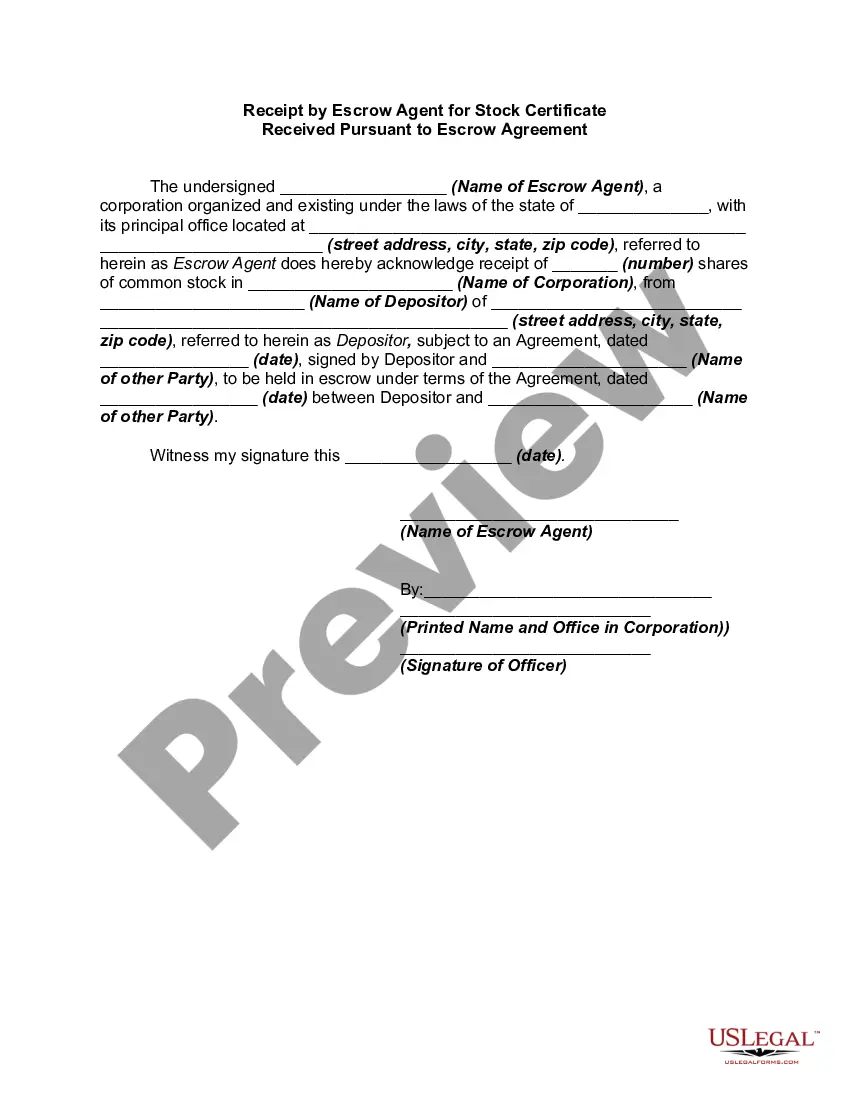
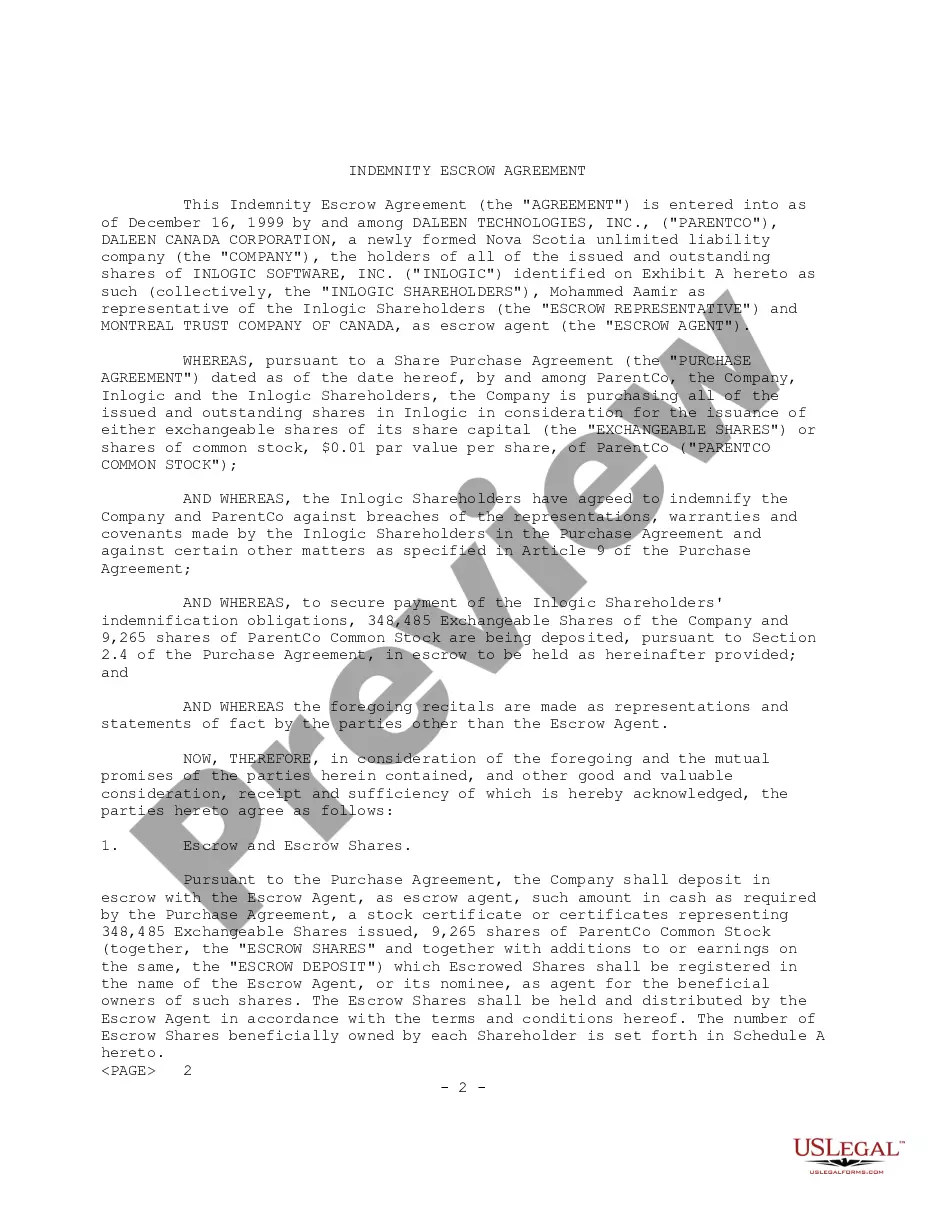
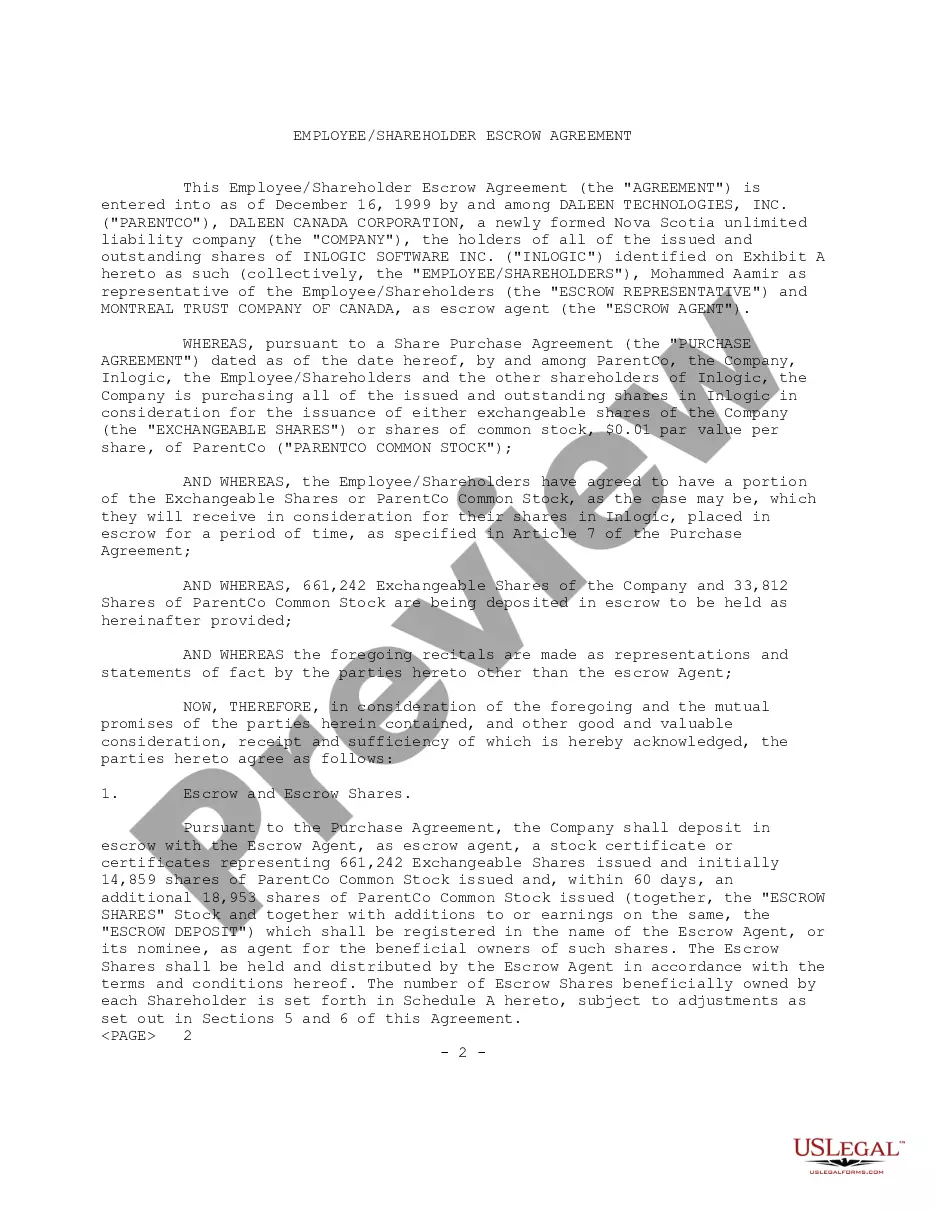
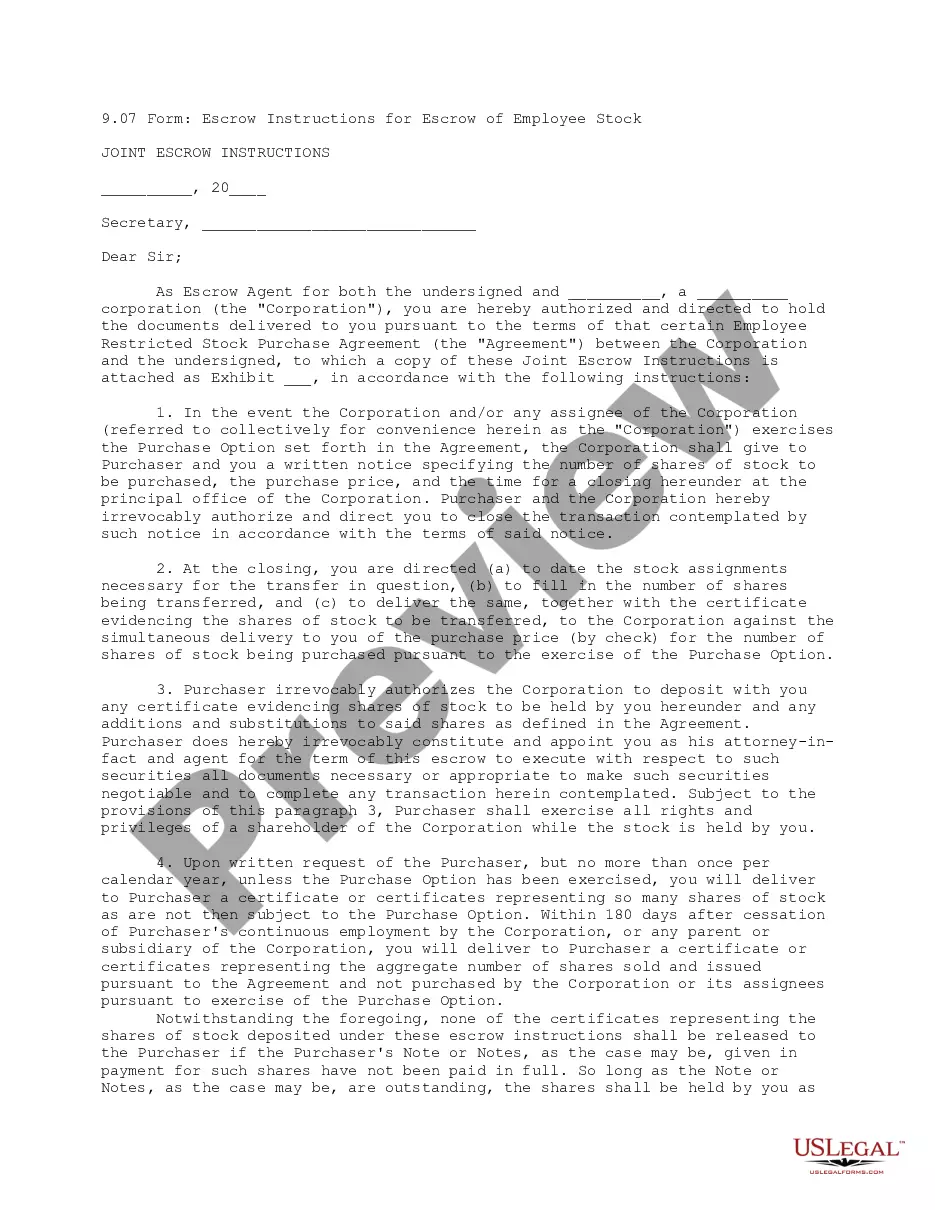
The Receipt By Escrow Agent for Stock Certificate Received Pursuant to Escrow is a legal document used to acknowledge the receipt of stock certificates held in escrow. This form serves as proof that an escrow agent has received specific shares of stock from a depositor based on an agreement. It is distinct from other escrow forms because it specifically pertains to stock certificates and the responsibilities of the escrow agent in handling them.
Form components explained
- Escrow agent's name and corporation details.
- Number of shares and name of the corporation for which the shares are issued.
- Depositor's name and contact information.
- Date of the agreement under which the shares are being held.
- Signature of the escrow agent with printed name and title.
Common use cases
This form should be used when an escrow agent has been designated to hold stock certificates on behalf of a depositor. It is typically utilized during transactions that require shares to be held until certain conditions are met, such as the closing of a sale or transfer of ownership. If you are involved in a business transaction where securities are exchanged and you need official documentation of stock being held in escrow, this form is essential.
Who this form is for
- Escrow agents managing stock transactions.
- Depositors involved in the transfer or sale of stock.
- Businesses engaging in mergers, acquisitions, or investment processes that involve stock certificates.
Instructions for completing this form
- Identify and enter the name of the escrow agent and their corporate details.
- Fill in the number of shares and the name of the corporation associated with the stock.
- Provide the name and contact information of the depositor.
- Specify the date of the agreement that governs the escrow arrangement.
- Have the authorized individual from the escrow agent's side print their name, sign, and include their title.
Notarization requirements for this form
This form does not typically require notarization unless specified by local law. It is advisable to check your jurisdiction's requirements to ensure compliance.
Get your form ready online
Our built-in tools help you complete, sign, share, and store your documents in one place.
Make edits, fill in missing information, and update formatting in US Legal Forms—just like you would in MS Word.
Download a copy, print it, send it by email, or mail it via USPS—whatever works best for your next step.
Sign and collect signatures with our SignNow integration. Send to multiple recipients, set reminders, and more. Go Premium to unlock E-Sign.
If this form requires notarization, complete it online through a secure video call—no need to meet a notary in person or wait for an appointment.
We protect your documents and personal data by following strict security and privacy standards.

Make edits, fill in missing information, and update formatting in US Legal Forms—just like you would in MS Word.

Download a copy, print it, send it by email, or mail it via USPS—whatever works best for your next step.

Sign and collect signatures with our SignNow integration. Send to multiple recipients, set reminders, and more. Go Premium to unlock E-Sign.

If this form requires notarization, complete it online through a secure video call—no need to meet a notary in person or wait for an appointment.

We protect your documents and personal data by following strict security and privacy standards.
Mistakes to watch out for
- Failing to include the correct number of shares or corporation name.
- Not signing the form, which can render it invalid.
- Using incorrect or outdated agreements for the escrow transaction.
Benefits of using this form online
- Convenient download and immediate access to necessary legal documentation.
- Editability allows for customization based on specific transaction details.
- Reliability of forms drafted by licensed attorneys ensures legal compliance.
Looking for another form?
Form popularity
FAQ
Escrow means that the shares are held by a third-party until certain conditions have been met in order to reduce counterparty risk in a transaction. Companies will also issue stock in escrow, imposing limitations on when the shares can be sold, as part of an employee's compensation plan.
Escrow Letter means the letter from the Facility Agent acknowledged by the Company dated on or about the date hereof regarding the various payments to be made at or about the Closing in respect of the Closing.
Include your name, home address, and mortgage account number. Identify the error. Tell your servicer exactly what error you believe occurred. Do not write your letter on your payment coupon or other payment form you get from your servicer. Send the letter to the proper address.
The escrow holder will hold onto and transfer the funds and documents during the transaction. In most cases the seller chooses an escrow holder, but this may also be negotiated in the offer or contract. The deposit check should be made out to the escrow holder and taken to the escrow or title company.
An escrow receipt is a bank statement which guarantees that an option writer has the underlying security available for delivery, should the need arise. An escrow receipt is most often utilized when a client's options account is held at a bank, rather than a registered broker-dealer.
It's a binding agreement between the party who makes the promise and the one to whom the promise is made. Written documents are held in escrow until the underlying agreement is accomplished.Any written document executed in accordance with all the necessary legal formalities may be put into escrow.
It is important to remember that an escrow agent does not prepare or review the legal documentsescrow merely takes directions from the parties to the contract and acts on them in a confidential manner.Typically, escrow fees are split equally between buyer and seller.
Once you and the seller agree on a price and sign a mutually acceptable purchase agreement, your real estate agent will collect your earnest moneysort of like a good faith deposit which is ultimately applied to your down paymentand deposit it in an escrow account at the escrow company or service specified in the
For example, an escrow account can be used for the sale of a house.In this case, the buyer of the property deposits the payment amount for the house in an escrow account held by a third party. The seller can proceed with house inspections confident that the funds are there, and the buyer is capable of making payment.