Work Rules
Understanding this form
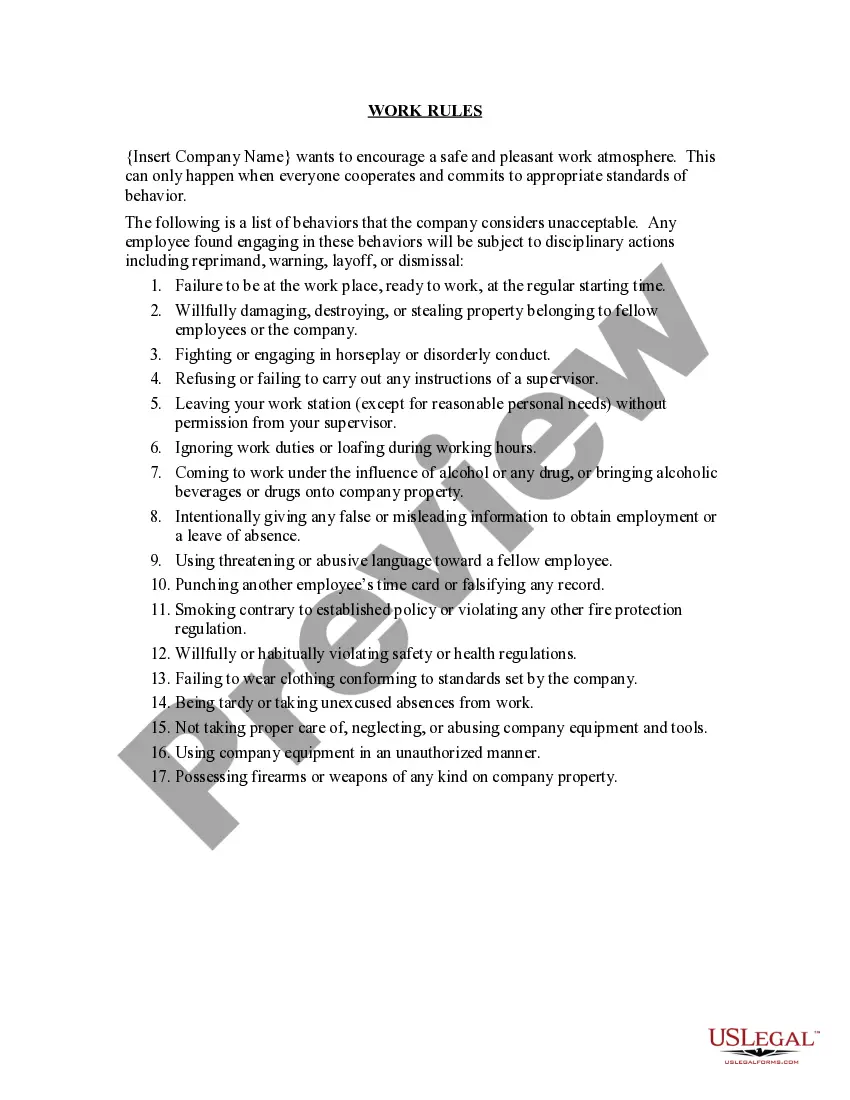
The Work Rules form is designed to help employers establish clear behavioral guidelines within the workplace. This form outlines unacceptable actions, encouraging a safe and cooperative work environment. By implementing these rules, businesses can effectively manage employee behavior and ensure a respectful and productive atmosphere, setting it apart from other forms that might not specify behaviors as explicitly.
Form components explained
- Company name and goals for workplace behavior
- List of unacceptable behaviors and associated disciplinary actions
- Citation of the need for cooperation and commitment to rules
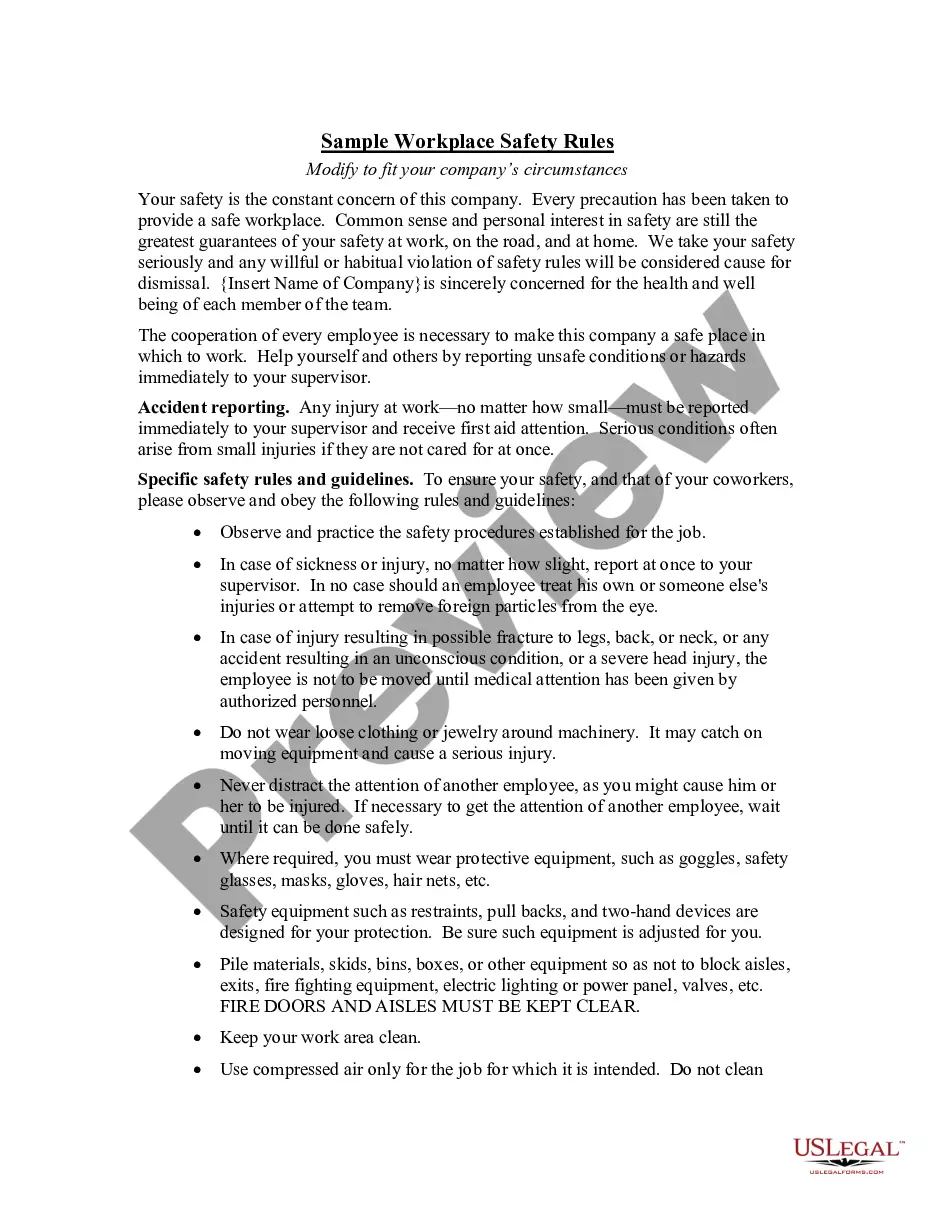
- Emphasis on maintaining a safe work environment
- Clear statements on consequences of violations

Situations where this form applies
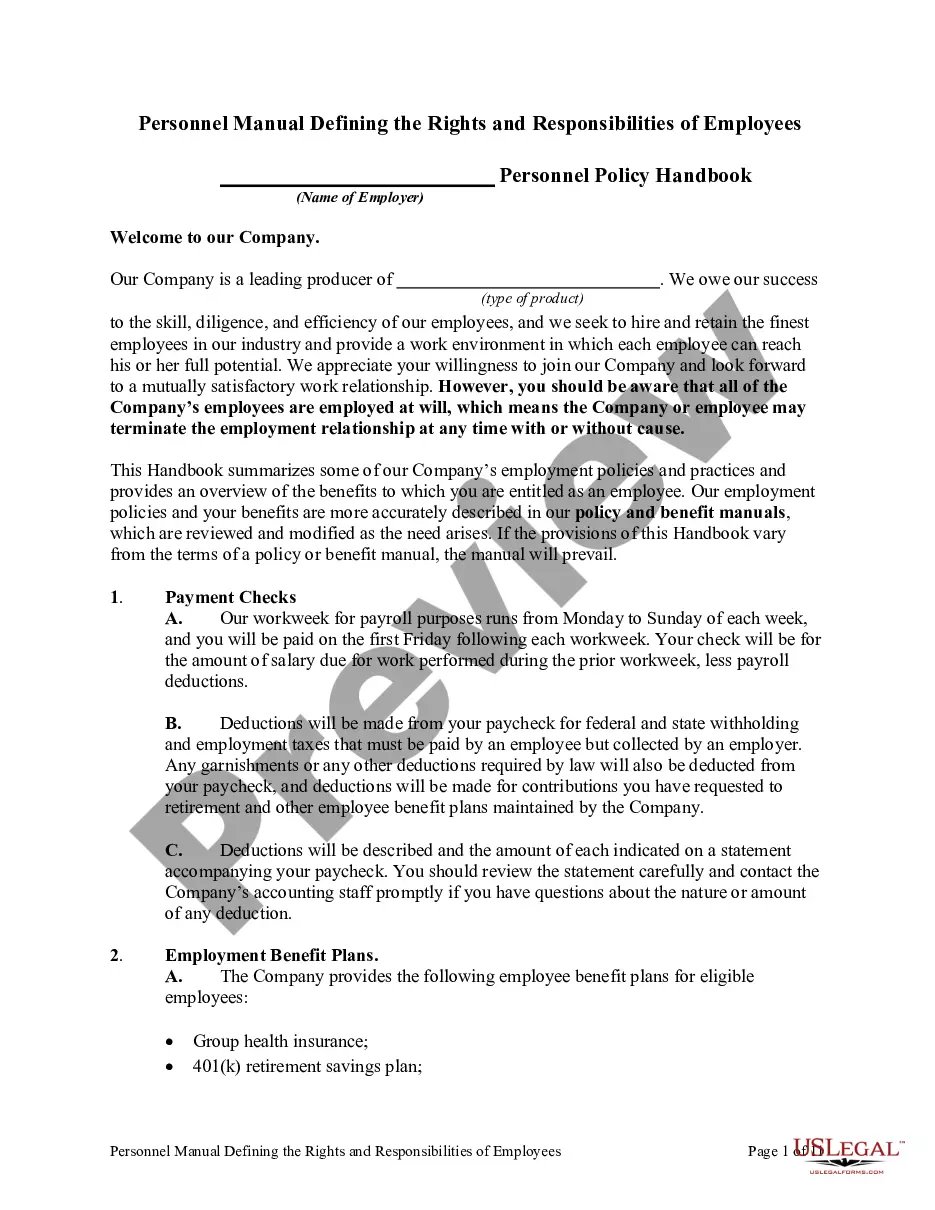
This form is useful for businesses looking to create a structured set of workplace rules. Use it when establishing new employee guidelines, during onboarding processes, or when revising existing company policies to address workplace conduct.
Who can use this document
- Employers establishing workplace rules
- HR professionals managing employee behavior
- Business owners aiming to foster a positive company culture
- Team leaders responsible for maintaining discipline among employees
Steps to complete this form
- Insert the company name at the top of the document.
- Clearly state the organization's goals related to workplace behavior.
- List specific unacceptable behaviors detailed in the form.
- Define the consequences for violating the rules.
- Review the document with all employees during orientation or training.
Is notarization required?
This form does not typically require notarization to be legally valid. However, some jurisdictions or document types may still require it. US Legal Forms provides secure online notarization powered by Notarize, available 24/7 for added convenience.
Get your form ready online
Our built-in tools help you complete, sign, share, and store your documents in one place.
Make edits, fill in missing information, and update formatting in US Legal Forms—just like you would in MS Word.
Download a copy, print it, send it by email, or mail it via USPS—whatever works best for your next step.
Sign and collect signatures with our SignNow integration. Send to multiple recipients, set reminders, and more. Go Premium to unlock E-Sign.
If this form requires notarization, complete it online through a secure video call—no need to meet a notary in person or wait for an appointment.
We protect your documents and personal data by following strict security and privacy standards.

Make edits, fill in missing information, and update formatting in US Legal Forms—just like you would in MS Word.

Download a copy, print it, send it by email, or mail it via USPS—whatever works best for your next step.

Sign and collect signatures with our SignNow integration. Send to multiple recipients, set reminders, and more. Go Premium to unlock E-Sign.

If this form requires notarization, complete it online through a secure video call—no need to meet a notary in person or wait for an appointment.

We protect your documents and personal data by following strict security and privacy standards.
Mistakes to watch out for
- Failing to customize the form with the company name and specific goals.
- Neglecting to communicate the rules to all employees effectively.
- Overlooking regular reviews and updates of the rules as required.
Why use this form online
- Convenient download and instant access for quick implementation.
- Editability to customize the form to meet specific company needs.
- Reliable drafting by licensed attorneys, ensuring legal compliance.
Legal use & context
- Establishes a clear framework for acceptable workplace behavior.
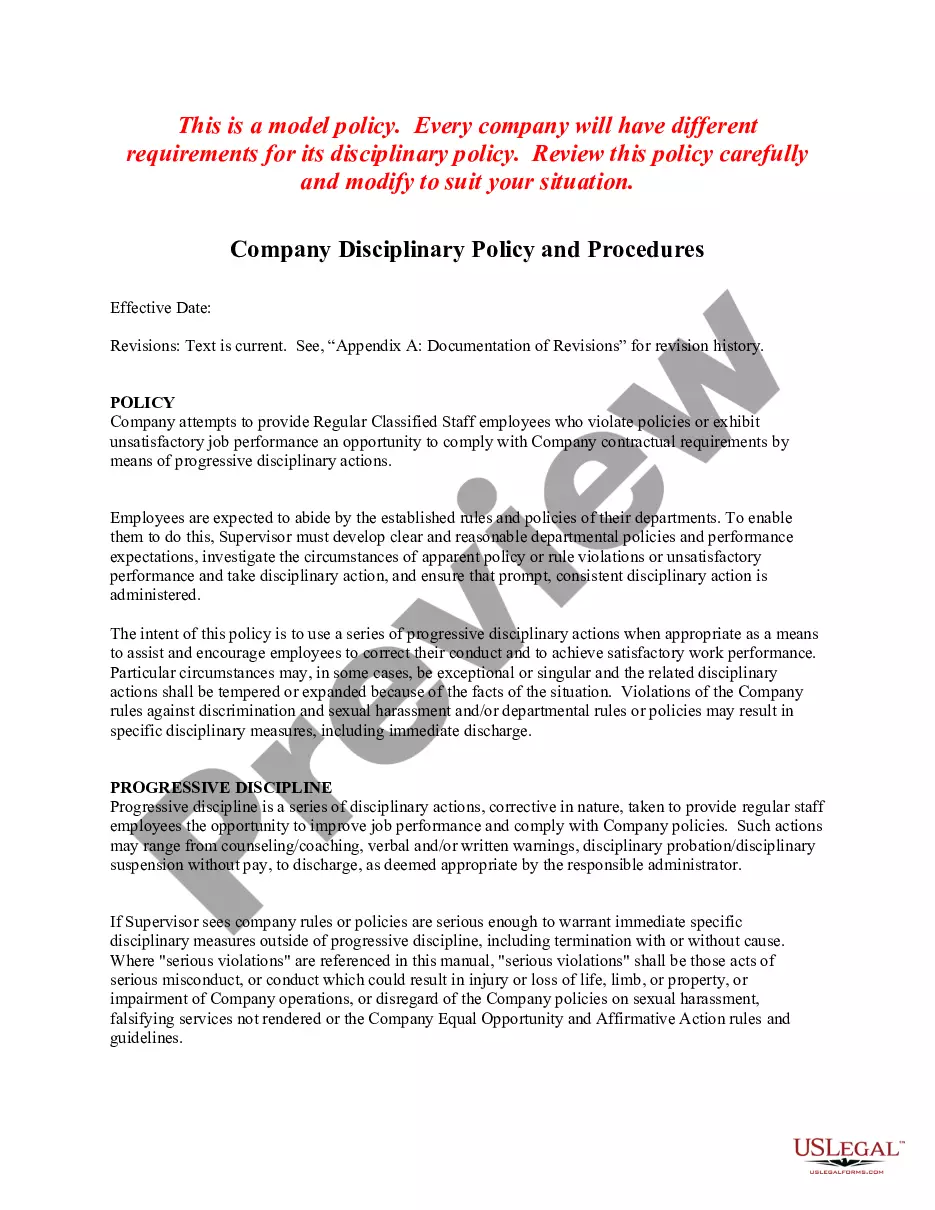
- Helps in minimizing legal disputes related to employee conduct.
- Enforceable in court if properly communicated and upheld.
Summary of main points
- Establishing clear Work Rules is vital for workplace harmony.
- Employers should communicate these rules clearly to all employees.
- Regular updates ensure that the rules stay relevant and effective.
Looking for another form?


Form popularity
FAQ
Work rules can help improve quality of work life by: Creating an atmosphere where employees are treated with dignity and respect. Helping to ensure that employees conduct themselves in a professional and safe manner. Encouraging open communication between you and your employees.
Working Hours. Observe your working hours faithfully. Time Records. Keep daily time records, and make only true and correct entries in your time records. Leaves and Absences. Behavior. Personal Integrity. Confidential Matters. Work Performance. Responsibility for Funds or Property.
Don't Disrespect Seniority. Some people take a job and languish in it for a long time. Don't Hog the Credit. People often don't have a rational view of their contribution to a project. Don't Be a Complainer. Everyone has an occasional workplace complaint. Don't Isolate Yourself. Just Be a Good Person.
Working Hours. Observe your working hours faithfully. Time Records. Keep daily time records, and make only true and correct entries in your time records. Leaves and Absences. Behavior. Personal Integrity. Confidential Matters. Work Performance. Responsibility for Funds or Property.
Workers' rights encompass a large array of human rights from the right to decent work and freedom of association to equal opportunity and protection against discrimination. Specific rights related to the workplace include health and safety in the workplace and the right to privacy at work, amongst many others.
Document The Unfair Treatment This can be done in a number of ways, including creating a journal, sending emails, text messages, or other types of communications that confirm the unfair treatment is happening. Ideally, this documentation is created as the unfair treatment is happening.
Not to be unfairly dismissed. To be treated with dignity and respect. To be paid the agreed wage on the agreed date and at the agreed time. To be provided with appropriate resources and equipment to enable him/her to do the job. To have safe working conditions.
Right to a safe workplace free of dangerous conditions, toxic substances, and other potential safety hazards; Right to be free from retaliation for filing a claim or complaint against an employer (these are sometimes called "whistleblower" rights); and. Right to fair wages for work performed.
Rules are instructions that tell you what you are allowed to do and what you are not allowed to do.