Sample Web Site Privacy Statement
What is this form?
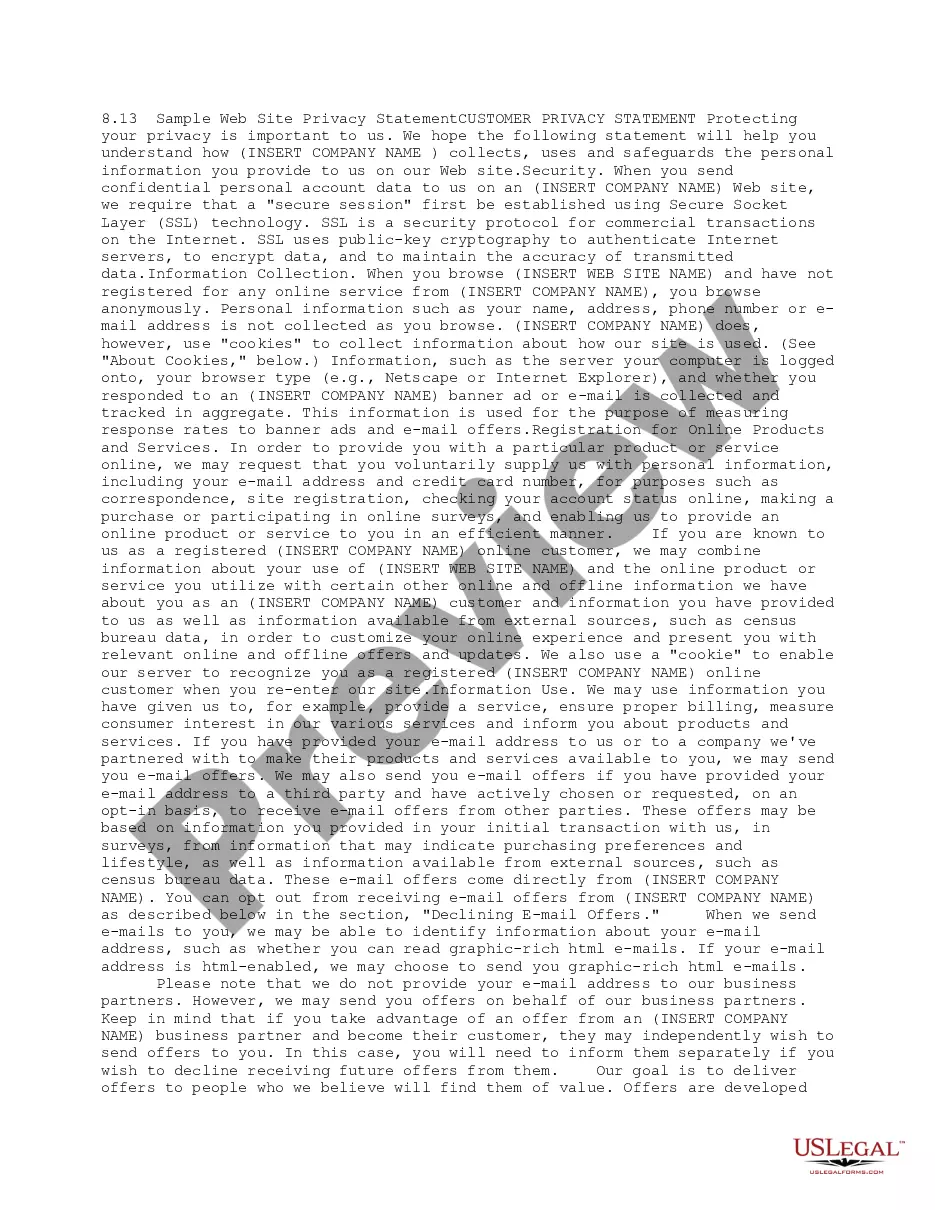
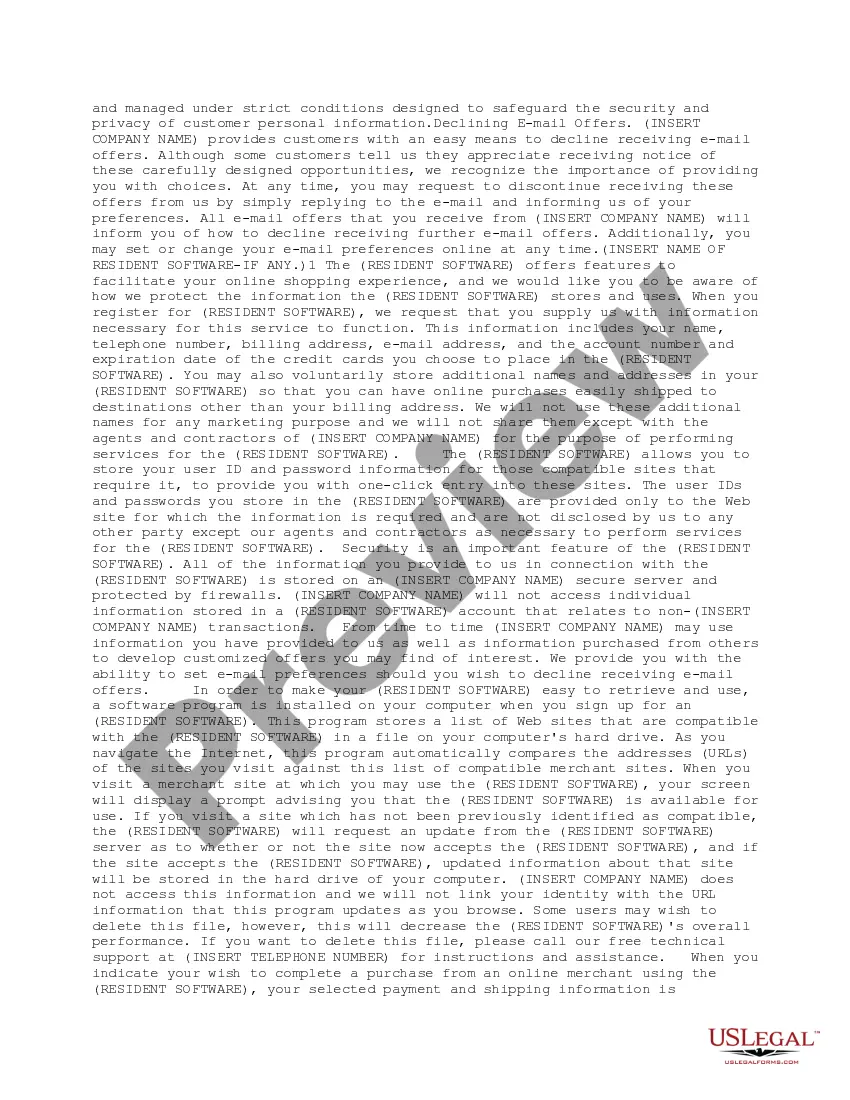
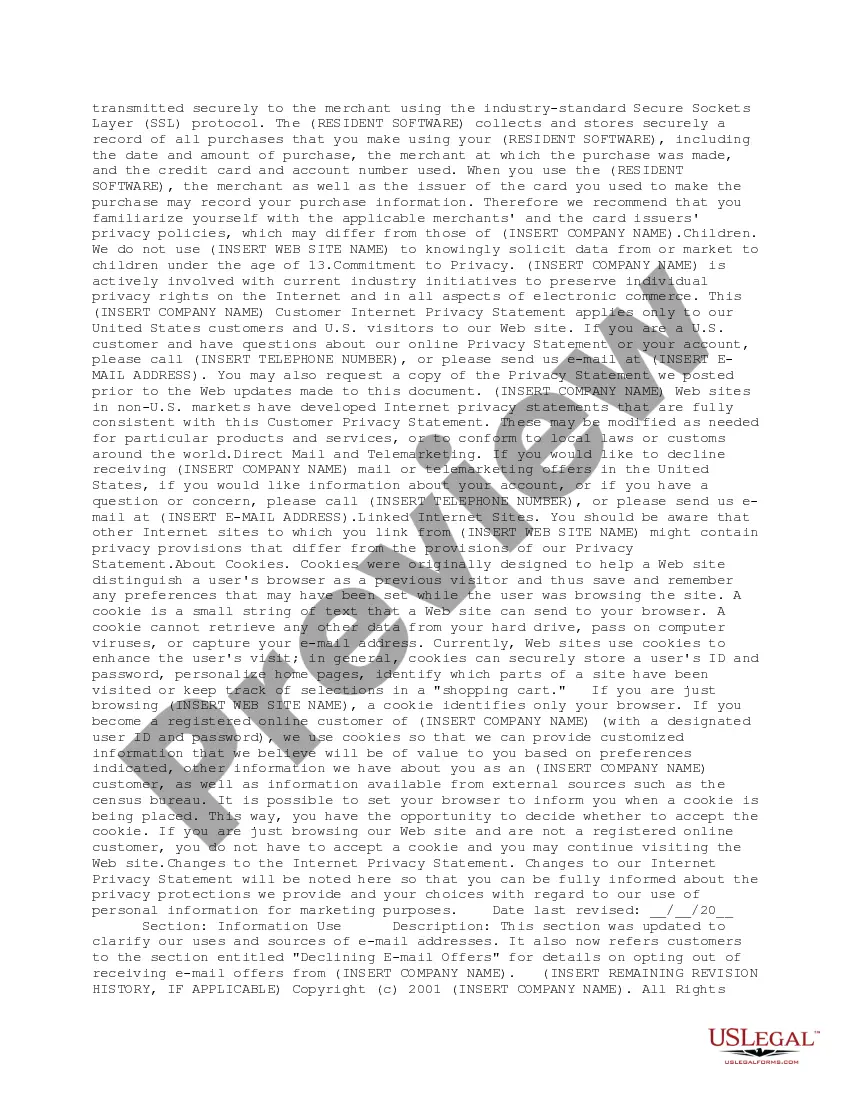
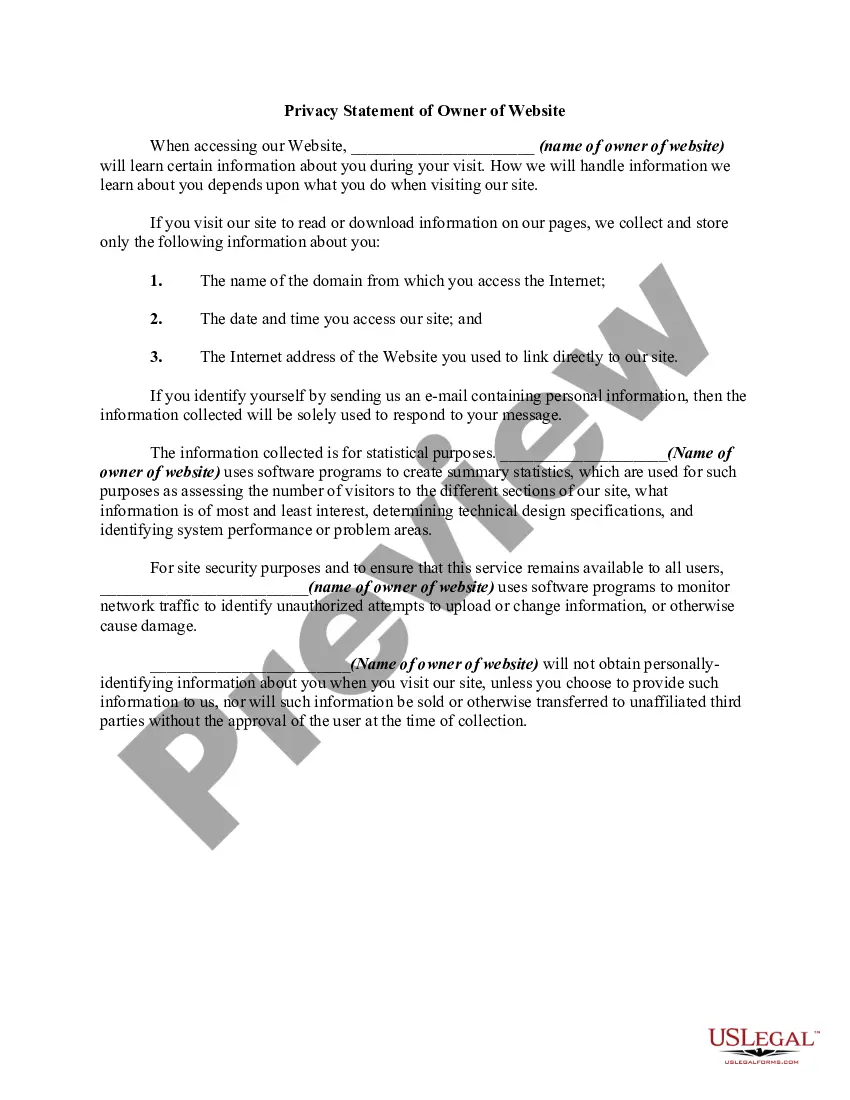
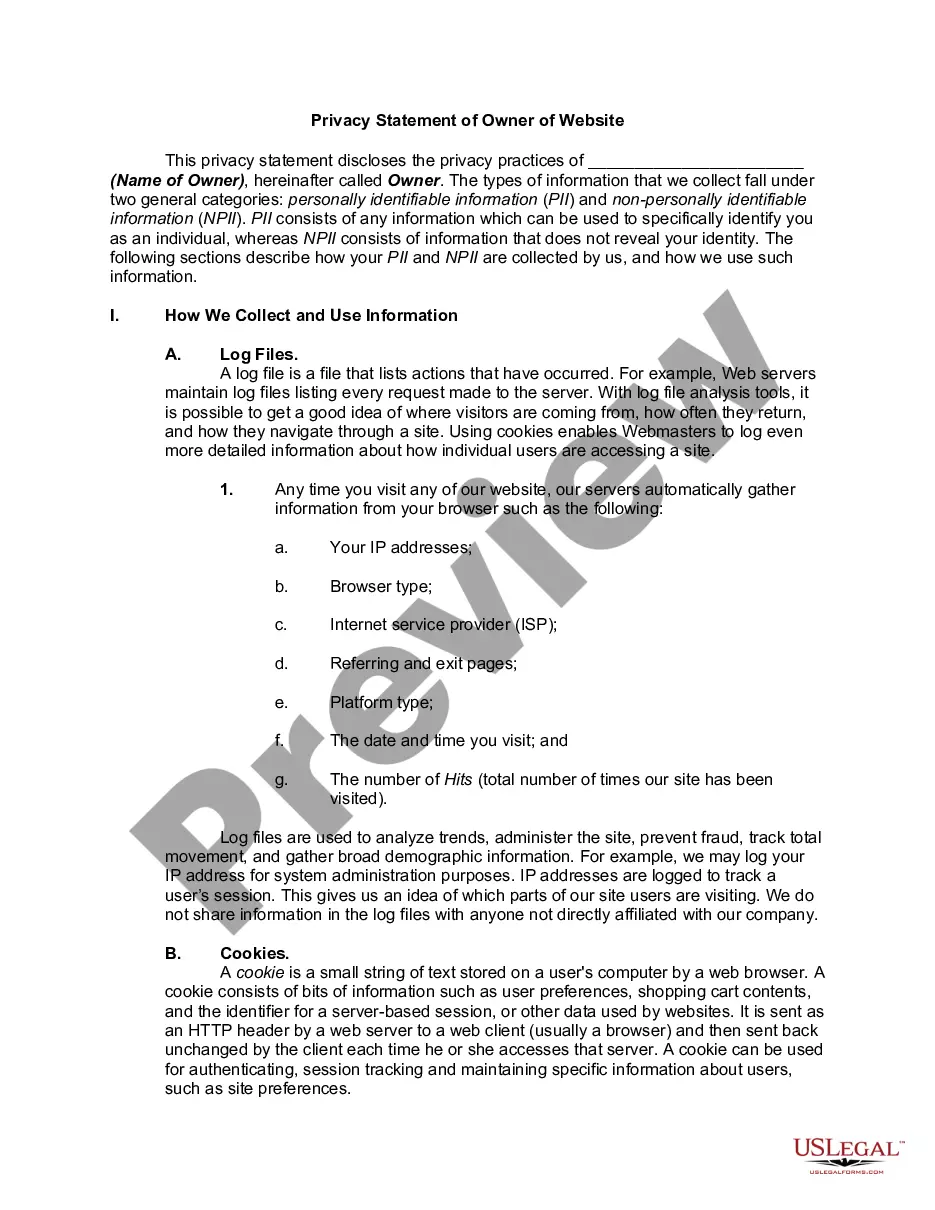
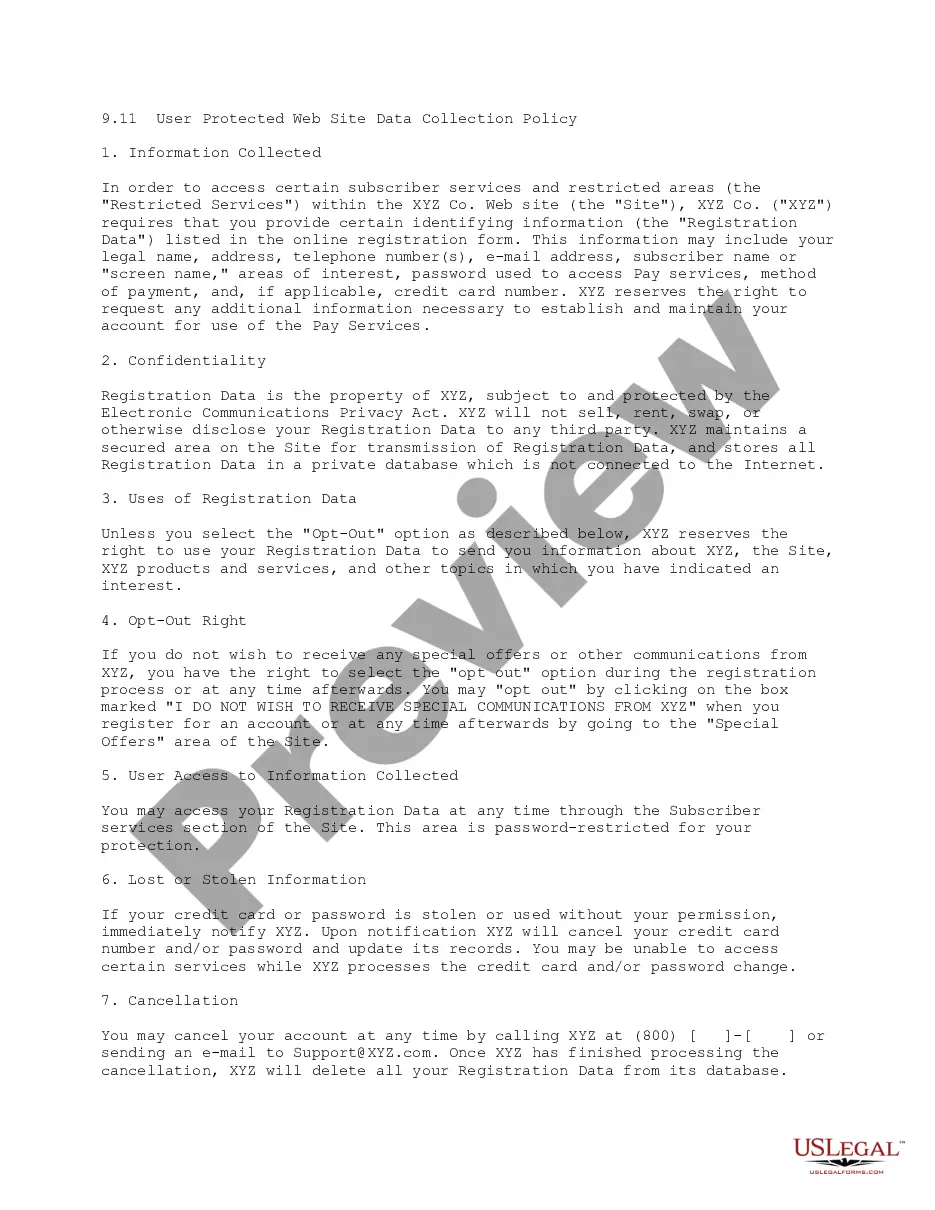
The Sample Web Site Privacy Statement is a legal document that ensures website customers that their personal information will remain private and secure. This form clarifies how a business collects, uses, and protects data gathered from users, including the use of cookies and secure information transfer during online transactions. It serves as a vital assurance for users concerned about their privacy online, setting it apart from standard privacy notices or policies.
Main sections of this form
- Customer privacy assurance and data protection commitments.
- Information about secure data transmission using SSL technology.
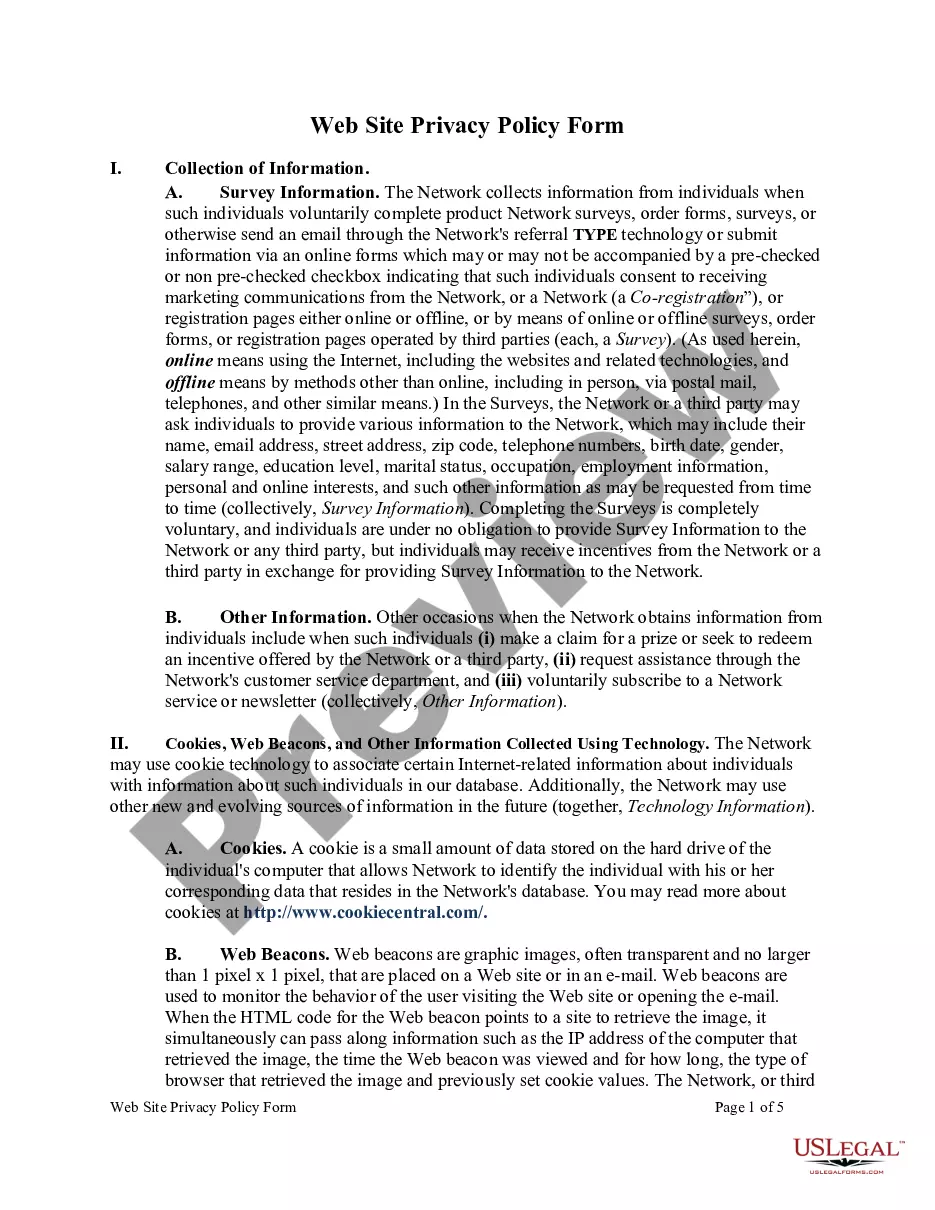
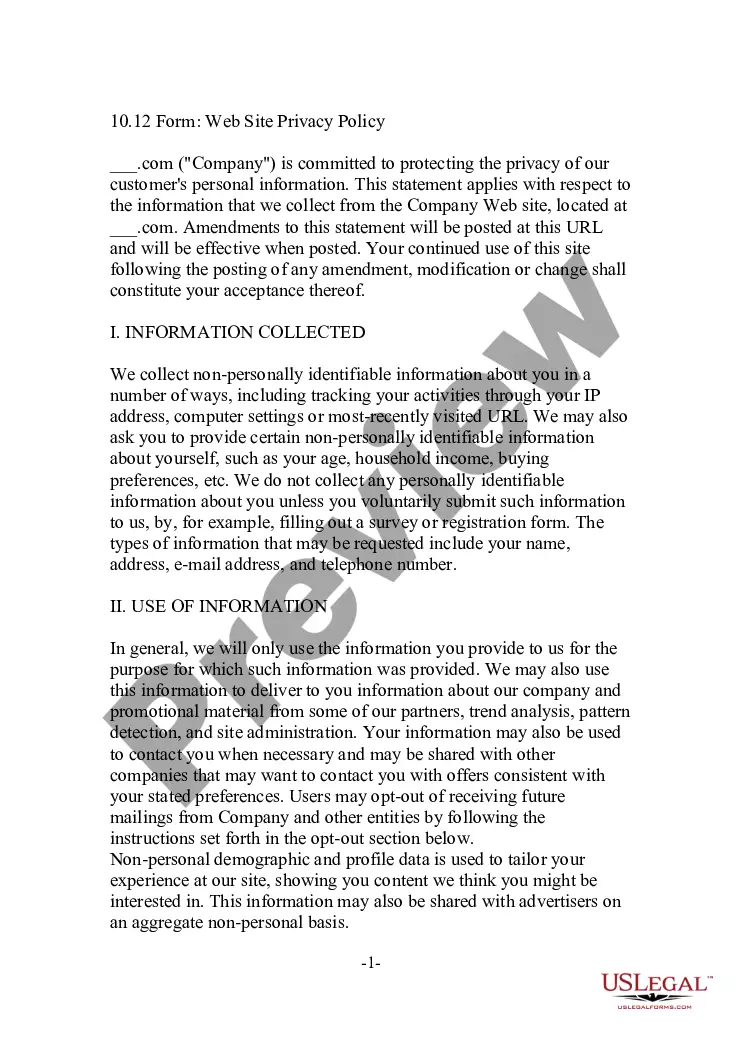
- Details on the collection and use of cookies and personal information.
- Opt-in options for email offers and advertisements.
- Instructions for opting out of email offers.
- Commitment to protecting the privacy rights of children and customers.
Situations where this form applies
The Sample Web Site Privacy Statement should be used when creating a website, especially for businesses that collect personal information from customers. It is essential when handling sensitive data, conducting online transactions, or if your site utilizes cookies to track user preferences. Implementing this form can help in building trust with users and ensuring compliance with privacy laws.
Intended users of this form
This form is intended for:
- Businesses operating online that collect user data.
- Website owners looking to reassure customers about data privacy.
- Developers and marketers needing to comply with privacy regulations.
- Any organization that engages in online transactions or collects customer information.
How to complete this form
- Customize the document by inserting your company's name and website name.
- Review and amend any sections to fit your specific data practices and policies.
- Ensure all references to external data usage are accurate and align with your practices.
- Clearly outline how customers can opt out of email offers and tracking.
- Make the document easily accessible on your website for transparency.
Notarization guidance
This form does not typically require notarization unless specified by local law. Always check your state regulations to ensure compliance with specific requirements regarding privacy statements.
Get your form ready online
Our built-in tools help you complete, sign, share, and store your documents in one place.
Make edits, fill in missing information, and update formatting in US Legal Forms—just like you would in MS Word.
Download a copy, print it, send it by email, or mail it via USPS—whatever works best for your next step.
Sign and collect signatures with our SignNow integration. Send to multiple recipients, set reminders, and more. Go Premium to unlock E-Sign.
If this form requires notarization, complete it online through a secure video call—no need to meet a notary in person or wait for an appointment.
We protect your documents and personal data by following strict security and privacy standards.

Make edits, fill in missing information, and update formatting in US Legal Forms—just like you would in MS Word.

Download a copy, print it, send it by email, or mail it via USPS—whatever works best for your next step.

Sign and collect signatures with our SignNow integration. Send to multiple recipients, set reminders, and more. Go Premium to unlock E-Sign.

If this form requires notarization, complete it online through a secure video call—no need to meet a notary in person or wait for an appointment.

We protect your documents and personal data by following strict security and privacy standards.
Mistakes to watch out for
- Failing to update the statement regularly as privacy laws change.
- Not clearly communicating cookie usage, leading to confusion for users.
- Overlooking to include opt-out options for users receiving marketing emails.
- Using overly complex language that may confuse customers.
Advantages of online completion
- Provides a clear and concise assurance of privacy to customers.
- Enhances trust and credibility for your online business.
- Facilitates compliance with privacy regulations effectively.
- Easy to download and customize to fit your specific needs.
- The privacy statement serves as a foundational document for demonstrating compliance with data protection regulations.
- It may be referenced in legal matters where data privacy practices are questioned.
Quick recap
- The Sample Web Site Privacy Statement is crucial for online businesses to protect customer privacy.
- Properly customizing and implementing this form builds trust and ensures compliance with laws.
- Regular updates and clear communication are essential to maintain accuracy and transparency.
Looking for another form?
Form popularity
FAQ
The first thing to include in your privacy notice is the name, address, email address and telephone number of your organisation. If you've appointed a DPO (data protection officer) or EU representative, you should also include their contact details.
Inform your store visitors about the private data you collect and manage. Give your visitors a choice to opt in and opt out. Give your visitors access to the information you and third parties collect. Inform your visitors of how you secure their data.
Write your Privacy Policy in plain, easy-to-understand language. Update your policy regularly to reflect changes in the law, in your business, or within your protocols. Notify users of these updates, and include the effective date with your policy. Be transparent and remain true to your commitment to user privacy.
Your policy should disclose that your site will collect and maintain personal information provided by its users, including their names, addresses, mobile telephone numbers, email addresses, and so forth.
A Privacy Policy is a statement or a legal document that states how a company or website collects, handles and processes data of its customers and visitors. It explicitly describes whether that information is kept confidential, or is shared with or sold to third parties.
Use of Information. This section should explain to your users how and why you use the information that you collect from them. Third Party Disclosure. Information Protection. Cookies. Notification of Changes. Contact Information.
An organisation or agency's privacy policy must tell you: their name and contact details. what kinds of personal information they collect and store. how they collect personal information and where it is stored.
Your website Privacy Policy needs to cover the following 8 elements: The type of personal information that you collect and store. The purposes for which you collect, hold, use and disclose personal information. How you collect and securely store personal information.