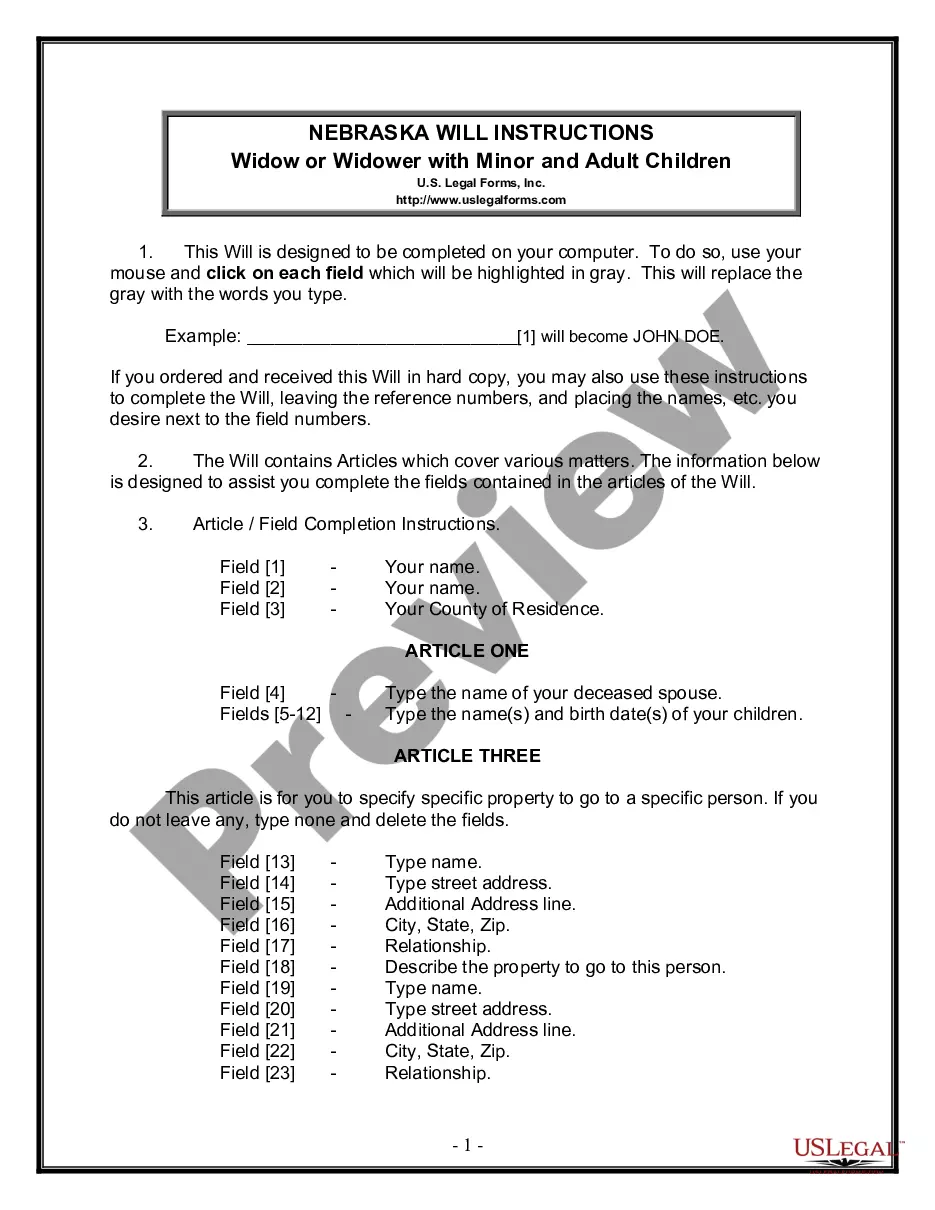
User Protected Web Site Data Collection Policy
What is this form?
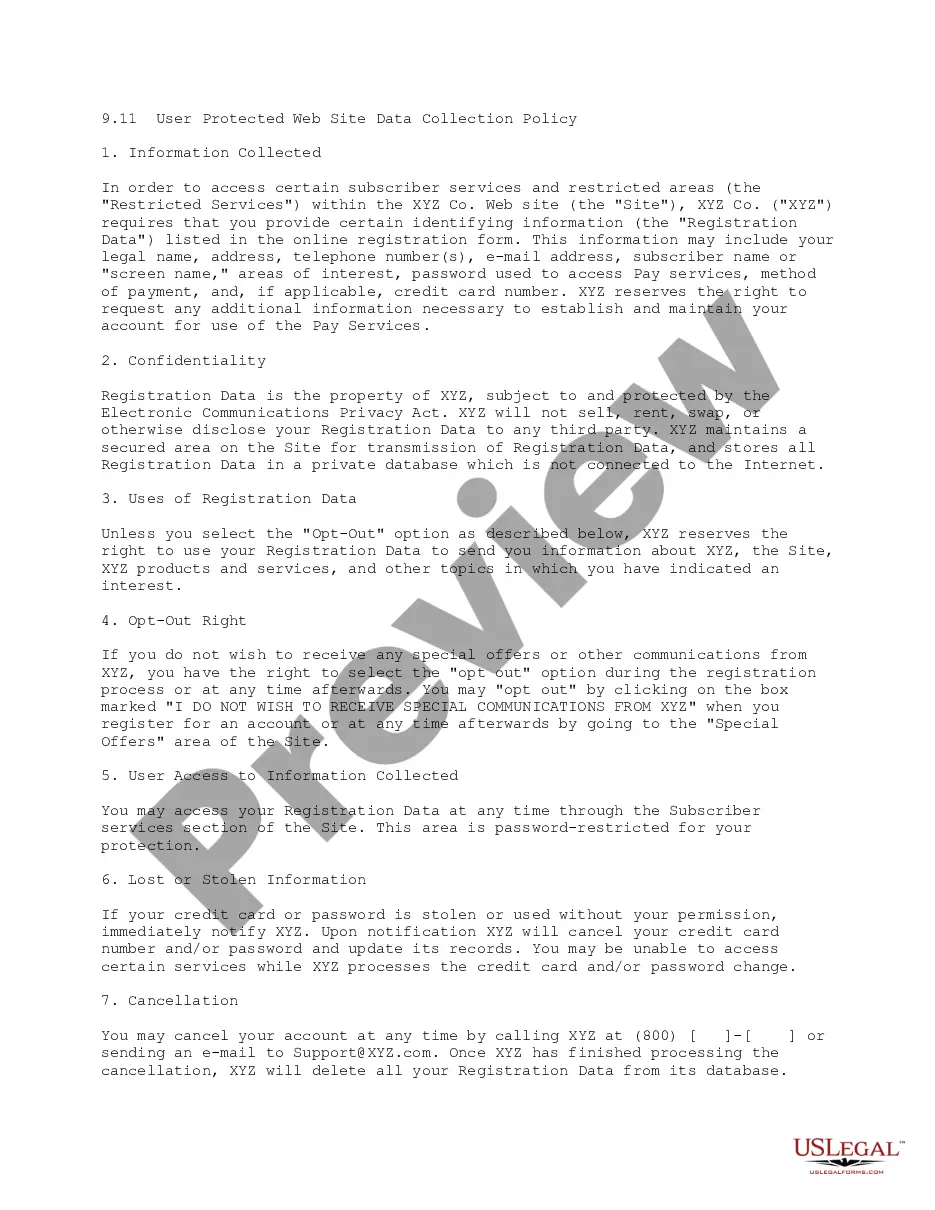
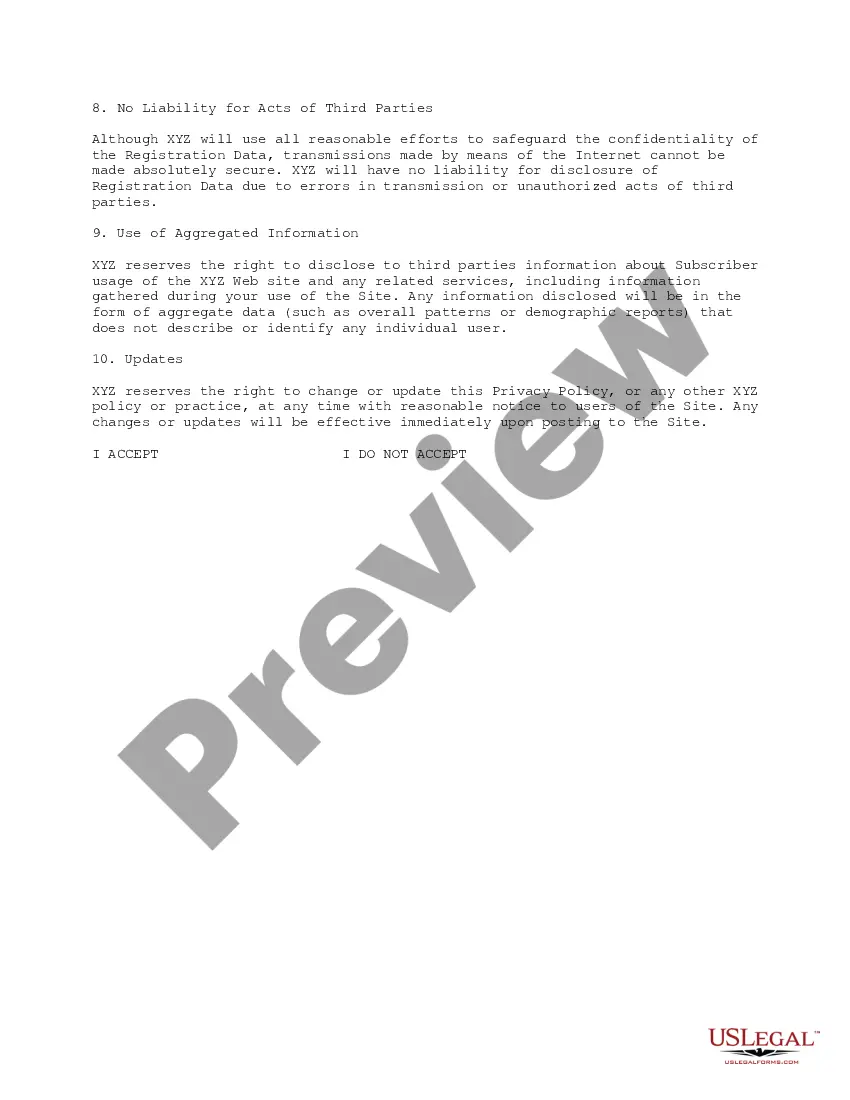
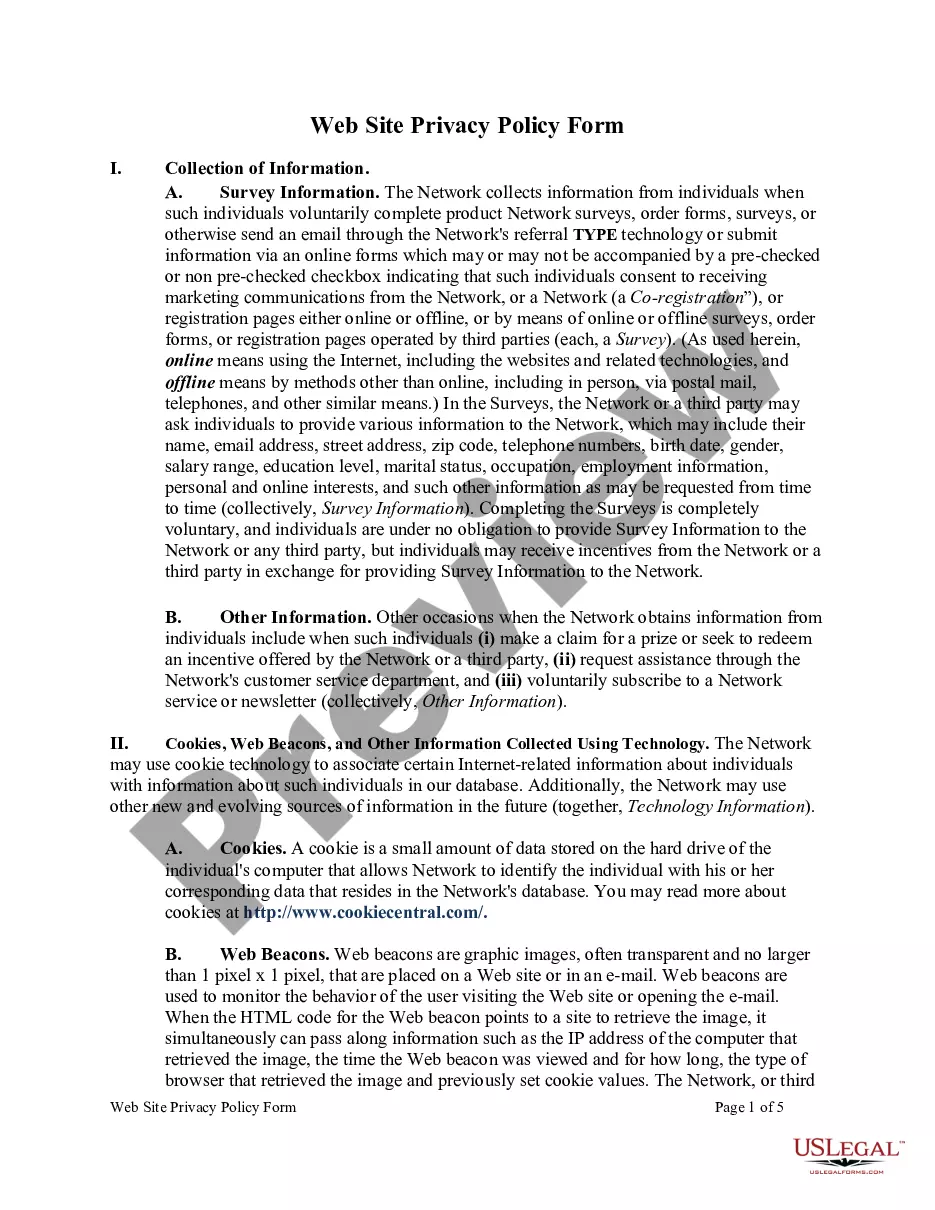
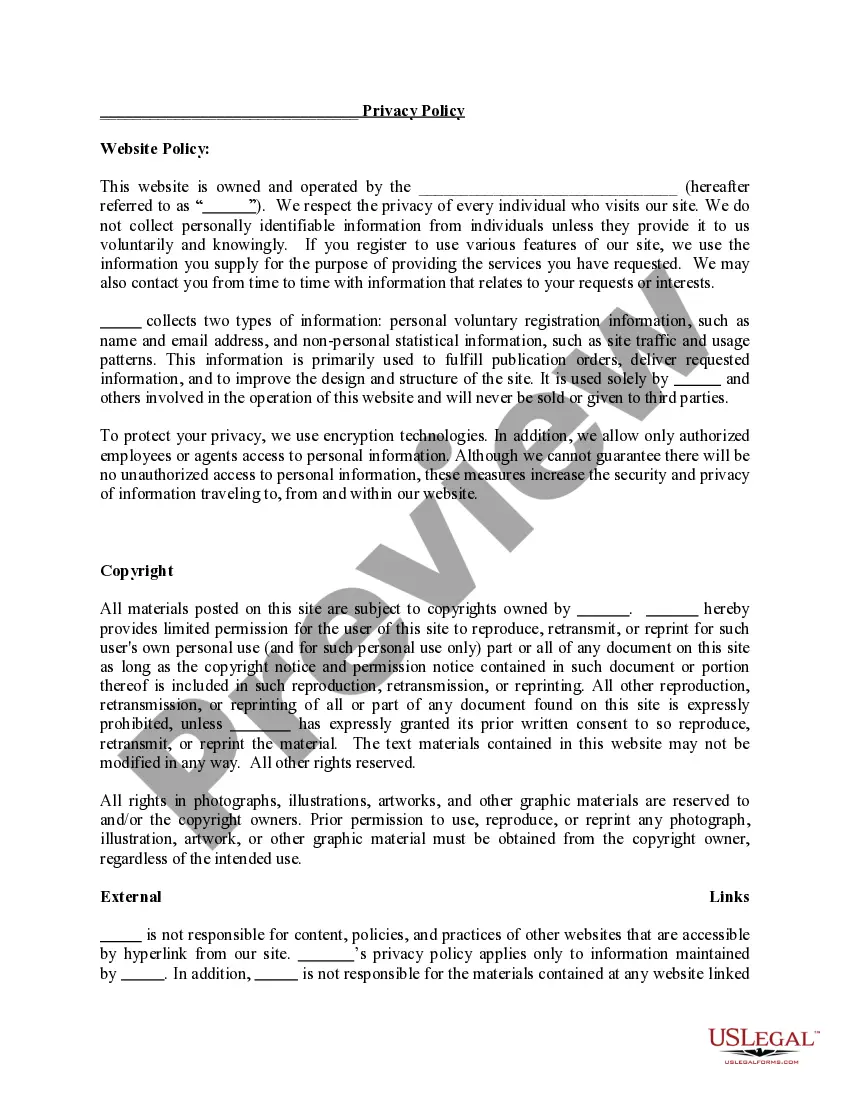
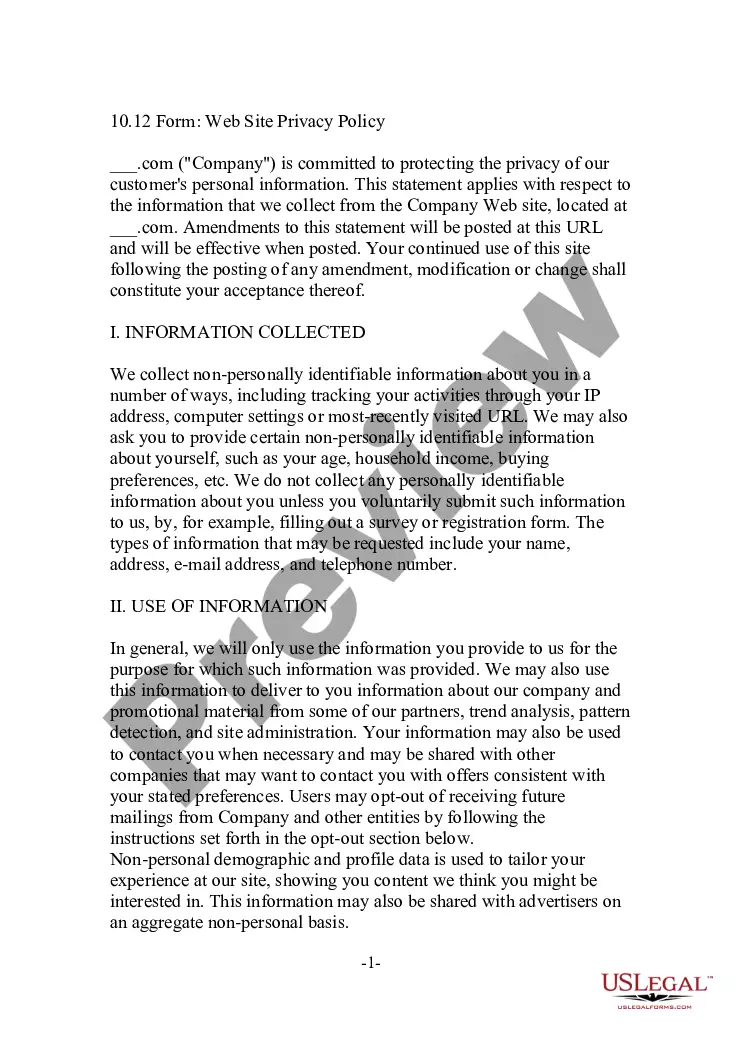
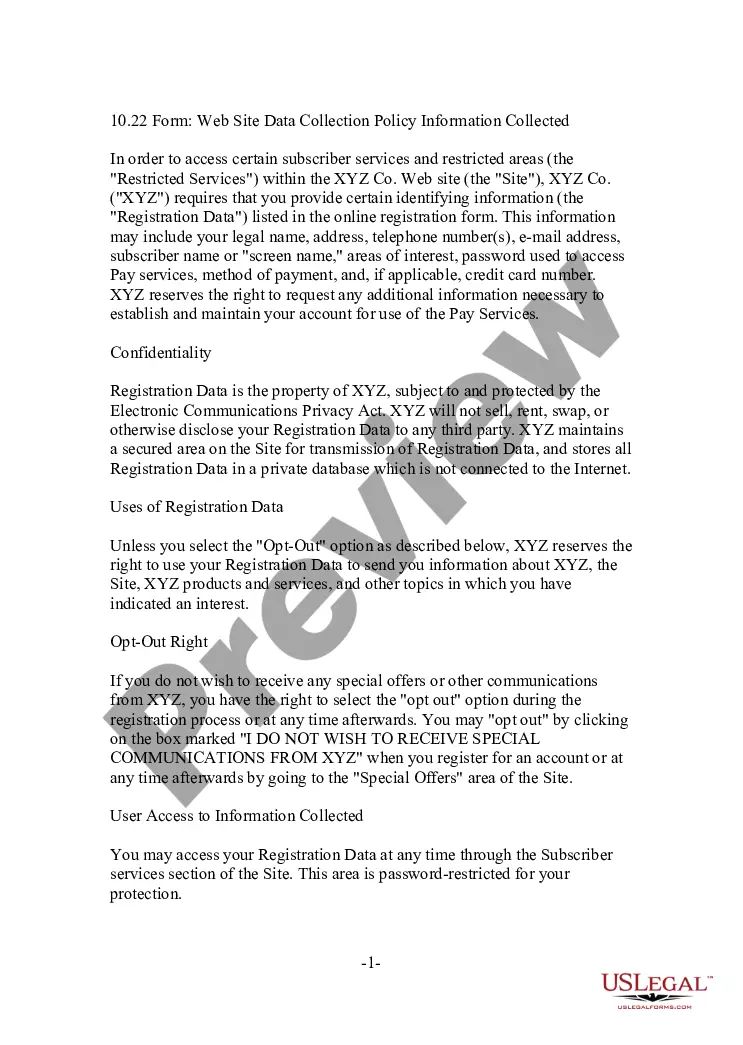
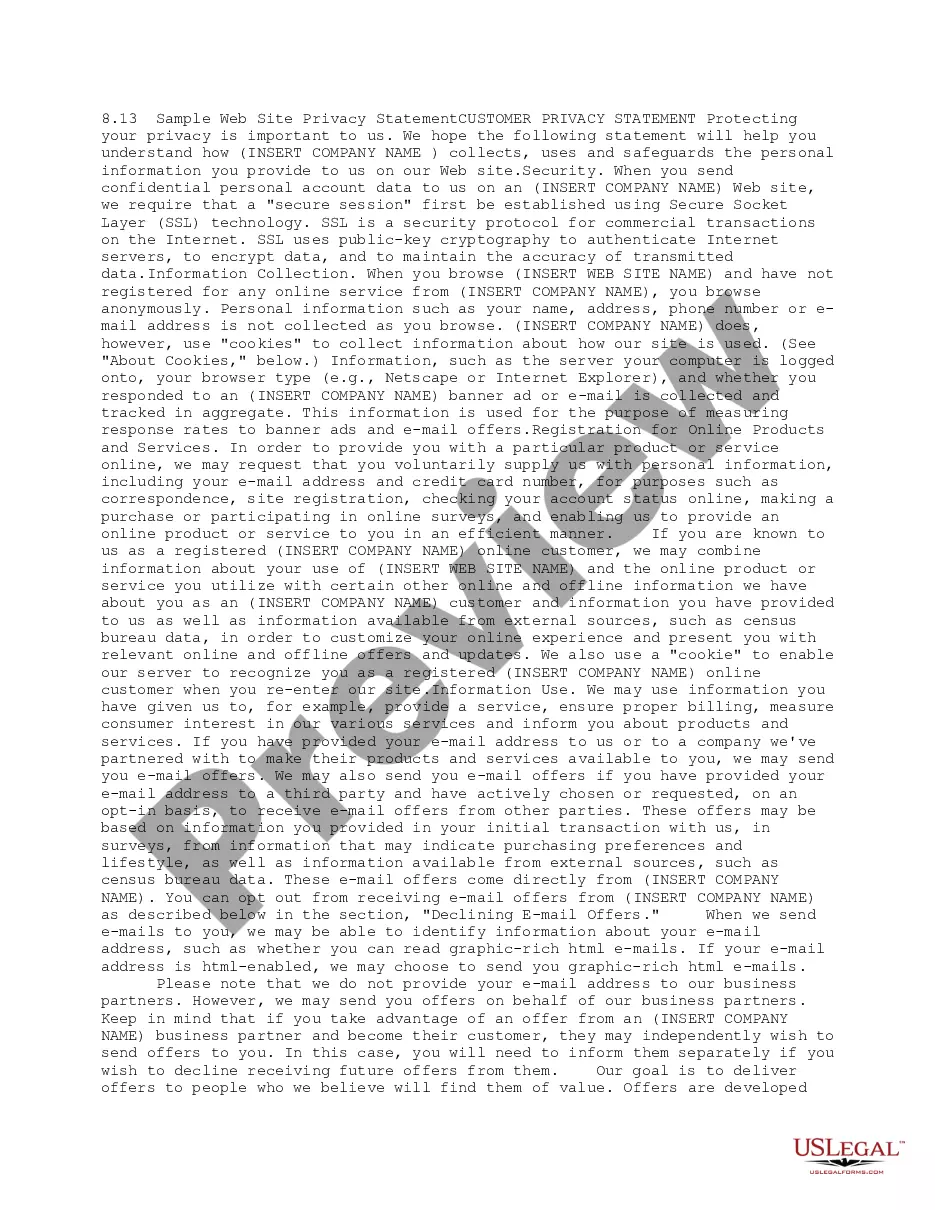
The User Protected Web Site Data Collection Policy outlines the terms under which a website collects, uses, and protects user data in restricted areas. This form is essential for businesses that require user registration and aim to ensure transparency for their users. It helps users understand their rights regarding their personal data while differentiating from basic privacy notices by including more comprehensive clauses and user options, such as the ability to opt-out of communications.
Key components of this form
- Information collected: Details the types of data required for registration and use of paid services.
- Confidentiality: Ensures user data is protected and not disclosed to third parties.
- Uses of registration data: Outlines how the collected data may be utilized, including sending updates and promotions.
- Opt-out right: Provides options for users to decline communications and promotional messages.
- User access: Allows users to view their data through password-protected sections of the site.
- Security measures: Details user responsibilities and security protocols for lost or stolen information.
When this form is needed
This form is used when creating a website intended for subscriber services with restricted access. It is particularly necessary for businesses that collect user data such as personal details, payment information, or preferences to ensure compliance with data protection laws and provide transparency to users regarding how their information will be used.
Who should use this form
- Website owners managing subscriber-only content or services.
- Businesses that intend to collect personal data from users for marketing or operational purposes.
- Organizations looking to assure users of data privacy and establish trust in their data handling practices.
- Compliance officers responsible for ensuring adherence to data protection regulations.
Steps to complete this form
- Identify the parties: Include the website owner's name and the users' information required for registration.
- Fill in the registration data: Provide all necessary information such as name, address, and payment details.
- Select the opt-out option: Determine if you want to receive promotional communications.
- Review the confidentiality clause: Understand how your data will be protected.
- Sign and date the policy acceptance: Confirm your agreement to the terms outlined in the policy.
Does this document require notarization?
Notarization is generally not required for this form. However, certain states or situations might demand it. You can complete notarization online through US Legal Forms, powered by Notarize, using a verified video call available anytime.
Get your form ready online
Our built-in tools help you complete, sign, share, and store your documents in one place.
Make edits, fill in missing information, and update formatting in US Legal Forms—just like you would in MS Word.
Download a copy, print it, send it by email, or mail it via USPS—whatever works best for your next step.
Sign and collect signatures with our SignNow integration. Send to multiple recipients, set reminders, and more. Go Premium to unlock E-Sign.
If this form requires notarization, complete it online through a secure video call—no need to meet a notary in person or wait for an appointment.
We protect your documents and personal data by following strict security and privacy standards.

Make edits, fill in missing information, and update formatting in US Legal Forms—just like you would in MS Word.

Download a copy, print it, send it by email, or mail it via USPS—whatever works best for your next step.

Sign and collect signatures with our SignNow integration. Send to multiple recipients, set reminders, and more. Go Premium to unlock E-Sign.

If this form requires notarization, complete it online through a secure video call—no need to meet a notary in person or wait for an appointment.

We protect your documents and personal data by following strict security and privacy standards.
Common mistakes to avoid
- Failing to inform users about their opt-out rights during sign-up.
- Not updating the policy when there are changes to data collection practices.
- Overlooking the need for compliance with state-specific privacy laws.
- Inadequately securing sensitive user data, leading to potential breaches.
Benefits of using this form online
- Convenience of electronically delivering a clear data collection policy.
- Editability allows businesses to easily update the form as policies change.
- Offers immediate distribution upon download, ensuring users have access quickly.
- Reliability, as it is drafted by licensed attorneys to ensure legal compliance.
Legal use & context
- Establishes a legal framework for user data collection practices.
- Helps mitigate risks related to data breach liabilities.
- Ensures that users are informed about their rights regarding personal data.
Key takeaways
- The User Protected Web Site Data Collection Policy is crucial for sites with restricted access.
- It outlines the data collection process, user rights, and confidentiality practices.
- Use this form to maintain transparency and compliance with data protection laws.
Looking for another form?
Form popularity
FAQ
In most cases, you can be fined for not complying with the law, although in some cases it's more the lack of notification to the user, not exactly for not having a Privacy Policy.
Inform your store visitors about the private data you collect and manage. Give your visitors a choice to opt in and opt out. Give your visitors access to the information you and third parties collect. Inform your visitors of how you secure their data.
The law probably requires that you publish a privacy policy (or similar document) on your website.If you do, EU and UK data protection law require that you provide information to individuals about how you use their data. The usual way of providing that information is via a privacy policy.
Log in to your WP site backend and open your Dashboard: Hover your mouse over Pages and select Add New in the Pages submenu that opens: Name your page "Privacy Policy" and paste your Policy text in the body of the page:
Write your Privacy Policy in plain, easy-to-understand language. Update your policy regularly to reflect changes in the law, in your business, or within your protocols. Notify users of these updates, and include the effective date with your policy. Be transparent and remain true to your commitment to user privacy.
Your policy should disclose that your site will collect and maintain personal information provided by its users, including their names, addresses, mobile telephone numbers, email addresses, and so forth.
Use of Information. This section should explain to your users how and why you use the information that you collect from them. Third Party Disclosure. Information Protection. Cookies. Notification of Changes. Contact Information.
A Privacy Policy is not only the legally required document to disclose your practices on protecting personal information, but it's also great way to show users that you can be trusted, and that you have procedures in place to handle their personal information with care.
The purpose of a Privacy Policy is to inform users of your data collection practices in order to protect the customer's privacy. Your Privacy Policy should disclose how the website/app collects information, how the information is used, whether or not it is shared with third parties and how it is protected and stored.