Jury Instruction - Interference With Commerce By Extortion - Hobbs Act - Racketeering - Force Or Threats Of Force
About this form
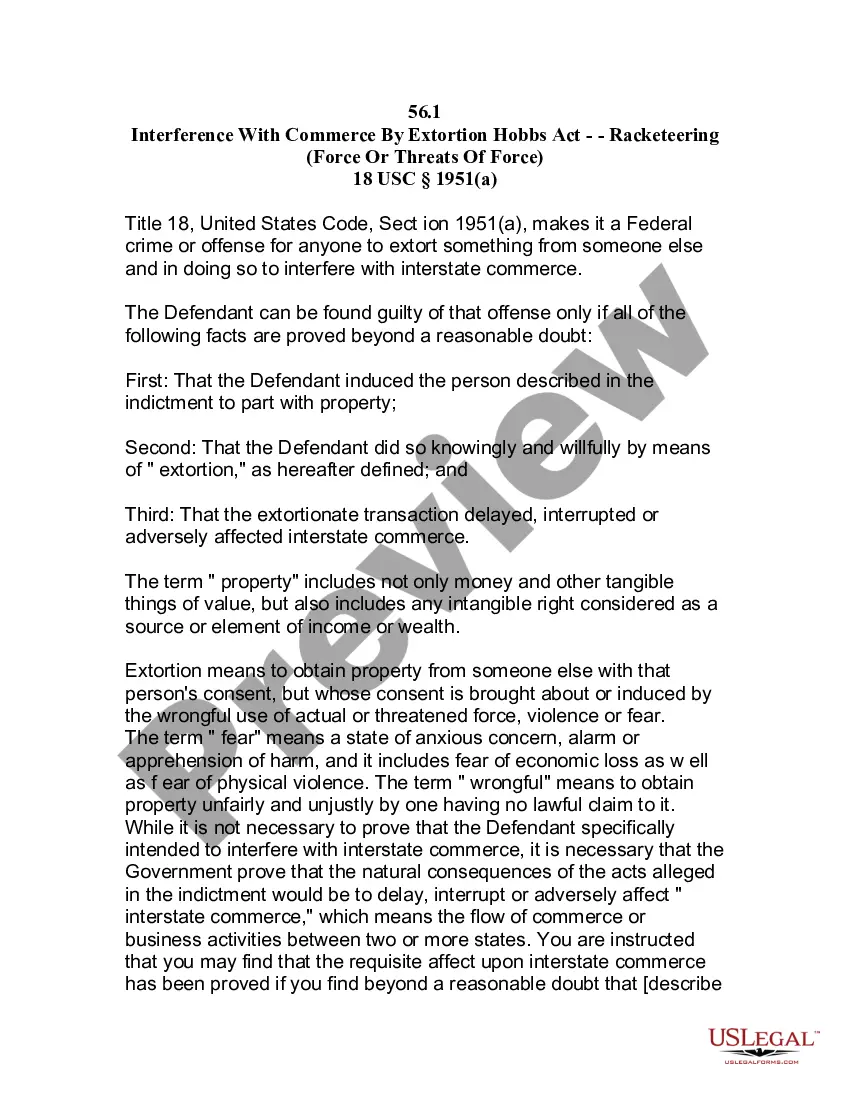
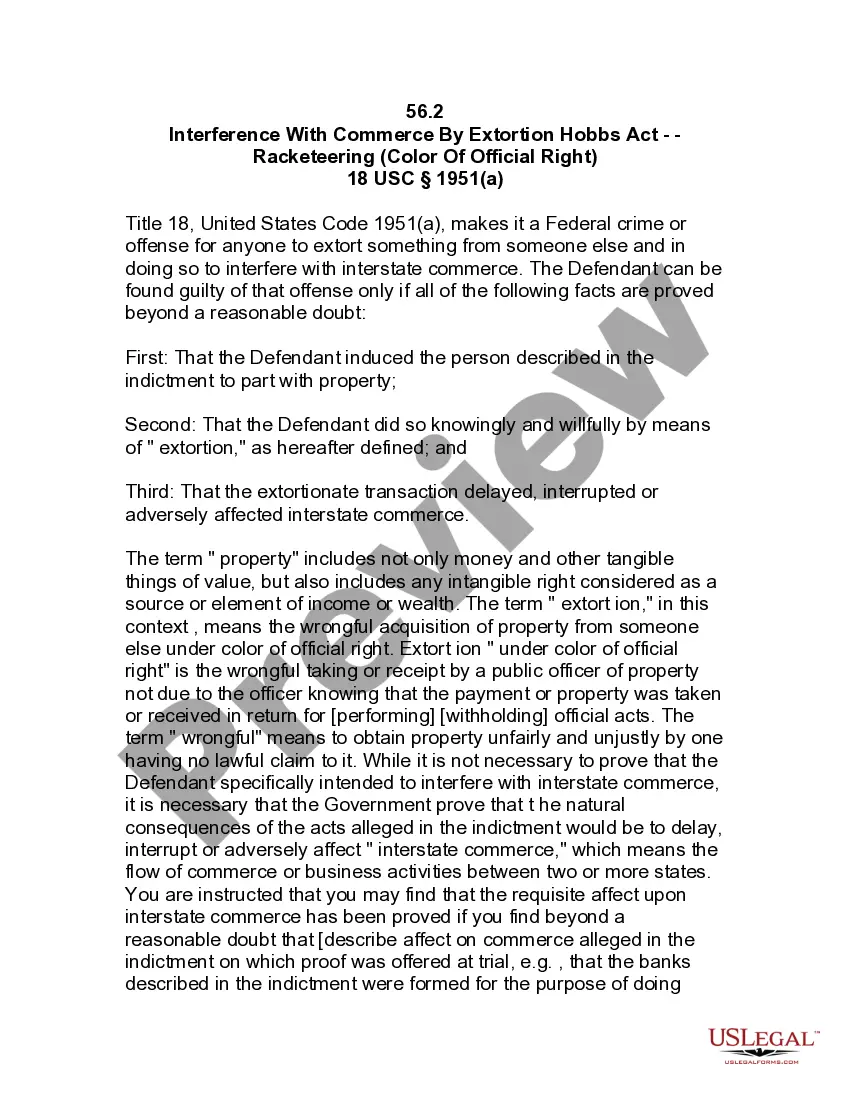
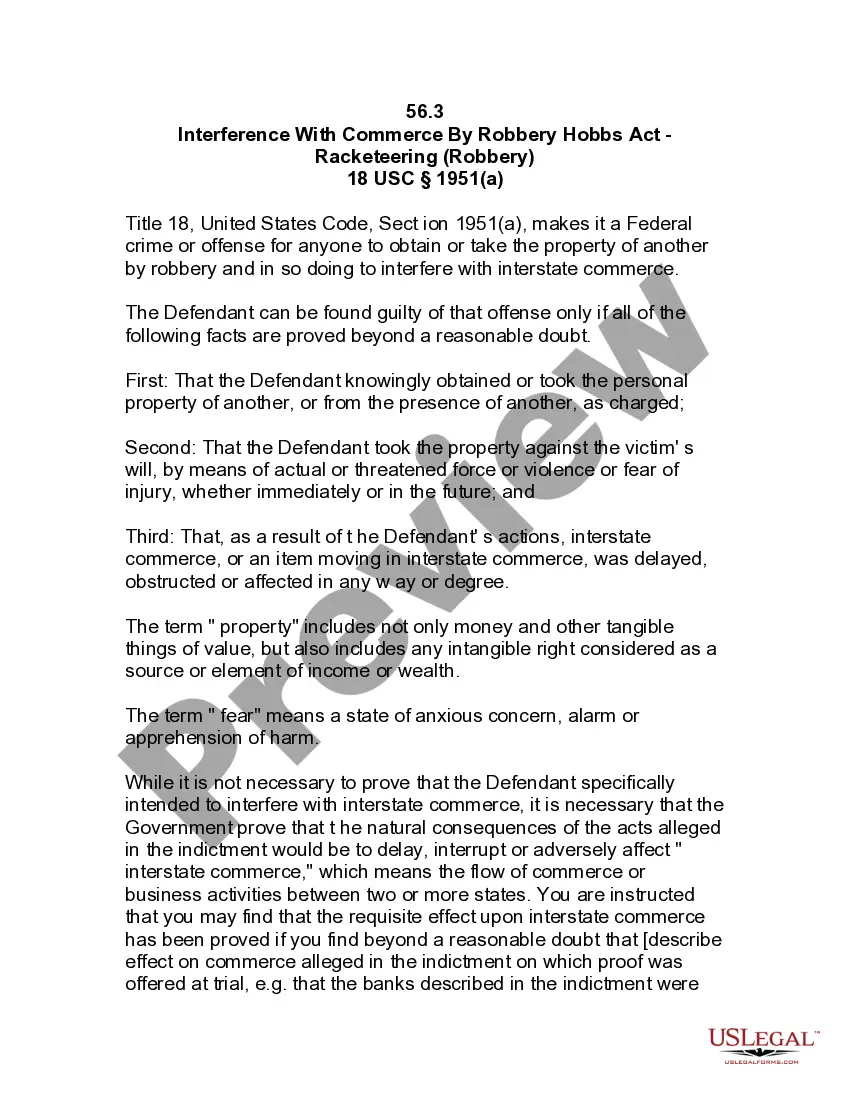
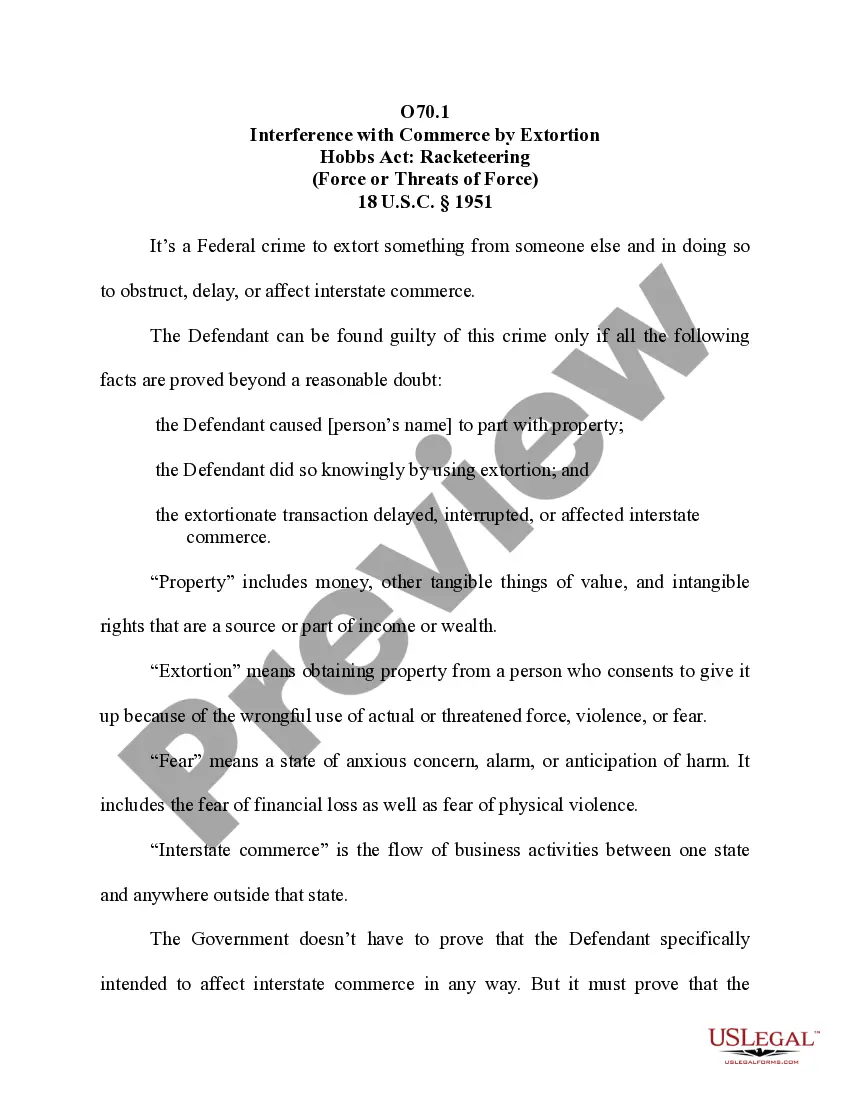
This Jury Instruction form for Interference With Commerce By Extortion under the Hobbs Act outlines a set of guidelines for juries to follow during trials involving extortion related to interstate commerce. It provides a framework for understanding the criminal implications defined by federal law, specifically 18 USC Section 1951(a), and is tailored to help juries assess the evidence brought forth in such cases.
What’s included in this form
- Legal definition of extortion as it pertains to interstate commerce.
- Criteria for establishing guilt beyond a reasonable doubt, including proof of property inducement and intention.
- Explanation of terms such as "property," "extortion," and "wrongful use."
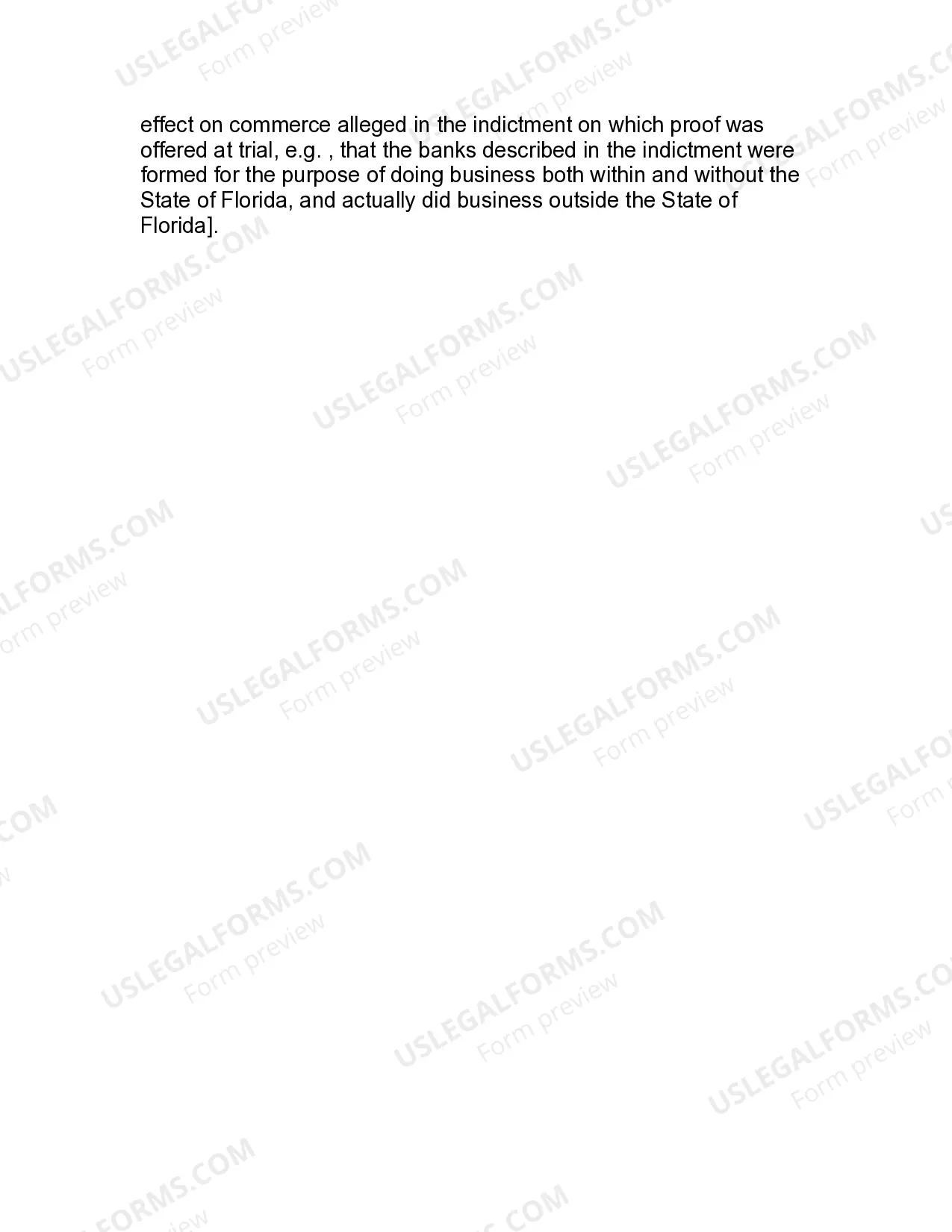
- Evidence requirements for showing how the alleged actions affected interstate commerce.
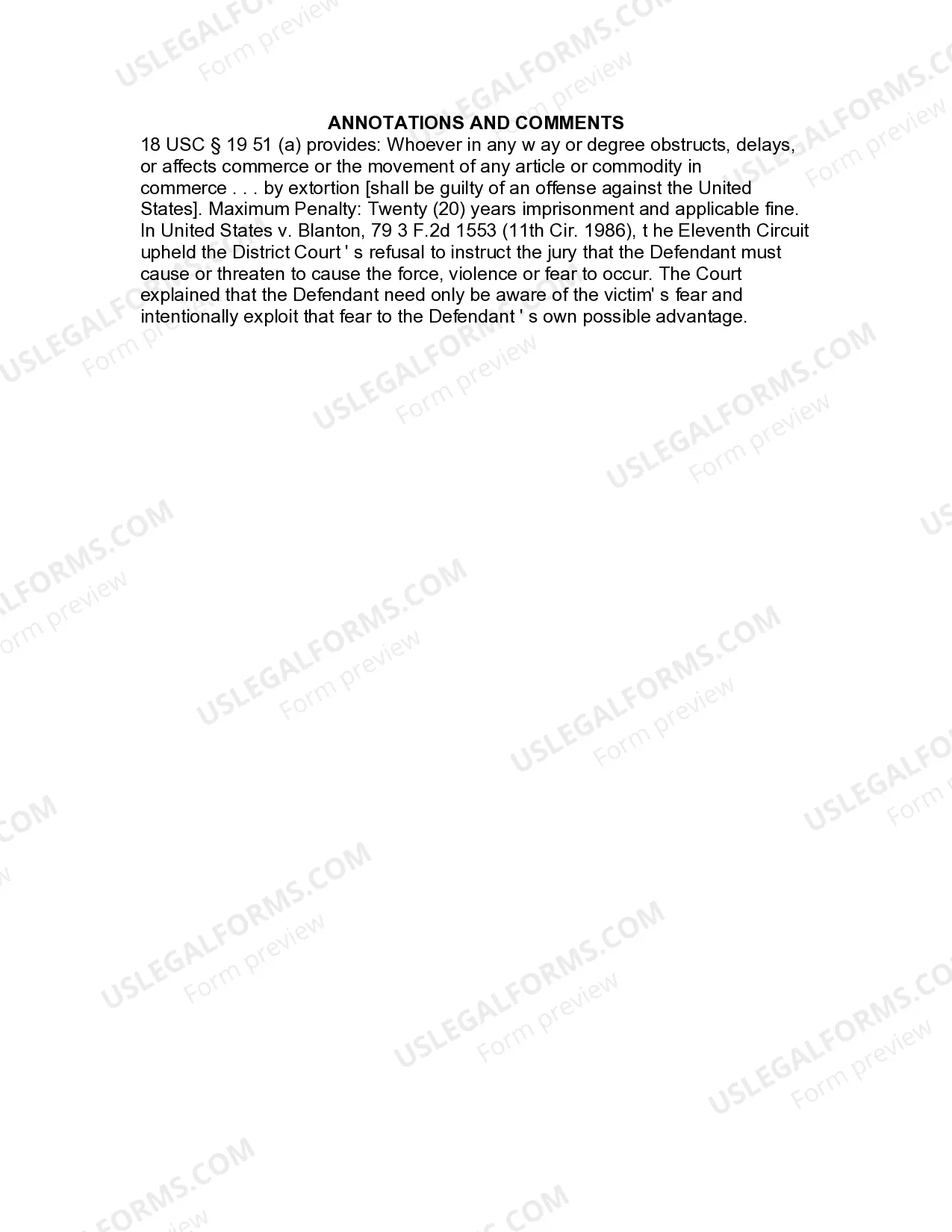
- Possible penalties for violations under the Hobbs Act, including imprisonment and fines.
When this form is needed
This form should be utilized in federal court trials when a defendant is accused of extorting property in a manner that affects interstate commerce. It serves as a guide for jurors to evaluate the charges against the defendant and determine their verdict based on the evidence presented during the trial.
Intended users of this form
- Attorneys preparing jury instructions for cases involving extortion under the Hobbs Act.
- Judges overseeing trials related to interstate commerce extortion cases.
- Legal professionals seeking standardized jury instruction templates for educational or reference purposes.
Completing this form step by step
- Review the legal definitions provided to ensure accurate comprehension of terms.
- Assess the evidence based on the criteria established within the form.
- Modify the sample questions as necessary to fit the specifics of the case being tried.
- Present the finalized jury instructions to the presiding judge for approval.
- Ensure that jurors understand each component before they begin deliberation.
Notarization guidance
This form does not typically require notarization unless specified by local law. It is intended for use in jury instructions, which do not necessitate a notarized signature to be effective.
Get your form ready online
Our built-in tools help you complete, sign, share, and store your documents in one place.
Make edits, fill in missing information, and update formatting in US Legal Forms—just like you would in MS Word.
Download a copy, print it, send it by email, or mail it via USPS—whatever works best for your next step.
Sign and collect signatures with our SignNow integration. Send to multiple recipients, set reminders, and more. Go Premium to unlock E-Sign.
If this form requires notarization, complete it online through a secure video call—no need to meet a notary in person or wait for an appointment.
We protect your documents and personal data by following strict security and privacy standards.

Make edits, fill in missing information, and update formatting in US Legal Forms—just like you would in MS Word.

Download a copy, print it, send it by email, or mail it via USPS—whatever works best for your next step.

Sign and collect signatures with our SignNow integration. Send to multiple recipients, set reminders, and more. Go Premium to unlock E-Sign.

If this form requires notarization, complete it online through a secure video call—no need to meet a notary in person or wait for an appointment.

We protect your documents and personal data by following strict security and privacy standards.
Typical mistakes to avoid
- Failing to provide clear definitions of key terms which may confuse jurors.
- Not tailoring the sample questions to fit the specific details of the case.
- Overcomplicating the instructions, making them difficult for jurors to follow.
Benefits of using this form online
- Easy access to professionally drafted jury instructions tailored for federal law.
- The ability to quickly modify sections to suit specific case needs.
- Immediate download options, allowing for quick use in legal proceedings.
Legal use & context
- This form is backed by federal law and is relevant in cases of alleged extortion affecting interstate commerce.
- It is crucial for ensuring that jurors properly understand the legal standards pertinent to their deliberations.
- Utilization of this form can help avoid legal challenges regarding jury instructions that may arise during or after a trial.
Main things to remember
- The form provides essential jury instructions for cases under the Hobbs Act.
- Understanding the requirements for establishing guilt is vital for jurors.
- Using this form helps ensure clarity and consistency in legal proceedings.
Glossary of terms used in this form
- Extortion: Obtaining property from someone by wrongful use of actual or threatened force.
- Interstate commerce: Economic activities that cross state lines.
- Wrongful use: Obtaining property unfairly, without a lawful claim to it.
Looking for another form?










Form popularity
FAQ
The Hobbs Act criminalizes both robbery and extortion:"extortion" means the obtaining of property from another, with his consent, induced by wrongful use of actual or threatened force, violence, or fear, or under color of official right.
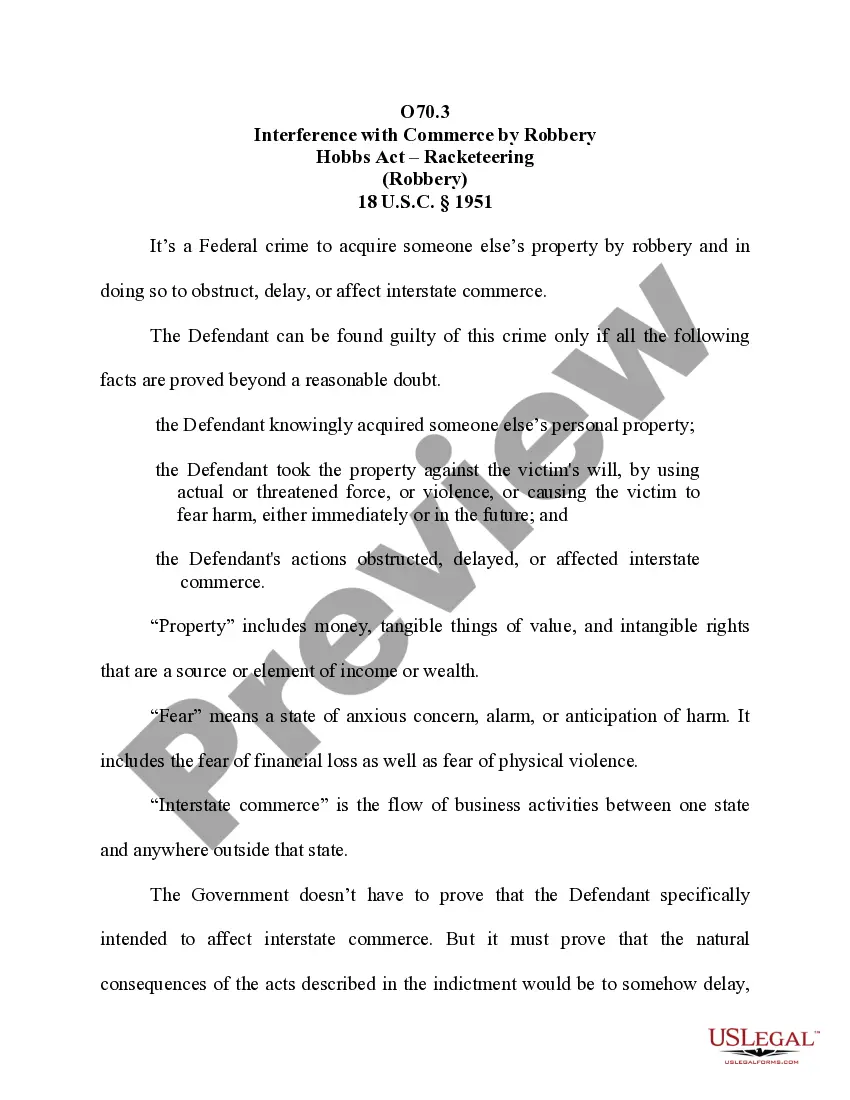
The Hobbs Act prohibits actual or attempted robbery or extortion affecting interstate or foreign commerce "in any way or degree." Section 1951 also proscribes conspiracy to commit robbery or extortion without reference to the conspiracy statute at 18 U.S.C. § 371.
The Hobbs Act criminalizes both robbery and extortion:"extortion" means the obtaining of property from another, with his consent, induced by wrongful use of actual or threatened force, violence, or fear, or under color of official right.
Interference in interstate commerce is any instance in which a person delays, obstructs or otherwise affects commerce. This can be the sale of or the movement of any type of commodity.
The defendant knew the threat was wrongful. The threat included a demand for money, property or services. This threat could be express or implied. The plaintiff complied with the demand.
Hobbs Act -- Generally. The Hobbs Act prohibits actual or attempted robbery or extortion affecting interstate or foreign commerce "in any way or degree." Section 1951 also proscribes conspiracy to commit robbery or extortion without reference to the conspiracy statute at 18 U.S.C. § 371.
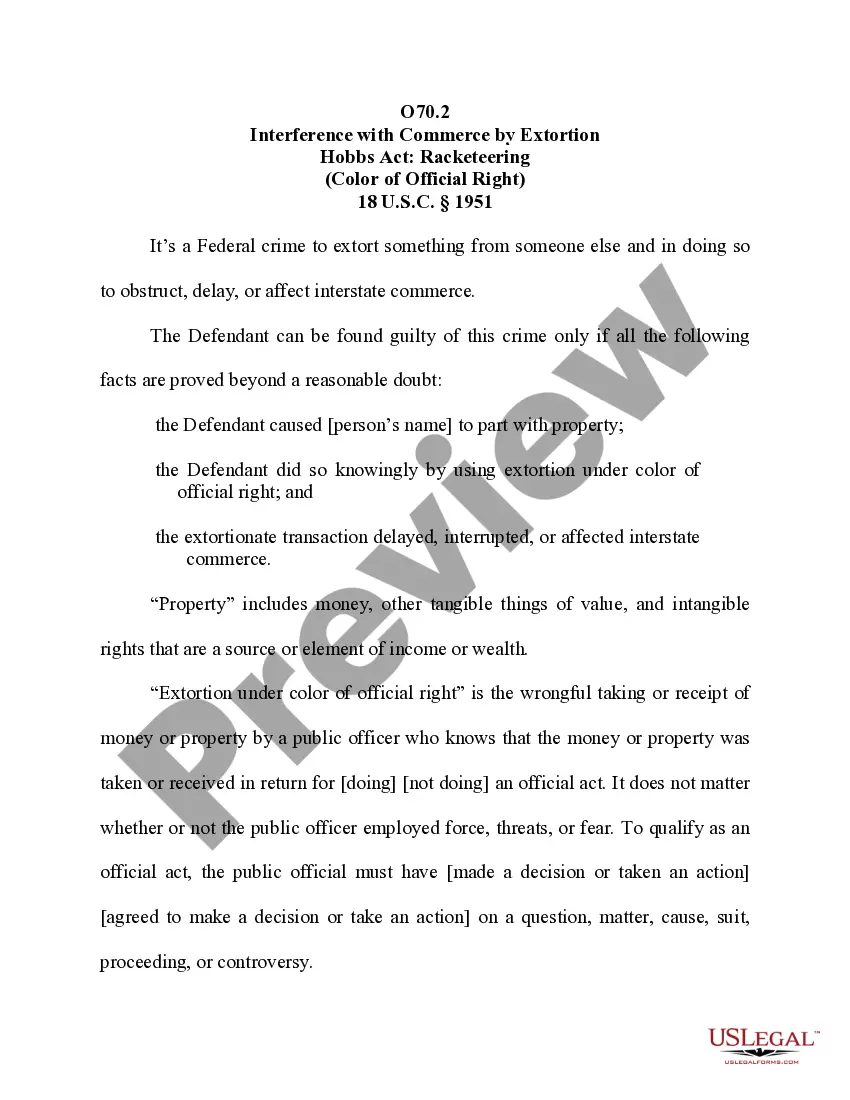
The wrongful taking by a public officer of money or property not due to him or his office, whether or not the taking was accomplished by force, threats, or use of fear.