Jury Instruction - 1.7.1 Fair Labor Standards Act 29 USC Sect. 201 et seq. General Instruction
Understanding this form
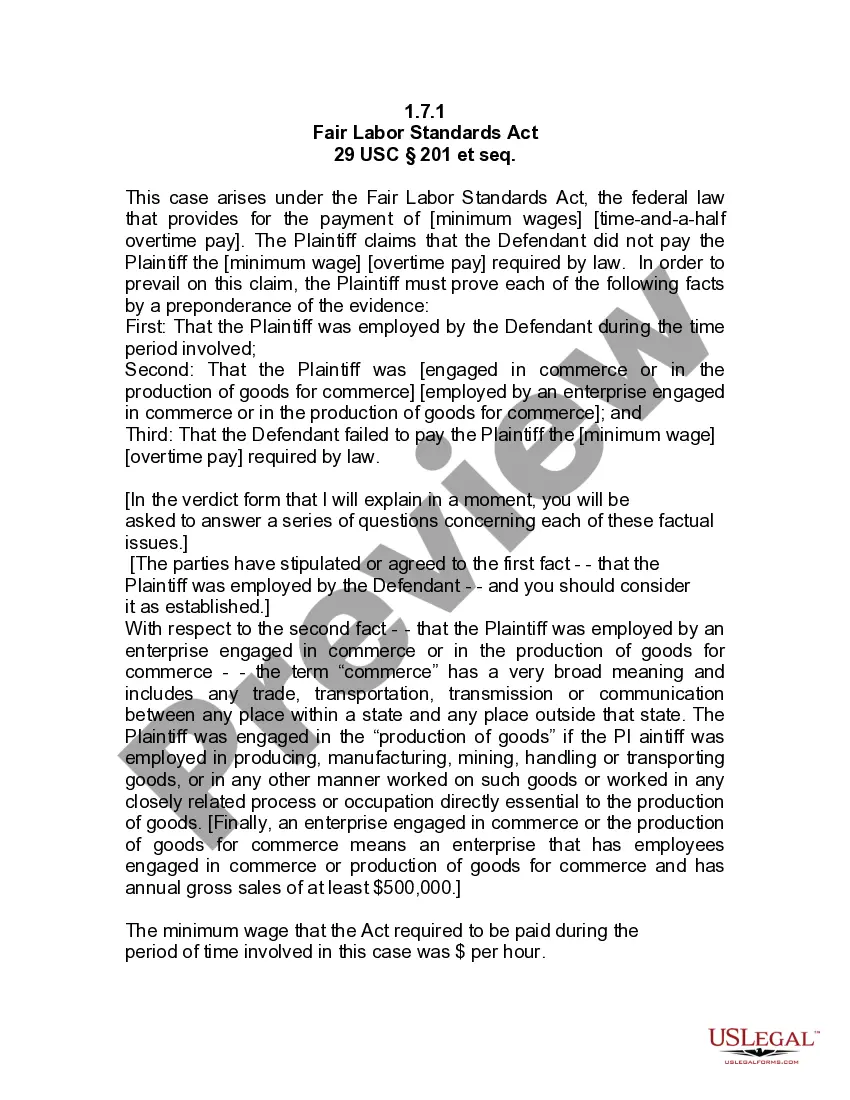
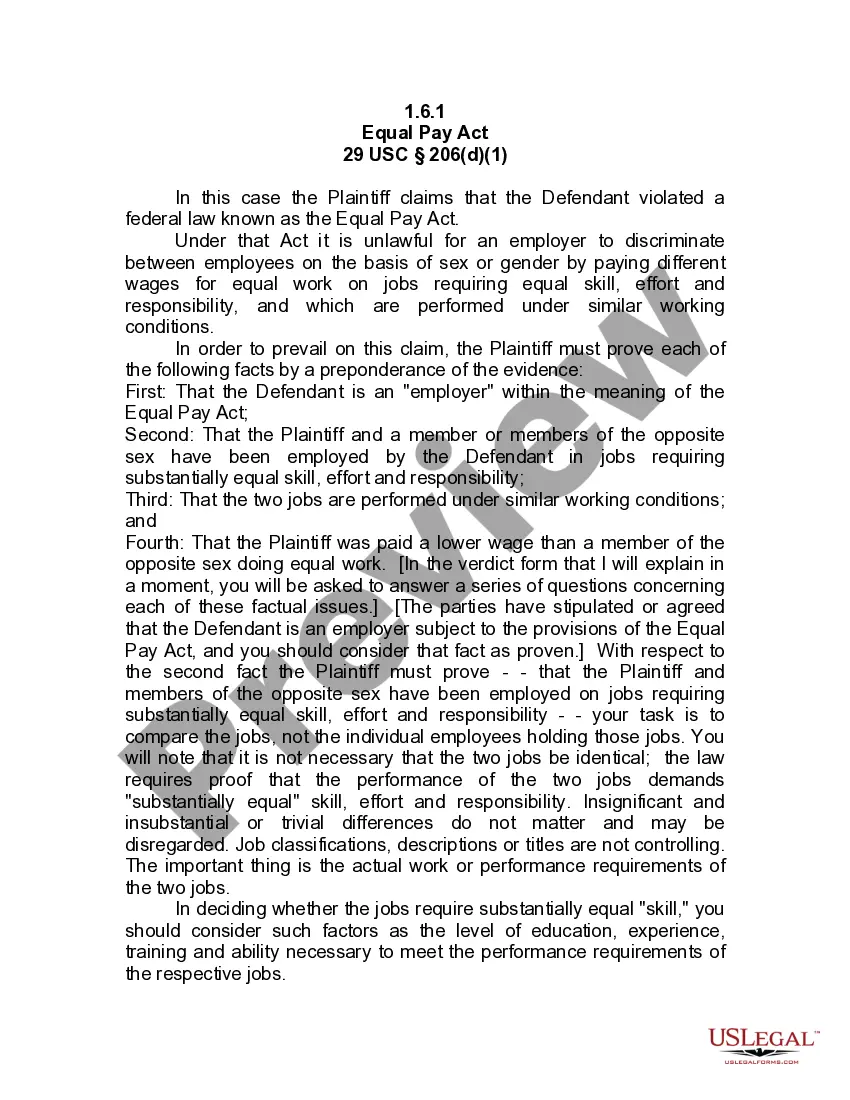
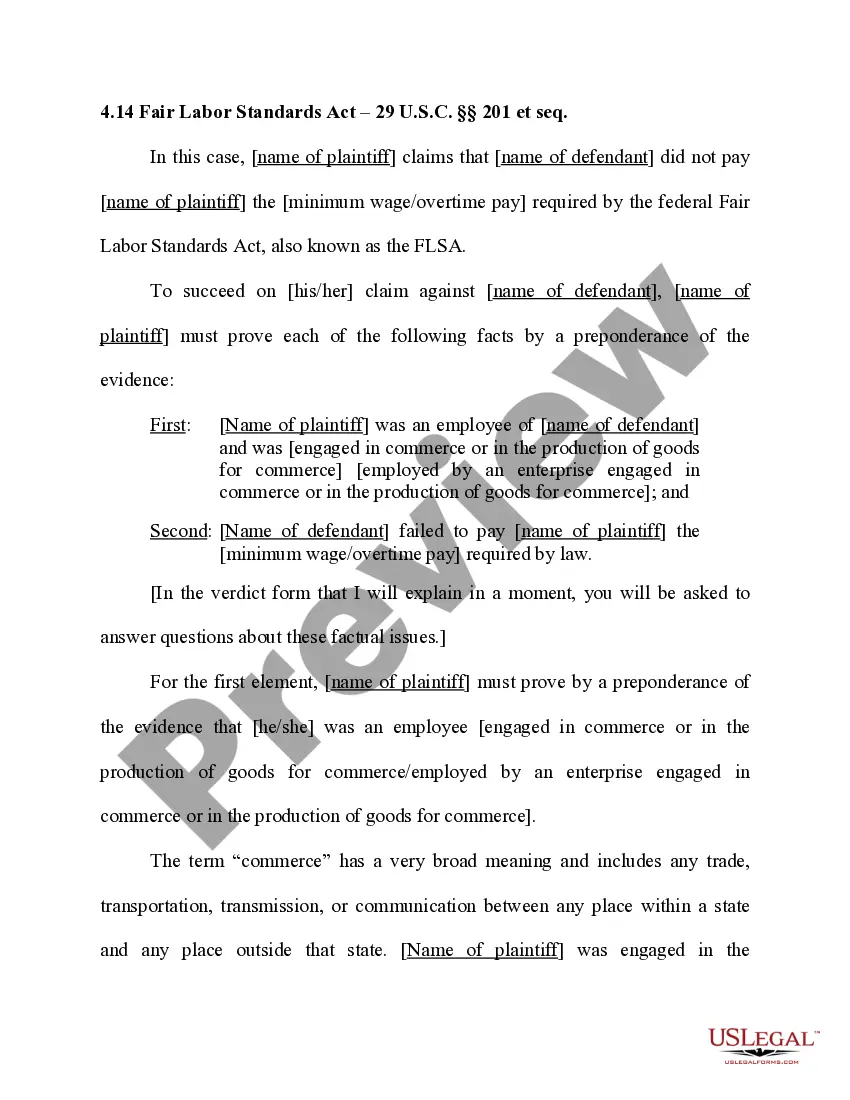
The Jury Instruction - 1.7.1 Fair Labor Standards Act form provides essential guidelines for jurors in cases involving claims under the Fair Labor Standards Act (FLSA). This legal form outlines the responsibilities and legal obligations regarding minimum wage and overtime pay, helping jurors understand the intricacies of the case at hand. Unlike other legal instructions, this form is specifically tailored for cases governed by the FLSA.
Key components of this form
- General information about the Fair Labor Standards Act and its provisions.
- Criteria for establishing the plaintiff's claims related to employment and wage requirements.
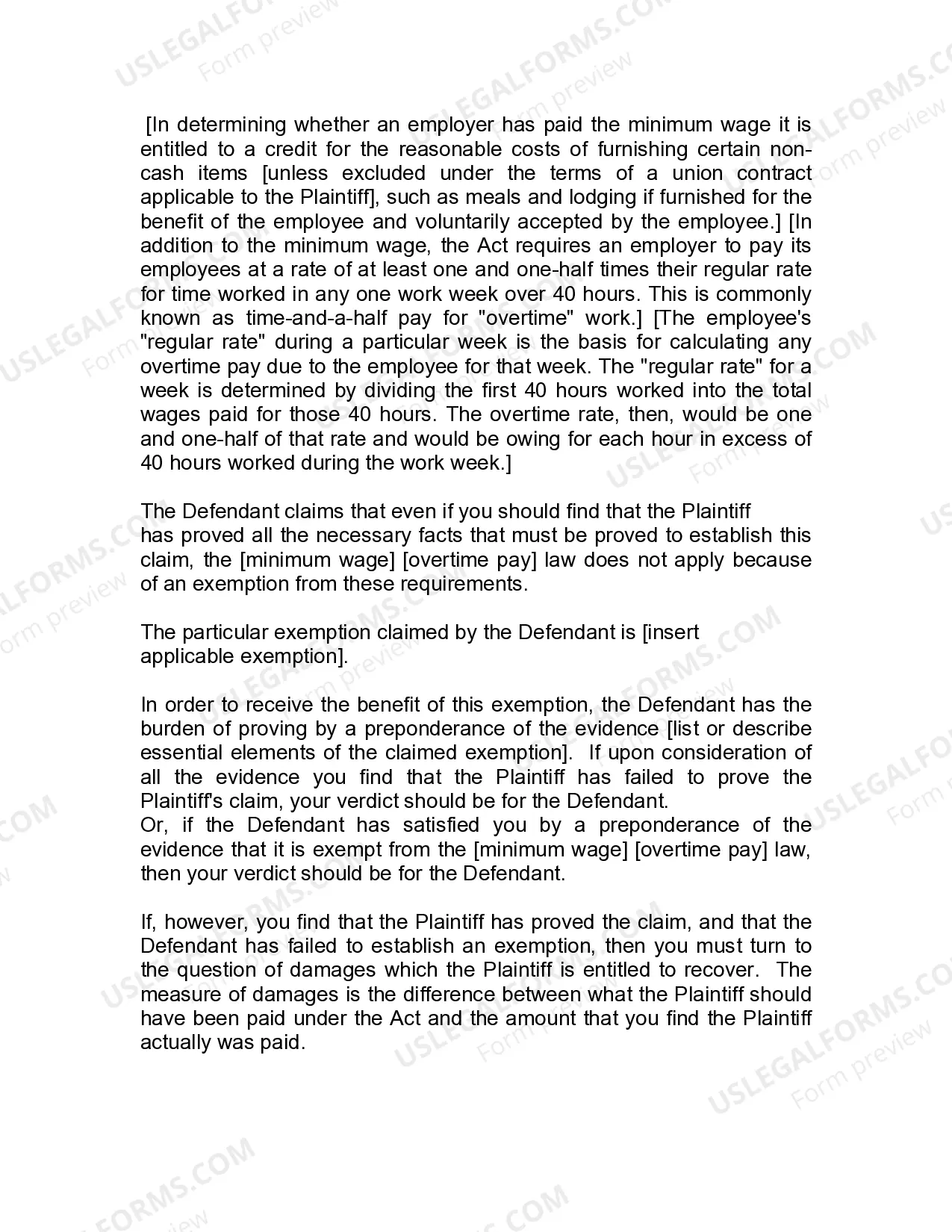
- Instructions for determining if the defendant qualifies for any exemptions from the FLSA.
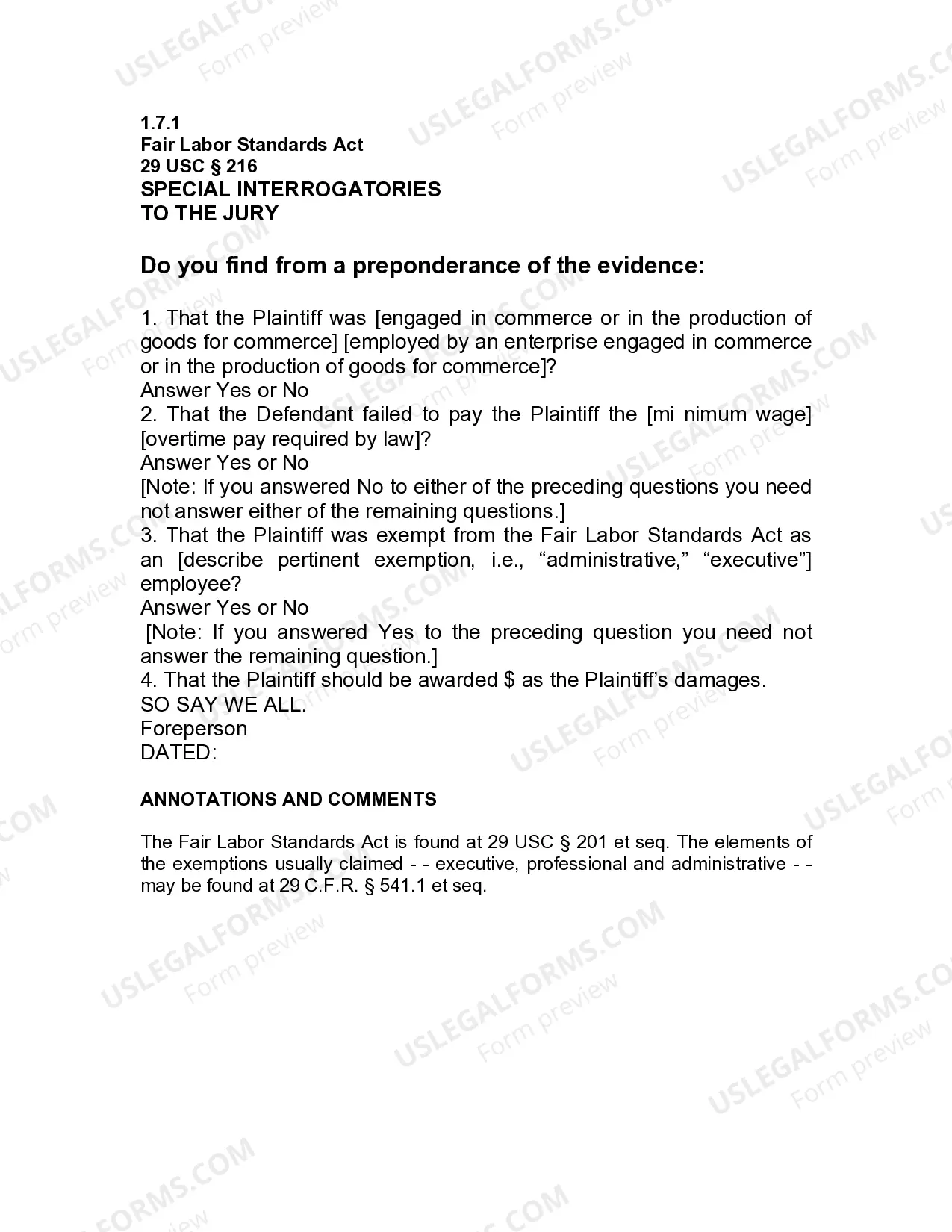
- Special interrogatories for the jury to consider regarding the evidence presented.
- A detailed explanation of how damages are calculated if the plaintiff prevails.
When this form is needed
This form is utilized in legal proceedings where a plaintiff claims that their employer has not adhered to the requirements of the Fair Labor Standards Act, specifically regarding minimum wage and overtime pay. It is essential in cases where employees believe they are entitled to compensation that they have not received according to federal law. This instruction aids jurors in making informed decisions based on the evidence and applicable laws.
Who should use this form
- Attorneys representing plaintiffs or defendants in wage and hour disputes.
- Judges presiding over cases involving claims under the FLSA.
- Juries tasked with making determinations in such cases.
Instructions for completing this form
- Review the elements of the claim to ensure they align with the FLSA provisions.
- Clearly state the employment period and nature of the plaintiff's work.
- Gather evidence supporting the minimum wage and overtime claims.
- Assess any exemptions claimed by the defendant and prepare evidence accordingly.
- Fill out the special interrogatories for the jury and ensure clarity in wording.
Does this document require notarization?
Notarization is generally not required for this form. However, certain states or situations might demand it. You can complete notarization online through US Legal Forms, powered by Notarize, using a verified video call available anytime.
Get your form ready online
Our built-in tools help you complete, sign, share, and store your documents in one place.
Make edits, fill in missing information, and update formatting in US Legal Forms—just like you would in MS Word.
Download a copy, print it, send it by email, or mail it via USPS—whatever works best for your next step.
Sign and collect signatures with our SignNow integration. Send to multiple recipients, set reminders, and more. Go Premium to unlock E-Sign.
If this form requires notarization, complete it online through a secure video call—no need to meet a notary in person or wait for an appointment.
We protect your documents and personal data by following strict security and privacy standards.

Make edits, fill in missing information, and update formatting in US Legal Forms—just like you would in MS Word.

Download a copy, print it, send it by email, or mail it via USPS—whatever works best for your next step.

Sign and collect signatures with our SignNow integration. Send to multiple recipients, set reminders, and more. Go Premium to unlock E-Sign.

If this form requires notarization, complete it online through a secure video call—no need to meet a notary in person or wait for an appointment.

We protect your documents and personal data by following strict security and privacy standards.
Avoid these common issues
- Failing to establish the plaintiff's engagement in commerce or production of goods.
- Not providing sufficient evidence for claimed exemptions by the defendant.
- Overlooking the importance of correct wage calculations when assessing damages.
Why complete this form online
- Convenience: Download and complete the form at any time.
- Editability: Tailor the form to suit the specific details of your case.
- Reliability: Access professionally drafted legal instructions validated by attorneys.
Legal use & context
- This form serves as a critical guide for jurors in understanding their role in FLSA-related cases.
- Ensures that jurors consider all relevant law when making decisions about compensation claims.
- Facilitates the fair application of laws concerning minimum wage and overtime pay.
Summary of main points
- The Jury Instruction - 1.7.1 is essential for guiding jurors in FLSA-related cases.
- Understanding employment relationships and commerce is critical for the jury's evaluation.
- Clearly defined jury interrogatories streamline the decision-making process regarding claims and defenses.
Looking for another form?







Form popularity
FAQ
The FLSA applies only to employers whose annual sales total $500,000 or more or who are engaged in interstate commerce. You might think that this would restrict the FLSA to covering only employees in large companies, but, in reality, the law covers nearly all workplaces.
The Fair Labor Standards Act (FLSA) is a federal law which establishes minimum wage, overtime pay eligibility, recordkeeping, and child labor standards affecting full-time and part-time workers in the private sector and in federal, state, and local governments.
The Fair Labor Standards Act (FLSA) establishes minimum wage, overtime pay, recordkeeping, and child labor standards affecting full-time and part-time workers in the private sector and in Federal, State, and local governments.
An exempt employee is not paid overtime wages for hours worked over 40 in a workweek. To be considered exempt from FLSA, an employee must be paid on a salary basis, and must have exempt job duties.
The Fair Labor Standards Act established the minimum wage, legislated a standard workweek, and outlawed oppressive child labor.
Employees at businesses with fewer than two employees. Employees at businesses that have an annual revenue of less than $500,000 and who do not engage in interstate commercei Railroad workers (covered instead by the Railway Labor Act) Truck drivers (covered instead by the Motor Carriers Act)
Employees who perform office or nonmanual work and are paid total annual compensation of $100,000 or morewhich must include at least $455 per week paid on a salary or fee basisare exempt from the FLSA if they regularly perform at least one of the duties of an exempt executive, administrative, or professional employee
The Fair Labor Standards Act (FLSA) establishes minimum wage, overtime pay, recordkeeping, and youth employment standards affecting employees in the private sector and in Federal, State, and local governments.
An exempt employee is not paid overtime wages for hours worked over 40 in a workweek. To be considered exempt from FLSA, an employee must be paid on a salary basis, and must have exempt job duties.Exempt Job Duties: For an employee to be considered exempt under the FLSA, their job duties must also be exempt duties.