Fair Labor Standards Act
Overview of this form
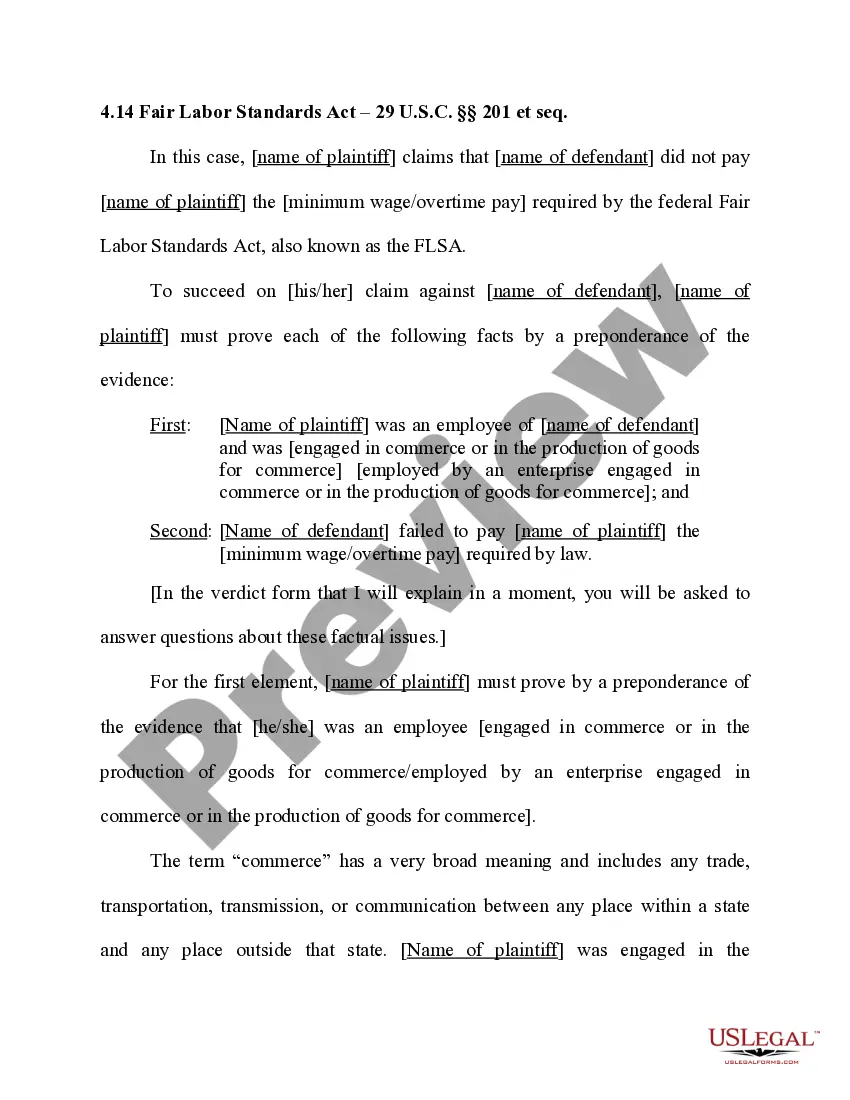
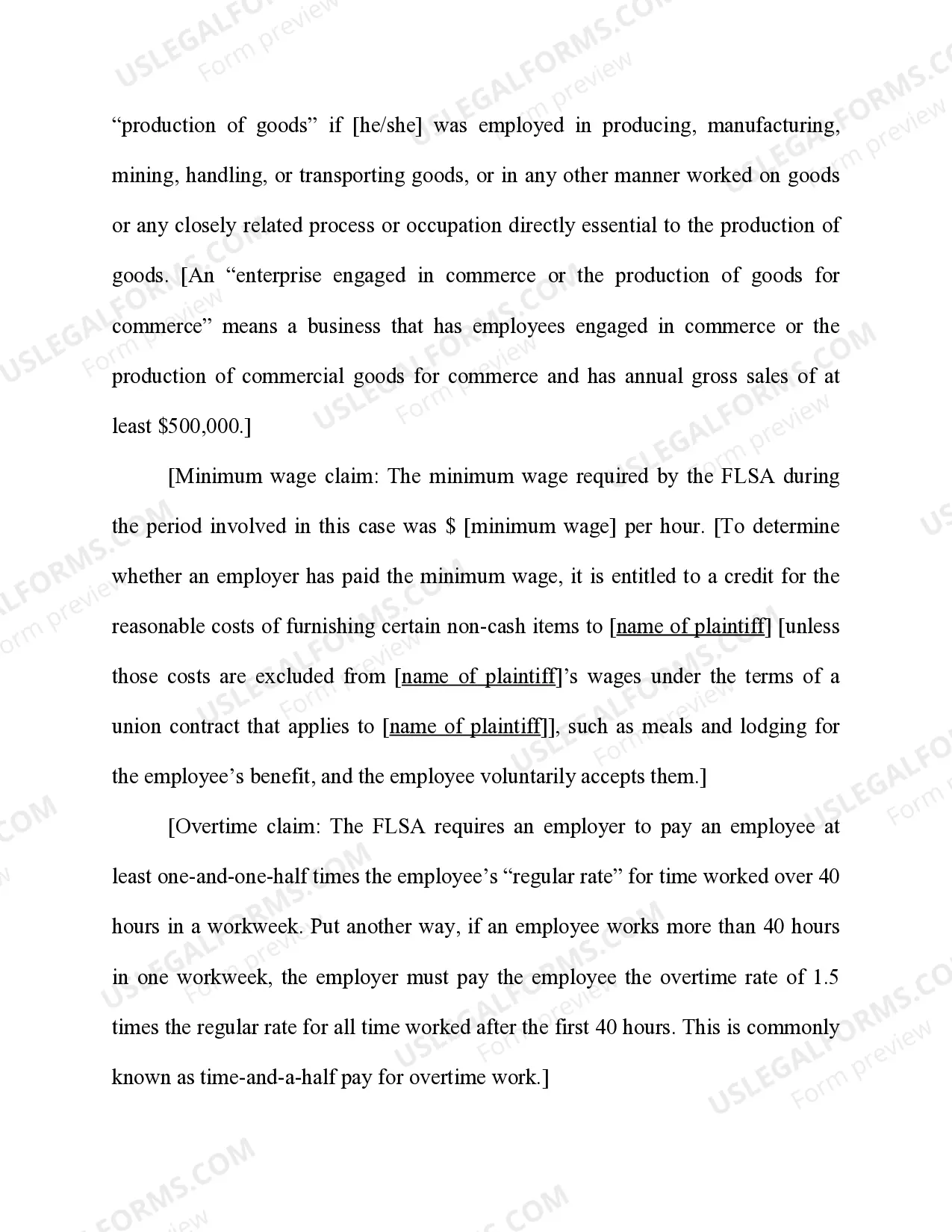
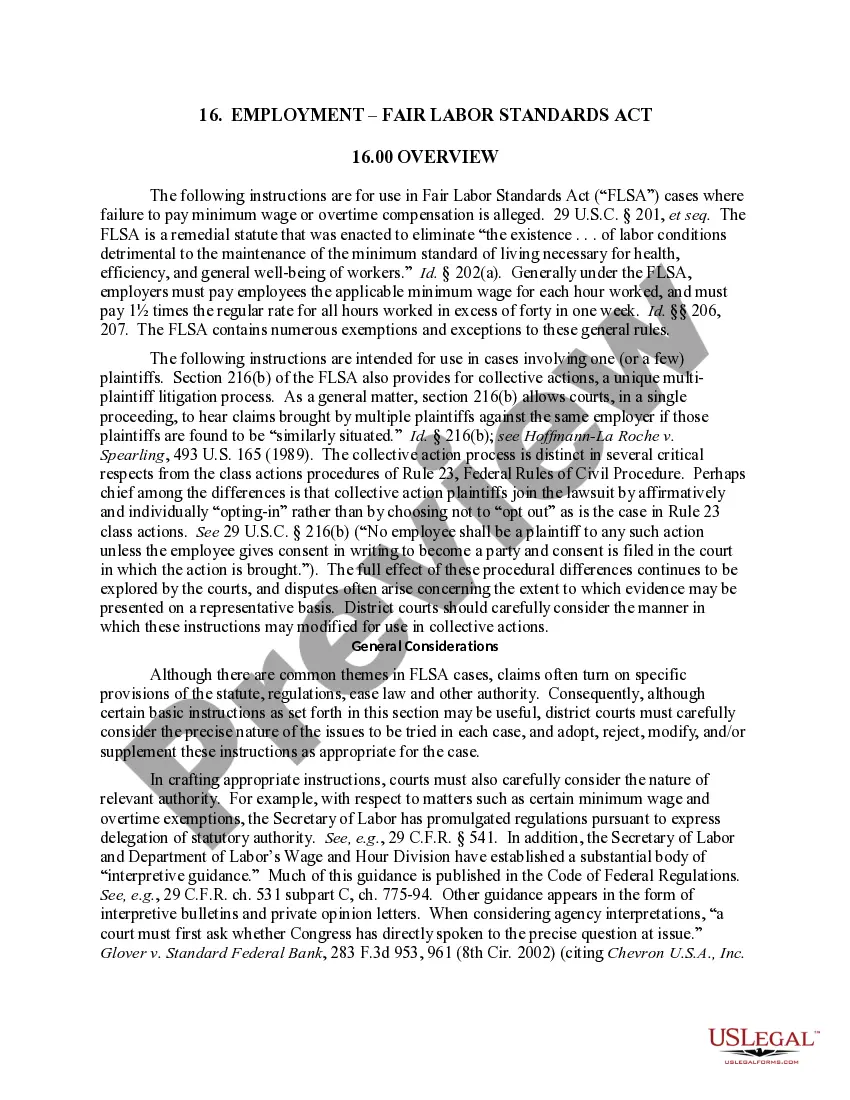
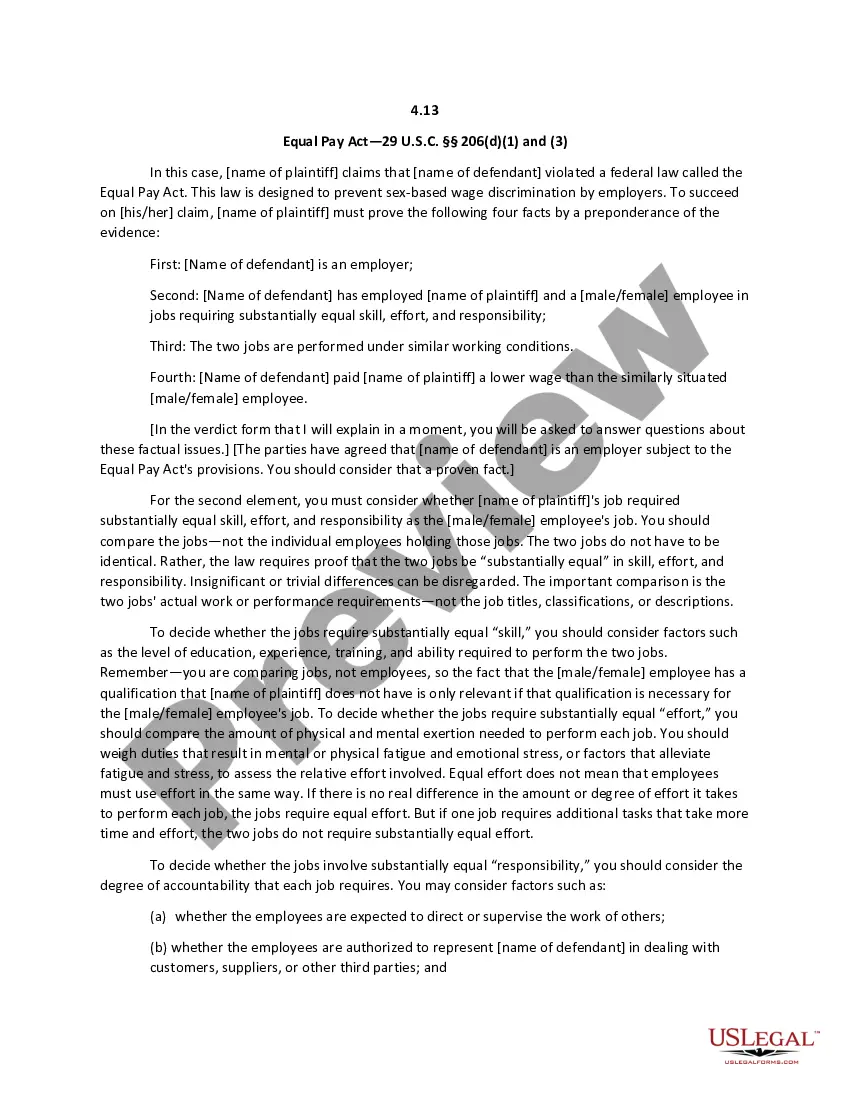
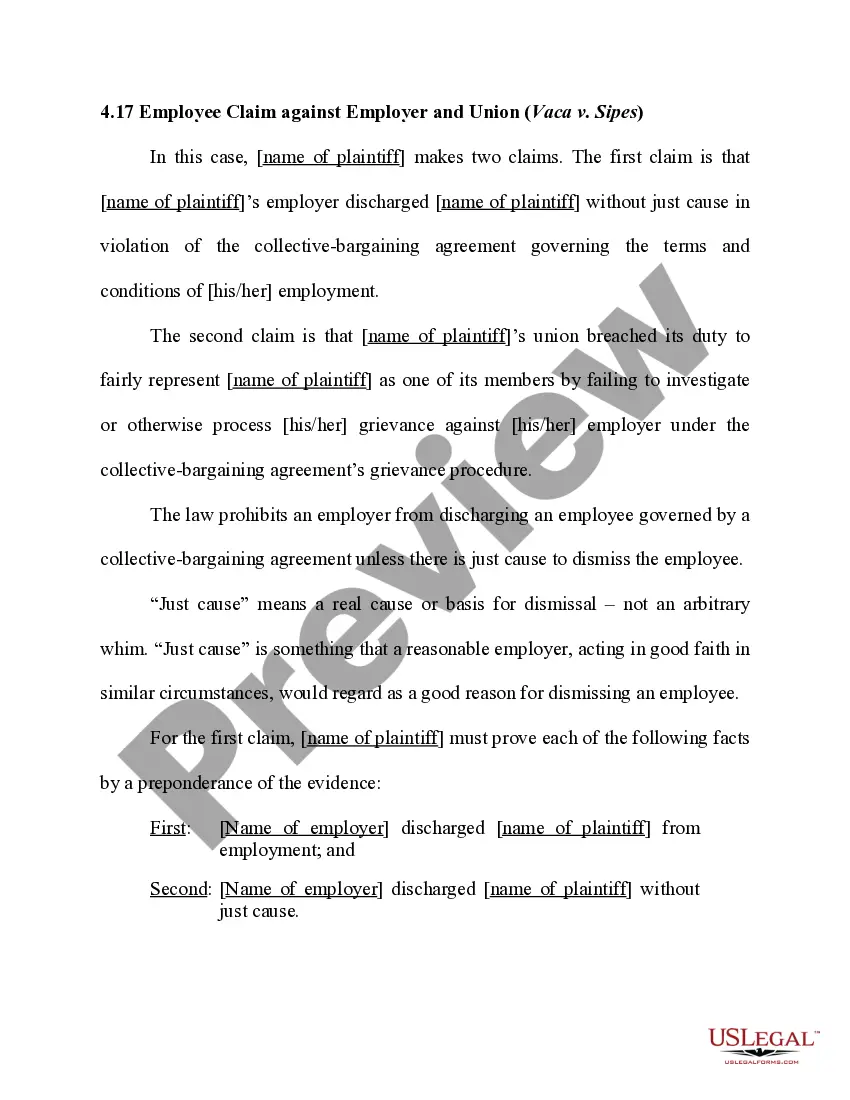
The Fair Labor Standards Act (FLSA) form is a legal document used in cases where an employee claims that they were not compensated appropriately for minimum wage or overtime work as required by federal law. This form outlines the necessary components for proving such claims and differs from other labor-related forms by specifically addressing federal standards set forth in the FLSA.
Form components explained
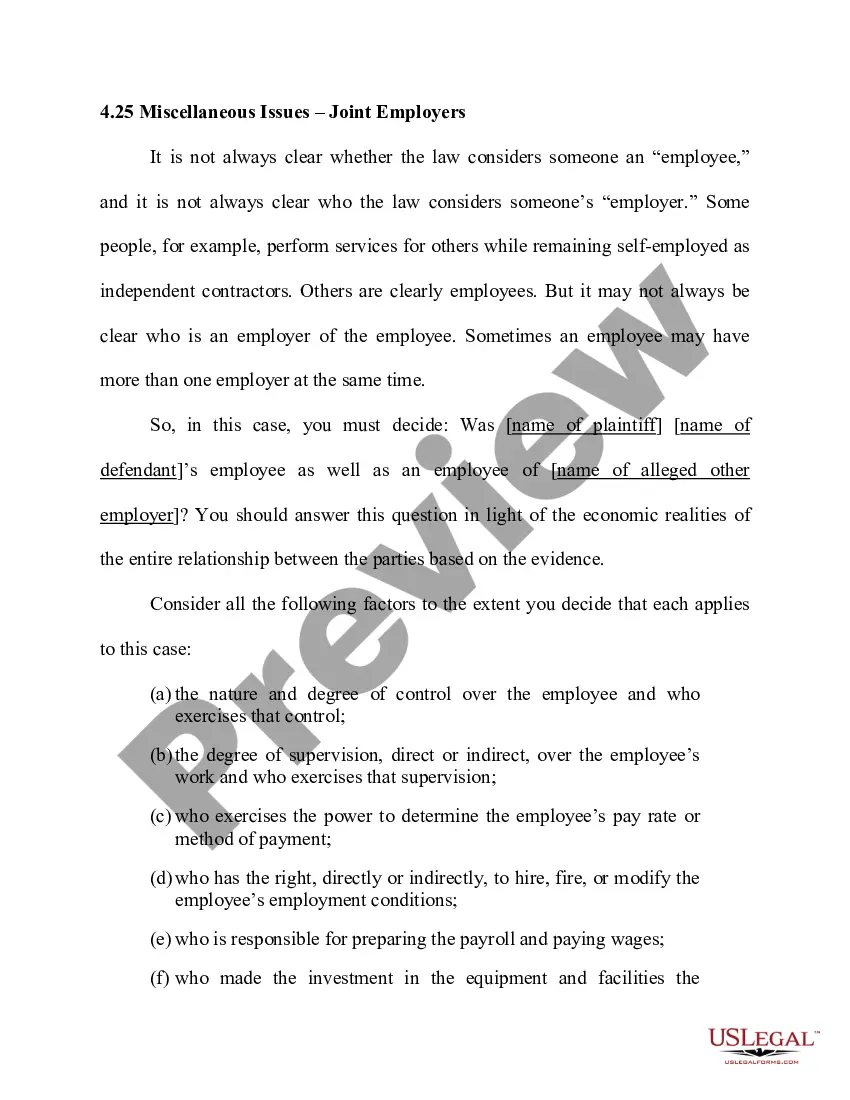
- Definition of employee and employer roles under the FLSA.
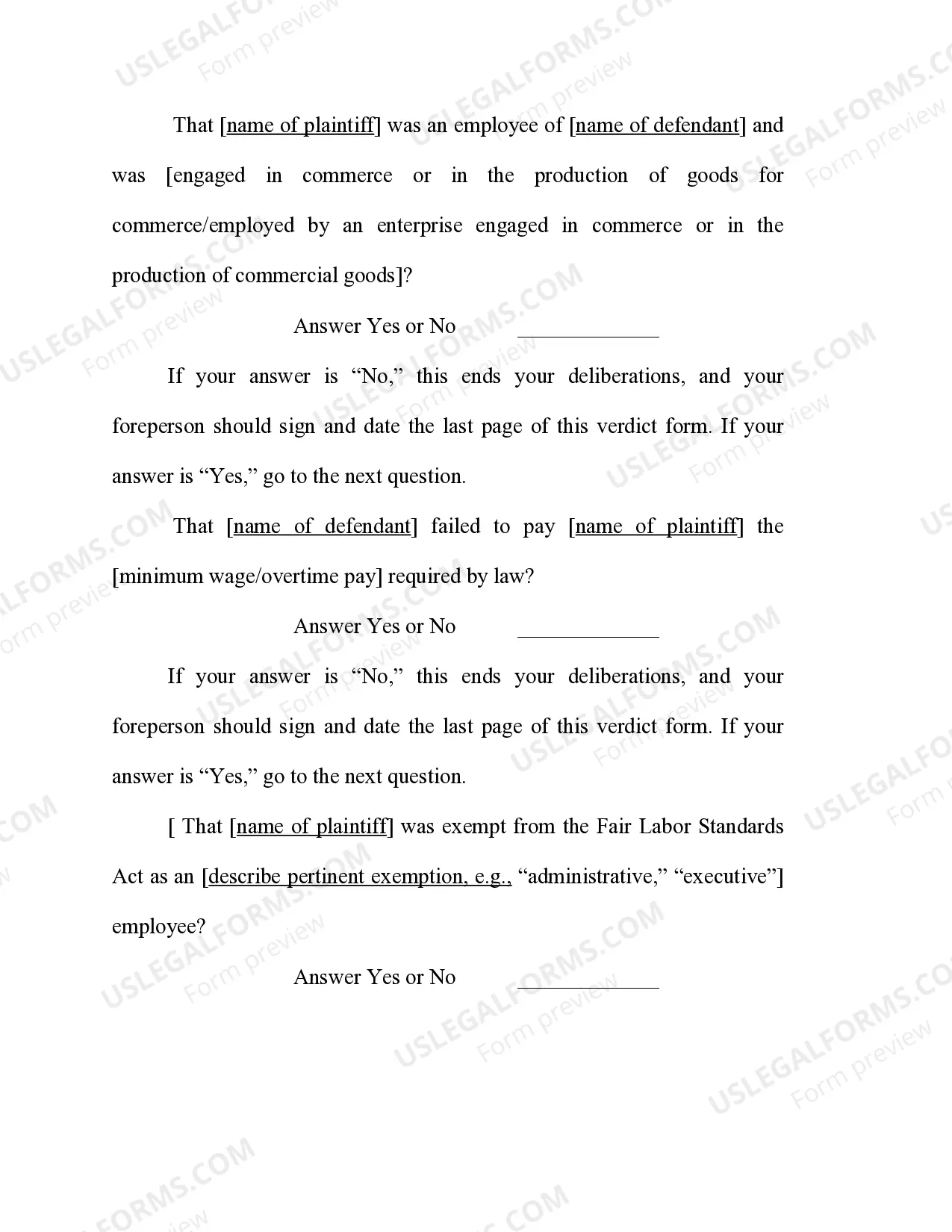
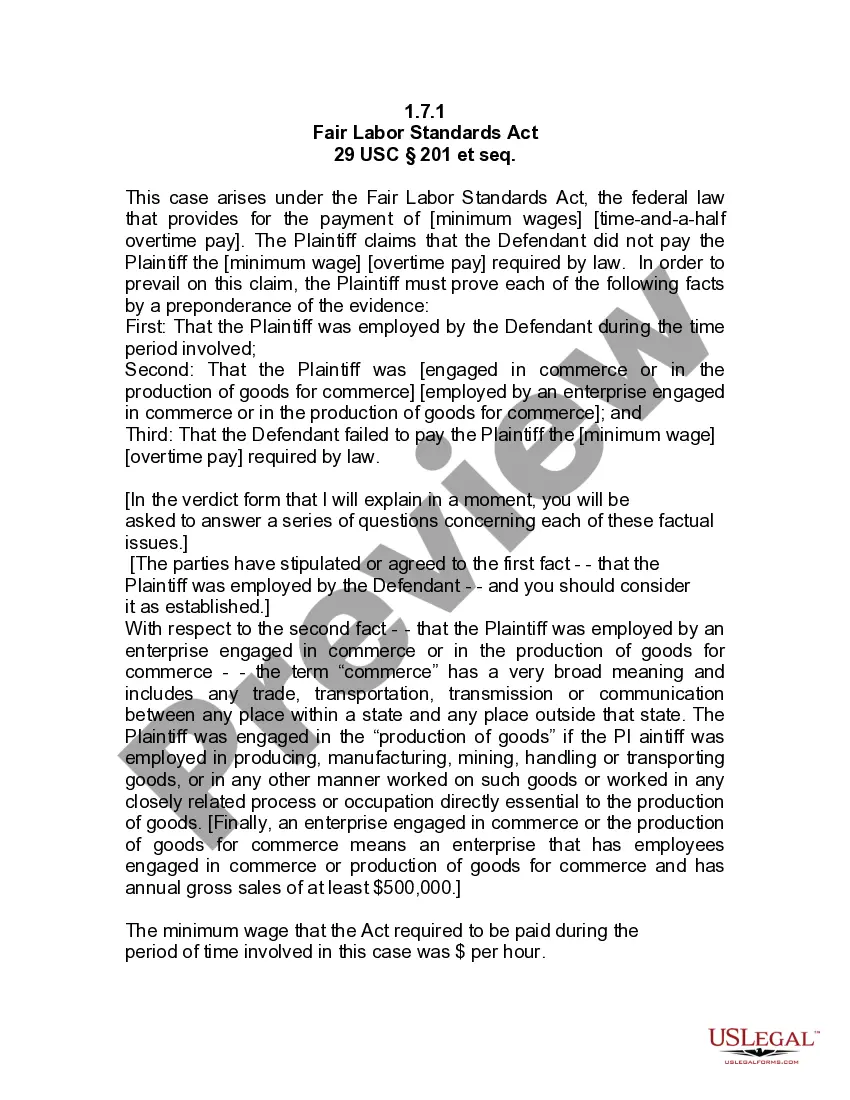
- Requirements for proving wage and overtime claims.
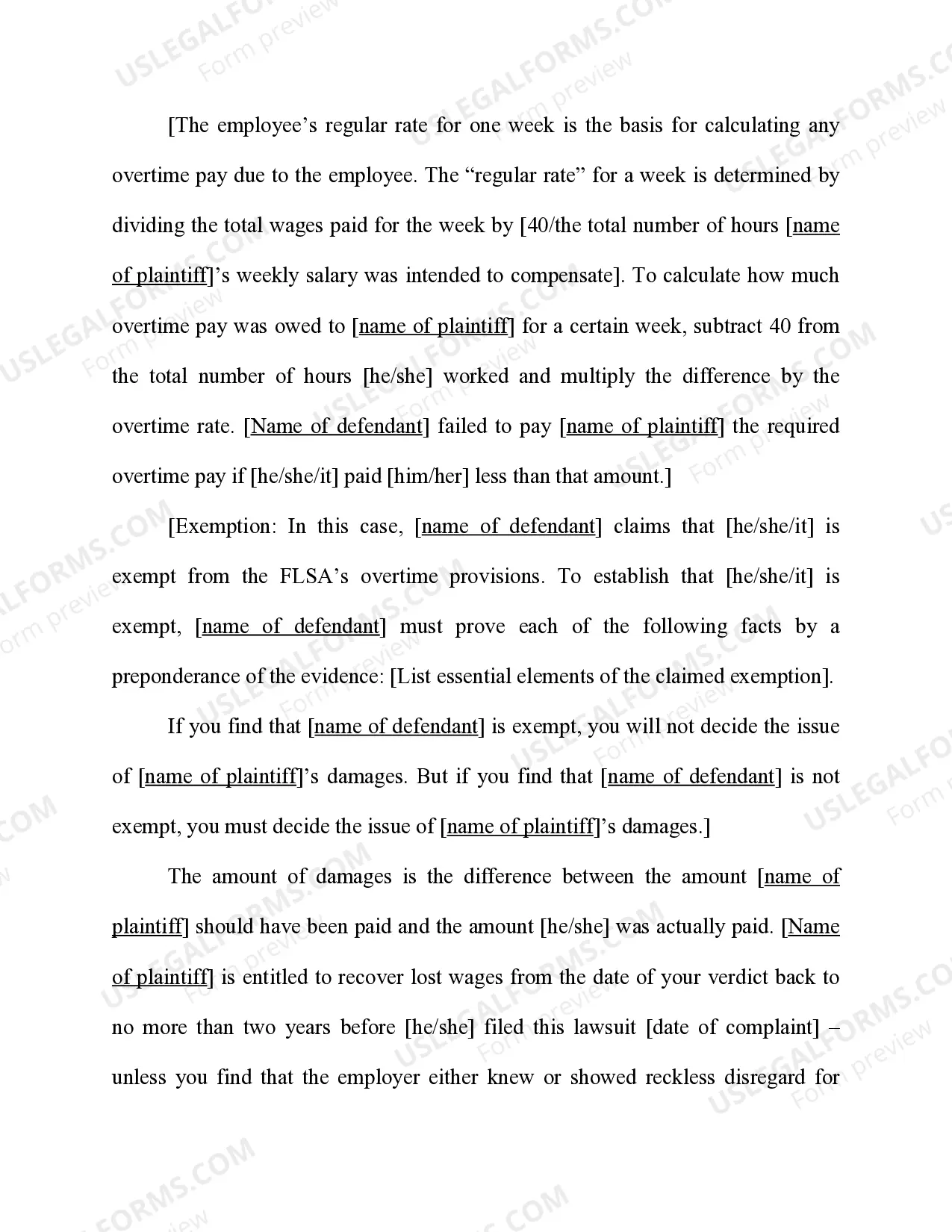
- Exemptions from FLSA provisions.
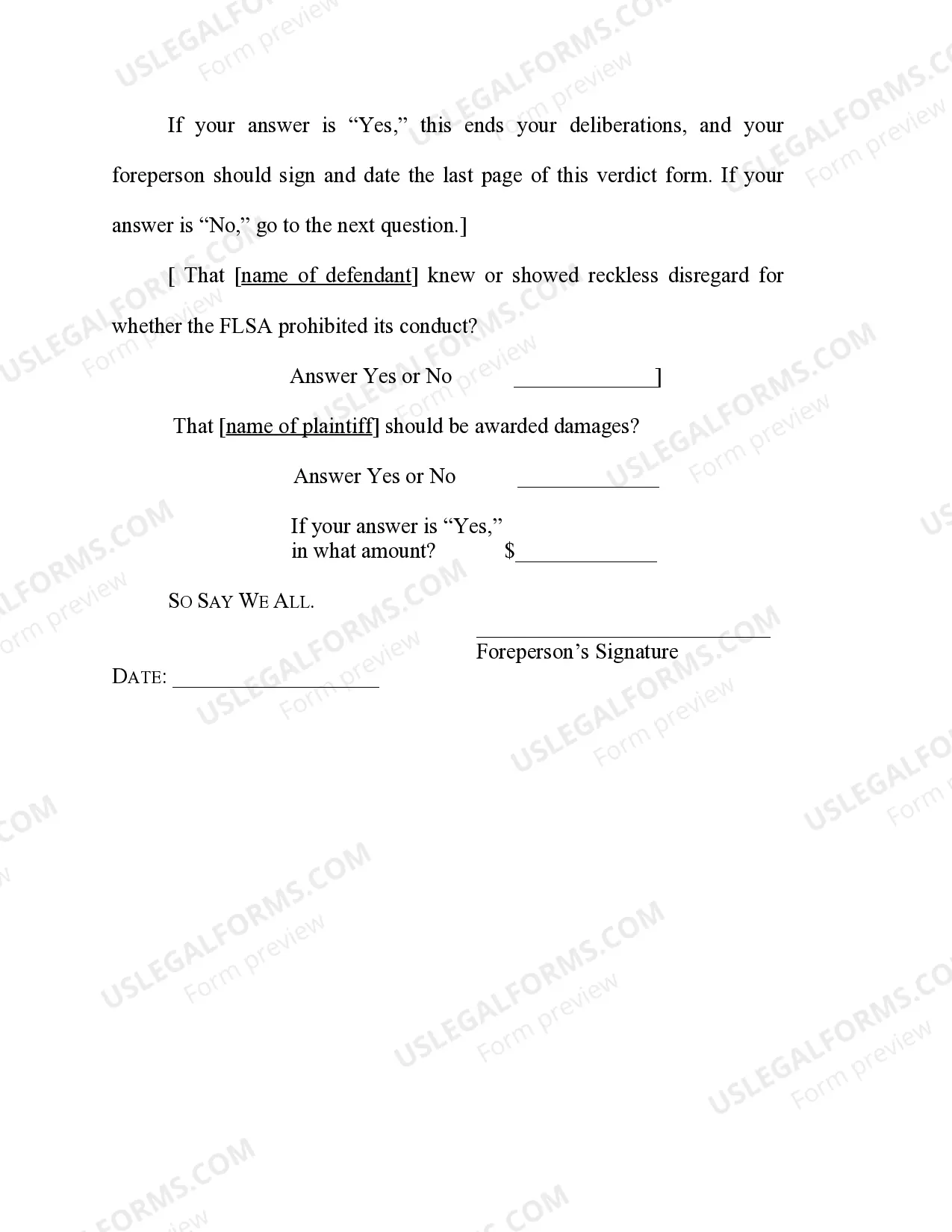
- Calculation of damages based on unpaid wages and overtime.
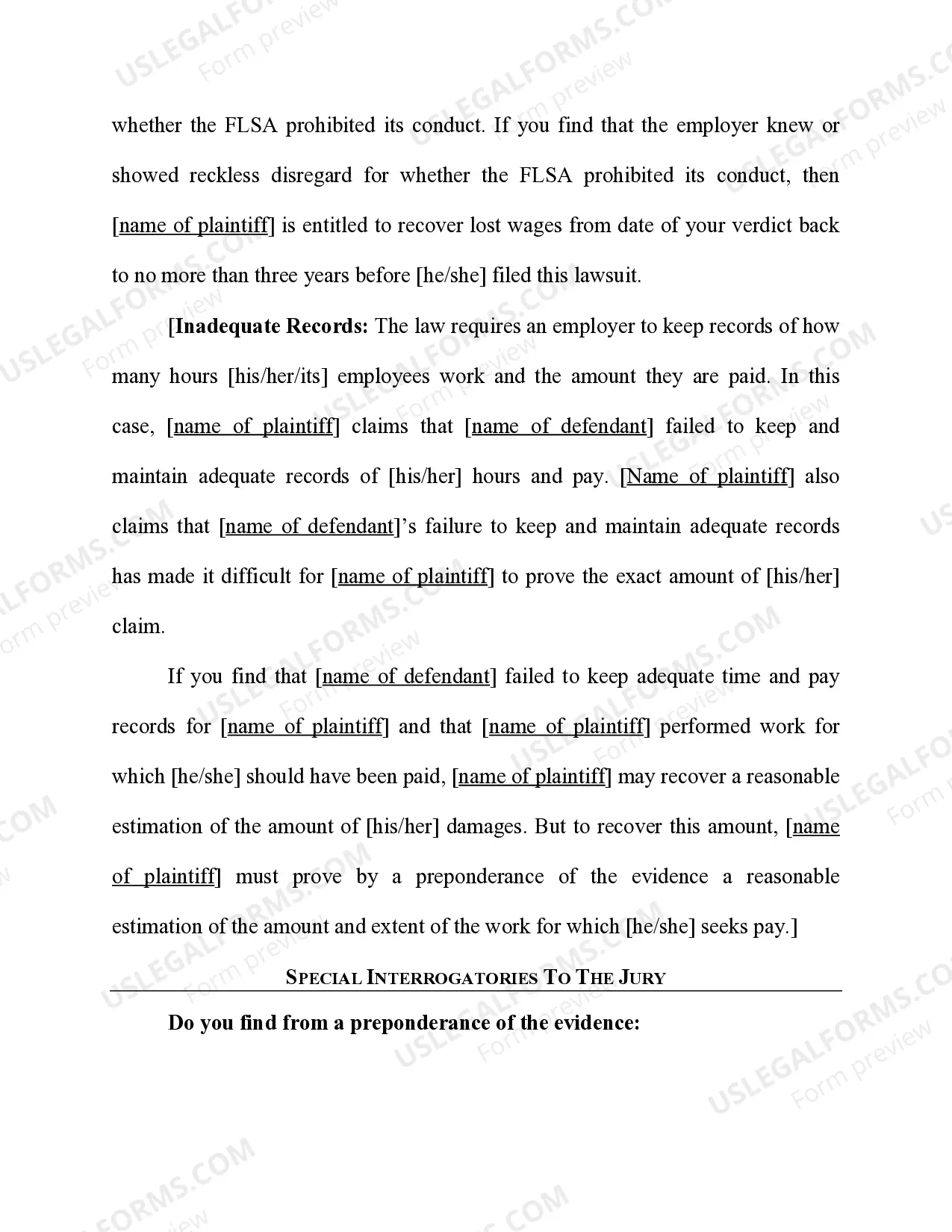
- Requirements for recordkeeping by employers.
Common use cases
This form is used when an employee believes that their employer has violated the Fair Labor Standards Act by failing to pay the required minimum wage or overtime pay. It is applicable in disputes regarding wage discrepancies and is necessary for legal proceedings that aim to recover owed wages.
Who this form is for
This form is intended for:
- Employees who believe they are owed minimum wage or overtime pay.
- Legal representatives assisting clients with FLSA claims.
- Employers seeking information on compliance with the FLSA.
How to prepare this document
- Identify the plaintiff and defendant, including their roles in the employment context.
- Specify the nature of the claim, whether for minimum wage or overtime pay.
- Detail the evidence supporting the employee's claim, including work hours and wages paid.
- Include any arguments regarding exemptions claimed by the employer.
- Sign and date the form to validate the claims made within it.
Does this document require notarization?
Notarization is not commonly needed for this form. However, certain documents or local rules may make it necessary. Our notarization service, powered by Notarize, allows you to finalize it securely online anytime, day or night.
Get your form ready online
Our built-in tools help you complete, sign, share, and store your documents in one place.
Make edits, fill in missing information, and update formatting in US Legal Forms—just like you would in MS Word.
Download a copy, print it, send it by email, or mail it via USPS—whatever works best for your next step.
Sign and collect signatures with our SignNow integration. Send to multiple recipients, set reminders, and more. Go Premium to unlock E-Sign.
If this form requires notarization, complete it online through a secure video call—no need to meet a notary in person or wait for an appointment.
We protect your documents and personal data by following strict security and privacy standards.

Make edits, fill in missing information, and update formatting in US Legal Forms—just like you would in MS Word.

Download a copy, print it, send it by email, or mail it via USPS—whatever works best for your next step.

Sign and collect signatures with our SignNow integration. Send to multiple recipients, set reminders, and more. Go Premium to unlock E-Sign.

If this form requires notarization, complete it online through a secure video call—no need to meet a notary in person or wait for an appointment.

We protect your documents and personal data by following strict security and privacy standards.
Common mistakes to avoid
- Failing to provide sufficient evidence of hours worked and pay received.
- Not accurately stating the claim type (minimum wage vs. overtime).
- Overlooking to address potential employer exemptions under the FLSA.
Why use this form online
- Convenience of immediate access and download from anywhere.
- Editability allows personalization to fit specific situations.
- Access to templates drafted by licensed attorneys ensures legal reliability.
Legal use & context
- The Fair Labor Standards Act is a federal law that affects a wide range of workers.
- Employees have a right to claim unpaid wages if they meet specific conditions outlined in the FLSA.
- Claims must be filed within a stipulated time frame to be considered valid.
Main things to remember
- The FLSA form is essential for employees claiming unpaid wages or overtime.
- Understanding employer exemptions is critical to evaluating claims.
- Maintaining accurate records is important for both employees and employers in wage disputes.
Looking for another form?
Form popularity
FAQ
The Fair Labor Standards Act (FLSA) protects workers against unfair employment practices. FLSA rules specify when workers are considered on the clock and when they should be paid overtime, along with a minimum wage. Employees are deemed either exempt or nonexempt with regard to the FLSA.
Fair Labor Standards Act does not have a clause forbidding employment discrimination.
The Illinois Workers' Rights Amendment adds language to the state constitution affirming that ?employees shall have the fundamental right to organize and to bargain collectively through representatives of their own choosing for the purpose of negotiating wages, hours, and working conditions, and to protect their
Summary. Illinois law prohibits an employer from discriminating and retaliating against employees in a variety of protected classes. Employers must also provide pregnancy and religious accommodations, allow employees to access their personnel files and allow wage discussions.
The FLSA established the minimum wage, overtime pay, standard work week, and safety provisions for young workers. But it excluded many, and its impact has diminished.
The Fair Labor Standards Act (FLSA) establishes minimum wage, overtime pay, recordkeeping, and child labor standards affecting full-time and part-time workers in the private sector and in Federal, State, and local governments.
Minimum Wage Law Illinois requires employers to pay a minimum of $13.00 per hour for workers 18 years of age and older; workers under 18 may be paid $. 50 per hour less than the adult minimum wage. Overtime must be paid after 40 hour of work per week at time and one-half the regular rate.
Minimum wage requirements and overtime pay are covered by the Fair Labor Standards Act (FLSA). As the law expands to include white-collar workers in its overtime pay provisions, it proves to remain relevant and necessary for assuring fair treatment in the workplace.