Equal Pay Act
Understanding this form
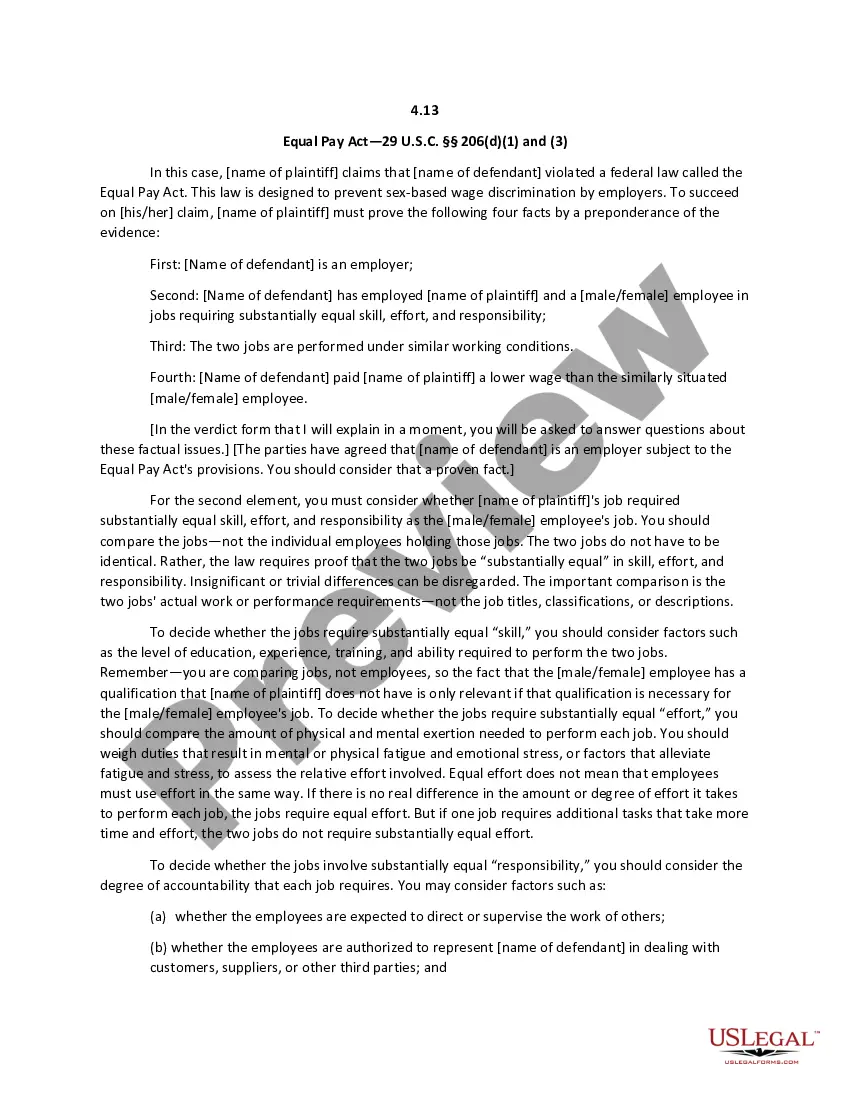
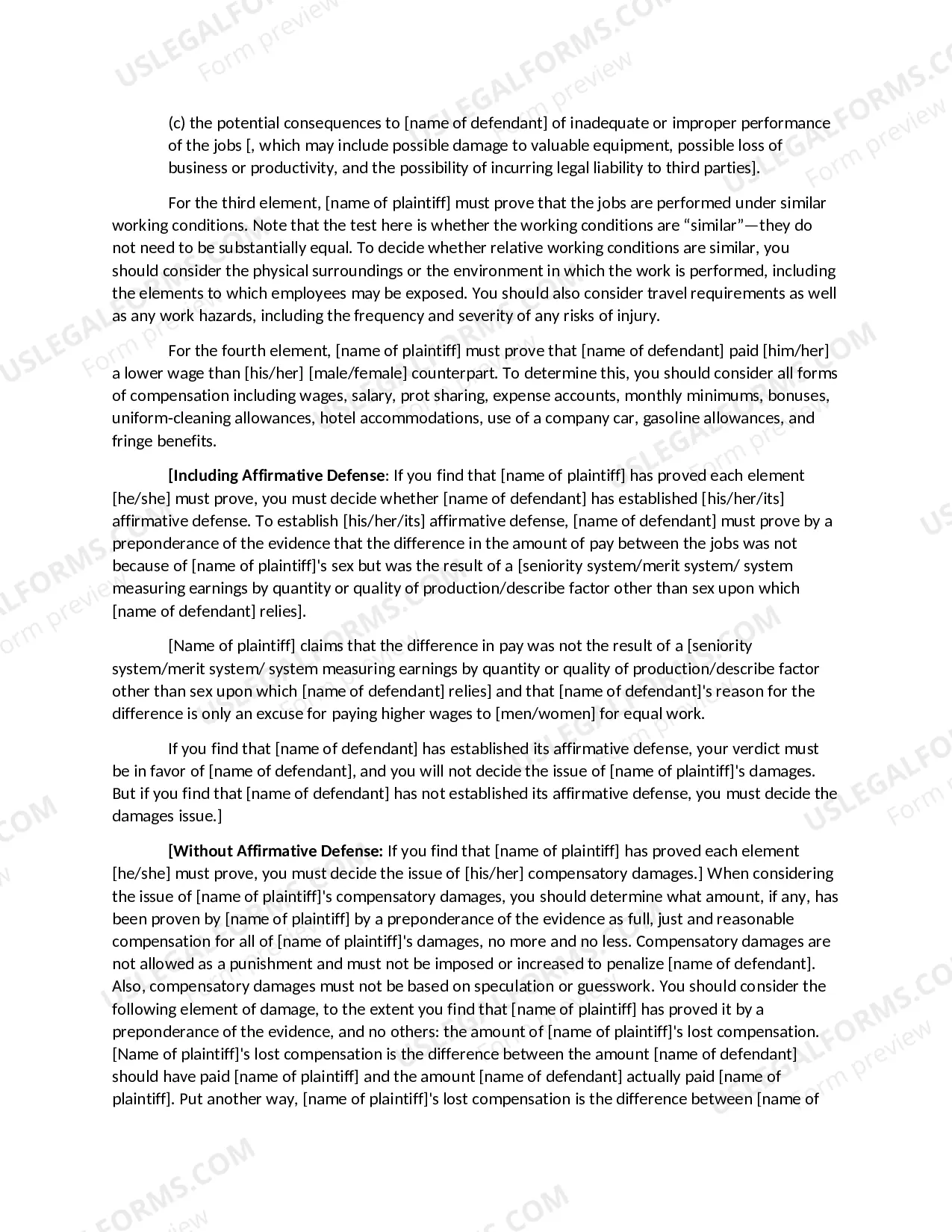
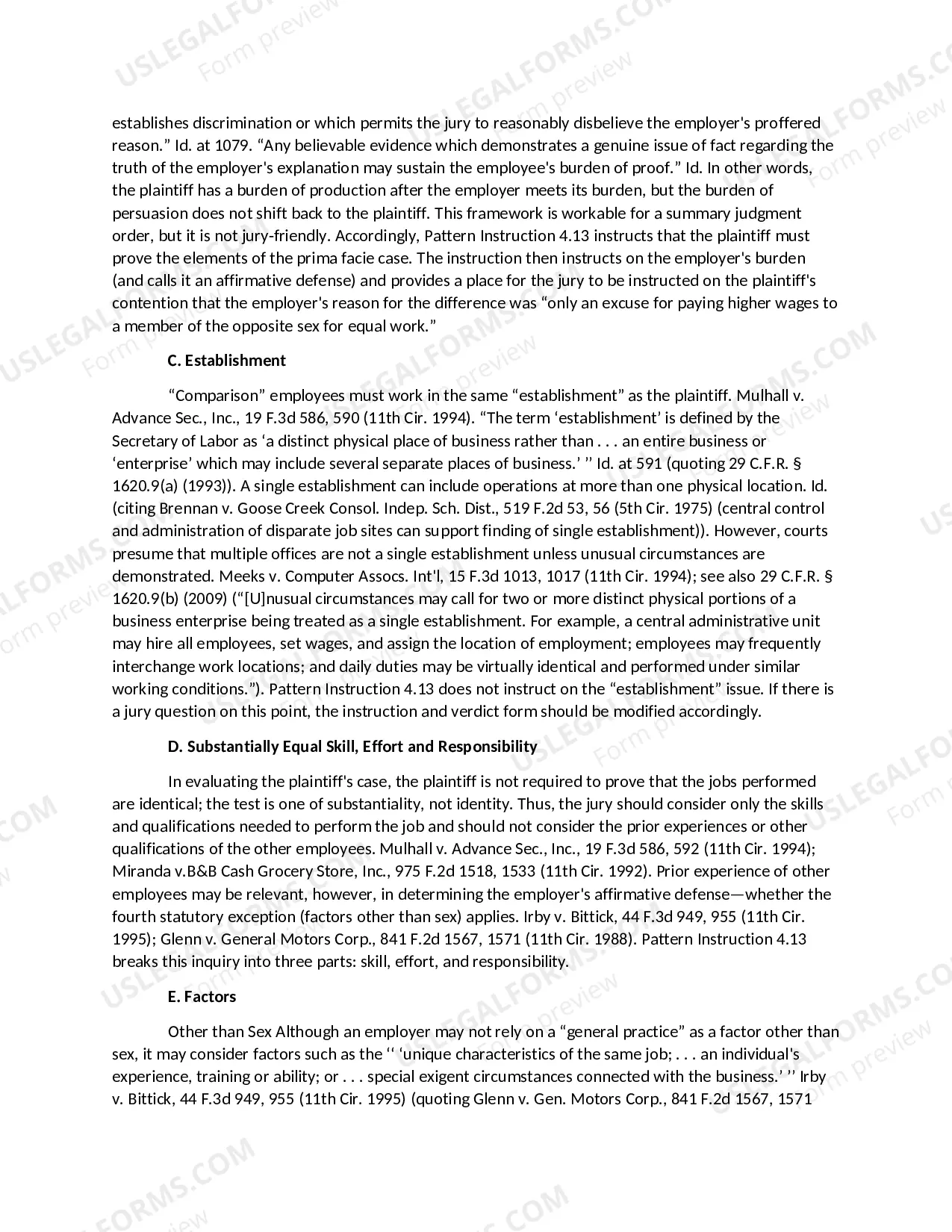
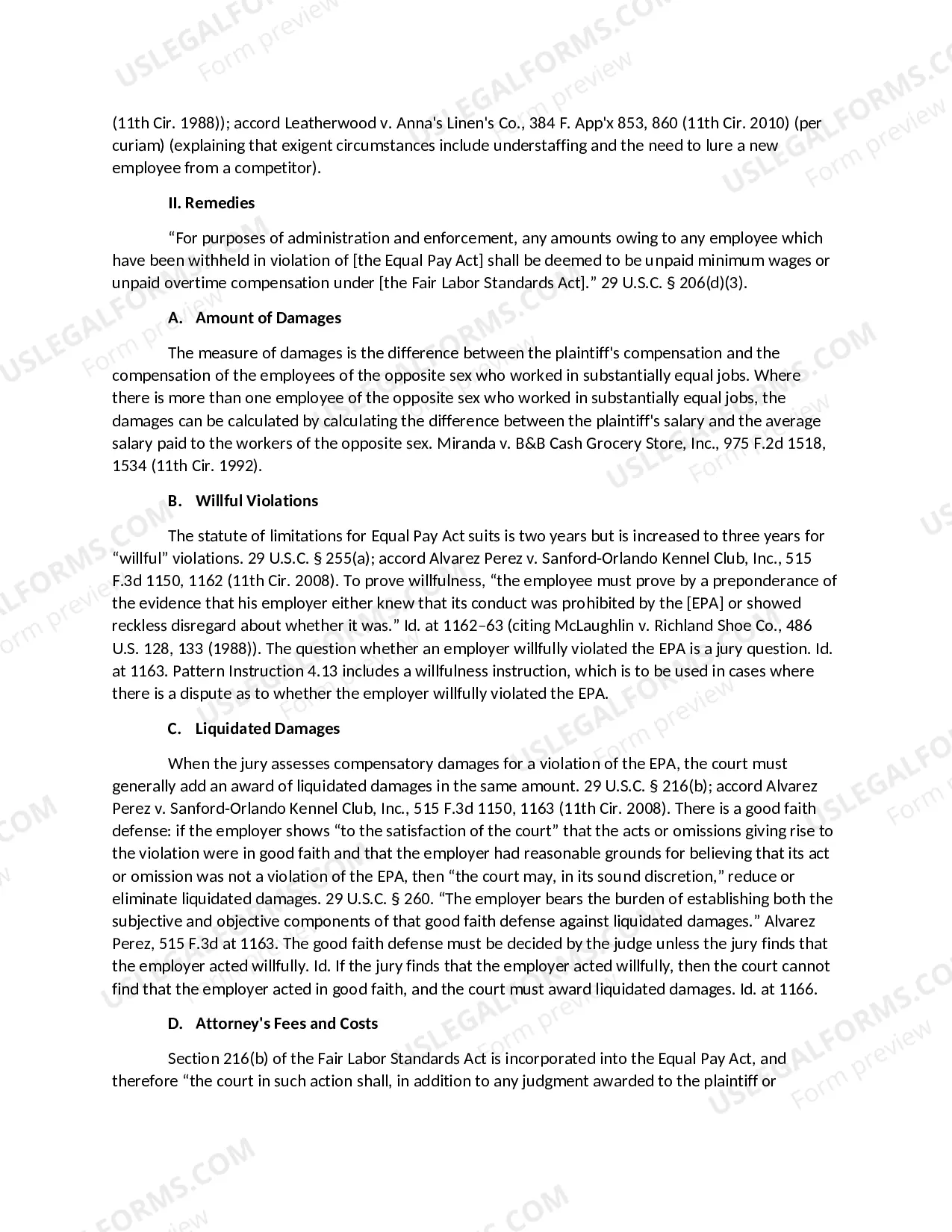
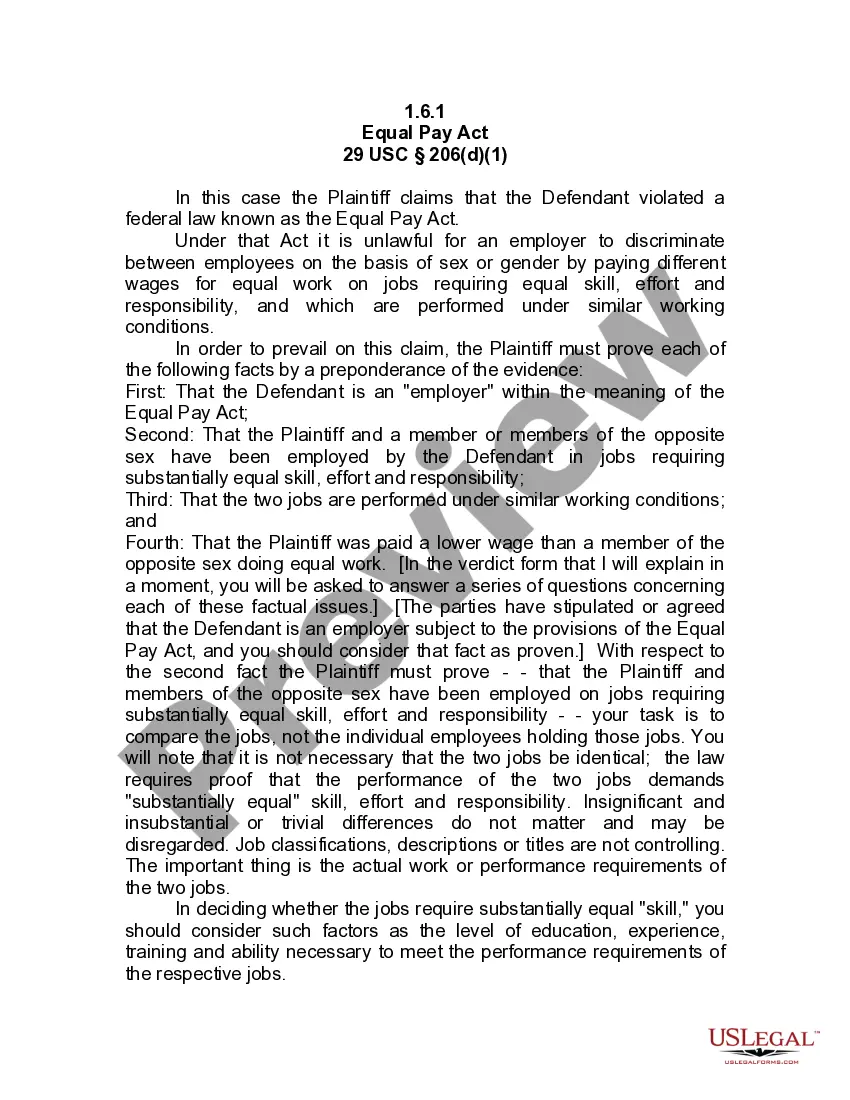
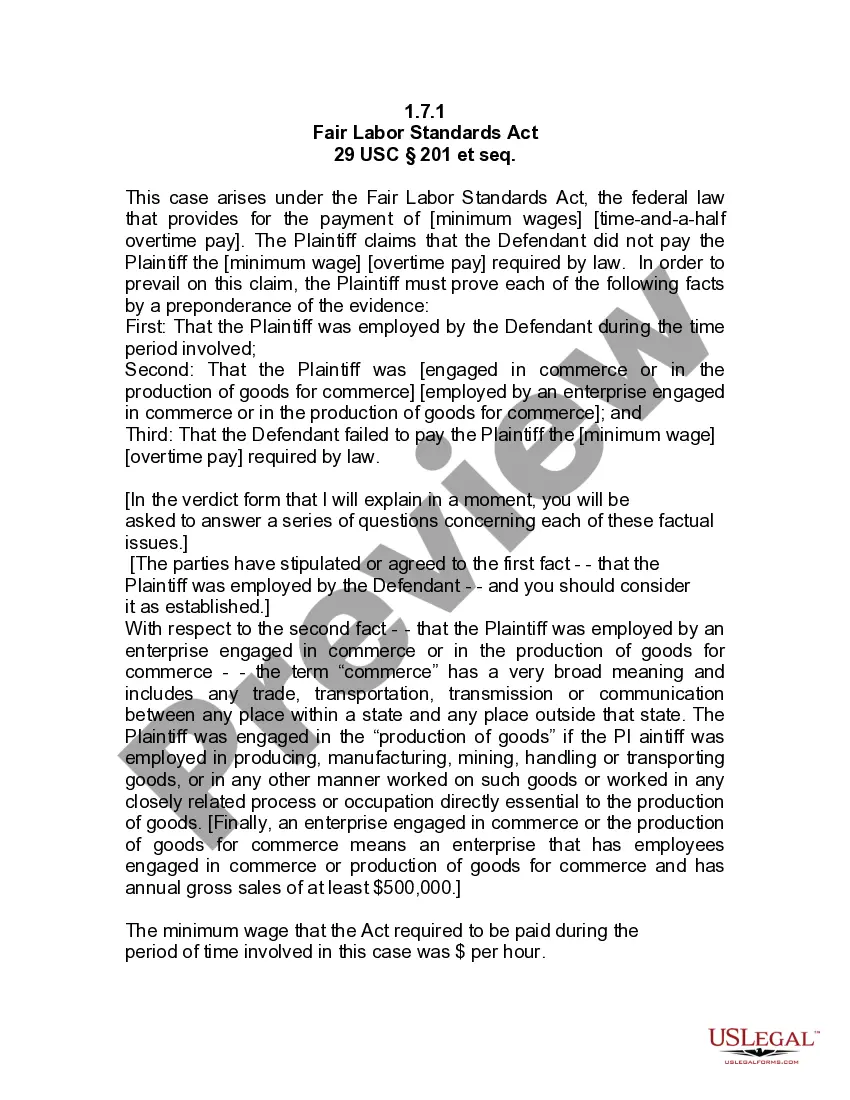
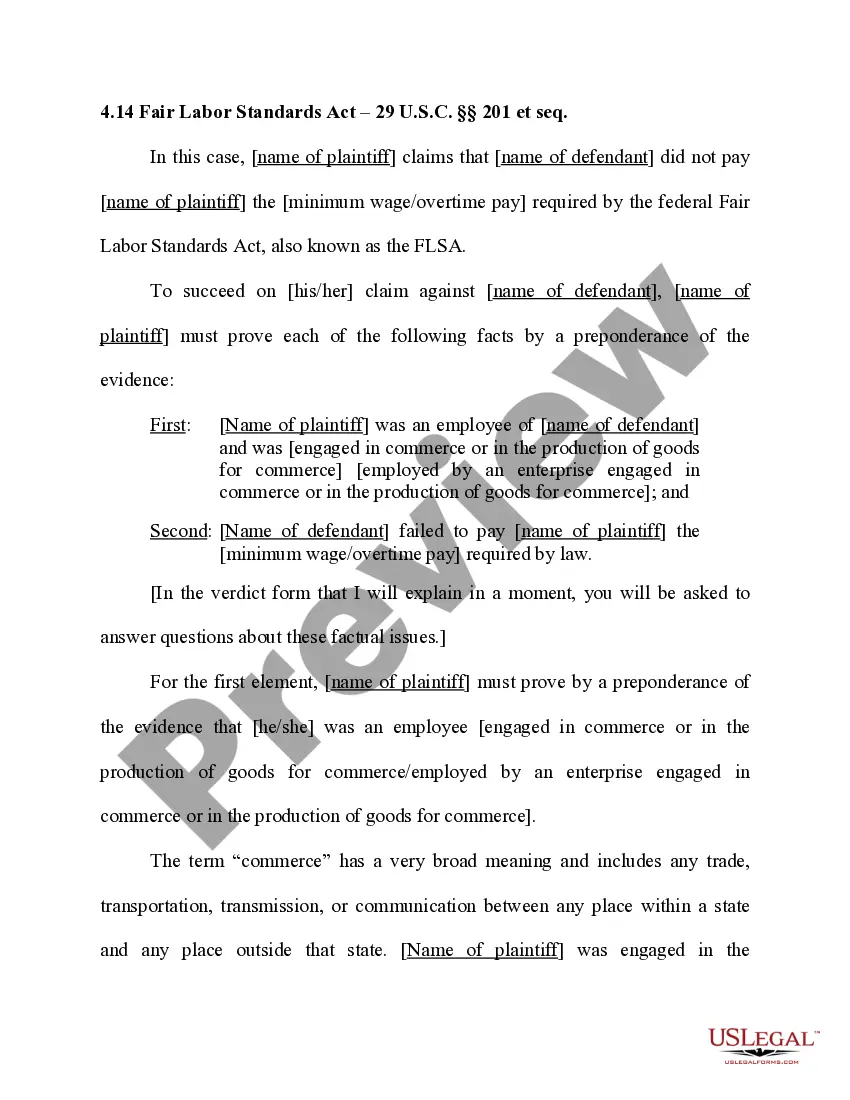
The Equal Pay Act form is a legal template designed to address claims of wage discrimination based on sex. This form helps plaintiffs assert that an employer has violated the Equal Pay Act by paying employees of different sexes unequal wages for substantially equal work. The form facilitates a structured approach to proving such claims, providing clear instructions on the necessary elements for a successful case and distinguishing itself from other employment-related legal forms by focusing specifically on equal pay issues.
Main sections of this form
- Identification of the plaintiff and defendant.
- Definitions of substantially equal work, including skill, effort, and responsibility comparisons.
- Criteria for similar working conditions.
- Details regarding wage differentials and their assessment.
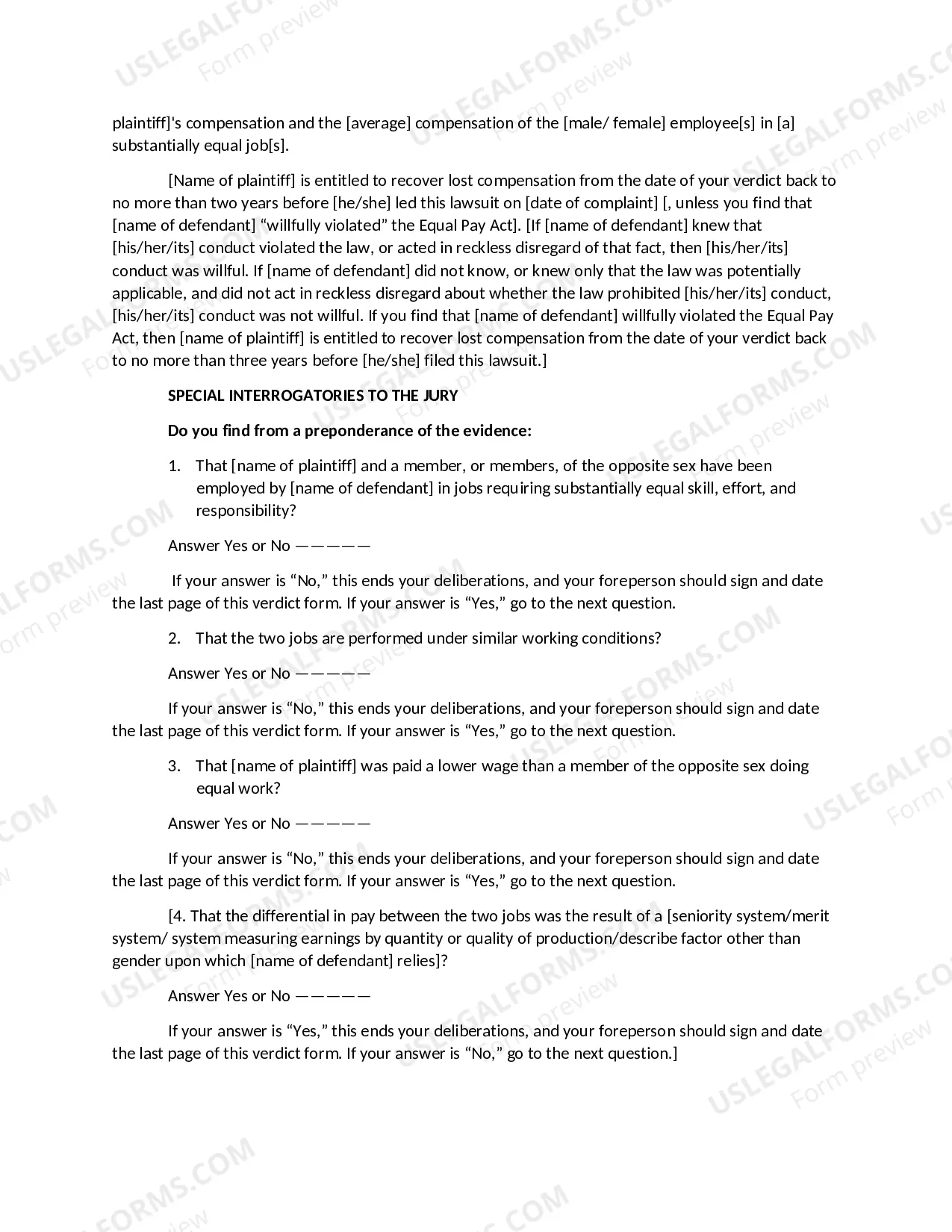
- Considerations for affirmative defenses by the employer.
- Procedures for determining damages if the defendant is found liable.
Situations where this form applies
This form should be used in situations where an employee believes they have been subjected to wage discrimination based on sex. Specific scenarios include cases where an employee discovers a pay disparity between themselves and an employee of the opposite sex performing similar job duties, efforts to address unequal pay issues with an employer, or preparation for filing a legal claim under the Equal Pay Act.
Who should use this form
- Employees who believe they are being paid less than their counterparts of a different sex for the same work.
- Legal representatives assisting clients with wage discrimination claims.
- Human resources professionals aiming to understand compliance with equal pay legislation.
- Employers seeking to assess or dispute claims of wage discrimination.
How to complete this form
- Enter the names of the plaintiff and defendant accurately.
- Describe the jobs being compared, focusing on skill, effort, and responsibility.
- Provide evidence or descriptions of the working conditions for both jobs.
- Document the wage differences and any relevant compensation factors.
- Indicate whether the employer has provided affirmative defenses and detail them as applicable.
- Complete the verdict section if applicable, noting any damages sought.
Notarization requirements for this form
This form usually doesn’t need to be notarized. However, local laws or specific transactions may require it. Our online notarization service, powered by Notarize, lets you complete it remotely through a secure video session, available 24/7.
Get your form ready online
Our built-in tools help you complete, sign, share, and store your documents in one place.
Make edits, fill in missing information, and update formatting in US Legal Forms—just like you would in MS Word.
Download a copy, print it, send it by email, or mail it via USPS—whatever works best for your next step.
Sign and collect signatures with our SignNow integration. Send to multiple recipients, set reminders, and more. Go Premium to unlock E-Sign.
If this form requires notarization, complete it online through a secure video call—no need to meet a notary in person or wait for an appointment.
We protect your documents and personal data by following strict security and privacy standards.

Make edits, fill in missing information, and update formatting in US Legal Forms—just like you would in MS Word.

Download a copy, print it, send it by email, or mail it via USPS—whatever works best for your next step.

Sign and collect signatures with our SignNow integration. Send to multiple recipients, set reminders, and more. Go Premium to unlock E-Sign.

If this form requires notarization, complete it online through a secure video call—no need to meet a notary in person or wait for an appointment.

We protect your documents and personal data by following strict security and privacy standards.
Mistakes to watch out for
- Failing to accurately document the comparability of jobs between employees.
- Overlooking the significance of working conditions when assessing claims.
- Neglecting to gather comprehensive compensation evidence.
- Misunderstanding the definitions of substantially equal work.
Benefits of using this form online
- Easy access to reliable legal templates drafted by licensed attorneys.
- Convenience of downloading forms and completing them at your own pace.
- Editability to tailor the form to specific cases and needs.
- Cost-effective solution for handling wage discrimination claims.
Legal use & context
- The Equal Pay Act prohibits wage discrimination based on sex in jobs requiring equal skill and responsibility.
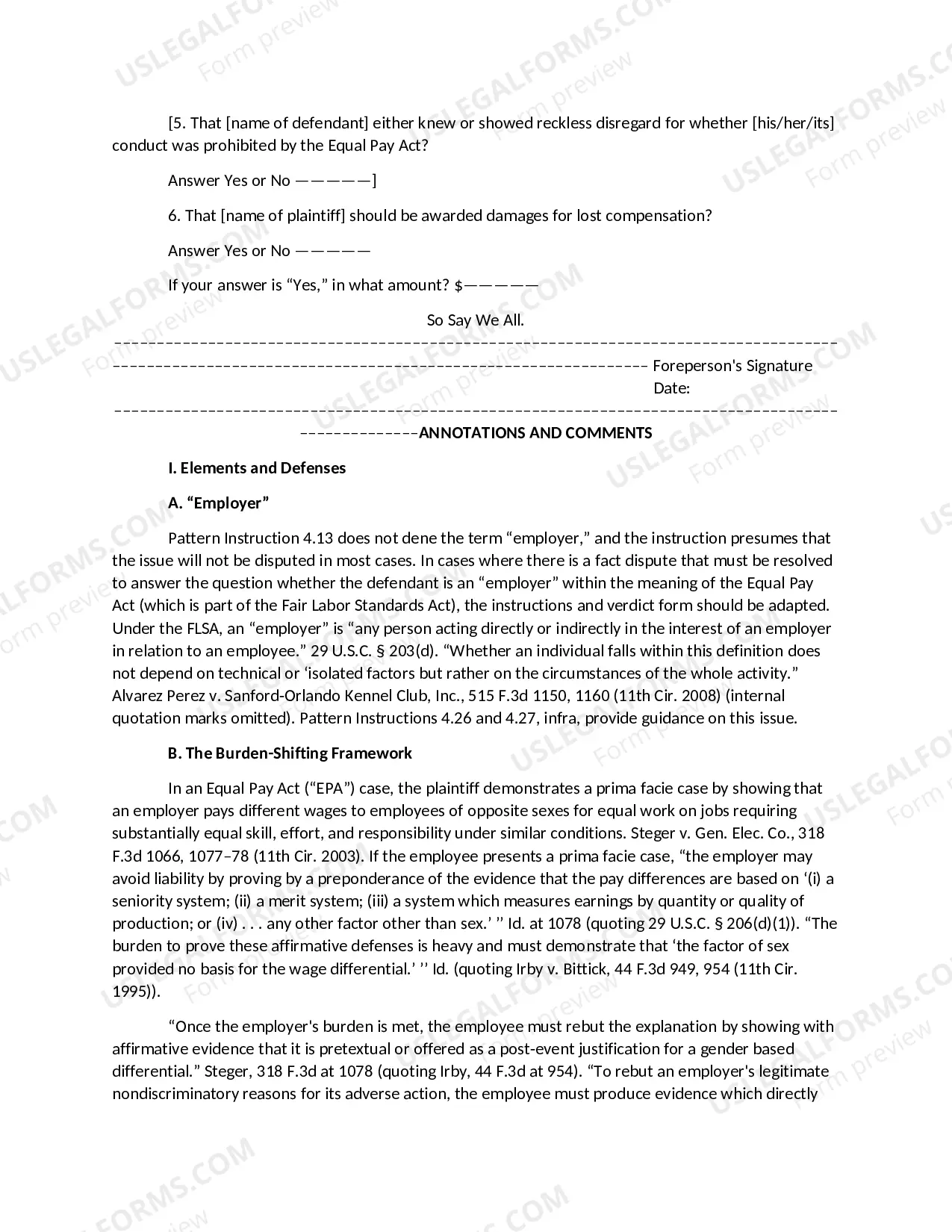
- The plaintiff must prove that wage differentials exist and that they are unjustified based on the criteria set forth in the Act.
- Employers can defend against claims by proving that disparities arise from legitimate factors beyond sex.
Looking for another form?

Form popularity
FAQ
The Equal Pay Act 1970 was an Act of the Parliament of the United Kingdom that prohibited any less favourable treatment between men and women in terms of pay and conditions of employment. The Act was proposed by the then Labour government, and was based on the Equal Pay Act of 1963 of the United States.
The Equal Pay Act (EPA) protects individuals of all sexes. All forms of compensation are covered, including salary, overtime pay, bonuses, life insurance, vacation and holiday pay, cleaning or gasoline allowances, hotel accommodations, reimbursement for travel expenses, and benefits.
To prohibit discrimination on account of sex in the payment of wages by employers engaged in commerce or in the production of goods for commerce.
An example of a violation of the Equal Pay Act is when a male manager receives a higher salary than a female manager with the same job title or duties.
The Equal Pay Act requires that men and women in the same workplace be given equal pay for equal work. The jobs need not be identical, but they must be substantially equal.
The Lilly Ledbetter Fair Pay Act of 2009 is a law enacted by Congress to bolster worker protections against pay discrimination. The Act allows individuals facing pay discrimination to seek rectification under federal anti-discrimination laws.
To prohibit discrimination on account of sex in the payment of wages by employers engaged in commerce or in the production of goods for commerce. Be it enacted by the Senate and House of Representatives of the United States of America in Congress assembled, That this Act may be cited as the "Equal Pay Act of 1963."
The Equal Pay Act of 1963, amending the Fair Labor Standards Act, protects against wage discrimination based on sex. The Equal Pay Act (EPA) protects individuals of all sexes.