Jury Instruction - 6.1 Burden Of Proof When Only Plaintiff Has Burden Of Proof
Understanding this form
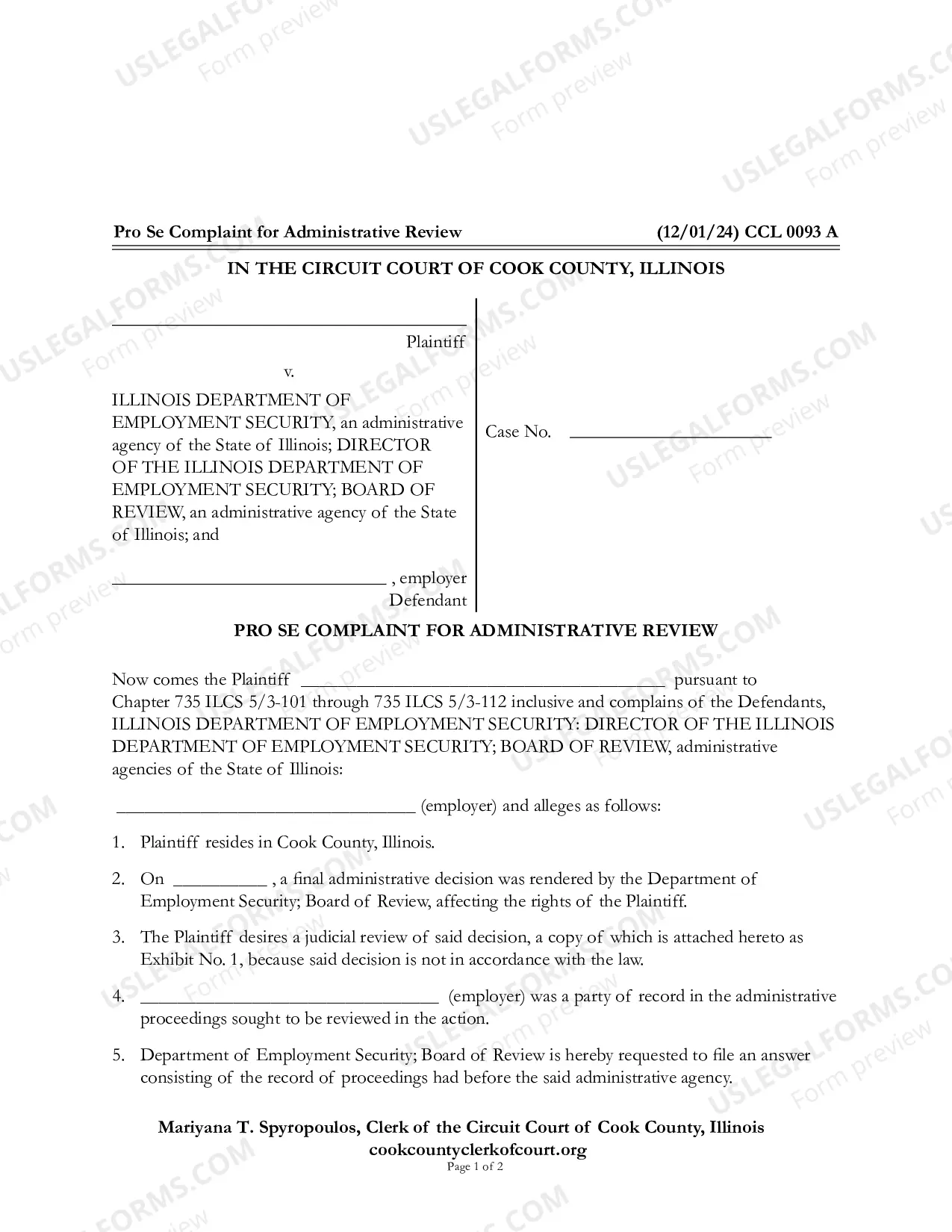
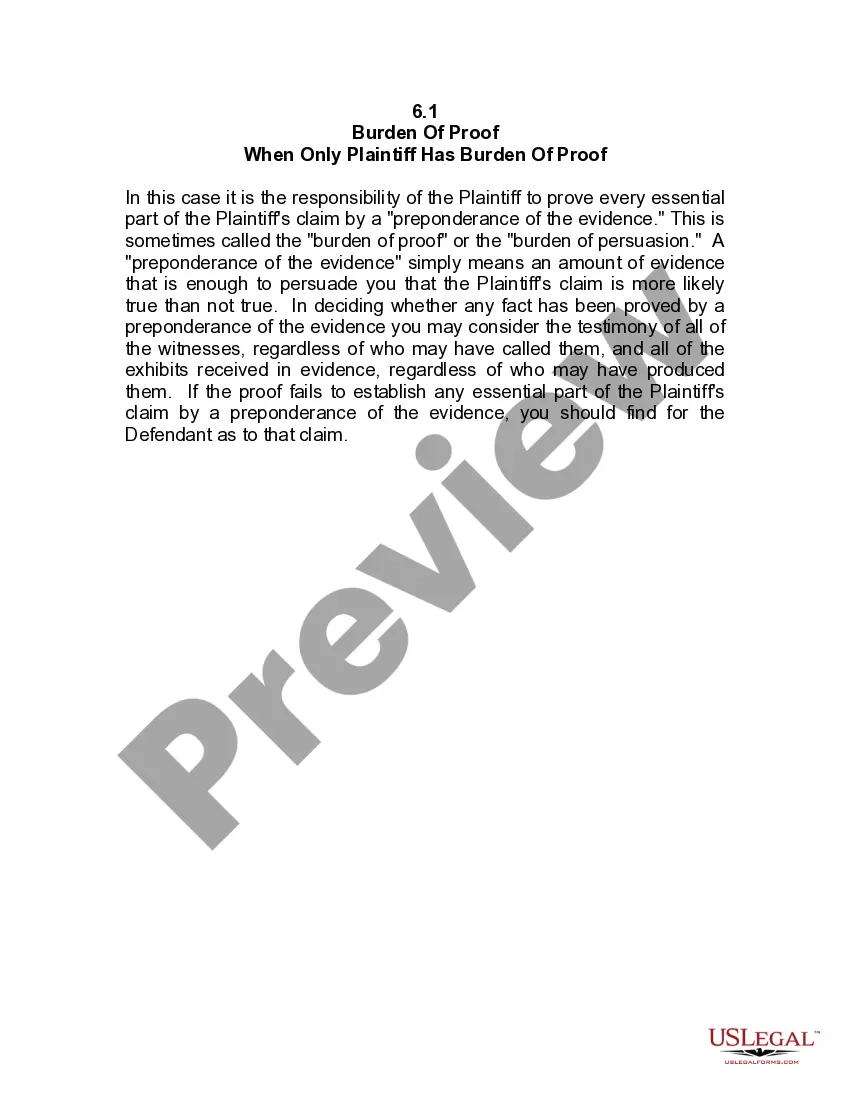
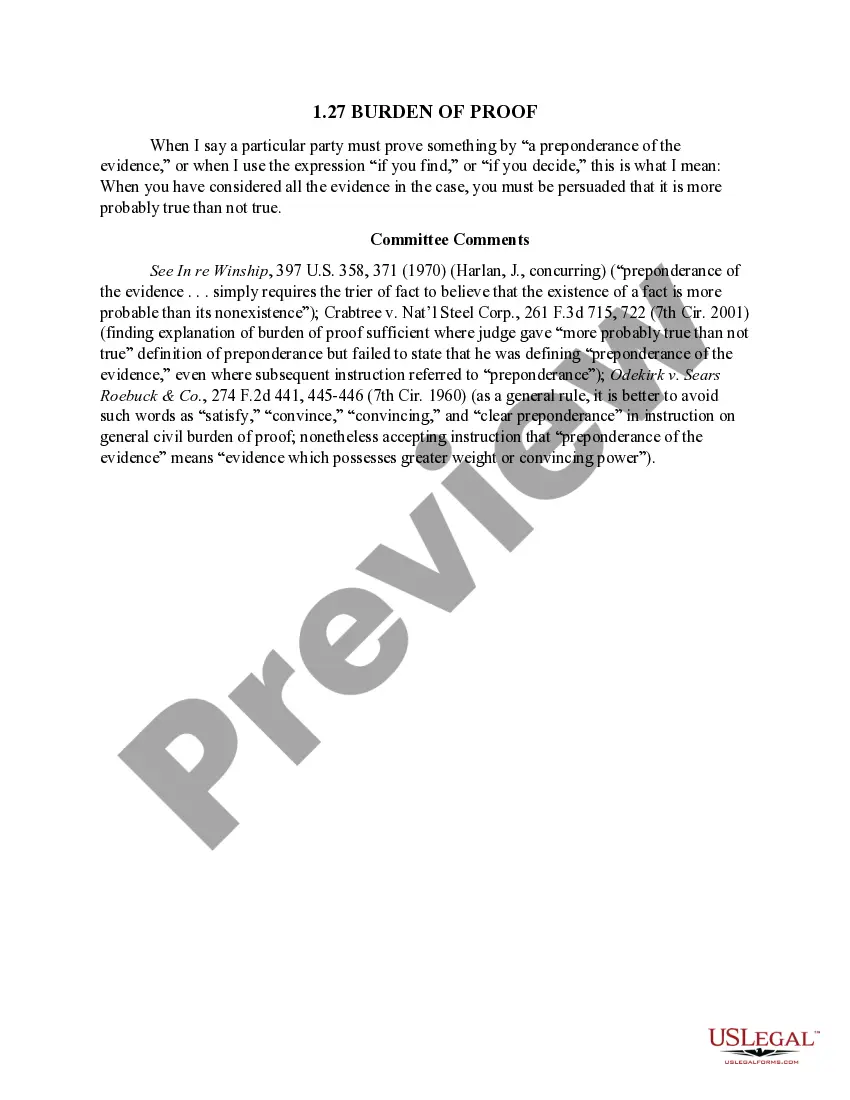
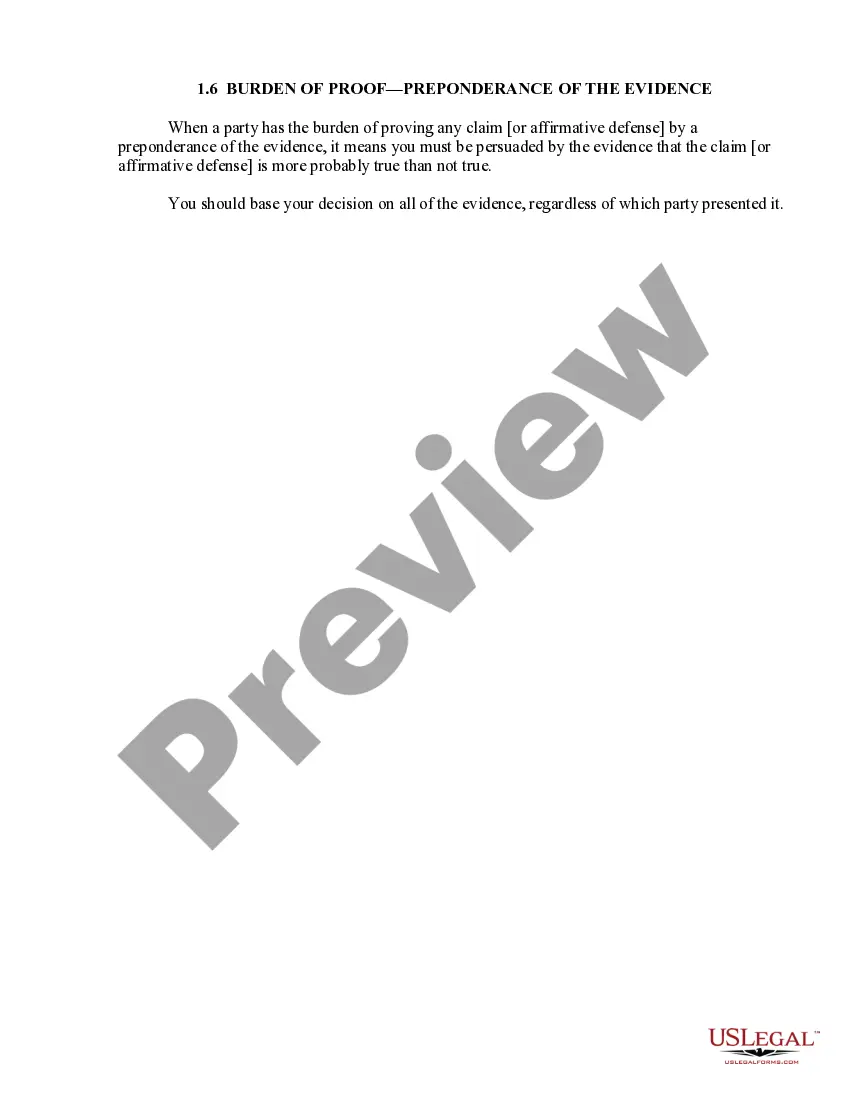
The Jury Instruction - Burden of Proof When Only Plaintiff Has Burden of Proof is a legal document that provides specific guidance for juries on how to evaluate the burden of proof in cases where the plaintiff is responsible for establishing their claims. This form is used to clarify the standard of proof required, known as the "preponderance of the evidence." It differs from other jury instructions by focusing solely on situations where the plaintiff holds the burden, making it clear and specific to those circumstances.
Main sections of this form
- Definition of burden of proof: Clarifies that the plaintiff must prove their claims by a preponderance of the evidence.
- Standard of evidence: Explains that a preponderance means the claim is more likely true than not true.
- Consideration of evidence: Instructs the jury to weigh all witness testimony and exhibits, regardless of who presented them.
- Finding for the defendant: Guides what the jury should decide if the plaintiff does not meet their burden of proof.
When to use this document
This form should be used in civil court cases where the plaintiff is claiming damages or seeking relief, and it is essential for the jury to understand their role in determining whether the plaintiff has met their burden of proof. Typical scenarios include personal injury cases, breach of contract lawsuits, and other civil disputes where evidence must show the plaintiff's claims are more likely true than false.
Who needs this form
This form is designed for use by:
- Attorneys representing plaintiffs in civil litigation.
- Judges instructing juries on the specific burdens of proof in a case.
- Jury members seeking to understand their responsibilities regarding evidence and verdicts.
How to complete this form
- Define the role: Clearly state that the plaintiff has the burden of proof.
- Explain the standard: Describe the preponderance of evidence necessary for the jury's consideration.
- Instruct on evidence: Provide guidelines on how the jury should evaluate witness testimony and evidence presented.
- Clarify verdict implications: Direct the jurors on how to proceed if the plaintiff fails to meet their burden.
Is notarization required?
Notarization is generally not required for this form. However, certain states or situations might demand it. You can complete notarization online through US Legal Forms, powered by Notarize, using a verified video call available anytime.
Get your form ready online
Our built-in tools help you complete, sign, share, and store your documents in one place.
Make edits, fill in missing information, and update formatting in US Legal Forms—just like you would in MS Word.
Download a copy, print it, send it by email, or mail it via USPS—whatever works best for your next step.
Sign and collect signatures with our SignNow integration. Send to multiple recipients, set reminders, and more. Go Premium to unlock E-Sign.
If this form requires notarization, complete it online through a secure video call—no need to meet a notary in person or wait for an appointment.
We protect your documents and personal data by following strict security and privacy standards.

Make edits, fill in missing information, and update formatting in US Legal Forms—just like you would in MS Word.

Download a copy, print it, send it by email, or mail it via USPS—whatever works best for your next step.

Sign and collect signatures with our SignNow integration. Send to multiple recipients, set reminders, and more. Go Premium to unlock E-Sign.

If this form requires notarization, complete it online through a secure video call—no need to meet a notary in person or wait for an appointment.

We protect your documents and personal data by following strict security and privacy standards.
Common mistakes
- Assuming the burden of proof applies equally to both parties.
- Misunderstanding the concept of preponderance of evidence.
- Neglecting to consider all evidence presented, regardless of the source.
Advantages of online completion
- Accessibility: Easy to download and print at any time.
- Editability: Can be modified to fit specific case needs.
- Reliability: Drafted by licensed attorneys to ensure legal compliance.
Looking for another form?
Form popularity
FAQ
The burden of proof is usually on the person who brings a claim in a dispute. It is often associated with the Latin maxim semper necessitas probandi incumbit ei qui agit, a translation of which in this context is: "the necessity of proof always lies with the person who lays charges."
For example, in criminal cases, the burden of proving the defendant's guilt is on the prosecution, and they must establish that fact beyond a reasonable doubt. In civil cases, the plaintiff has the burden of proving his case by a preponderance of the evidence.
Burden of proof can define the duty placed upon a party to prove or disprove a disputed fact, or it can define which party bears this burden. In criminal cases, the burden of proof is placed on the prosecution, who must demonstrate that the defendant is guilty before a jury may convict him or her.
Burden of proof is one type of fallacy in which someone makes a claim, but puts the burden of proof onto the other side.For example, a person makes a claim. Another person refutes the claim, and the first person asks them to prove that the claim is not true.
Conclusion. The rule governing the burden of proof is that whoever lays a claim must present evidence or proof. This rule is subject to the principles that the burden of proof rests on the party that either asserts a claim or denies it.
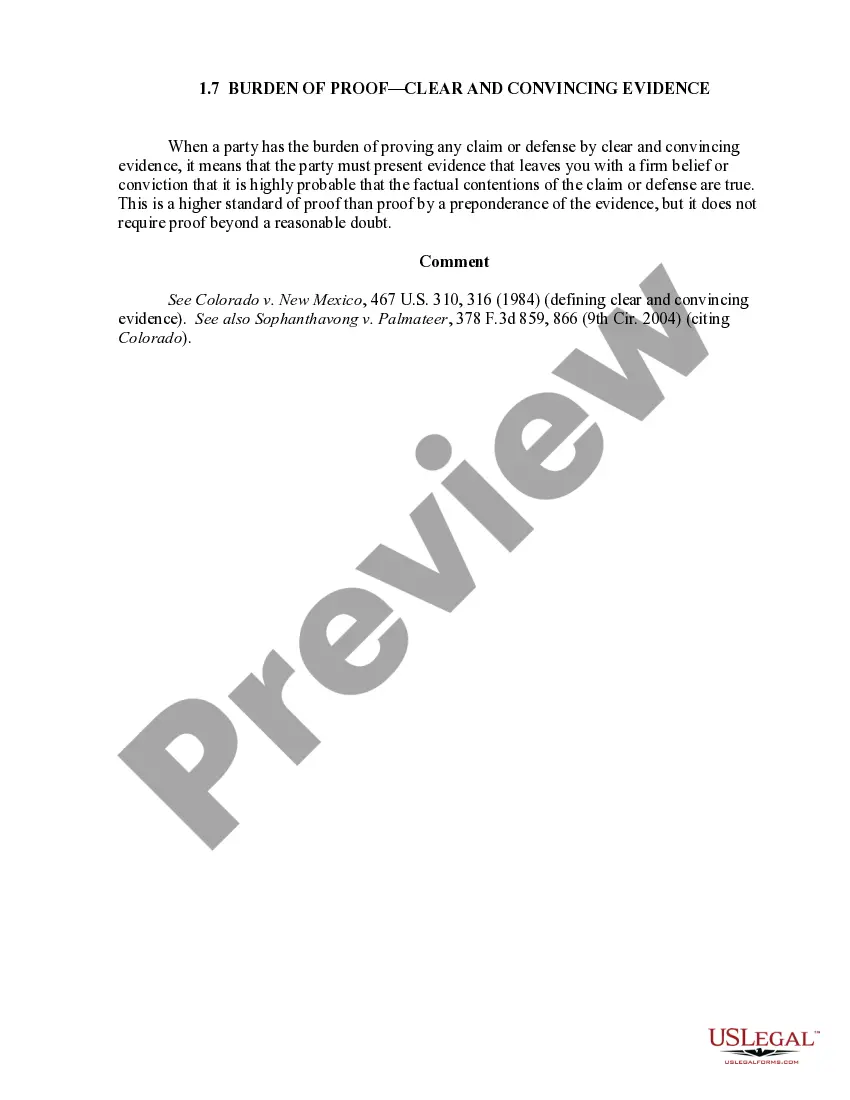
The three primary standards of proof are proof beyond a reasonable doubt, preponderance of the evidence and clear and convincing evidence.
In civil cases, the plaintiff has the burden of proving his case by a preponderance of the evidence. A "preponderance of the evidence" and "beyond a reasonable doubt" are different standards, requiring different amounts of proof.
In a civil case, the plaintiff must prove his case by a preponderance of the evidence.If the plaintiff has successfully proves that a fact is more likely so than not, it must be accepted as true by the judge or jury. In criminal cases, the prosecution must prove its case beyond a reasonable doubt.