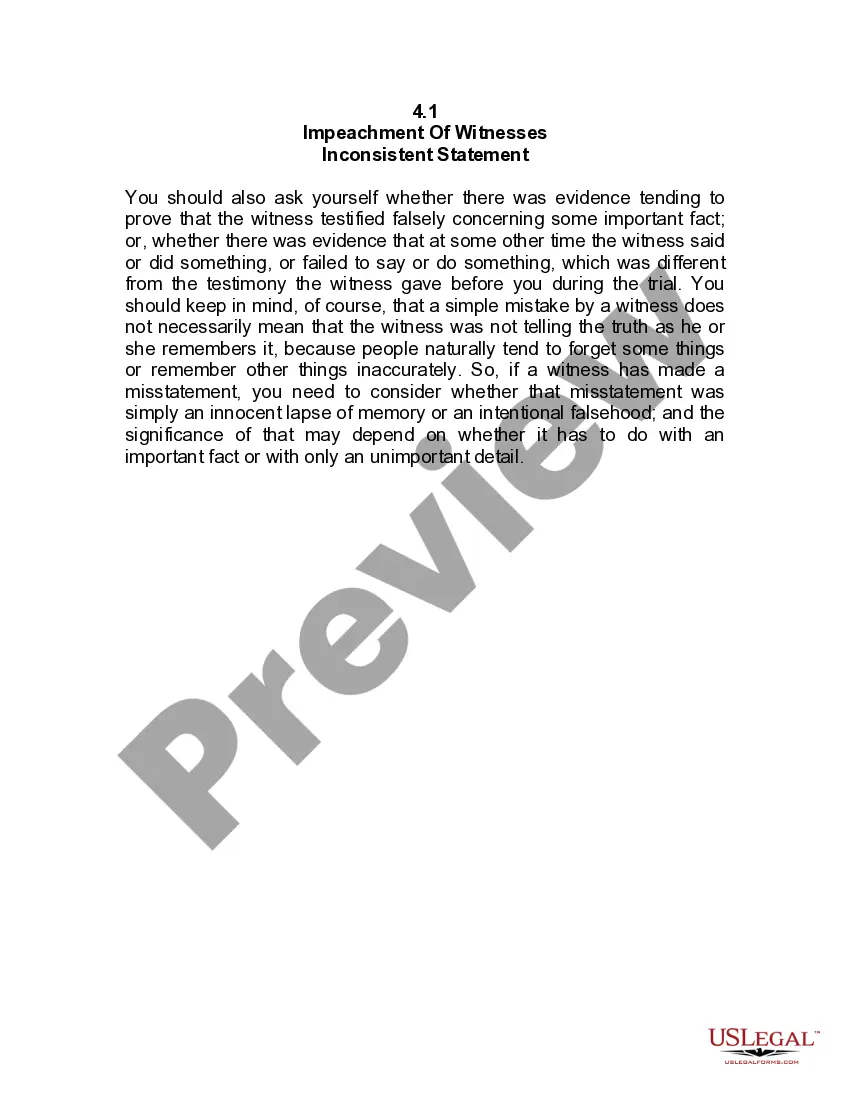
Jury Instruction - 4.1 Impeachment Of Witnesses Inconsistent Statement
Understanding this form
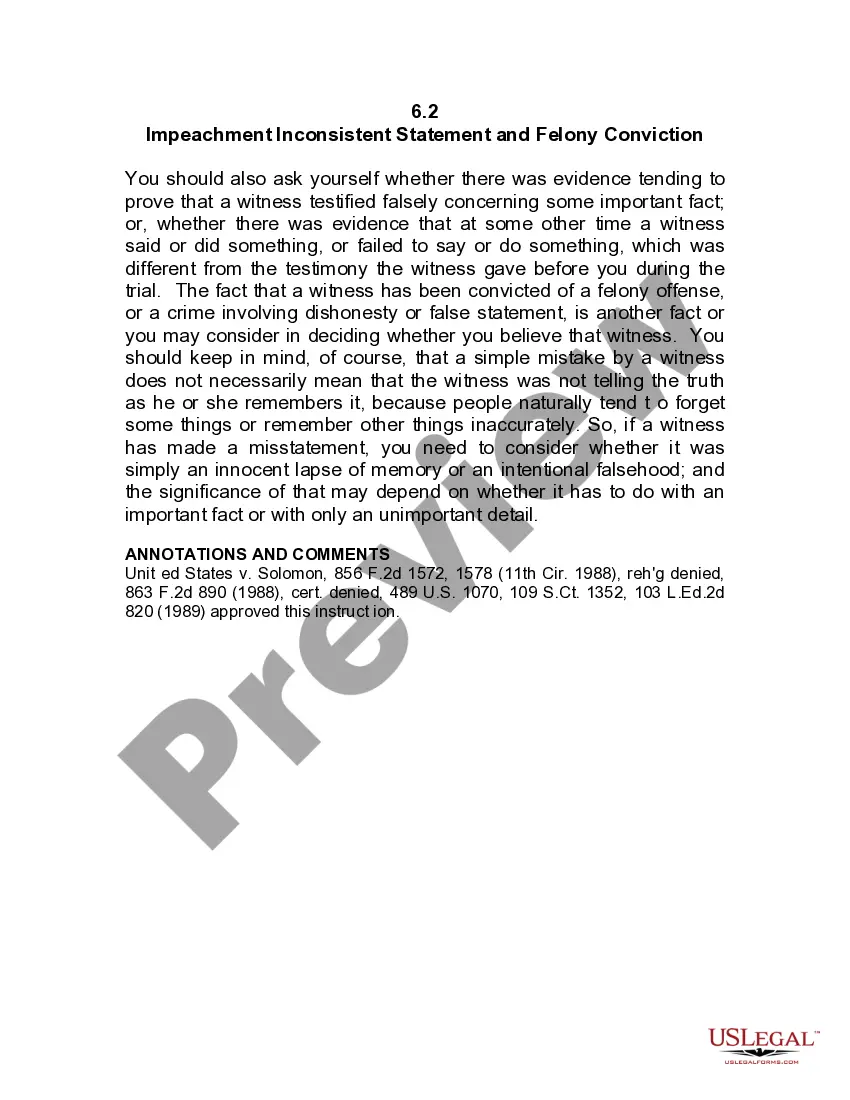
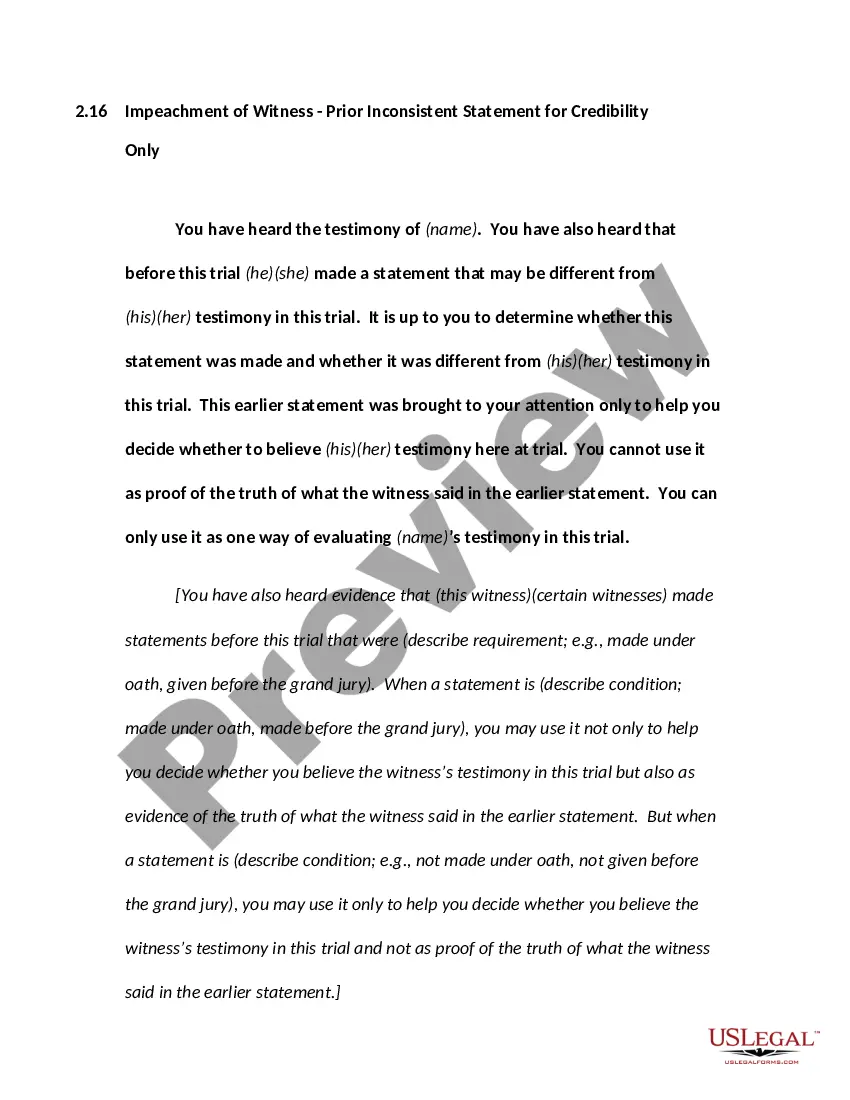
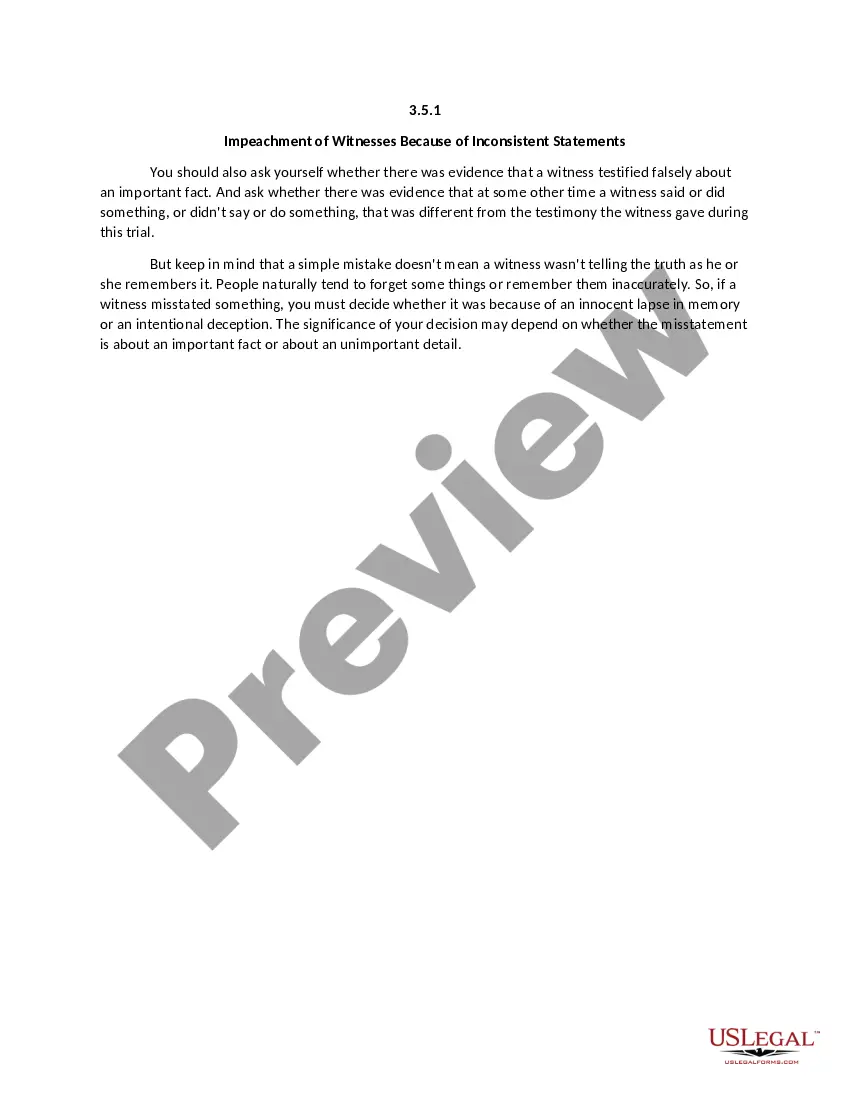
The Jury Instruction - 4.1 Impeachment of Witnesses Inconsistent Statement is a legal template used to guide jurors in understanding how to evaluate a witness's credibility when there are inconsistent statements or evidence suggesting untruthfulness. This form provides a structured approach to assessing whether a witness's misstatement is due to a simple lapse in memory or an intentional falsehood, emphasizing the importance of context in their testimony. Unlike other jury instructions, this one focuses specifically on the nuances of witness impeachment based on inconsistent statements.
Form components explained
- Overview of the impeachment process for witnesses.
- Criteria for determining if a witness has testified falsely.
- Guidance on the significance of minor mistakes versus major inconsistencies.
- Methods for assessing the importance of specific statements made by the witness.
When to use this form
This form should be used during trials where witness testimony is a critical component of the case. Specifically, it is applicable in scenarios where there are allegations of inconsistencies in a witness's statements, allowing jurors to reflect carefully on these discrepancies before making determinations about credibility and truthfulness. This instruction helps to guide jurors in making informed decisions based on the overall context of the evidence presented.
Who can use this document
This form is intended for:
- Judges presiding over trials who need to instruct jurors on evaluating witness testimony.
- Attorneys preparing jury instructions to enhance their clients' cases.
- Any legal professional involved in the presentation of evidence to jurors.
How to complete this form
- Understand the key elements of witness impeachment outlined in the instruction.
- Tailor the template questions to the specifics of your case and testimony.
- Ensure that the language used is clear and relevant to the jury's understanding.
- Review the form with legal counsel to ensure compliance with local court rules.
- Present the completed instruction to the judge for approval before using it in trial.
Notarization requirements for this form
This form does not typically require notarization unless specified by local law. It serves as a guiding instruction for jurors and is utilized within the trial process, which does not involve notarization requirements.
Get your form ready online
Our built-in tools help you complete, sign, share, and store your documents in one place.
Make edits, fill in missing information, and update formatting in US Legal Forms—just like you would in MS Word.
Download a copy, print it, send it by email, or mail it via USPS—whatever works best for your next step.
Sign and collect signatures with our SignNow integration. Send to multiple recipients, set reminders, and more. Go Premium to unlock E-Sign.
If this form requires notarization, complete it online through a secure video call—no need to meet a notary in person or wait for an appointment.
We protect your documents and personal data by following strict security and privacy standards.

Make edits, fill in missing information, and update formatting in US Legal Forms—just like you would in MS Word.

Download a copy, print it, send it by email, or mail it via USPS—whatever works best for your next step.

Sign and collect signatures with our SignNow integration. Send to multiple recipients, set reminders, and more. Go Premium to unlock E-Sign.

If this form requires notarization, complete it online through a secure video call—no need to meet a notary in person or wait for an appointment.

We protect your documents and personal data by following strict security and privacy standards.
Common mistakes
- Failing to clarify the context of a witness's inconsistent statement.
- Using overly complex language that confuses jurors.
- Not distinguishing between innocent mistakes and deliberate falsehoods.
- Neglecting to adapt the instruction to the specifics of the case.
Why complete this form online
- Convenient access to a professionally drafted legal template.
- Editable format allows customization to suit specific cases.
- Reliable guidance based on established legal standards.
Key takeaways
- The form aids jurors in evaluating inconsistencies in witness testimony.
- It highlights the importance of context in assessing credibility.
- The instruction can be adapted to meet specific jurisdictional needs.
Looking for another form?

Form popularity
FAQ
Repeat. First, the most basic step, is to have the witness repeat the testimony from today's hearing that you want to impeach. Build Up. Impeach.
In the US, a party has the option of discrediting a witness through impeachment by cross-examining the witness about facts that reflect poorly on the witness's credibility or, in some cases, by introducing extrinsic evidence that reflects negatively on the witness's truthfulness or knowledge.
Under common law, a witness may be impeached by proof the witness has contradicted him- or herself through evidence of prior acts or statements that are inconsistent with testimony given on direct examination.
The five basic methods are: use of contradiction, proof of bad character, proof of inconsistency, proof of bias, or proof of diminished capacity.
The most common situation in which the issue of extrinsic evidence arises is when counsel seeks to impeach the witness in reply to the witness's denial of some facts or previous statements and introduces evidence proving that the witness is lying.
How witness impeached by evidence of inconsistent statements Before a witness can be impeached by evidence that he has made at other times statements inconsistent with his present testimony, the statements must be related to him, with the circumstances of the times and places and the persons present, and he must be
The judge will decide if the witness testimony is to be included or excluded as part of the case.If a judge decides to impeach a witness, then the testimony made by that witness is no longer considered credible or admissible in court proceedings.
Explanation A witness declaring another witness to be unworthy of credit may not, upon his examination-in-chief, give reasons for his belief, but he may be asked his reasons in cross-examination, and the answers which he gives cannot be contradicted, though, if they are false, he may afterwards be charged with giving