Impeachment of Witness - Prior Inconsistent Statement for Credibility Only
What this document covers
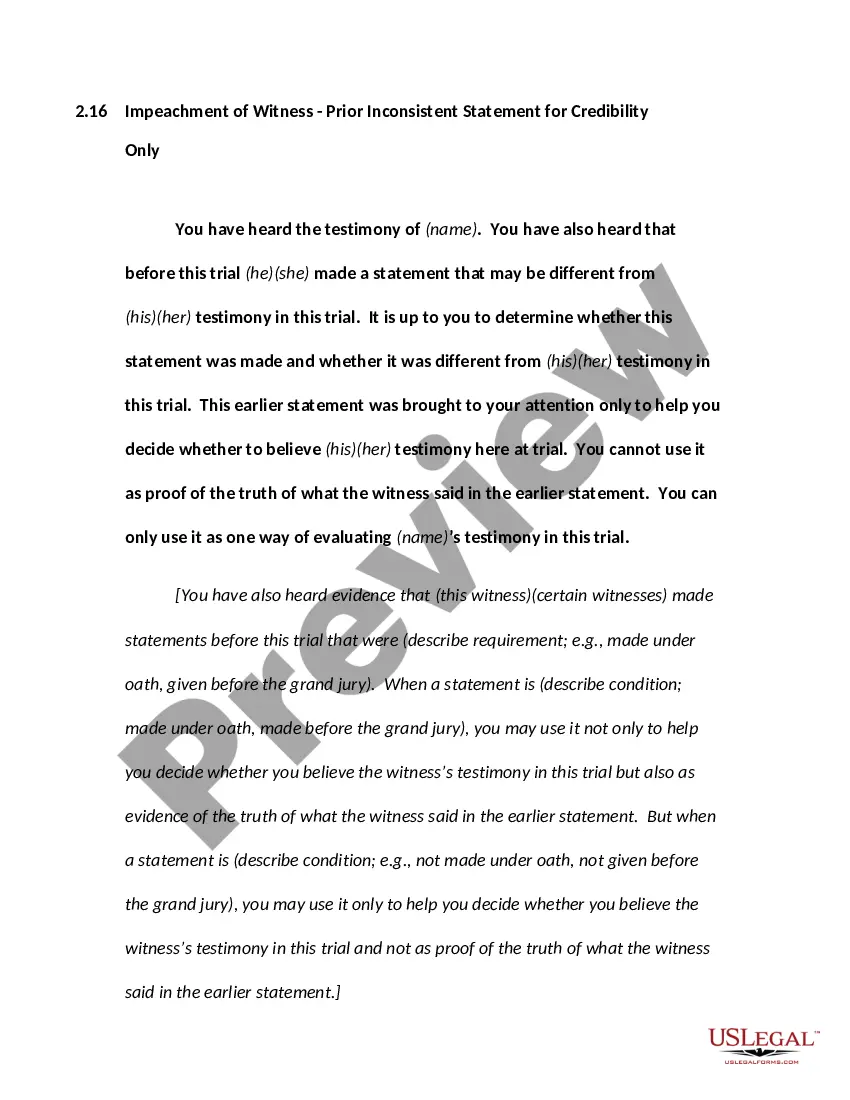
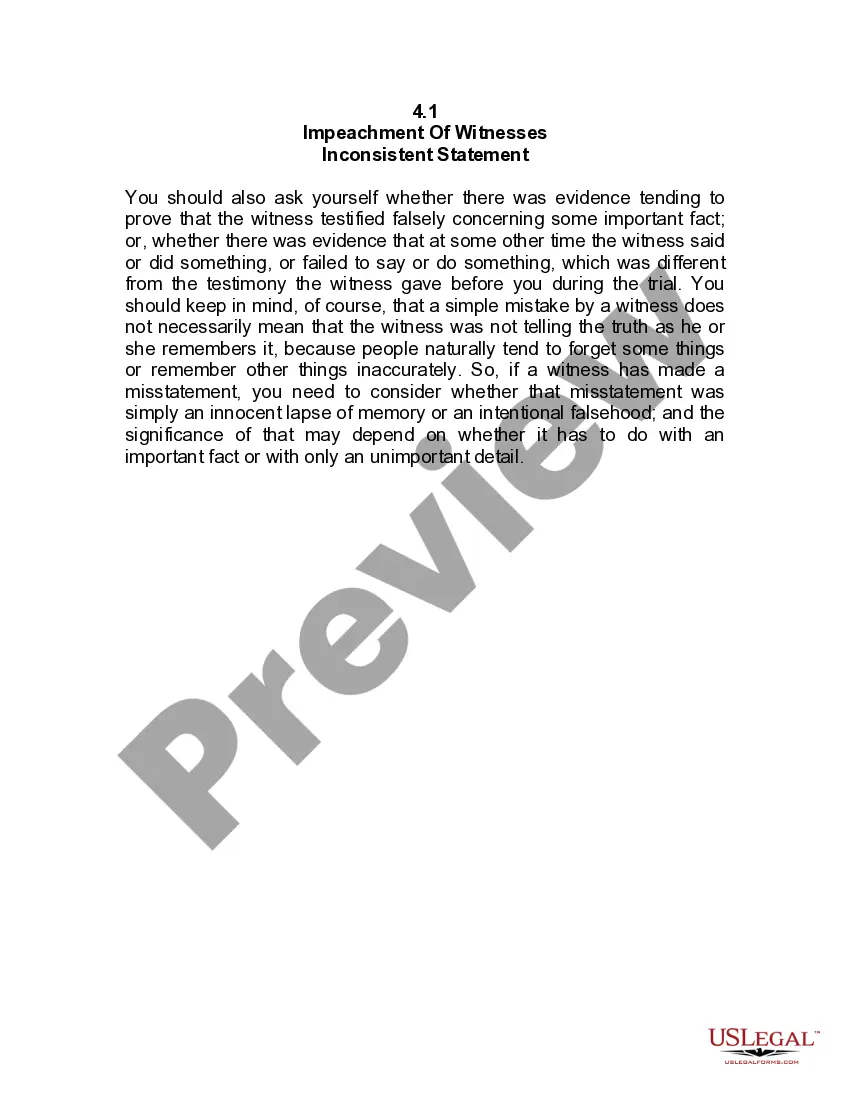
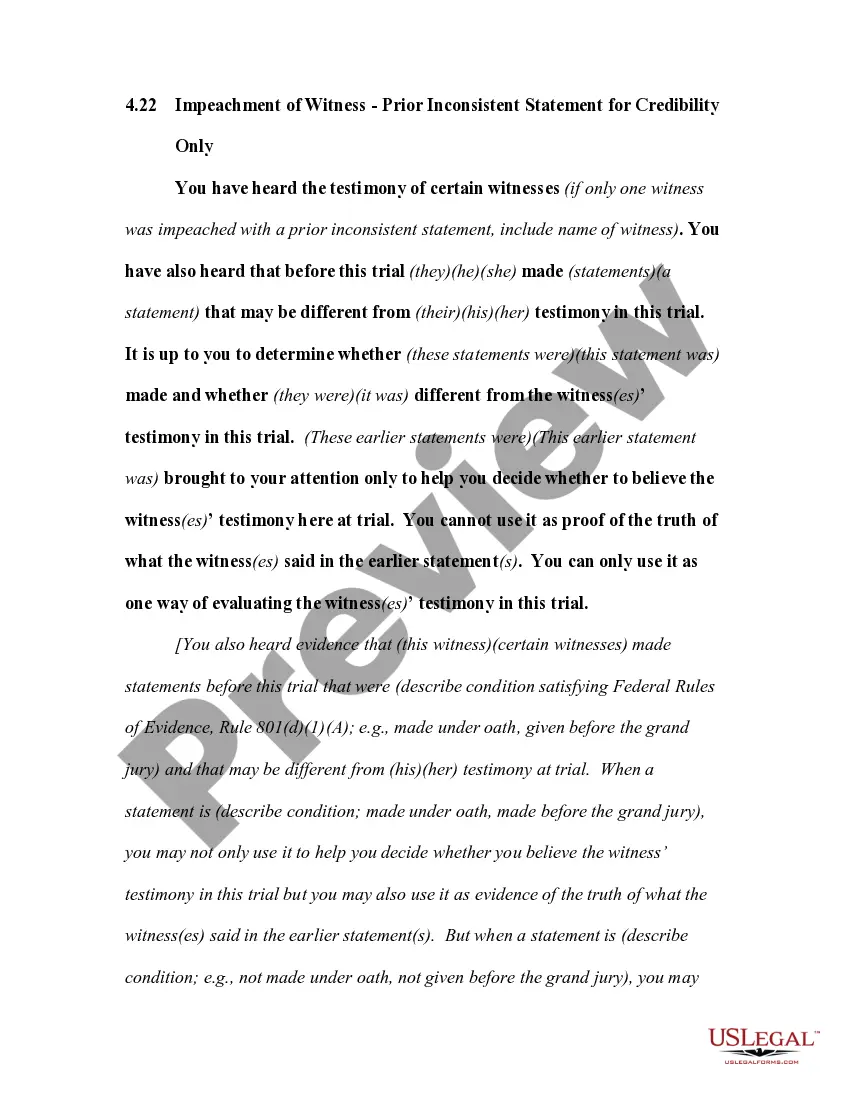
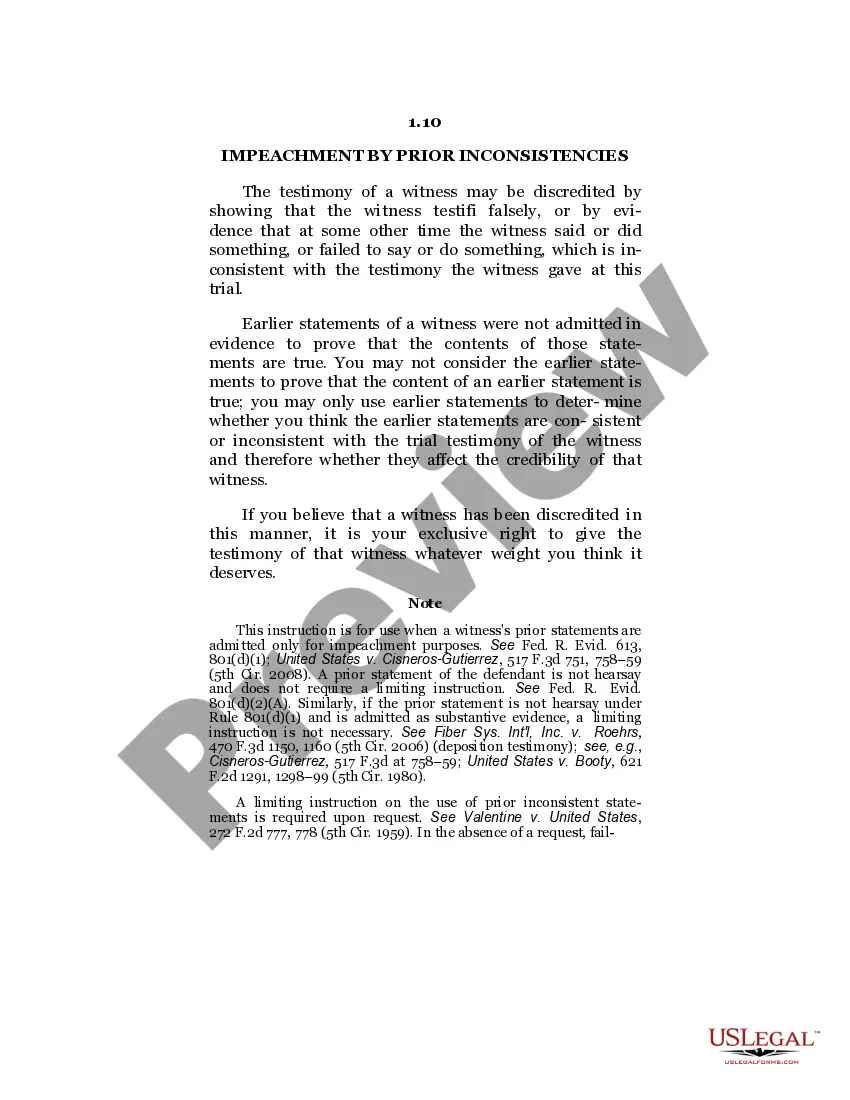
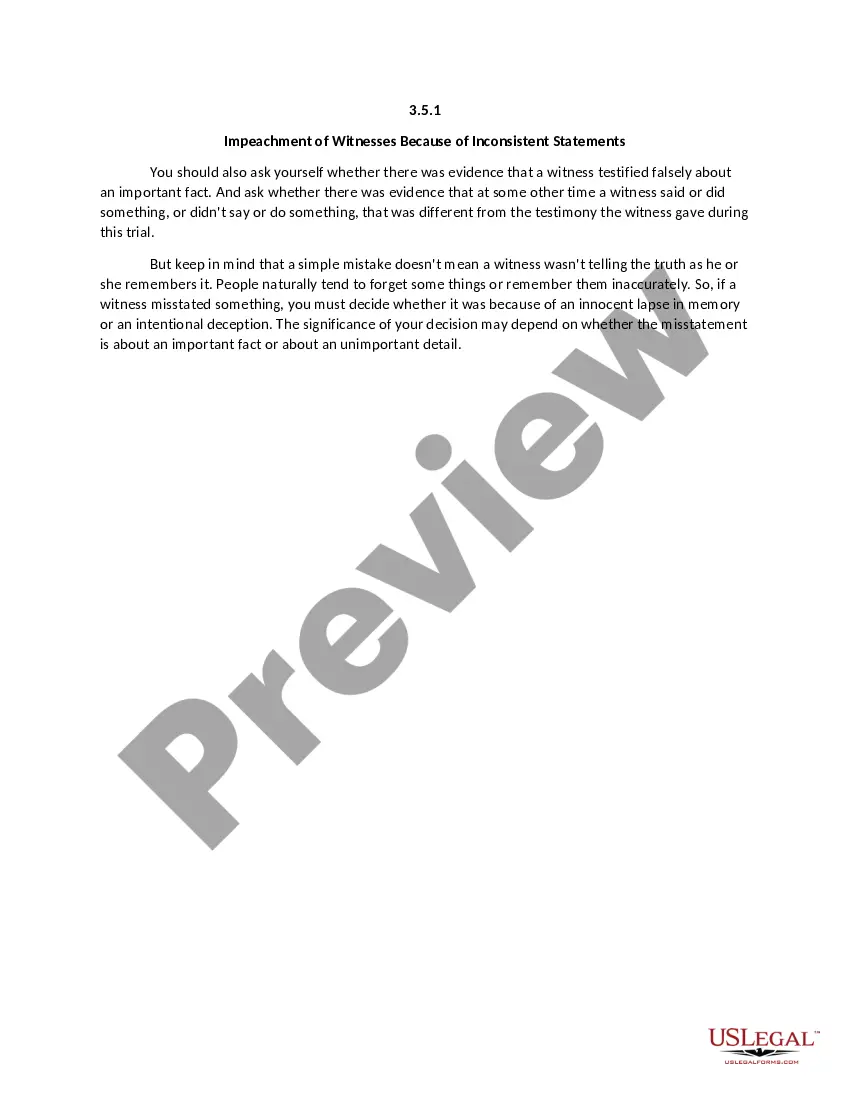
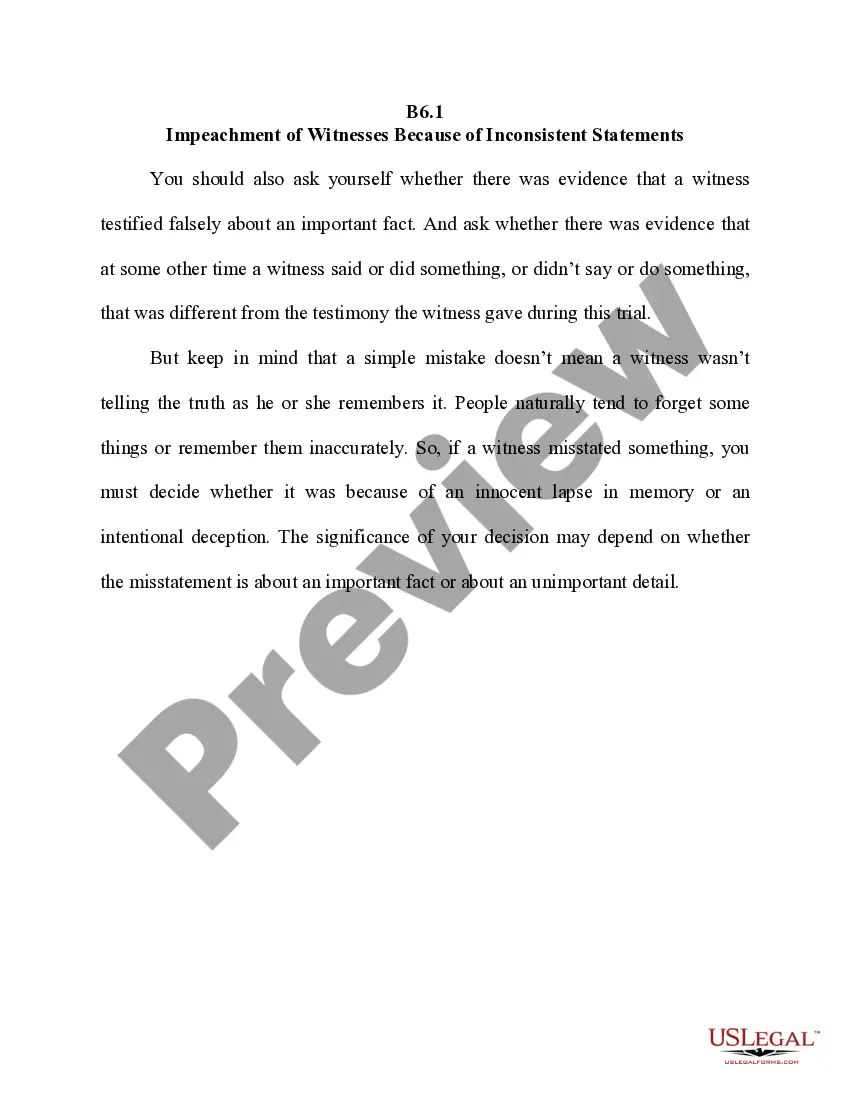
The Impeachment of Witness - Prior Inconsistent Statement for Credibility Only form is used in legal proceedings to assess the credibility of a witness's testimony by introducing earlier statements that differ from their current testimony. This form does not admit prior statements for their truth but serves as a tool for the jury to evaluate the reliability of the witness's current claims. It is an essential component in understanding how past statements can influence a jury's perception of a witness's trustworthiness.
Form components explained
- Information about the witness: Includes the name of the witness being impeached.
- Statement of inconsistency: A description of the previous statement made by the witness.
- Jury instruction: Explains how the jury should use the prior inconsistent statement strictly for credibility evaluation.
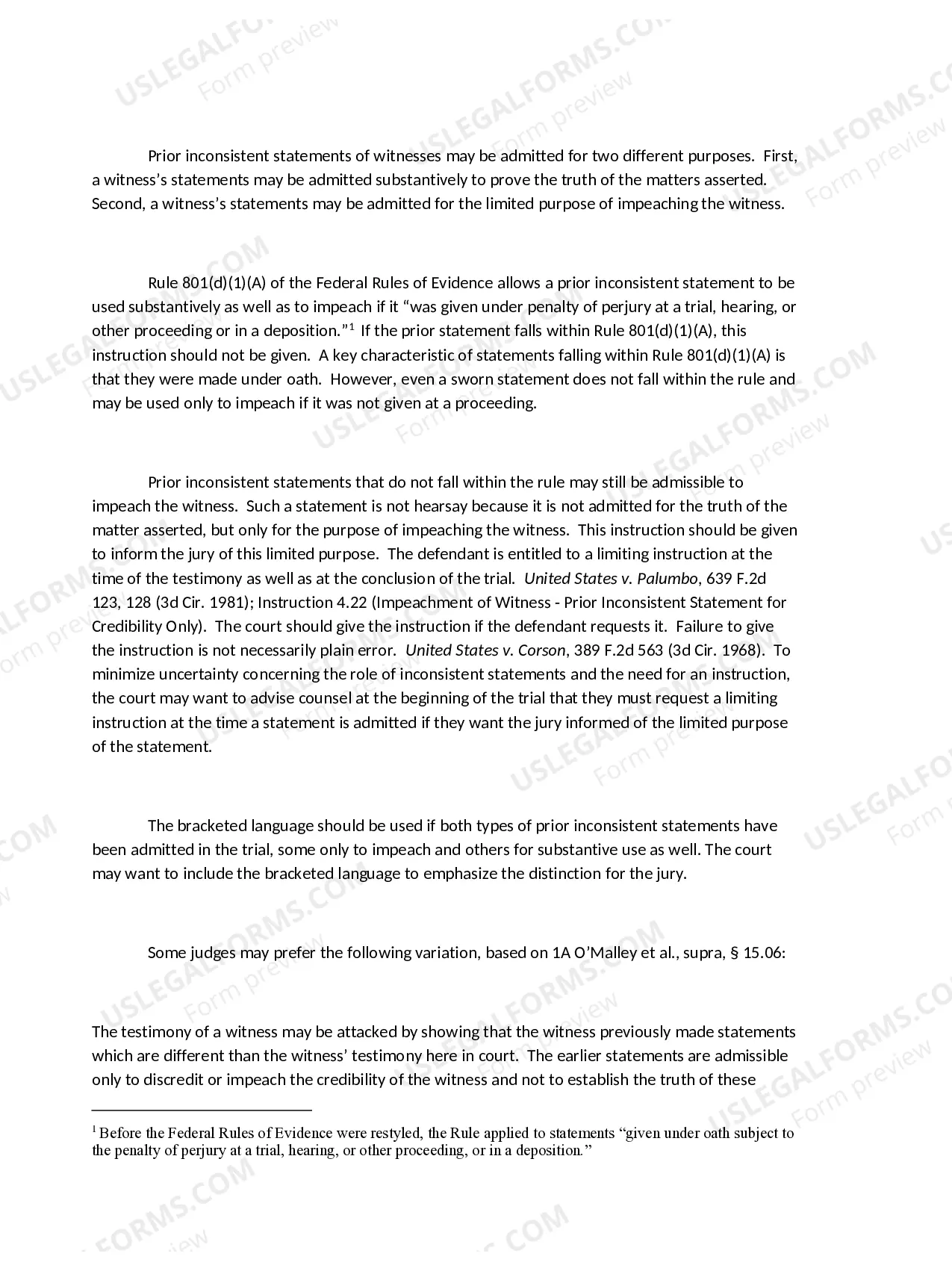
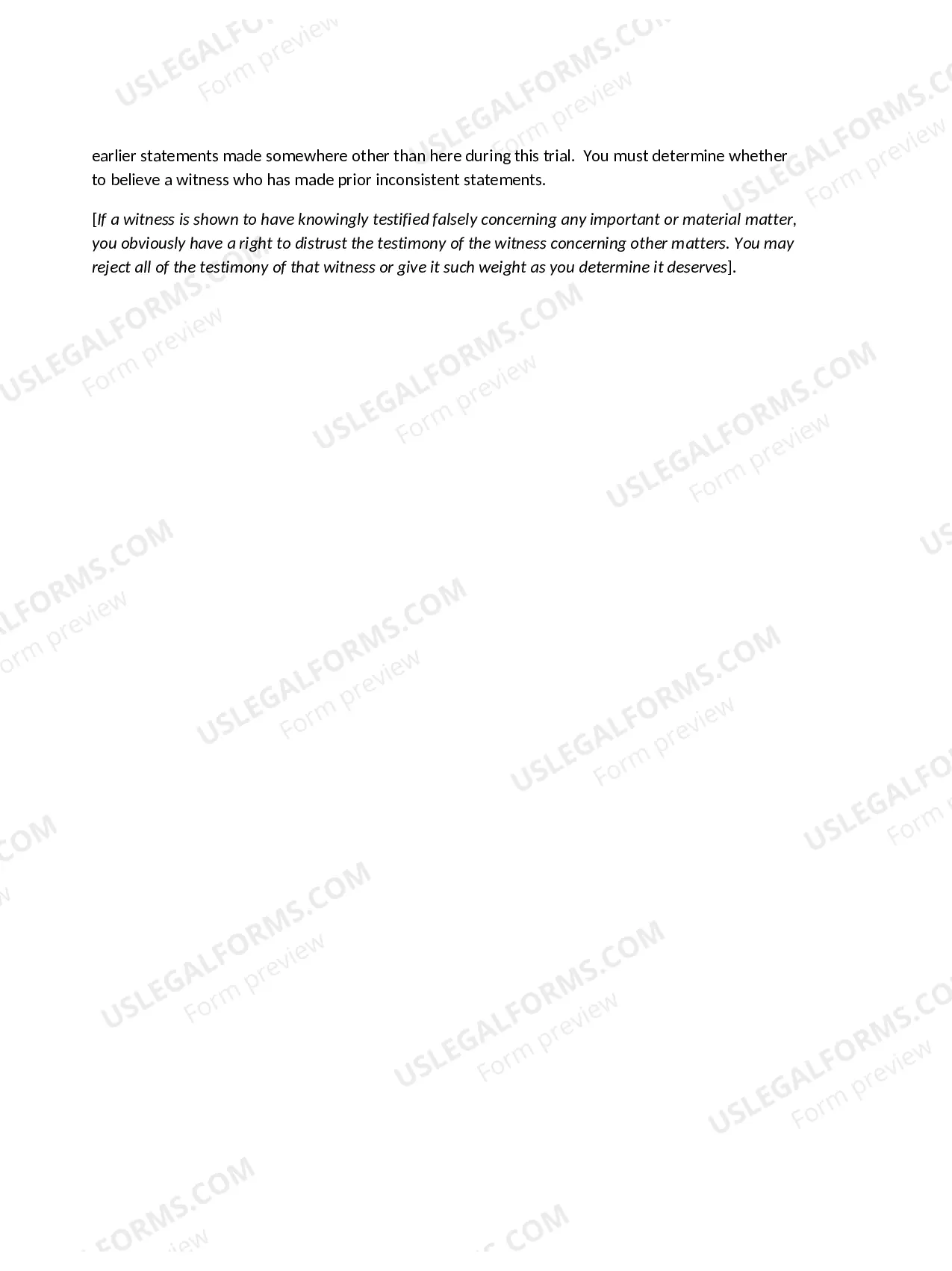
- Guidelines on admissibility: Clarifies conditions under which former statements may be used substantively or only for impeachment.
- Limiting instruction: A provision requesting the court to give instructions on the limited purpose of the evidence presented.
Situations where this form applies
This form is applicable in scenarios where a witness's current testimony differs from a statement they made previously. It is particularly relevant during trials where the credibility of a witness is in question, such as criminal cases or civil litigation. Legal representatives often use this form to challenge the reliability of witness statements, aiming to provide the jury with a comprehensive understanding of any inconsistencies that may affect the outcome of the case.
Who this form is for
- Attorneys representing clients in court who wish to impeach a witness's credibility.
- Prosecutors seeking to enhance their case by highlighting inconsistencies in witness testimony.
- Defendants or their legal teams aiming to weaken the opposing testimony by showing prior contradictions.
- Any party involved in a legal proceeding where witness credibility is crucial to the case's outcome.
How to complete this form
- Identify the witness: Clearly state the name of the witness whose past inconsistent statements will be referenced.
- Document prior statements: Include the content of the prior statement and how it contradicts current testimony.
- Request a jury instruction: Specify that the statement is to be used only for assessing credibility, not for truth.
- Note admissibility conditions: Outline any relevant details regarding whether prior statements were made under oath.
- Maintain clarity in language: Use straightforward language to ensure that all parties involved understand the implications of the inconsistent statement.
Is notarization required?
In most cases, this form does not require notarization. However, some jurisdictions or signing circumstances might. US Legal Forms offers online notarization powered by Notarize, accessible 24/7 for a quick, remote process.
Get your form ready online
Our built-in tools help you complete, sign, share, and store your documents in one place.
Make edits, fill in missing information, and update formatting in US Legal Forms—just like you would in MS Word.
Download a copy, print it, send it by email, or mail it via USPS—whatever works best for your next step.
Sign and collect signatures with our SignNow integration. Send to multiple recipients, set reminders, and more. Go Premium to unlock E-Sign.
If this form requires notarization, complete it online through a secure video call—no need to meet a notary in person or wait for an appointment.
We protect your documents and personal data by following strict security and privacy standards.

Make edits, fill in missing information, and update formatting in US Legal Forms—just like you would in MS Word.

Download a copy, print it, send it by email, or mail it via USPS—whatever works best for your next step.

Sign and collect signatures with our SignNow integration. Send to multiple recipients, set reminders, and more. Go Premium to unlock E-Sign.

If this form requires notarization, complete it online through a secure video call—no need to meet a notary in person or wait for an appointment.

We protect your documents and personal data by following strict security and privacy standards.
Common mistakes
- Omitting critical details about the prior statement, which may weaken the impeachment argument.
- Failing to emphasize the limited purpose of the prior inconsistent statement, leading to potential misuse in jury deliberations.
- Not correctly citing admissibility conditions under which the prior statement can be considered.
- Neglecting to request appropriate jury instructions at the right time during the trial.
Advantages of online completion
- Convenience of immediate access to a legally vetted form, reducing time spent on drafting.
- Editability allows customization to specific case needs without starting from scratch.
- Reliability ensured through attorney-drafted language, increasing the likelihood of compliance with legal standards.
- Easy downloading for quick use in legal settings, minimizing delays in trial preparations.
Legal use & context
- Prior inconsistent statements can significantly influence jury perceptions, making careful use of this form essential in trials.
- This form adheres to established legal precedents and standards as defined by the Federal Rules of Evidence.
- Improper use of prior statements can lead to legal challenges; hence correct application of this form is critical for effective legal proceedings.
Quick recap
- This form aids in impeaching a witness's credibility by addressing inconsistencies in their statements.
- It is important to distinguish when prior statements can be used as substantive evidence versus merely for credibility evaluation.
- Completing the form accurately ensures compliance with legal standards and proper jury instructions.
Looking for another form?
Form popularity
FAQ
A prior inconsistent statement is a common example where evidence may be offered to impeach a witness, as substantive evidence of a party's case, or both. A prior inconsistent may be offered as substantive evidence?if the statement was made under oath?in federal courts because it is not hearsay.
?In order to lay the proper predicate for impeachment by prior inconsistent statement, the witness must be advised of the substance of the prior inconsistent statement, the time and place the statement was made, and the person to whom the statement was made.? See Kimble v. State, 537 So.
Rule 613(b) allows a party to use a prior inconsistent statement to impeach a witness, but if the witness is called to the stand for sole purpose of impeaching him, the ?impeachment? is really a subterfuge for admitting the hearsay.
613(b) in that extrinsic evidence of a prior inconsistent statement is not admissible unless the statement is shown or disclosed to the witness during the witness's examination. Paragraph (b) is intended to give the witness and the party a fair opportunity to explain or deny the allegation.
You cannot effectively impeach unless the witness repeats a fact they said during the current hearing that clearly contradicts a prior statement. While this seems simple enough, you can easily run into trouble by tipping off the witness that you are about to impeach them.
Prior inconsistent statements are always admissible to impeach a witness, so long as they're in fact inconsistent. Prior inconsistent statements are admissible for their truth only if given under oath at a trial, hearing, or other proceeding.
Repeat. First, the most basic step, is to have the witness repeat the testimony from today's hearing that you want to impeach. You cannot effectively impeach unless the witness repeats a fact they said during the current hearing that clearly contradicts a prior statement.