Sample Letter for Review of Answer's and Objections to Plaintiff's 2nd Set of Interrogatories
What is this form?
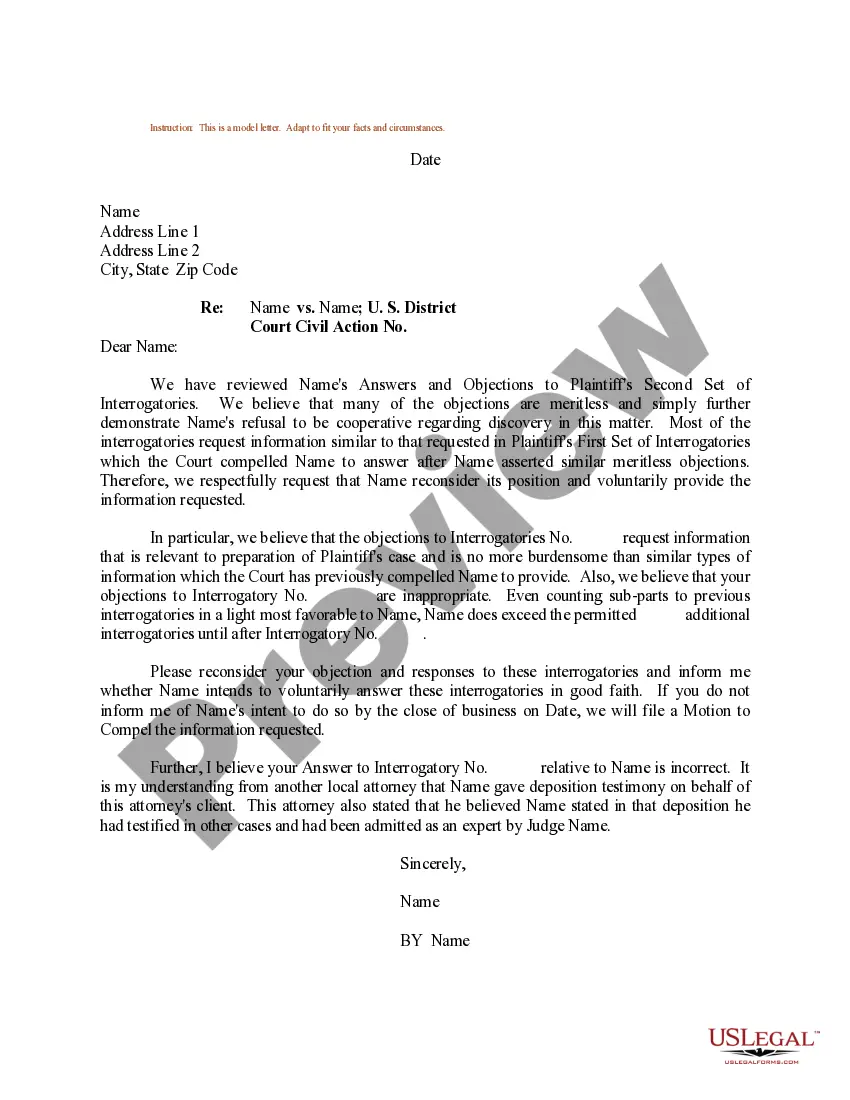
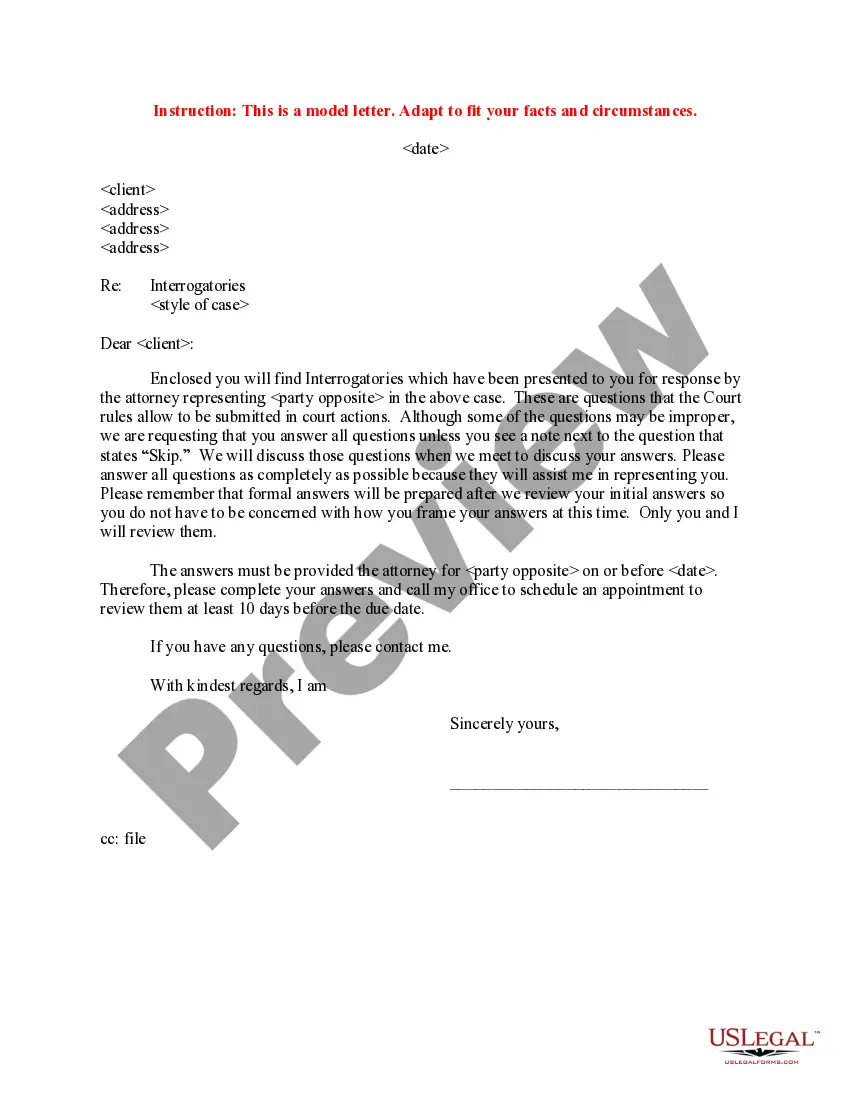
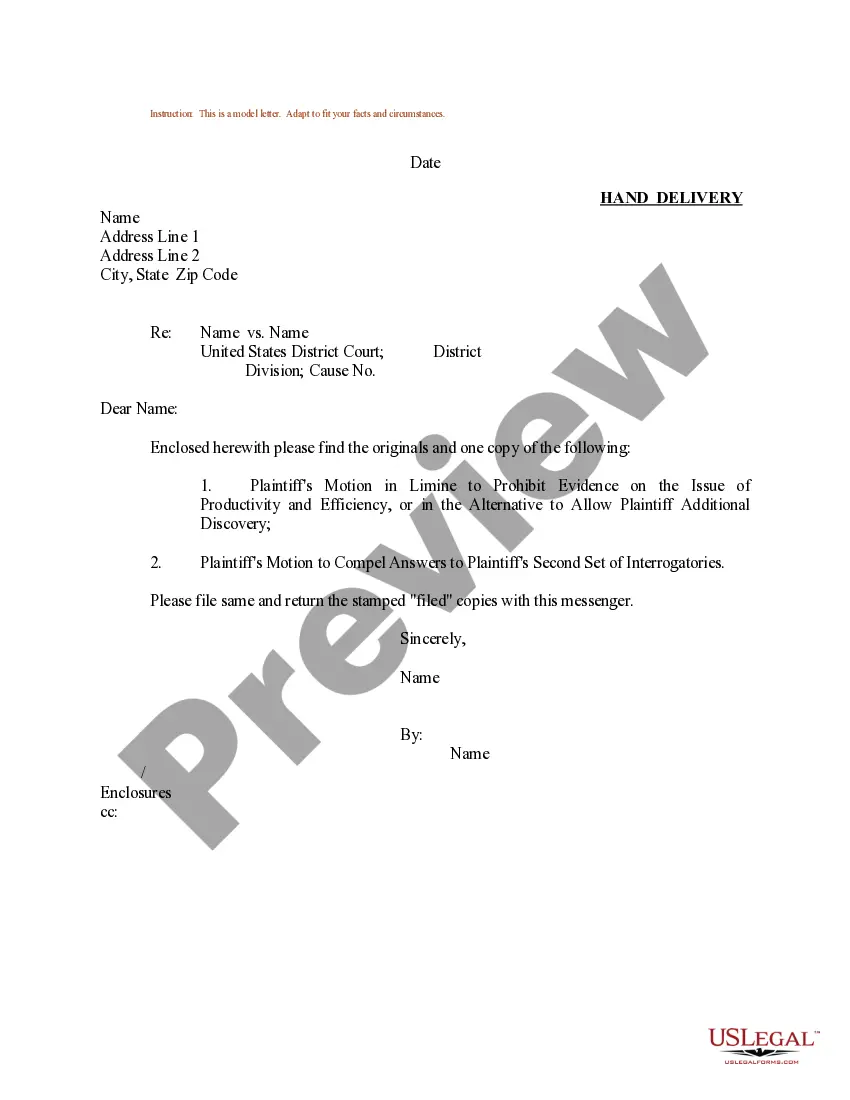
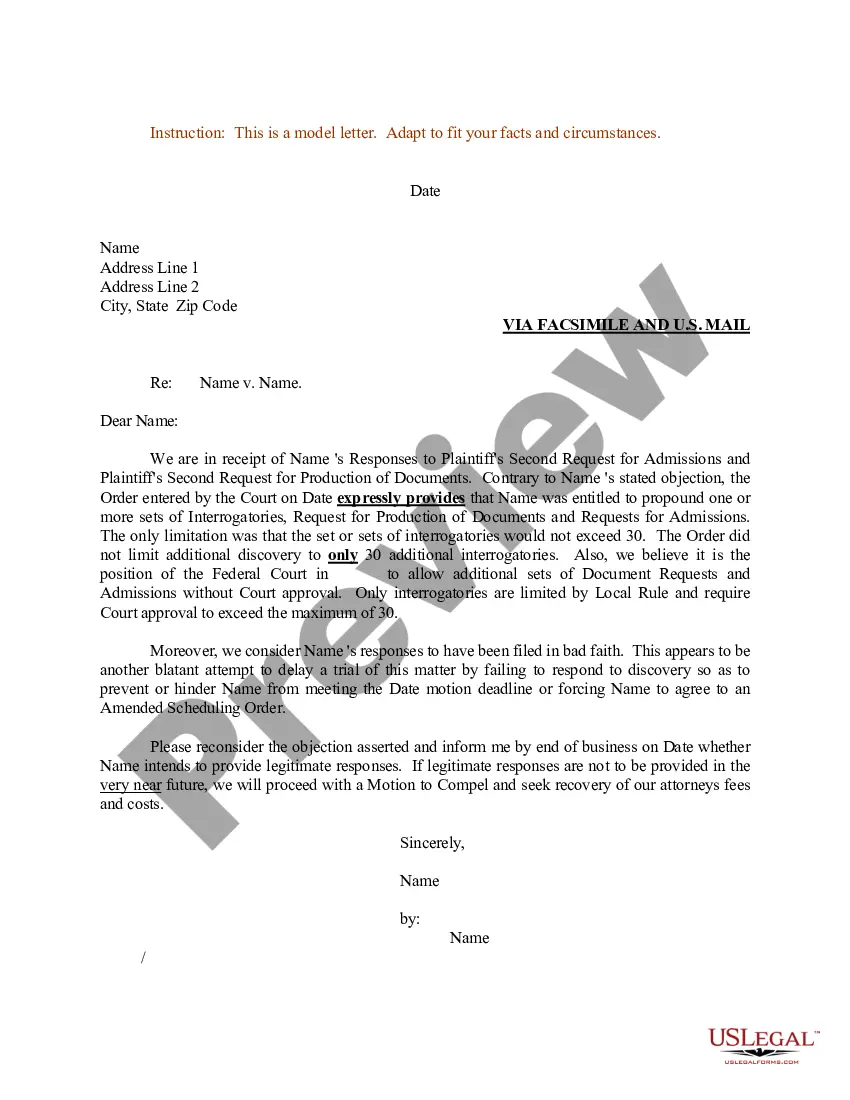
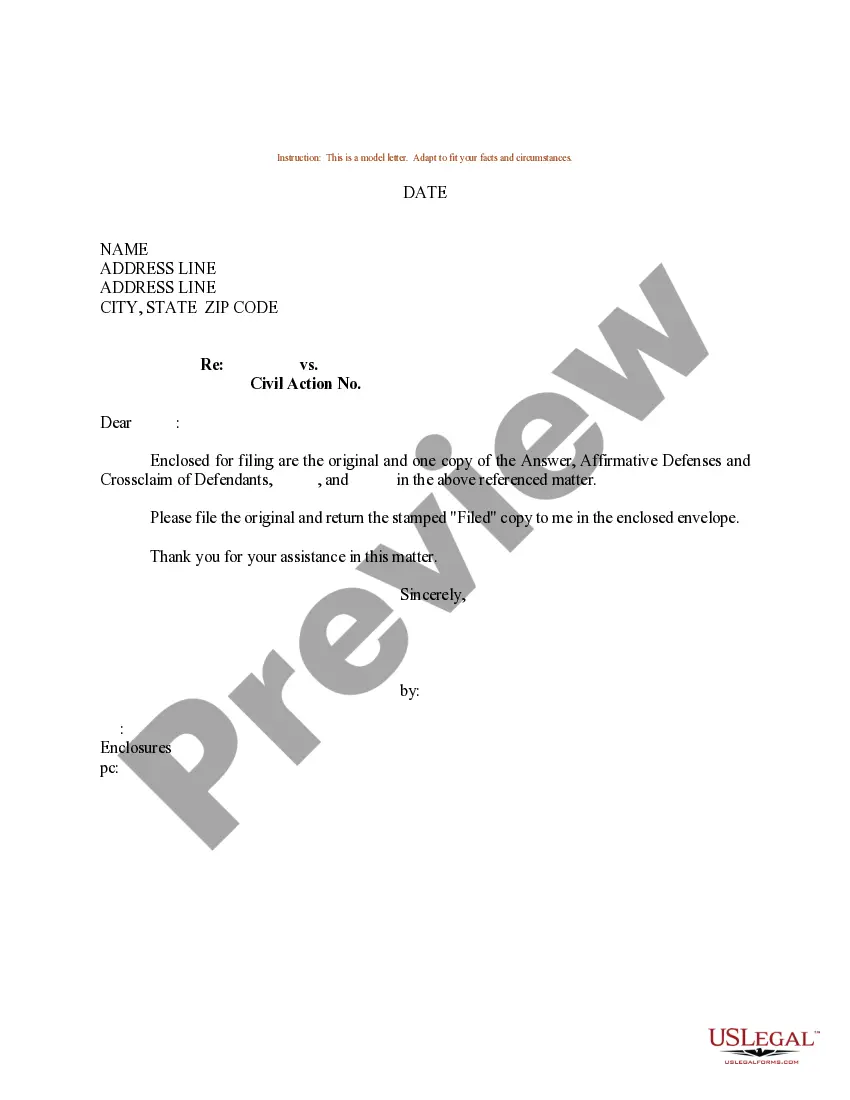
This Sample Letter for Review of Answer's and Objections to Plaintiff's 2nd Set of Interrogatories is designed to assist parties in legal proceedings by facilitating communication regarding responses to interrogatories. This form serves as a letter template that should be tailored to address specific objections and answers to interrogatories submitted by the plaintiff. It provides a professional framework to ensure clarity and compliance with legal standards, distinguishing itself from generic communication templates available online.
What’s included in this form
- Date field for correspondence tracking.
- Address section for both the sender and the recipient.
- Case details including the title (Name vs. Name) and court jurisdiction.
- Specific sections to address and outline objections to each interrogatory.
- Signature line for acknowledgment and validation of the response.
When this form is needed
This form is utilized in situations where a party must formally address and challenge the plaintiff's second set of interrogatories during a legal dispute. You should use this letter when you need to provide a documented response that presents your objections, clarifies your position, and maintains a record of your correspondence within the case. This letter will help ensure that your legal rights are upheld and any concerns about the interrogatories are officially communicated.
Who needs this form
- Defendants in a civil litigation case.
- Legal representatives acting on behalf of their clients.
- Individuals responding to discovery requests that include interrogatories.
Instructions for completing this form
- Enter the date in the designated field at the top of the letter.
- Provide your name and complete address, as well as that of the recipient.
- Include the case title and appropriate U.S. District Court details.
- Clearly outline your objections to each specific interrogatory within the form.
- Sign the letter to validate your responses and affirm the validity of the content.
Does this document require notarization?
This form does not typically require notarization unless specified by local law. Users are encouraged to check with local court requirements to confirm compliance.
Get your form ready online
Our built-in tools help you complete, sign, share, and store your documents in one place.
Make edits, fill in missing information, and update formatting in US Legal Forms—just like you would in MS Word.
Download a copy, print it, send it by email, or mail it via USPS—whatever works best for your next step.
Sign and collect signatures with our SignNow integration. Send to multiple recipients, set reminders, and more. Go Premium to unlock E-Sign.
If this form requires notarization, complete it online through a secure video call—no need to meet a notary in person or wait for an appointment.
We protect your documents and personal data by following strict security and privacy standards.

Make edits, fill in missing information, and update formatting in US Legal Forms—just like you would in MS Word.

Download a copy, print it, send it by email, or mail it via USPS—whatever works best for your next step.

Sign and collect signatures with our SignNow integration. Send to multiple recipients, set reminders, and more. Go Premium to unlock E-Sign.

If this form requires notarization, complete it online through a secure video call—no need to meet a notary in person or wait for an appointment.

We protect your documents and personal data by following strict security and privacy standards.
Avoid these common issues
- Failing to clearly outline specific objections to each interrogatory.
- Not including relevant case details, which are essential for clarity.
- Neglecting to sign and date the letter before sending it.
Why complete this form online
- Convenience of downloading and editing the template from your home or office.
- Access to professionally drafted content that complies with legal standards.
- Time-saving compared to drafting a letter from scratch.
Main things to remember
- This sample letter is essential for reviewing interrogatory responses in legal proceedings.
- It helps ensure compliance with discovery rules relevant to litigation.
- Attorneys and legal professionals should tailor the content to address specific objections effectively.
- Always verify local jurisdictional requirements that may affect the use of this form.
Looking for another form?


Form popularity
FAQ
You can object to an interrogatory if the information sought is known by the requesting party or available to both parties equally. For example, you should raise this objection if the answers are publicly available or in a third-party's custody or control.
So, can you refuse to answer interrogatories? The answer is, no, you may not. You must answer a Rule 33 interrogatory within 30 days of being served with it. That answer must either permit inspection of the requested information or object to the production of the information for a specific reason.
Your answers to the interrogatories should usually be short, clear, and direct and should answer only the question that is being asked. This is not the time to set out your entire case or defense to the other side. Take the time to make sure your answers are correct and truthful.
Make it a lead-off general objection. Object to anything that is not relevant to the subject matter (no longer the standard) or not likely to lead to admissible evidence (no longer the standard). Don't say if anything is being withheld on the basis of the objection. Use boilerplate wording from form files.
You may object to Form Interrogatories, but be careful to use the proper objection. Using the wrong one or using every single one may lead the court to view you as misusing the discovery process and make you pay sanctions.
If you are unable to answer an interrogatory because it is too vague, ambiguous, or somehow objectionable, you can state an objection and the reason for your objection. You must then answer to the extent the interrogatory is not objectionable.
You can object to an interrogatory if the information sought is known by the requesting party or available to both parties equally. For example, you should raise this objection if the answers are publicly available or in a third-party's custody or control.
Interrogatories Interrogatories are written questions that are sent by one party to another. Generally speaking, the party who receives these questions has 30 days to answer them.If the other party fails to respond on time, within 30 days, then the questions are deemed admitted.