Release regarding Field Trip
About this form
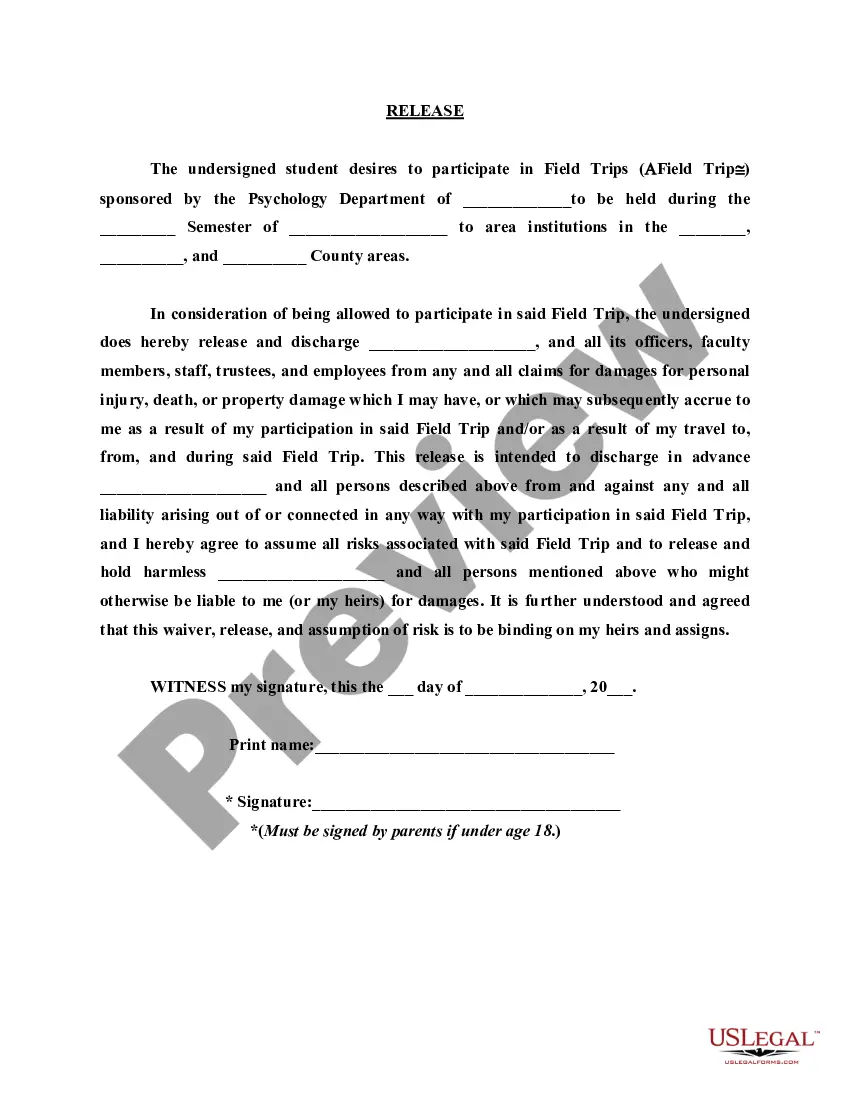
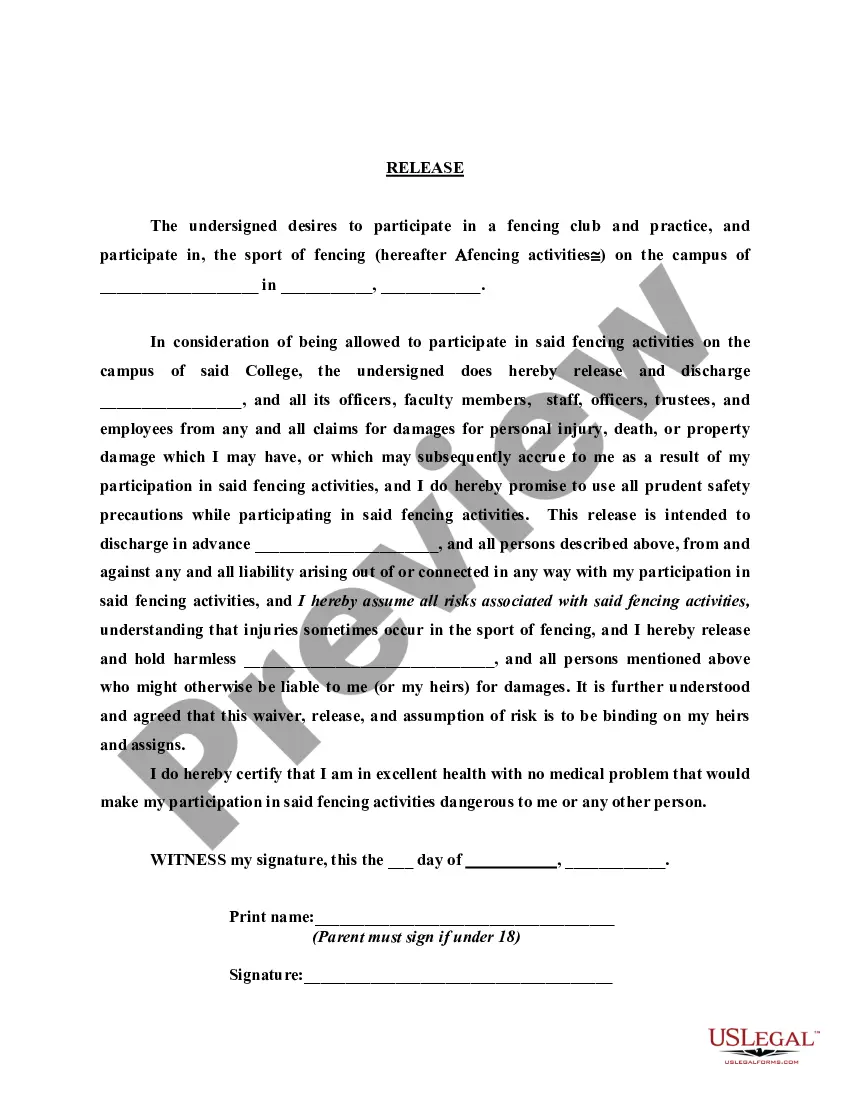
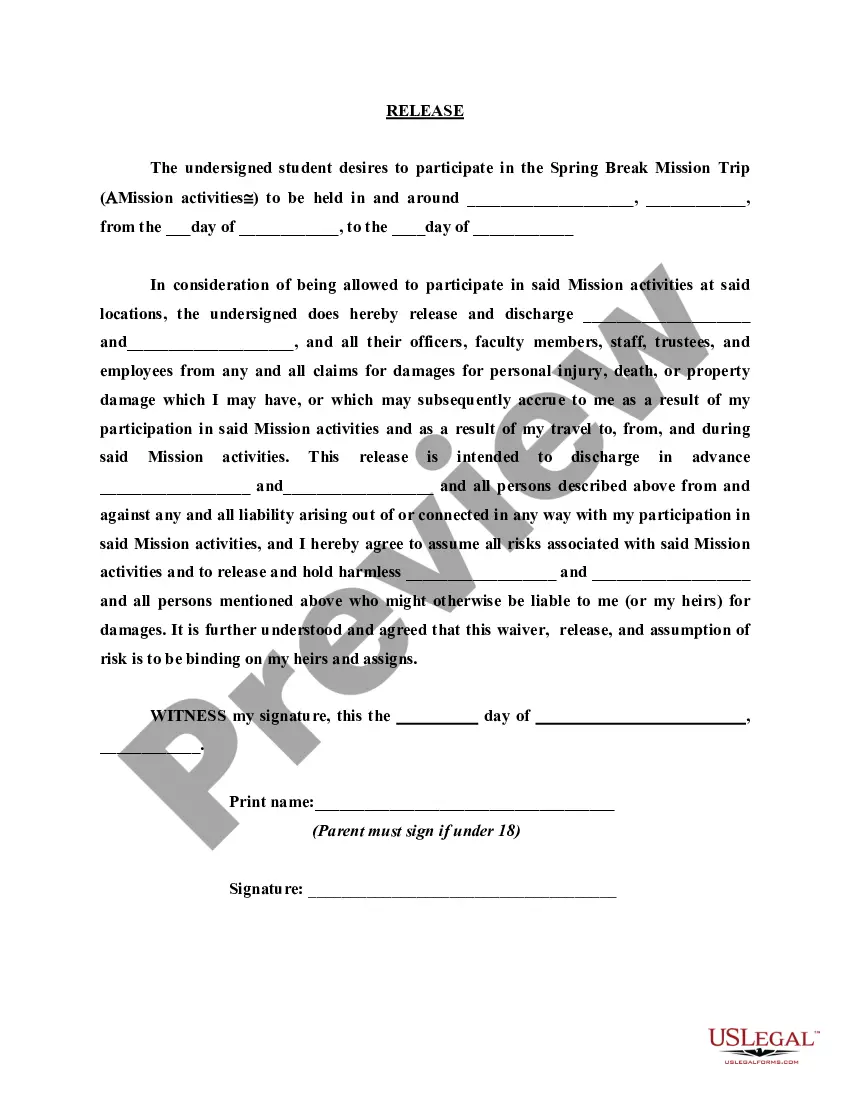
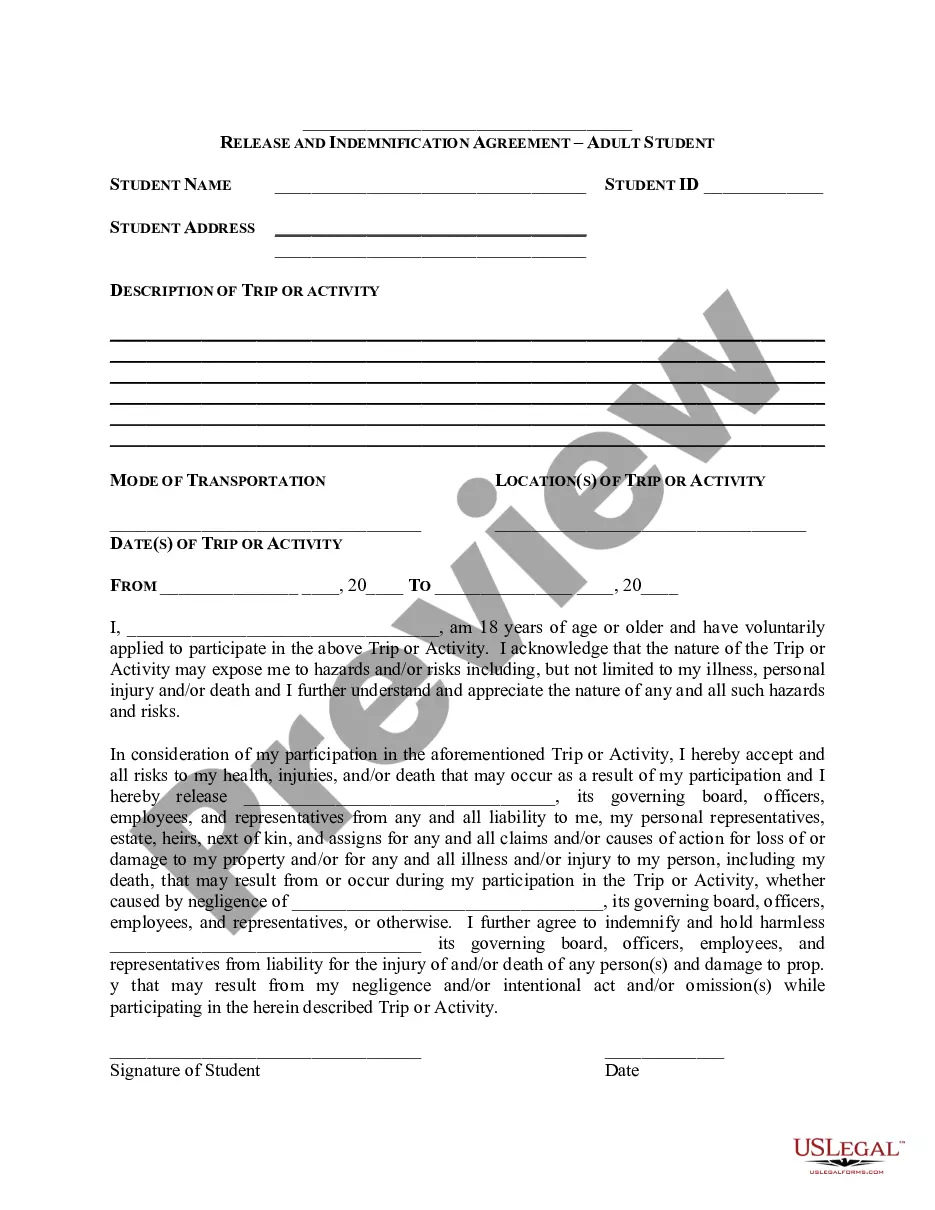
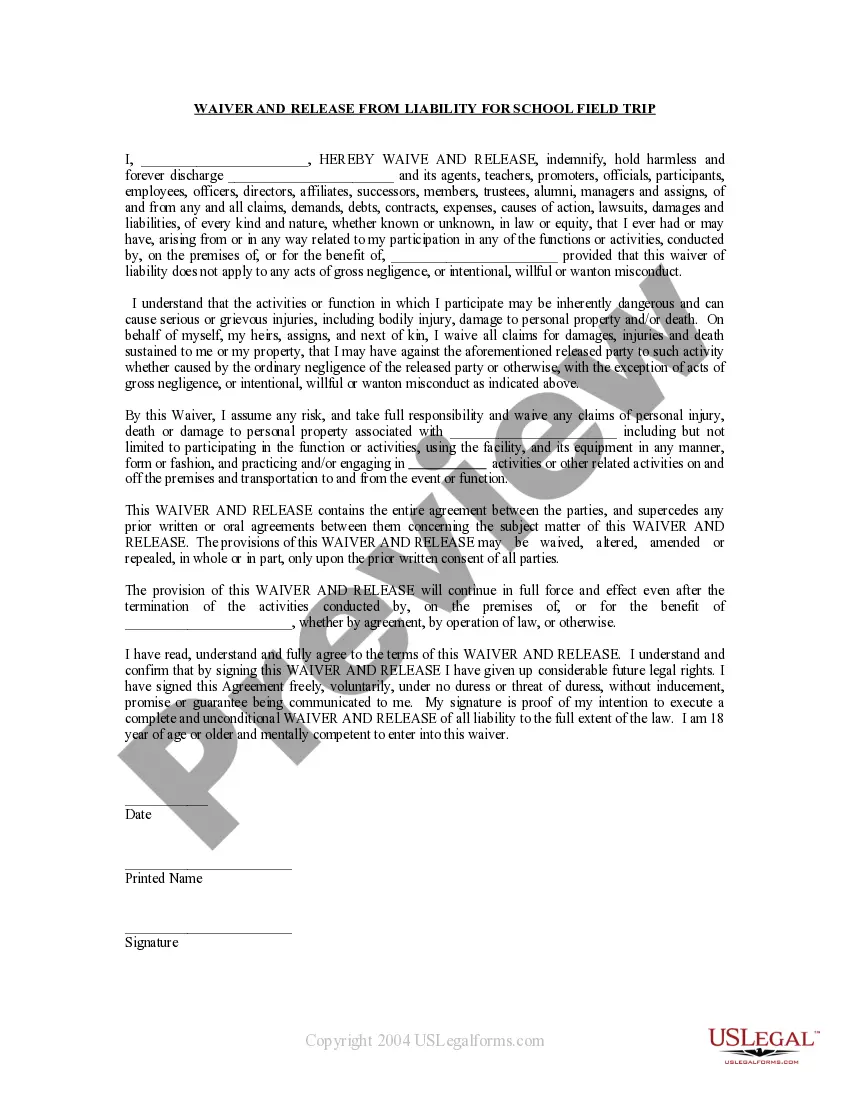
The Release regarding Field Trip is a legal document that confirms a participant's acceptance of risks associated with a specific field trip organized by an educational institution. This form serves to protect the institution and its employees from liability related to any injuries or damages that may occur during the trip. Unlike other liability waivers, this form is specifically tailored for educational field trips and includes provisions for minors, necessitating a parent's or guardian's signature.
Key parts of this document
- Identification of the student participating in the field trip
- Details about the field trip, including the organizing department and location
- Release of liability for the institution and its employees
- Assumption of all risks associated with the field trip
- Signature section for the participant and parent or guardian if applicable
When to use this document
This form should be used whenever a student plans to participate in a sponsored field trip, including school outings, educational visits, or off-campus activities. It is essential for managing the institution's risk and ensuring that all participants acknowledge any potential hazards involved in the trip.
Who can use this document
- Students participating in field trips organized by an educational entity
- Parents or guardians of participants under the age of 18
- Educational institutions or departments organizing field trips
Completing this form step by step
- Fill in the name of the student and the educational institution organizing the trip.
- Specify the details of the field trip, including the semester and locations visited.
- Read and understand the liability release clauses carefully.
- Sign and date the form, ensuring that a parent or guardian signs if the participant is under 18.
- Keep a copy of the signed form for your records.
Does this form need to be notarized?
This form usually doesn’t need to be notarized. However, local laws or specific transactions may require it. Our online notarization service, powered by Notarize, lets you complete it remotely through a secure video session, available 24/7.
Get your form ready online
Our built-in tools help you complete, sign, share, and store your documents in one place.
Make edits, fill in missing information, and update formatting in US Legal Forms—just like you would in MS Word.
Download a copy, print it, send it by email, or mail it via USPS—whatever works best for your next step.
Sign and collect signatures with our SignNow integration. Send to multiple recipients, set reminders, and more. Go Premium to unlock E-Sign.
If this form requires notarization, complete it online through a secure video call—no need to meet a notary in person or wait for an appointment.
We protect your documents and personal data by following strict security and privacy standards.

Make edits, fill in missing information, and update formatting in US Legal Forms—just like you would in MS Word.

Download a copy, print it, send it by email, or mail it via USPS—whatever works best for your next step.

Sign and collect signatures with our SignNow integration. Send to multiple recipients, set reminders, and more. Go Premium to unlock E-Sign.

If this form requires notarization, complete it online through a secure video call—no need to meet a notary in person or wait for an appointment.

We protect your documents and personal data by following strict security and privacy standards.
Common mistakes to avoid
- Failing to provide all requested details about the trip.
- Not obtaining a parent or guardian's signature for minors.
- Submitting the form without reviewing the liability clauses thoroughly.
Why complete this form online
- Convenience of downloading and completing the form from anywhere.
- Editability allows customization for specific field trips.
- Reliability of templates created by licensed attorneys.
What to keep in mind
- The Release Regarding Field Trip serves to protect the educational institution from liability during field trips.
- It is essential for both participants and parents or guardians to read and understand the form before signing.
- This form is suitable for use in multiple states, but ensure compliance with local regulations.
Looking for another form?
Form popularity
FAQ
Today's students are visual learners and a field trip lets them touch, feel, and listen to what they're learning about, which helps them build on classroom instruction, gain a better understanding of topics, build cultural understanding and tolerance, and expose them to worlds outside their own.
Decide on a Destination. Ask Your Administrator. Arrange Transportation. Decide on a Food Plan. Plan Your Schedule for the Day. Arrange Supervision and Volunteers. Create a Permission Slip. Decide Who's Allowed to Go.
1) Art Museum. Art Museums are a great way to connect art and history- a subject that young students struggle to identify with. 2) Aquarium. 3) TV Station. 4) Botanical Gardens. 5) Theatre. 6) Movies. 7) Zoo. 8) Farm.
The purpose of the trip is usually observation for education, non-experimental research or to provide students with experiences outside their everyday activities, such as going camping with teachers and their classmates.
Under DepEd Order No.The DepEd also reiterates that while field trips are meant to supplement classroom learning, joining such is not mandatory. It cites in the memo: Participation in co- and extra-curricular activities will be voluntary. No learner shall be required to participate in any off-campus activity.
A field trip or excursion is a journey by a group of people to a place away from their normal environment.Teachers often take the time to learn about the destination and the subject before the trip. Activities that happen on the field trips often include: lectures, tours, worksheets, videos and demonstrations.
No. Students are not required to participate in school trips.The school cannot legally take the students off the school grounds without permission.
Field trips and hands on learning make concepts more memorable. Just think back to what you learned in school, the field trips you took, and what you learned on them are still some of the clearest concepts. Additionally, field trips are important because students are able to engage with content in a variety of ways.
Start your introduction with information that leads up to your thesis statement, which is usually the last sentence of your introduction. You might focus on an interesting anecdote from your trip or discuss particular features that made an impression on you. Use these tidbits to develop your thesis.