Sample Letter for Release of Funds into Decedent's Estate
What this document covers
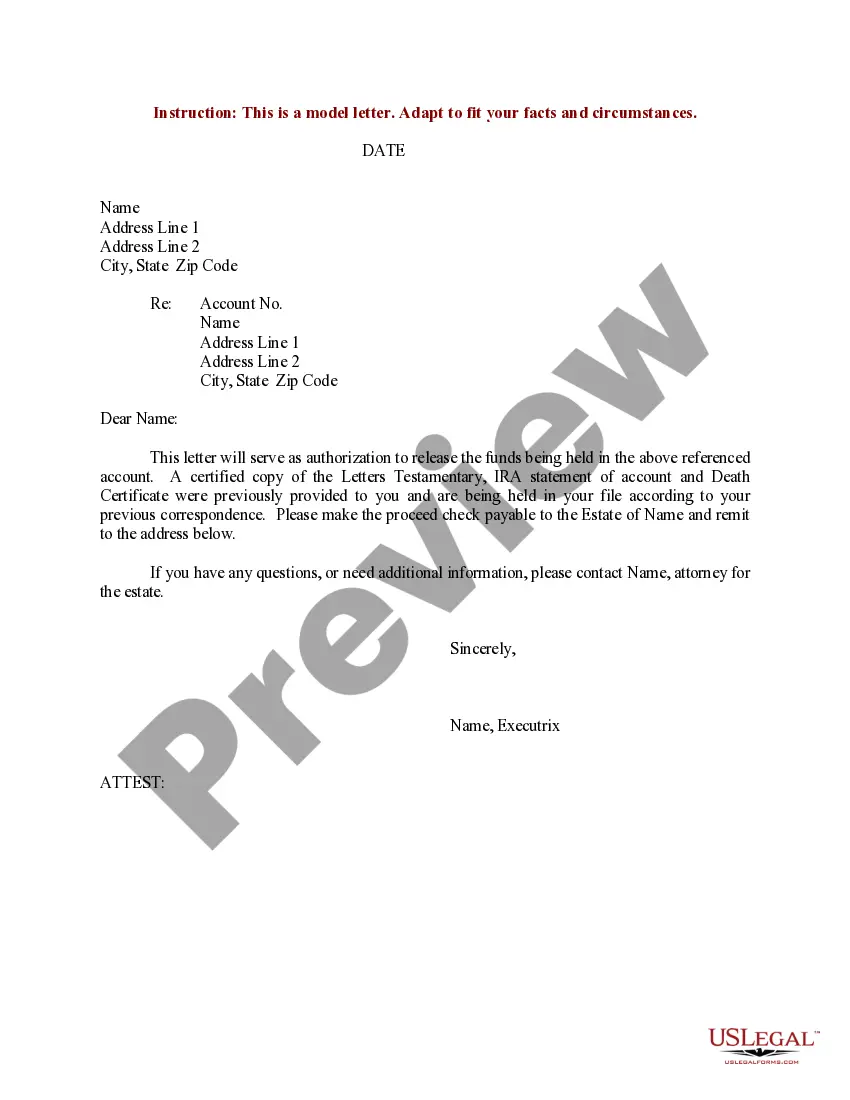
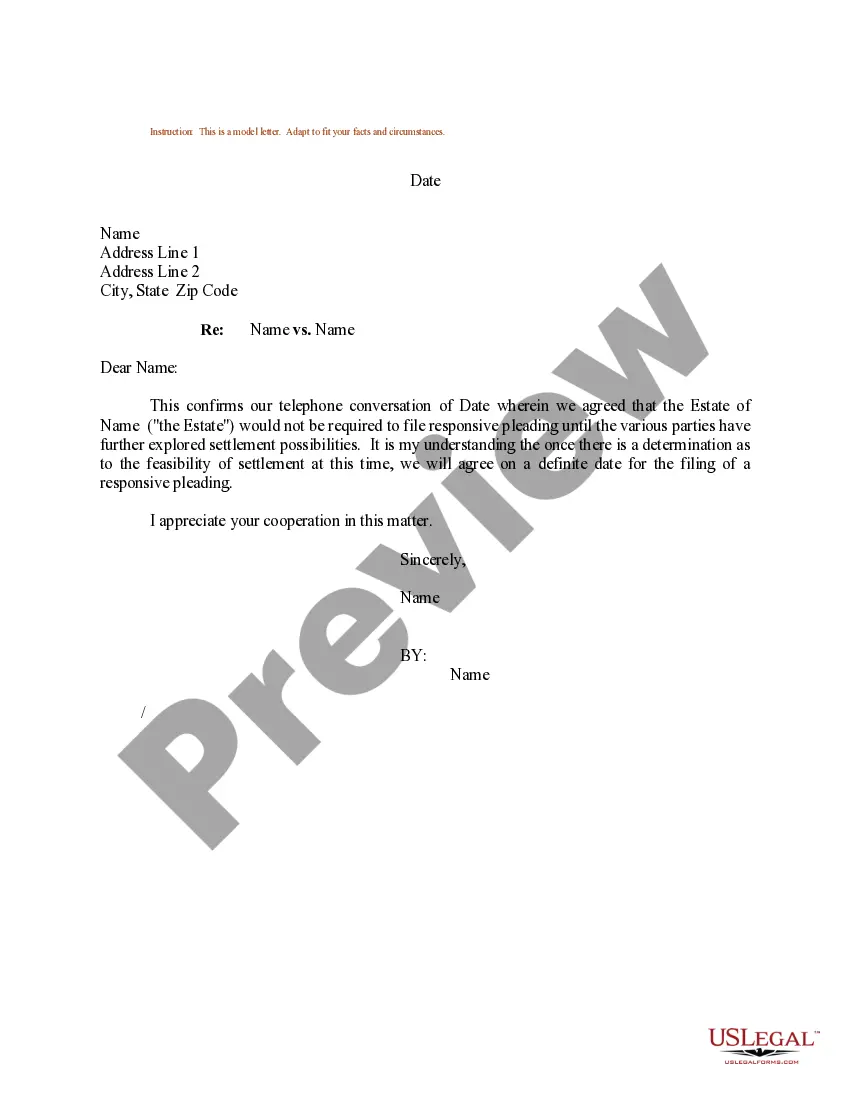
The Sample Letter for Release of Funds into Decedent's Estate is a template that allows the executor or administrator of an estate to formally request the release of funds held by a financial institution or company. This letter serves to ensure that assets are released accurately and in compliance with legal requirements, distinguishing it from other estate management documents by specifically facilitating the transfer of funds necessary for settling the decedent's financial obligations and distributing the estate.
Key parts of this document
- Date: The date when the letter is written.
- Name of Company: The financial institution or entity holding the funds.
- Address: The complete address of the company.
- Account Number: Identifier for the account associated with the funds.

Common use cases
This form is used when an executor or administrator of an estate needs to access or transfer funds belonging to a deceased individual. It may be necessary in instances such as settling debts, paying for funeral expenses, or facilitating the distribution of assets to beneficiaries as part of the probate process. Utilizing this form helps streamline communication with financial institutions, ensuring that funds are released promptly and legally.
Intended users of this form
Individuals or entities that should use this form include:
- Executors or administrators of a decedent's estate.
- Legal representatives acting on behalf of the estate.
- Beneficiaries who need to coordinate with the estate administrator regarding fund release.
Steps to complete this form
- Identify the current date to make the letter official.
- Enter the name of the financial institution or company holding the funds.
- Provide the complete address of the institution for correspondence.
- Include the account number related to the funds being requested.
- Sign the letter to authenticate the request.
Notarization requirements for this form
This form does not typically require notarization unless specified by local law. This means that the letter can usually be sent directly to the financial institution without needing to notarize it, simplifying the process for executors or administrators.
Get your form ready online
Our built-in tools help you complete, sign, share, and store your documents in one place.
Make edits, fill in missing information, and update formatting in US Legal Forms—just like you would in MS Word.
Download a copy, print it, send it by email, or mail it via USPS—whatever works best for your next step.
Sign and collect signatures with our SignNow integration. Send to multiple recipients, set reminders, and more. Go Premium to unlock E-Sign.
If this form requires notarization, complete it online through a secure video call—no need to meet a notary in person or wait for an appointment.
We protect your documents and personal data by following strict security and privacy standards.

Make edits, fill in missing information, and update formatting in US Legal Forms—just like you would in MS Word.

Download a copy, print it, send it by email, or mail it via USPS—whatever works best for your next step.

Sign and collect signatures with our SignNow integration. Send to multiple recipients, set reminders, and more. Go Premium to unlock E-Sign.

If this form requires notarization, complete it online through a secure video call—no need to meet a notary in person or wait for an appointment.

We protect your documents and personal data by following strict security and privacy standards.
Typical mistakes to avoid
- Failing to provide the exact account number, leading to delays.
- Not signing the letter, which could invalidate the request.
- Missing the date, making it unclear when the request was made.
Why complete this form online
- Convenience of instant access to templates that can be customized.
- Easy editing options allow users to fill in specific details without hassle.
- Reliability of professionally drafted forms by licensed attorneys for accuracy.
Looking for another form?



Form popularity
FAQ
Letters of Administration are granted by a Surrogate Court or probate registry to appoint appropriate people to deal with a deceased person's estate where property will pass under Intestacy Rules or where there are no executors living (and willing and able to act) having been validly appointed under the deceased's will
A grant of probate is issued to the executor/s named in the will, whereas a grant of letters of administration is issued to the next of kin of someone who died without a will.This document will allow whoever is dealing with the estate to close bank accounts, cash in investments and sell or transfer property.
The simple answer is that once you have a grant of probate or letter of administration in hand, it usually takes between six and twelve months to transfer all the funds, assets and property in an estate.The Department for Work and Pensions needs to investigate the estate. The estate is bankrupt.
A letter of instructions is an informal document that gives your survivors information concerning important financial and personal matters that must be attended to after your demise.
Give the letter a personal touch and address each of your heirs and beneficiaries personally. Tell them any last wishes you may have or any hopes you have for their future. Write as clearly as possible. Use specific details and avoid using shorthand.
The fee for applying for probate or letters of administration depends on the value of the estate. You won't pay a fee if the value of the estate is less than £5,000. If the estate is valued at A£5,000 or more the fee is A£215. This is the same for both post and online applications.
Completion of the executor or administrator appointment takes about six to eight weeks once the executor files the petition or the court makes a selection.
An executor letter authorizes a person or organization to act on behalf of a decedent's estate as an executor.It's also called "letters of testamentary" or "letters of administration" in some jurisdictions.
Distribution Letter means that certain letter agreement, executed and delivered by the Company, the Controlling Stockholder and the Investor concurrently with the execution of this Agreement, as attached hereto as Exhibit E.