Clauses Relating to Accounting Matters
Overview of this form
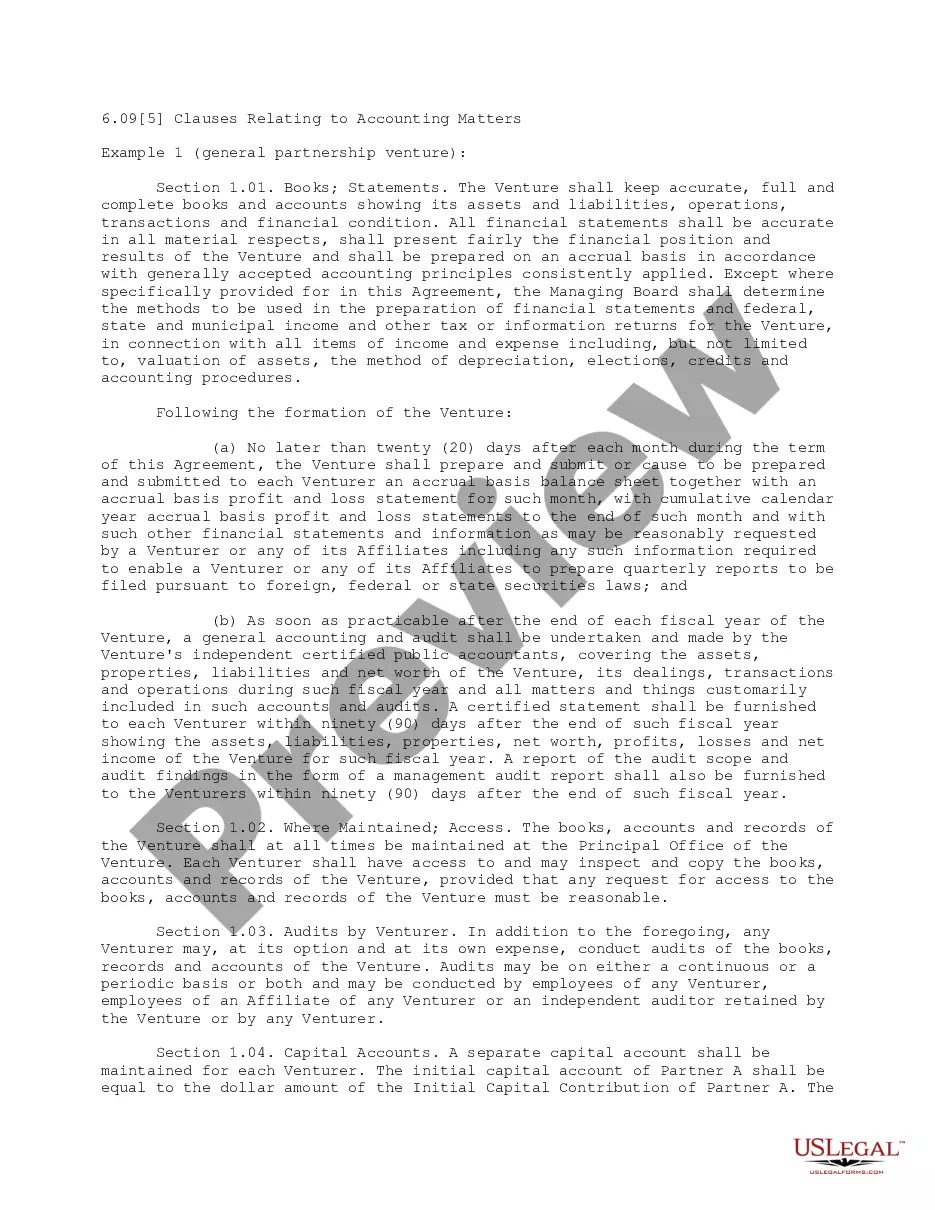
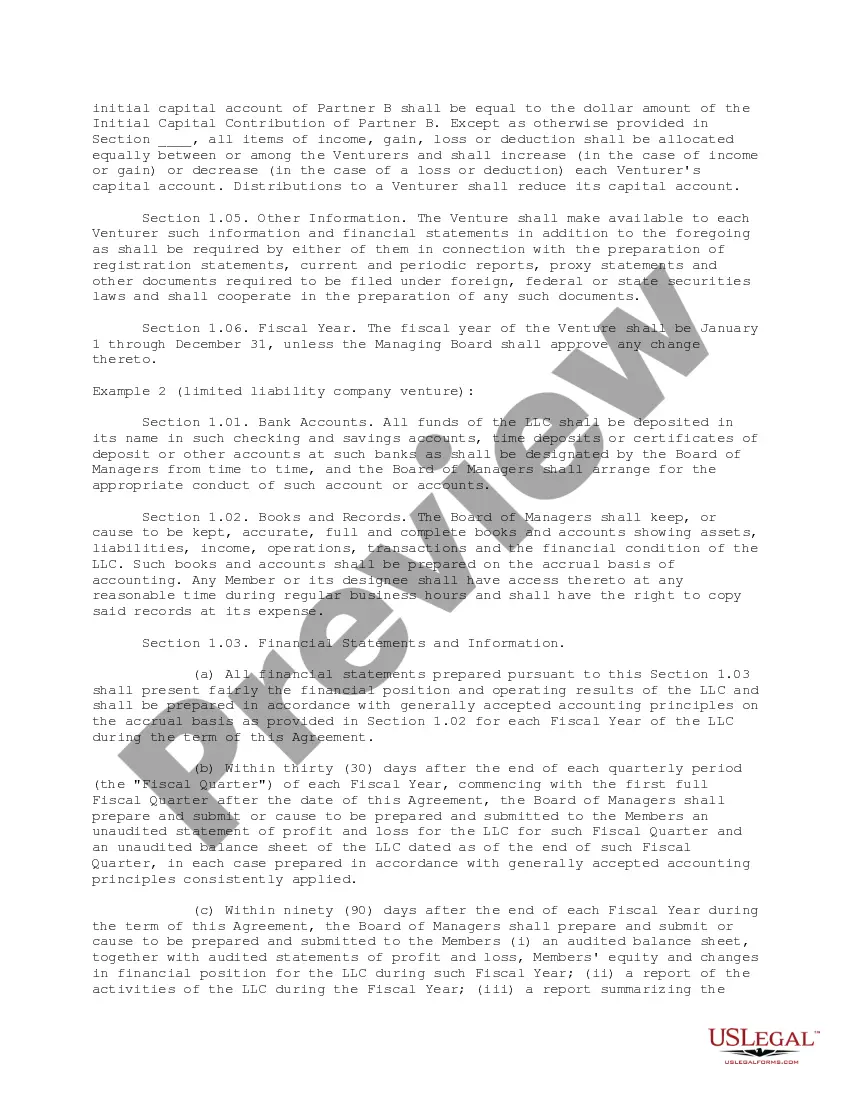
The Clauses Relating to Accounting Matters is a legal form template designed for corporate and business transactions. This form outlines the necessary accounting practices, record-keeping, and reporting requirements for business ventures, providing a structured approach to maintain accurate financial records. Unlike general accounting forms, this template is tailored for specific use in corporate agreements, ensuring compliance and clarity in financial documentation.
What’s included in this form
- Books and Financial Statements: Requirements for maintaining accurate financial records in accordance with accounting principles.
- Access and Inspection: Provisions allowing partners access to financial records for transparency.
- Audits: Rules regarding the conduct of financial audits to ensure integrity and accuracy.
- Capital Accounts: Guidelines for maintaining individual capital accounts for each partner within a venture.
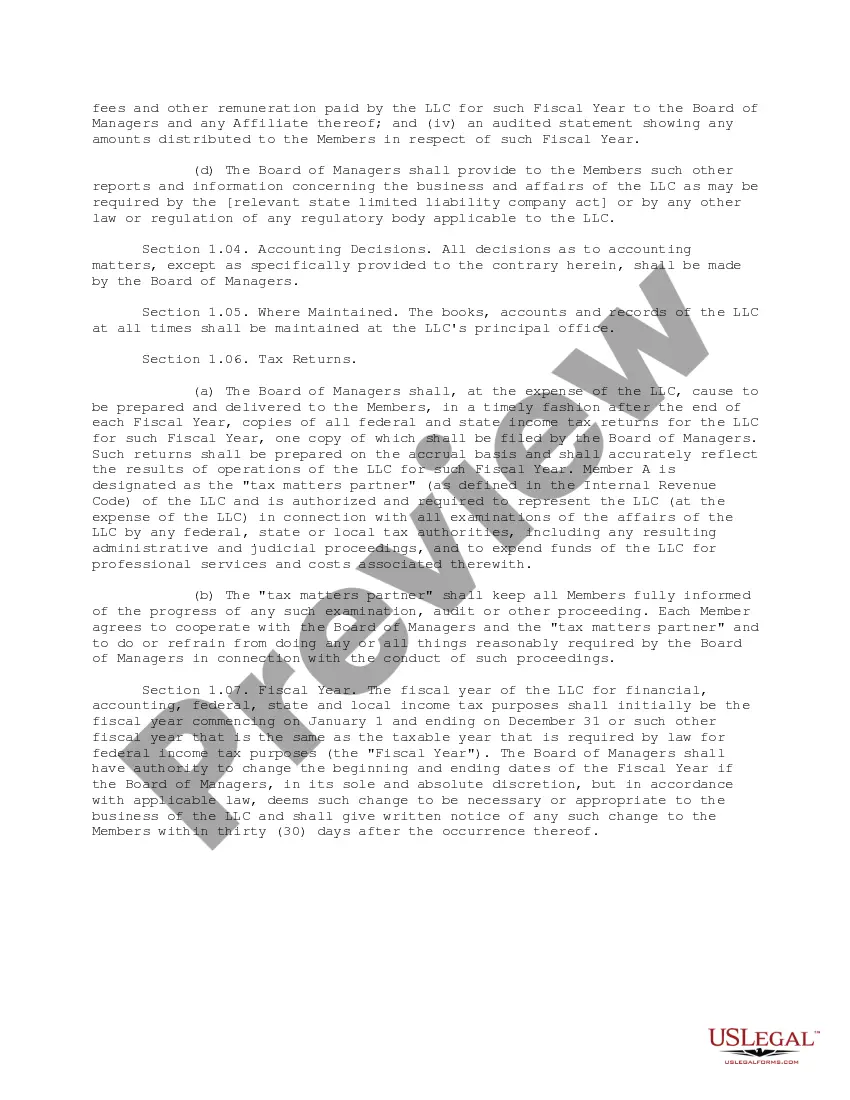
- Fiscal Year: Definition of the fiscal year for the partnership or LLC, typically from January 1 to December 31.
- Tax Returns: Instructions for tax preparation and responsibilities of members or partners.
When to use this form
This form is essential for business partners in a general partnership or limited liability company (LLC) looking to establish clear accounting responsibilities and reporting procedures. Use this form when forming a new venture, managing existing partnerships, or when required to comply with state regulations governing financial disclosures and audits.
Who needs this form
- Business partners in general partnerships.
- Members of a limited liability company (LLC).
- Corporate managers responsible for accounting compliance.
- Legal professionals drafting or reviewing business agreements.
Instructions for completing this form
- Identify the party or parties involved in the venture.
- Specify the principal office location where records will be maintained.
- Detail the accounting methods to be used in financial reporting.
- Outline the schedule and responsibilities for preparing financial statements.
- Provide information regarding access to records and procedures for audits.
Does this form need to be notarized?
In most cases, this form does not require notarization. However, some jurisdictions or signing circumstances might. US Legal Forms offers online notarization powered by Notarize, accessible 24/7 for a quick, remote process.
Get your form ready online
Our built-in tools help you complete, sign, share, and store your documents in one place.
Make edits, fill in missing information, and update formatting in US Legal Forms—just like you would in MS Word.
Download a copy, print it, send it by email, or mail it via USPS—whatever works best for your next step.
Sign and collect signatures with our SignNow integration. Send to multiple recipients, set reminders, and more. Go Premium to unlock E-Sign.
If this form requires notarization, complete it online through a secure video call—no need to meet a notary in person or wait for an appointment.
We protect your documents and personal data by following strict security and privacy standards.

Make edits, fill in missing information, and update formatting in US Legal Forms—just like you would in MS Word.

Download a copy, print it, send it by email, or mail it via USPS—whatever works best for your next step.

Sign and collect signatures with our SignNow integration. Send to multiple recipients, set reminders, and more. Go Premium to unlock E-Sign.

If this form requires notarization, complete it online through a secure video call—no need to meet a notary in person or wait for an appointment.

We protect your documents and personal data by following strict security and privacy standards.
Common mistakes
- Failing to maintain accurate and up-to-date financial records.
- Neglecting to specify accounting methods and timelines in the agreement.
- Overlooking the need for regular audits and evaluations.
- Not providing sufficient access to records for partners or members.
Why complete this form online
- Convenient access to a professionally drafted template tailored for business needs.
- Editable format allows for customization specific to your venture.
- Instant download provides immediate use, saving time and administrative overhead.
- Guidance from licensed attorneys ensures legal compliance and accuracy.
Legal use & context
- This form is enforceable between parties when properly completed and executed.
- Ensure compliance with state-specific accounting regulations for validity.
- Utilize this template to clarify obligations and prevent disputes over financial matters.
Key takeaways
- The Clauses Relating to Accounting Matters form is critical for establishing clear financial governance in business ventures.
- Use this template to ensure compliance with accounting laws and improve financial transparency.
- Accessibility to financial records fosters trust and communication among partners.
Looking for another form?

Form popularity
FAQ
Adverbial Dependent Clauses. Relative Dependent Clauses. Noun Dependent Clauses.
Clauses are groups of words that contain a subject and a verb.
Relative clauses are clauses starting with the relative pronouns who, that, which, whose, where, when. They are most often used to define or identify the noun that precedes them. Here are some examples: Do you know the girl who started in grade 7 last week?
He is a wise man. I like him. Can you do it? Do it please. I read the whole story. I want to buy a phone, but I don't have enough money.
Recognize a clause when you find one. Clauses come in four types: main (or independent), subordinate (or dependent), adjective (or relative), and noun. Every clause has at least one subject and one verb. Other characteristics will help you distinguish one type of clause from another.
A main clausesometimes called an independent clausemust contain a subject and a verb. Together, this pair expresses a complete thought. Read these examples:Diane = subject; kicked = verb.
Relative Clause There are two types of relative clauses: restrictive and nonrestrictive.
Clauses are groups of words that have both subjects and predicates. Unlike phrases, a clause can sometimes act as a sentence this type of clause is called an independent clause.While the independent clause could be used by itself as a complete sentence, the subordinate clause could not.