Sample Letter for Selling of Estate
Understanding this form
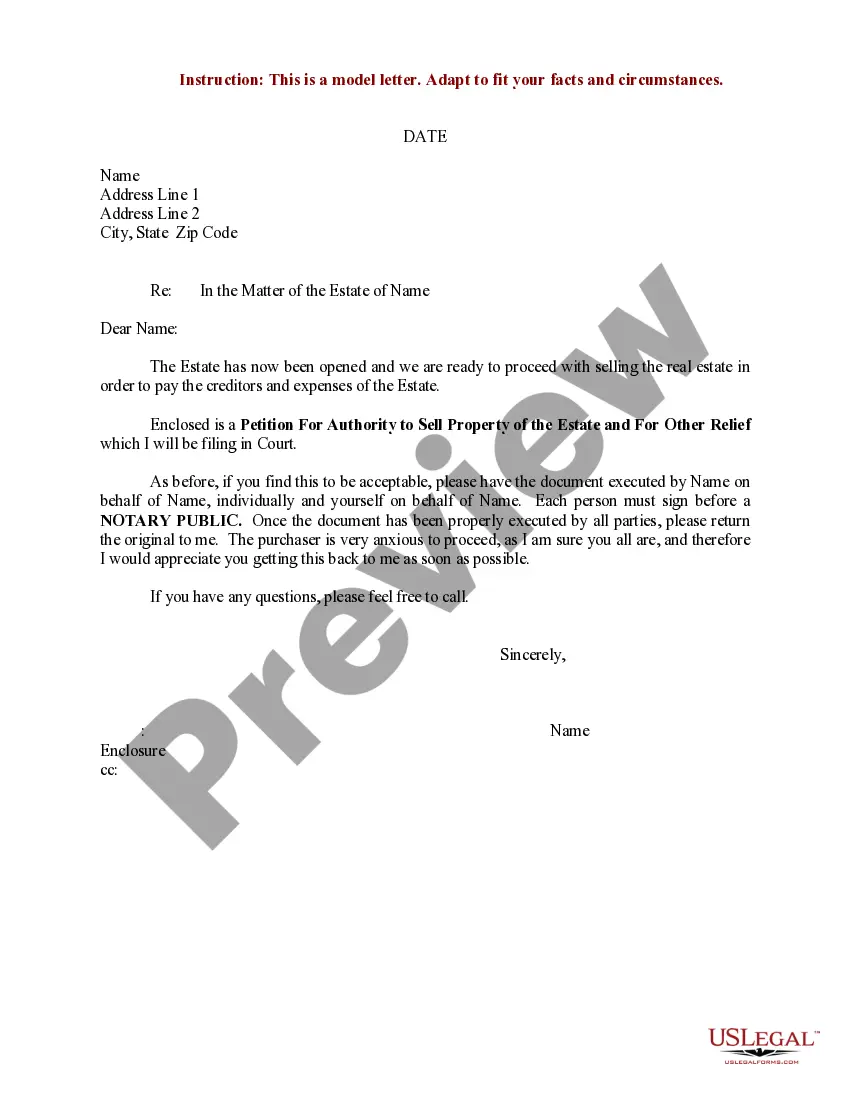
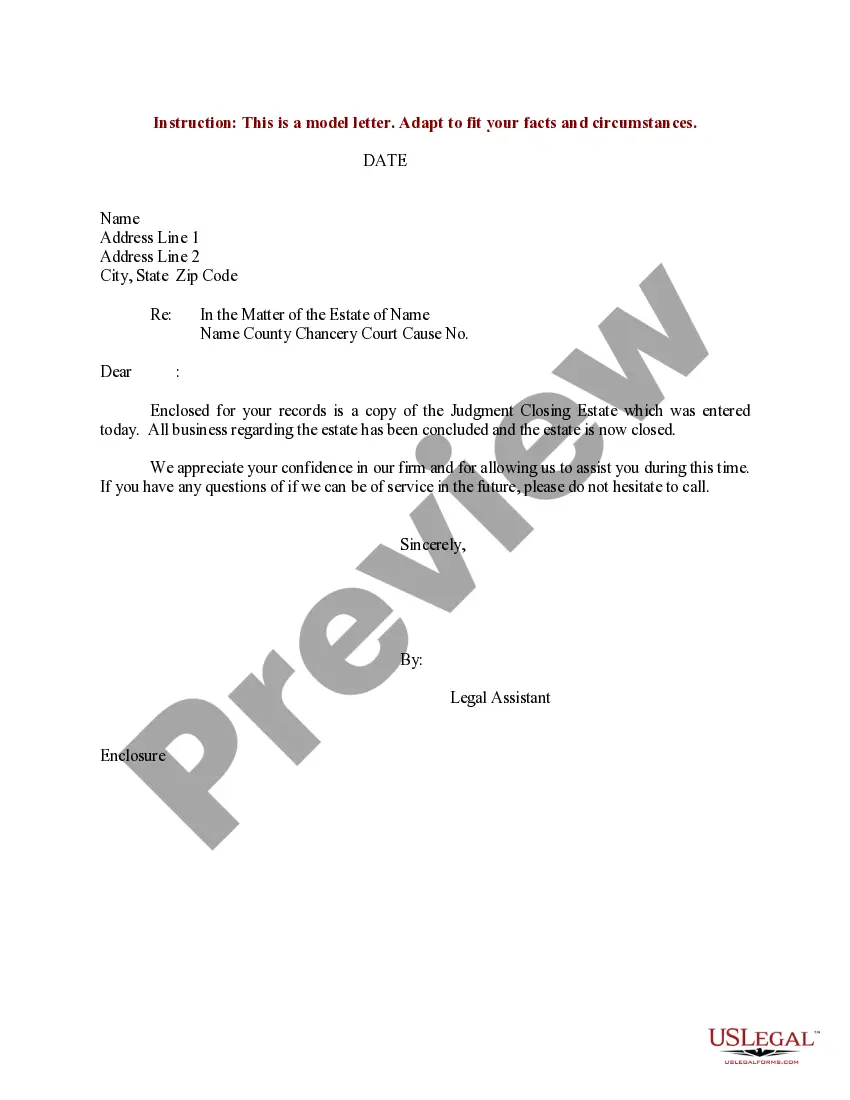
The Sample Letter for Selling of Estate is a legal document used to communicate the intention to sell property belonging to an estate. This form serves as a template to notify interested parties about the sale and initiate necessary legal actions to settle the estate's debts. Unlike general letters or notices, this form has specific legal components that ensure compliance with probate laws, making it essential for estate executors and administrators.
Key components of this form
- Date: The date the letter is prepared.
- Recipient Information: Name and address of the recipient.
- Subject Line: Summary of the matter concerning the estate.
- Opening Statement: Notification that the estate has been opened and the sale is imminent.
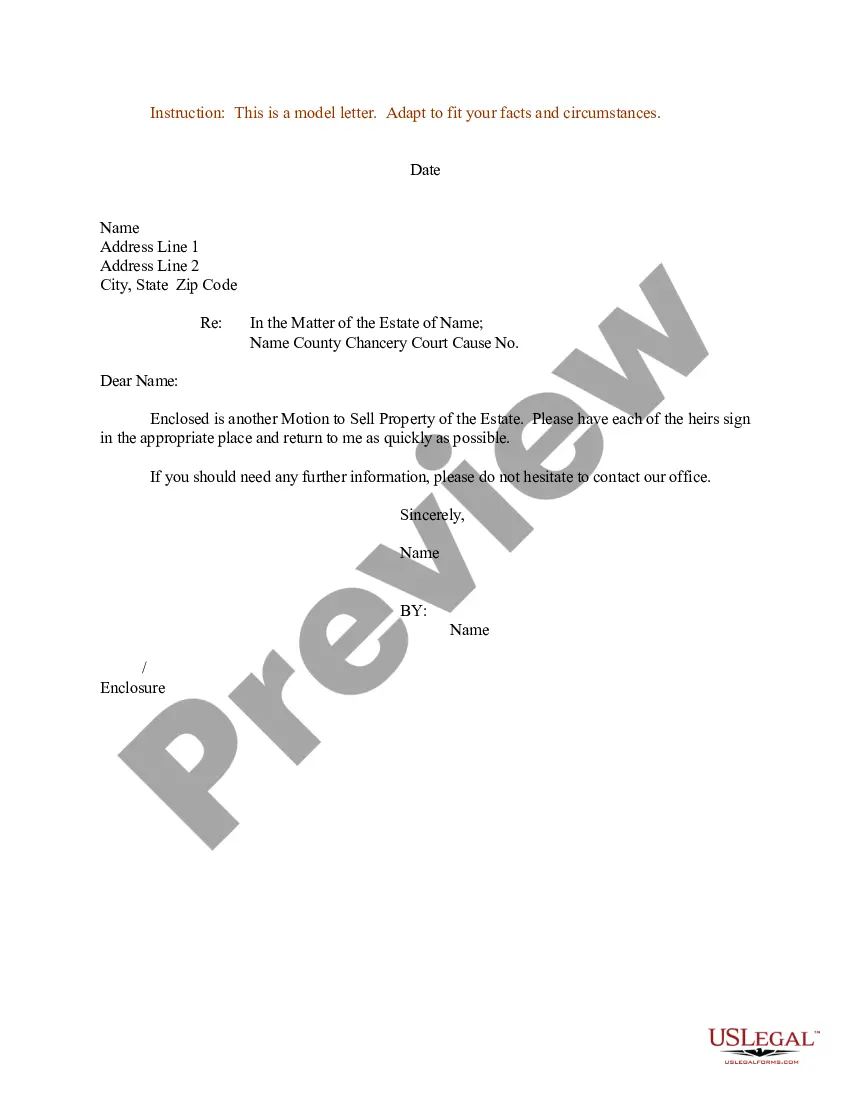
- Enclosure Reminder: Reference to the petition for authority to sell property.
When to use this document
This form should be used when an estate has been opened and there is a need to sell real estate as part of the probate process. It enables the executor or administrator to inform interested parties, such as heirs and creditors, about the intention to sell property to cover estate expenses and debts. It is commonly needed when settling an estate following the death of a property owner.
Who needs this form
- Executors of an estate who are authorized to manage and sell estate property.
- Administrators of an estate in cases where there is no will.
- Legal representatives handling estate matters.
Steps to complete this form
- Fill in the date at the top of the letter.
- Enter the recipient's name and address details accurately.
- Include the subject line detailing the estate's matter clearly.
- Draft the opening statement to inform the recipient that the estate is being settled.
- Attach the Petition for Authority to Sell Property of the Estate as referenced in the letter.
Does this document require notarization?
Notarization is required for this form to take effect. Our online notarization service, powered by Notarize, lets you verify and sign documents remotely through an encrypted video session, available 24/7.
Get your form ready online
Our built-in tools help you complete, sign, share, and store your documents in one place.
Make edits, fill in missing information, and update formatting in US Legal Forms—just like you would in MS Word.
Download a copy, print it, send it by email, or mail it via USPS—whatever works best for your next step.
Sign and collect signatures with our SignNow integration. Send to multiple recipients, set reminders, and more. Go Premium to unlock E-Sign.
If this form requires notarization, complete it online through a secure video call—no need to meet a notary in person or wait for an appointment.
We protect your documents and personal data by following strict security and privacy standards.

Make edits, fill in missing information, and update formatting in US Legal Forms—just like you would in MS Word.

Download a copy, print it, send it by email, or mail it via USPS—whatever works best for your next step.

Sign and collect signatures with our SignNow integration. Send to multiple recipients, set reminders, and more. Go Premium to unlock E-Sign.

If this form requires notarization, complete it online through a secure video call—no need to meet a notary in person or wait for an appointment.

We protect your documents and personal data by following strict security and privacy standards.
Mistakes to watch out for
- Failing to include all necessary recipient details.
- Omitting critical information in the opening statement.
- Not attaching the required petition documents.
Advantages of online completion
- Convenient access allows for easy download and customization.
- Templates are drafted by licensed attorneys, ensuring accuracy and legal compliance.
- Editable Word format enables you to adjust language to fit your specific needs.
Legal use & context
- This letter serves as a formal notification process in estate management.
- It can be used to provide transparency to beneficiaries and creditors.
- Failure to utilize this form may result in legal misunderstandings regarding estate property sales.
What to keep in mind
- The Sample Letter for Selling of Estate is essential for notifying interested parties about estate property sales.
- Timely communication via this letter helps manage expectations of beneficiaries and creditors.
- Adhering to state-specific requirements ensures that the sale process complies with local laws.
Looking for another form?

Form popularity
FAQ
Build a Connection. Keep It Short. Stay Positive. Show, Don't Tell. Leave Out Remodeling Plans. Finish Strong. Proofread It.
The Letters of Executorship and Letters of Authority can only be obtained from the Office of the Master of the High Court.
Flatter first. Your offer to purchase letter is an emotional pitch. Get to the point. You may have 10 great ideas that you'd like to tell the seller. Paint a picture. Don't remodel the house. Show stability. Show humility. Don't whine. Close your offer to purchase letter with clarity.
Write a catchy headline that grabs your customer's attention. Hook the reader by identifying what they need and why. Include bullet points with key information. Use testimonials or statistics. Give readers a call to action. Offer something to the customer that is limited in time or quantity.
Address the Seller By Name. Highlight What You Like Most About the Home. Share Something About Yourself. Throw in a Personal Picture. Discuss What You Have in Common. Keep it Short. Close the Letter Appropriately. The Bottom Line.
Naming a Qualified Executor The most important guideline in naming an executor is to choose some-one you trust enough to have access to your personal records and finances after your death. Many people choose someone who is also named to get a substantial amount of property under the will.
An executor letter authorizes a person or organization to act on behalf of a decedent's estate as an executor.It's also called "letters of testamentary" or "letters of administration" in some jurisdictions.
A Letter of Appointment of Executor helps prove you have been put in charge of someone's estate after they have passed away. As Executor, you've been given the duty to manage the estate and carry out the directions of the will; however, a court may require official documentation.
Identify persons the executor should notify of your death. Include family members, close friends and business associates, including your attorney. Provide contact information for each person, as well as any final message or instructions to be given. Describe your important estate documents and their exact location.