Phone Memo
About this form
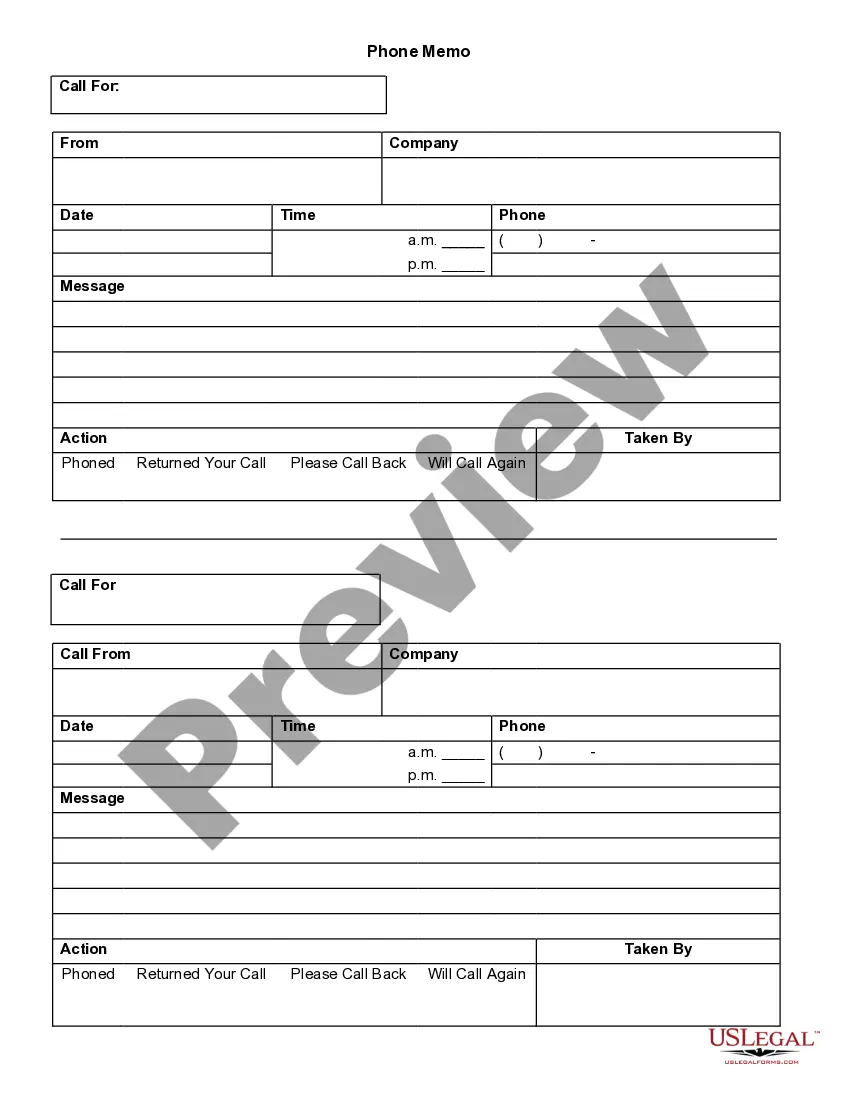
The Phone Memo is a document designed to record important information about a phone call that took place when the intended recipient was unavailable. This memo serves as a way for the recipient to review the conversation details later on, differentiating it from other forms of communication, such as emails or formal letters.
Form components explained
- Call For: Specifies who the call was intended for.
- Call From: Identifies the person or company that made the call.
- Date: The date the call occurred.
- Time: Indicates the time frame of the call, including AM/PM designation.
- Message: A summary of the information conveyed during the call.
- Action Taken: Notes what actions have been taken following the call, such as returning the call or arranging a future call.
When this form is needed
This form is useful in situations where an important call is missed, and someone needs to document the message left by the caller. It serves as a reminder for follow-up actions and ensures that no critical information is overlooked, commonly used in business environments and for personal communication alike.
Who should use this form
This form is suitable for:
- Individuals receiving calls that may require follow-up.
- Employees who need to document messages from clients or colleagues.
- Business owners managing customer interactions.
- Professionals in any field who regularly receive important phone calls.
Instructions for completing this form
- Identify the person the call was intended for (Call For).
- Enter the caller's name or company (Call From).
- Fill in the date of the call.
- Specify the start and end time of the call.
- Summarize the message that was conveyed during the call.
- Document any actions taken as a result of the call.
Notarization guidance
This form does not typically require notarization unless specified by local law.
Get your form ready online
Our built-in tools help you complete, sign, share, and store your documents in one place.
Make edits, fill in missing information, and update formatting in US Legal Forms—just like you would in MS Word.
Download a copy, print it, send it by email, or mail it via USPS—whatever works best for your next step.
Sign and collect signatures with our SignNow integration. Send to multiple recipients, set reminders, and more. Go Premium to unlock E-Sign.
If this form requires notarization, complete it online through a secure video call—no need to meet a notary in person or wait for an appointment.
We protect your documents and personal data by following strict security and privacy standards.

Make edits, fill in missing information, and update formatting in US Legal Forms—just like you would in MS Word.

Download a copy, print it, send it by email, or mail it via USPS—whatever works best for your next step.

Sign and collect signatures with our SignNow integration. Send to multiple recipients, set reminders, and more. Go Premium to unlock E-Sign.

If this form requires notarization, complete it online through a secure video call—no need to meet a notary in person or wait for an appointment.

We protect your documents and personal data by following strict security and privacy standards.
Avoid these common issues
- Not including all relevant details from the call.
- Mislabeling the time or date, leading to confusion.
- Forgetting to specify the action taken, which may result in missed follow-ups.
Why use this form online
- Convenient access from anywhere, allowing for immediate documentation of calls.
- Easy to edit and personalize for specific call details.
- Reliable storage of important communication records.
Quick recap
- The Phone Memo is essential for recording and managing missed phone calls.
- Accurate documentation helps maintain professional communication standards.
- Available online for easy access and customization to fit various needs.
Looking for another form?






Form popularity
FAQ
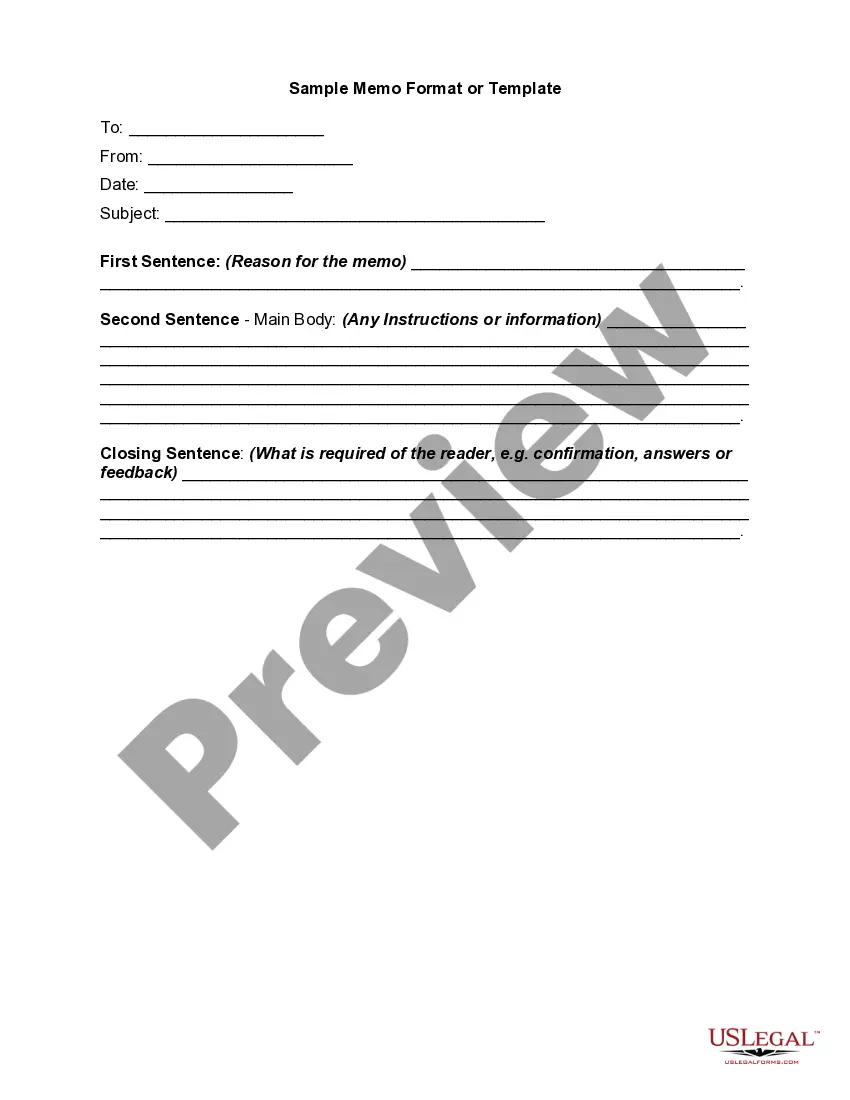
There are usually three main parts to a memo:1. The heading 2. The subject and date 3. The message.
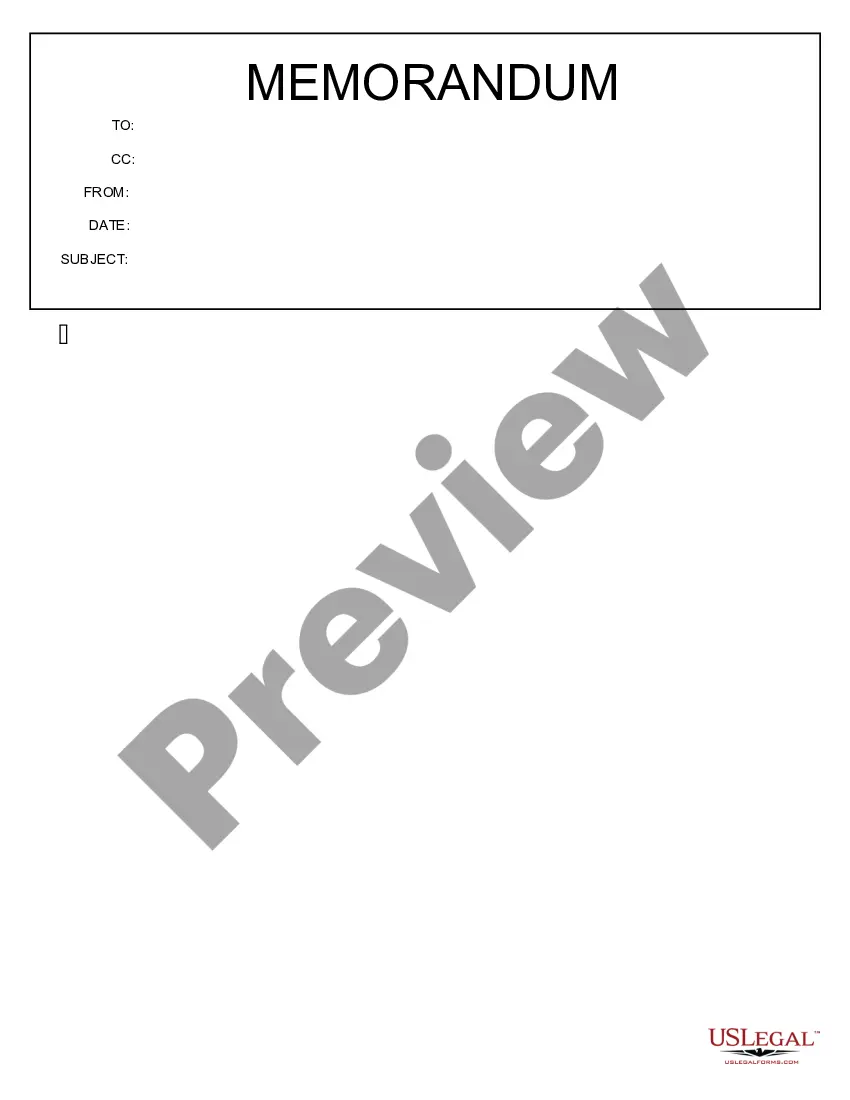
The format of a memo is much simpler. You write Memo or Memorandum at the top, followed by a To line, a From line, a Date line, a Subject line, and then the actual body of the message. Traditionally, you would print out a memo and distribute it to the relevant parties inside your small business.
A well-written business letter is made up of seven basic parts, which may include an enclosures line as needed. The format of a memo is much simpler. You write Memo or Memorandum at the top, followed by a To line, a From line, a Date line, a Subject line, and then the actual body of the message.
Heading Segment. The heading segment follows this general format: Opening Segment. Context. Task Segment. Summary Segment. Discussion Segments. Closing Segment. Necessary Attachments.
Choose Your Audience. To make sure your memo gets read and acted upon, you need to address it appropriately. Clearly State the Purpose. Attach Data and Documents. Use an Appropriate Tone. Proofread Carefully. A Few More Tips. Sample Business Memo.
Type MEMORANDUM at the top of the page.Label the page MEMORANDUM 1.5 inches (3.8 cm) from the top of the page. Put the word in bold on the first line. You can either center it on this line or left-align it. You might also choose to make the font larger for this word.
Heading Components of a Memo. Context and Background Section. Tasks and Resolutions. Supporting Research and Ideas. Conclusion and Further Discussion. Documents and Other Attachments.
Heading. The heading of memorandums is designed to allow a reader to understand what he or she is looking at, and decide quickly whether he or she should read it. The heading has four or five parts, appearing in this order. purpose. summary. background/discussion. conclusion/action.