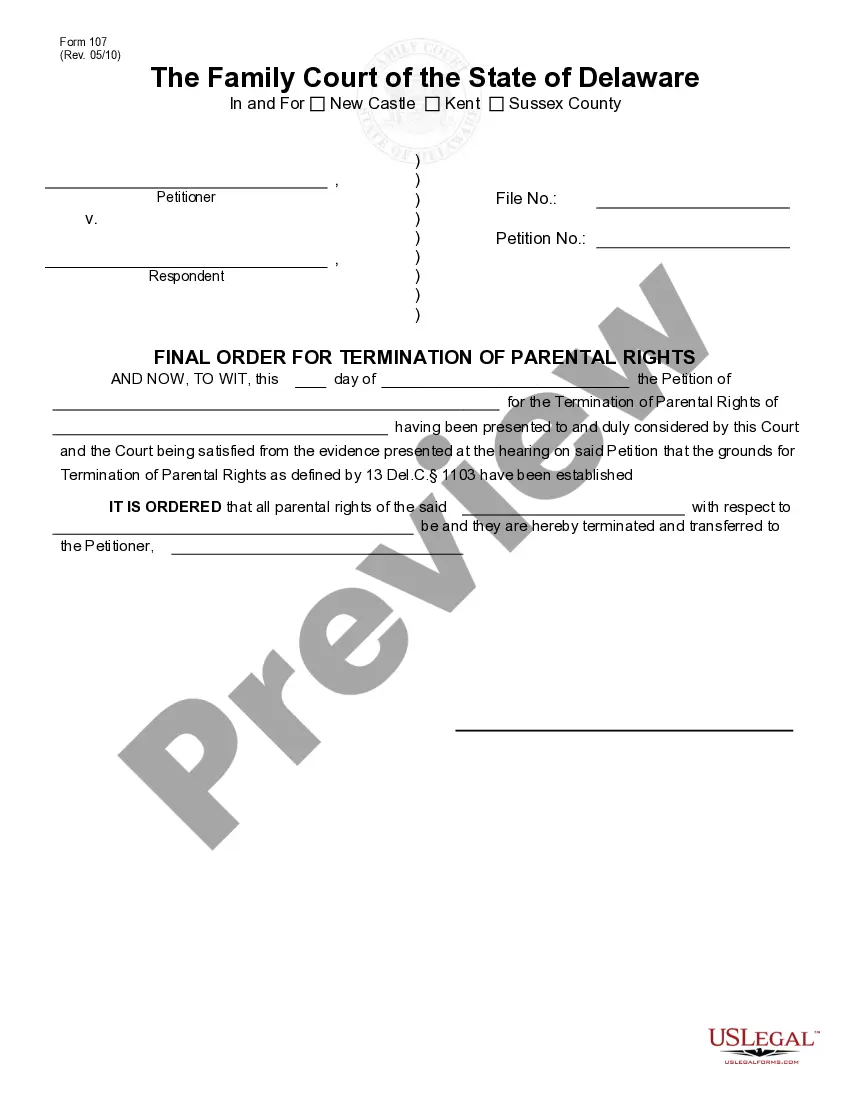
Checklist - Sale of a Business
Overview of this form
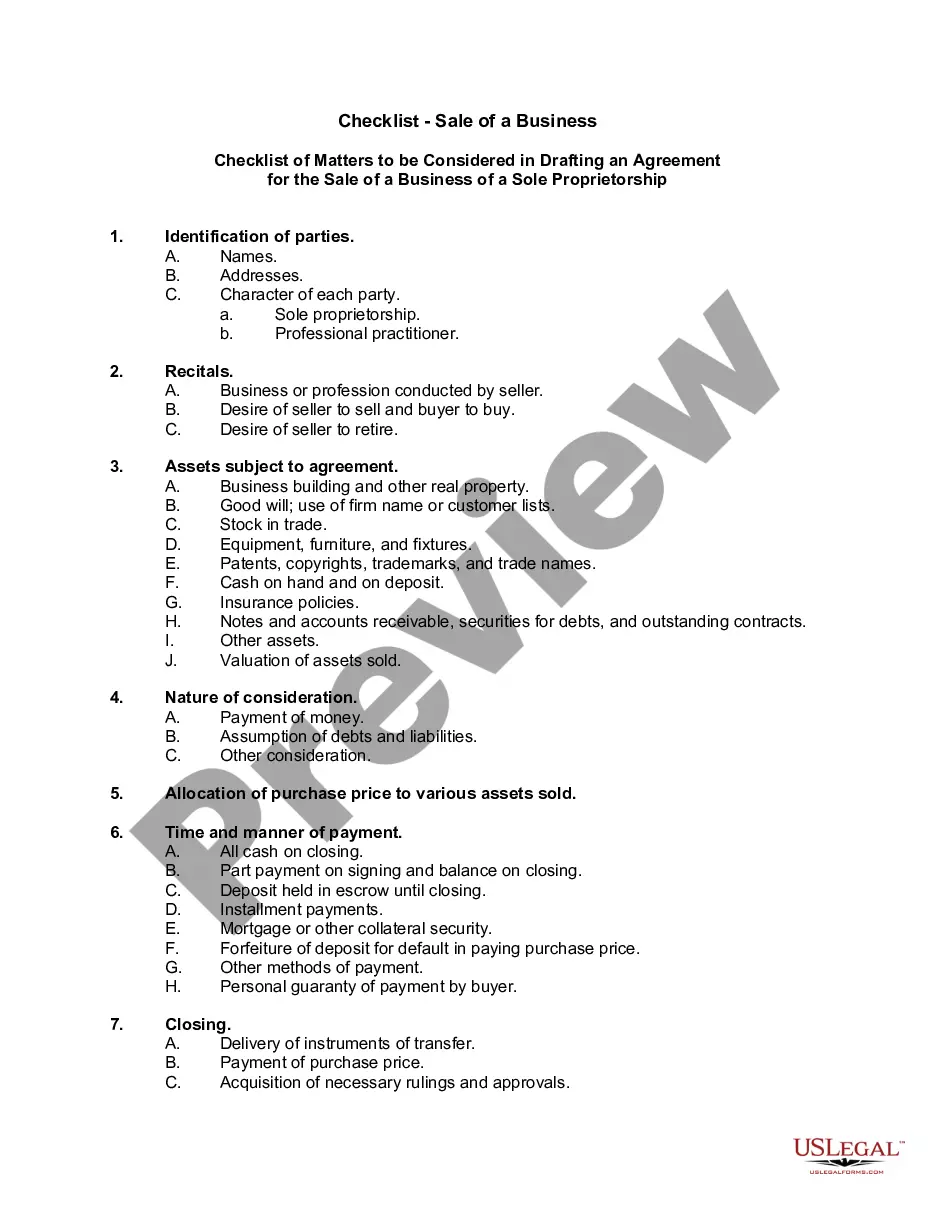
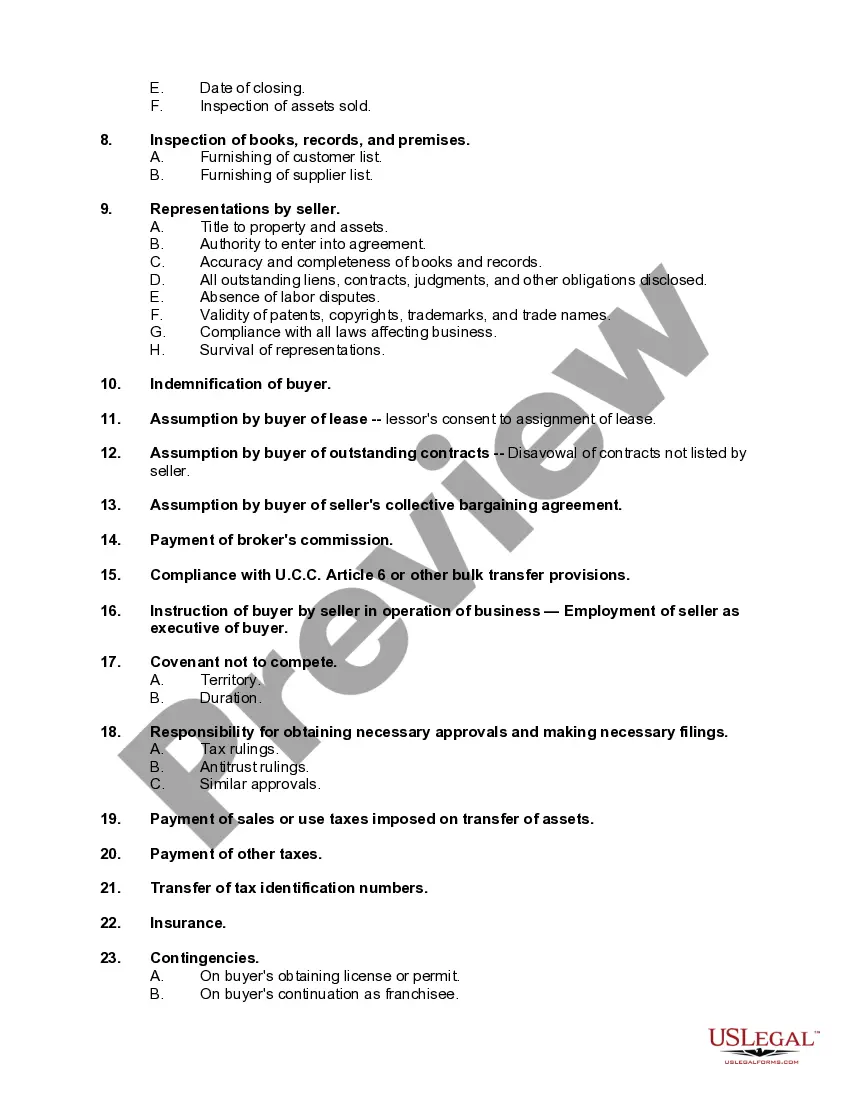
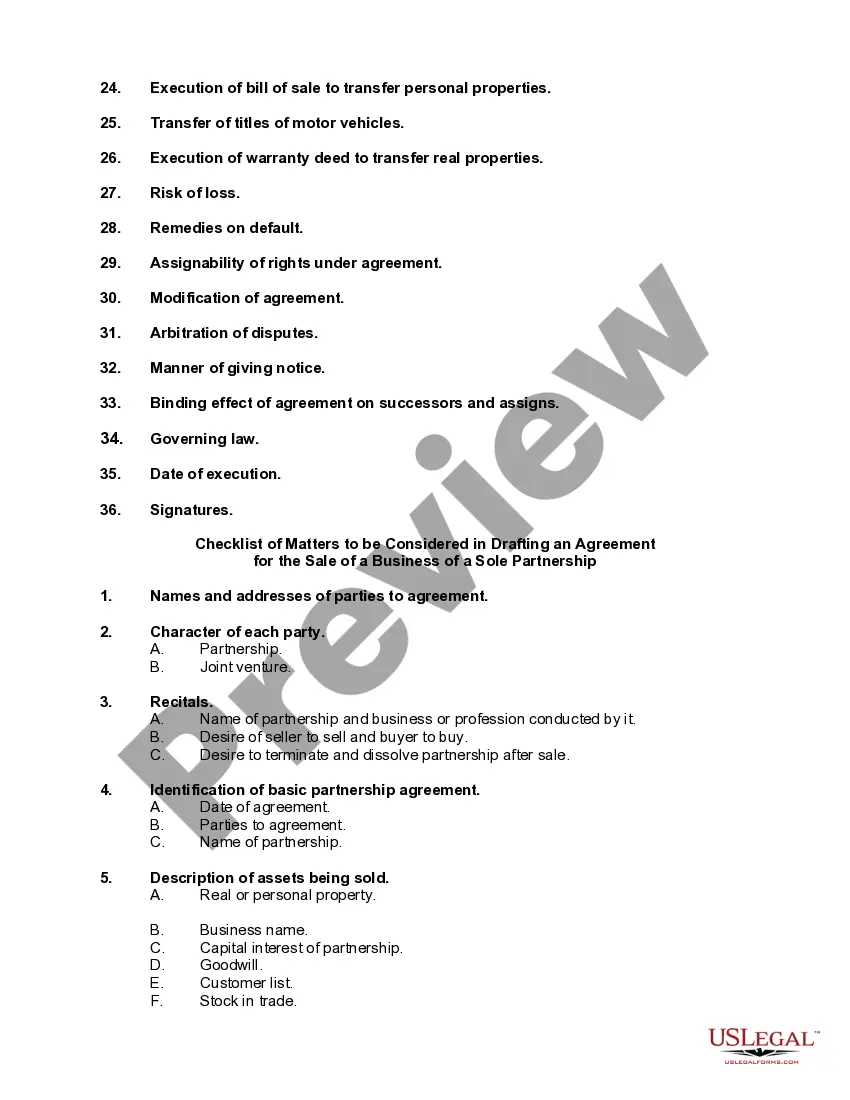
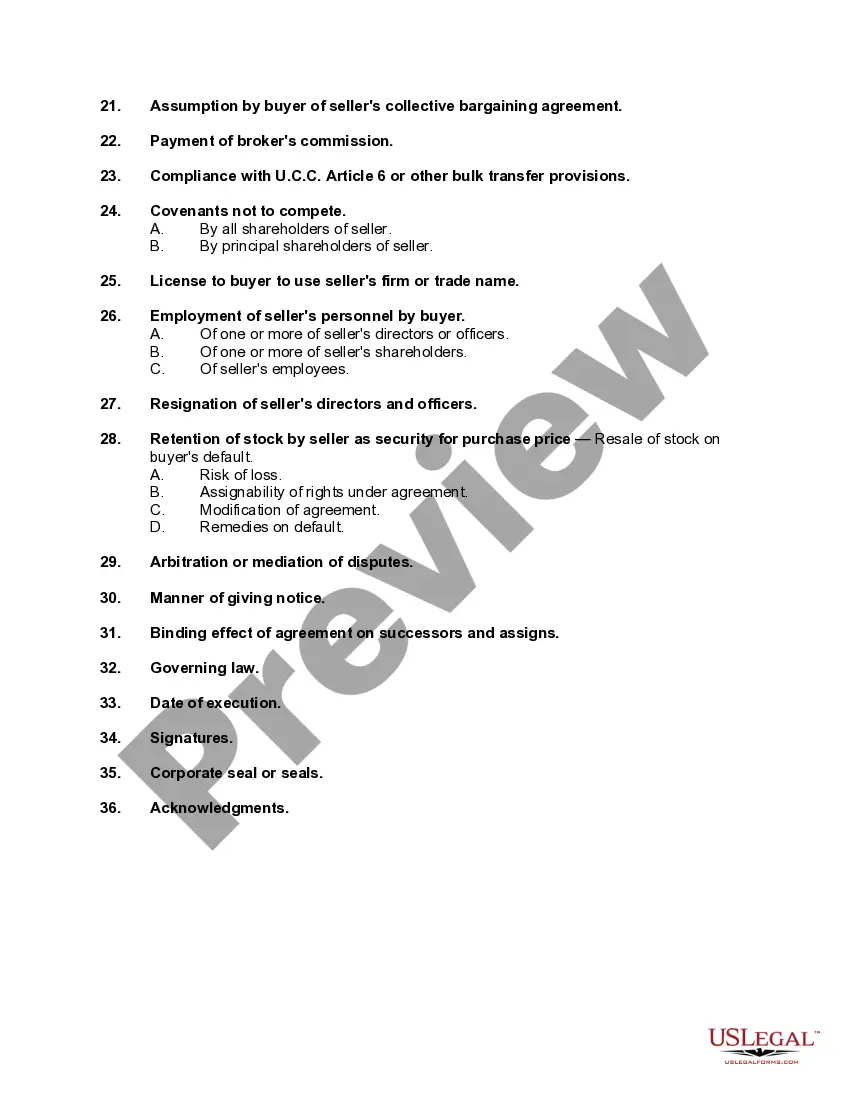
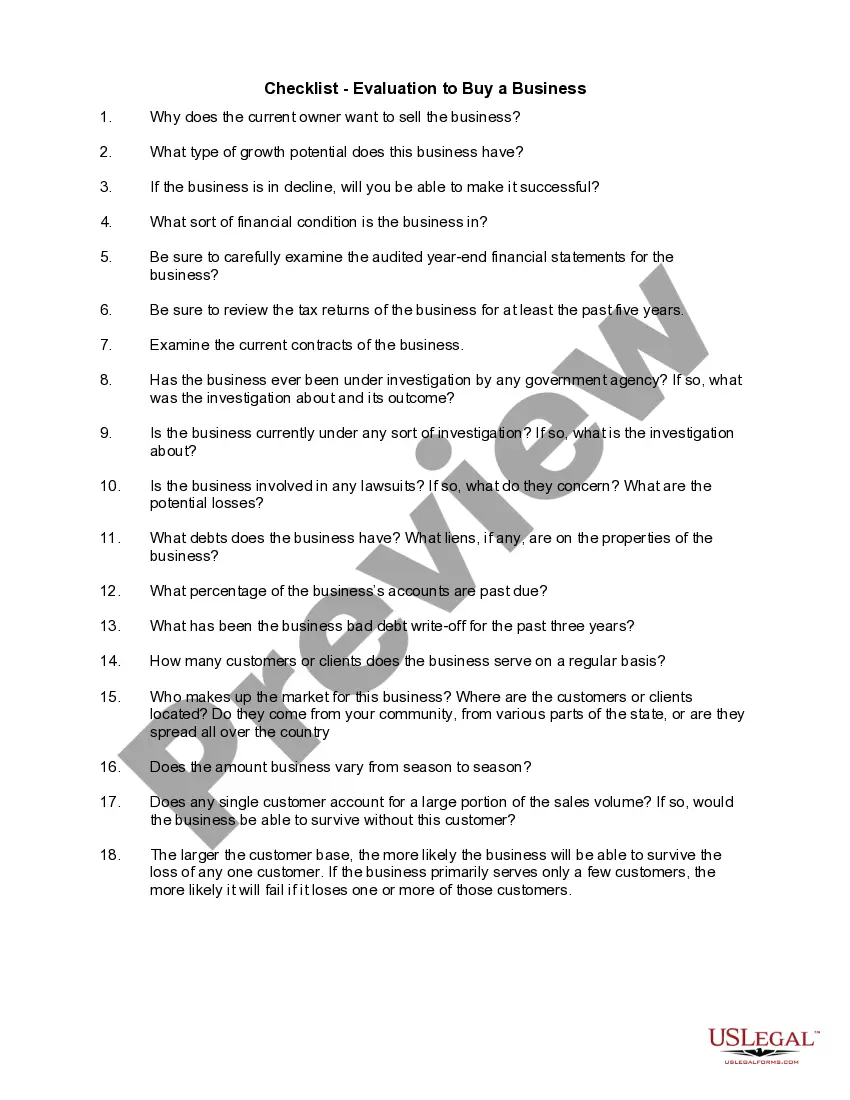
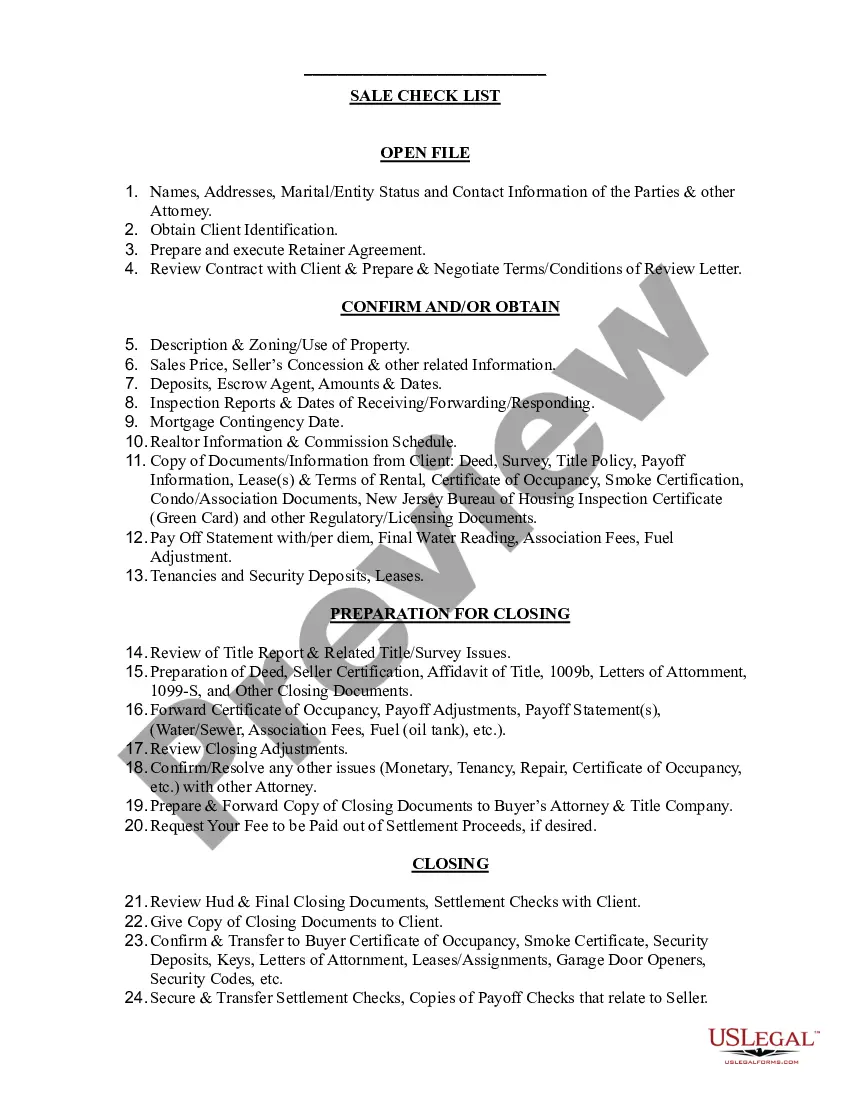
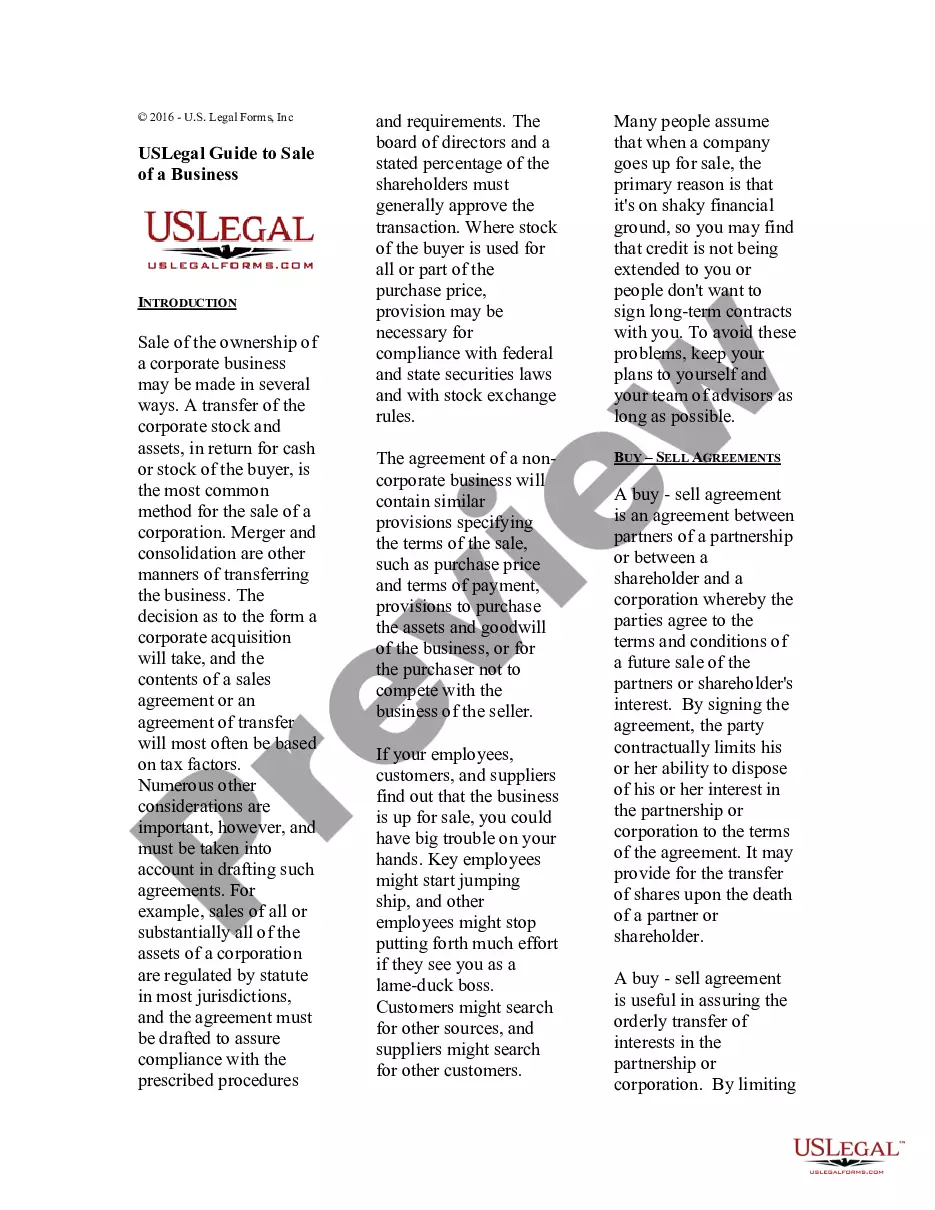
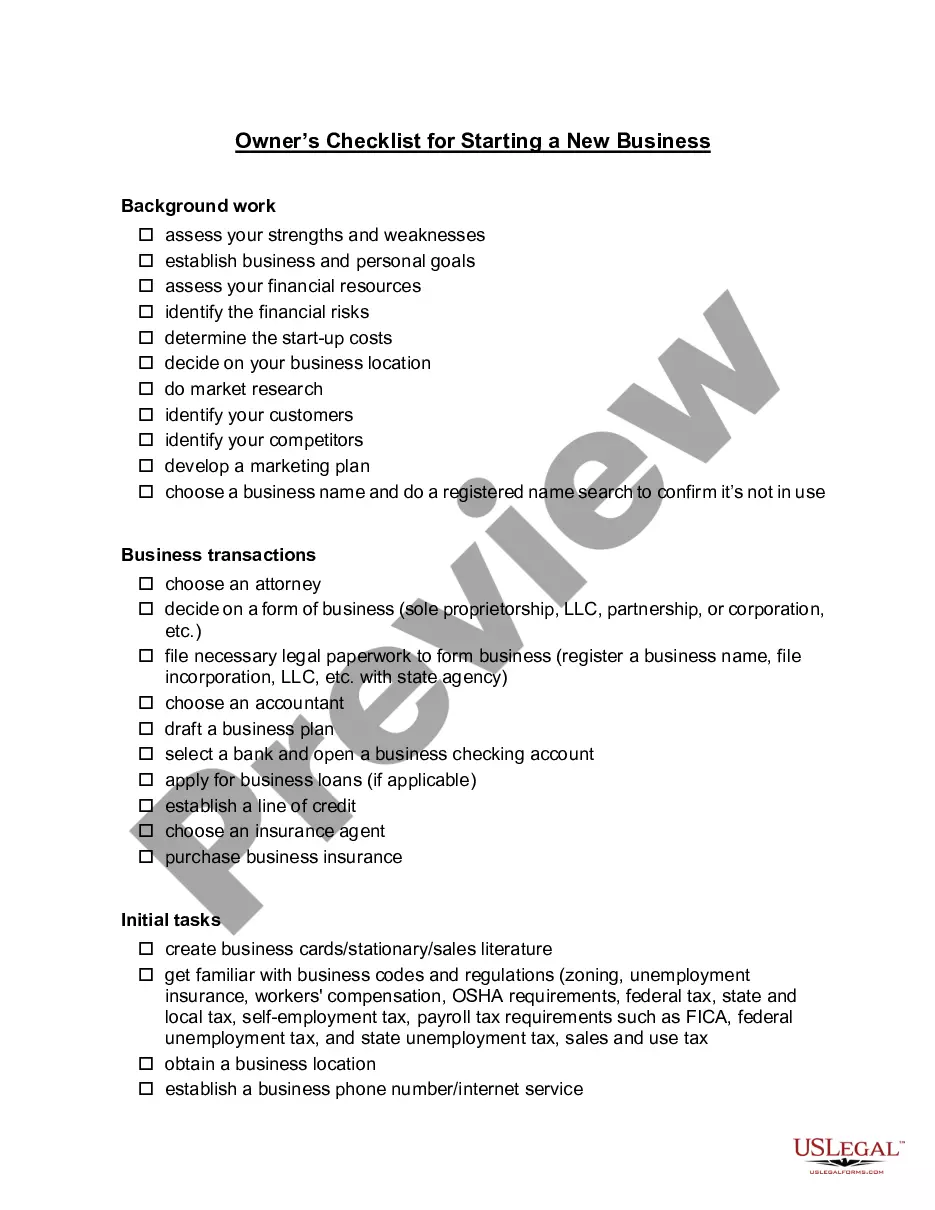
The Checklist - Sale of a Business is a comprehensive guide that assists business owners and buyers in navigating the complexities involved in selling a business. This checklist outlines critical considerations for drafting an agreement for the sale of a sole proprietorship, partnership, or corporation, ensuring that all necessary legal and financial aspects are covered. Unlike standard purchase agreements, this checklist provides a detailed framework aimed at protecting the interests of both sellers and buyers during the transaction process.
What’s included in this form
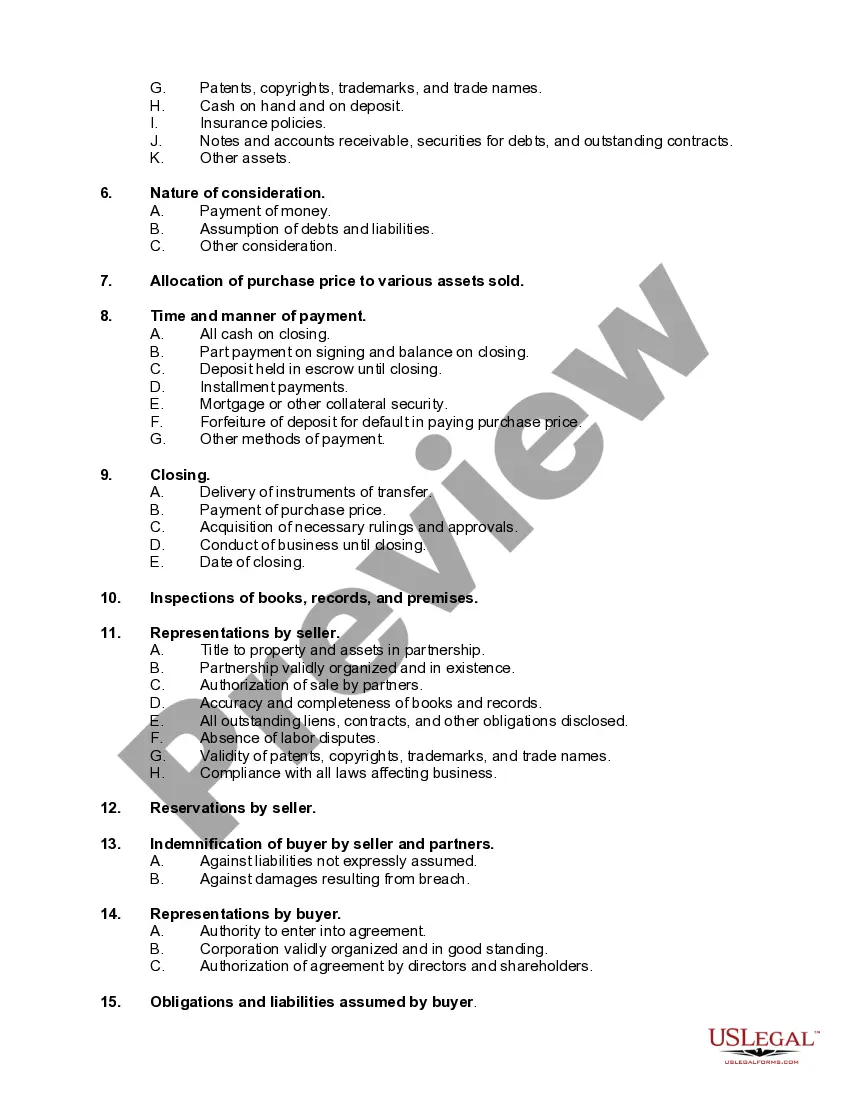
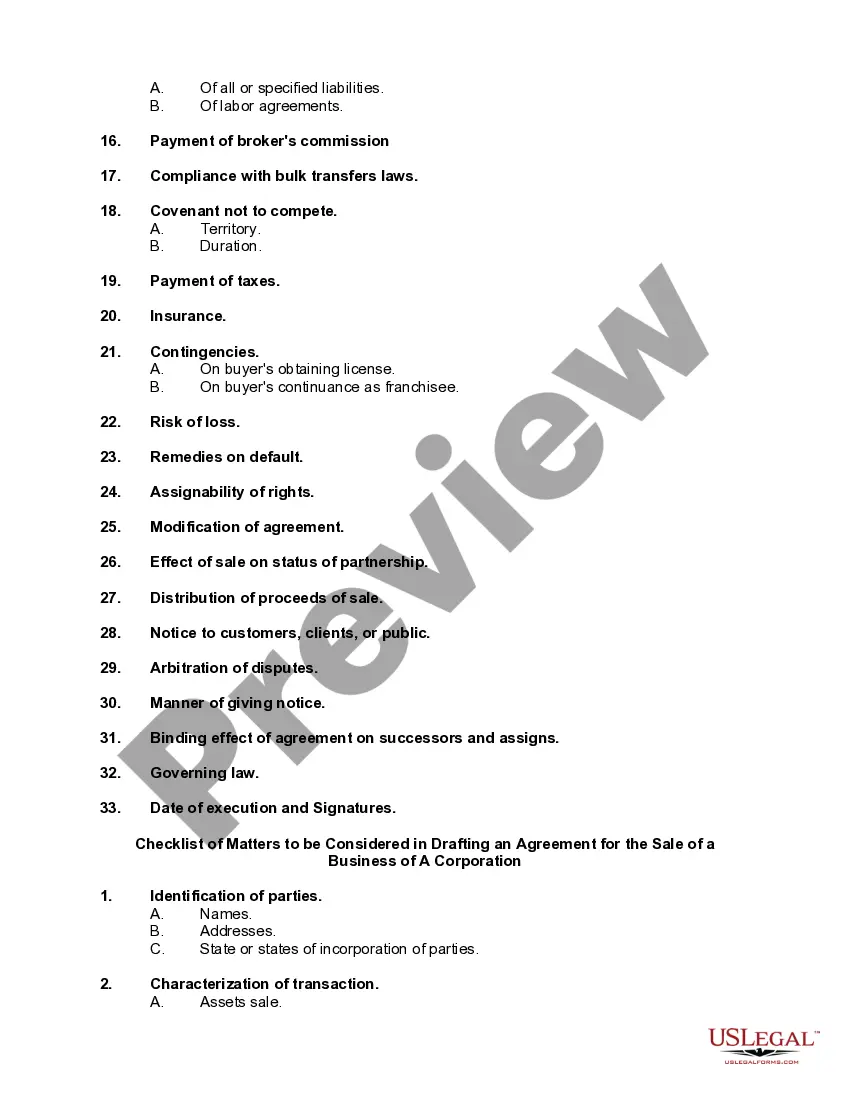
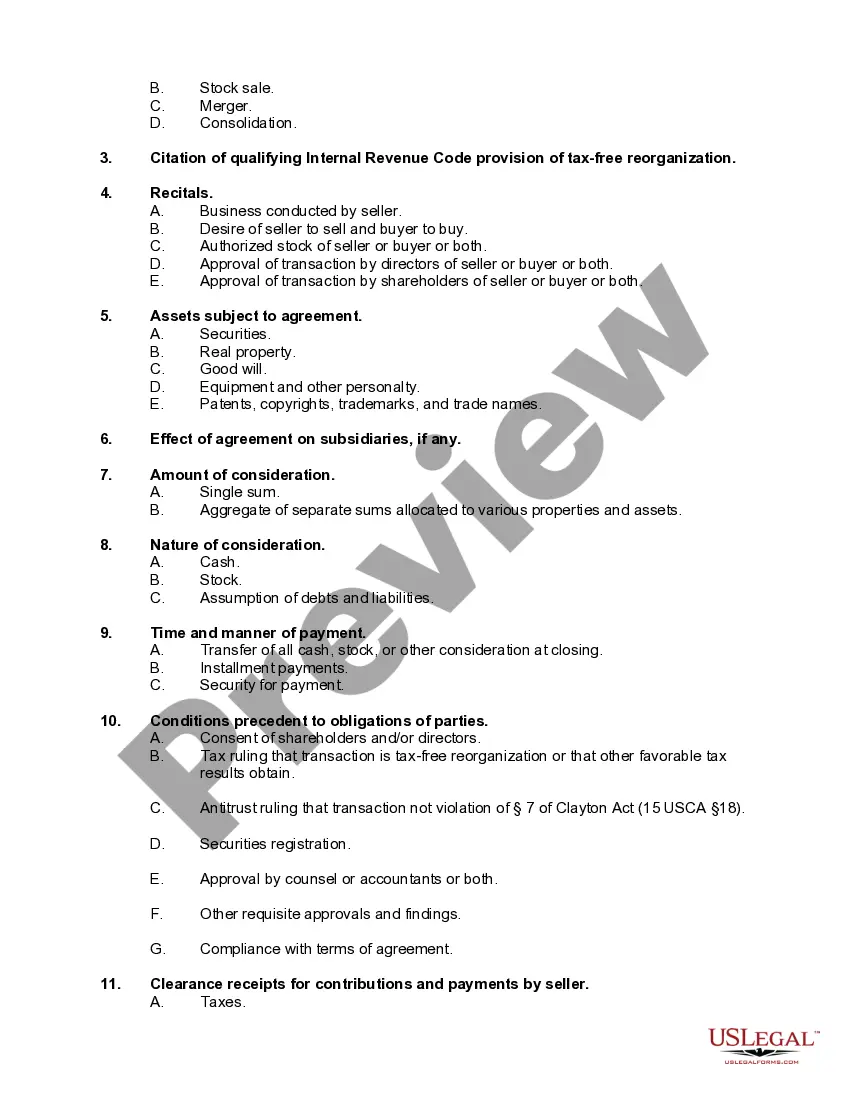
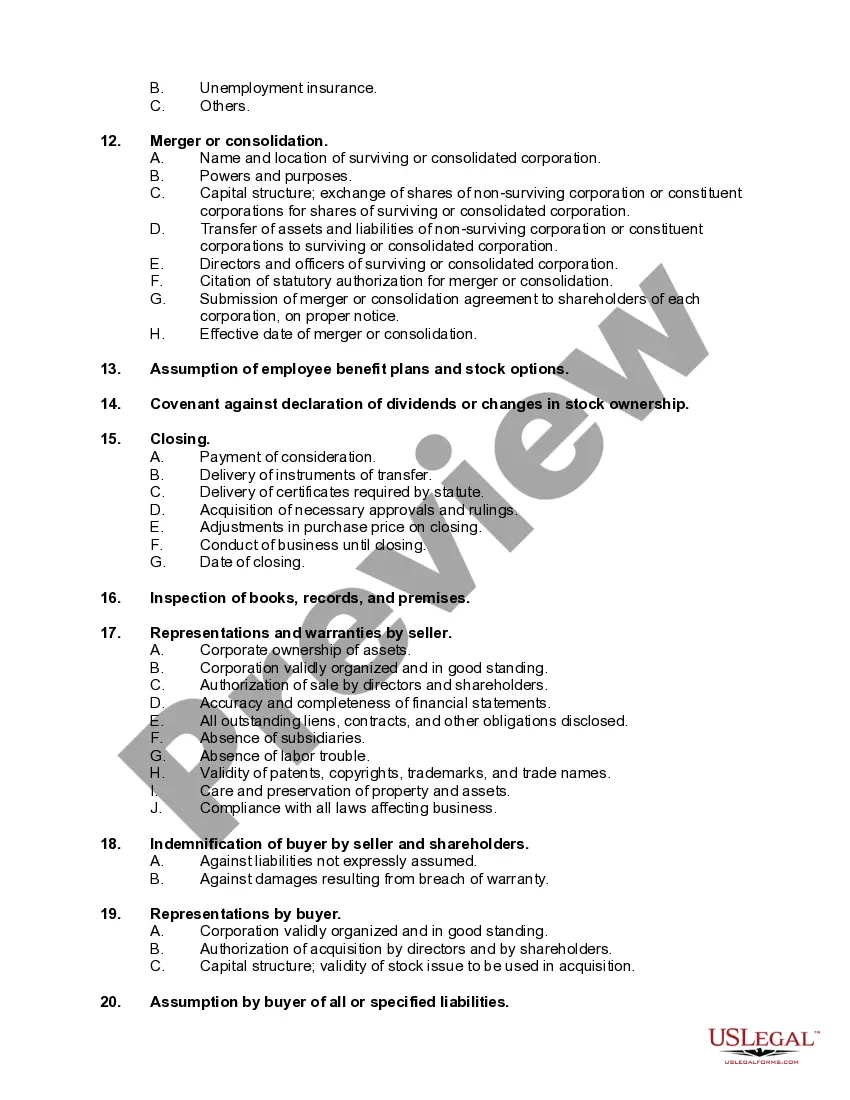
- Identification of parties involved in the sale.
- Recitals explaining the business conducted and the intention to sell.
- Details on assets included in the sale.
- Nature of consideration, including payment terms.
- Closing procedures and requirements.
- Representations and warranties by the seller regarding the business and assets.
- Covenant not to compete and responsibilities for obtaining approvals.

When to use this form
This form should be used when you are in the process of selling a business, whether it is a sole proprietorship, partnership, or corporation. It is especially crucial for ensuring that all legal obligations and financial responsibilities are clearly outlined and agreed upon by both parties. Use this checklist to guide discussions and decisions, ensuring that no critical elements are overlooked in the sale agreement.
Intended users of this form
- Business owners planning to sell their business.
- Potential buyers interested in purchasing an existing business.
- Attorneys representing buyers or sellers in business transactions.
- Financial advisors assisting clients in business sales.
Steps to complete this form
- Identify the parties: List the names and addresses of both the seller and buyer.
- Detail the assets being sold: Specify which assets are included in the sale, such as property, equipment, and goodwill.
- Determine the terms of consideration: Outline the payment structure and any liabilities assumed by the buyer.
- Finalize closing procedures: Agree on the closing date and necessary approvals required before the sale can be completed.
- Enter signatures: Ensure all parties sign the agreement to establish legal validity.
Notarization requirements for this form
This form does not typically require notarization unless specified by local law. Buyers and sellers should verify the requirements in their jurisdiction to ensure the validity of their transaction.
Get your form ready online
Our built-in tools help you complete, sign, share, and store your documents in one place.
Make edits, fill in missing information, and update formatting in US Legal Forms—just like you would in MS Word.
Download a copy, print it, send it by email, or mail it via USPS—whatever works best for your next step.
Sign and collect signatures with our SignNow integration. Send to multiple recipients, set reminders, and more. Go Premium to unlock E-Sign.
If this form requires notarization, complete it online through a secure video call—no need to meet a notary in person or wait for an appointment.
We protect your documents and personal data by following strict security and privacy standards.

Make edits, fill in missing information, and update formatting in US Legal Forms—just like you would in MS Word.

Download a copy, print it, send it by email, or mail it via USPS—whatever works best for your next step.

Sign and collect signatures with our SignNow integration. Send to multiple recipients, set reminders, and more. Go Premium to unlock E-Sign.

If this form requires notarization, complete it online through a secure video call—no need to meet a notary in person or wait for an appointment.

We protect your documents and personal data by following strict security and privacy standards.
Common mistakes
- Failing to adequately identify all assets included in the sale.
- Neglecting to address existing liabilities assumed by the buyer.
- Omitting necessary legal disclaimers or representations.
- Overlooking state-specific requirements for business transactions.
- Not having all parties sign the document before closing.
Benefits of using this form online
- Convenient access to legal documents anytime, allowing for timely preparation.
- Edit and customize the checklist to fit your specific business needs.
- Reliability of forms drafted by licensed attorneys ensuring legal compliance.
- Streamlined process that reduces the risk of missing important details in the sale.
- This form serves as a checklist, ensuring all critical aspects of the sale are considered.
- While it provides a robust framework, users should integrate local regulations that may apply to their specific transaction.
- Using this checklist can enhance enforceability and clarity in the sale agreement.
Key takeaways
- Prepare thorough documentation to ensure a smooth sale process.
- Understand both parties' rights and obligations by reviewing representations and warranties.
- Utilize this checklist to avoid common pitfalls in business sales.
Looking for another form?


Form popularity
FAQ
You have two main options in selling a portion of your business: Selling a Percentage of Your Company - This option involves selling a certain percentage of your entire company, usually structured as percentage of stock shares.
Profit & loss statements for the current and past 2-3 years. Current balance sheet. Cash flow statement. Business tax returns for the past 2-3 years. Copy of the current lease. Insurance policies. Non-disclosure/confidentiality agreement.
Determine the Business' Value. Prepare All Required Business Documents and Legal Paperwork. Decide Whether You Will Sell Your Business on Your Own or Hire a Broker / Investment Banker. Find Buyers and Qualify Them. Make the Presentation. Negotiate and Close Deal.
Start by mentioning how long you've been in business, how much you've enjoyed running your business and how much you appreciate your customers. Transition into the fact that you're selling your business. Emphasize the business will continue to offer the same services at the same price.
Use the inverted pyramid style of writing: Include the most important information at the top of the release. The lead paragraph: This is the most important paragraph and should provide a 'hook' for the journalist. Include a headline: Make sure your headline states the facts and the main point of the media release.
A Business Bill of Sale is a legal document that recognizes the sale and change of ownership of a business and all its assets. The Business Bill of Sale sets the terms for the sale, details key information of the buyer and seller, and acts as a key record of the final transaction.
Get a business valuation. Get your books in order. Understand the true profitability of your business. Consult your financial advisor. Make a good first impression. Organize your legal paperwork. Consider management succession. Know your reason for selling.
Step 1: Define the Owner's Goals and Potential Exit Strategies. Step 2: Determine a Range of Value. Step 3: Enhancing Value Prior to the Sale. Step 4: Gather Financial Information; Present Financials. Step 5: Compile Due Diligence Information. Step 6: Target Buyers. Step 7: Qualify Potential Buyers. Step 8: Negotiate the Deal.
Delays Kills Deals. First, understand that delays kill deals. Market Small Businesses on the Web. Most small businesses these days are marketed on the Internet. Manage the Process. Keep on it Through Due Diligence. Pay Attention To Taxes. Use an Attorney.