Delaware Financial Account Transfer to Living Trust
Understanding this form
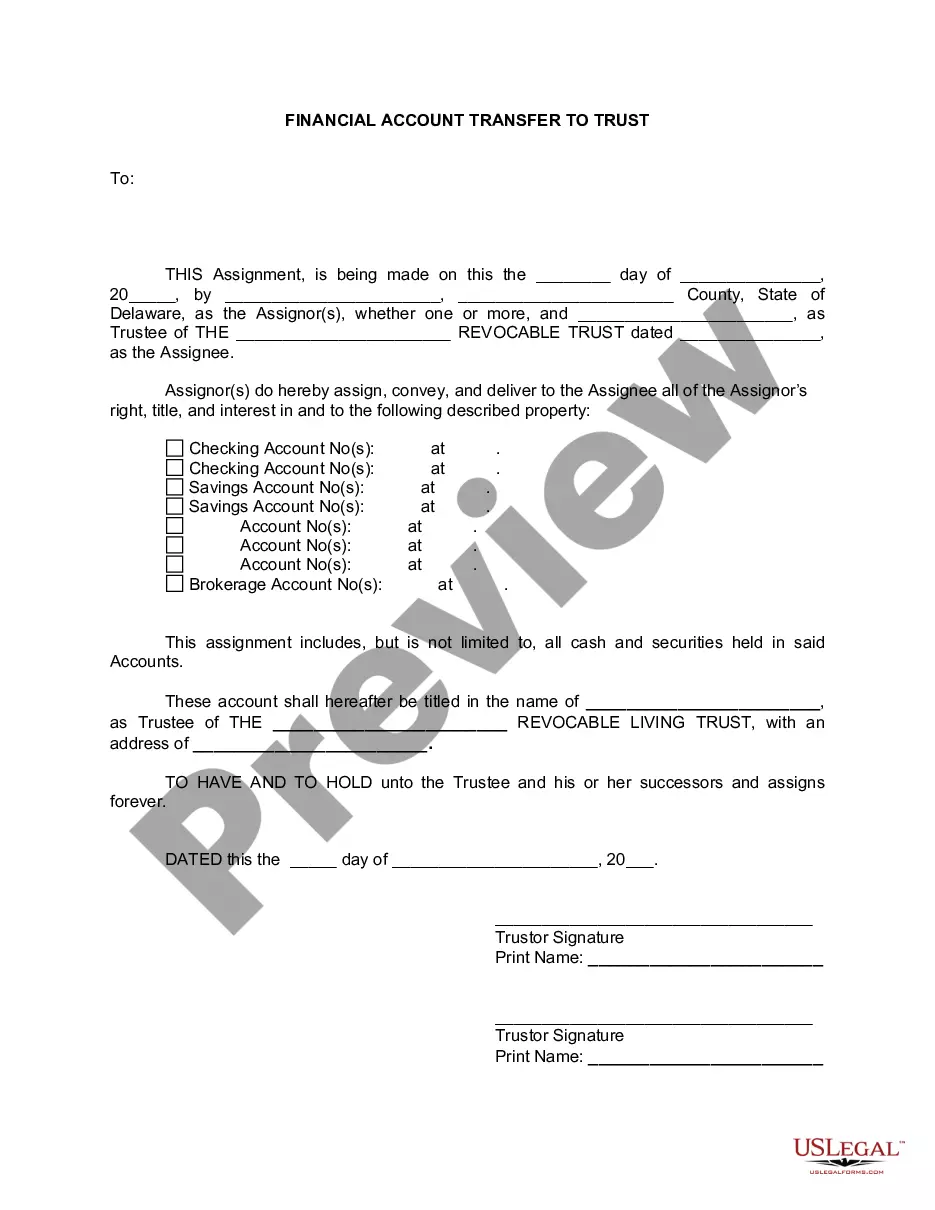
The Financial Account Transfer to Living Trust form is designed to facilitate the transfer of bank and other financial accounts into a living trust. A living trust is a legal entity created during a person's lifetime, allowing them to manage their assets and streamline the estate planning process. This form serves a specific purpose in ensuring that necessary financial accounts are formally assigned to the trust, distinguishing it from other estate planning documents such as wills or power of attorney forms.
What’s included in this form
- Assignor section: Identifies the individual or individuals transferring their financial accounts.
- Assignee section: Names the trustee of the living trust receiving the accounts.
- Description of property: Specifies the financial accounts being transferred.
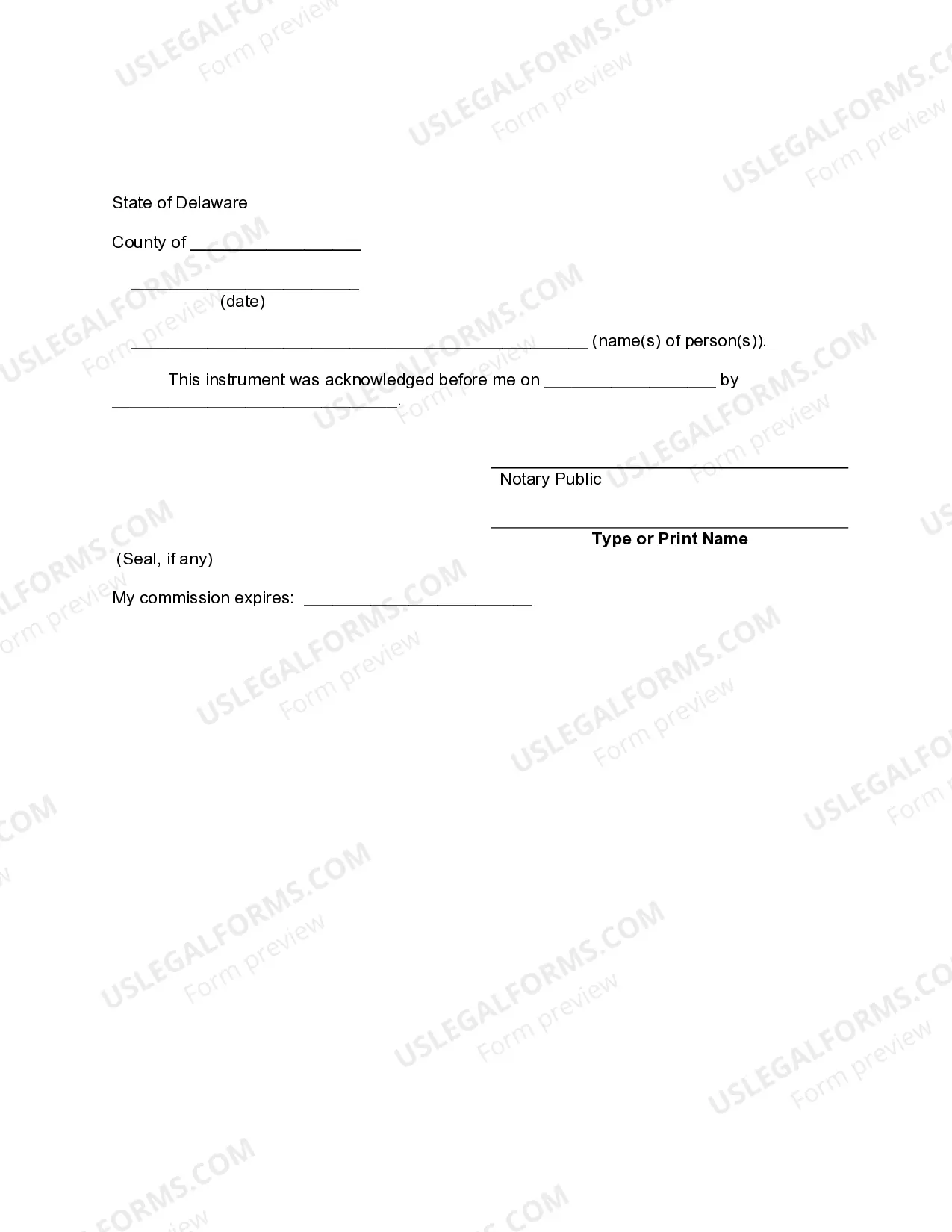
- Signatures: Requires signatures from the assignor(s) and a notary public for validation.
- Date field: Indicates when the assignment takes place.

Common use cases
This form is ideally used when an individual wishes to transfer ownership of their financial accounts into a living trust. This is often done to avoid probate, ensure a smoother transfer of assets upon death, and maintain privacy. Additionally, it may be required by banks or financial institutions as part of their process for updating account ownership to reflect the trust structure.
Who should use this form
- Individuals establishing a living trust for estate planning purposes.
- Trustees managing or updating the trust's assets.
- Anyone looking to consolidate financial assets into a trust to streamline management and transfer of property.
Completing this form step by step
- Identify the assignor(s) transferring the accounts.
- Specify the assignee, typically the trustee of the living trust.
- Clearly describe the financial accounts being transferred.
- Enter the date of the transfer and sign the document in the presence of a notary public.
Does this form need to be notarized?
Notarization is required for this form to take effect. Our online notarization service, powered by Notarize, lets you verify and sign documents remotely through an encrypted video session, available 24/7.
Get your form ready online
Our built-in tools help you complete, sign, share, and store your documents in one place.
Make edits, fill in missing information, and update formatting in US Legal Forms—just like you would in MS Word.
Download a copy, print it, send it by email, or mail it via USPS—whatever works best for your next step.
Sign and collect signatures with our SignNow integration. Send to multiple recipients, set reminders, and more. Go Premium to unlock E-Sign.
If this form requires notarization, complete it online through a secure video call—no need to meet a notary in person or wait for an appointment.
We protect your documents and personal data by following strict security and privacy standards.

Make edits, fill in missing information, and update formatting in US Legal Forms—just like you would in MS Word.

Download a copy, print it, send it by email, or mail it via USPS—whatever works best for your next step.

Sign and collect signatures with our SignNow integration. Send to multiple recipients, set reminders, and more. Go Premium to unlock E-Sign.

If this form requires notarization, complete it online through a secure video call—no need to meet a notary in person or wait for an appointment.

We protect your documents and personal data by following strict security and privacy standards.
Common mistakes
- Failing to provide a complete description of the accounts being transferred.
- Not having the form notarized, leading to potential legal issues.
- Omitting to include all assignors if there are multiple account holders.
Advantages of online completion
- Convenient access to legally drafted forms at any time.
- Editable fields allowing users to tailor information as needed.
- Reliable documents prepared in compliance with relevant laws and regulations.
Summary of main points
- The form facilitates the transfer of financial accounts into a living trust.
- Notarization is required for added legal validity.
- Proper completion of the form is essential to avoid issues in the future.
Looking for another form?



Form popularity
FAQ
Placing a brokerage account in a trust offers several benefits, particularly for estate planning. A Delaware Financial Account Transfer to Living Trust allows for more efficient management of your assets, simplifies the transfer process upon your passing, and can help avoid probate, saving time and potentially reducing costs. Additionally, it provides privacy, as the trust does not go through the public probate process, keeping your financial matters confidential.
To title a brokerage account to a trust, you must contact your brokerage firm and request the appropriate forms. Typically, you will need to fill out a form that specifies the trust's name, the date it was established, and the names of the trustees. This process allows for a smooth Delaware Financial Account Transfer to Living Trust, ensuring the assets are managed under the trust. Your brokerage may also provide guidance to help you navigate this transfer.
Transferring assets into a trust involves several straightforward steps. First, you need to create the trust document, which outlines terms and conditions for the trust. Then, you will need to retitle assets, like real estate or financial accounts, in the name of the trust, effectively executing a Delaware Financial Account Transfer to Living Trust. You may want to seek assistance with this process to ensure all legal requirements are met.
When you conduct a Delaware Financial Account Transfer to Living Trust, the tax ramifications are generally minimal because the trust remains revocable. This means that you still control the assets, and they are treated as part of your estate for tax purposes. It's essential to be aware that transferring stocks can trigger different considerations if the trust becomes irrevocable later. Consulting with a tax advisor is wise to clarify your specific scenario.
When someone with a trust checking account passes away, the account remains part of the trust and doesn't go through probate. The successor trustee can manage the account according to the trust's terms, ensuring that assets are distributed correctly. This structure helps streamline the process of asset distribution for heirs and beneficiaries. With a Delaware Financial Account Transfer to Living Trust, you can have peace of mind knowing your financial accounts are in good hands.
Transferring a brokerage account to your living trust involves contacting your brokerage firm for their specific transfer process. You will typically need to provide your trust document and appropriate forms to initiate a Delaware Financial Account Transfer to Living Trust. It's critical to ensure that your investments are aligned with your estate planning goals. Working with a financial advisor can facilitate a smoother transition.
To transfer your bank account to a living trust, you will need to contact your bank for their procedure. Usually, you must provide your trust document and fill out necessary forms to initiate the Delaware Financial Account Transfer to Living Trust. It's important to review the details with a financial advisor to avoid complications in the transfer. Once completed, your trust will own the account, ensuring it bypasses probate.
Some accounts are better off outside of a trust. For instance, certain retirement accounts and health savings accounts may have specific beneficiary designations, which should be maintained. Additionally, accounts linked to loans or credit protections may not fit well within a trust structure. Always evaluate each account's implications before making a Delaware Financial Account Transfer to Living Trust.
Yes, you can place your checking account in your living trust as part of a Delaware Financial Account Transfer to Living Trust. This process helps ensure that your funds are managed according to your wishes after your passing. By transferring your checking account, you simplify the management of your assets for your heirs. Consult a legal expert to guide you through the transfer process smoothly.
Many people choose to set up trusts in Delaware due to its favorable trust laws and tax benefits. A Delaware Financial Account Transfer to Living Trust can streamline the management and distribution of assets, giving you more control over your estate. Additionally, Delaware offers a level of privacy and protection for trust assets that attracts many individuals. By creating a trust, you can ensure your wishes are upheld while potentially reducing estate taxes.