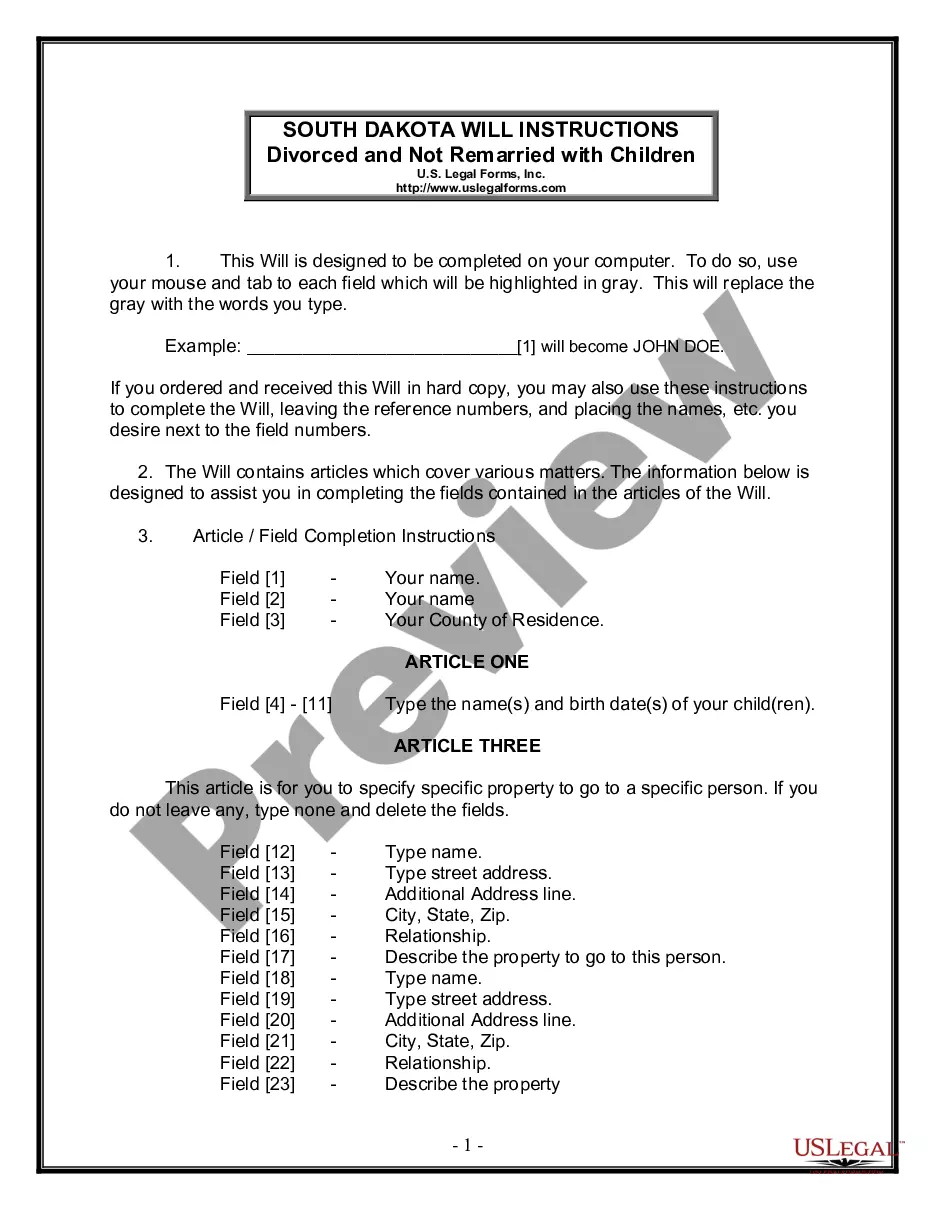
Delaware Living Trust Property Record
What is this form?
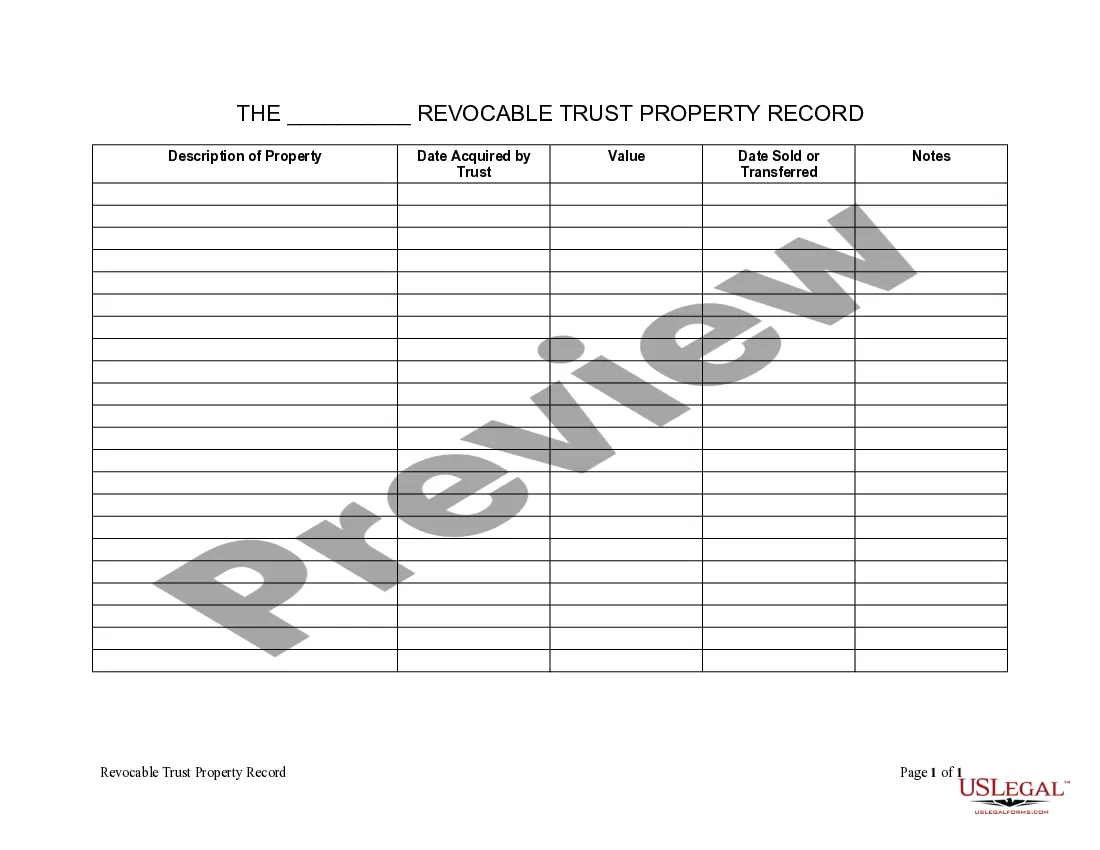
The Living Trust Property Record is a form used to inventory assets placed in a living trust. A living trust is created during a personâs lifetime to manage assets for estate planning purposes. This form allows the Trustee to document various details about the trust's property, ensuring that all real, personal, and intellectual property is properly recorded and managed. Unlike other estate planning documents, this inventory is specific to the assets held within a living trust.
Key components of this form
- Description of Property: A detailed account of each asset included in the trust.
- Date Acquired by Trust: The date when each property was transferred into the trust.
- Value: The estimated market value of each asset at the time it is recorded.
- Date Sold or Transferred: The date on which any asset was sold or transferred to another party.

Common use cases
This form should be used when establishing a living trust or when updating the inventory of assets within an existing trust. It is essential for maintaining an accurate record of the trustâs property, especially when changes occur, such as the addition of new assets or the sale of existing ones. It is also useful during estate planning discussions or when preparing for the eventual distribution of assets after the trust creatorâs passing.
Who this form is for
This form is intended for:
- Individuals setting up a living trust for estate planning.
- Trustees managing an existing living trust.
- Beneficiaries seeking clarity on the assets held within a trust.
- Estate planners and legal advisors assisting clients with property management.
How to complete this form
- Identify the assets: List each property included in the trust.
- Enter the description: Provide a detailed description for each asset.
- Record acquisition details: Fill in the date the asset was acquired by the trust.
- Assess the value: Determine and input the current market value of each asset.
- Note any sales: Document the date if the asset is sold or transferred.
Is notarization required?
Notarization is not commonly needed for this form. However, certain documents or local rules may make it necessary. Our notarization service, powered by Notarize, allows you to finalize it securely online anytime, day or night.
Get your form ready online
Our built-in tools help you complete, sign, share, and store your documents in one place.
Make edits, fill in missing information, and update formatting in US Legal Forms—just like you would in MS Word.
Download a copy, print it, send it by email, or mail it via USPS—whatever works best for your next step.
Sign and collect signatures with our SignNow integration. Send to multiple recipients, set reminders, and more. Go Premium to unlock E-Sign.
If this form requires notarization, complete it online through a secure video call—no need to meet a notary in person or wait for an appointment.
We protect your documents and personal data by following strict security and privacy standards.

Make edits, fill in missing information, and update formatting in US Legal Forms—just like you would in MS Word.

Download a copy, print it, send it by email, or mail it via USPS—whatever works best for your next step.

Sign and collect signatures with our SignNow integration. Send to multiple recipients, set reminders, and more. Go Premium to unlock E-Sign.

If this form requires notarization, complete it online through a secure video call—no need to meet a notary in person or wait for an appointment.

We protect your documents and personal data by following strict security and privacy standards.
Avoid these common issues
- Failing to update the inventory after selling or transferring assets.
- Providing vague descriptions of property, making it difficult to identify assets.
- Not including important details like the purchase date or current value.
Why use this form online
- Convenience of filling out and accessing the form from anywhere.
- Editability, allowing for easy updates as assets change.
- Reliability of professionally drafted legal language to ensure compliance.
Legal use & context
- The Living Trust Property Record is crucial for maintaining a clear inventory of trust assets.
- Ensure that the trust complies with state laws regarding asset management and reporting.
- This record is beneficial during probate, should it be required, to clarify ownership and distribution of trust assets.
Key takeaways
- The Living Trust Property Record is essential for managing trust assets efficiently.
- Accurate record-keeping helps in the clear administration of the trust.
- This form is beneficial for trustees, beneficiaries, and estate planners.
Looking for another form?
Form popularity
FAQ
One major mistake parents make is not clearly communicating their intentions and plans regarding the trust fund to their children. This lack of clarity can lead to confusion and disputes later on. Ensuring that the Delaware Living Trust Property Record is fully understood by all parties helps foster transparency and trust within the family.
One significant downside of placing assets in a trust is the potential loss of control over those assets by the original owner, especially in complex trusts. Additionally, there can be costs associated with setting them up and maintaining them. It's crucial to weigh these factors while considering how a Delaware Living Trust Property Record aligns with overall estate planning goals.
Some people view trusts negatively due to misconceptions about their purpose. Trusts can seem complicated and intimidating, leading to confusion about their benefits. However, when established correctly, they often enhance estate planning and provide a solid strategy for managing the Delaware Living Trust Property Record effectively.
Trust funds can have some drawbacks, including potential complexities in administration and management. They may incur legal fees and require ongoing oversight, which can be burdensome. Additionally, certain types of trusts may limit access to funds or assets, making financial flexibility challenging at times.
Filling out a certification of trust form is straightforward when you follow the correct steps. First, gather necessary details such as the trust's name, date, and the names of trustees. Next, you will need to provide information about the Delaware Living Trust Property Record to ensure it reflects the most accurate account of the trust’s assets and responsibilities.
It's a good idea for your parents to consider a trust for their assets, especially to manage their Delaware Living Trust Property Record effectively. A trust can provide benefits like avoiding probate, ensuring privacy, and allowing for easy distribution of assets. Ultimately, each family’s situation is unique, so exploring options and seeking professional advice is wise.
People set up trusts in Delaware for several reasons, including favorable tax laws and strong asset protection features. Delaware's legal system is well-known for its business-friendly environment and established precedents related to trusts. By establishing a trust in Delaware, you can effectively manage your Delaware Living Trust Property Record, ensuring your assets are distributed according to your wishes while minimizing complications.
Yes, you can often look up trust documents online, but the availability varies by state and the specific trust. Many jurisdictions maintain databases for public records, including some Delaware Living Trust Property Records, which can provide access to these documents. However, private trust documents may not be publicly accessible, emphasizing the importance of maintaining accurate records through reliable platforms like U.S. Legal Forms.
One downside of a living trust is that it does not provide tax benefits during your lifetime, unlike some other estate planning tools. Additionally, there may be upfront costs involved in setting it up, and if your assets are not correctly transferred into the trust, it may not function as intended. Nevertheless, a properly structured living trust can greatly enhance your Delaware Living Trust Property Record and simplify your estate management.
Yes, you can transfer your mortgage to a trust, but it requires careful planning. Often, lenders must approve this transfer, which involves reviewing the trust documents. By doing so, you may protect your Delaware Living Trust Property Record, ensuring that your assets are safeguarded for your beneficiaries.