Sample Letter for Promotional Letter - Dry Cleaner Supplies
What this document covers
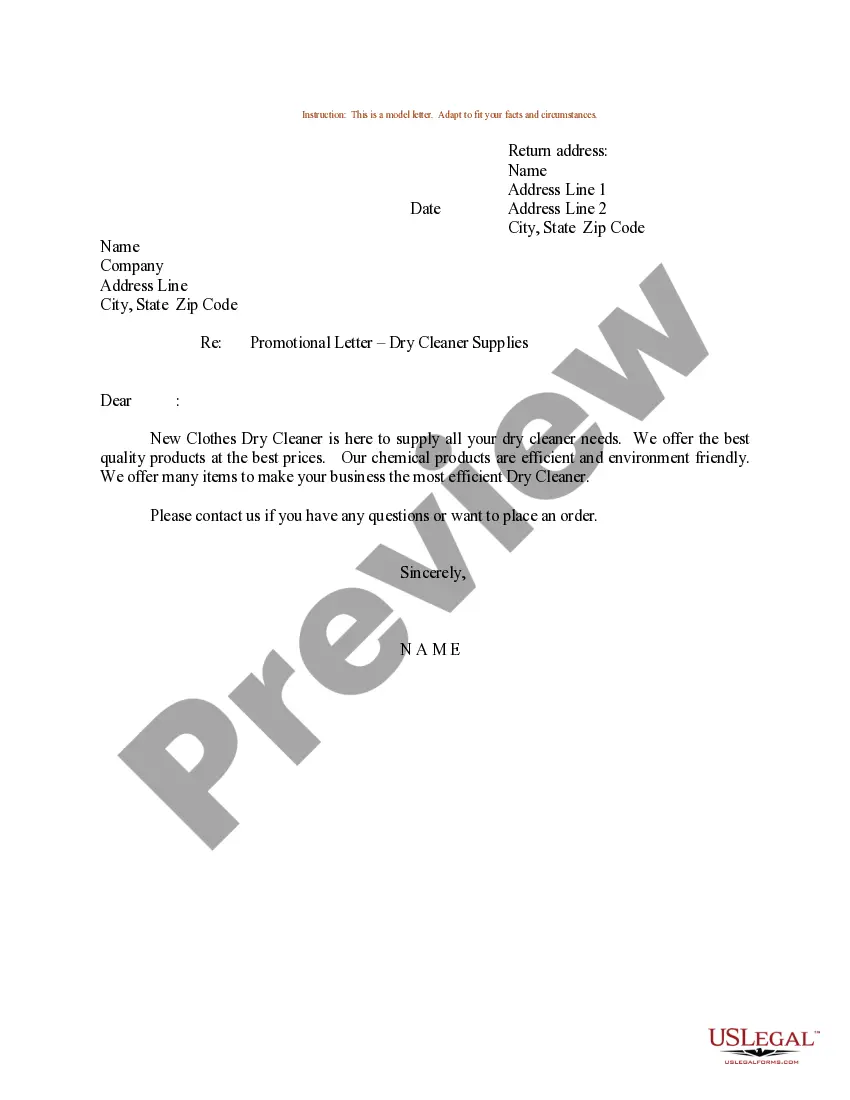
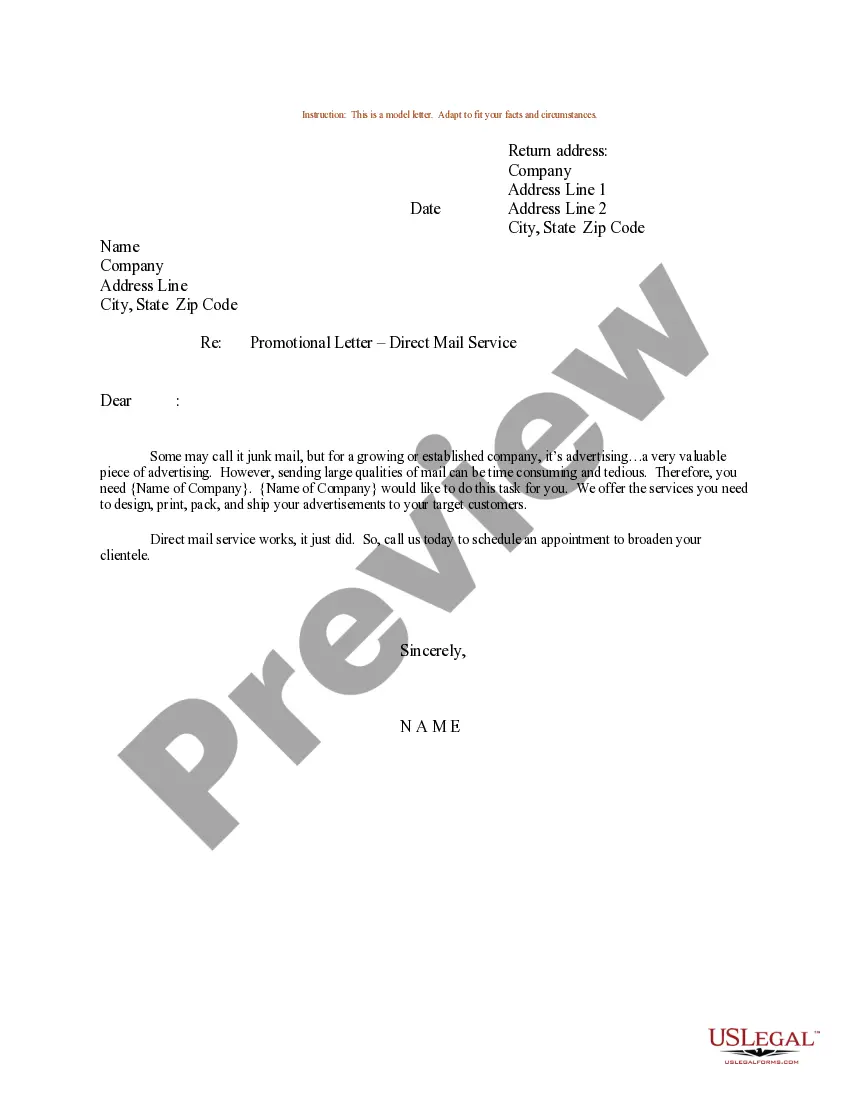
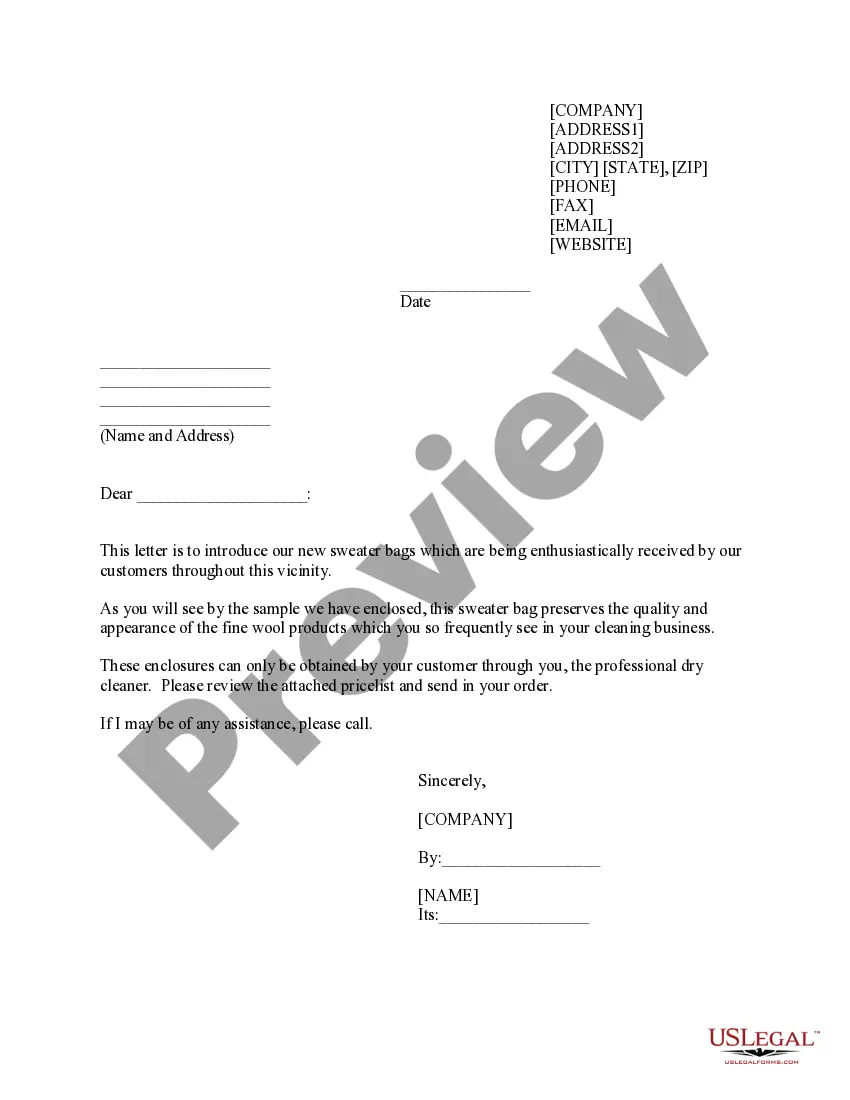
The Sample Letter for Promotional Letter - Dry Cleaner Supplies is a template designed for businesses in the dry cleaning industry to promote their supplies and services. This letter serves as a direct communication tool to reach potential customers, distinguishing itself from other marketing materials by focusing specifically on dry cleaner supplies and offering a formal approach to customer outreach.
Main sections of this form
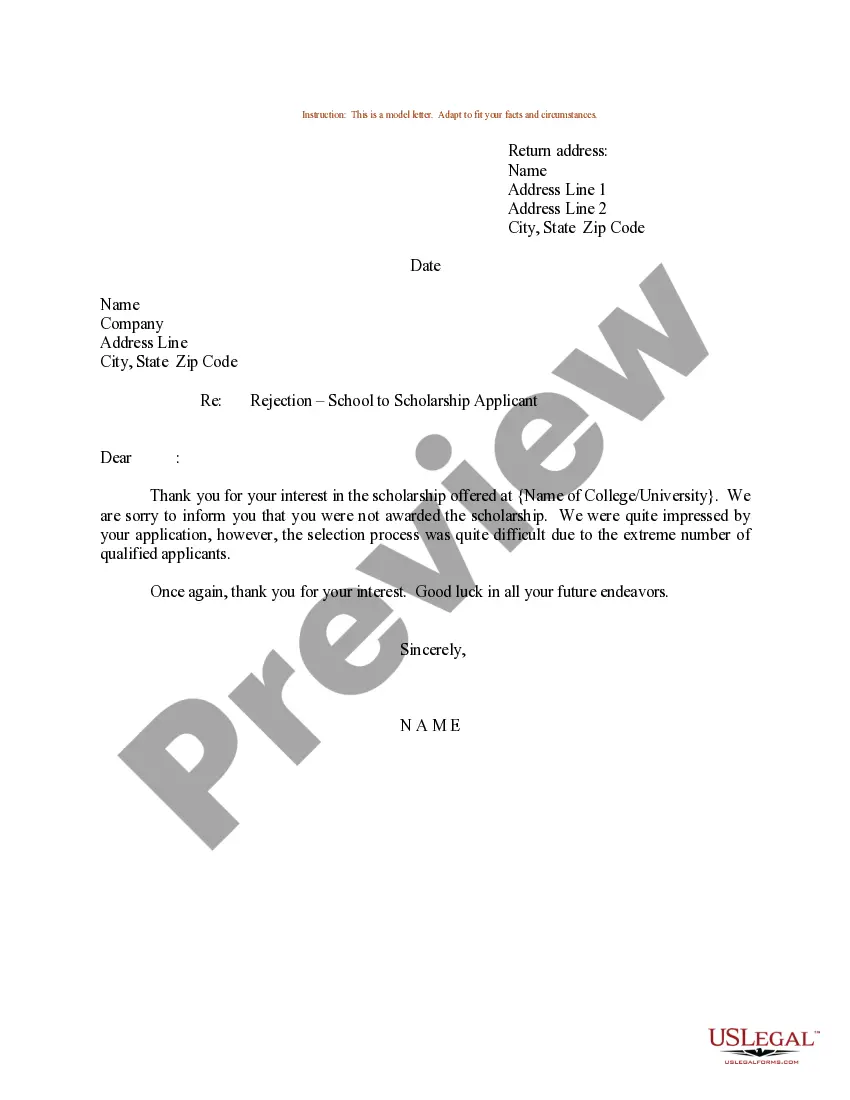
- Return address: Includes the sender's name and address for correspondence.
- Date: The date when the letter is written.
- Recipient address: Name and address of the company or individual to whom the letter is directed.
- Subject line: Clearly states the purpose of the letter as a promotional communication.
- Content body: Encourages recipients to contact for questions or to place orders.
- Closing: Includes a professional sign-off and the sender's name.
When to use this form
This form should be used when a dry cleaning business wants to reach out to potential or current customers to inform them about available supplies or special offers. It is particularly useful during product launches, promotions, or when introducing new services tailored for dry cleaning operations.
Who should use this form
This form is suitable for:
- Dry cleaning business owners looking to promote their services.
- Suppliers targeting dry cleaning establishments.
- Marketing professionals aiming to create targeted promotional materials for clients in the dry cleaning industry.
Steps to complete this form
- Identify the sender's return address and enter the necessary details.
- Add the date of writing the letter.
- Provide the recipient's name and address information accurately.
- Clearly state the subject line to focus on promotional intent.
- Draft the body content, encouraging questions and orders regarding supplies.
- Sign off the letter with your name for a personal touch.
Is notarization required?
This form usually doesn’t need to be notarized. However, local laws or specific transactions may require it. Our online notarization service, powered by Notarize, lets you complete it remotely through a secure video session, available 24/7.
Get your form ready online
Our built-in tools help you complete, sign, share, and store your documents in one place.
Make edits, fill in missing information, and update formatting in US Legal Forms—just like you would in MS Word.
Download a copy, print it, send it by email, or mail it via USPS—whatever works best for your next step.
Sign and collect signatures with our SignNow integration. Send to multiple recipients, set reminders, and more. Go Premium to unlock E-Sign.
If this form requires notarization, complete it online through a secure video call—no need to meet a notary in person or wait for an appointment.
We protect your documents and personal data by following strict security and privacy standards.

Make edits, fill in missing information, and update formatting in US Legal Forms—just like you would in MS Word.

Download a copy, print it, send it by email, or mail it via USPS—whatever works best for your next step.

Sign and collect signatures with our SignNow integration. Send to multiple recipients, set reminders, and more. Go Premium to unlock E-Sign.

If this form requires notarization, complete it online through a secure video call—no need to meet a notary in person or wait for an appointment.

We protect your documents and personal data by following strict security and privacy standards.
Typical mistakes to avoid
- Leaving out the recipient's address, which may lead to confusion.
- Not specifying the promotional offers clearly in the letter.
- Failing to proofread for spelling or grammatical errors before sending.
Why use this form online
- Easy access to a professionally drafted template.
- Immediate download for quick use.
- Editable format allows customization to fit individual business needs.
Summary of main points
- The Sample Letter for Promotional Letter - Dry Cleaner Supplies is tailored for marketing in the dry cleaning industry.
- It helps to effectively engage potential customers and promote products.
- Ensure accurate information and professionalism to maximize effectiveness.
Looking for another form?
Form popularity
FAQ
Perchloroethylene (perc) has been the leading dry cleaning solvent used in the dry cleaning industry and is still being used by the majority of dry cleaners in many countries.
Dry cleaning still involves liquid, but clothes are instead soaked in a water-free liquid solvent, tetrachloroethylene (perchloroethylene), known in the industry as "perc", which is the most widely used solvent. Alternative solvents are 1-bromopropane and petroleum spirits.
Dry cleaning solvent is a type of fluid that is used to clean a fabric or textile surface without water. There is not one specific chemical; there are a variety of chemicals that can be used. Dry cleaning solvent is used for removing toner because of the toner's sensitivity to water.Dry Cleaner's Secret.
Perchloroethylene ("perc") has long been recognized as an effective dry cleaning solvent and today it is by far the most commonly used solvent in dry cleaning shops. However, as a volatile organic solvent, perc may pose serious health hazards if exposure is not properly controlled.
¾ cup of water. 4 tablespoons of vinegar. 1 teaspoon of borax. 1 teapsoon of dry oxygen bleach. Zip-top pillowcase. Washcloth. Mixing or container.
If the dry cleaner has damaged your garment or item, it is considered a major problem and they should compensate you for it.If the item can't be recovered, the dry cleaner will be responsible to reasonably compensate you.
Pressing or Finishing is the process of taking clean clothes (Dry-cleaned or laundered) and pressing the wrinkles out as well as reshaping the garment to its original form.
Dry cleaners are legally required to take 'reasonable' care of anything left with them. You can claim compensation if your belongings are damaged or lost while in their care. Even if the dry cleaning company has a sign or notice saying they aren't responsible for items left with them, this isn't necessarily true.
Here's how they work: First, spot-treat your clothing with the included pre-treater. Then put your clothes and the damp pad with cleaning solution (also included) in the dryer, where the heat steams them. To minimize wrinkles, remove garments a few minutes before the cycle ends and hang them up to dry.