Sample Letter for Tax Exemption - Discussion of Office Equipment Qualifying for Tax Exemption
Overview of this form
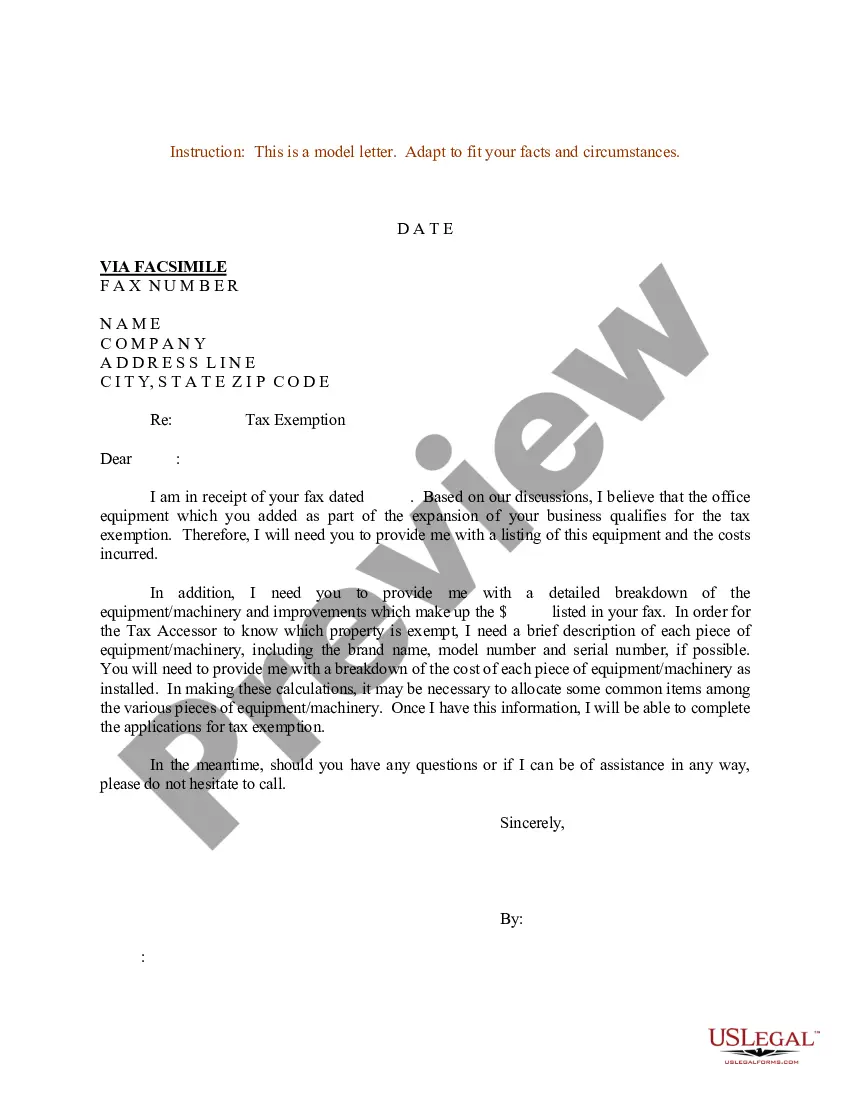
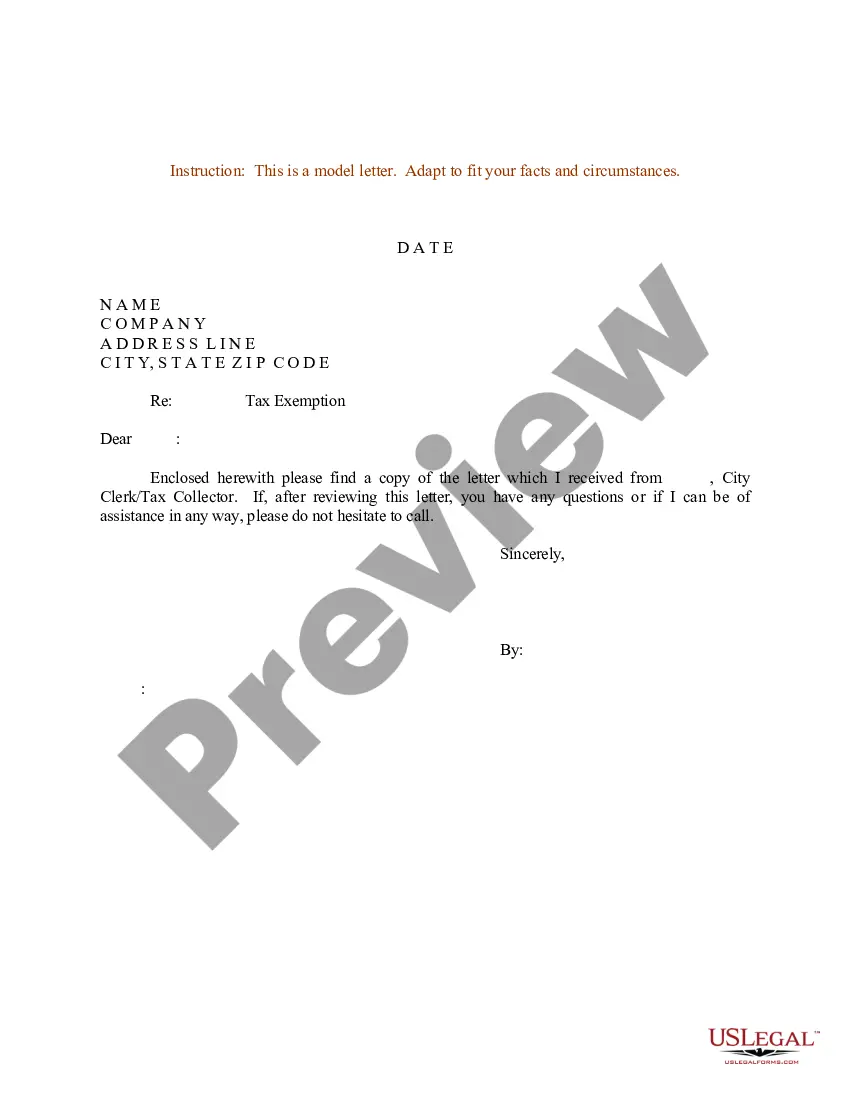
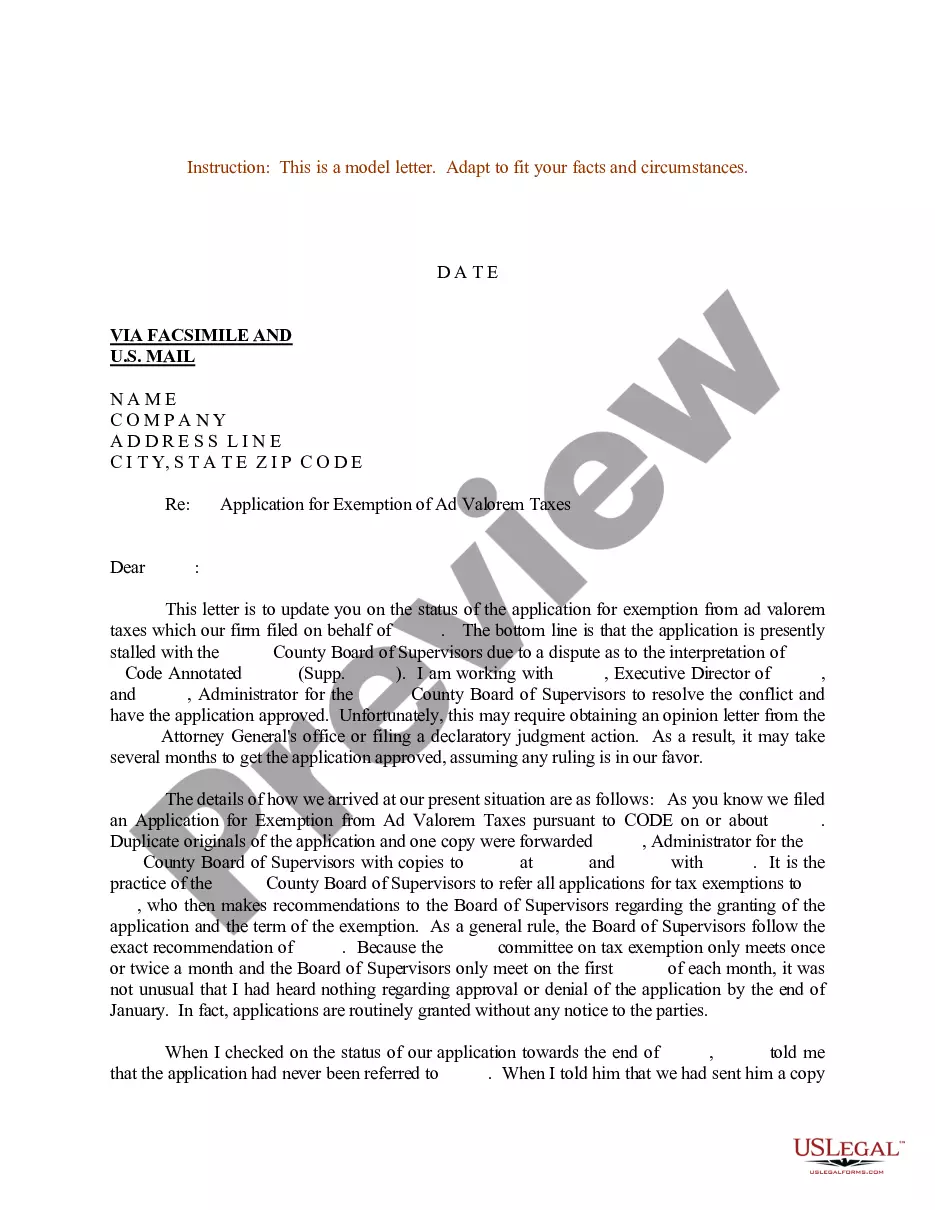
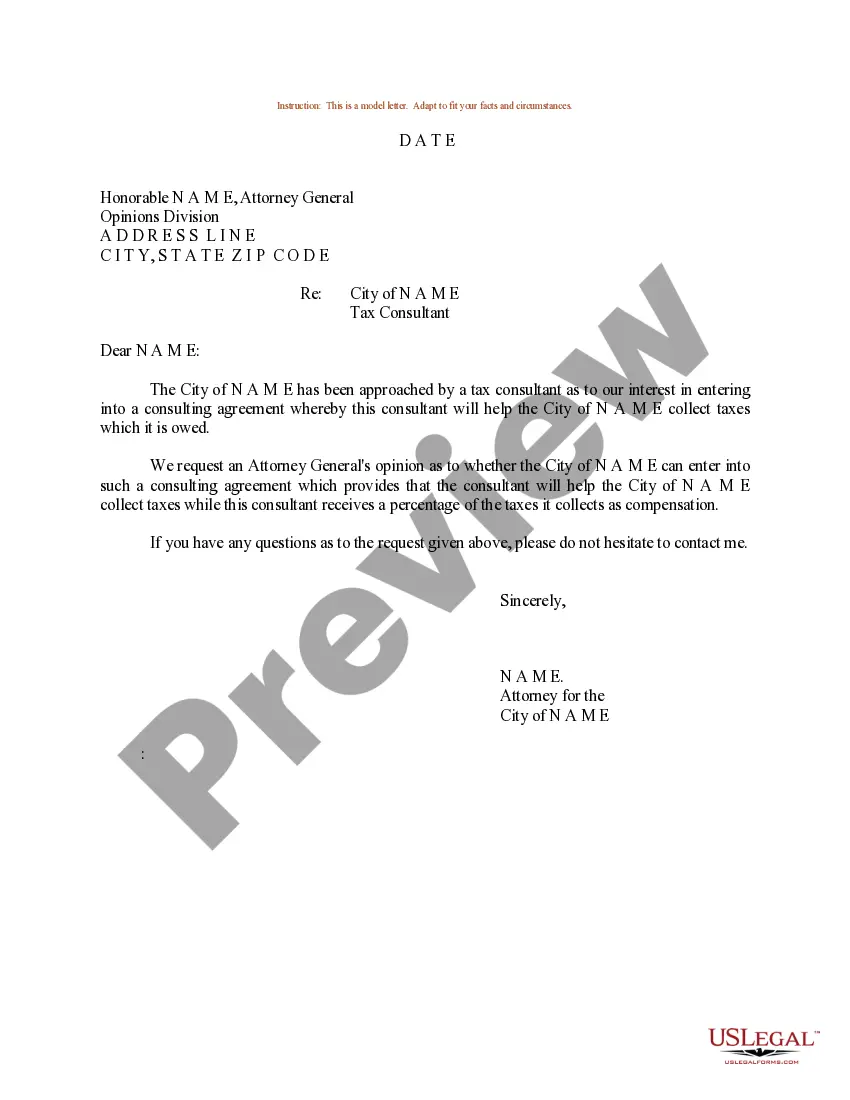
This Sample Letter for Tax Exemption is a template designed to help individuals or businesses communicate with tax authorities about specific office equipment that may qualify for tax exemption. It streamlines the process of requesting exemptions, ensuring that all relevant details are addressed. This form is particularly useful for businesses looking to understand and apply for exemptions on equipment expenditures effectively.
What’s included in this form
- Date: The date on which the letter is drafted.
- Recipient information: Name of the tax authority or relevant individual, including their address.
- Company information: Details about the sending business, including name and address.
- Discussion of equipment: A section that specifies the office equipment being discussed and its qualifications for exemption.
When to use this form
This form should be used when a business wants to request a tax exemption related to its office equipment purchases. It is particularly relevant during tax seasons or when a business is re-evaluating its tax liabilities, ensuring that it is taking advantage of any available exemptions for eligible equipment.
Who needs this form
- Small business owners looking to apply for tax exemptions on office equipment.
- Accountants or tax professionals preparing documents for clients seeking exemptions.
- Any organization or individual interested in understanding tax benefits related to equipment purchases.
How to prepare this document
- Identify the date of the letter.
- Fill in the recipient's name and fax number where the letter will be sent.
- Provide your company's name and address information.
- Clearly describe the office equipment and its qualifications for tax exemption in the designated section.
- Sign and date the letter before sending it to the tax authority.
Notarization guidance
This form does not typically require notarization to be legally valid. However, some jurisdictions or document types may still require it. US Legal Forms provides secure online notarization powered by Notarize, available 24/7 for added convenience.
Get your form ready online
Our built-in tools help you complete, sign, share, and store your documents in one place.
Make edits, fill in missing information, and update formatting in US Legal Forms—just like you would in MS Word.
Download a copy, print it, send it by email, or mail it via USPS—whatever works best for your next step.
Sign and collect signatures with our SignNow integration. Send to multiple recipients, set reminders, and more. Go Premium to unlock E-Sign.
If this form requires notarization, complete it online through a secure video call—no need to meet a notary in person or wait for an appointment.
We protect your documents and personal data by following strict security and privacy standards.

Make edits, fill in missing information, and update formatting in US Legal Forms—just like you would in MS Word.

Download a copy, print it, send it by email, or mail it via USPS—whatever works best for your next step.

Sign and collect signatures with our SignNow integration. Send to multiple recipients, set reminders, and more. Go Premium to unlock E-Sign.

If this form requires notarization, complete it online through a secure video call—no need to meet a notary in person or wait for an appointment.

We protect your documents and personal data by following strict security and privacy standards.
Avoid these common issues
- Failing to include complete contact information for both sender and recipient.
- Not specifying all office equipment that may qualify for exemption.
- Neglecting to review state-specific requirements before submission.
Why use this form online
- Easy accessibility: Downloadable templates tailor-made for user needs.
- Convenience: Fill out the template at your own pace and convenience.
- Accuracy: Attorneys draft the templates, reducing the likelihood of errors.
Key takeaways
- The form assists in requesting tax exemptions for qualifying office equipment.
- It is essential to provide clear and complete information to improve approval chances.
- Reviewing state-specific rules can enhance the form's effectiveness.
Looking for another form?



Form popularity
FAQ
Most state sales tax exemption certificates do not expire and the seller is required to maintain exemption certificates for as long as sales continue to be made to the purchaser and sales tax is not collected. Exemption certificates are not required for items that are not taxable by statute.
Who qualifies for tax-exempt status?Some common examples of organizations that may qualify for tax-exempt status include child care, churches and religious, and social welfare organizations. Operating as one of the above organizations does not mean you are tax exempt. You must apply through the IRS for tax exemption.
A tax exempt letter needs to include the name and contact information of the organization. Then establish the reason for the tax exempt status such as listing what the organization does that will profit the public.
Incorporate. Apply for an EIN. Provide a detailed business purpose. File Form 1023 with the IRS. Pay the necessary filing fees. When to file. Complete the state-level application (if applicable).
The letter must mention if the application is approved or rejected. The letter must be short and precise. If there are any changes to be made, the letter must explain the changes in details. The letter must be addressed to the proper authority at the company.
A tax exemption is the right to exclude certain amounts of income or activities from taxation. A few years ago, taxpayers were able to exclude $4,050 or more off their income by claiming personal exemptions. Personal exemptions no longer exist.
To be tax-exempt, an organization must be organized and operated exclusively for exempt purposes specified in section 501(c)(3) The organization must have a charitable purpose, be a religious group, considered a scientific organization, qualify as an educational organization or serve some literary purpose.
Exemption letter is an official document, which can be issued only by accredited certification body, for products, which do not fall under obligatory certification according to TR CU.Practically this document informs that obligatory certificate is not needed for exact type of product.
To qualify for this exempt status, the employee must have had no tax liability for the previous year and must expect to have no tax liability for the current year. A Form W-4 claiming exemption from withholding is valid for only the calendar year in which it's furnished to the employer.