Lock Box Agreement as Cash Management System with Lenders
What is this form?
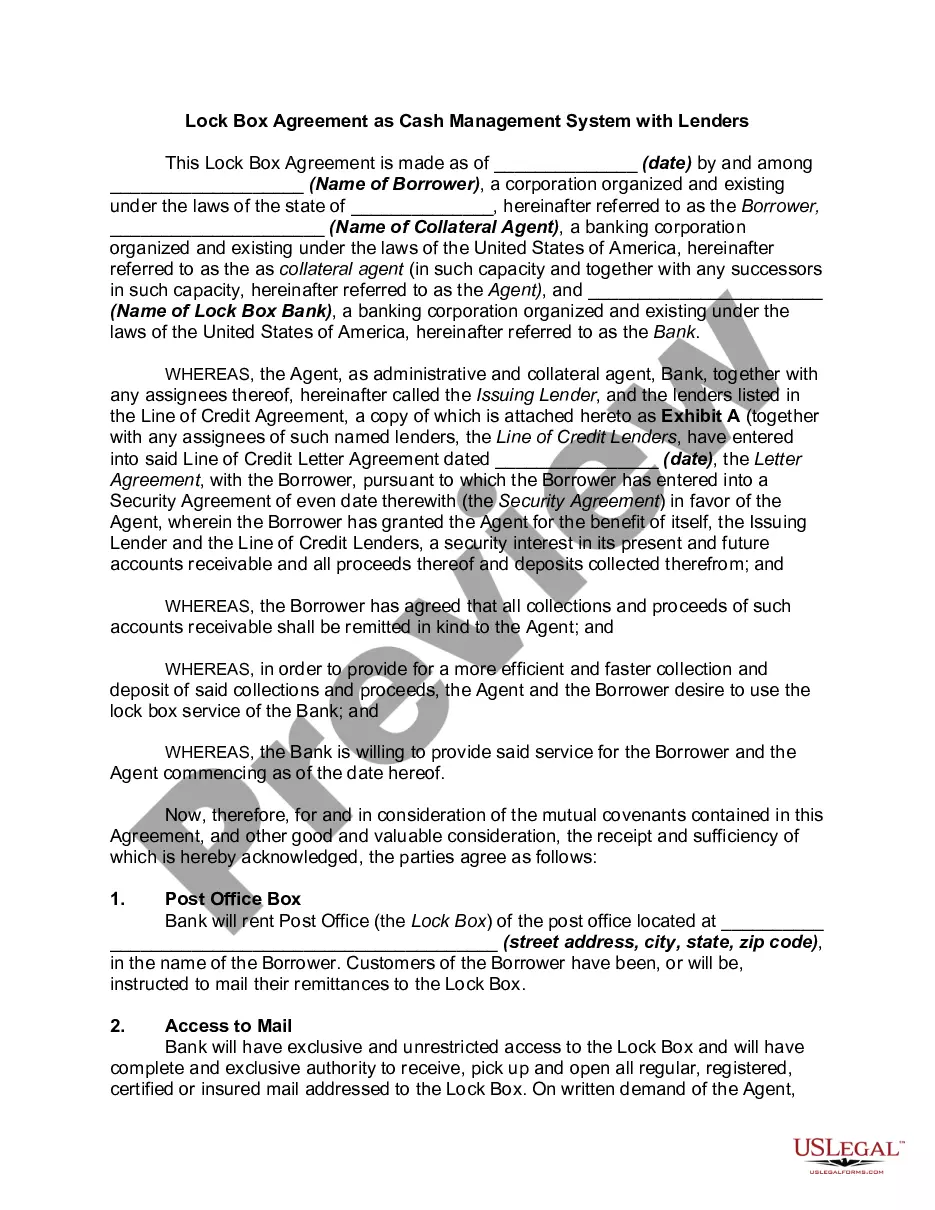
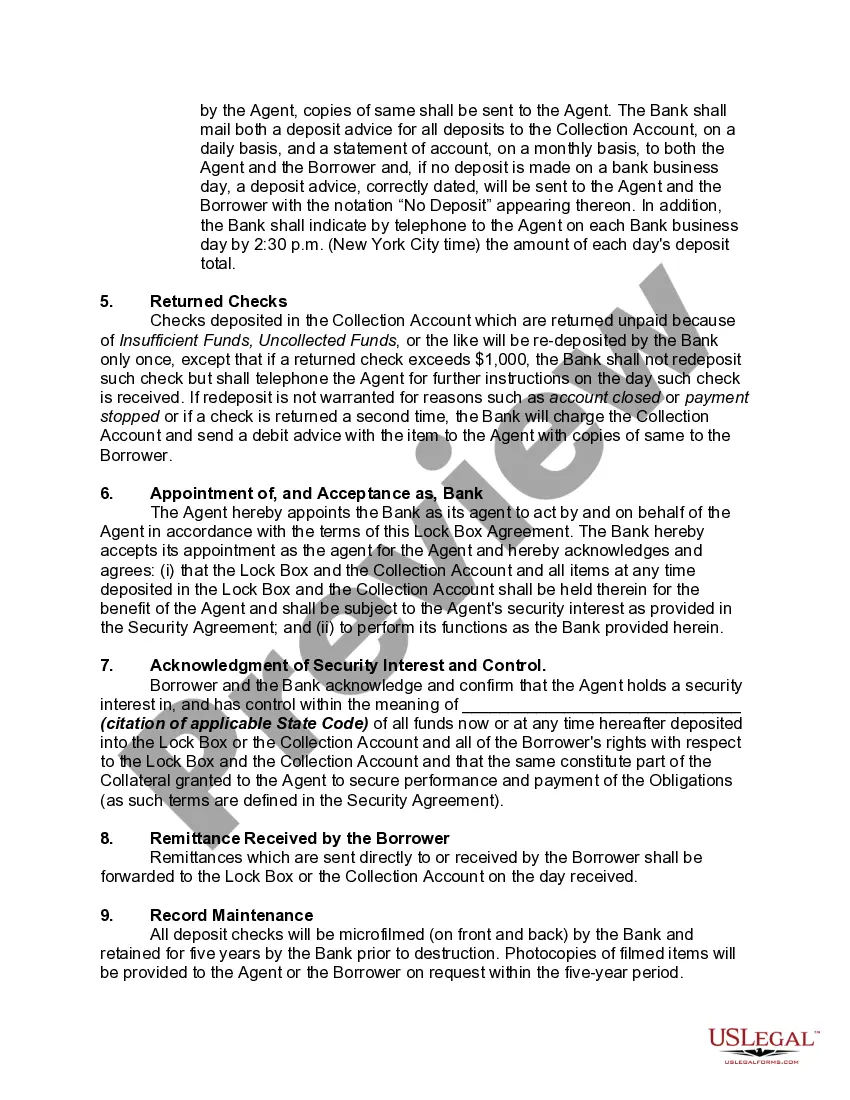
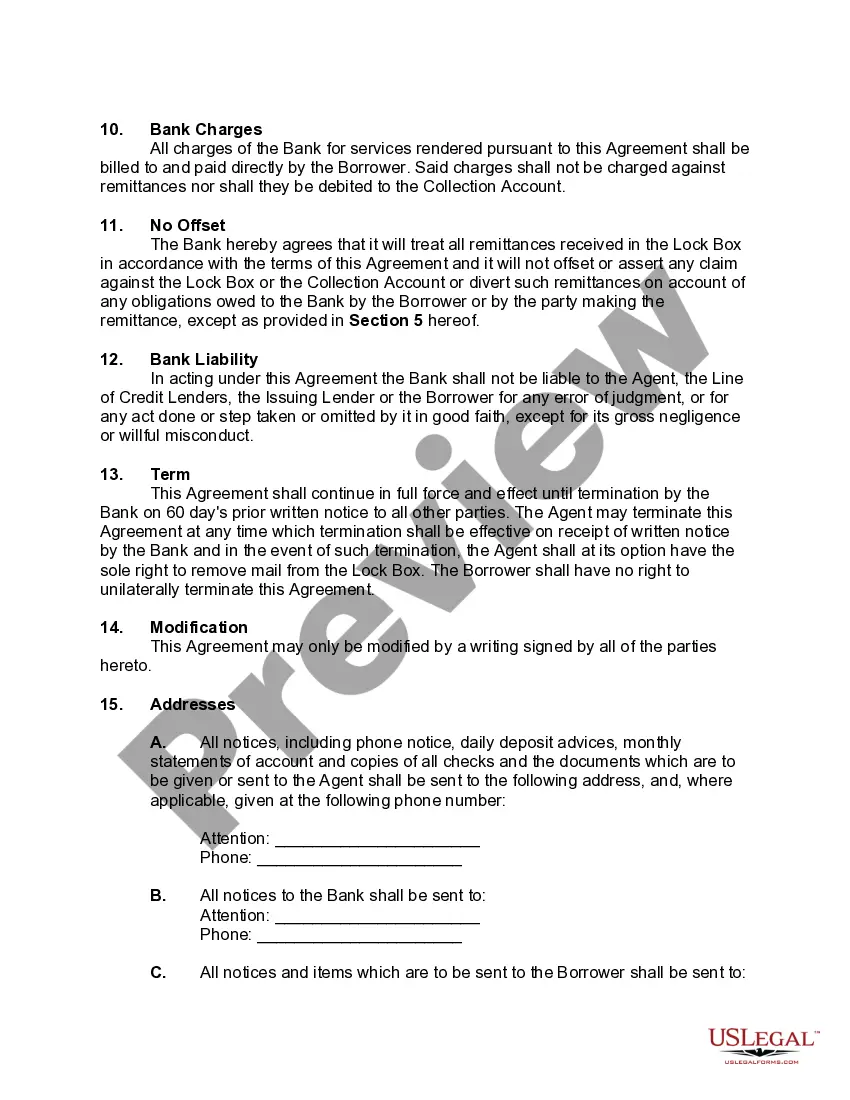
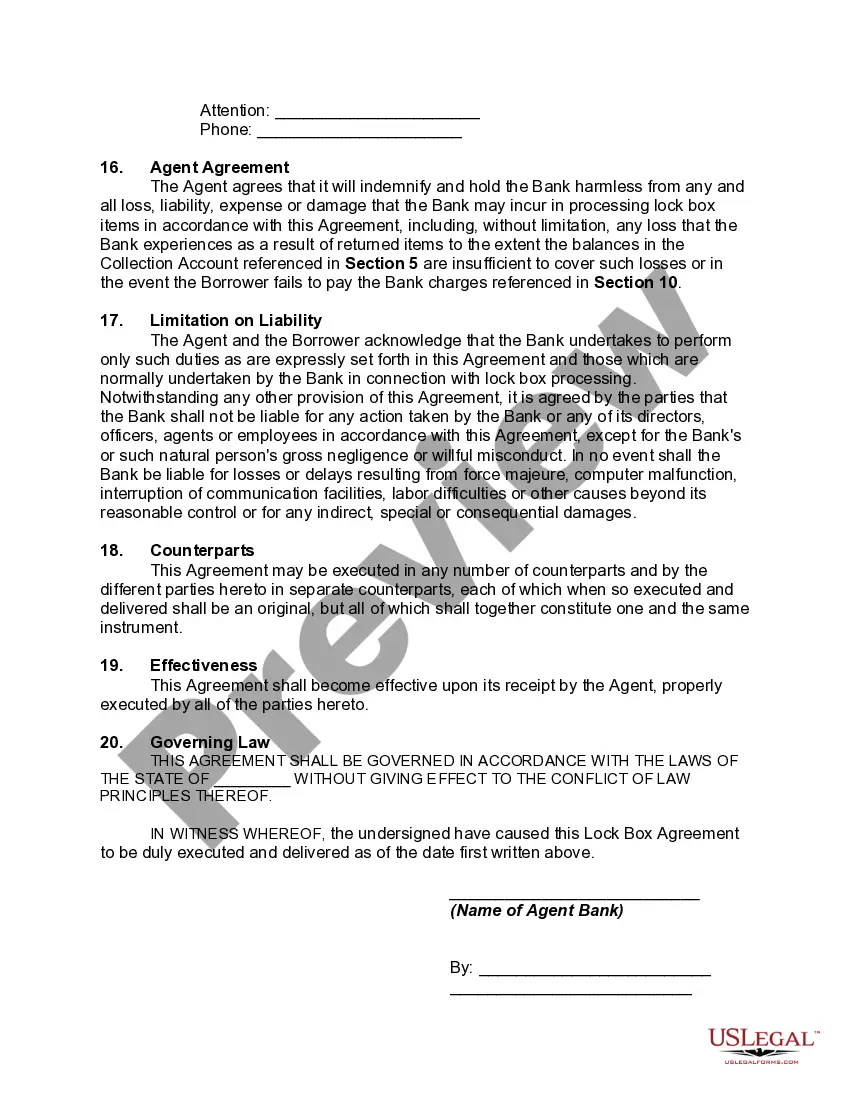
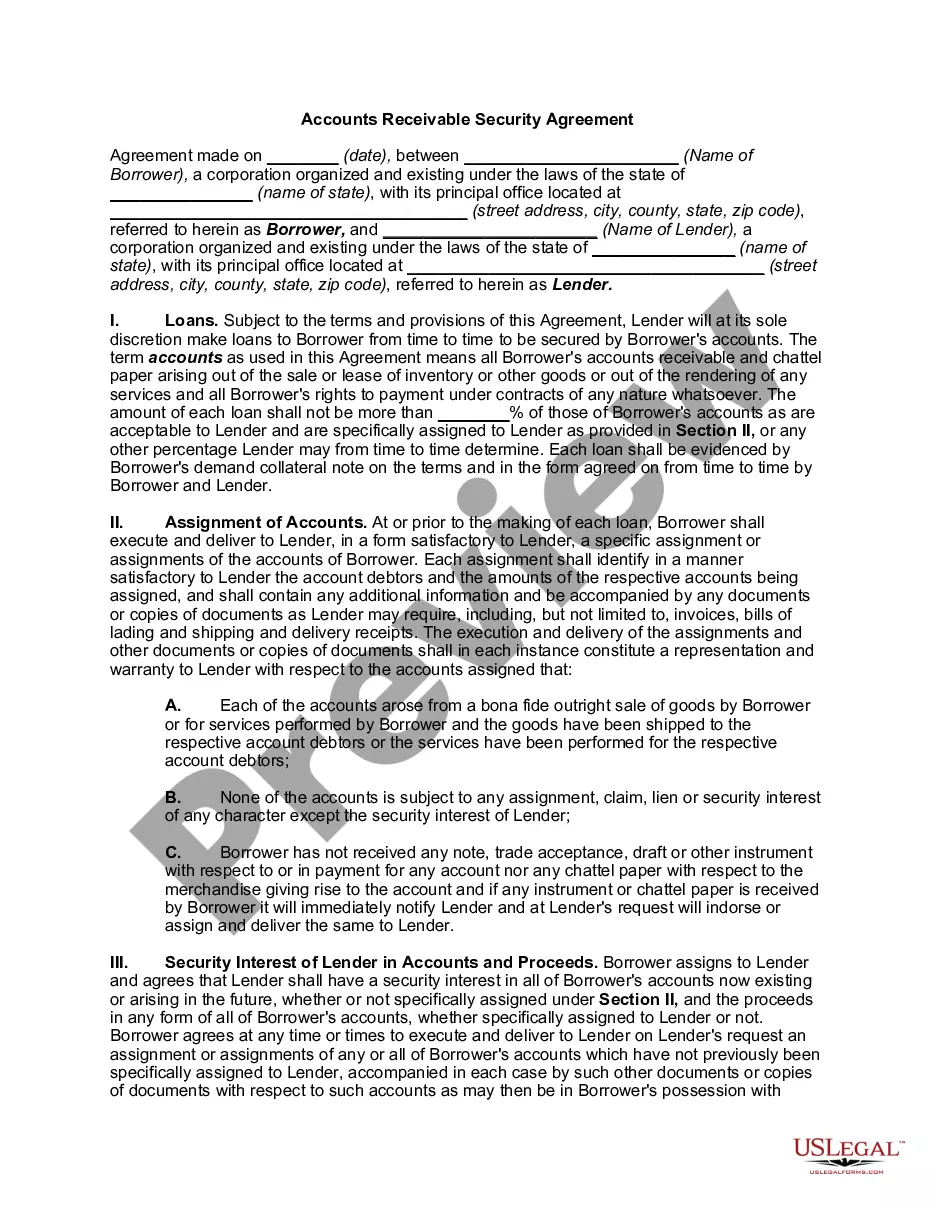
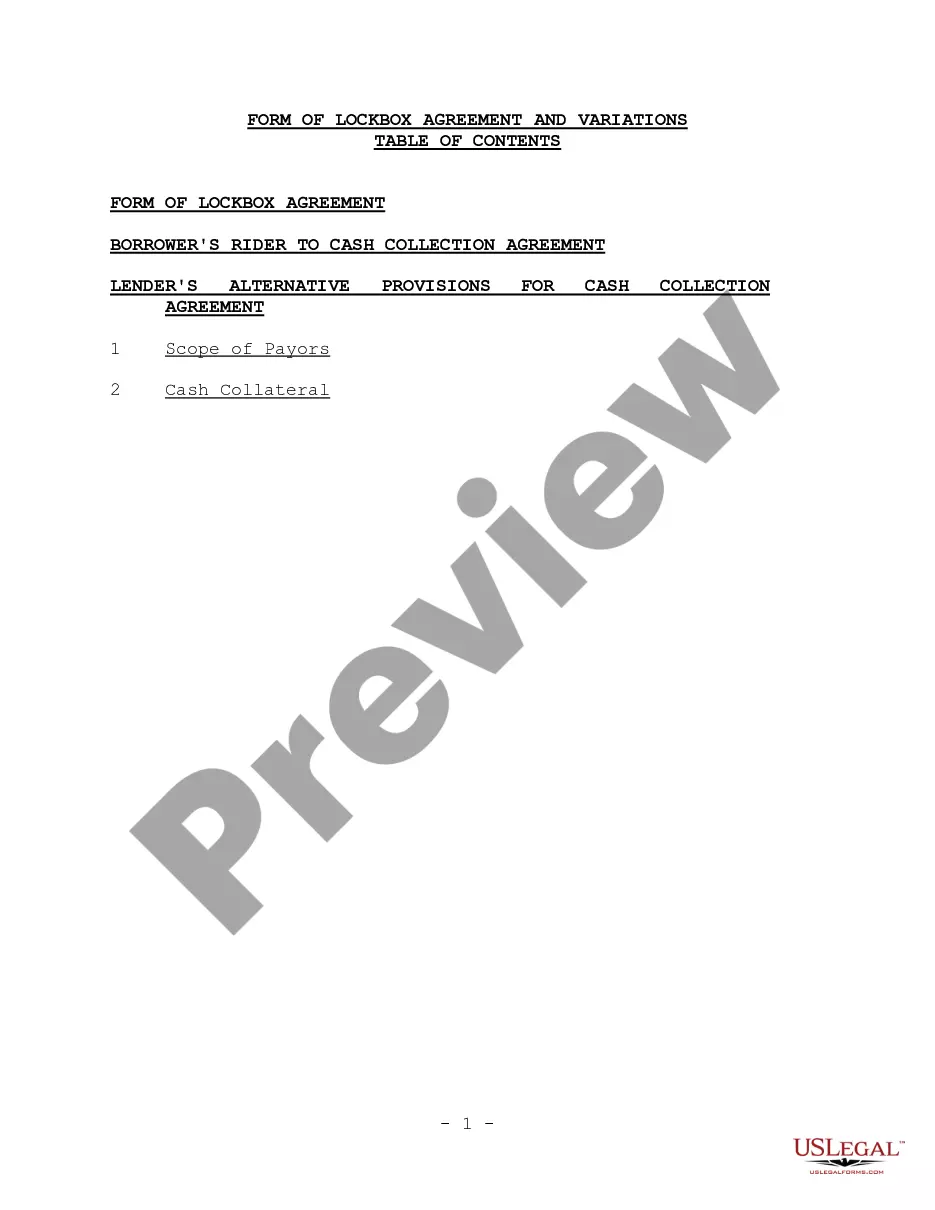
A Lock Box Agreement is a financial arrangement that allows organizations to expedite the collection and management of payments. This particular form is designed for a collateral agent acting on behalf of multiple lenders to receive payments linked to a borrower's accounts receivable. It establishes a lock box service with a bank, enabling the timely deposit of payments while perfecting the security interest for the lenders, thereby enhancing cash management. This agreement distinctly differs from other financial agreements by ensuring bank control over payments flowing into the lock box account, thereby protecting lendersâ rights against any potential claims from the debtor.
Form components explained
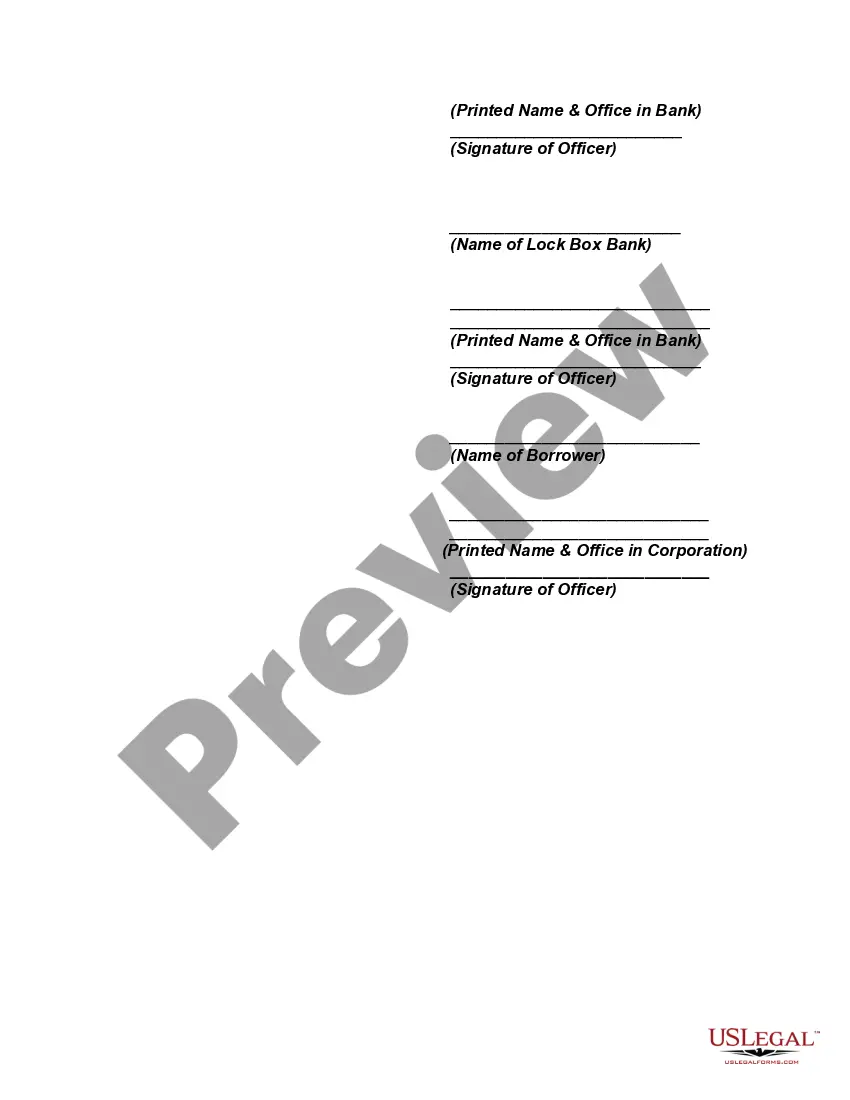
- Parties involved: Identification of the borrower, the collateral agent, and the lock box bank.
- Post office box provision: Arrangement for renting a lock box for receiving payments.
- Access to mail: Specifications on the bank's rights to open and process mail addressed to the lock box.
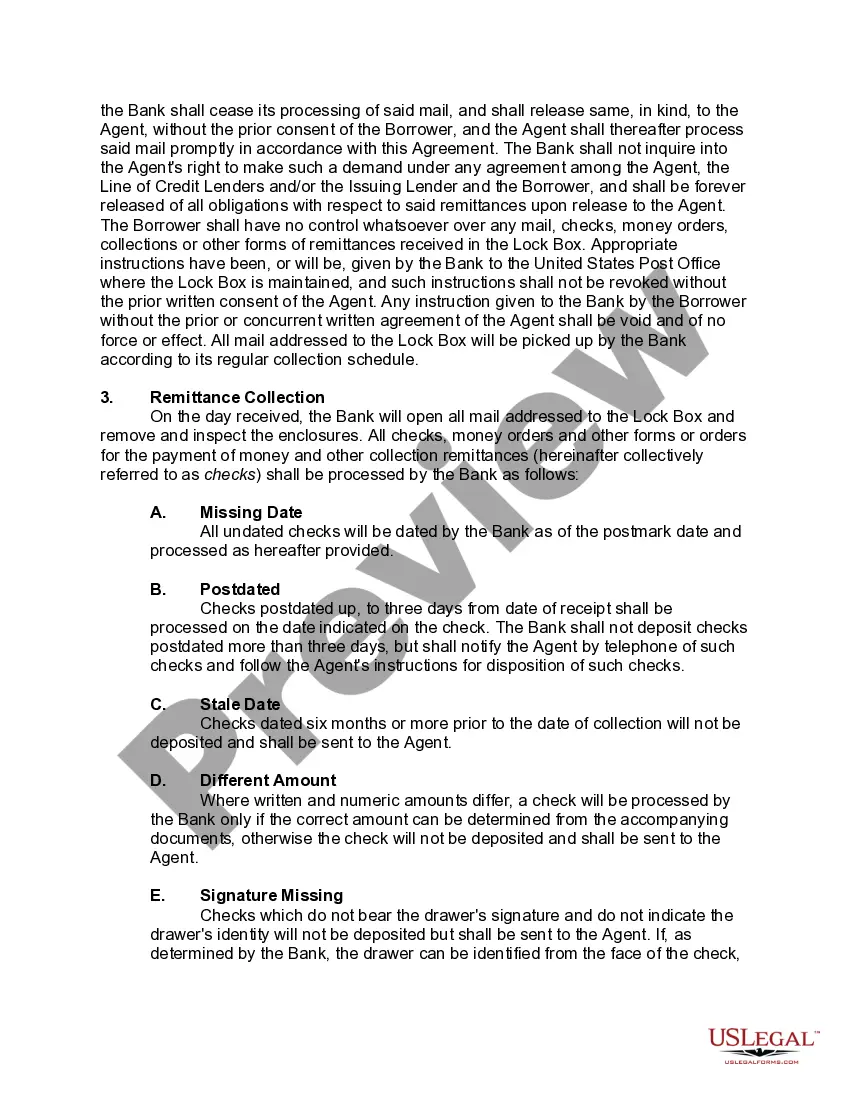
- Collection procedures: Detailed instructions for processing checks and collections received.
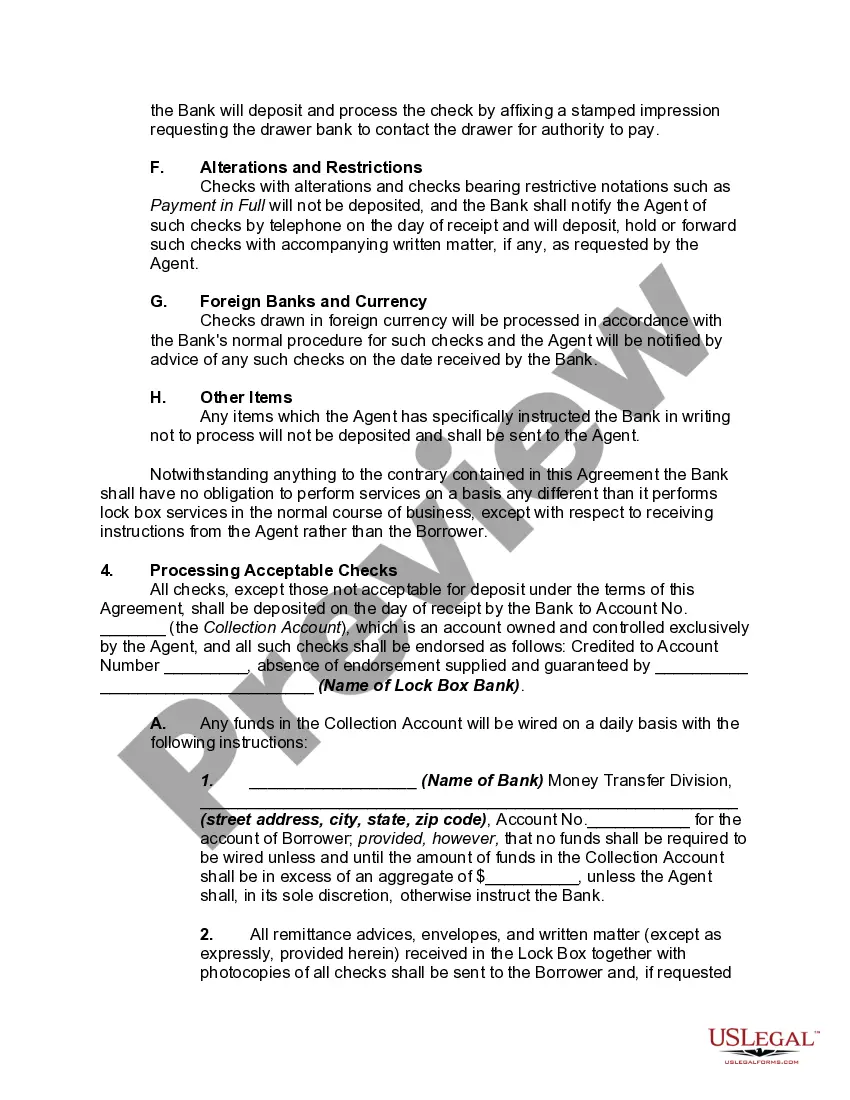
- Remittance handling: Guidelines for deposit and transfer of funds to the borrowerâs accounts.
- Indemnification clauses: Responsibilities and liabilities of the bank and agent regarding collections.
When this form is needed
This Lock Box Agreement should be used when a business has established a lending relationship with a syndicate of banks and needs to streamline the collection of accounts receivable. Common situations include when a business is expecting significant payments from clients and wants to maximize cash flow quickly. It is also appropriate for businesses seeking additional security for their lenders, as it ensures that cash collections are efficiently managed and protected against claims from debtors.
Who can use this document
- Businesses that engage in commercial transactions on credit and have accounts receivable.
- Companies looking for effective cash management solutions and secure payment handling.
- Collateral agents representing syndicate lenders in securing their interests related to borrower payments.
Instructions for completing this form
- Identify the parties: Fill in the names of the borrower, collateral agent, and lock box bank.
- Specify the postal address: Provide the address for the lock box to be rented.
- Set dates: Enter the effective date for the agreement and any relevant deadlines.
- Detail financial institutions: Include the account numbers and names linked to the remittance processing.
- Obtain signatures: Ensure all parties sign the agreement to make it legally binding.
Is notarization required?
This form does not typically require notarization unless specified by local law.
Get your form ready online
Our built-in tools help you complete, sign, share, and store your documents in one place.
Make edits, fill in missing information, and update formatting in US Legal Forms—just like you would in MS Word.
Download a copy, print it, send it by email, or mail it via USPS—whatever works best for your next step.
Sign and collect signatures with our SignNow integration. Send to multiple recipients, set reminders, and more. Go Premium to unlock E-Sign.
If this form requires notarization, complete it online through a secure video call—no need to meet a notary in person or wait for an appointment.
We protect your documents and personal data by following strict security and privacy standards.

Make edits, fill in missing information, and update formatting in US Legal Forms—just like you would in MS Word.

Download a copy, print it, send it by email, or mail it via USPS—whatever works best for your next step.

Sign and collect signatures with our SignNow integration. Send to multiple recipients, set reminders, and more. Go Premium to unlock E-Sign.

If this form requires notarization, complete it online through a secure video call—no need to meet a notary in person or wait for an appointment.

We protect your documents and personal data by following strict security and privacy standards.
Avoid these common issues
- Failing to clearly identify all parties involved in the agreement.
- Not providing accurate postal addresses for the lock box location.
- Omitting required signatures, which can invalidate the agreement.
- Overlooking local and state-specific legal obligations that may affect the agreement.
Why complete this form online
- Convenient access to a legally vetted template that saves time.
- Editable fields allow customization to fit specific business and legal needs.
- Ensures compliance with legal standards relevant to your business type.
- Immediate downloading or printing for quick enactment of financial agreements.
Key takeaways
- The Lock Box Agreement optimizes cash flow management for borrowers with accounts receivable.
- It enables faster deposit access, enhancing operational efficiency for businesses.
- Parties must understand their rights and responsibilities specified in the agreement.
Looking for another form?

Form popularity
FAQ
How does a Lockbox work? Once a bank receives a lockbox payment on behalf of a business, a bank representative will collect the total sums of money dropped off on a daily (or more frequent) basis from the box. Each payment and any remittance info that has been received are set to process.
A lockbox is a bank-operated mailing address to which a company directs its customers to send their payments. The bank opens the incoming mail, deposits all received funds in the company's bank account, and scans the payments and any remittance information.
What is a Lockbox System? A lockbox is a bank-operated mailing address to which a company directs its customers to send their payments. The bank opens the incoming mail, deposits all received funds in the company's bank account, and scans the payments and any remittance information.
Lockbox banking is a service provided by banks to companies for the receipt of payment from customers.The bank goes to the box, retrieves the payments, processes them and deposits the funds directly into the company's bank account.
Checks received in a lockbox are processed and deposited by the bank, usually on the date received. This provides faster access to much needed cash flow.
Lockbox services are specifically designed to compress the amount of time a check is in the mail and ultimately deposited into your business' account. Banks specialize in taking the delays out of the process by collecting and promptly depositing the checks for you.
In a lockbox system, customers' payments are physically collected close to them and much of the processing takes place close to the bank, but in concentration banking both physical collection and processing take place close to the bank.
What Is Lockbox Processing? Businesses that receive frequent payments and documents by mail use lockbox services to help reduce expenses, improve cash flow and update their accounting systems quickly.Customers mail payments and documents directly to a unique post office box for the third party to collect.
Banks offer lockbox services to help businesses streamline deposit processing and speed posting of remittances. To do this, the bank sets up a post office box, and you direct your customers to send their payments to the new address.