Sample Letter for Proof of Publication of Summons by Publication
Overview of this form
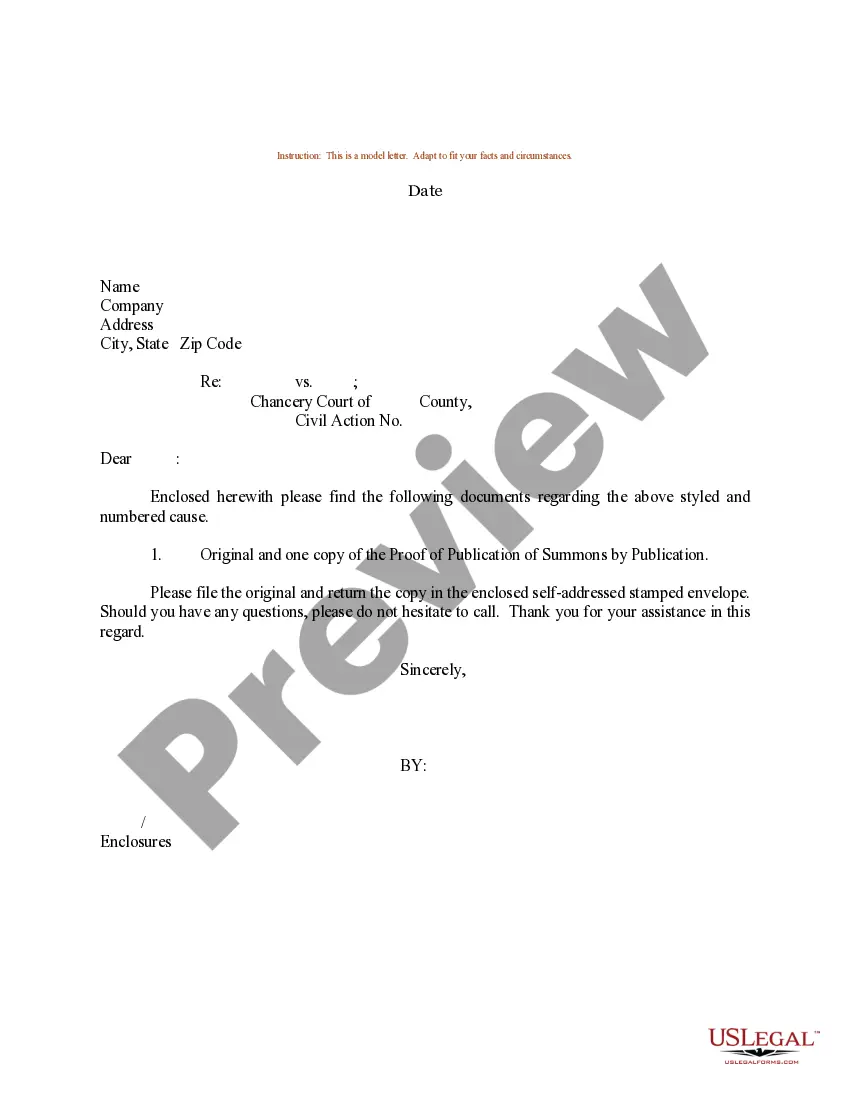
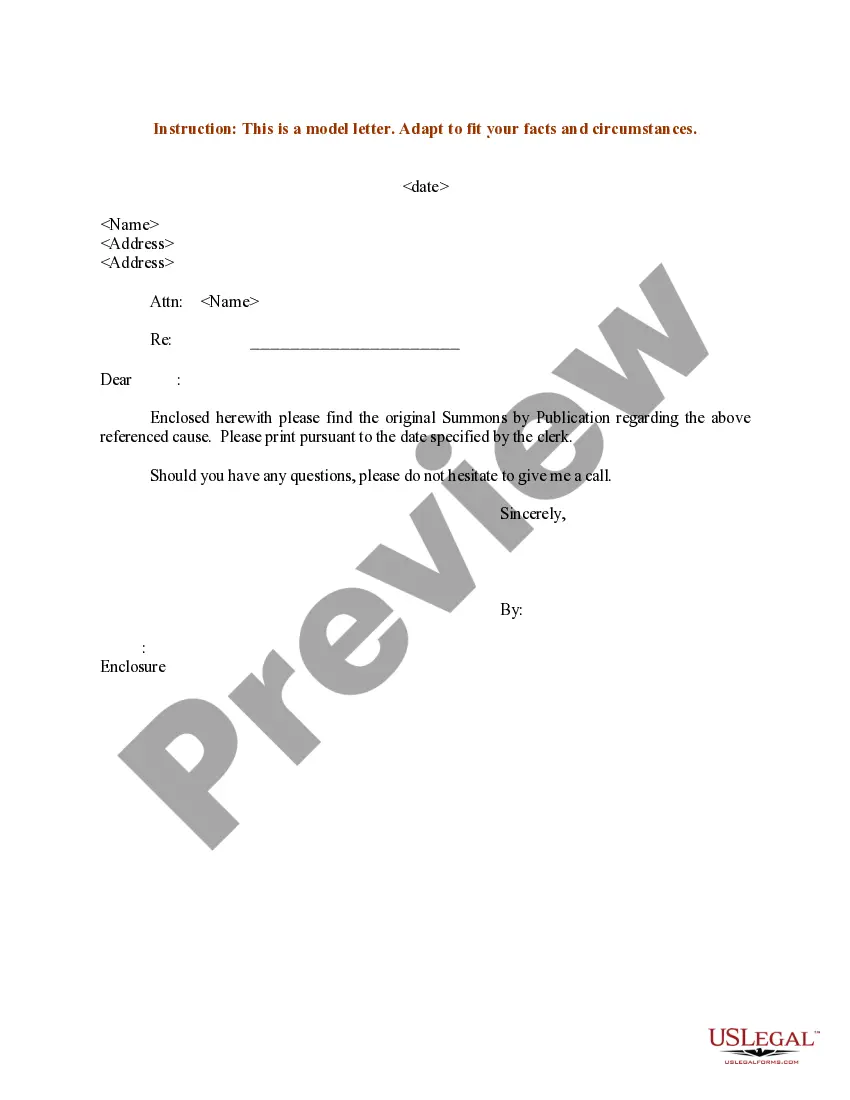
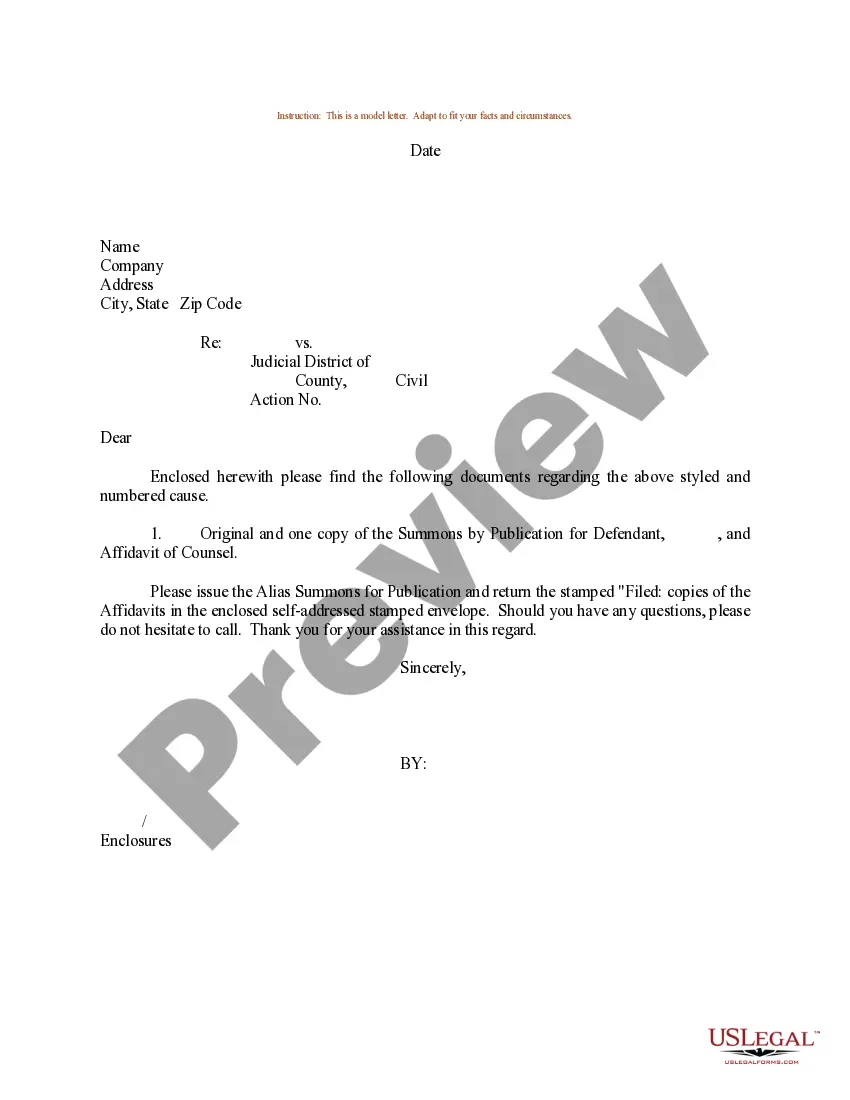
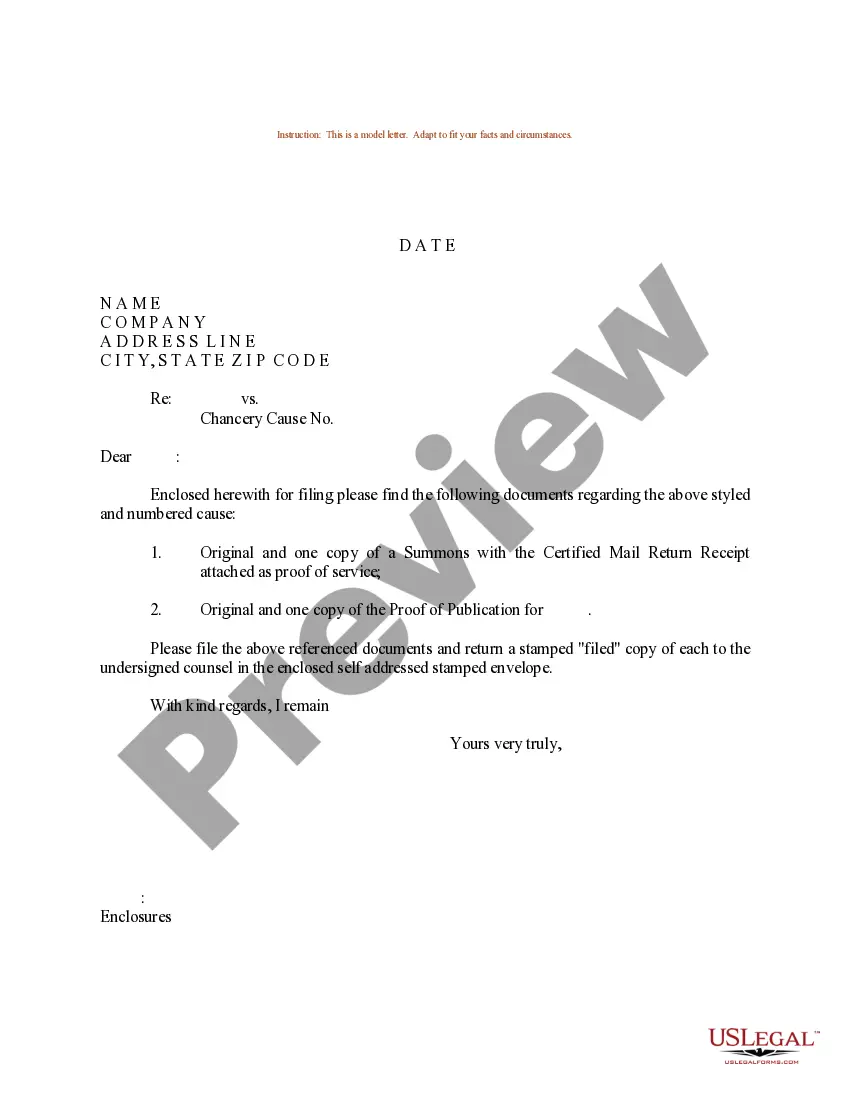
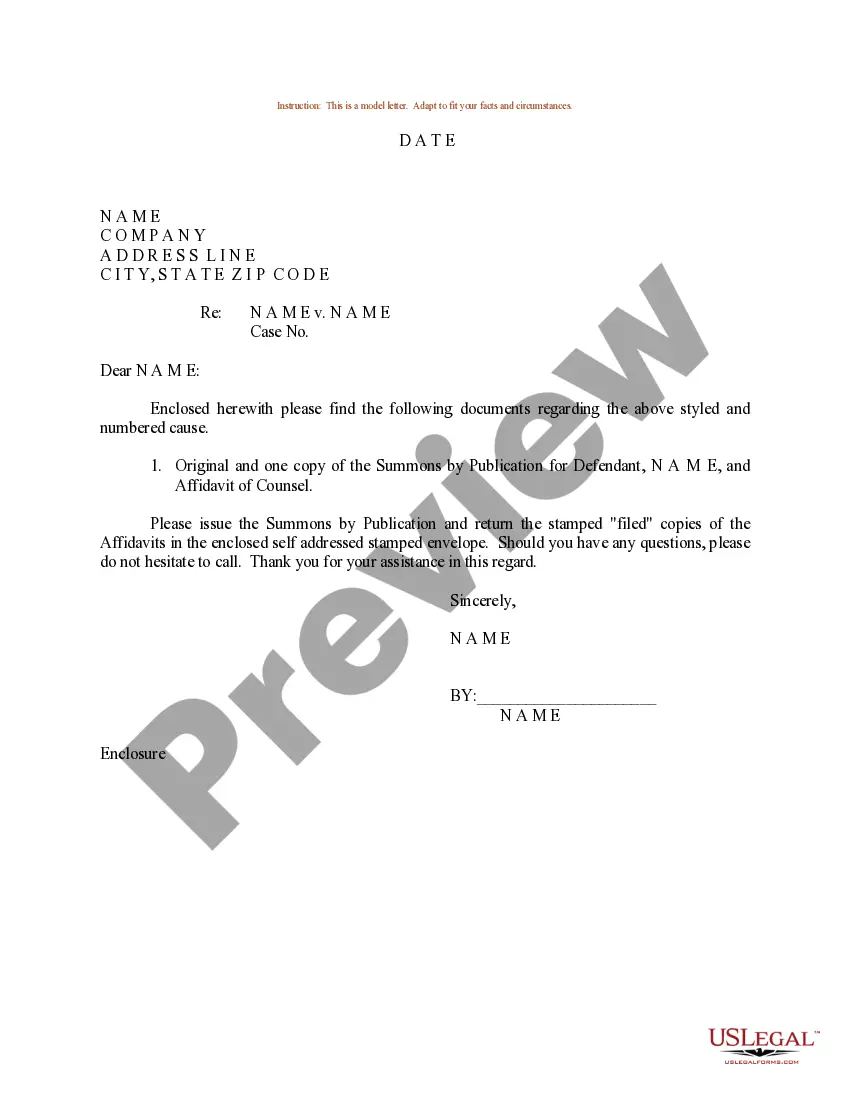
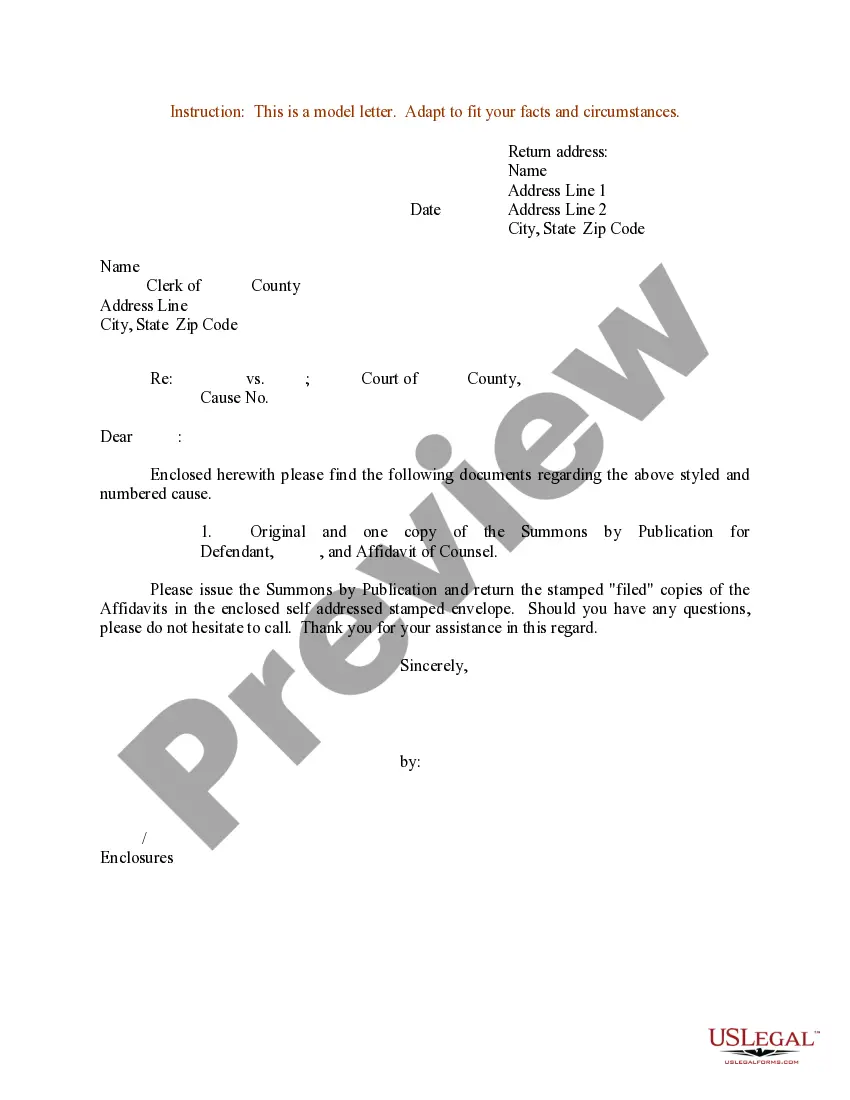
The Sample Letter for Proof of Publication of Summons by Publication is a legal document used to demonstrate that a summons has been published according to legal requirements. This form serves as a template to help individuals draft their own letter for proof of publication, which is necessary in certain legal proceedings where traditional service of summons is not possible. This letter specifically outlines the details of the publication, distinguishing it from other legal notices or documents related to summonses.
Main sections of this form
- Date of the letter
- Name and address of the individual or entity sending the letter
- Name and address of the recipient, typically a court or legal authority
Common use cases
This form is commonly used when an individual or entity needs to provide proof that a summons has been published in a newspaper or other designated publication as part of a legal process. You may need this letter if you are involved in a civil case, such as a divorce or a foreclosure, where you cannot locate the other party for direct service of the summons. Providing proof of publication is often a requirement for the court to proceed with the case.
Who needs this form
This form is intended for:
- Individuals involved in legal proceedings who are required to provide proof of publication
- Attorneys representing clients in cases where publication of a summons is necessary
- Businesses or organizations that need to fulfill court requirements for notification
Completing this form step by step
- Enter the date on which the letter is being sent.
- Provide your name and address in the designated fields.
- Add the recipient's name and address, typically a court or legal office.
- Include the details of the publication, such as dates and locations of the printed summons.
- Sign the letter, either personally or through your attorney.
Notarization requirements for this form
In most cases, this form does not require notarization. However, some jurisdictions or signing circumstances might. US Legal Forms offers online notarization powered by Notarize, accessible 24/7 for a quick, remote process.
Get your form ready online
Our built-in tools help you complete, sign, share, and store your documents in one place.
Make edits, fill in missing information, and update formatting in US Legal Forms—just like you would in MS Word.
Download a copy, print it, send it by email, or mail it via USPS—whatever works best for your next step.
Sign and collect signatures with our SignNow integration. Send to multiple recipients, set reminders, and more. Go Premium to unlock E-Sign.
If this form requires notarization, complete it online through a secure video call—no need to meet a notary in person or wait for an appointment.
We protect your documents and personal data by following strict security and privacy standards.

Make edits, fill in missing information, and update formatting in US Legal Forms—just like you would in MS Word.

Download a copy, print it, send it by email, or mail it via USPS—whatever works best for your next step.

Sign and collect signatures with our SignNow integration. Send to multiple recipients, set reminders, and more. Go Premium to unlock E-Sign.

If this form requires notarization, complete it online through a secure video call—no need to meet a notary in person or wait for an appointment.

We protect your documents and personal data by following strict security and privacy standards.
Typical mistakes to avoid
- Not including the correct publication dates.
- Failing to provide complete contact information for the recipient.
- Not signing the letter before submission.
- Using incorrect formatting or language that does not meet state requirements.
Why complete this form online
- Convenience of instant access to a legal document template.
- Editable Word format allows for quick customization.
- Drafted by licensed attorneys, ensuring legal compliance.
- No need for physical visits to purchase legal forms.
Looking for another form?
Form popularity
FAQ
It depends but generally, no, a judgement should not be entered unless you have been served. After filing, a petitioner must also file a proof of service showing that you were properly served with the court. If you were not properly served, the judgement entered against you can be overturned.
Take Action Immediately: Contact Your AttorneyDo not ignore the summons and complaint. You must respond to the lawsuit and any delay can jeopardize your case. Upon being served, the defendant should promptly contact an attorney to schedule a meeting to discuss the situation.
A Summons is an official notice of a lawsuit. It is given to the person being sued. If you sue someone, they need to know about it. This way, they can come to court and fight the lawsuit. When you serve the defendant with a Summons, you officially tell that you are suing them.
If you haven't already, go down to the court house and get a copy of the proof of service from the records department. Identify the details of the service (where the services allegedly took place, the description of the person served etc.)
Filling Out and Filing the Proof of Service The court must know that the other side was properly served. To do this, the process server must carefully fill out and sign the Proof of Service detailing how service was done, on whom, where, and when. The process server then gives you the Proof of Service.
If the summons does not have a court docket number or the case is so new that it has not yet been processed in the court's system, you should be able to visit the county clerk's office, show them the summons you received, and have them confirm that the document is a legitimate summons.
Debt collectors using fake summons to entrap their consumers will typically issue fake summonses with limited legal language or terminology (if any at all). To verify legitimacy within a court summons, look for any type of confirmation of pending actions that exist between the various parties involved.
Send a USPS mail to the person's last address. Search social media (networking) sites. Use online service that search for people. Contact the relatives or friends. Call4112033 ask for city where you think the person may live. Go to tax assessor's office or recorder's office and search property records.
A Simple Answer to "What Happens if a Process Server Can't Serve You?" The simple answer to your question is that the court continues without you. Evidence is brought forth without a rebuttal or defense from you and a judgment is issued.