Independent Contractor Agreement with a Crew Member for a Television Production
About this form
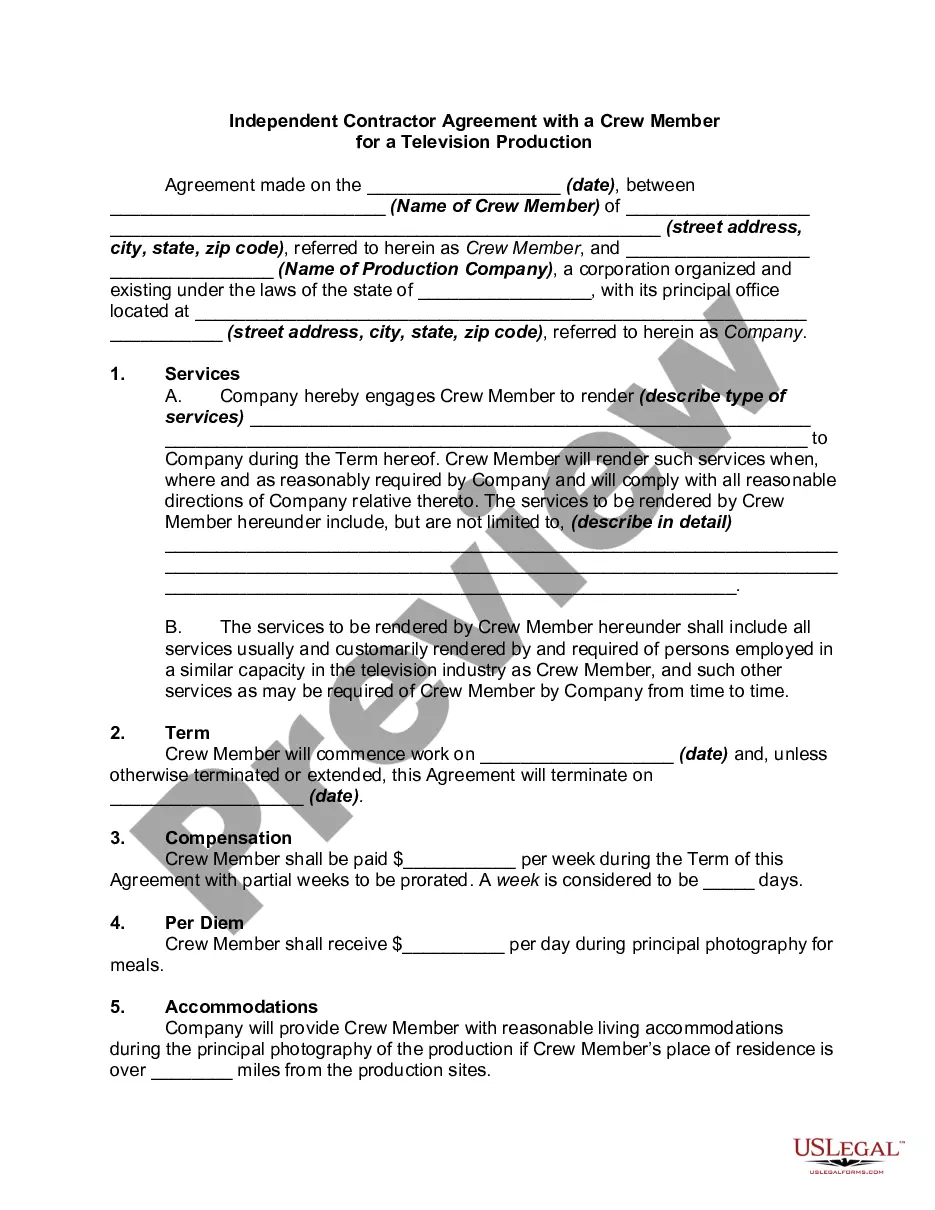
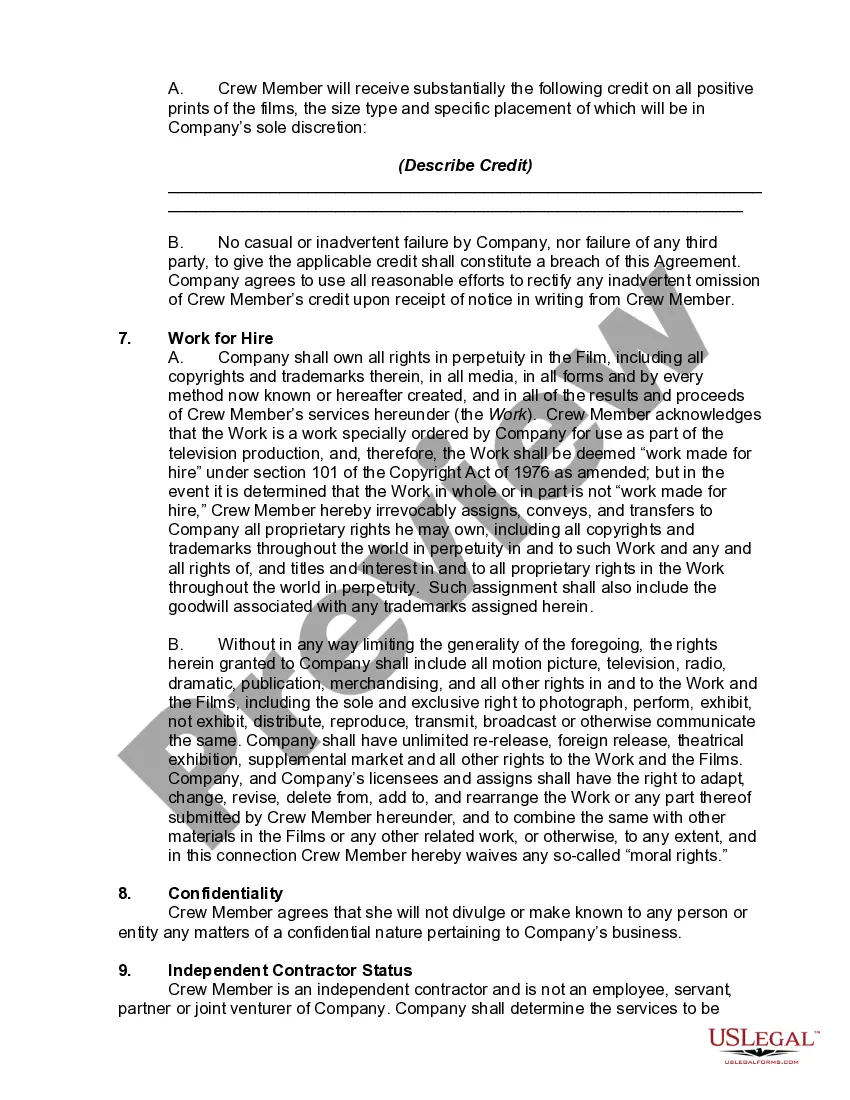
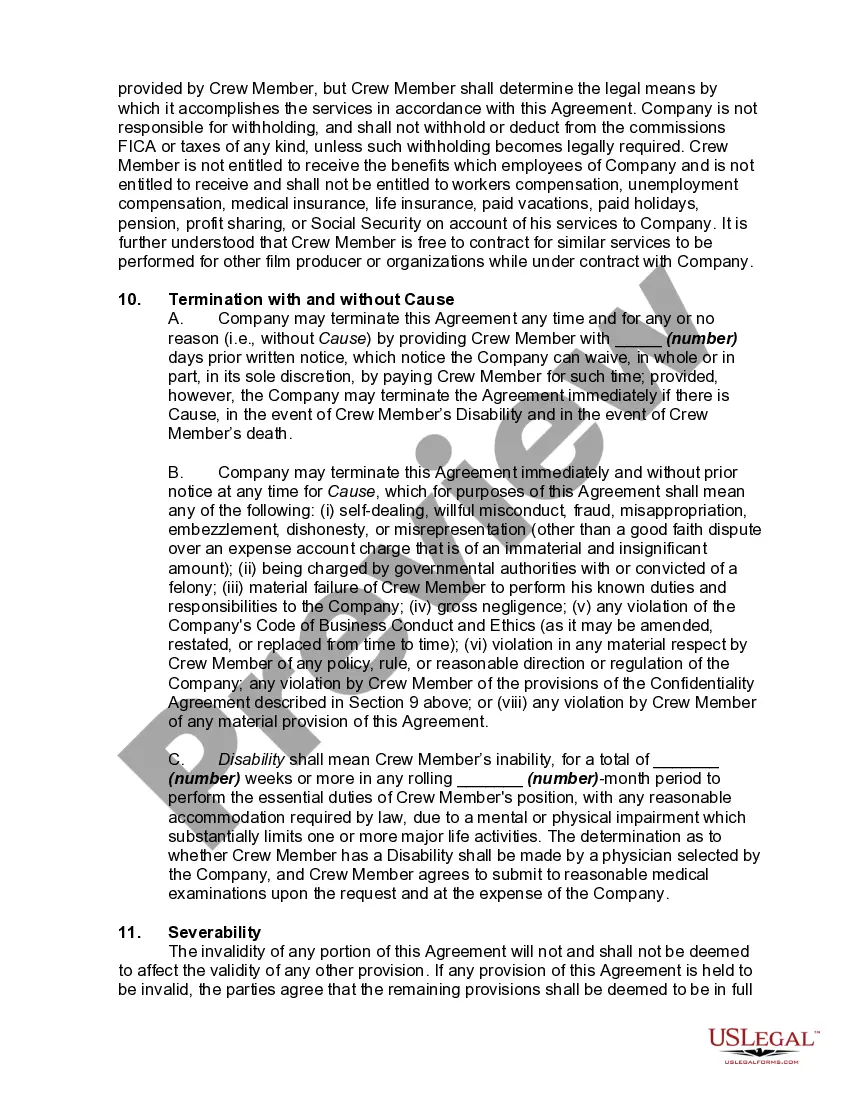
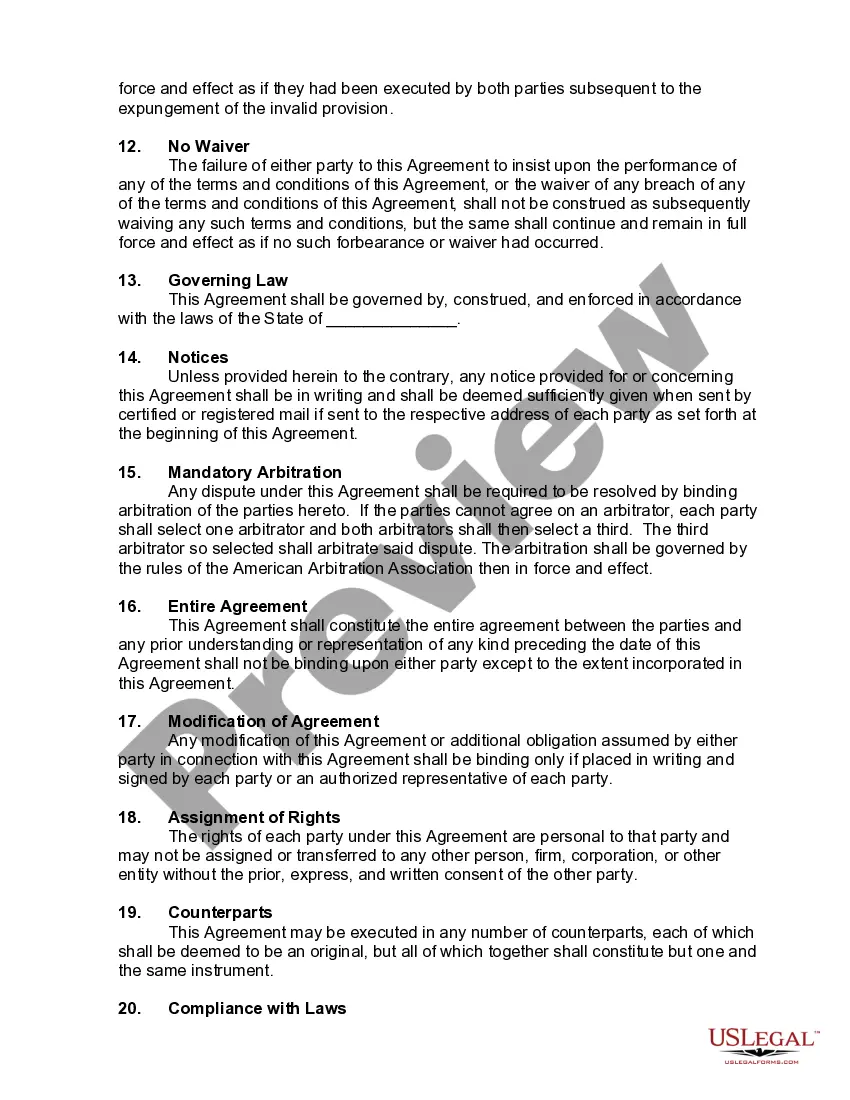
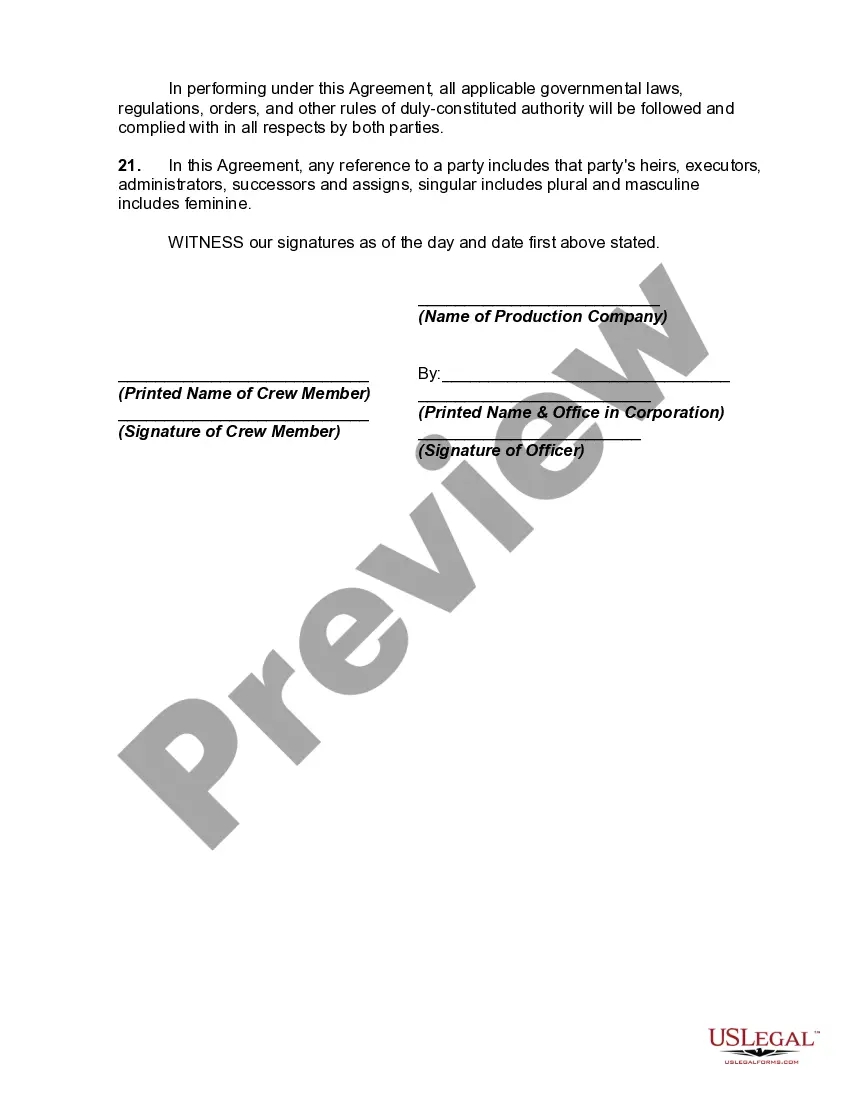
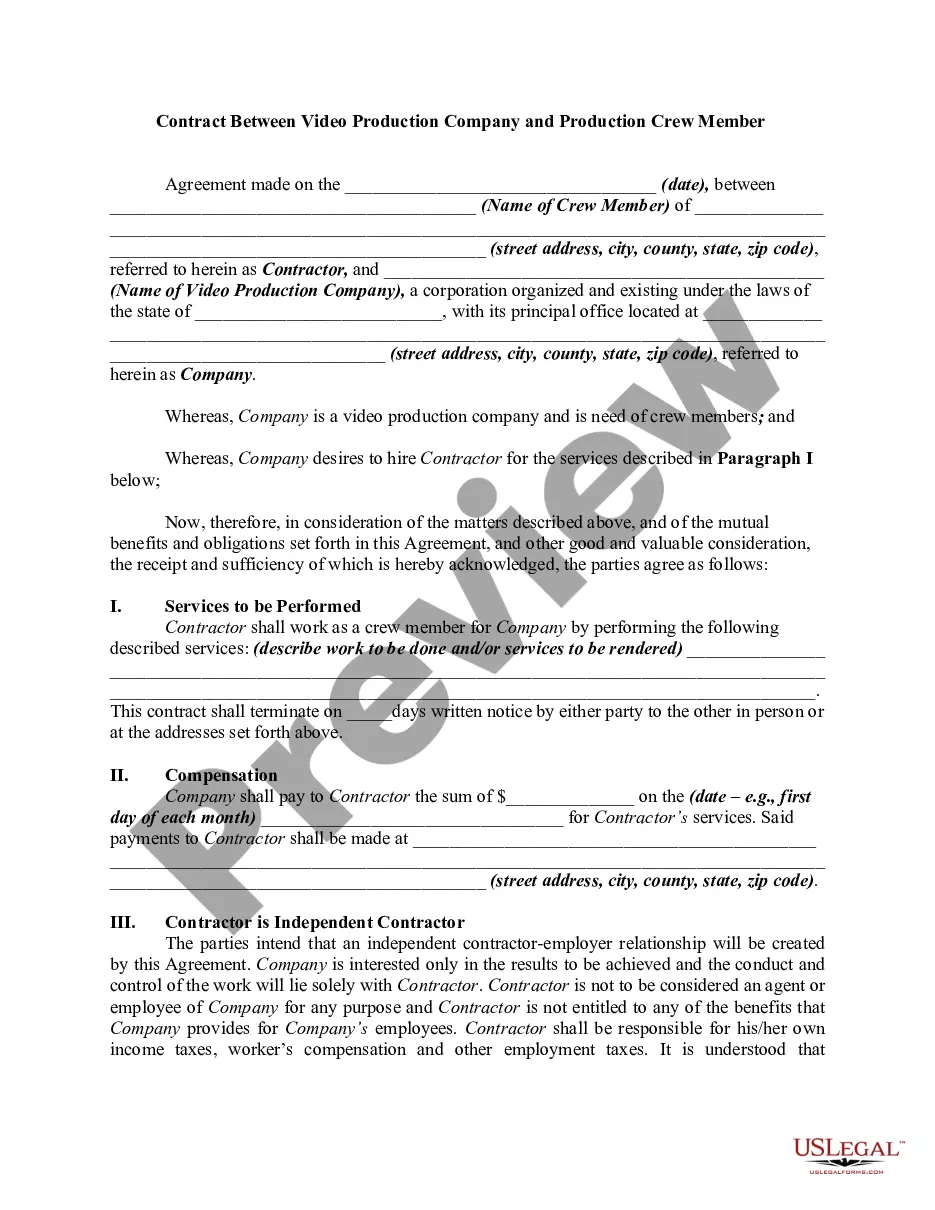
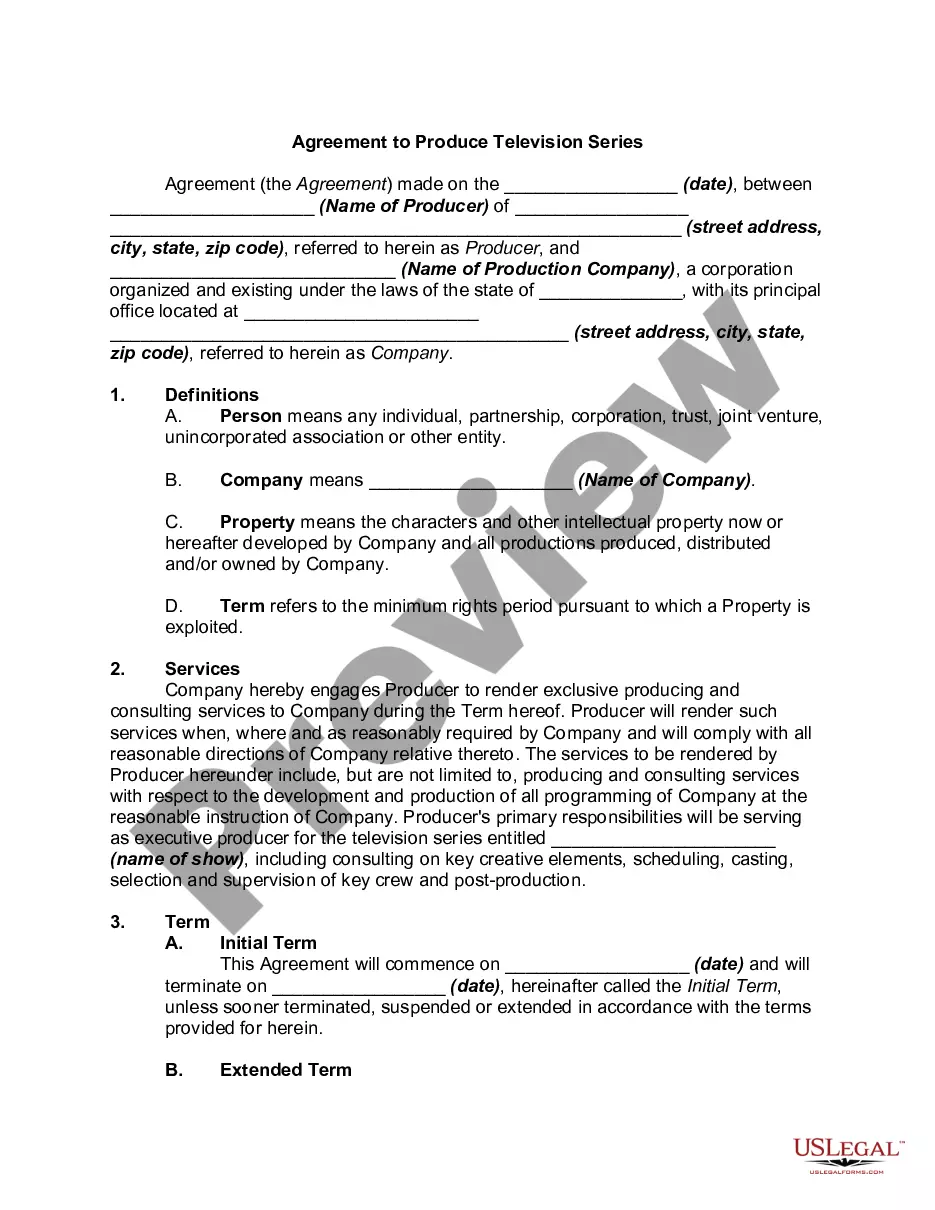
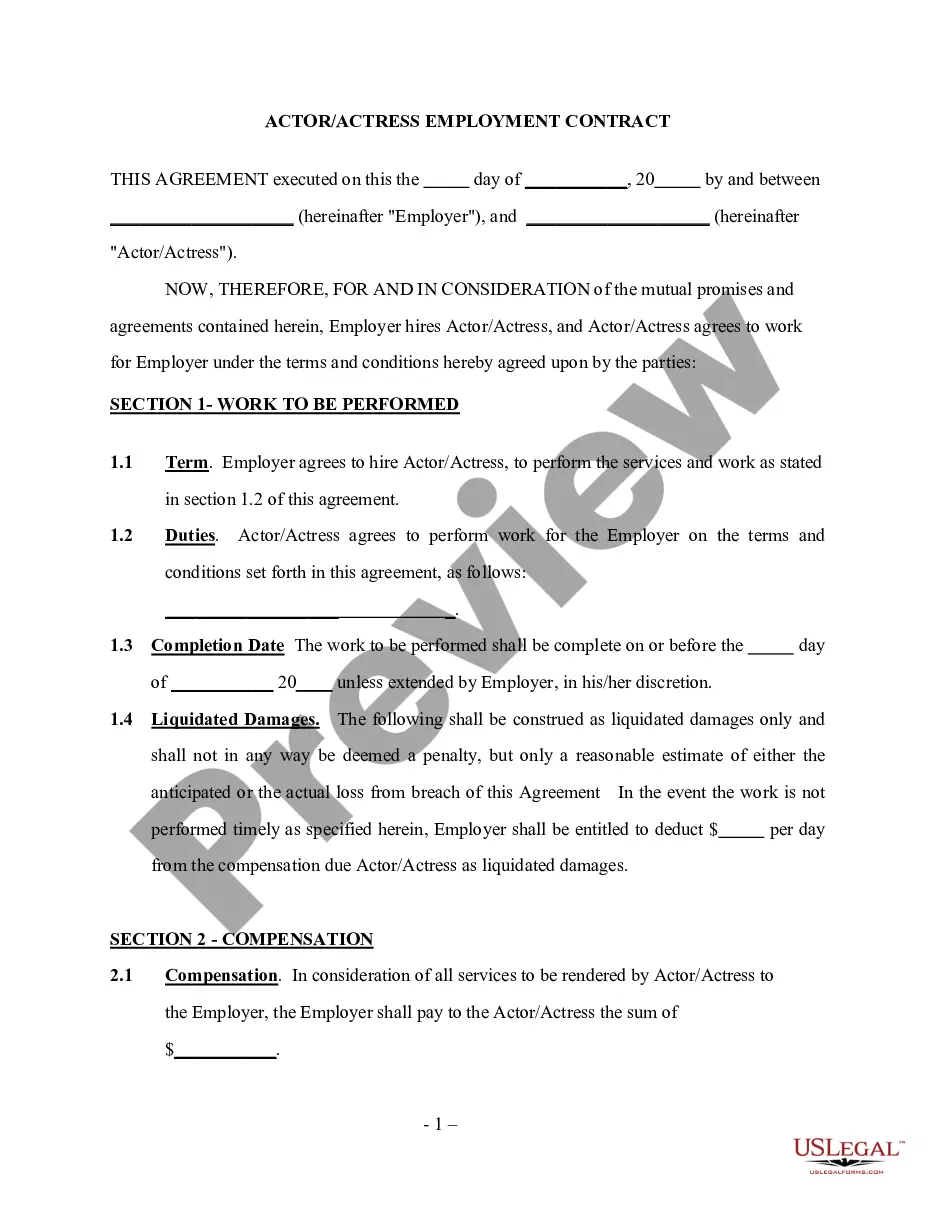
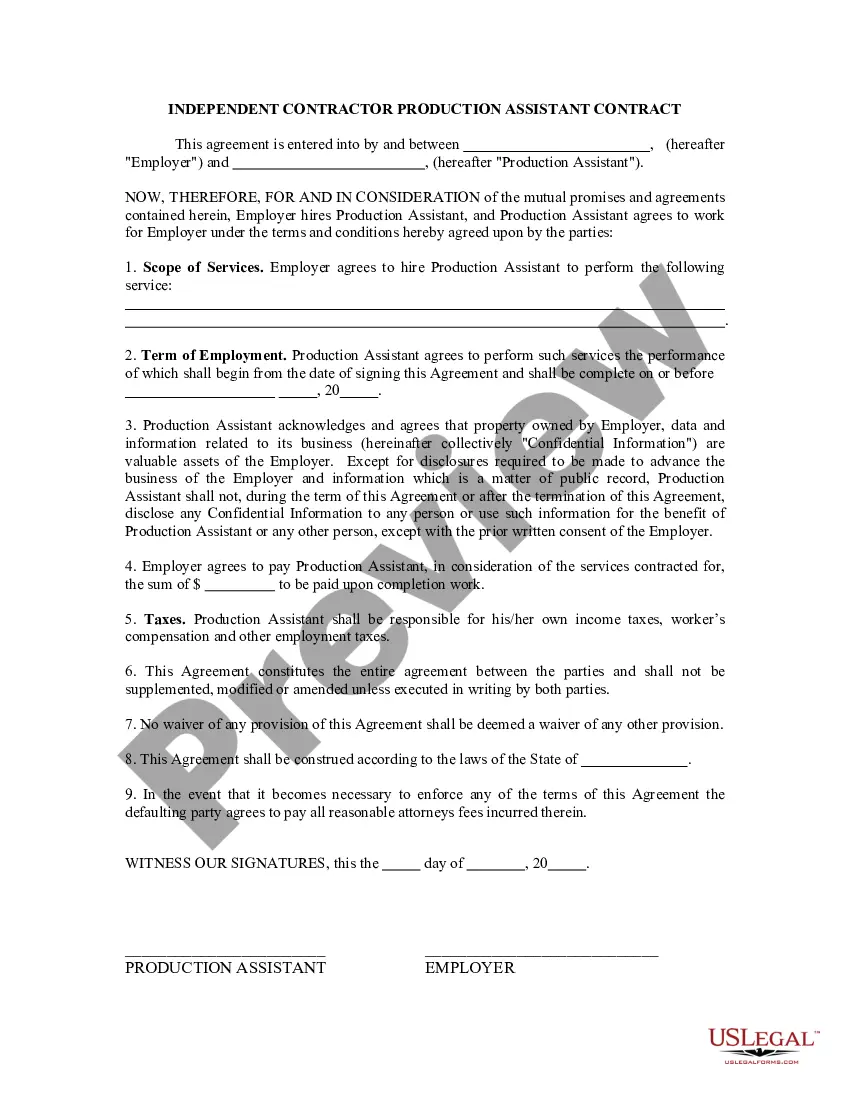
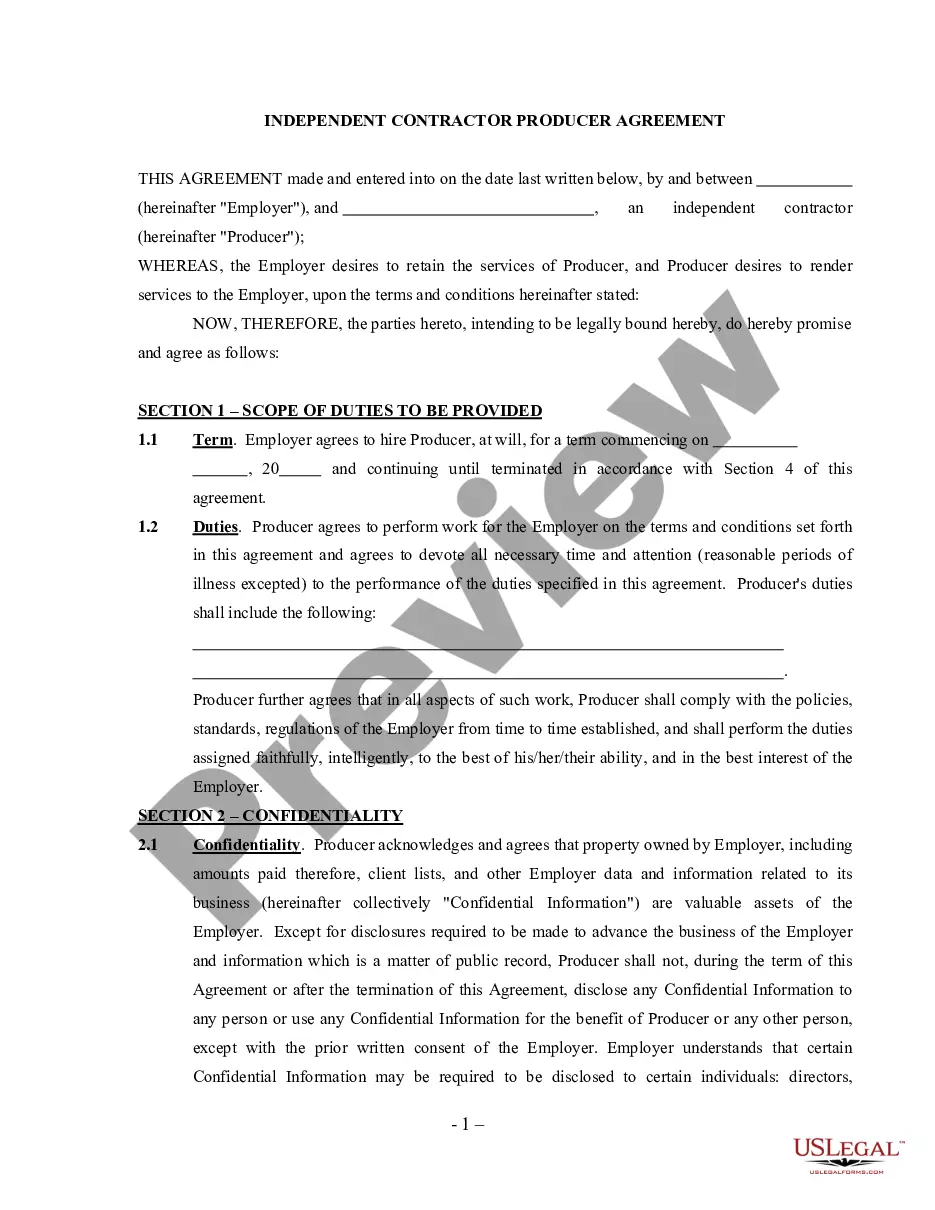
The Independent Contractor Agreement with a Crew Member for a Television Production is a legal document that establishes the relationship between a production company and a crew member hired on a contract basis. Unlike an employee, an independent contractor maintains control over how the work is performed, and is responsible for their own taxes and benefits. This form is essential for clearly specifying the services to be rendered, compensation, and the rights of both parties, ensuring a professional framework for collaboration in the television industry.
Key components of this form
- Parties Involved: Identifies the crew member and the production company.
- Services: Describes the specific services to be provided by the crew member.
- Term: Specifies the start and end dates of the agreement.
- Compensation: Details the payment structure for the crew member.
- Work for Hire: Outlines ownership rights over the work produced during the contract.
- Confidentiality: Stipulates the obligation to keep company information private.
When to use this document
This form should be used whenever a production company engages a crew member to perform specific tasks on a television production. It is essential for outlining expectations and legal rights in scenarios such as hiring camera operators, lighting technicians, or other specialized roles in the production process. Utilizing this form helps to prevent misunderstandings and provides a clear basis for the working relationship.
Intended users of this form
- Production companies seeking to hire crew members as independent contractors.
- Freelance film and television crew members wanting to formalize their working relationship.
- Legal professionals drafting or reviewing contracts in the entertainment industry.
How to complete this form
- Identify and enter the names and addresses of both the crew member and the production company.
- Clearly describe the services to be rendered by the crew member in detail.
- Specify the effective dates for the term of the agreement.
- Detail the compensation structure, including any per diem or accommodation provisions.
- Include any special clauses, such as confidentiality and work for hire conditions, that apply.
- Have both parties review the document, sign, and date it to finalize the agreement.
Notarization requirements for this form
Notarization is generally not required for this form. However, certain states or situations might demand it. You can complete notarization online through US Legal Forms, powered by Notarize, using a verified video call available anytime.
Get your form ready online
Our built-in tools help you complete, sign, share, and store your documents in one place.
Make edits, fill in missing information, and update formatting in US Legal Forms—just like you would in MS Word.
Download a copy, print it, send it by email, or mail it via USPS—whatever works best for your next step.
Sign and collect signatures with our SignNow integration. Send to multiple recipients, set reminders, and more. Go Premium to unlock E-Sign.
If this form requires notarization, complete it online through a secure video call—no need to meet a notary in person or wait for an appointment.
We protect your documents and personal data by following strict security and privacy standards.

Make edits, fill in missing information, and update formatting in US Legal Forms—just like you would in MS Word.

Download a copy, print it, send it by email, or mail it via USPS—whatever works best for your next step.

Sign and collect signatures with our SignNow integration. Send to multiple recipients, set reminders, and more. Go Premium to unlock E-Sign.

If this form requires notarization, complete it online through a secure video call—no need to meet a notary in person or wait for an appointment.

We protect your documents and personal data by following strict security and privacy standards.
Avoid these common issues
- Failing to clearly define the services and expectations may lead to misunderstandings.
- Not specifying the compensation structure can result in disputes later.
- Neglecting to address ownership rights for the work produced can lead to legal complications.
- Overlooking the section on confidentiality may risk sensitive information being disclosed.
Advantages of online completion
- Convenient access to downloadable templates tailored by licensed attorneys.
- Editability allows for quick customization to fit specific needs.
- Provides legal assurance that key components comply with industry standards.
Legal use & context
- Independent contractors working under this agreement are responsible for their own taxes.
- The agreement clearly establishes the nature of the working relationship, protecting both parties.
- It ensures legal enforceability while outlining rights regarding work ownership and credit.
Looking for another form?


Form popularity
FAQ
Generally, actors would be considered to be employees the company that hires them exercises a great deal of control over what they do: the company (or director) tells them when to start, when to stop, what to say and what to do.The company that hires them actually has a contract with the actor's company.
The general rule is that an individual is an independent contractor if the payer has the right to control or direct only the result of the work, not what will be done and how it will be done. Small businesses should consider all evidence of the degree of control and independence in the employer/worker relationship.
According to a recent article in Forbes, the gig economy is a term that refers to the increased tendency for businesses to hire independent contractors and short-term workers, and the increased availability of workers for these short-term arrangements. Inuit estimates that gig workers currently represent about 34
For most types of projects you hire an independent contractor (IC) to do, the law does not require you to put anything in writing. You can meet with the IC, agree on the terms of your arrangement, and have an oral contract or agreement that is legally binding. Just because you can doesn't mean you should, however.
The IRS requires contractors to fill out a Form W-9, request for Taxpayer Identification Number and Certification, which you should keep on file for at least four years after the hiring. This form is used to request the correct name and Taxpayer Identification Number, or TIN, of the worker or their entity.
Terms. This is the first section of any agreement or contract and states the names and locations of the parties involved. Responsibilities & Deliverables. Payment-Related Details. Confidentiality Clause. Contract Termination. Choice of Law.
However, for the most part, under the Federal regulations (and most states including California), a crew member on a film or other similar type production should never be categorized as an independent contractor they are really employees and are subject to federal and state withholding (from their paychecks) as
First and foremost, California film and television producers have lost the option to hire most of their production crew as independent contractors under the new AB5 law. This is because California has tightened the guidelines of what classifies a worker as an employee instead of an independent contractor.