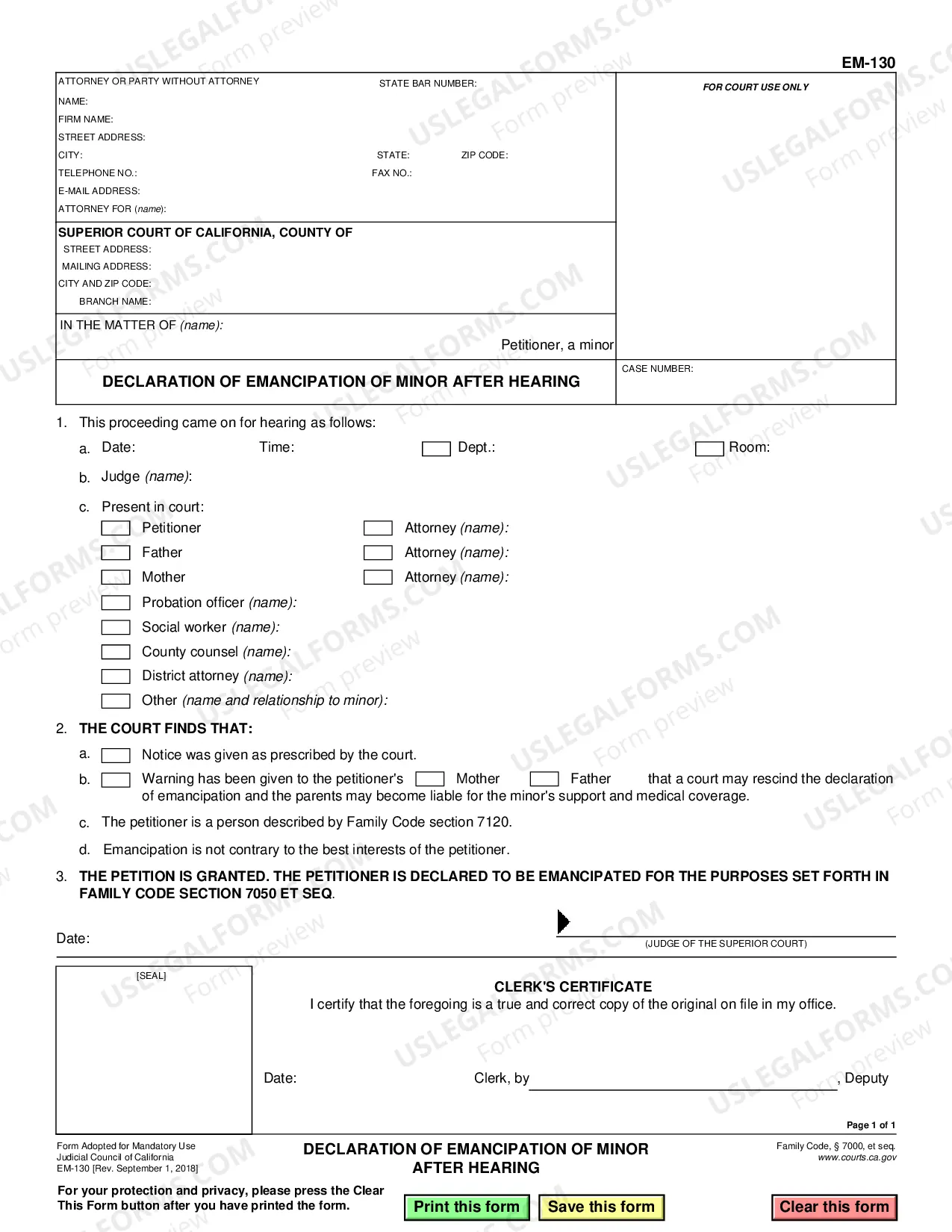
Petition to Determine Distribution Rights of the Assets of a Decedent
What is this form?
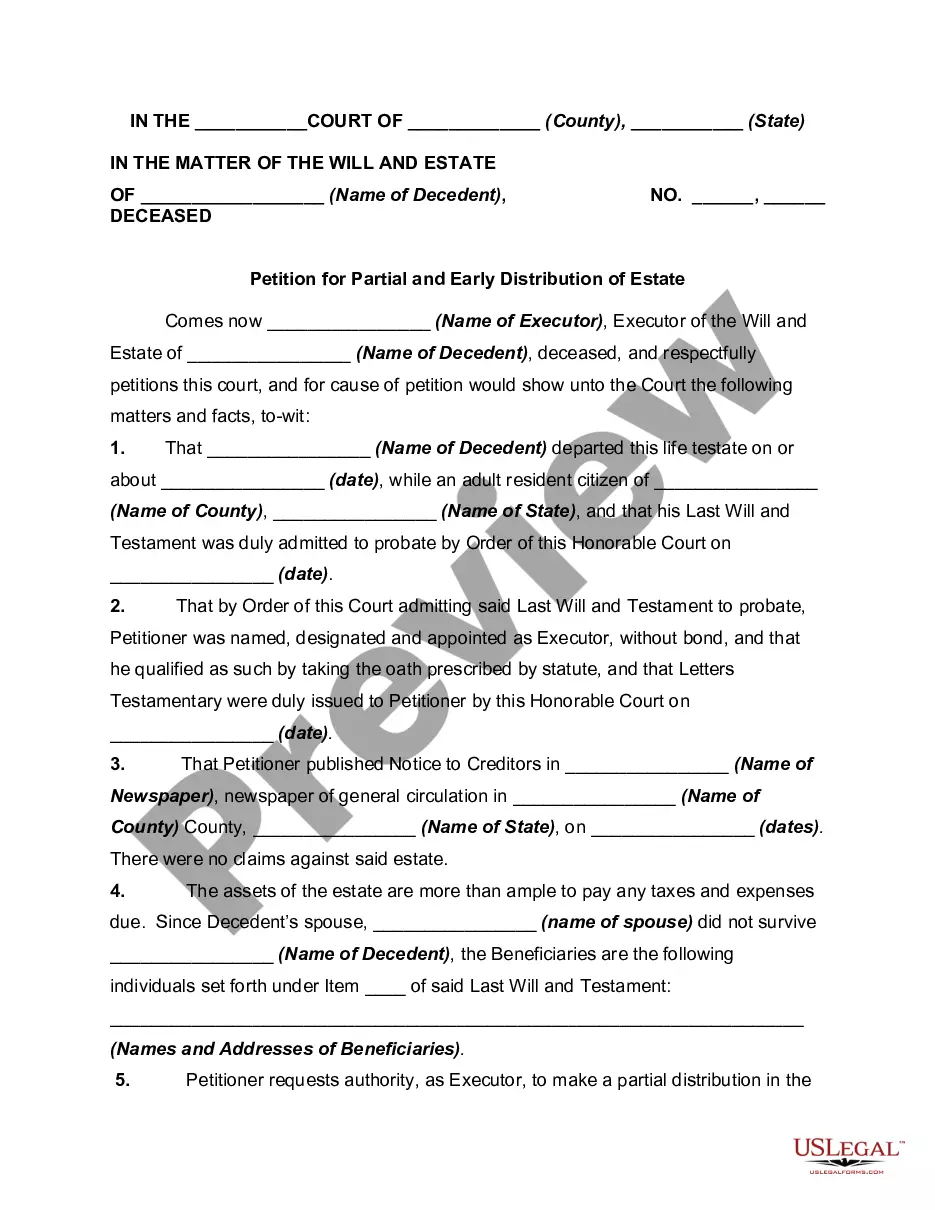
The Petition to Determine Distribution Rights of the Assets of a Decedent is a legal document used to request a court order clarifying the distribution of a deceased person's estate. This form helps establish who is entitled to inherit the decedent's assets when there is no will, thus differing from a typical will or testament, which outlines specific bequests.
Form components explained
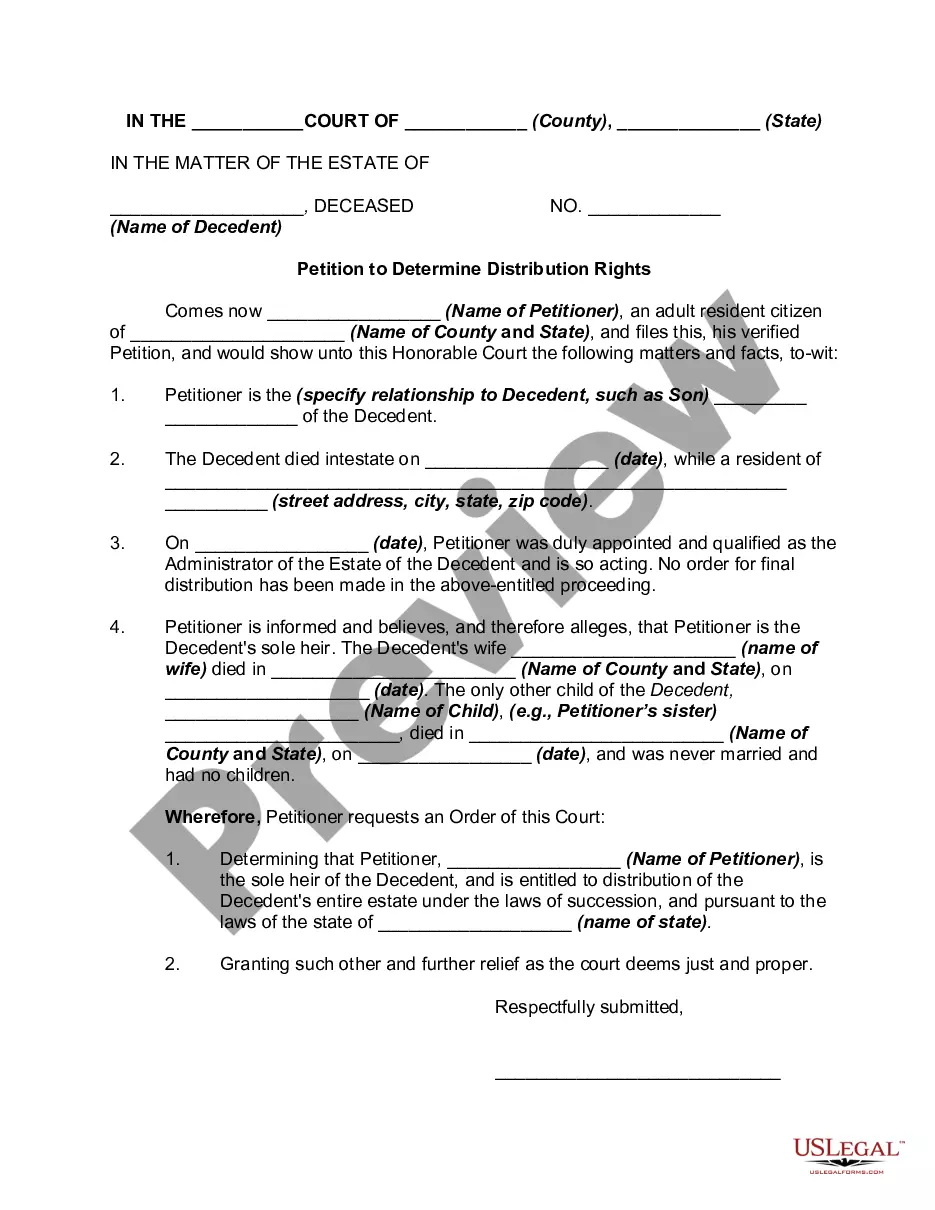
- Petitioner's information, including name and relationship to the decedent
- Details about the decedent, including date of death and residency
- Statement of the petitioner's qualification as the estate administrator
- Assertion of the petitioner's status as the sole heir
- Request for court determination regarding distribution rights
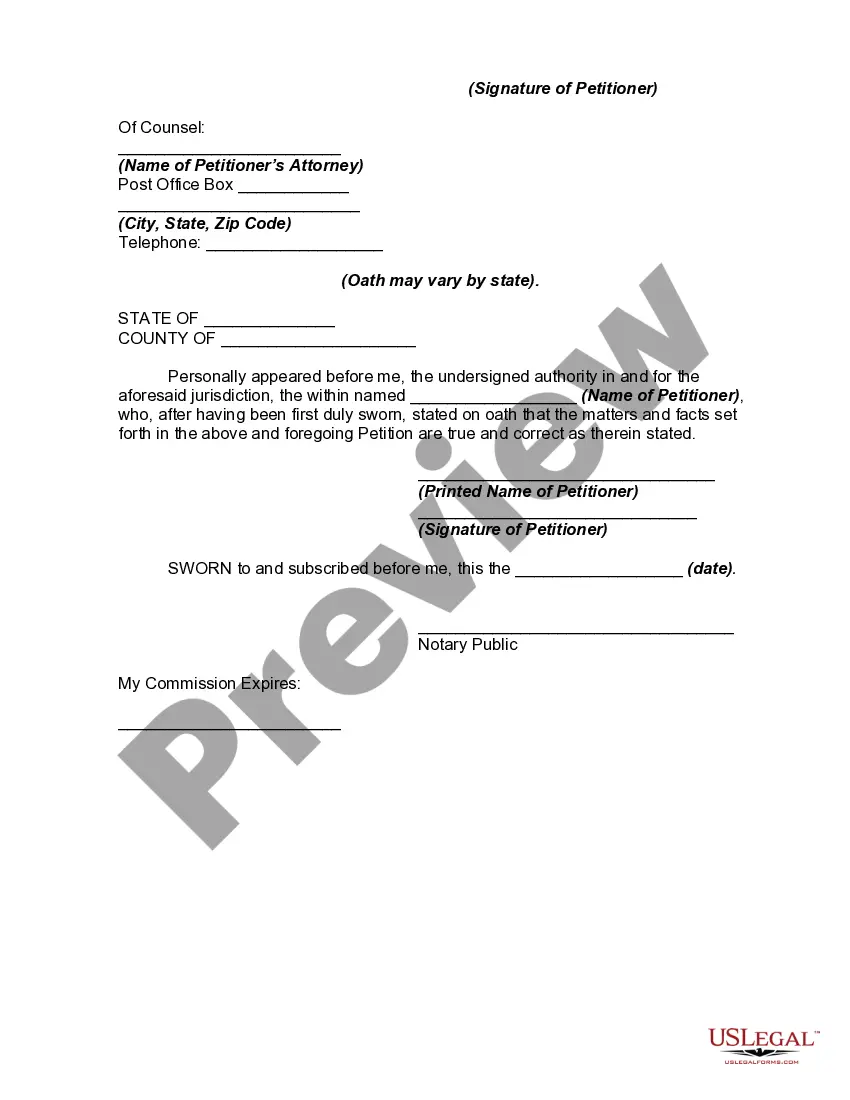
- Signature lines for the petitioner and attorney, if applicable
Situations where this form applies
This form is typically used when an individual needs to legally confirm their rights to inherit assets from a deceased person who died without a will. It is essential when there are disputes about who should inherit or when complications arise due to the absence of a formally executed will.
Intended users of this form
- Individuals claiming inheritance rights to a decedent's estate
- Persons appointed as administrators of an estate
- Family members of the decedent seeking legal clarity on asset distribution
- Those involved in intestate succession proceedings
How to complete this form
- Provide the decedent's full name and the case number at the top of the form.
- Fill in your information as the petitioner, including your name, relationship to the decedent, and residence.
- Indicate the decedent's date of death and their last known address.
- State your status as the estate administrator and claim to be the sole heir.
- Request an order of the court for asset distribution, specifying your name and the applicable state laws.
- Sign the form and include any required notary information, if necessary.
Does this form need to be notarized?
This form does not typically require notarization unless specified by local law. However, it is advisable to confirm if your jurisdiction has specific notarization requirements for court petitions.
Get your form ready online
Our built-in tools help you complete, sign, share, and store your documents in one place.
Make edits, fill in missing information, and update formatting in US Legal Forms—just like you would in MS Word.
Download a copy, print it, send it by email, or mail it via USPS—whatever works best for your next step.
Sign and collect signatures with our SignNow integration. Send to multiple recipients, set reminders, and more. Go Premium to unlock E-Sign.
If this form requires notarization, complete it online through a secure video call—no need to meet a notary in person or wait for an appointment.
We protect your documents and personal data by following strict security and privacy standards.

Make edits, fill in missing information, and update formatting in US Legal Forms—just like you would in MS Word.

Download a copy, print it, send it by email, or mail it via USPS—whatever works best for your next step.

Sign and collect signatures with our SignNow integration. Send to multiple recipients, set reminders, and more. Go Premium to unlock E-Sign.

If this form requires notarization, complete it online through a secure video call—no need to meet a notary in person or wait for an appointment.

We protect your documents and personal data by following strict security and privacy standards.
Typical mistakes to avoid
- Failing to correctly identify the relationship to the decedent.
- Omitting required signatures or notary sections.
- Providing inaccurate information about the decedentâs residency or date of death.
- Neglecting to specify relevant state laws or regulations.
Advantages of online completion
- Convenience: The form can be downloaded and filled out at your own pace.
- Editability: Users can easily make changes to the form as needed.
- Reliability: Forms are prepared by licensed attorneys, ensuring legal compliance.
Legal use & context
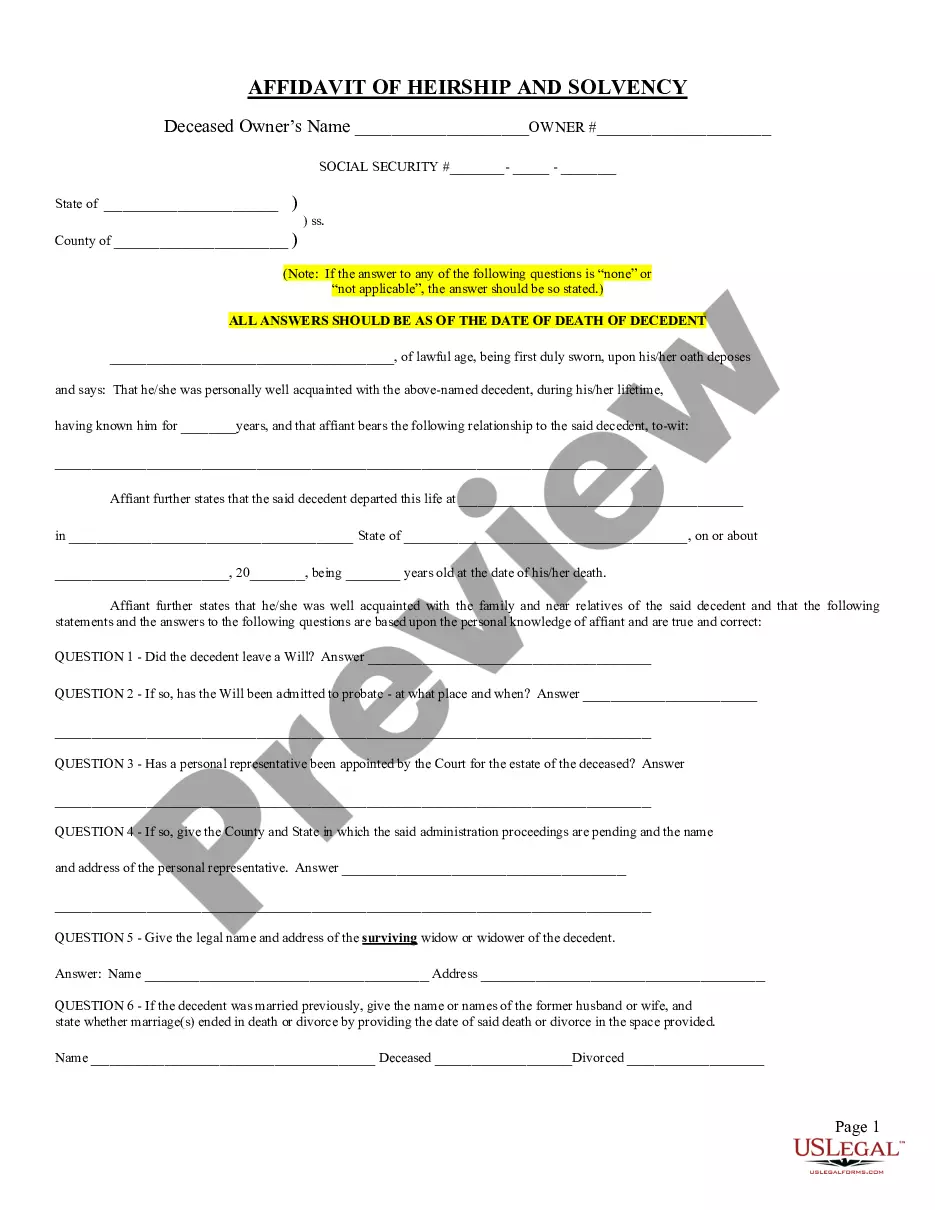
- This form is used within the context of probate law to determine heirs.
- Compliance with state-specific requirements is essential for enforceability.
- Inaccuracies may lead to disputes and delays in the distribution of assets.
Quick recap
- The petition clarifies inheritance rights when there is no will.
- Completing the form accurately is essential for legal validity.
- Consult local laws for specific requirements related to estate distribution.
- Ensure all relevant sections are filled out and signed correctly.
Looking for another form?

Form popularity
FAQ
An estate bank account is opened up by the executor, who also obtains a tax ID number. The various accounts of the deceased person are then transferred to the account. The executor must pay creditors, file tax returns and pay any taxes due. Then, he must collect any money or benefits owed to the decedent.
The first method involves a special petition to the court requesting that the court issue an order determining who the new owner of the property is. The Judicial Council of California has created a special form for this purpose.
When the executor has paid off the debts, filed the taxes and sold any property needed to pay bills, he can submit a final estate accounting to the probate court. Once the probate court approves the accounting, he can distribute assets to you and other beneficiaries according to the terms of the will.
Determine Your State's Laws Regarding Inventory Forms. Review the Instructions Provided. Identify Real Property. Identify Personal Property. Identify Bank Accounts. Identify Retirement Accounts. Identify Non-Probate Assets. File the Form With the Court.
Introduction. Pay the debts of the estate first. Ask each beneficiary to acknowledge receipt of the gift. Transferring company shares. Transferring real property. Draw up the accounts of the estate. Other claims on the estate. Finishing up.
Final Distribution and Closing the Estate: 1-3 Months During the probate process, you may distribute some assets, like tangible personal property. However, in most states you are required to wait to distribute financial assetssuch as proceeds from the property saleuntil the final probate hearing.
An estate bank account is opened up by the executor, who also obtains a tax ID number. The various accounts of the deceased person are then transferred to the account. The executor must pay creditors, file tax returns and pay any taxes due. Then, he must collect any money or benefits owed to the decedent.
How Are Assets Distributed With a Will?With probate proceedings, an executor is named in the will to pay all debts, taxes, and claims against the estate. Once these are paid the executor will distribute the remaining assets to the beneficiaries named in the will.
Obtaining and filing receipts In the case of real property, the Personal Representative should record a certified copy of the Judgment of Final Distribution in the county in which the real property is located. Recordation of the order is considered to be a Receipt from Distributee for the property.