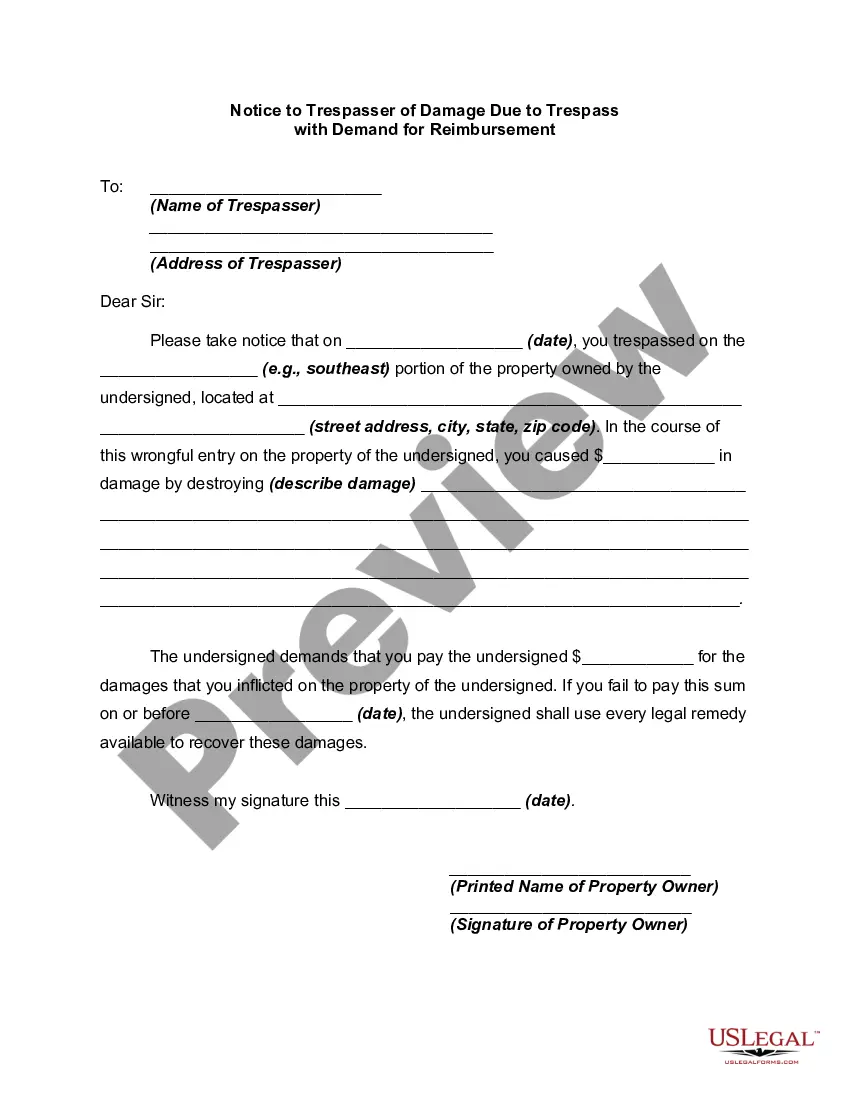
Notice to Trespasser of Damage Due to Trespass with Demand for Reimbursement
What this document covers
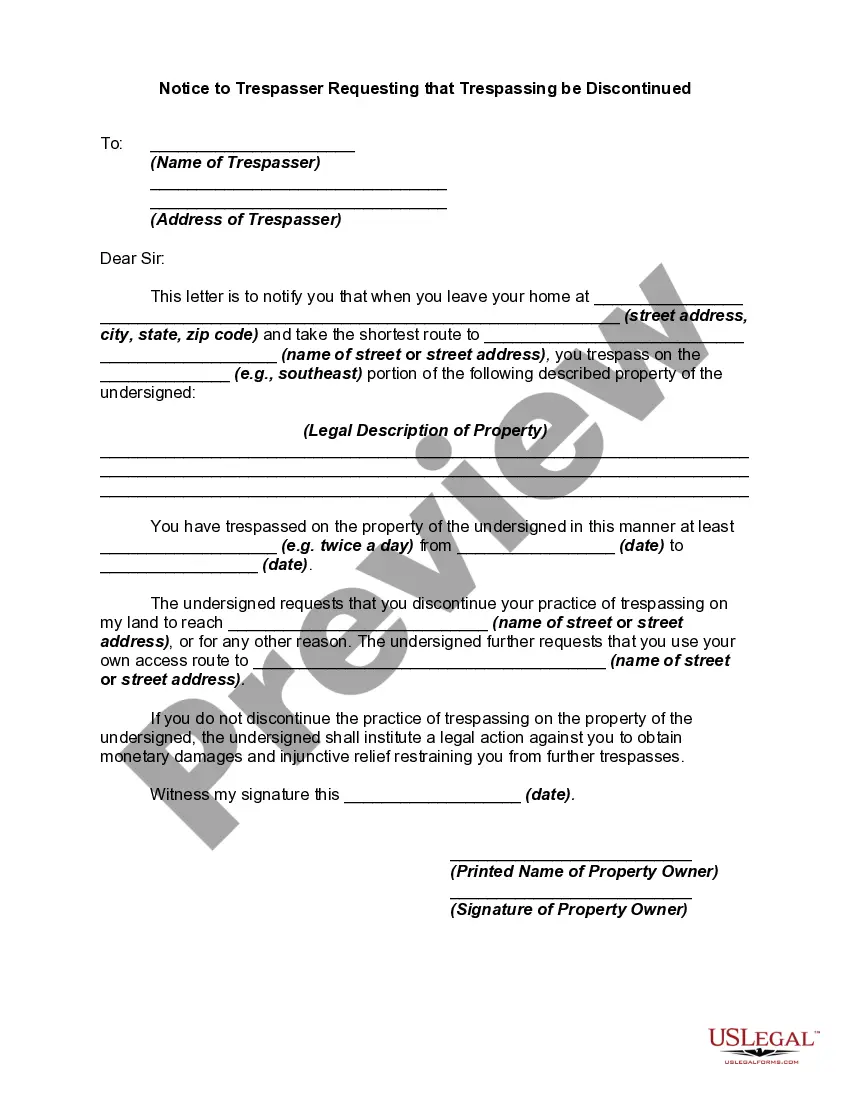
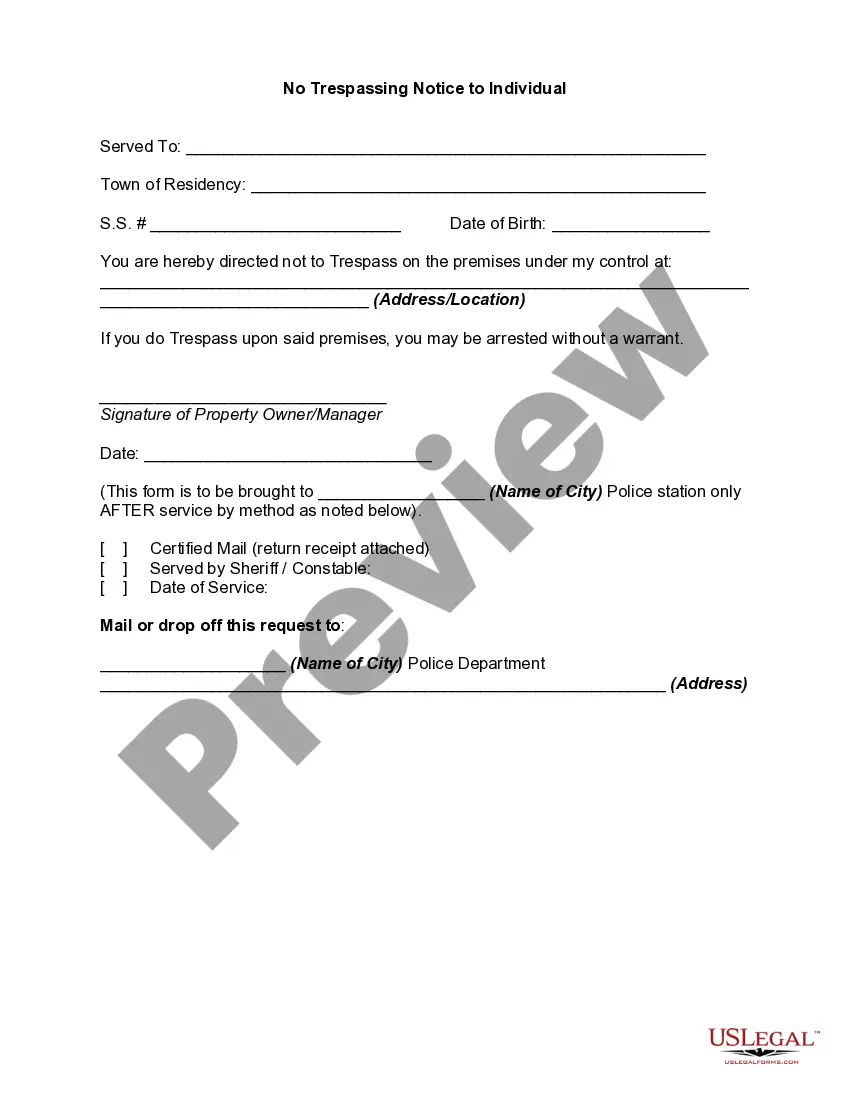
The Notice to Trespasser of Damage Due to Trespass with Demand for Reimbursement is a formal document used by property owners to notify trespassers of damages caused during their unauthorized entry. This form serves to demand reimbursement for damages inflicted on the property. Unlike other trespass notices, this document specifies the damages and sets a deadline for reimbursement, making it a key tool for property owners seeking to recover financial losses due to trespassing incidents.
Main sections of this form
- Identification of the trespasser, including name and address.
- Date of the trespass incident.
- Description of the property affected.
- Details of the damages caused.
- Amount demanded for reimbursement.
- Deadline for payment and mention of potential legal action.
When to use this form
This form should be used when a property owner has experienced a trespass on their land that resulted in damage. It is appropriate in situations where the trespasser has created a financial loss, and the property owner wishes to formally demand payment for the damages incurred. The notice acts as a legal step before further enforcement actions are taken.
Who can use this document
- Property owners who have experienced unauthorized entry onto their land.
- Landlords seeking to address damages caused by tenants or guests.
- Individuals who wish to hold a trespasser accountable for financial losses.
Instructions for completing this form
- Identify the trespasser by entering their name and address.
- Specify the date when the trespass occurred.
- Clearly describe the location of the property where the trespass took place.
- Detail the damages caused, including a description of what was destroyed or harmed.
- Input the total amount of reimbursement being requested.
- Enter the date by which the payment should be made, and provide your signature.
Does this form need to be notarized?
Notarization is not commonly needed for this form. However, certain documents or local rules may make it necessary. Our notarization service, powered by Notarize, allows you to finalize it securely online anytime, day or night.
Get your form ready online
Our built-in tools help you complete, sign, share, and store your documents in one place.
Make edits, fill in missing information, and update formatting in US Legal Forms—just like you would in MS Word.
Download a copy, print it, send it by email, or mail it via USPS—whatever works best for your next step.
Sign and collect signatures with our SignNow integration. Send to multiple recipients, set reminders, and more. Go Premium to unlock E-Sign.
If this form requires notarization, complete it online through a secure video call—no need to meet a notary in person or wait for an appointment.
We protect your documents and personal data by following strict security and privacy standards.

Make edits, fill in missing information, and update formatting in US Legal Forms—just like you would in MS Word.

Download a copy, print it, send it by email, or mail it via USPS—whatever works best for your next step.

Sign and collect signatures with our SignNow integration. Send to multiple recipients, set reminders, and more. Go Premium to unlock E-Sign.

If this form requires notarization, complete it online through a secure video call—no need to meet a notary in person or wait for an appointment.

We protect your documents and personal data by following strict security and privacy standards.
Common mistakes to avoid
- Failing to provide a detailed description of the damages.
- Not including the correct address of the trespasser.
- Neglecting to specify a clear deadline for payment.
- Omitting signatures or dates, making the document invalid.
Why complete this form online
- Convenience of immediate access and download.
- Editability to customize the form as needed.
- Drafted by licensed attorneys to ensure legal accuracy.
Legal use & context
- This form serves as a written record of the trespass and the resulting demand for reimbursement.
- It can be used as evidence in court if further legal action is initiated.
- Failure to respond to this notice may strengthen the property owner's case for recovery in legal proceedings.
Main things to remember
- The form notifies trespassers of damages and requests reimbursement.
- It is important for property owners to act promptly when dealing with trespassing incidents.
- Legal steps can follow if reimbursement is not made by the specified deadline.
Looking for another form?

Form popularity
FAQ
Some circumstances do justify taking immediate action rather than calling the police. Some do not. In most instances, you can use non-deadly reasonable force to remove someone from your property.You have to give the person some reasonable amount of time to get off your property.
In tort law, trespass is held to infringe upon a property owner's legal right to enjoy the benefits of ownership. Criminal charges, which range from violation to felony, may be brought against someone who interferes with another person's legal property rights.
In order to prove a trespassing case against you, the prosecution will point out the presence of any barriers that should have notified you that property was off-limits. Barriers that may be used to secure and/or enclose property may include: Fences.
Trespass to land involves the "wrongful interference with one's possessory rights in real property." It is not necessary to prove that harm was suffered to bring a claim, and is instead actionable per se.
Because trespass is a violation of someone's property rights, a property owner can sue a trespasser for money, even if the trespasser didn't cause any harm. (If the trespasser's presence didn't hurt anyone or damage property, though, the plaintiff will likely only be able to recover nominal damages.)
General Rule: Property Owners Are Not Responsible for Trespasser Injuries.But in any personal injury lawsuit by a trespasser against a property owner, the court will essentially say, Property owners are not usually liable for injuries to trespassers, so prove why your case is different.
There are several defences to trespass to land; licence, justification by law, necessity and jus tertii. Licence is express or implied permission, given by the possessor of land, to be on that land.
A trespass is an intentional, wrongful entry onto another person's land, without the owner's permission and without a legal privilege to do so.
The date the letter is effective, the offender's name and the address of the premises that are off limits. A description of what is meant by trespassing and the actions the letter recipient must take to avoid penalties. ( The consequences of further infractions.