California Option Agreement between a LLC and a political subdivision of the State
Overview of this form
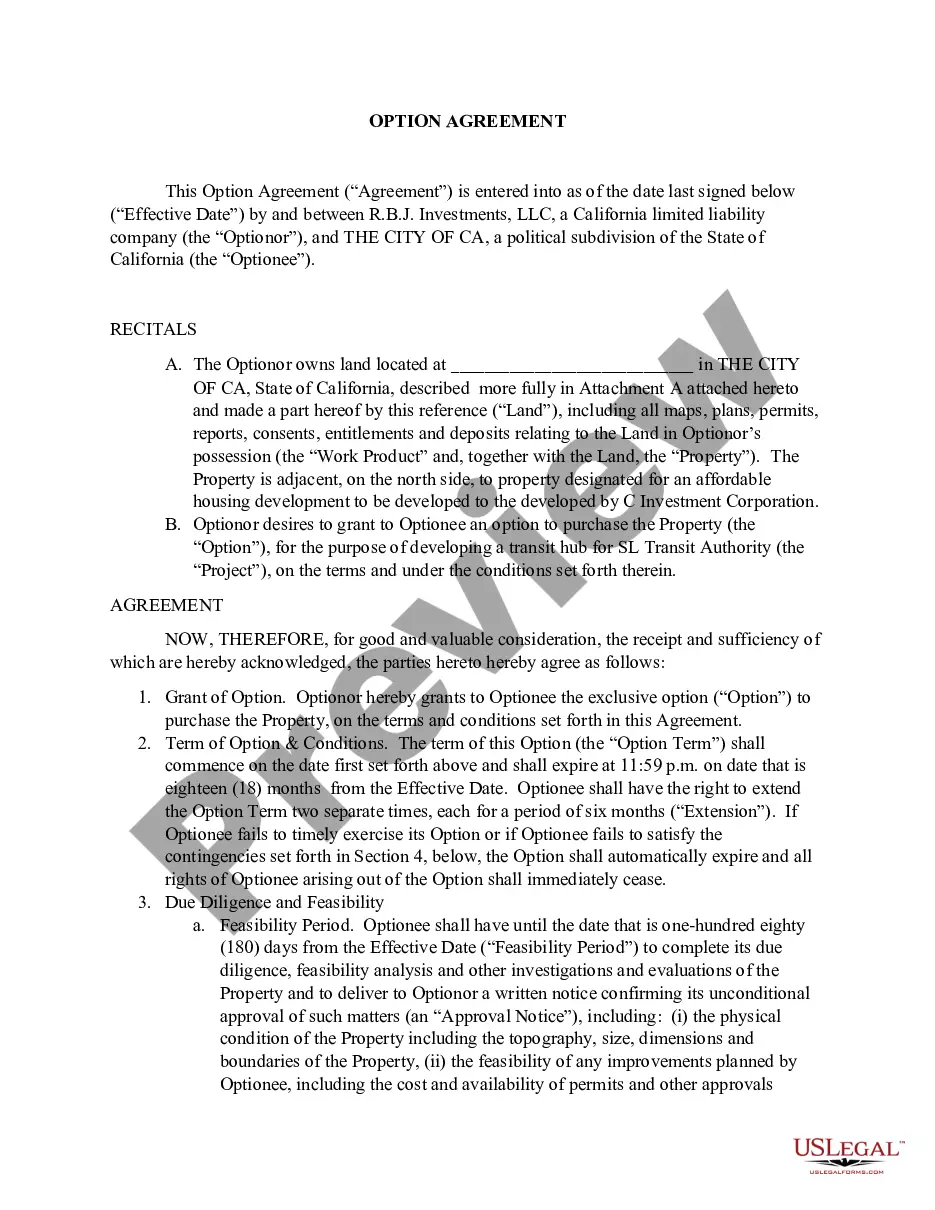
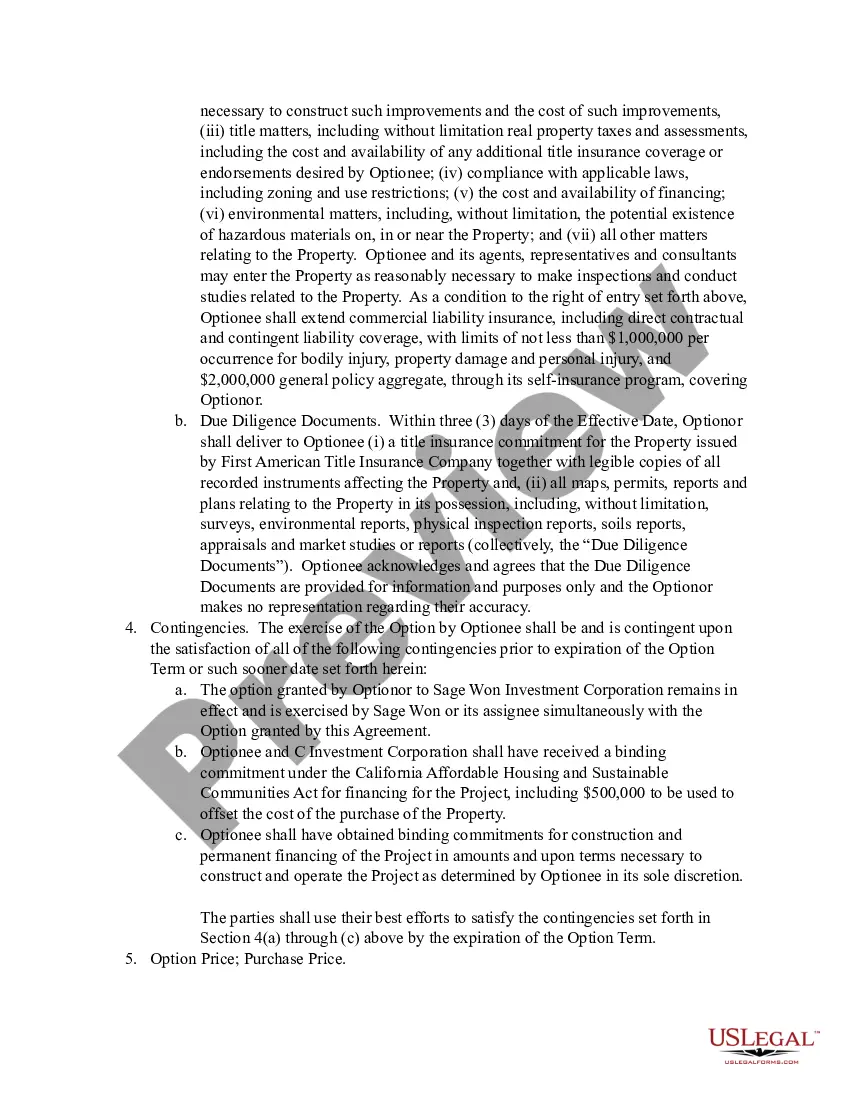
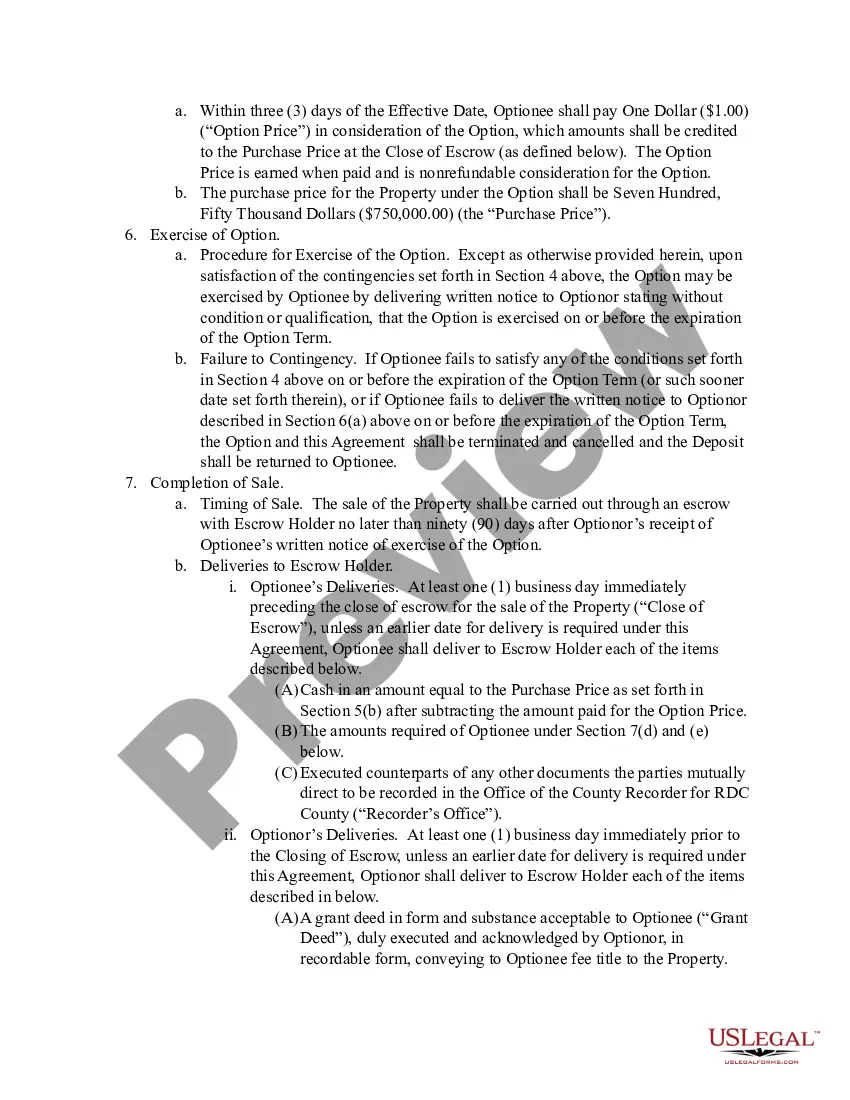
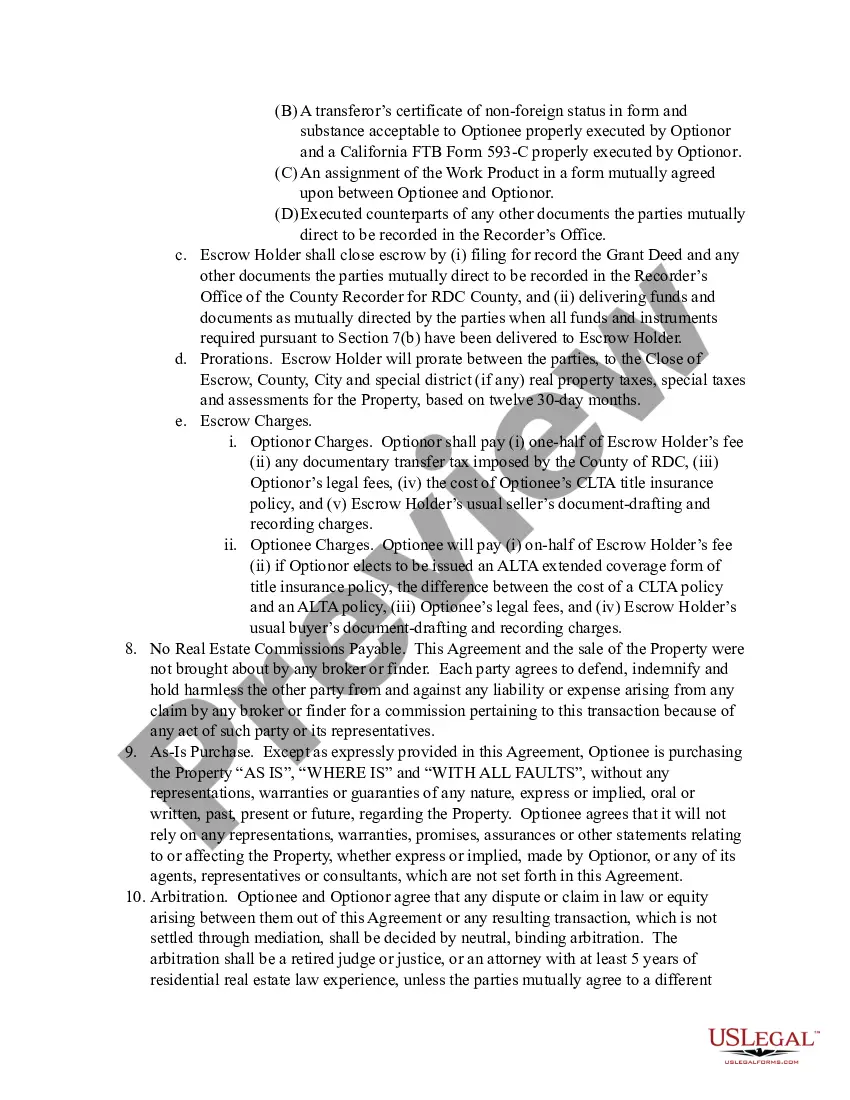
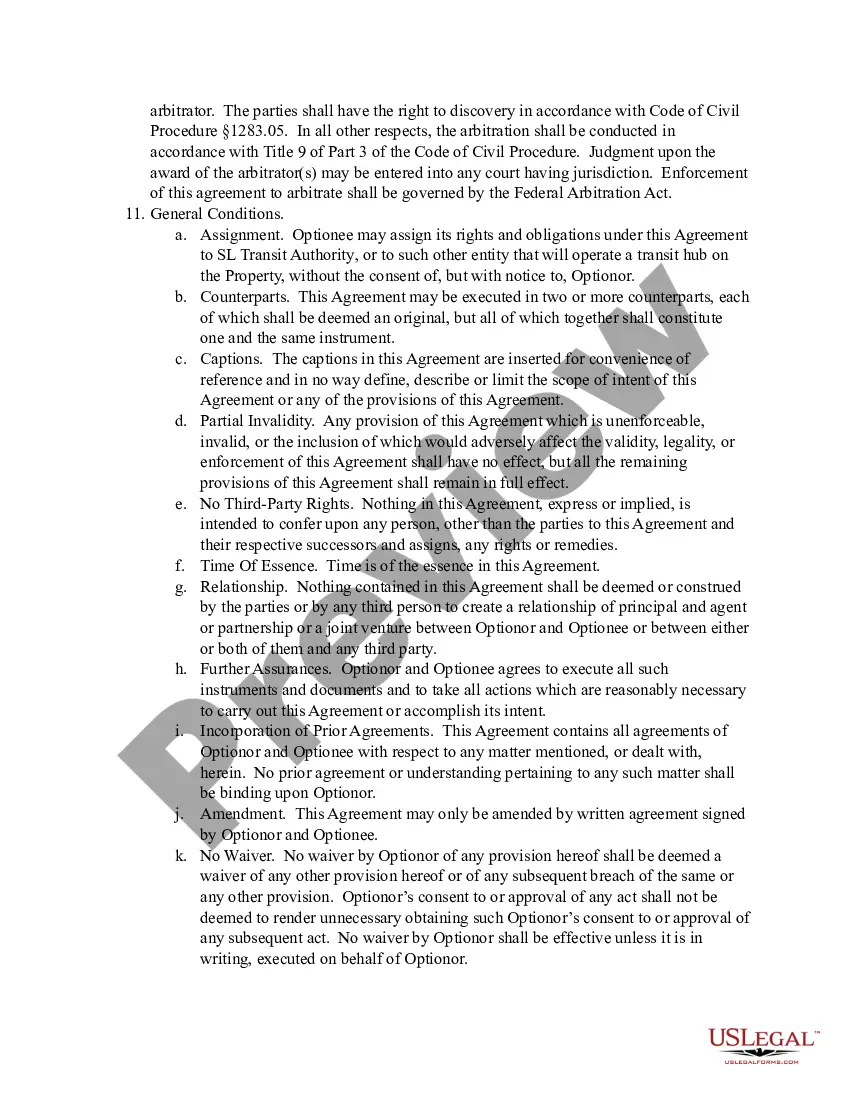
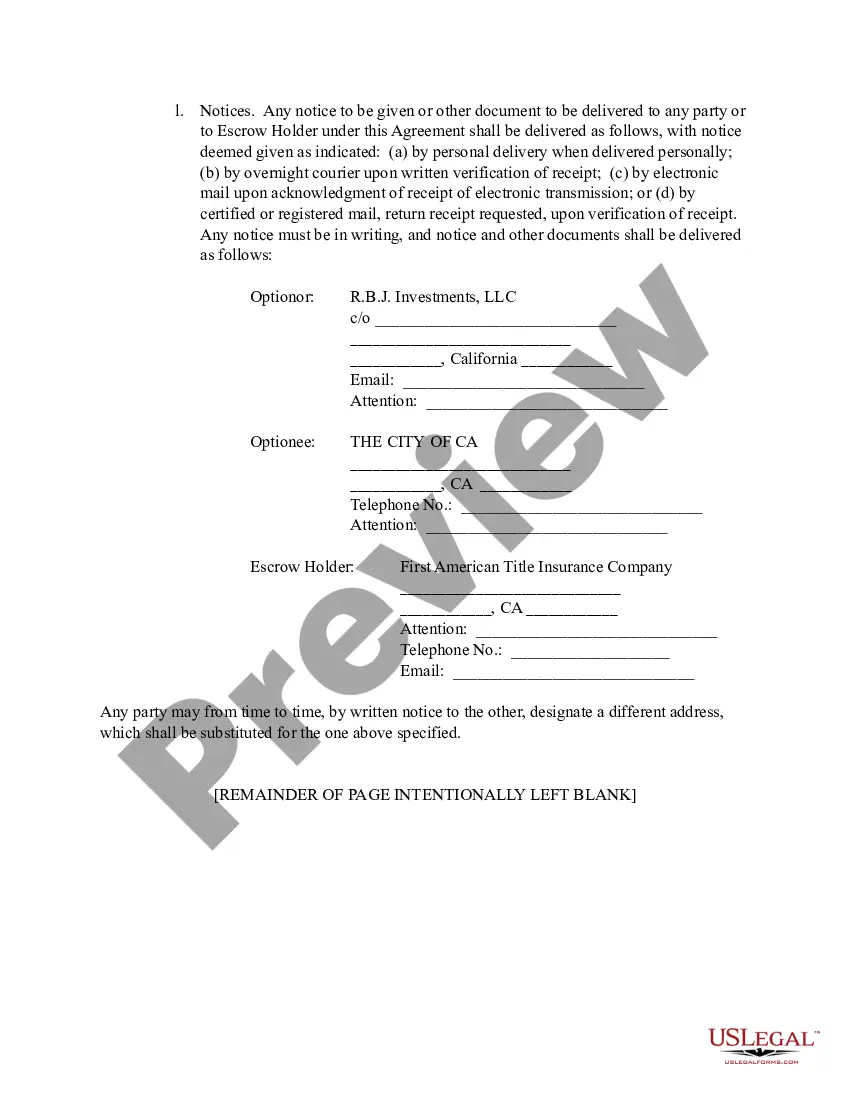
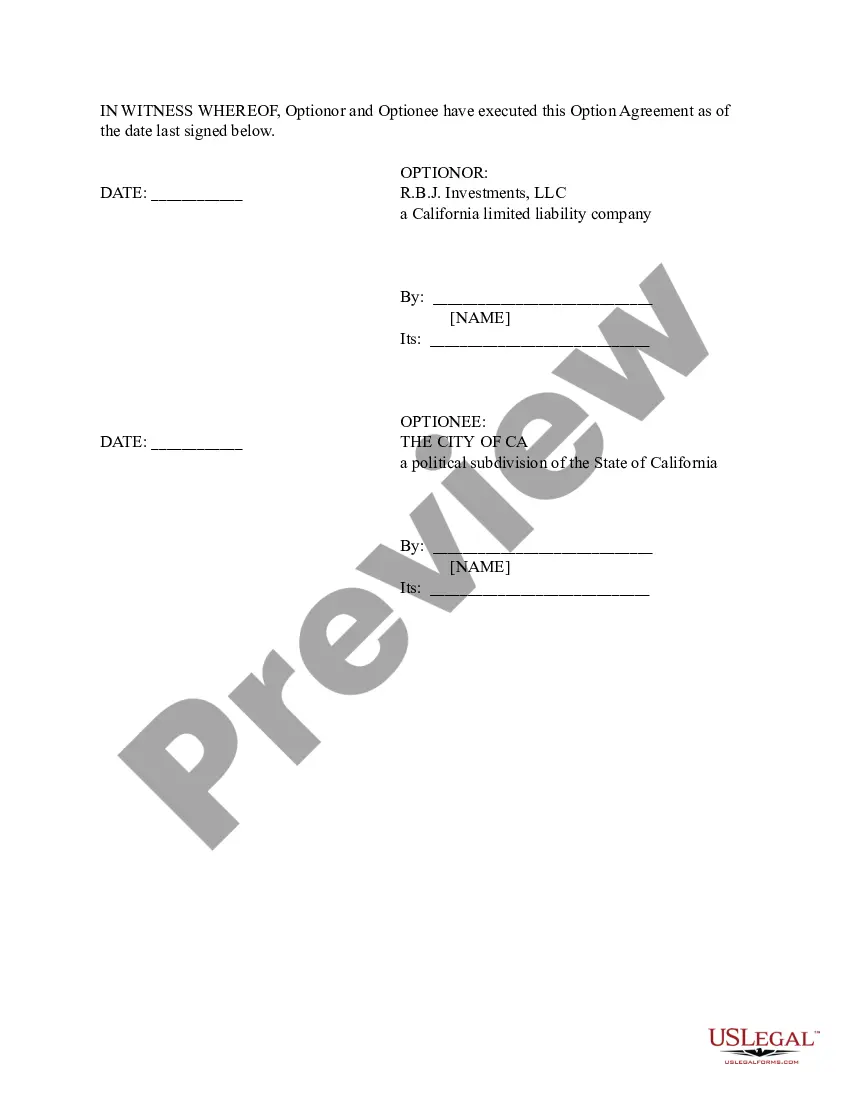
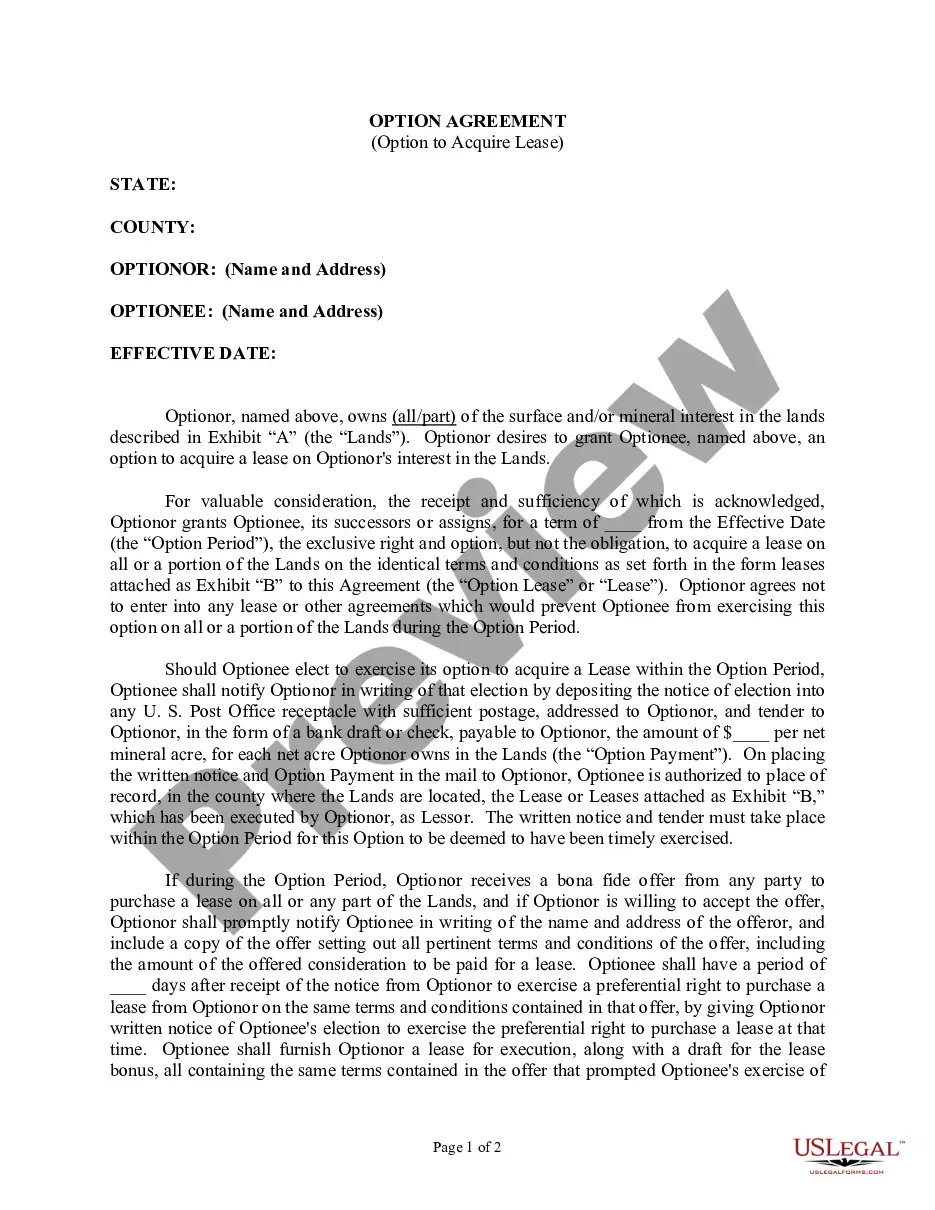
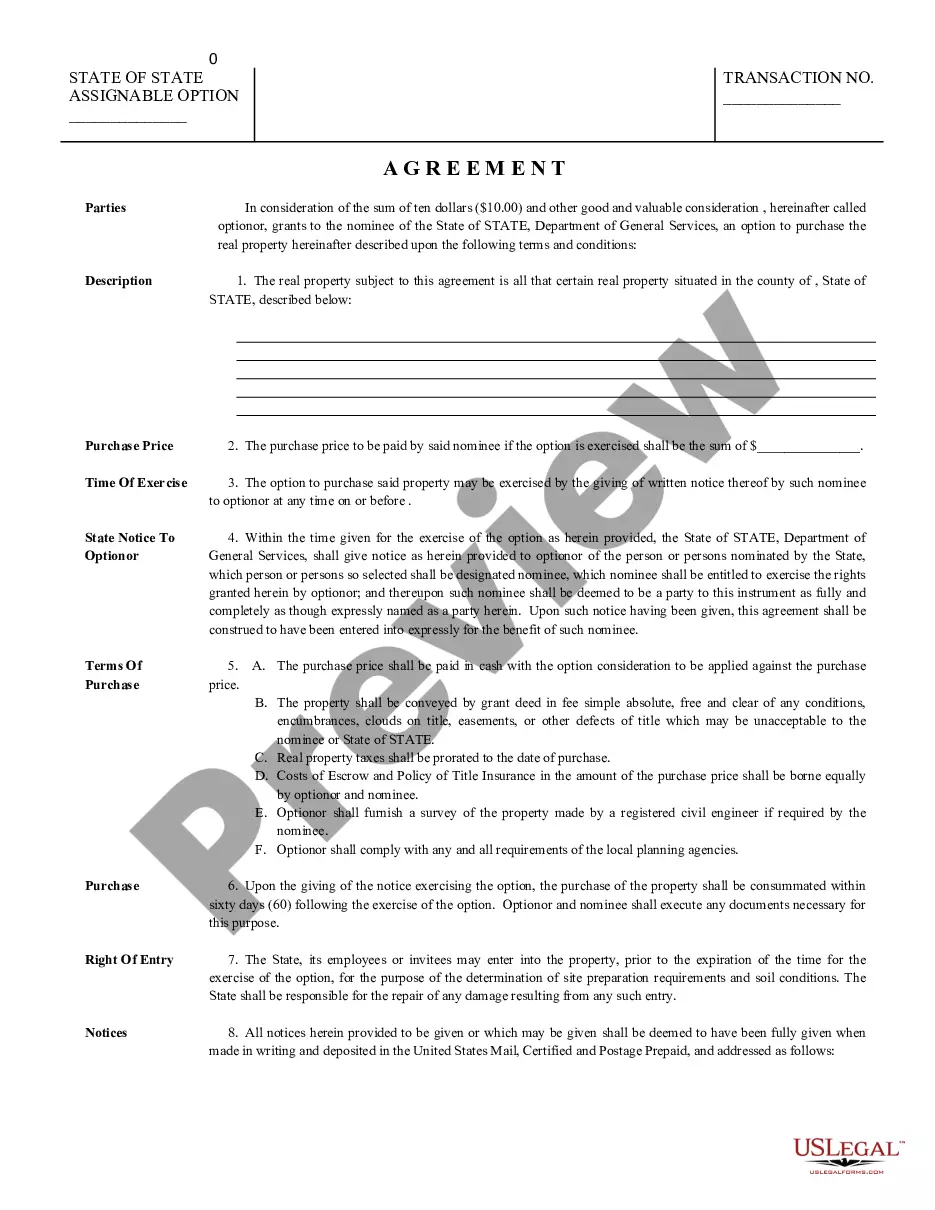
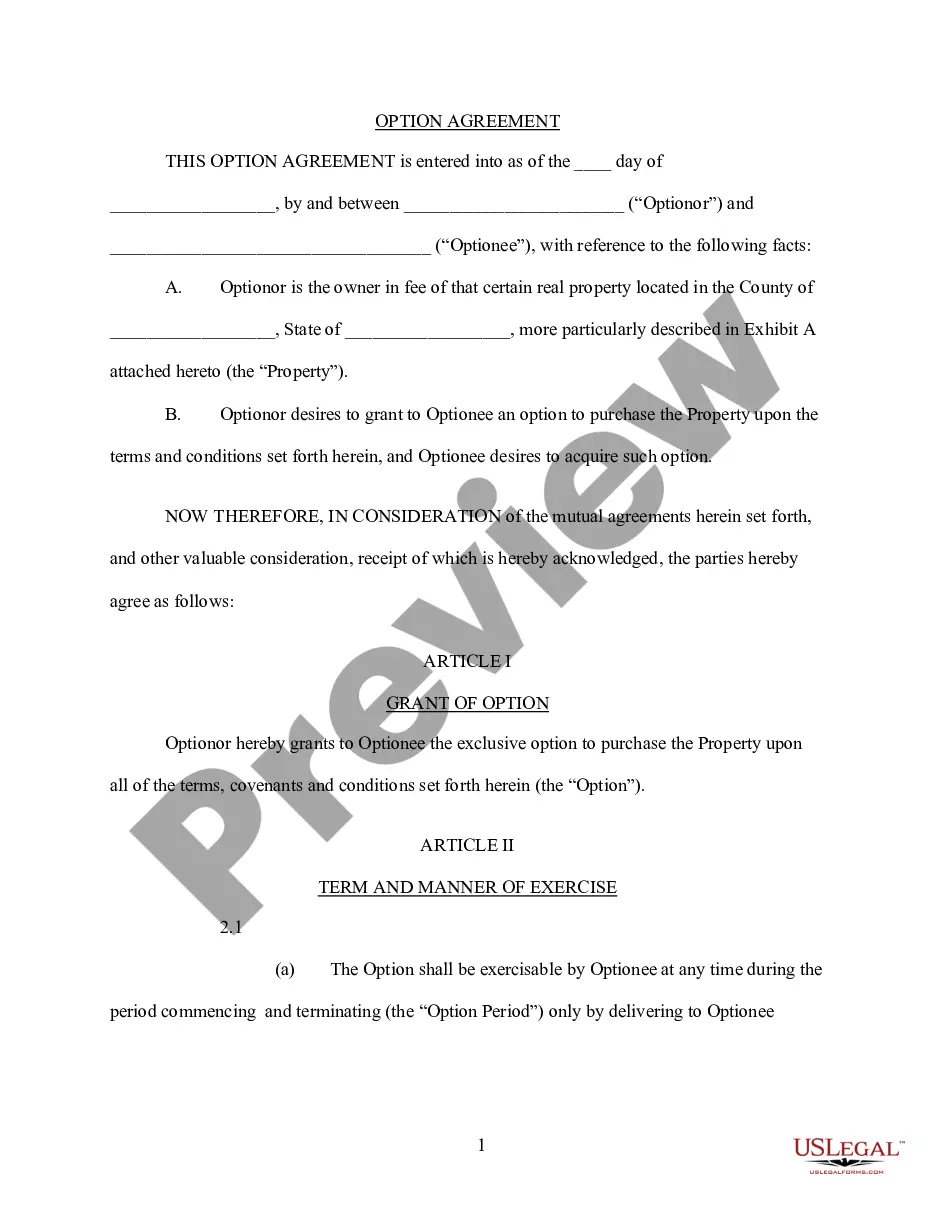
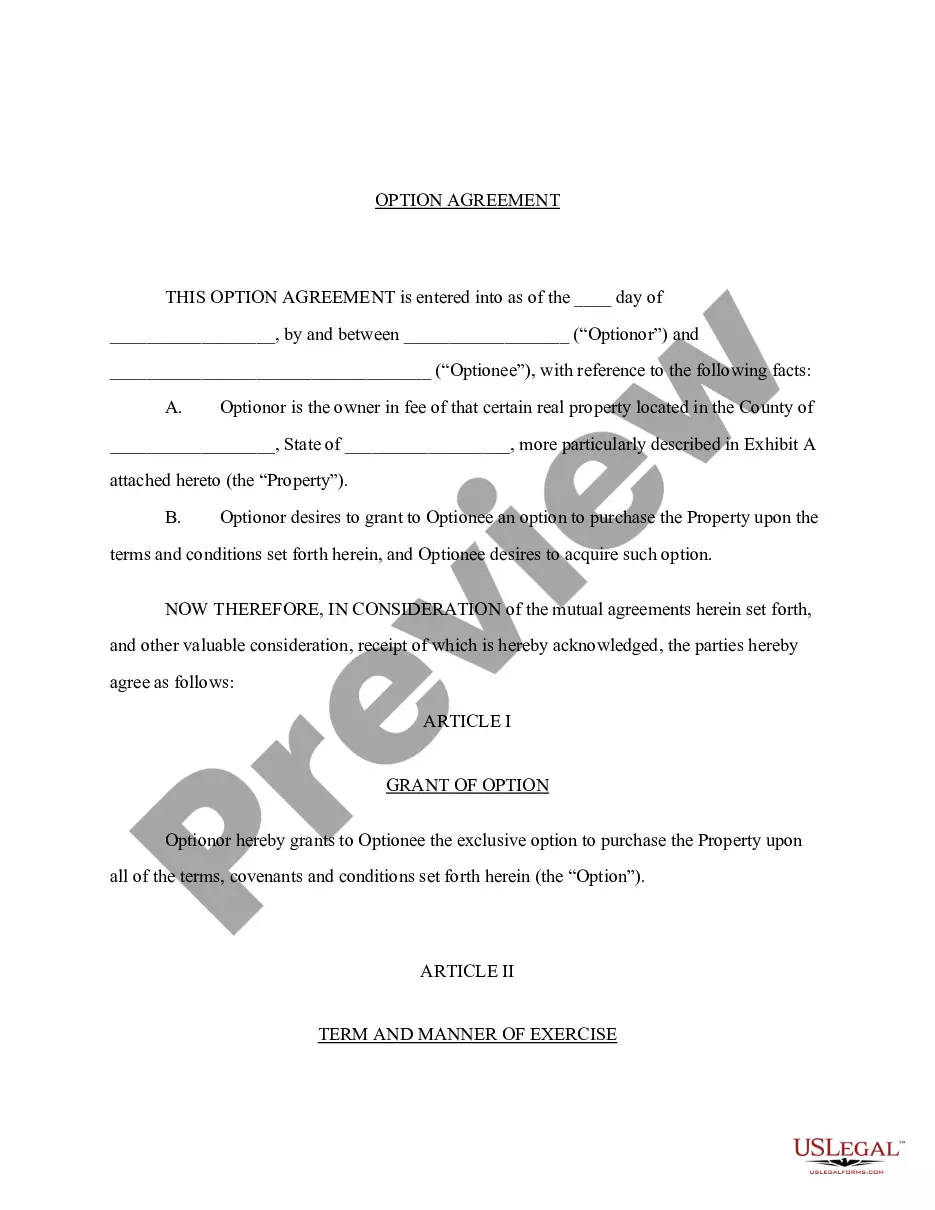
This Option Agreement is a legal document enabling a limited liability company (LLC) to grant a political subdivision of the State the right to purchase certain property at a later date. The agreement defines the terms of the option, including the property involved, conditions for exercising the option, and the length of time the option remains valid. This form is distinct from other real estate agreements, as it specifically concerns the grant of an option rather than an outright sale.
Main sections of this form
- Identification of the parties involved: the Optionor (LLC) and the Optionee (political subdivision).
- Description of the property, including its location and related documents.
- Terms and duration of the option, including any provisions for extensions.
- Requirements for due diligence and feasibility analysis.
- Conditions under which the option may be exercised.
- Price and payment terms associated with the option and purchase.

Common use cases
The Option Agreement should be used when a limited liability company wishes to allow a political subdivision of the State to have the opportunity to purchase property for a specific purpose, such as developing a transit hub. This form is particularly useful in scenarios where the buyer needs time to evaluate the property and gather necessary financing before committing to a purchase.
Who this form is for
- Limited Liability Companies (LLCs) seeking to grant property purchase options to governmental entities.
- Political subdivisions of the State interested in acquiring property through an option agreement.
- Real estate professionals facilitating transactions involving governmental interests and private entities.
How to prepare this document
- Identify the parties: clearly state the names of the LLC (Optionor) and the political subdivision (Optionee).
- Describe the property: provide the physical address and any relevant attachments or descriptions.
- Specify the option term: indicate the effective date and the expiration date of the option.
- Outline due diligence requirements: detail the necessary investigations and approvals required before exercising the option.
- Enter the purchase price and option price: specify the amounts agreed upon for the property transaction.
- Complete signatures: ensure officials from both parties sign and date the agreement to validate it.
Is notarization required?
This form does not typically require notarization unless specified by local law. Always check with local legal requirements to confirm if notarization is necessary for enforceability.
Get your form ready online
Our built-in tools help you complete, sign, share, and store your documents in one place.
Make edits, fill in missing information, and update formatting in US Legal Forms—just like you would in MS Word.
Download a copy, print it, send it by email, or mail it via USPS—whatever works best for your next step.
Sign and collect signatures with our SignNow integration. Send to multiple recipients, set reminders, and more. Go Premium to unlock E-Sign.
If this form requires notarization, complete it online through a secure video call—no need to meet a notary in person or wait for an appointment.
We protect your documents and personal data by following strict security and privacy standards.

Make edits, fill in missing information, and update formatting in US Legal Forms—just like you would in MS Word.

Download a copy, print it, send it by email, or mail it via USPS—whatever works best for your next step.

Sign and collect signatures with our SignNow integration. Send to multiple recipients, set reminders, and more. Go Premium to unlock E-Sign.

If this form requires notarization, complete it online through a secure video call—no need to meet a notary in person or wait for an appointment.

We protect your documents and personal data by following strict security and privacy standards.
Common mistakes
- Failing to clearly define the property subject to the option agreement.
- Not specifying the terms or deadlines related to the due diligence process.
- Neglecting to secure signatures from both parties, leading to potential enforceability issues.
- Omitting to attach necessary documentation for the property.
Why use this form online
- Convenience: Access and download this form anytime from any location.
- Editability: Easily customize the form to fit specific needs and circumstances.
- Reliability: Use professionally drafted documents that adhere to current laws.
Looking for another form?
Form popularity
FAQ
A contract for deed, also known as a land contract or installment sale, is a type of seller financing that lasts from three to five years. It allows the property's title to stay with the seller until the total sale price is paid. A typical way to end the contract is with a balloon payment.
Statute of Frauds InReal Estate The Statute of Frauds, California Civil Code section 1624, requires certain contracts to be in writing to be enforceable. Under the statute, contracts for the sale, gift, or financing of real property must be memorialized in a writing that satisfies the statute of frauds.
General Disclosure Duties: You must affirmatively disclose to the buyer, in writing, any and all known facts that materially affect the value or desirability of your Property. You must disclose these facts whether or not asked about such matters by the buyer, any broker, or anyone else.
Contracts longer than 1 year: If a contract will not be completed in full within a year of entering into the agreement, the contract must be in writing. This includes leases, employment contracts, and even nondisclosure agreements.
A California land contract records the terms of the sale of an undeveloped or vacant property. A buyer can purchase either commercial or residential land from a seller by drafting a land contract with all the appropriate information, such as the land's legal description and the agreed-upon purchase price.
The Statute of Frauds, codified in California Civil Code section 1624, requires certain contracts to be in writing (or that there be written evidence of the contract's terms). That is, an oral contract (one that is not in writing) may not be enforceable.
The contract must be signed by all involved parties. A contract must be signed by both parties involved in the purchase and sale of a property to be legally enforceable. All parties signing must be of legal age and must enter into the contract voluntarily, not by force, to be enforceable.
4 Essential Elements of a California Real Estate Contract The contract must be executed by parties who are legally capable of entering a contract. There must be mutual consent. The contract must have a lawful objective. The terms must include consideration (an exchange of things of value)
Statute of Frauds: A law, originally adopted in England in 1677, now adopted in some form by all 50 states, that states that certain contracts, including those transferring an interest in real estate, must be in writing to be enforceable.