Employment by Architectural Firm of Mechanical Engineer to Supervise Construction Projects
What this document covers
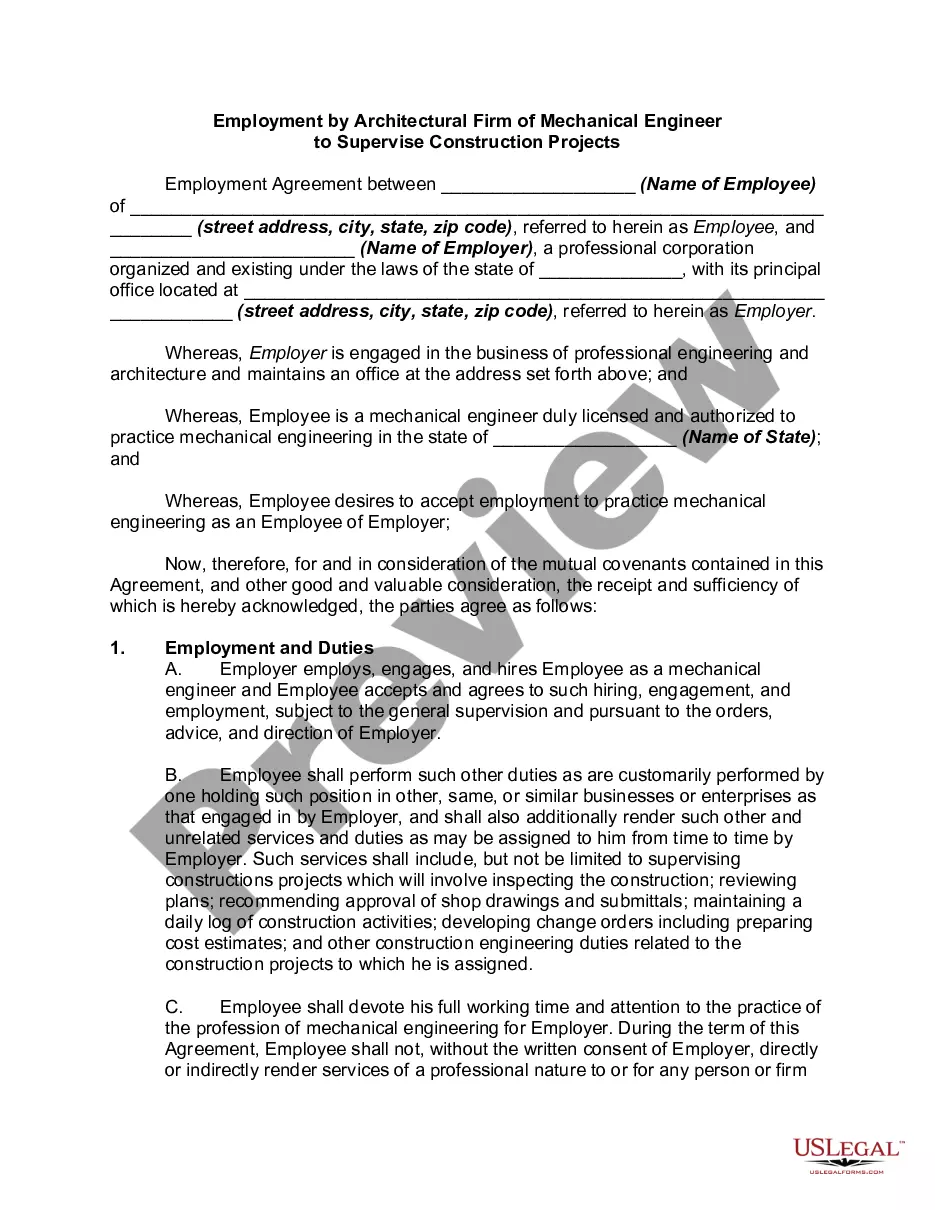
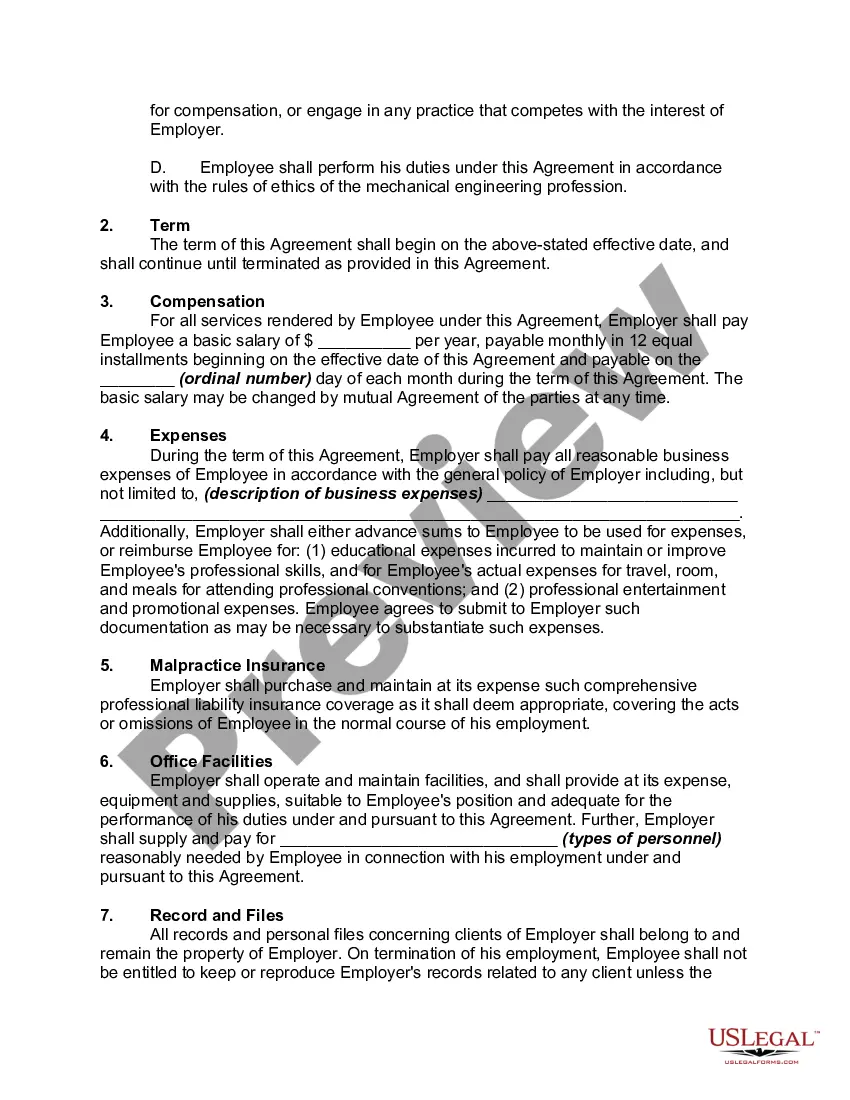
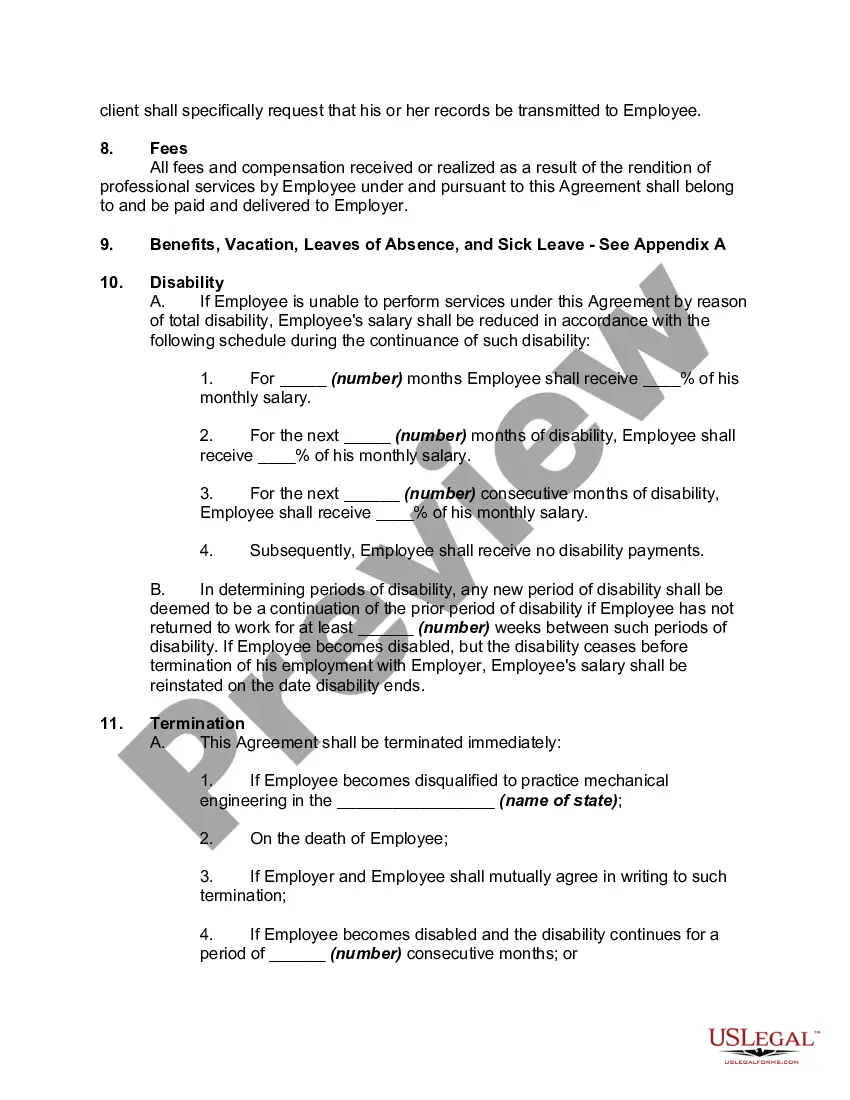
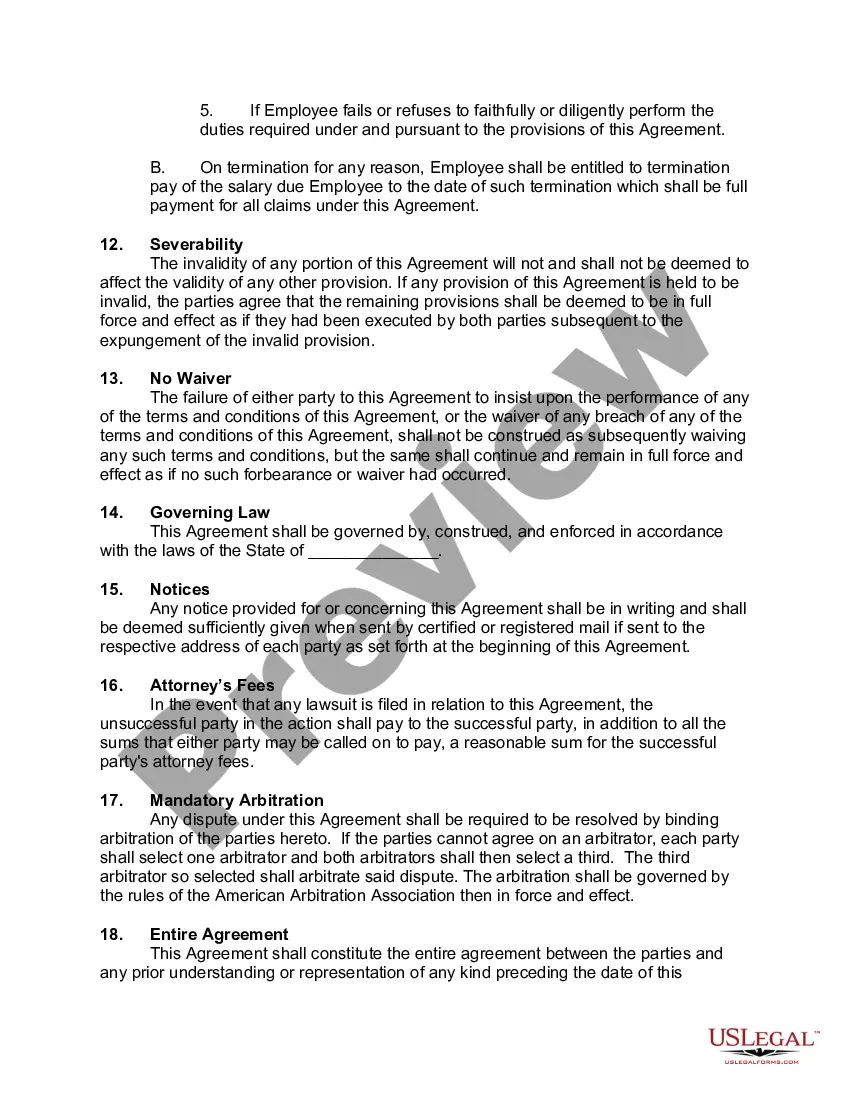
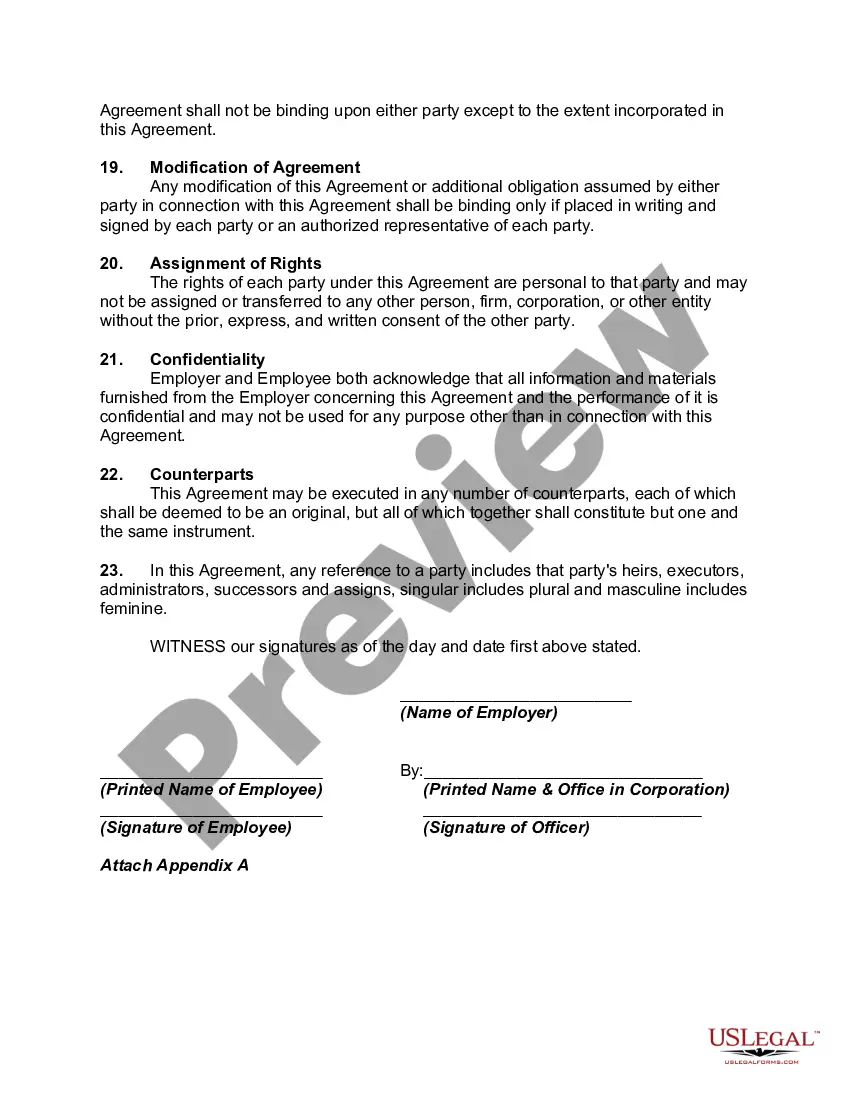
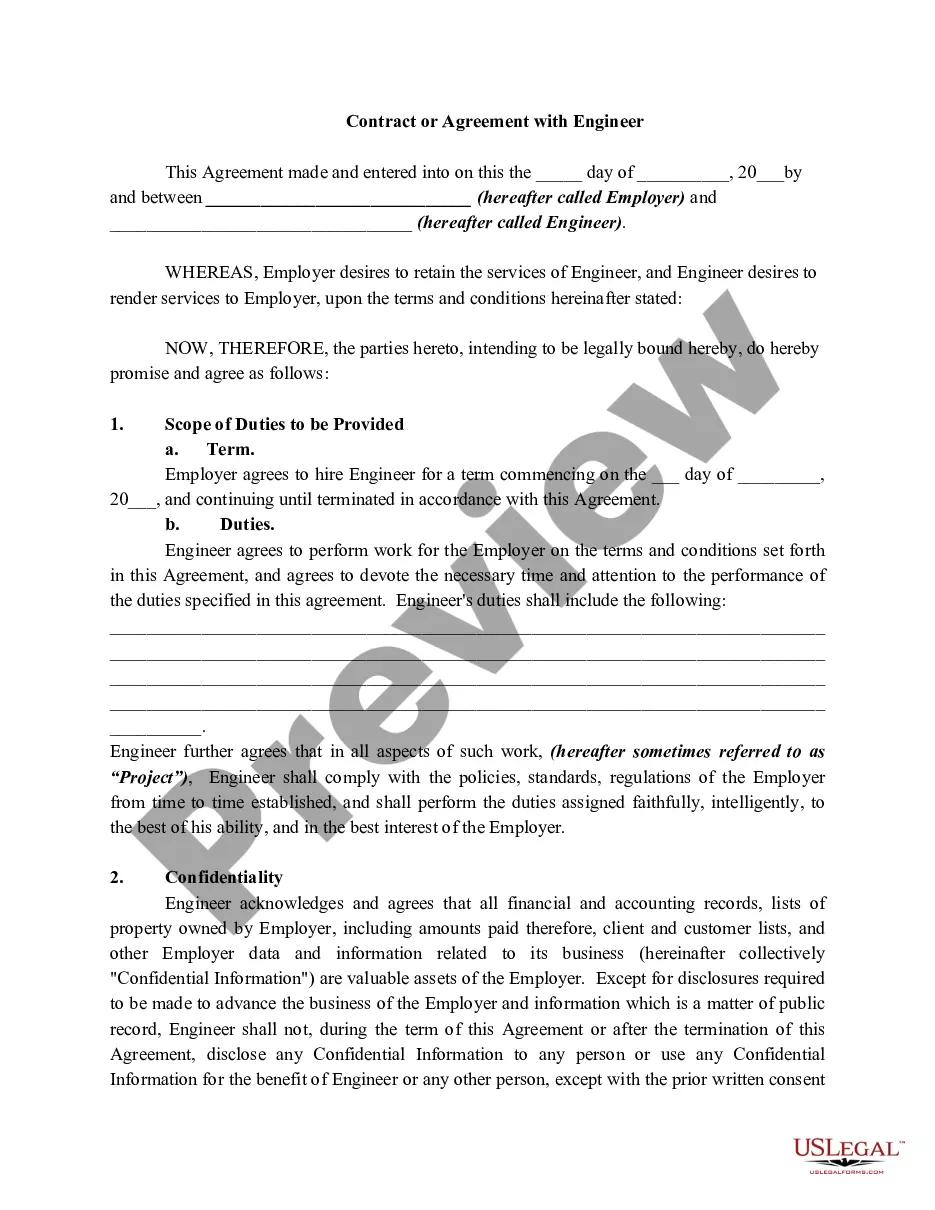
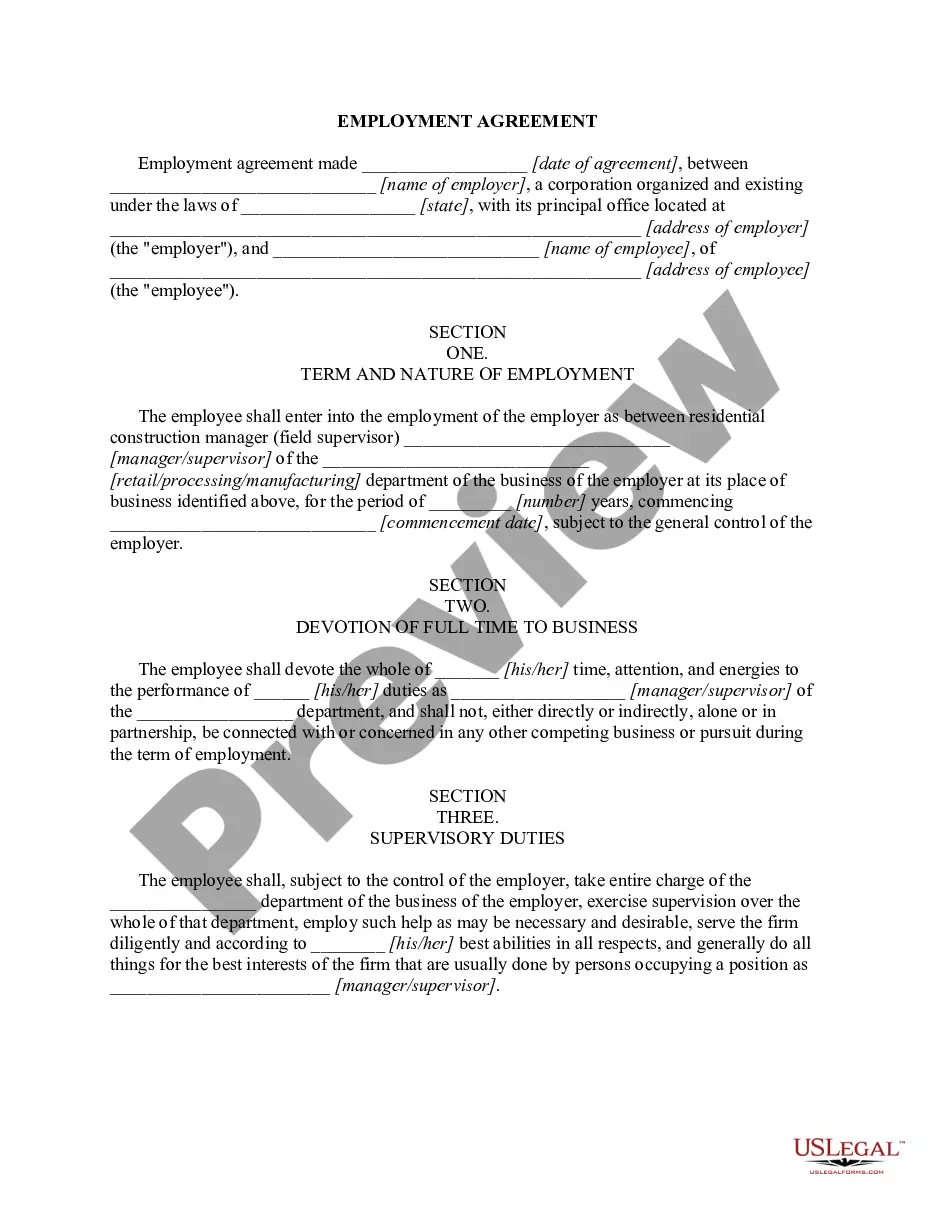
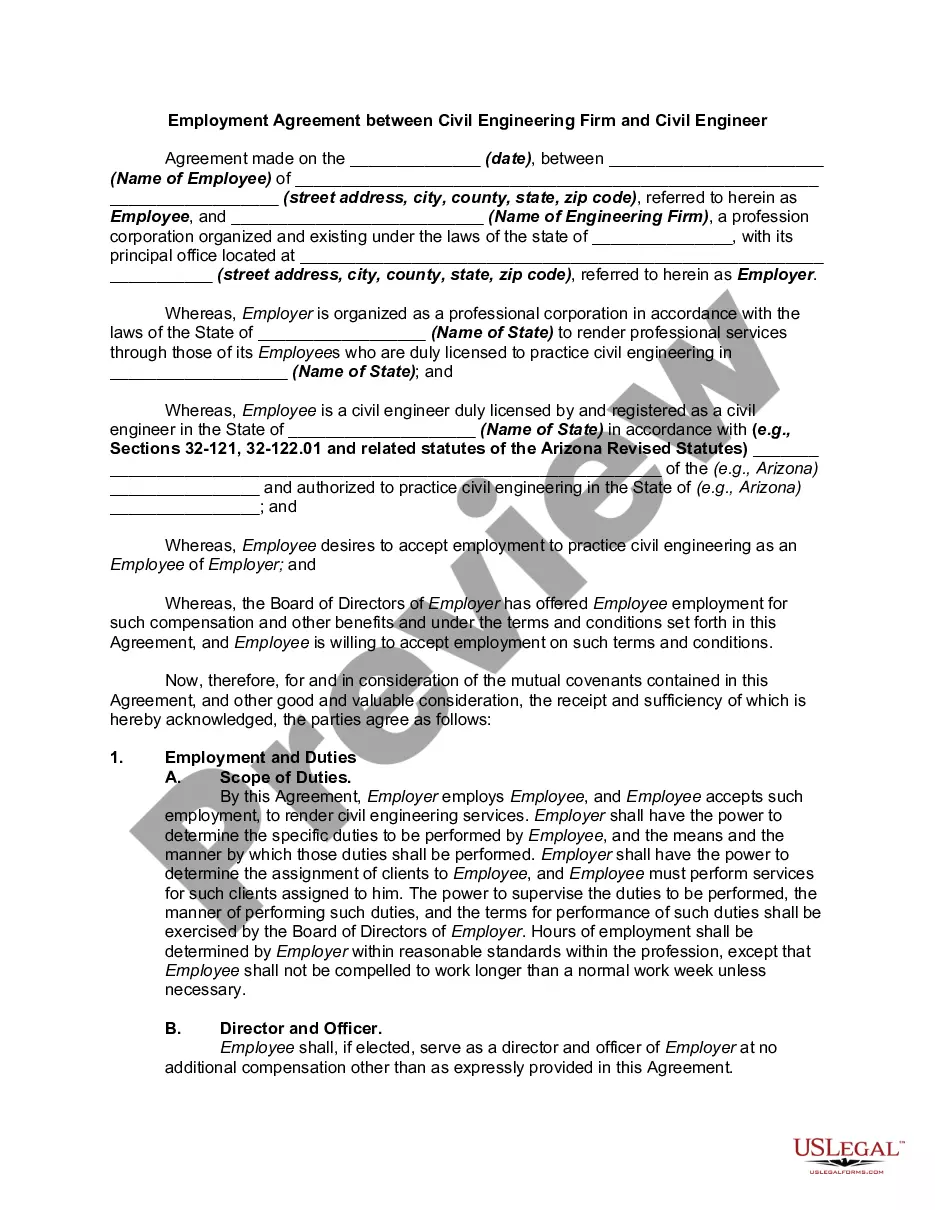
This form is an Employment Agreement between an architectural firm and a mechanical engineer, specifically designed for supervising construction projects. It outlines the terms of employment, including duties, compensation, and conditions for termination. This agreement ensures clarity and legal protection for both parties, distinguishing it from generic employment agreements that may not cater specifically to the engineering profession.
What’s included in this form
- Parties involved: Specifies the employee (mechanical engineer) and employer (architectural firm).
- Duties and responsibilities: Outlines the tasks the employee will perform, focusing on construction project supervision.
- Compensation details: States the salary and payment schedule.
- Malpractice insurance: Mandates employer-provided professional liability insurance.
- Termination conditions: Lists the circumstances under which the agreement can be terminated.
- Confidentiality requirements: Ensures protection of sensitive information shared during employment.
Common use cases
This form should be used when an architectural firm hires a mechanical engineer to oversee construction projects. It is essential in situations where the employer wants to formalize the employment relationship and delineate the engineer's specific roles and responsibilities while protecting their legal interests.
Who should use this form
The following individuals or entities should consider using this form:
- Architectural firms looking to employ a mechanical engineer.
- Mechanical engineers seeking employment agreements with architecture or engineering firms.
- Human resources departments in architectural firms managing engineering hires.
How to prepare this document
- Identify and enter the names and addresses of the employee and employer at the beginning of the form.
- Clearly define the duties and responsibilities of the employee, focusing on supervising construction projects.
- Specify the compensation details, including the annual salary and payment schedule.
- Complete sections related to benefits, expenses, and insurance provisions relevant to the employment.
- Ensure all parties sign and date the agreement to validate it.
Notarization guidance
This form does not typically require notarization unless specified by local law. However, having the signatures notarized can add an extra layer of validity to the agreement.
Get your form ready online
Our built-in tools help you complete, sign, share, and store your documents in one place.
Make edits, fill in missing information, and update formatting in US Legal Forms—just like you would in MS Word.
Download a copy, print it, send it by email, or mail it via USPS—whatever works best for your next step.
Sign and collect signatures with our SignNow integration. Send to multiple recipients, set reminders, and more. Go Premium to unlock E-Sign.
If this form requires notarization, complete it online through a secure video call—no need to meet a notary in person or wait for an appointment.
We protect your documents and personal data by following strict security and privacy standards.

Make edits, fill in missing information, and update formatting in US Legal Forms—just like you would in MS Word.

Download a copy, print it, send it by email, or mail it via USPS—whatever works best for your next step.

Sign and collect signatures with our SignNow integration. Send to multiple recipients, set reminders, and more. Go Premium to unlock E-Sign.

If this form requires notarization, complete it online through a secure video call—no need to meet a notary in person or wait for an appointment.

We protect your documents and personal data by following strict security and privacy standards.
Avoid these common issues
- Failing to clearly outline the employee's duties, leading to misunderstandings.
- Omitting specific compensation details, which can result in disputes later.
- Not addressing termination conditions appropriately, which may cause legal issues.
Benefits of completing this form online
- Convenient and fast access to a professionally drafted agreement.
- Editability allows for customization according to specific needs.
- Reliable templates drafted by licensed attorneys ensure legal soundness.
Legal use & context
- This form serves as a legally binding agreement once both parties have signed it.
- It ensures clear communication of job expectations and protects both partiesâ rights.
- Noncompliance with the terms of this agreement can lead to legal disputes.
Looking for another form?

Form popularity
FAQ
An aspiring architectural engineer must complete a Bachelor's Degree in Architectural Engineering or a related field, such as civil engineering, where they will take a broad range of science and technical courses, including classes in physics, architectural design and construction.
Architectural Engineer Responsibilities: Designing, analyzing, and altering plans, prototypes, or structures. Ensuring building plans, prototypes, and structures are operating safely, efficiently, and reliably. Assisting team members with project objectives, budgets, and timelines. Establishing project goals.
An architect designs and draws up plans for buildings, bridges, and other structures.The key difference between an architect and an engineer is that an architect focuses more on the artistry and design of the building, while the engineer focuses more on the technical and structural side.
Architectural Engineering is in many ways similar to civil and mechanical engineering, but it is specifically geared toward the building industry.Architectural Engineering majors study the planning, design, construction, and operation of engineered systems for all different kinds of buildings.
They typically begin projects by meeting with clients to learn about goals and requirements. After initial meetings, architects develop preliminary plans that include cost estimates and prospective timelines.
Architectural engineers apply science and technology to the real world by designing buildings that enhance our standard of living and improve our quality of life. They do this by combining building systems structural, electrical, mechanical, lighting, acoustics and fire protection - into an integrated whole.
Architectural engineers work with architects, but they're engineers first and foremost. Given an architectural design, the engineer figures out the right building structure to support the design.Although architects fall on the creative side and engineers on the technical/mechanical, they're not that far apart.
Yes. Assuming the degree is both ABET and NAAB accredited, you can get both licenses. My Dad had both from OSU (where I went too but didn't get the AE degree). Basically, with that degree, you could do the internship and take both exams getting dual licenses becoming a licensed architect and structural engineer.
Making plans using detailed drawings. Preparing estimates and budgets. Creating accurate project specifications. Designing engineering experiments. Creating technical reports for customers. Completing regulatory documents concerning safety issues.