Changing Will with Codicil Substituting New Provisions
Overview of this form
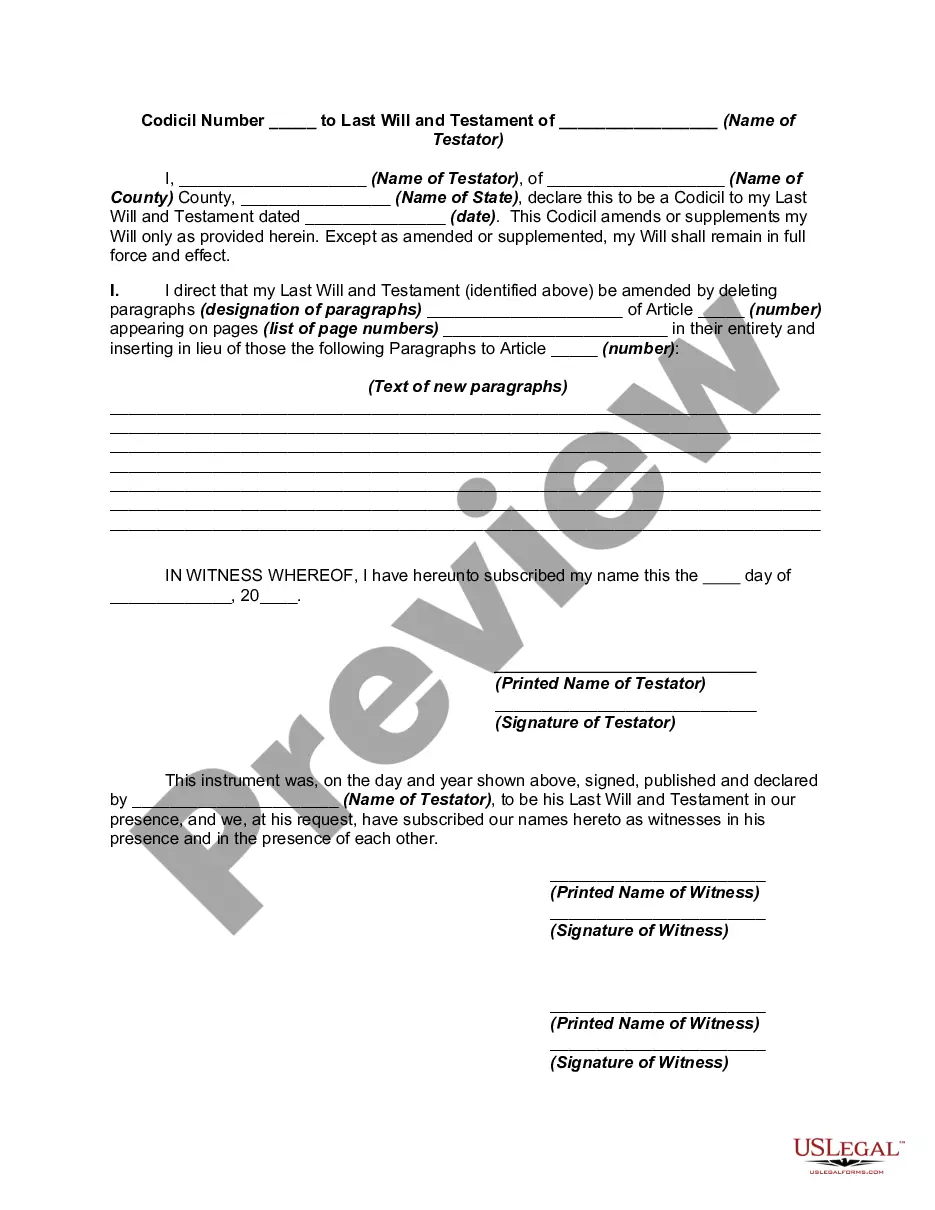
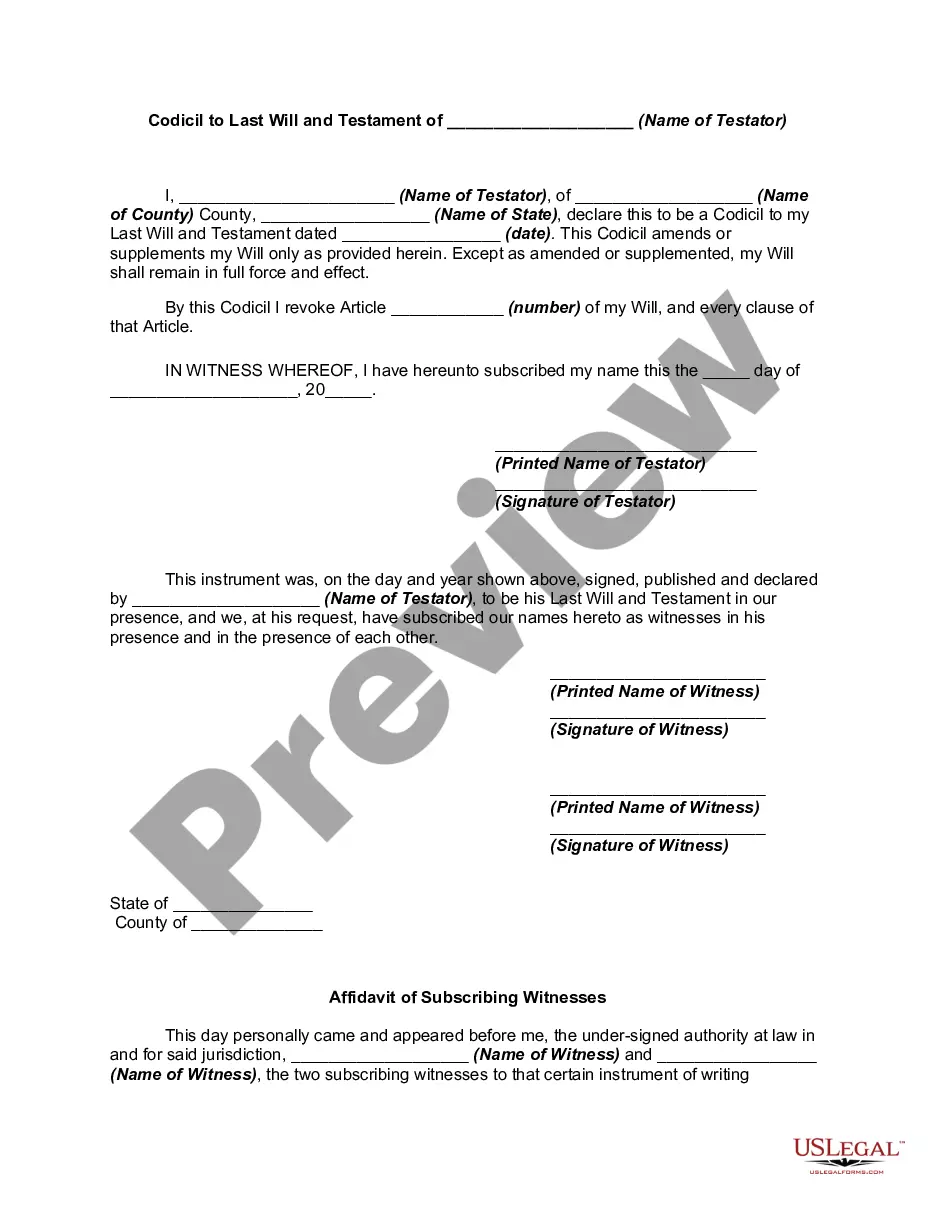
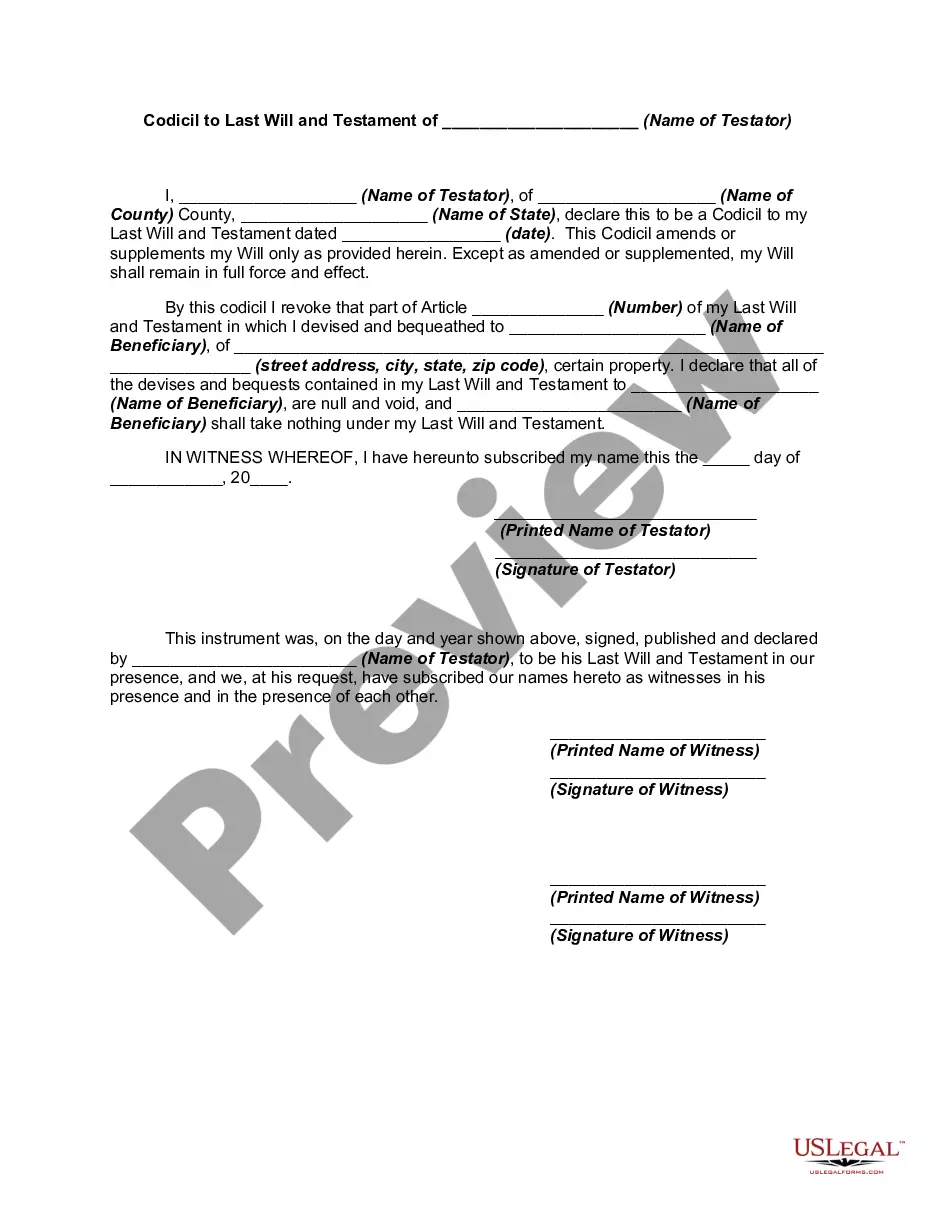
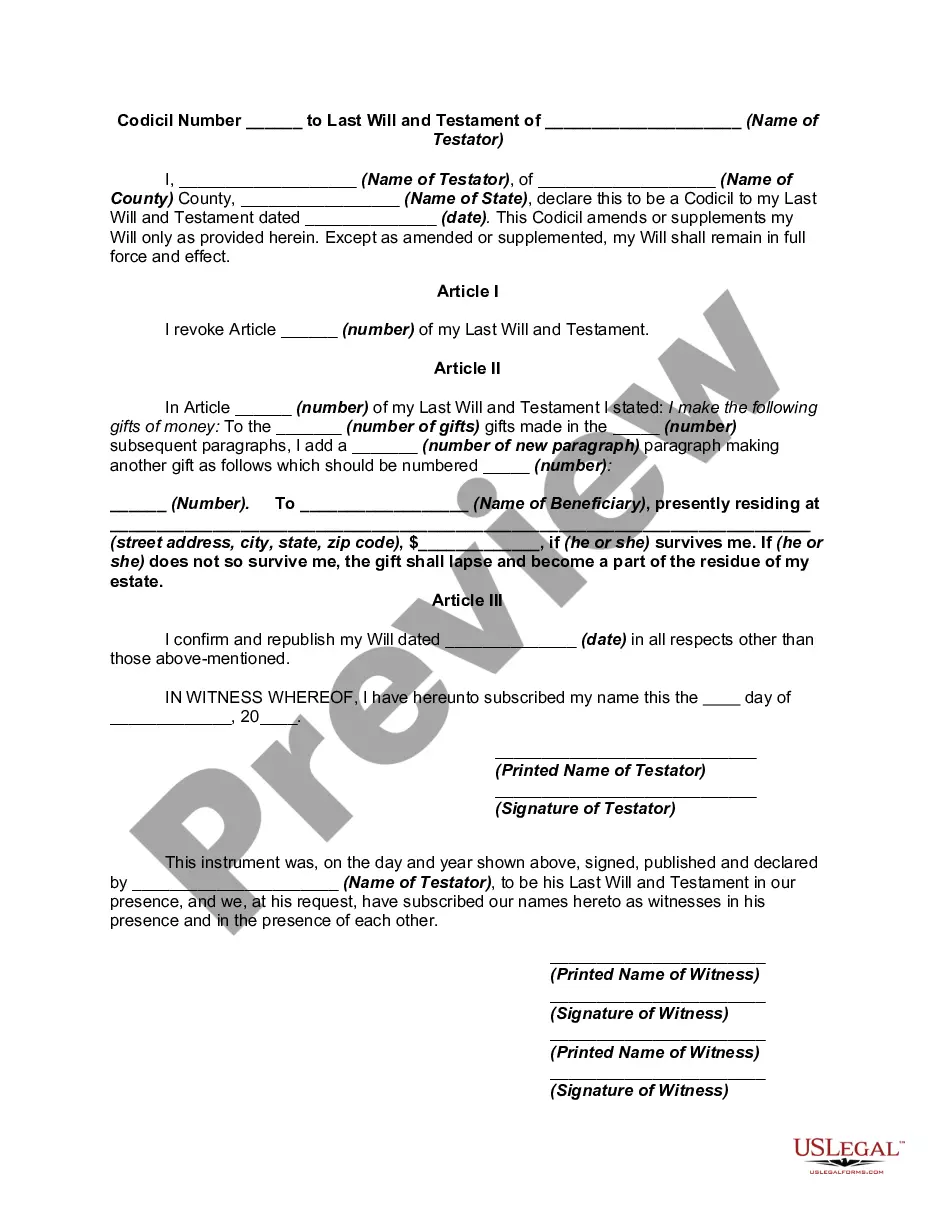
The Changing Will with Codicil Substituting New Provisions is a legal document that serves as a supplement to an existing will. This form allows the testator to make modifications, including additions or deletions, to the original will without the need to rewrite the entire document. By using a codicil, the testator can clarify their intentions in a clear manner while ensuring that both the original will and the codicil go through the probate process together, facilitating a smooth estate administration.
What’s included in this form
- Name of the testator who is making the changes.
- Details about the original will, including the date it was executed.
- Specific paragraphs or articles from the original will that are being modified or deleted.
- New provisions or paragraphs to be inserted in place of the old ones.
- Signatures of the testator and witnesses, along with their printed names.
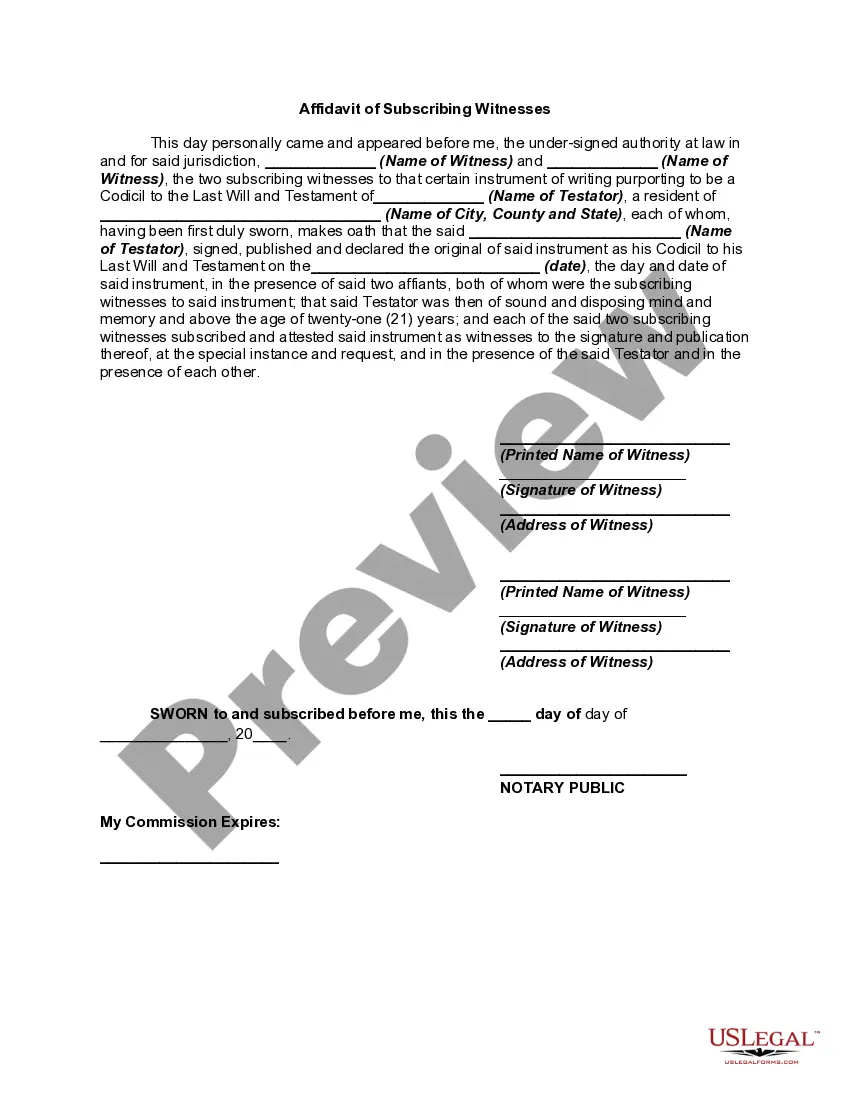
- Notarization section for additional validation of signatures.

When this form is needed
This form is appropriate in situations where a testator needs to update their will due to changes in personal circumstances, such as marriage, divorce, the birth of children, or changes in financial status. It is particularly useful for those who want to make straightforward amendments without the administrative burden of creating a completely new will.
Who needs this form
- Individuals who already have a valid will but need to update certain provisions.
- Testators who wish to make changes after significant life events.
- Those looking for a clear and efficient way to modify their existing estate planning documents.
Completing this form step by step
- Begin by entering your name as the testator and your county and state of residence.
- Clearly state the date of your original will that you are amending.
- Identify the specific sections or paragraphs of the will you wish to modify.
- Insert the new text or provisions to replace the old ones in the designated sections.
- Have the form signed by you and at least two witnesses in accordance with local laws.
- Consider having the document notarized to add an additional layer of validity.
Does this document require notarization?
To make this form legally binding, it must be notarized. Our online notarization service, powered by Notarize, lets you verify and sign documents remotely through an encrypted video session.
Get your form ready online
Our built-in tools help you complete, sign, share, and store your documents in one place.
Make edits, fill in missing information, and update formatting in US Legal Forms—just like you would in MS Word.
Download a copy, print it, send it by email, or mail it via USPS—whatever works best for your next step.
Sign and collect signatures with our SignNow integration. Send to multiple recipients, set reminders, and more. Go Premium to unlock E-Sign.
If this form requires notarization, complete it online through a secure video call—no need to meet a notary in person or wait for an appointment.
We protect your documents and personal data by following strict security and privacy standards.

Make edits, fill in missing information, and update formatting in US Legal Forms—just like you would in MS Word.

Download a copy, print it, send it by email, or mail it via USPS—whatever works best for your next step.

Sign and collect signatures with our SignNow integration. Send to multiple recipients, set reminders, and more. Go Premium to unlock E-Sign.

If this form requires notarization, complete it online through a secure video call—no need to meet a notary in person or wait for an appointment.

We protect your documents and personal data by following strict security and privacy standards.
Mistakes to watch out for
- Failing to clearly reference the sections of the original will being amended.
- Not following the proper witnessing and signing requirements mandated by law.
- Omitting the date or signatures, which could invalidate the codicil.
- Using vague language that may lead to misinterpretation of the new provisions.
Benefits of using this form online
- Convenience of accessing the form from anywhere and downloading it instantly.
- Editability allows you to tailor the provisions specifically to your needs.
- Reliability of a form designed by licensed attorneys to ensure compliance with legal standards.
Legal use & context
- The codicil must comply with the same formalities as the original will to ensure its legal enforceability.
- Both the original will and the codicil will be subject to probate upon the testator's death.
- Using a codicil can help avoid disputes among heirs regarding ambiguous amendments.
Summary of main points
- A codicil allows changes to your will without complete rewrites.
- It is essential to follow proper legal procedures for the codicil to be valid.
- This form can be customized online for convenience and efficiency.
- Always verify local laws regarding the execution of the codicil.
Looking for another form?

Form popularity
FAQ
In short, no a codicil to a Will does not have to be notarized. However, laws and requirements vary from state to state. A codicil does have to be signed in front of at least two witnesses who are not listed as beneficiaries, guardians, or executors in your Will.
Rather than taking the will to an attorney, you may attempt to change the will yourself. Not all handwritten changes to a will may be valid, however.A codicil is a legal document, added to your will, through which you can make valid changes to your estate plan.
Making changes to your will You cannot amend your will after it's been signed and witnessed. The only way you can change a will is by making an official alteration called a codicil. You must sign a codicil and get it witnessed in the same way as witnessing a will.
The codicil, if valid, does not revoke the Will (if it revokes the prior Will , then it is a Will not a codicil), but it does alter the terms of the Will.
The Codicil cross-refers to the original Will and gives details of the amendments or additions you want to make to it. The Codicil must then be executed in the same way as for the Will i.e. signed with two witnesses (although the witnesses do not need to be the same people as the witnesses on the Will).
If executed correctly, a codicil is simply an amendment to the original will and therefor in essence becomes part of the original will. So, there is really no "will overriding a codicil" as they are in essence one and the same.
How do I write a Codicil? You can handwrite or type a Codicil. It should state at the top it is a codicil, and make reference to the document it is altering. You should then describe the clause to be changed, and explain the changes.
Identify the section and content you want to change. The first step in amending your will is to review it. Type up the changes. Take the time to type up the codicil. Sign and date the codicil. Store your codicil in a safe place.