License of Rights under Patent
What is this form?
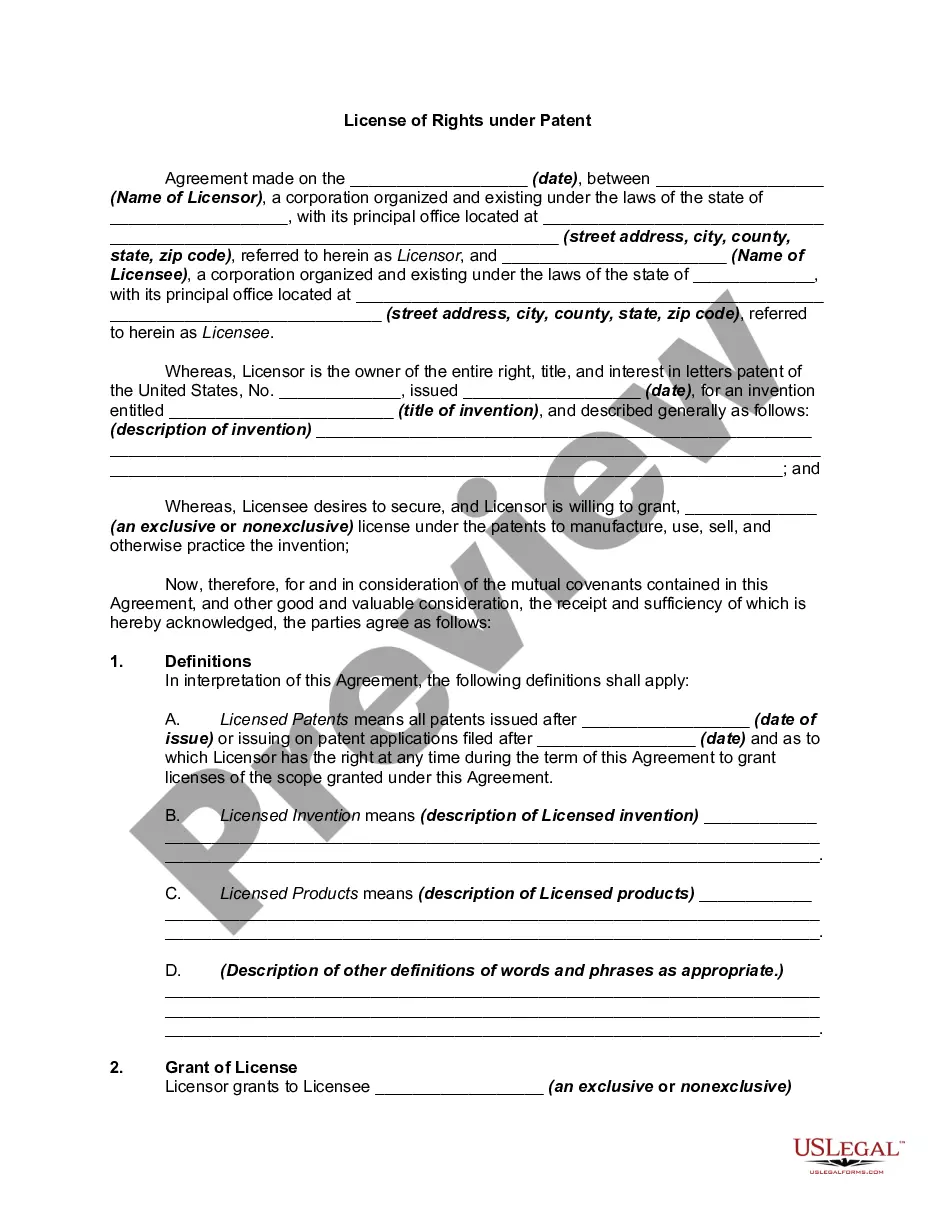
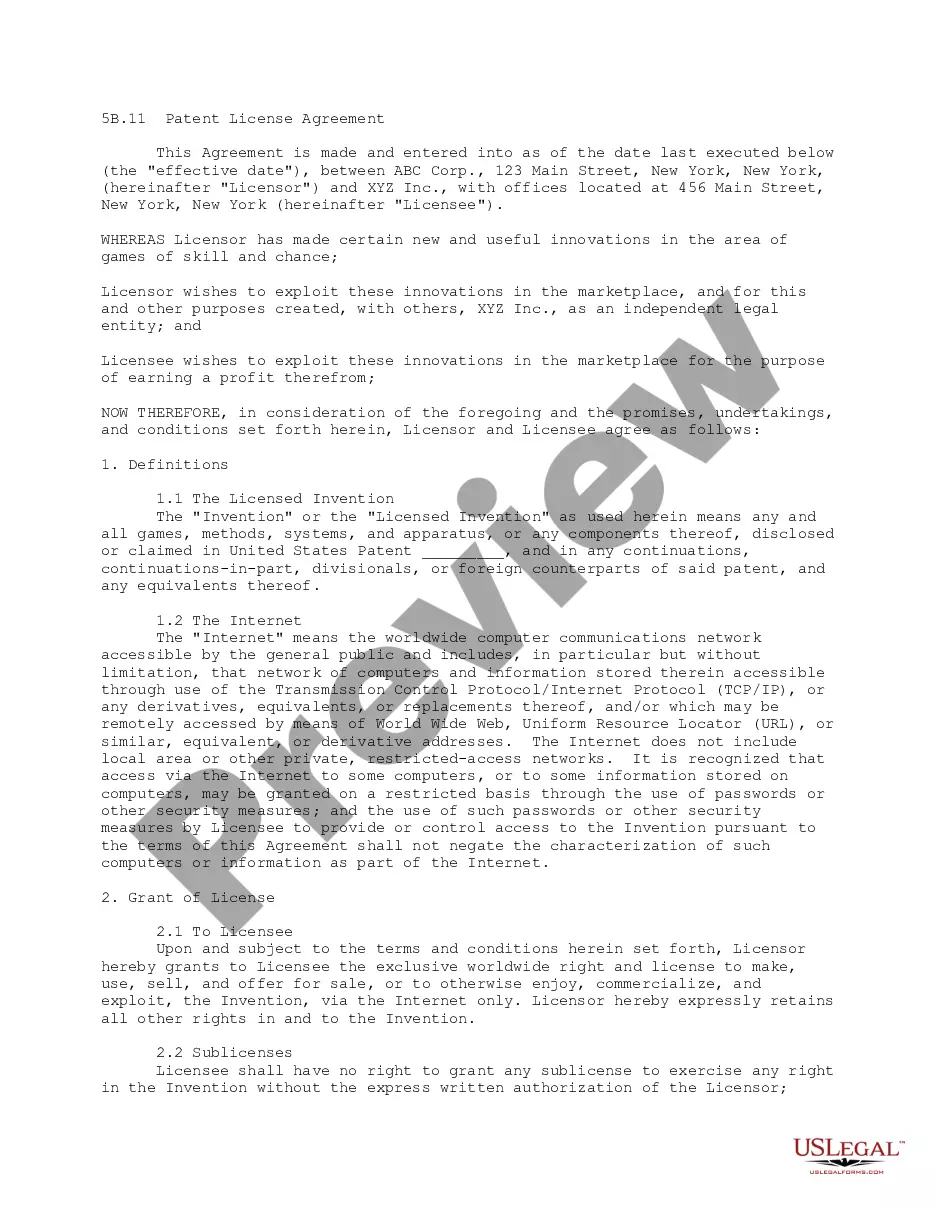
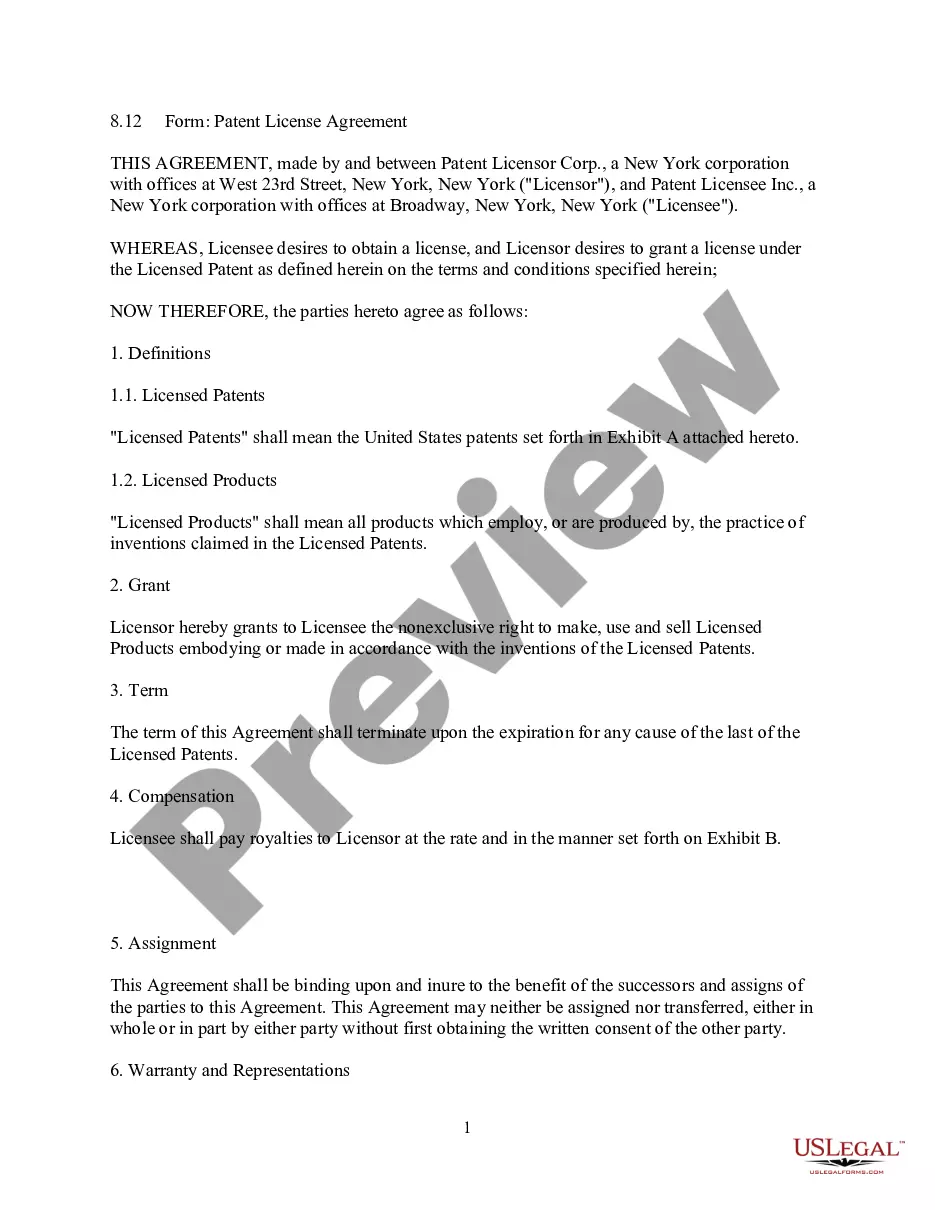
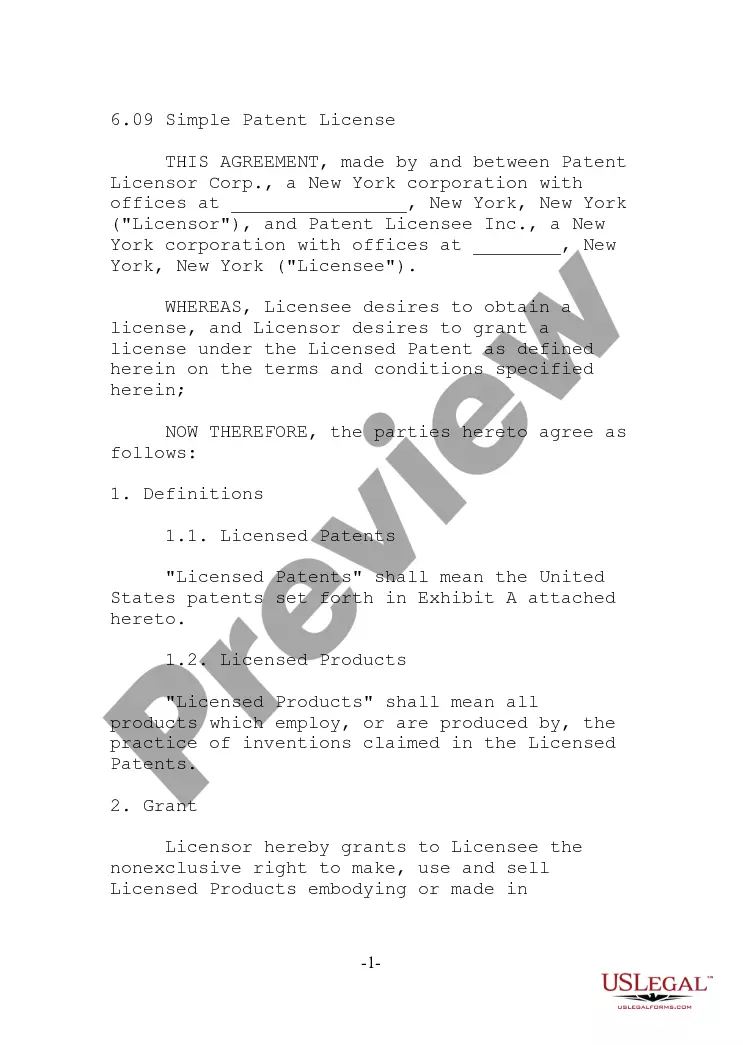
The License of Rights under Patent is a legal agreement that allows a party, known as the licensee, to use, manufacture, or sell a patented invention owned by another party, the licensor. This document is essential for specifying the terms under which the licensee can exploit the patented technology, including any restrictions or obligations. Unlike other forms of agreements, a licensing agreement specifically pertains to intellectual property rights, making it crucial for businesses involved in innovation and product development.
Key components of this form
- Date of the agreement
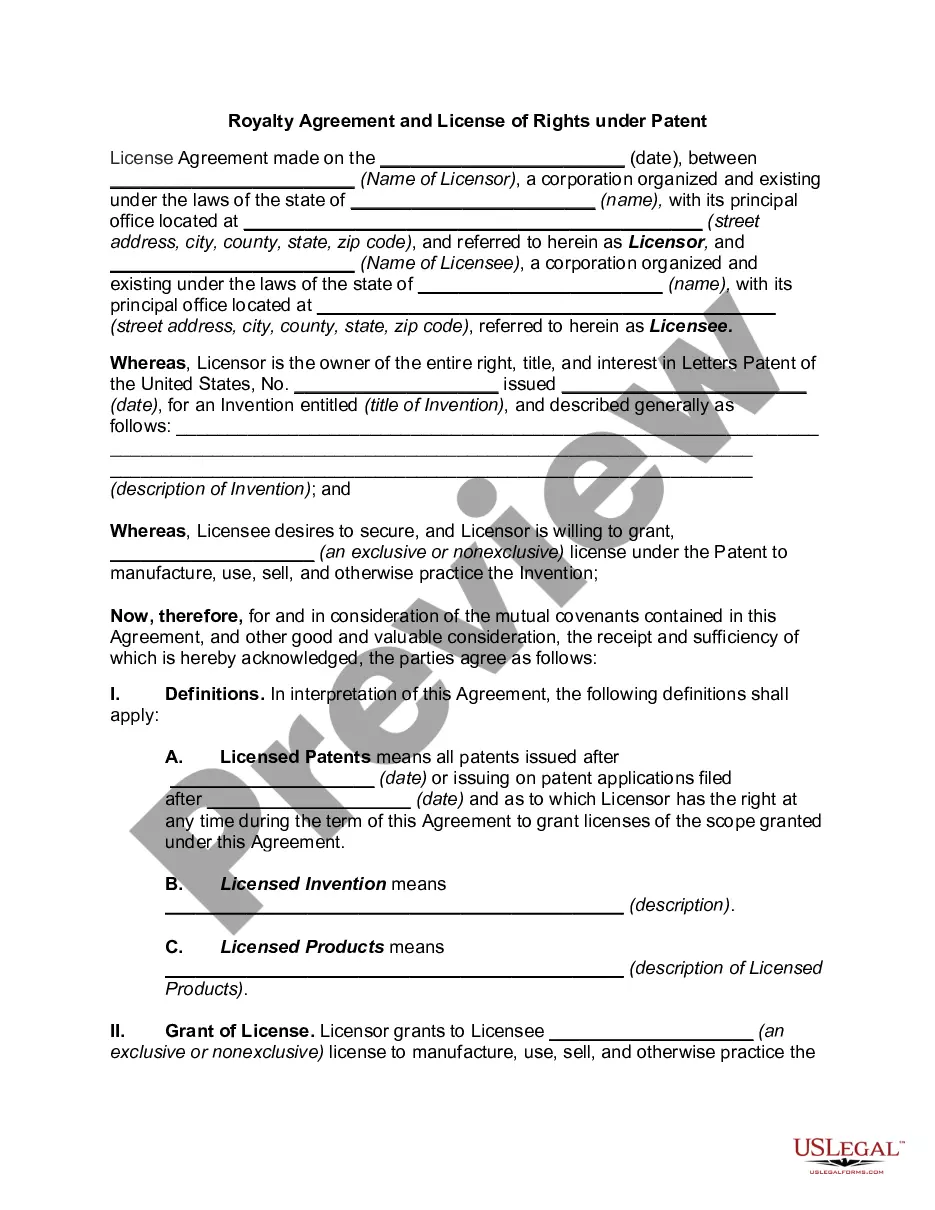
- Names and addresses of the licensor and licensee
- Details of the patent, including patent number and title of the invention
- Type of license granted (exclusive or nonexclusive)
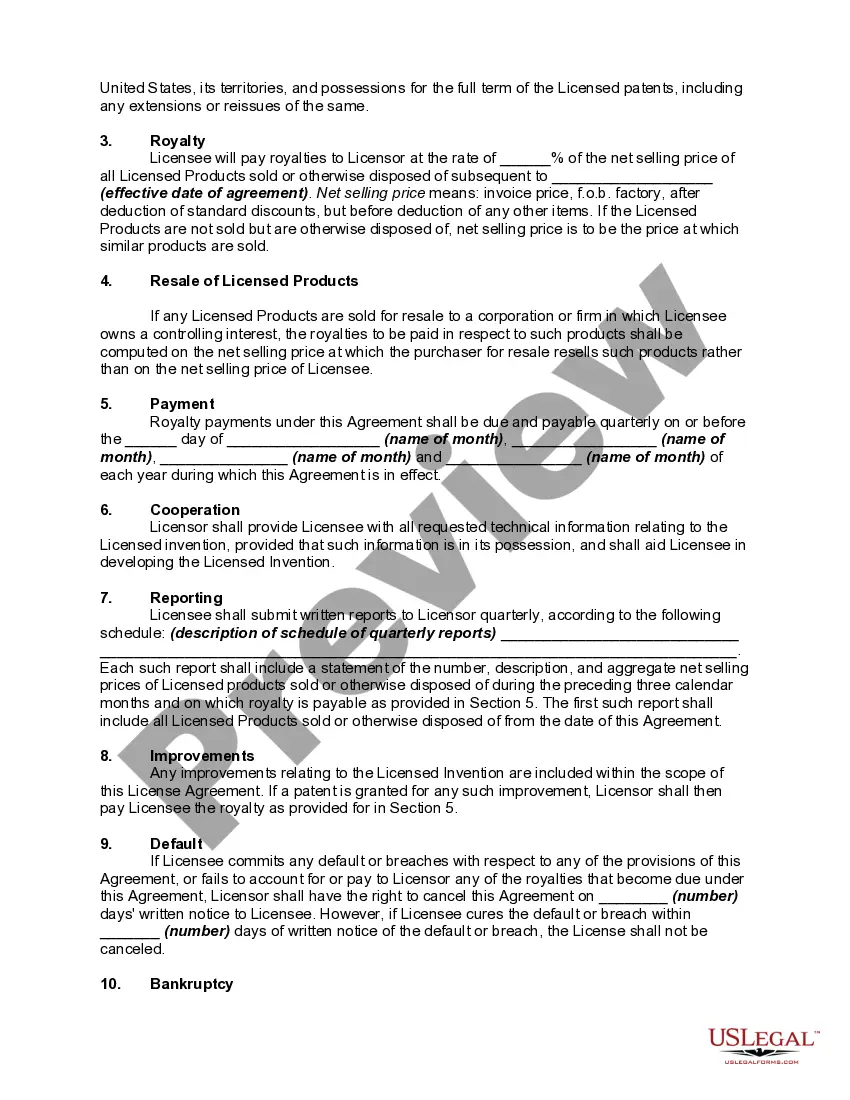
- Royalty payment structure and schedule
- Definitions of key terms used in the agreement
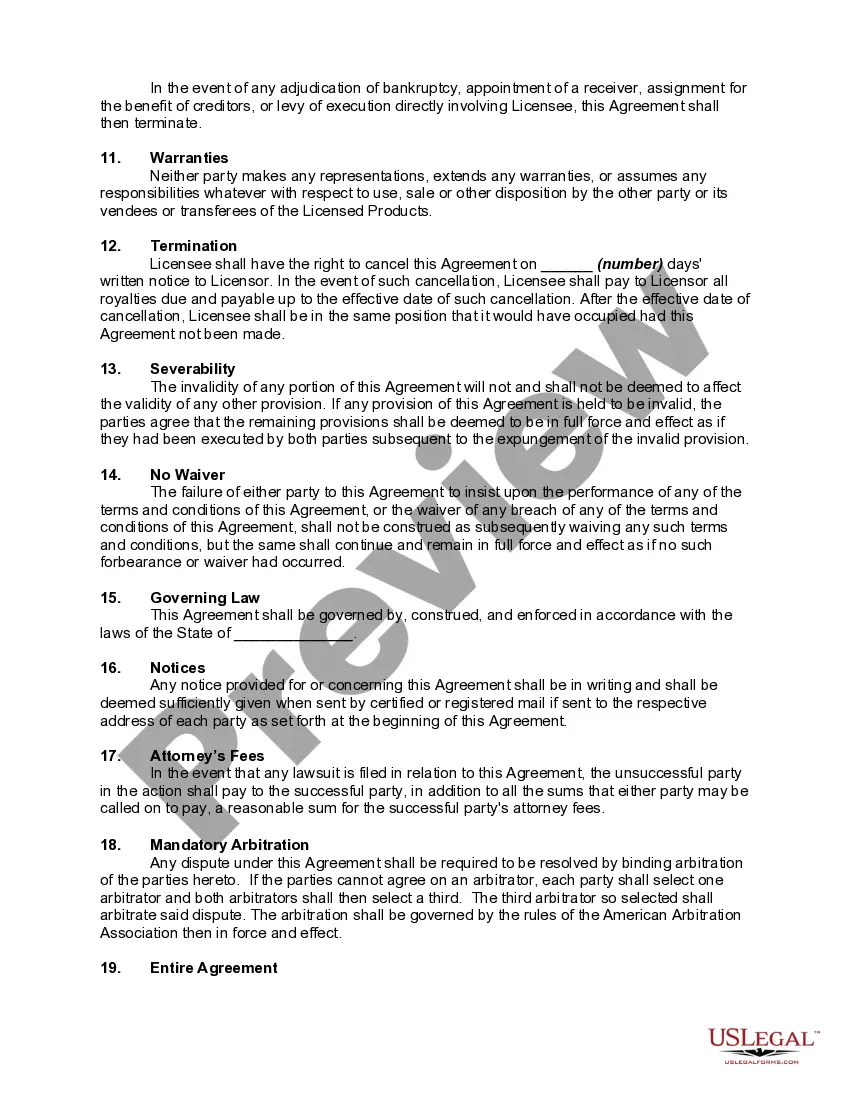
- Conditions for default and cancellation of the agreement
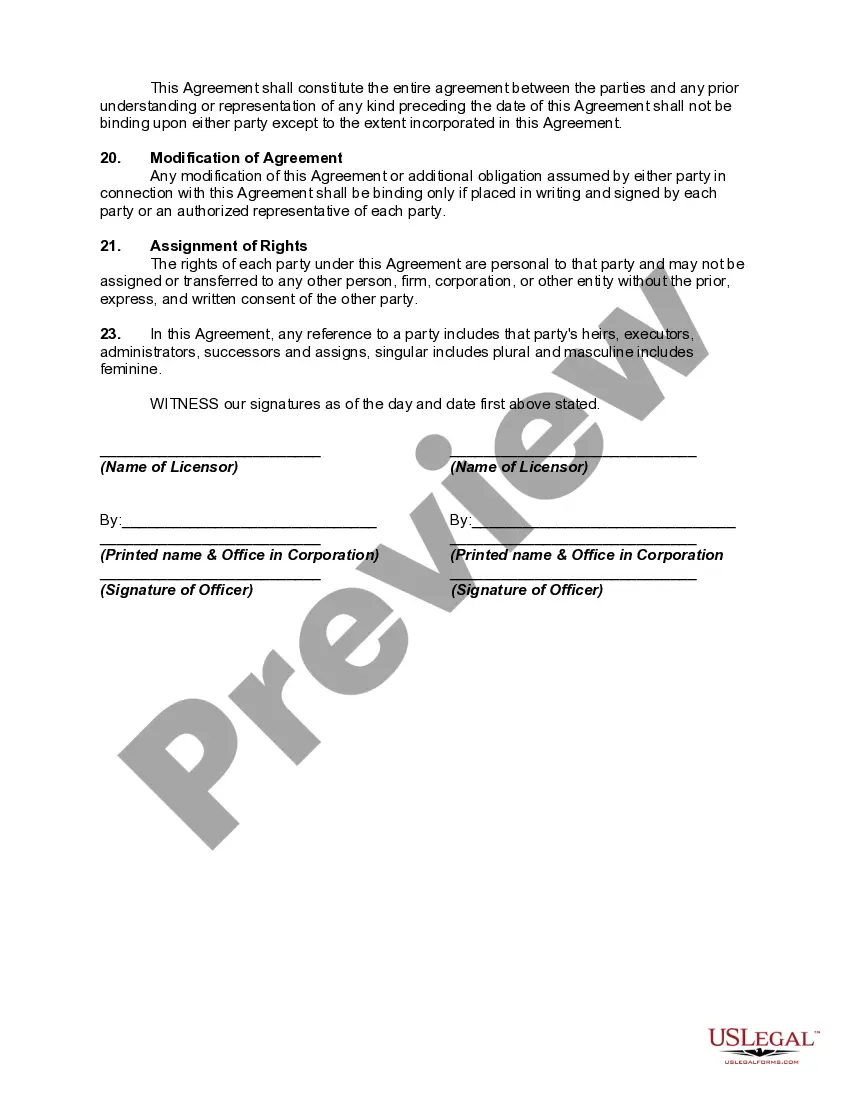
- Governing law and dispute resolution procedures
Common use cases
This form should be used when a patent holder (licensor) wants to grant another party (licensee) the rights to utilize their patented invention. Typical scenarios include businesses wishing to manufacture a product covered by a patent, a company looking to expand its product line without infringing on existing patents, or individuals seeking to commercialize a patented invention. It provides formal documentation for the licensing arrangement, ensuring clarity and legal protection for both parties involved.
Who needs this form
Eligibility for this form includes:
- Inventors or companies holding patents who wish to license their technology.
- Businesses looking to use patented inventions in their products.
- Entrepreneurs seeking to enter a market with patented technologies.
- Legal representatives involved in drafting or negotiating licensing agreements.
Steps to complete this form
To complete the License of Rights under Patent, follow these steps:
- Identify and insert the date of the agreement.
- Fill in the names and principal addresses of both the licensor and licensee.
- Specify the patent number, title of the invention, and the description of the invention.
- Indicate whether the license is exclusive or nonexclusive.
- Detail the royalty payment terms and timeline for payments.
- Ensure both parties sign and date the agreement.
Is notarization required?
This form does not typically require notarization unless specified by local law. Always check local regulations to confirm the requirements for your specific situation.
Get your form ready online
Our built-in tools help you complete, sign, share, and store your documents in one place.
Make edits, fill in missing information, and update formatting in US Legal Forms—just like you would in MS Word.
Download a copy, print it, send it by email, or mail it via USPS—whatever works best for your next step.
Sign and collect signatures with our SignNow integration. Send to multiple recipients, set reminders, and more. Go Premium to unlock E-Sign.
If this form requires notarization, complete it online through a secure video call—no need to meet a notary in person or wait for an appointment.
We protect your documents and personal data by following strict security and privacy standards.

Make edits, fill in missing information, and update formatting in US Legal Forms—just like you would in MS Word.

Download a copy, print it, send it by email, or mail it via USPS—whatever works best for your next step.

Sign and collect signatures with our SignNow integration. Send to multiple recipients, set reminders, and more. Go Premium to unlock E-Sign.

If this form requires notarization, complete it online through a secure video call—no need to meet a notary in person or wait for an appointment.

We protect your documents and personal data by following strict security and privacy standards.
Common mistakes to avoid
- Failing to clearly define the scope of the license, including geographic and usage limits.
- Neglecting to specify a royalty payment schedule or calculation method.
- Ignoring the need for signatures from authorized representatives.
- Not including a clause for handling improvements to the licensed invention.
Advantages of online completion
- Convenient access to a standardized legal form that saves time and legal fees.
- Ease of modification to tailor the agreement to specific business needs.
- Reliable templates drafted by licensed attorneys to ensure legal compliance.
Key takeaways
- The License of Rights under Patent is crucial for legally allowing the use of patented inventions.
- Clear definitions and terms help prevent disputes between the parties.
- Accurate royalty calculations ensure fair compensation for the use of intellectual property.
Looking for another form?







Form popularity
FAQ
Patent rights are usually enforced in a court on the initiative of the right owner.Licensing a patent simply means that the patent owner grants permission to another individual/organization to make, use, sell etc. his/her patented invention.
A holder of a patent can license his patent in exchange for royalties by executing a licensing agreement between himself and the third party for an agreed-upon royalty. The agreement would allow a third party to use or sell the patented invention for a limited period of time.
A patent is an exclusive right granted to an inventor by the governmentspecifically, the U.S. Patent and Trademark Officethat permits the inventor to prevent other companies or individuals from selling or using the invention for a period of time.
When it comes to setting patent licensing royalty rates, there's no room for guesswork you need to calculate fair royalties based on income, costs or comparable market rates. Royalty rates can be anything from 0.1% to 25%, and they can differ from product to product and industry to industry.
The 'proof of right' is usually in the form of the original assignment, under which the assignee claims their right to make the application. This document serves as proof for the Controller to decide the right of the assignee to file the application.
There are three basic criteria for patentabilitynovelty, utility and inventiveness: NoveltyTo be granted a patent, the invention (door lock) must be the first of its kind in the world. UtilityA valid patent cannot be obtained for something that does not work or that has no useful function.
Locate Manufacturers. Identify potential licensees. Sign a Confidentiality Agreement. Ask potential licensees to sign a confidentiality agreement to protect rights to your intellectual property. Negotiate Patent License. Complete a Patent License Agreement.
The royalties typically are a percentage of the gross sales of the products using your patent. Although each situation must be evaluated separately, royalties from patent licenses are usually 3 to 6 percent of gross sales. However, some patent license royalties are set by law.
Royalties are usage-based payments from one party (a licensee) to another (the licensor). Licensing fees are paid as part of an agreement that defines the terms under which a tangible property is licensed for use by one party (a licensor) to another (the licensee).