Arizona Petition for Formal Appointment of Special Administrator
What this document covers
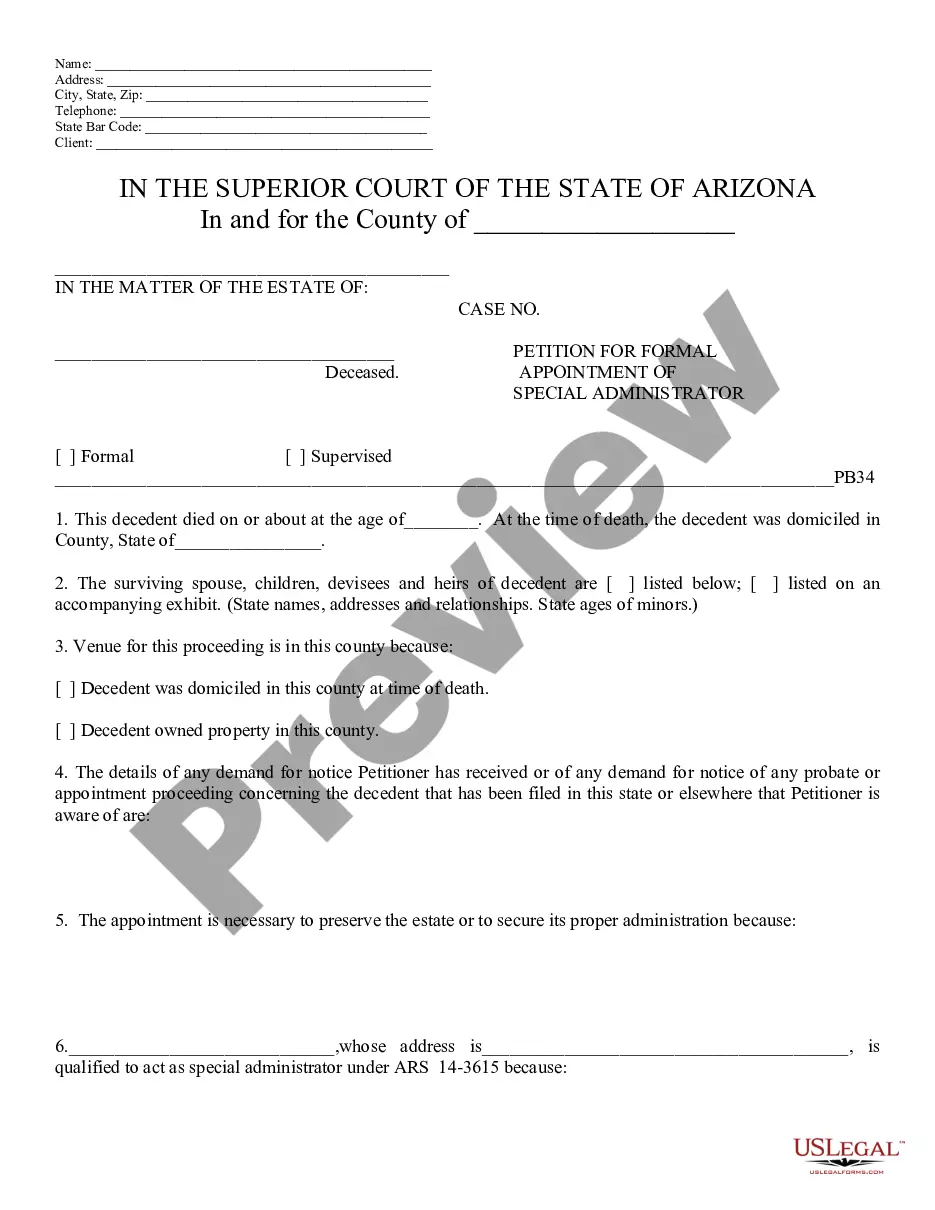
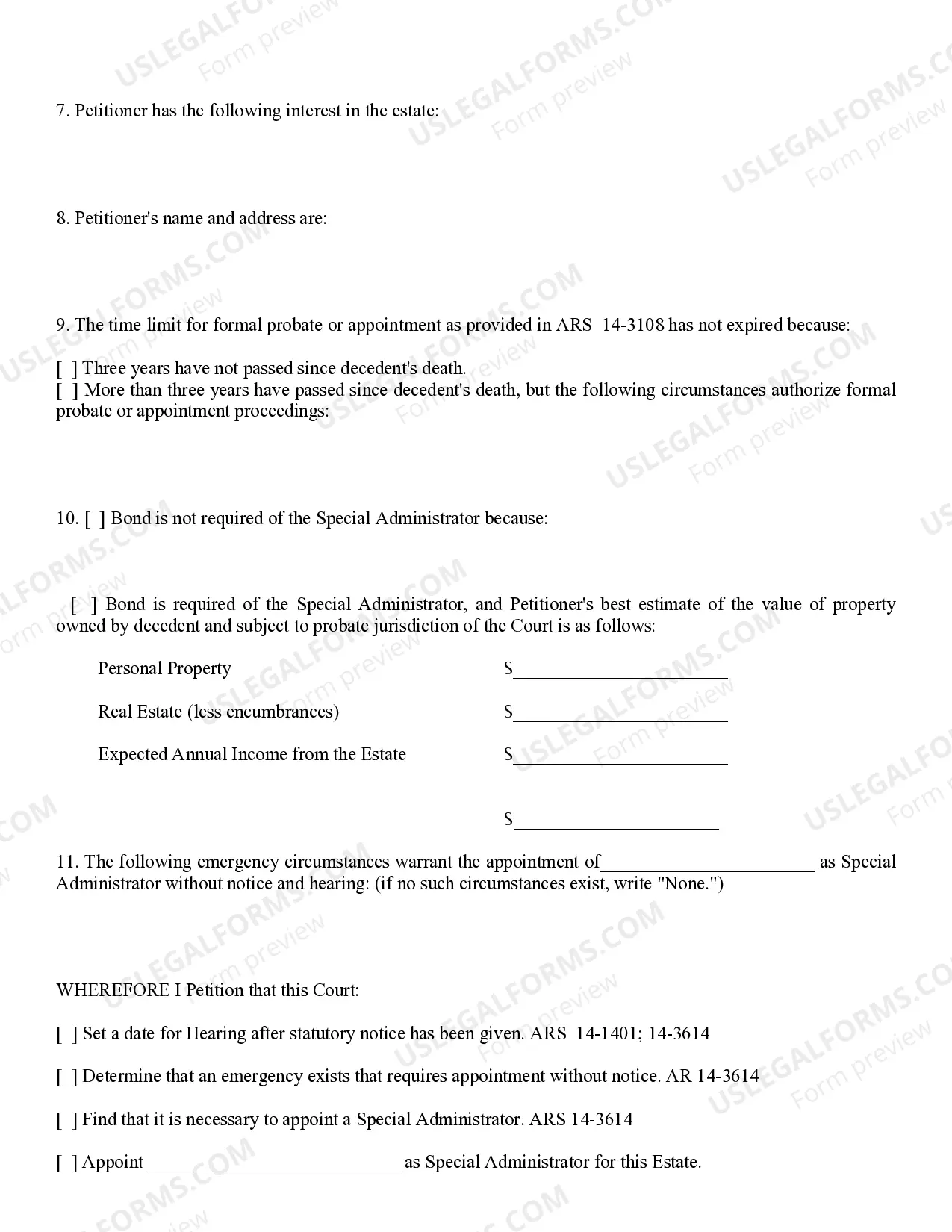
The Petition for Formal Appointment of Special Administrator is a legal document used in Arizona to request the appointment of a special administrator for an estate. This form is specifically designed for situations where the decedent's estate requires immediate management, especially when there may be urgent matters to address. Unlike other estate management forms, this petition allows for formal appointment without delay in certain emergency circumstances.
Key components of this form
- Personal information including name and address of the petitioner.
- Details about the deceased, including date of death and domicile.
- A list of surviving family members and their relationships to the decedent.
- Information regarding bond requirements related to estate management.
- Statement of necessity for the appointment and any emergency circumstances.
When to use this form
This form should be used when a decedent has passed away and there is a need for immediate estate administration. Scenarios include when there is property that needs to be managed quickly, when there are potential risks to the estate's value, or when there are disputes among heirs that need interim resolution. It is essential in cases where a regular executor cannot be appointed in a timely manner due to various circumstances.
Who this form is for
- Individuals who are named as petitioners in the estate of the deceased.
- Heirs or beneficiaries who need urgent control over estate matters.
- Legal representatives assisting clients in securing an appointment for estate management.
Steps to complete this form
- Fill in your personal information, including your contact details and state bar code if applicable.
- Provide details about the decedent, including when and where they died.
- List the surviving relatives along with their relationships and ages if minors are involved.
- Specify why a special administrator is necessary, including any urgent circumstances.
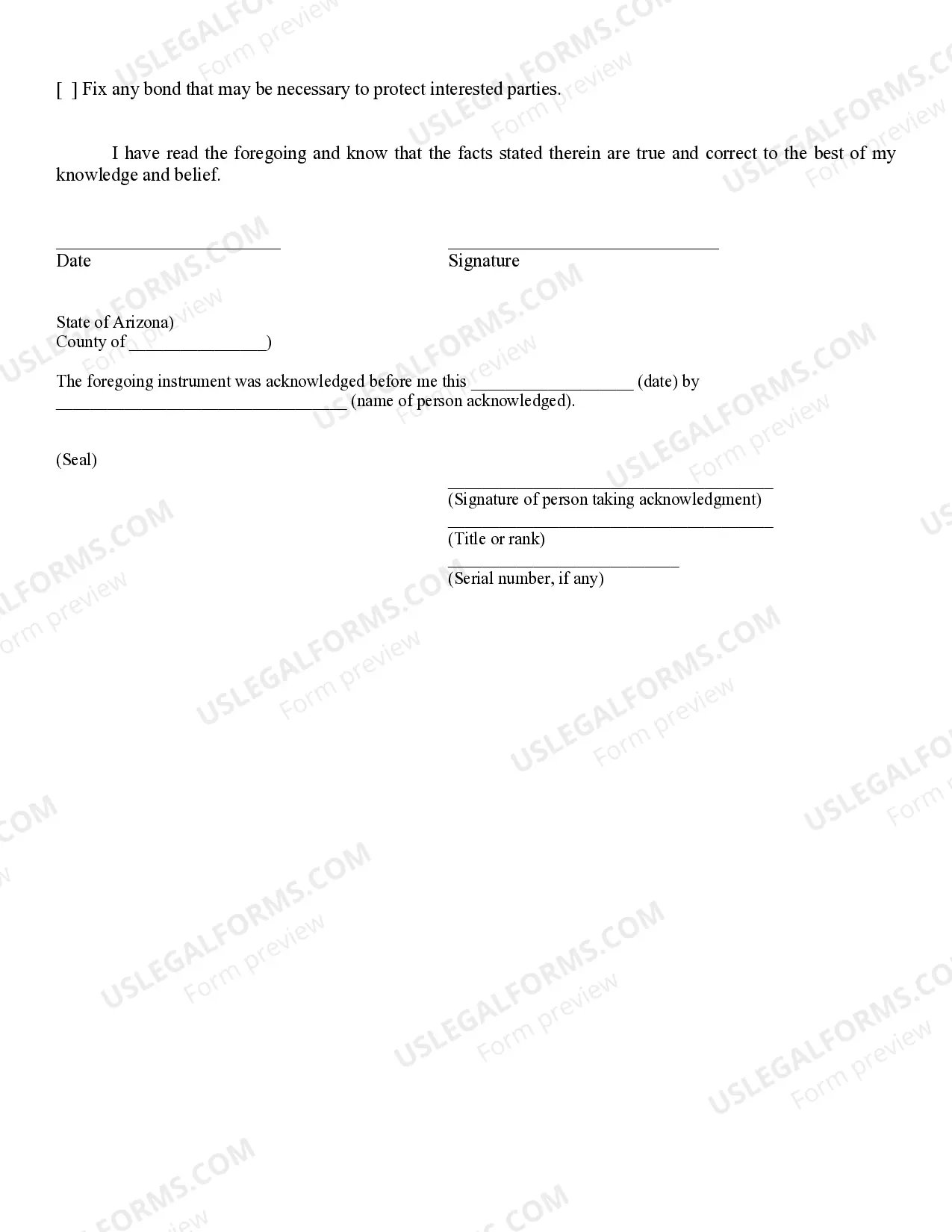
- Sign the form in front of a notary public if required, affirming the accuracy of the information provided.
Notarization requirements for this form
This document requires notarization to meet legal standards. US Legal Forms provides secure online notarization powered by Notarize, allowing you to complete the process through a verified video call, available 24/7.
Get your form ready online
Our built-in tools help you complete, sign, share, and store your documents in one place.
Make edits, fill in missing information, and update formatting in US Legal Forms—just like you would in MS Word.
Download a copy, print it, send it by email, or mail it via USPS—whatever works best for your next step.
Sign and collect signatures with our SignNow integration. Send to multiple recipients, set reminders, and more. Go Premium to unlock E-Sign.
If this form requires notarization, complete it online through a secure video call—no need to meet a notary in person or wait for an appointment.
We protect your documents and personal data by following strict security and privacy standards.

Make edits, fill in missing information, and update formatting in US Legal Forms—just like you would in MS Word.

Download a copy, print it, send it by email, or mail it via USPS—whatever works best for your next step.

Sign and collect signatures with our SignNow integration. Send to multiple recipients, set reminders, and more. Go Premium to unlock E-Sign.

If this form requires notarization, complete it online through a secure video call—no need to meet a notary in person or wait for an appointment.

We protect your documents and personal data by following strict security and privacy standards.
Mistakes to watch out for
- Failing to provide complete information about the deceased's estate.
- Not adequately stating the emergency circumstances requiring prompt appointment.
- Leaving out signatures or not notarizing the document when necessary.
Why use this form online
- Convenience of downloading and printing the form from home.
- Editable format allows for easy customization to fit specific needs.
- Reliability with templates created by licensed attorneys, ensuring compliance with legal standards.
Summary of main points
- The Petition for Formal Appointment of Special Administrator is critical for urgent estate management needs.
- Complete the form accurately and ensure notarization for legal efficacy.
- Utilize this form when immediate action is necessary to protect estate assets.
Looking for another form?
Form popularity
FAQ
A formal probate in Arizona is a legal process used to administer a deceased person's estate through the court system. It involves submitting an Arizona Petition for Formal Appointment of Special Administrator to ensure that the deceased's assets are distributed according to their will or state law. This process also involves appointing a special administrator to manage the estate's affairs during probate. Understanding this process is crucial for ensuring that all legal obligations are met and that the estate is handled properly.
To obtain letters of testamentary in Arizona, you first need to file a petition with the probate court. This petition includes the Arizona Petition for Formal Appointment of Special Administrator, which allows you to request the appointment of an executor for the estate. After filing, you must notify interested parties and attend a hearing where the court will review your petition. Once granted, the court will issue the letters, giving you the authority to manage the deceased’s assets and affairs.
To file probate in Arizona, you need to start by determining if the deceased left a valid will. If there is a will, you will file it with the probate court, along with a completed Arizona Petition for Formal Appointment of Special Administrator. This petition allows you to request the court to appoint someone to manage the estate. Ensure you gather all necessary documents and consider using platforms like USLegalForms to simplify the process.
To prove yourself as an executor of an estate without a will in Arizona, you'll need to file the appropriate documents with the court. Typically, this includes an Arizona Petition for Formal Appointment of Special Administrator, outlining your relationship to the deceased and your intention to manage the estate. Working with uslegalforms can simplify this process, providing the necessary templates and guidance to ensure compliance.
A letter of appointment of personal representative is a legal document issued by the court, granting authority to manage an estate. This letter confirms the person’s role and responsibilities regarding the decedent's assets and liabilities. Receiving this document often follows the Arizona Petition for Formal Appointment of Special Administrator, ensuring that the personal representative can act on behalf of the estate.
When a person dies without a will in Arizona, the state's intestacy laws dictate inheritance. Typically, the surviving spouse and children share the estate according to a structured formula. Understanding this process can be crucial, and services like uslegalforms can help you navigate the nuances involved in estate management.
Arizona law outlines a specific priority for appointing a personal representative, starting with the spouse, then adult children, and other close relatives. In cases where no family members are willing, the court may appoint a trusted friend or a professional. Utilizing the Arizona Petition for Formal Appointment of Special Administrator can streamline this process, ensuring that the right individual is appointed efficiently.
In Arizona, if a person dies without a will, you can seek appointment as an executor through the court. The process involves filing an Arizona Petition for Formal Appointment of Special Administrator or a similar petition for a personal representative. This ensures that someone is assigned to handle the estate's affairs, even in the absence of a will.
A special administrator in Arizona is a person appointed by the court to manage the estate when there is an urgent need. This role is essential in situations where there is no executor or the existing executor cannot act promptly. The Arizona Petition for Formal Appointment of Special Administrator initiates this process, allowing immediate actions to protect the estate's assets.