Lease of Patented Machinery with License Agreement
About this form
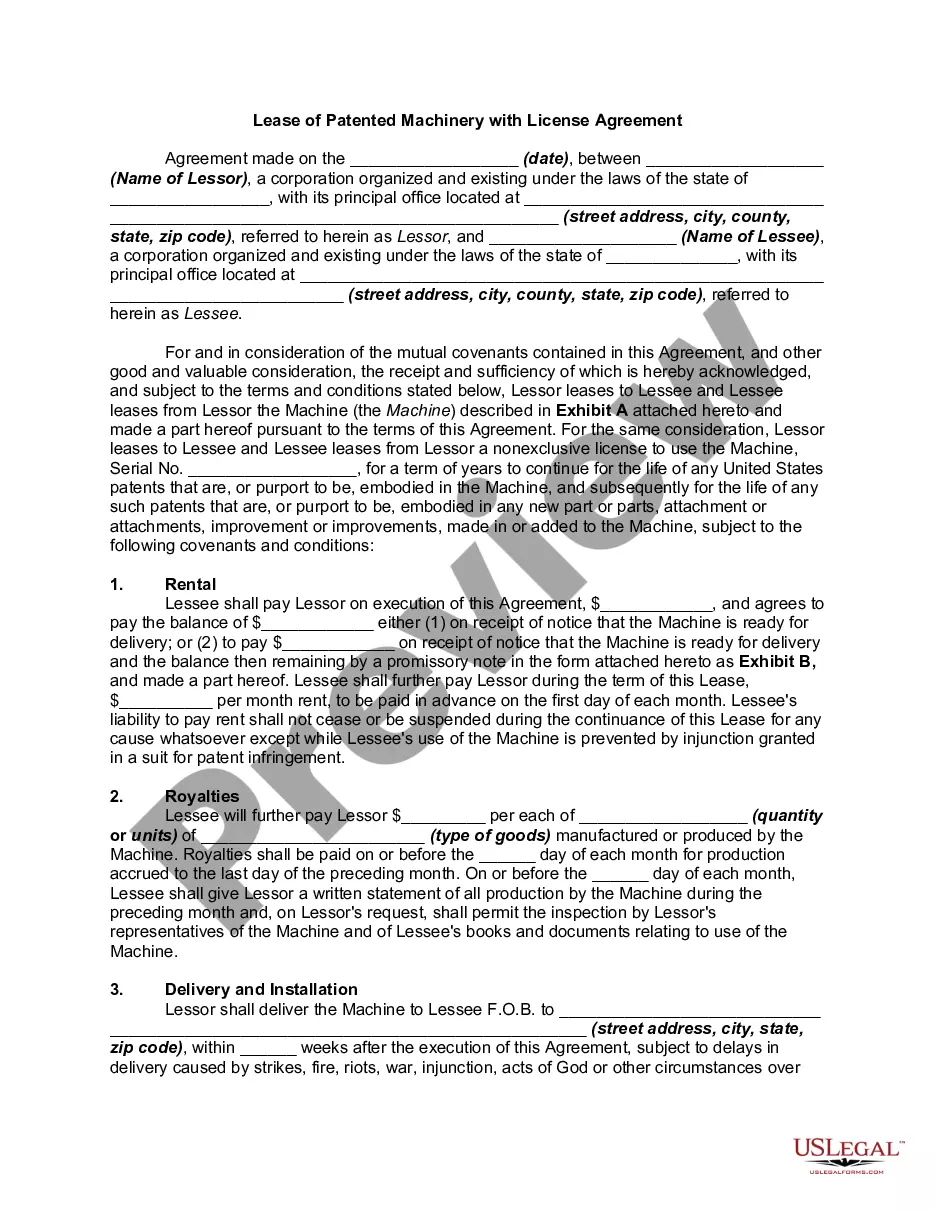
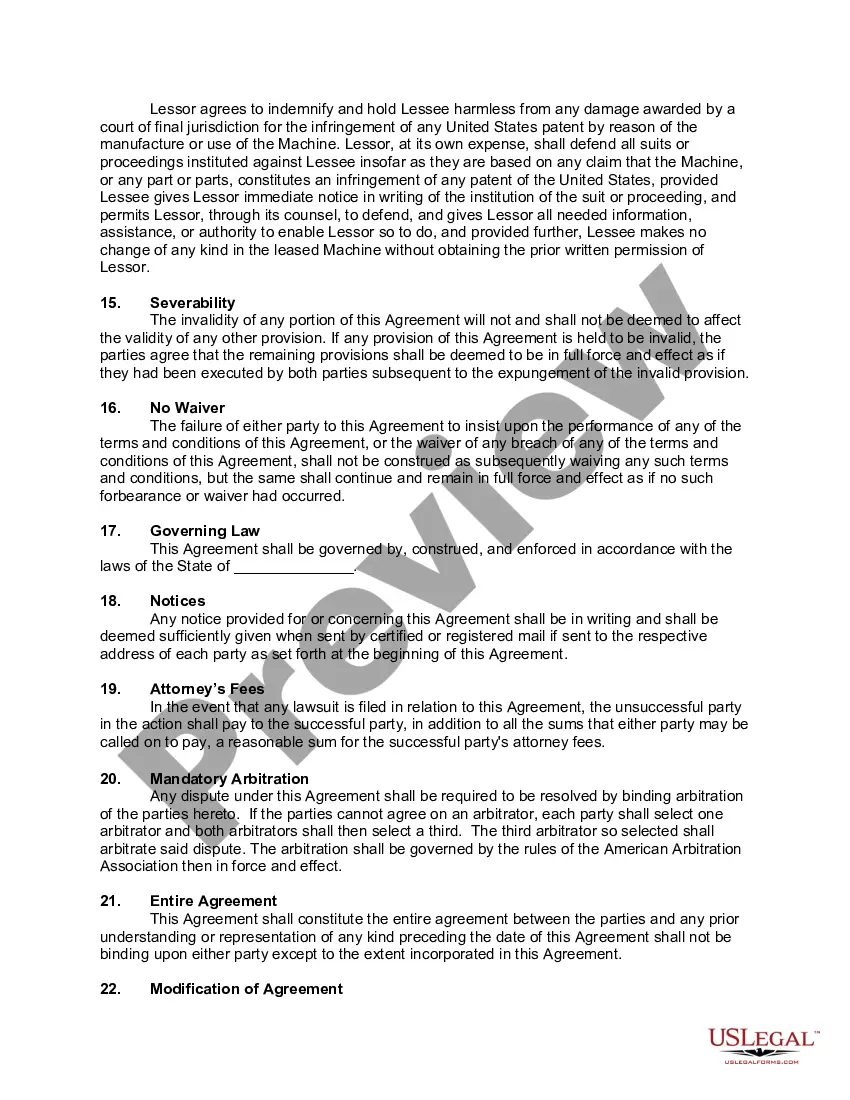
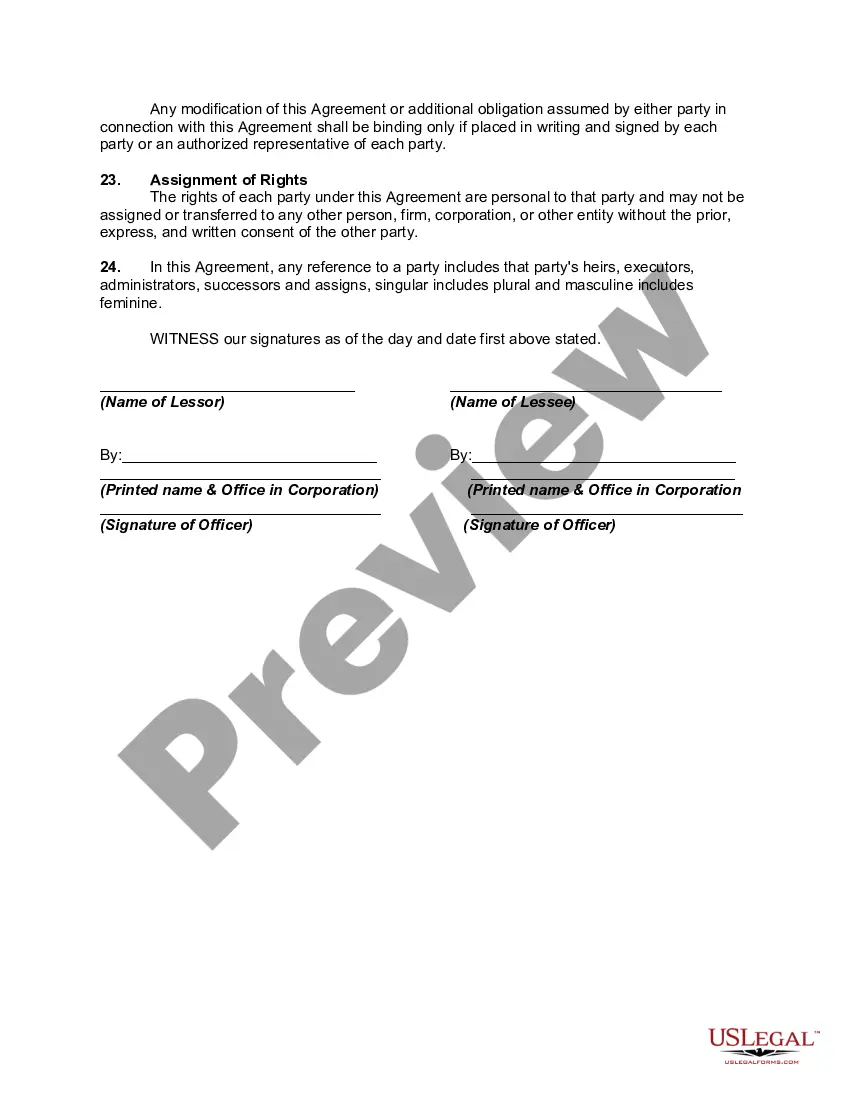
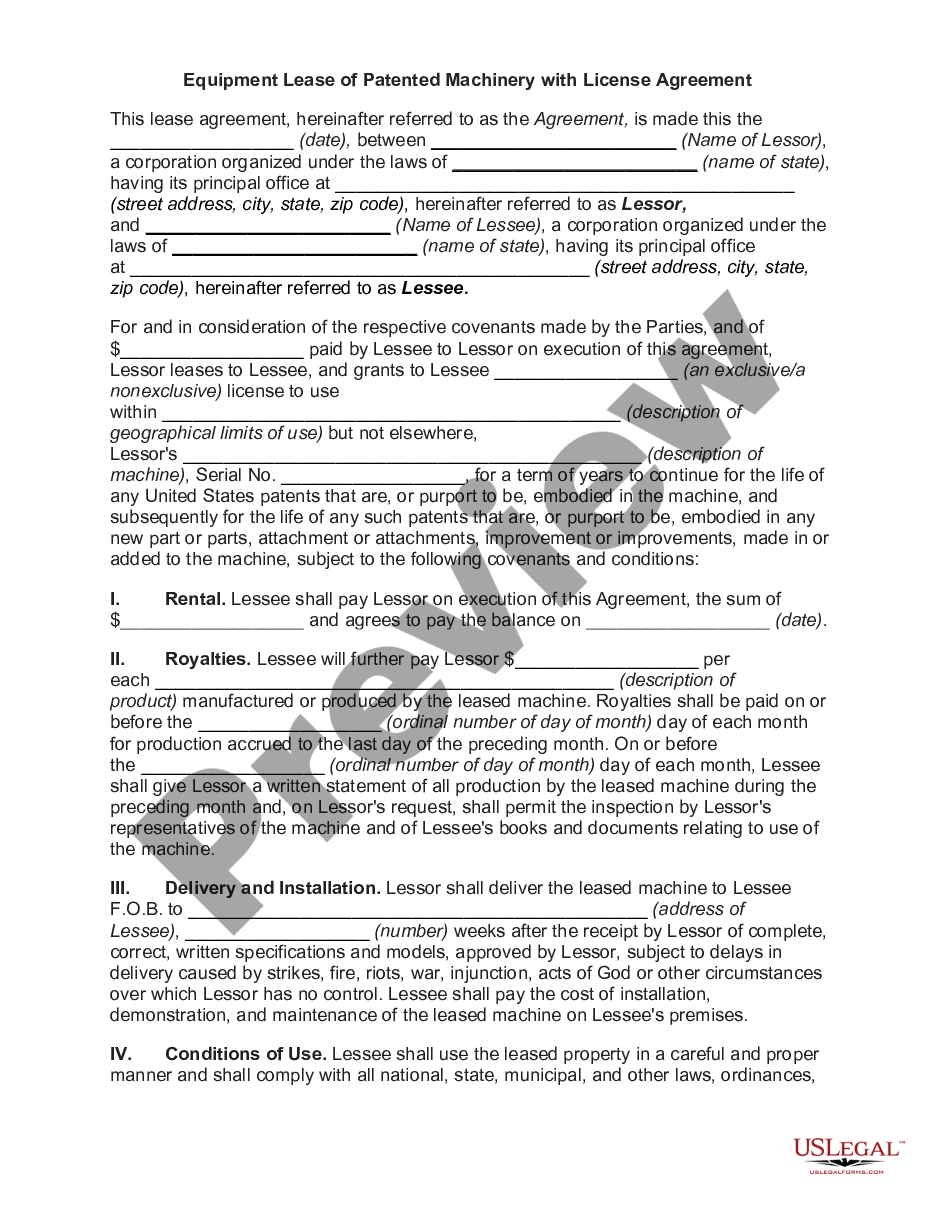
This Lease of Patented Machinery with License Agreement is a legal document that outlines the terms under which one party (the Lessor) leases patented machinery to another party (the Lessee) while granting them a nonexclusive license to use the machinery. This form ensures that both parties understand their rights and responsibilities regarding the usage of the patented machine, which differs from general machinery lease agreements by incorporating specific intellectual property rights associated with the invention.
What’s included in this form
- Identifies the parties involved in the lease agreement.
- Details the description of the patented machinery and its associated patent rights.
- Outlines rental payments and royalties based on production.
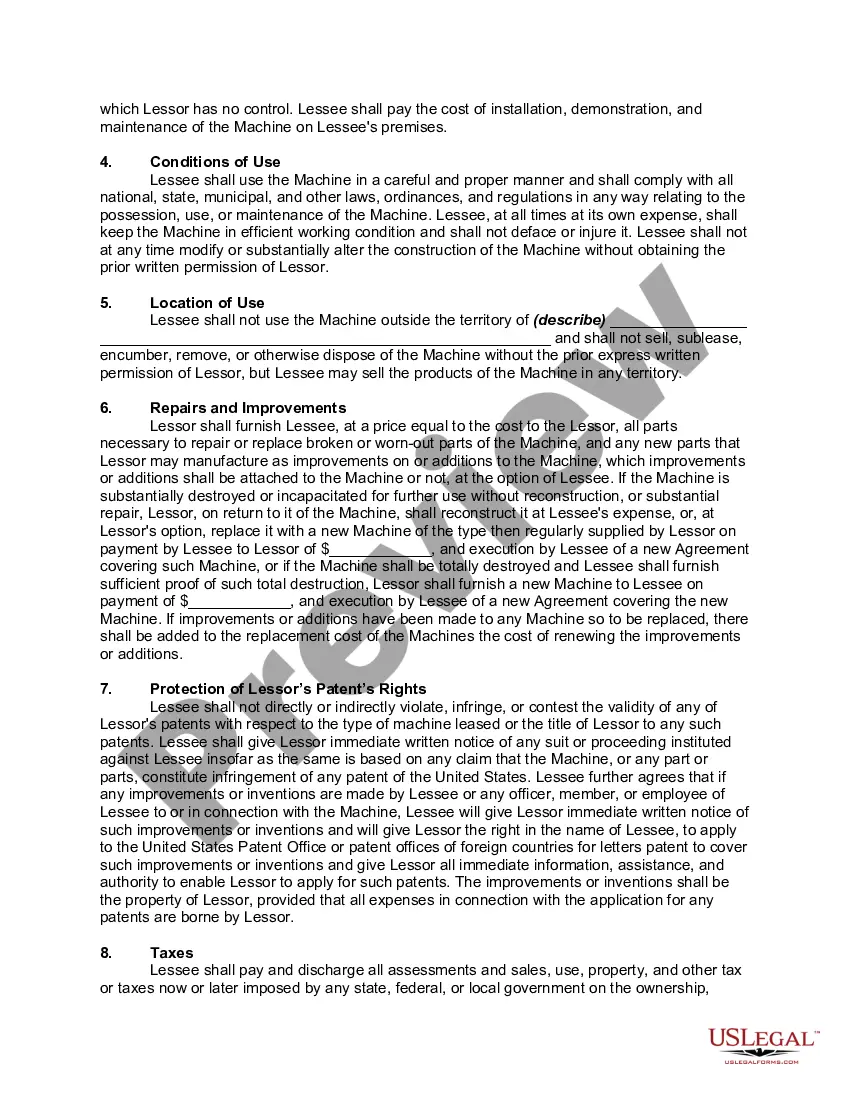
- Describes conditions regarding the maintenance and use of the machinery.
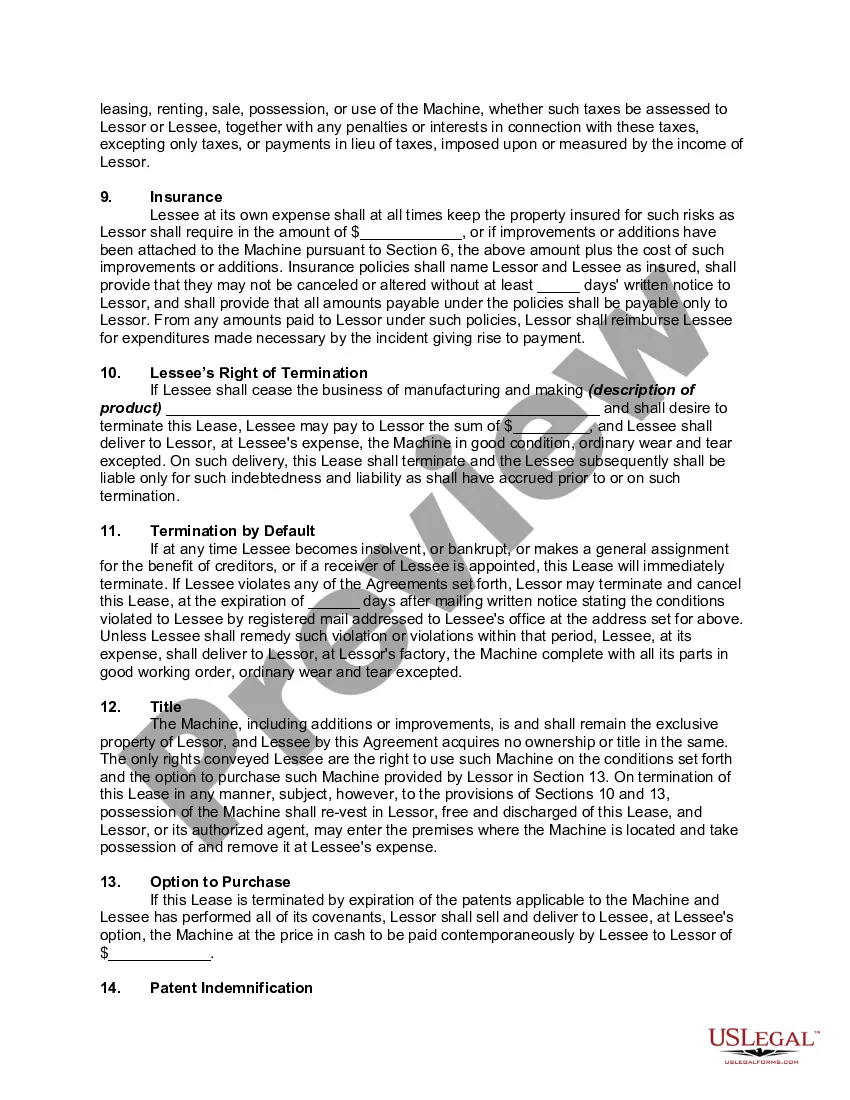
- Specifies terms for termination, repairs, and insurance requirements.
- Includes clauses for indemnification and patent rights protection.
When to use this form
This form should be used when a business entity (Lessee) wishes to lease patented machinery from another entity (Lessor) while also obtaining the right to use the machinery for manufacturing purposes. It is particularly relevant in industries where innovation and intellectual property play critical roles, such as manufacturing, technology, or pharmaceuticals, where the use of patented machinery is integral to production processes.
Who can use this document
This form is ideal for:
- Corporations or businesses that require access to patented machinery for production.
- Inventors or companies that own patents and wish to lease their machinery to others.
- Businesses looking to establish clear legal guidelines around the use of patented inventions.
Instructions for completing this form
- Identify the parties involved by filling in the names and addresses of the Lessor and Lessee.
- Specify the date of the agreement and describe the patented machinery in detail, including serial numbers.
- Detail the financial arrangements regarding rental payments and royalties as agreed upon.
- Include any necessary terms about maintenance, insurance, and delivery logistics.
- Ensure all parties sign and date the agreement to validate it.
Notarization requirements for this form
In most cases, this form does not require notarization. However, some jurisdictions or signing circumstances might. US Legal Forms offers online notarization powered by Notarize, accessible 24/7 for a quick, remote process.
Get your form ready online
Our built-in tools help you complete, sign, share, and store your documents in one place.
Make edits, fill in missing information, and update formatting in US Legal Forms—just like you would in MS Word.
Download a copy, print it, send it by email, or mail it via USPS—whatever works best for your next step.
Sign and collect signatures with our SignNow integration. Send to multiple recipients, set reminders, and more. Go Premium to unlock E-Sign.
If this form requires notarization, complete it online through a secure video call—no need to meet a notary in person or wait for an appointment.
We protect your documents and personal data by following strict security and privacy standards.

Make edits, fill in missing information, and update formatting in US Legal Forms—just like you would in MS Word.

Download a copy, print it, send it by email, or mail it via USPS—whatever works best for your next step.

Sign and collect signatures with our SignNow integration. Send to multiple recipients, set reminders, and more. Go Premium to unlock E-Sign.

If this form requires notarization, complete it online through a secure video call—no need to meet a notary in person or wait for an appointment.

We protect your documents and personal data by following strict security and privacy standards.
Common mistakes to avoid
- Failing to clearly define the patented machinery and its specifications.
- Omitting key financial terms, such as the amount of rent and royalties.
- Not including all required signatures from the authorized representatives.
- Ignoring local legal requirements that might affect the lease agreement.
Why use this form online
- Convenient access to a professionally drafted legal form tailored to leasing patented machinery.
- Editable templates that allow users to customize the agreement to their specific situation.
- Quick download enables faster contract finalization between parties.
- Support and guidance from licensed attorneys ensure ease of use and legal conformity.
Legal use & context
- This form facilitates legally binding agreements between the lessor and lessee regarding patented machinery.
- Ensures both parties are aware of intellectual property protections and obligations.
- Defines the terms for usage, maintenance, and royalties related to the patented machinery.
What to keep in mind
- The Lease of Patented Machinery with License Agreement is essential for businesses leasing patented equipment.
- Clear terms regarding payments, maintenance, and patent rights can prevent future disputes.
- Both parties need to understand their rights and obligations as outlined in the agreement.
Looking for another form?

Form popularity
FAQ
A license agreement is a business contract between two parties. The licensor (the seller of the license) owns the asset being licensed and the licensee (the buyer) pays for the right to use the license. The licensee pays royalties to the owner in exchange for the right to sell the product or use the technology.
An example of a licensing agreement is a contract between the copyright holders of software and another company, allowing the latter to use the computer software for their daily business operations.
An example of a licensing agreement is a contract between the copyright holders of software and another company, allowing the latter to use the computer software for their daily business operations.
Exclusive or non-exclusive. In an exclusive license, the intellectual property holder is licensing the work only to one person, for that particular use/territory. Territory. Use. Attribution. Derivative works. Confidentiality. Time frame. Termination.
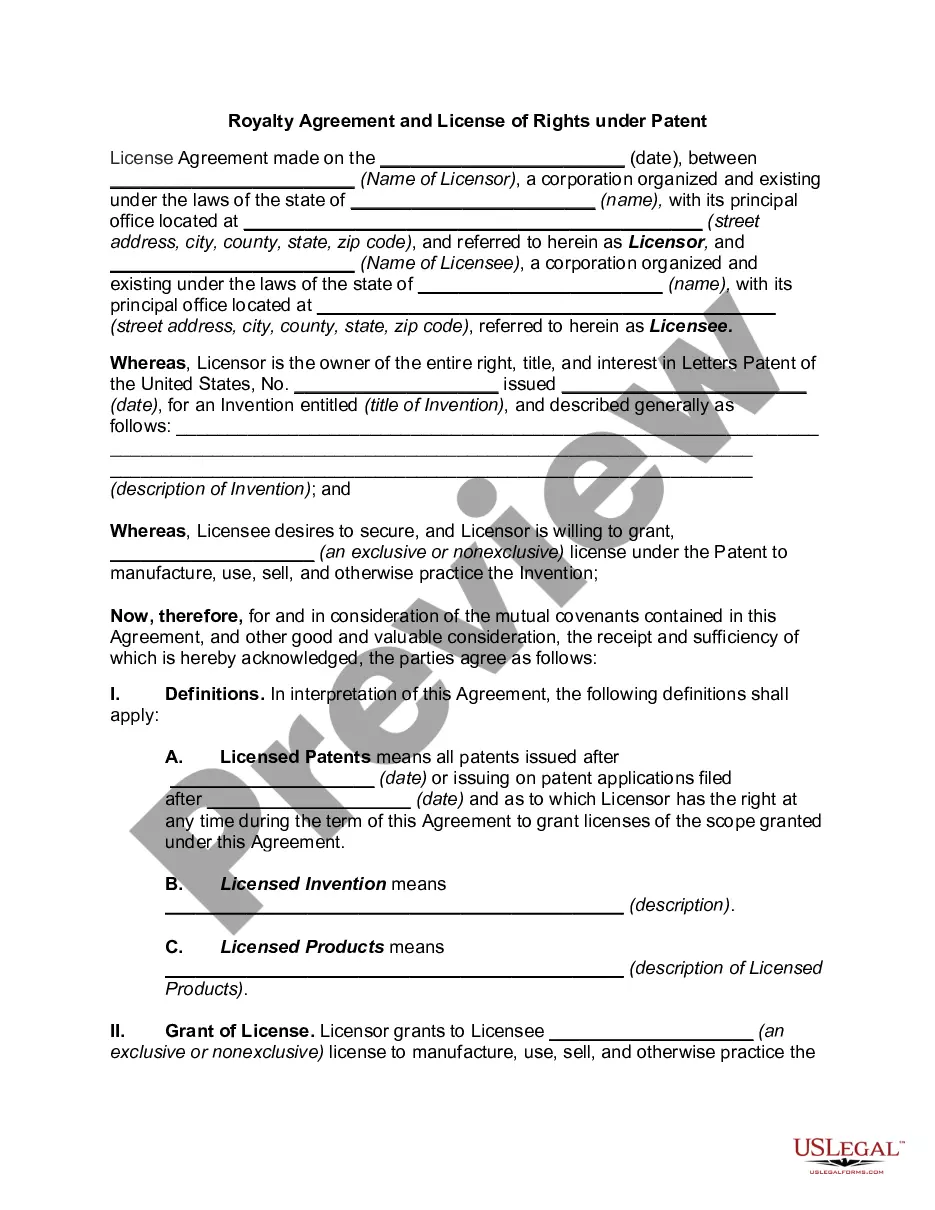
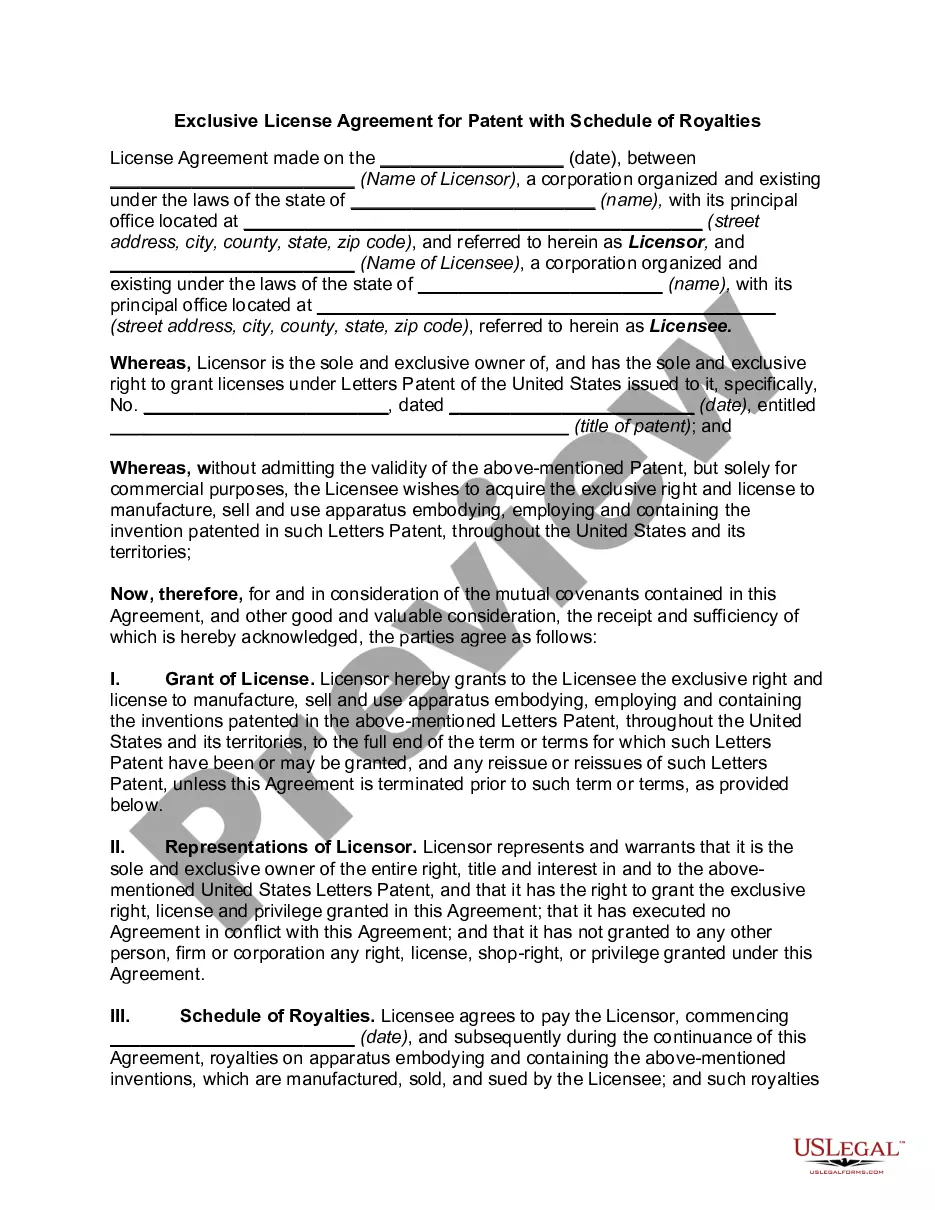
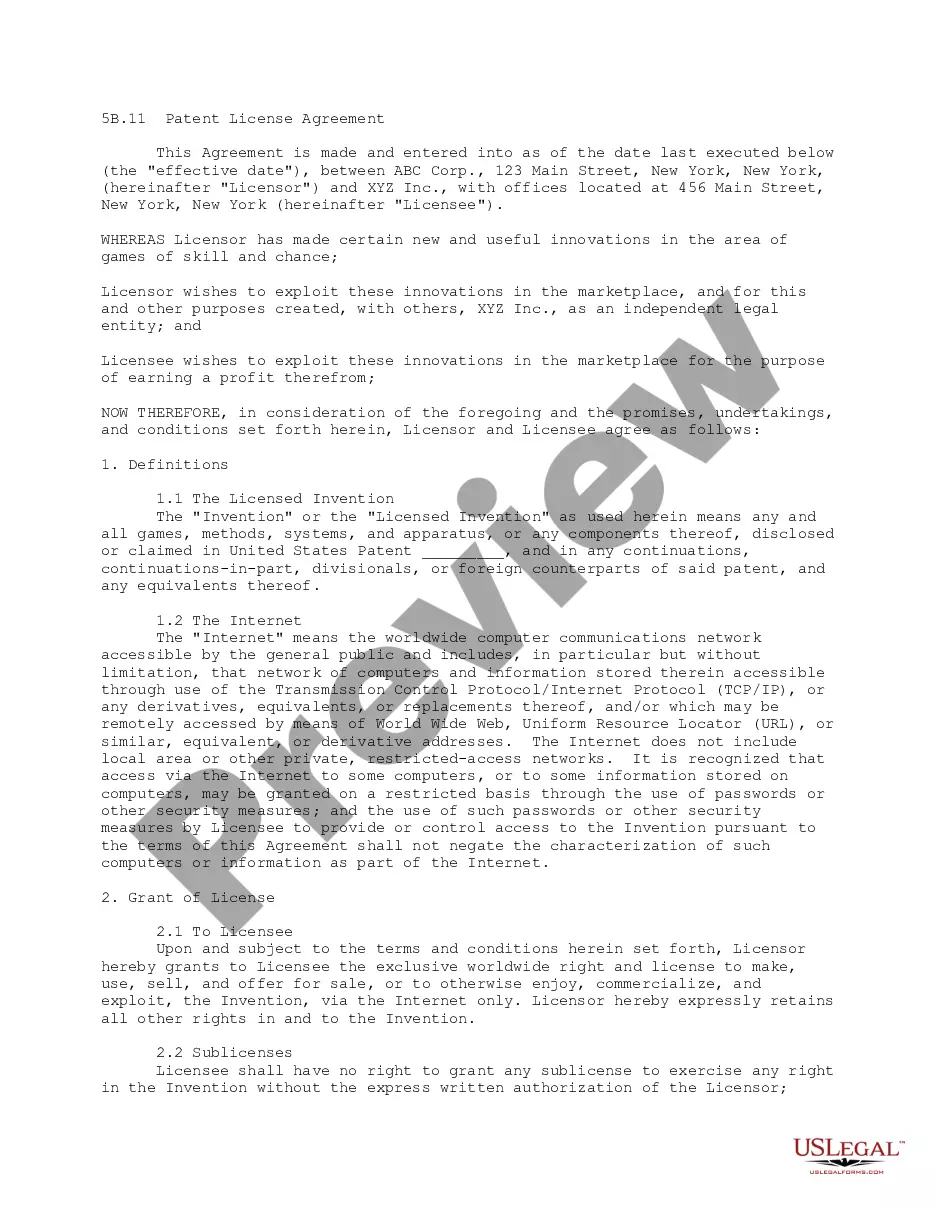
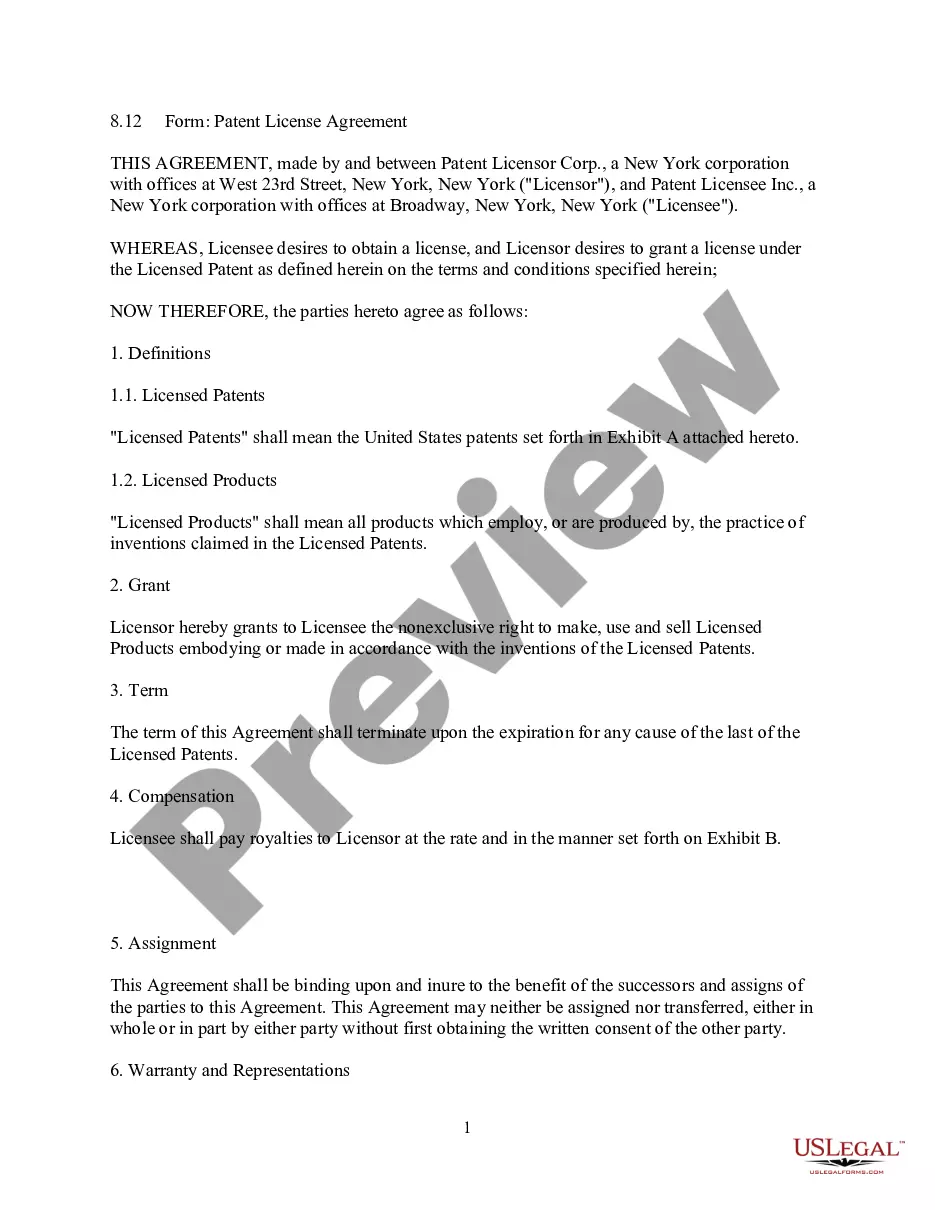
A patent license agreement typically grants a licensee exclusive rights to manufacture, sell, and use a patented invention, subjected to certain terms. A patent license agreement will also define the amount of royalties the licensee owes the licensor.
What is Patent Licensing? When a patent is licensed, an agreement is made between the patent owner (or the licensor) and the person or company that wants to use and benefit from the patent (the licensee). It permits the licensee to make or sell the product, design, or technology in the patent.
The 3 P's of collegiate licensing are protection, promotion, and profit.
Download a template for a licensing agreement. Choose your role as the licensor or licensee. Define the license(s) in the agreement. Decide whether the license is exclusive or not. Settle the matter of fees and payment schedule. Add a renewal date and rules.
Locate Manufacturers. Identify potential licensees. Sign a Confidentiality Agreement. Ask potential licensees to sign a confidentiality agreement to protect rights to your intellectual property. Negotiate Patent License. Complete a Patent License Agreement.