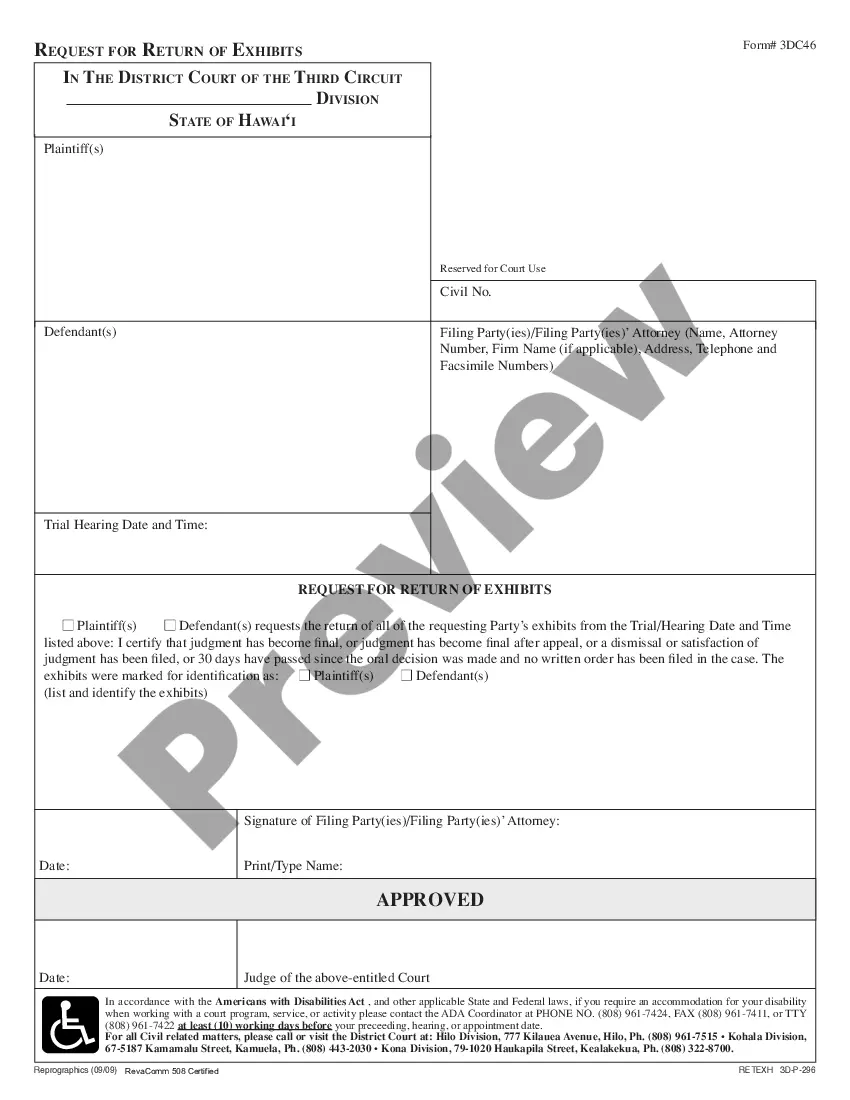
Exclusive License Agreement for Patent with Schedule of Royalties
What this document covers
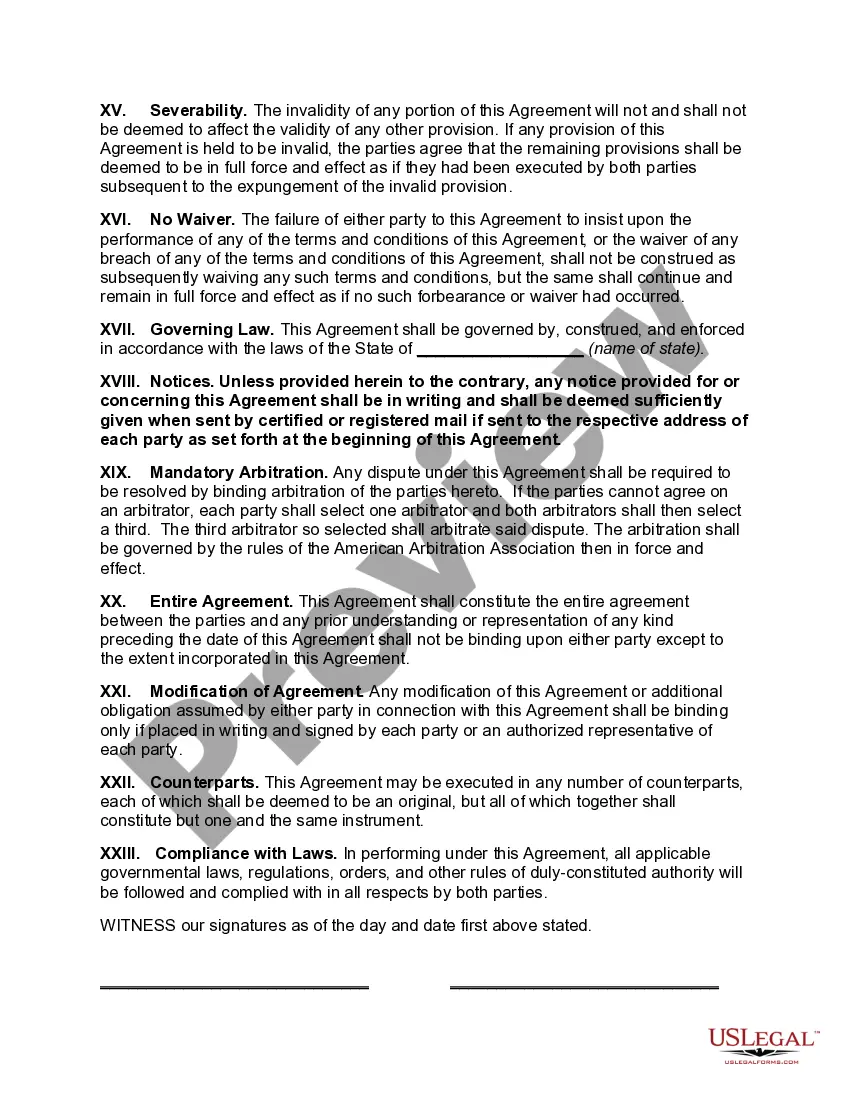
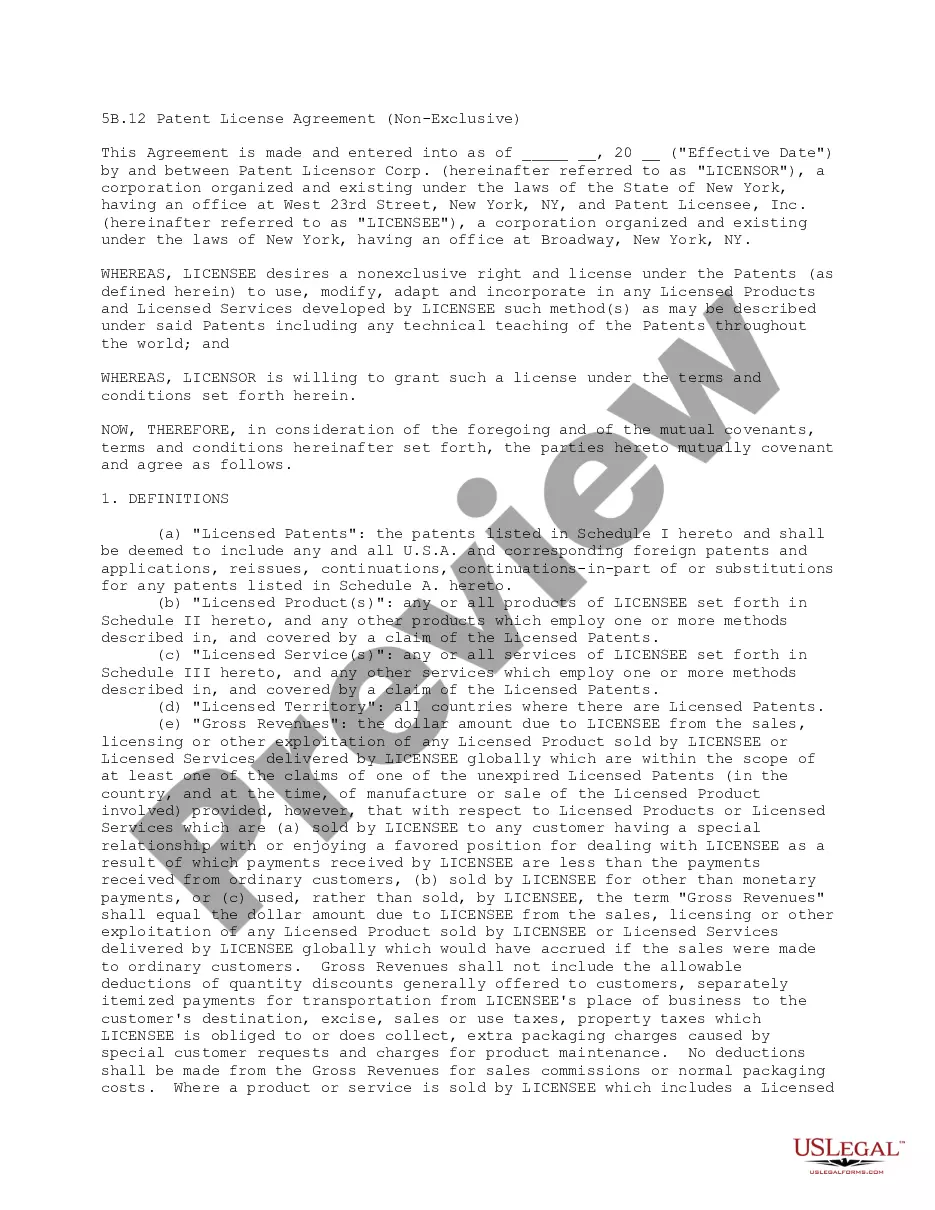
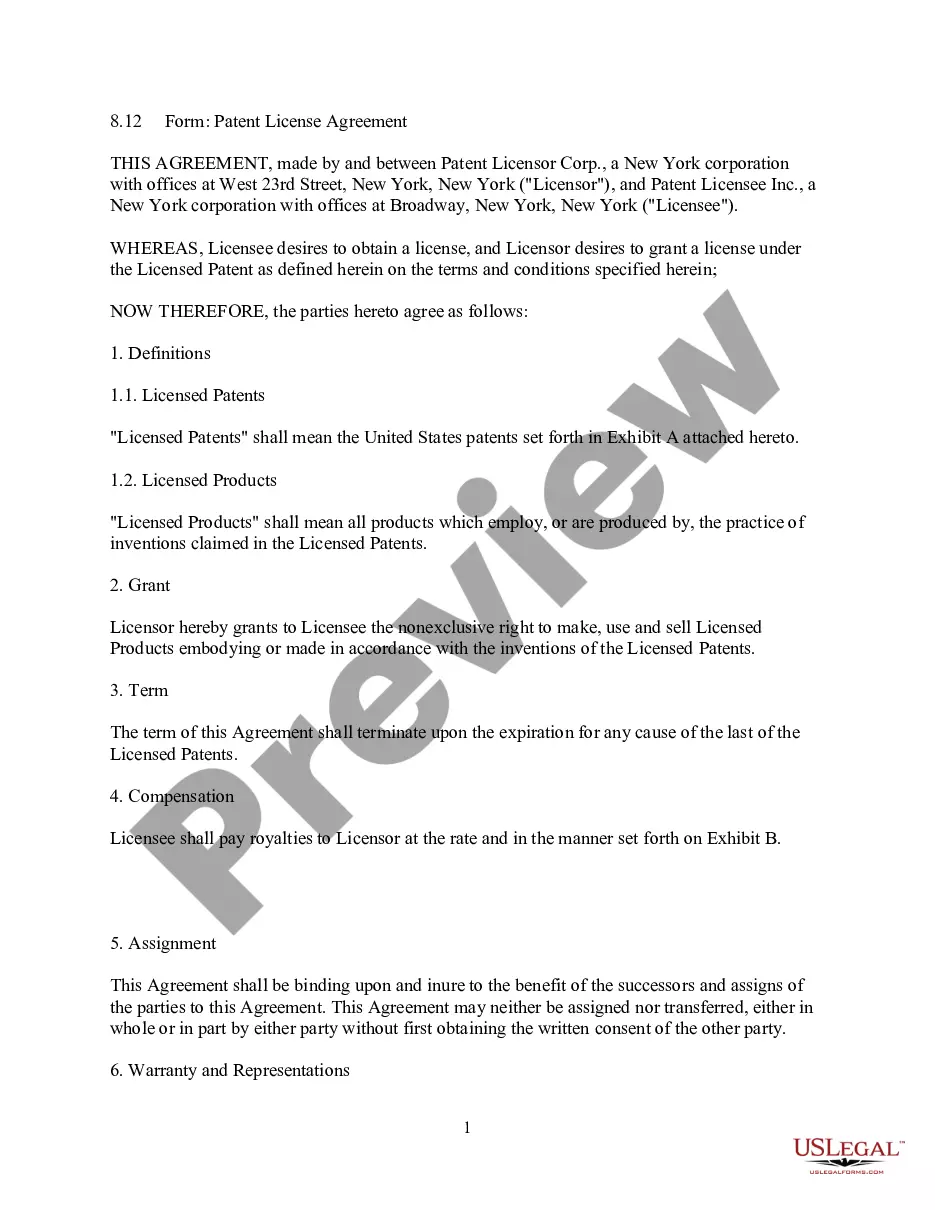
The Exclusive License Agreement for Patent with Schedule of Royalties is a legal document that grants a licensee the exclusive rights to manufacture, sell, and use a patented invention. This form is specifically designed for situations where a licensor holds a patent and wishes to permit another party, the licensee, to commercially exploit that patent while outlining the terms and conditions, including a schedule for royalty payments. It is distinct from general licensing agreements due to its focus on exclusivity and royalty structures.
What’s included in this form
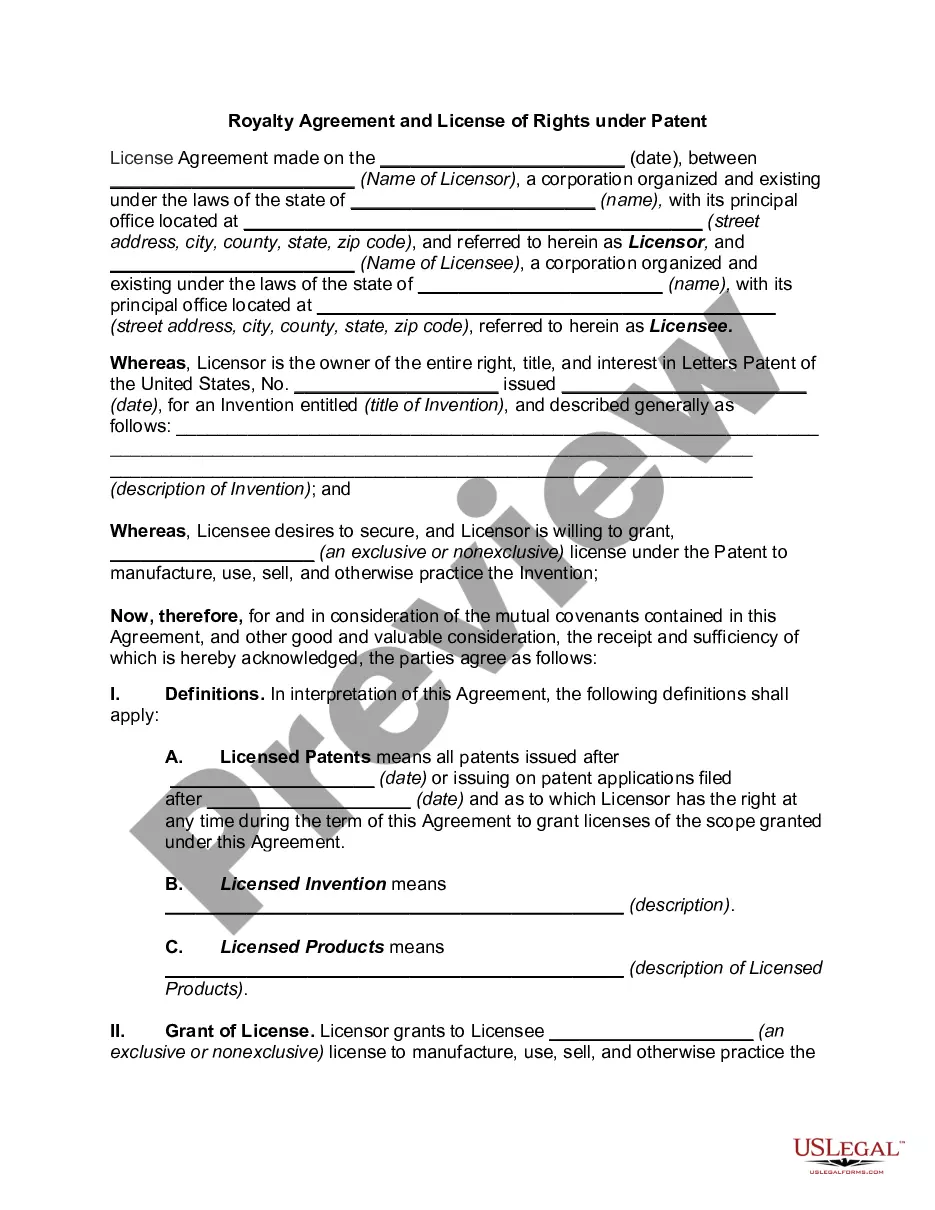
- Date of the agreement and details about the licensor and licensee.
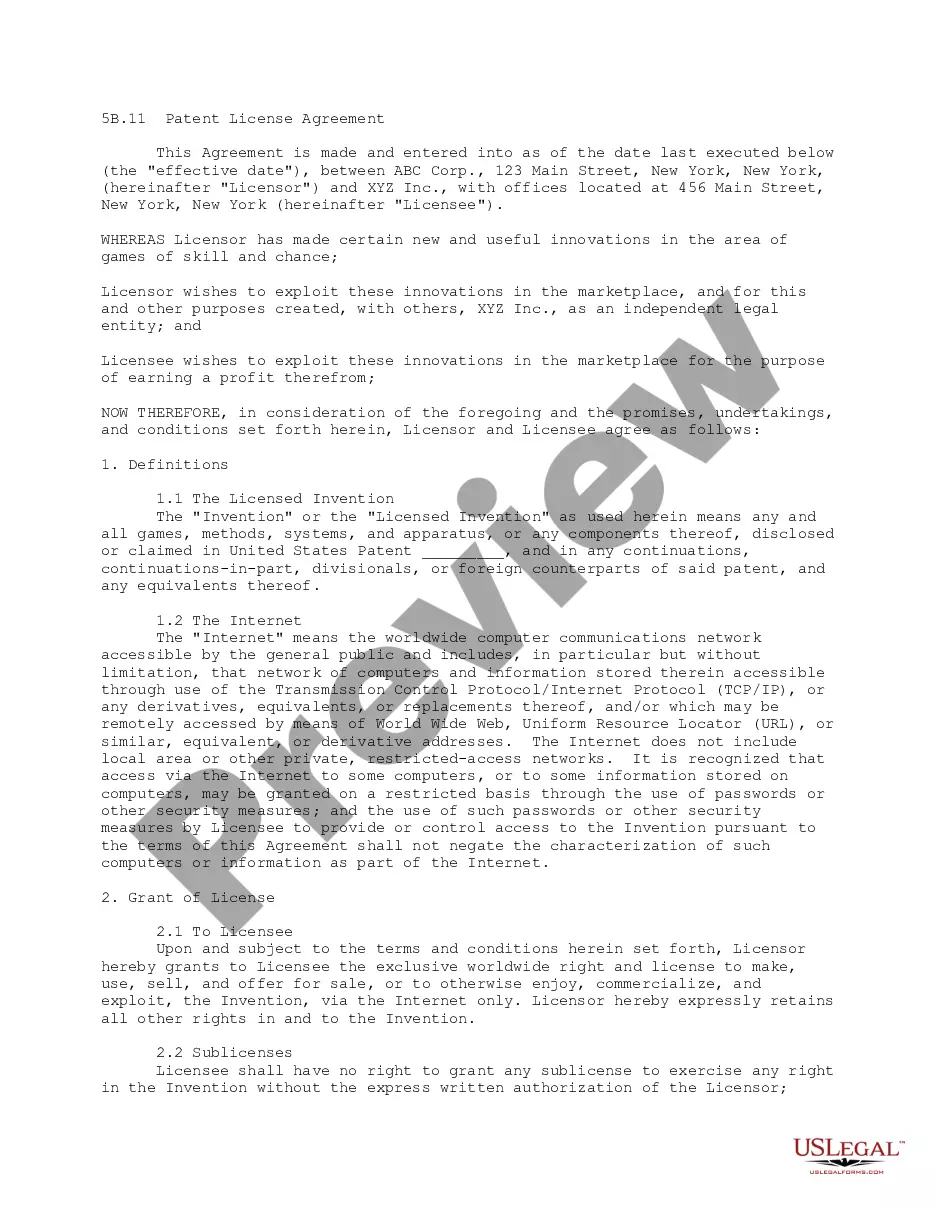
- Grant of License outlining the rights of the licensee.
- Representations of the licensor regarding ownership and rights to the patent.
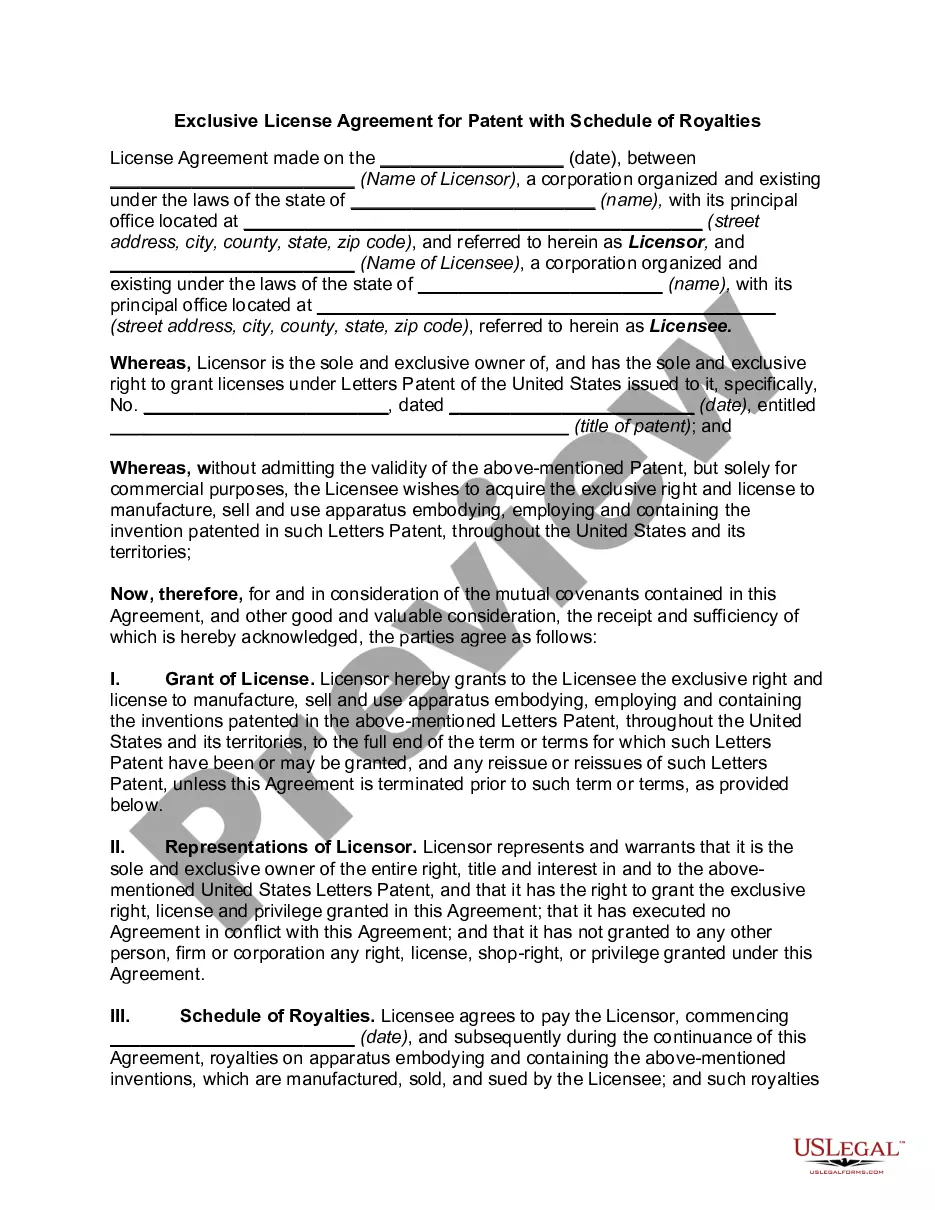
- Schedule of Royalties detailing payment structures based on sales.
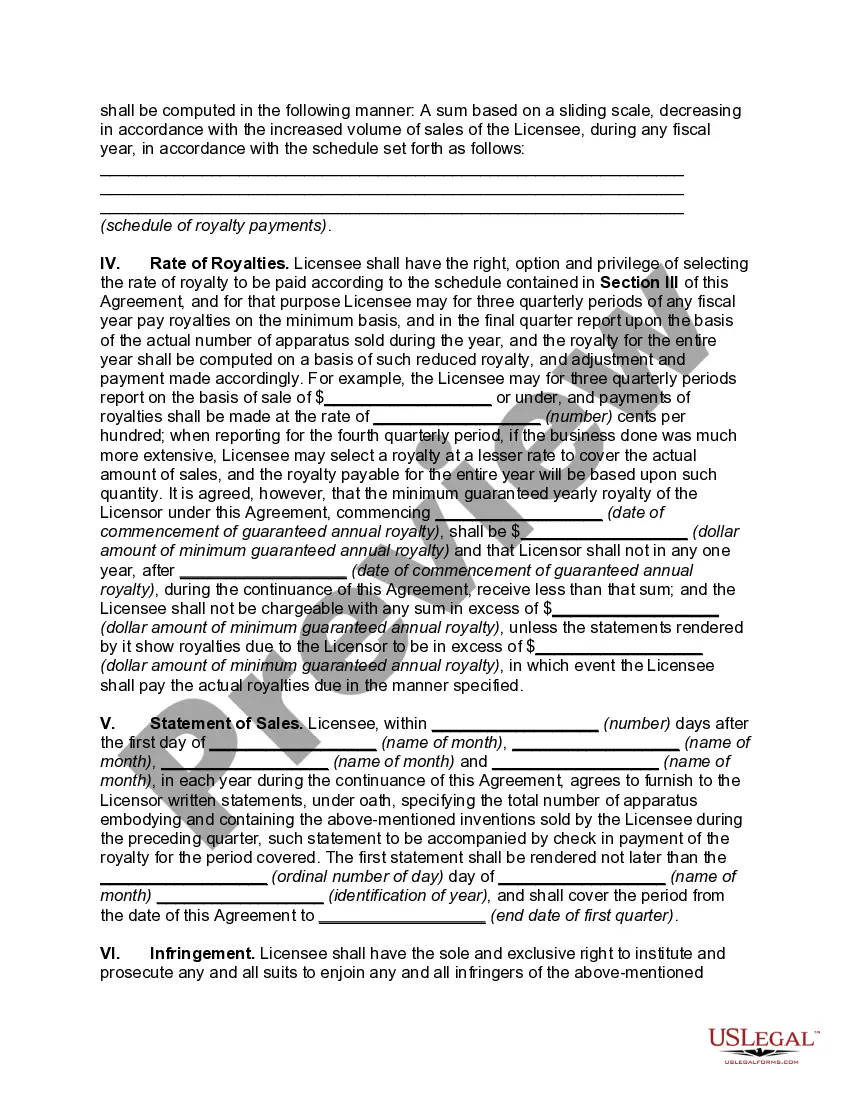
- Terms regarding infringement and the process for enforcing patent rights.
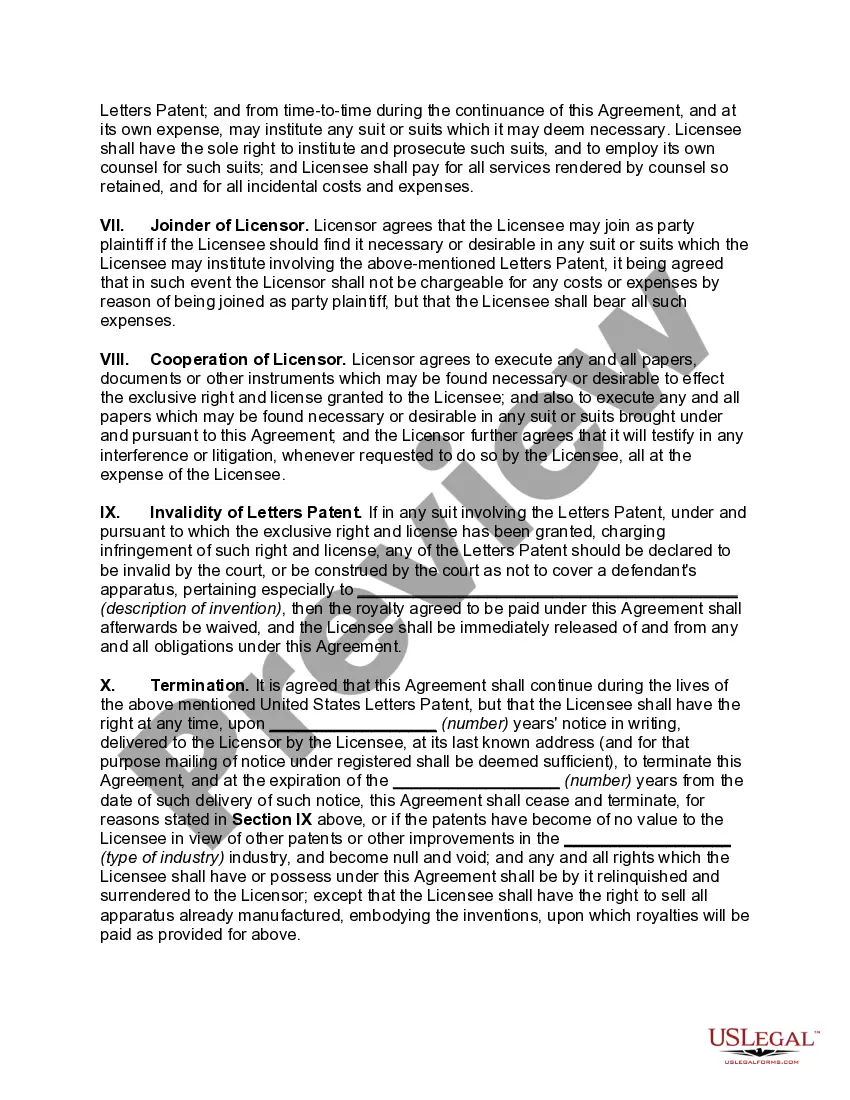
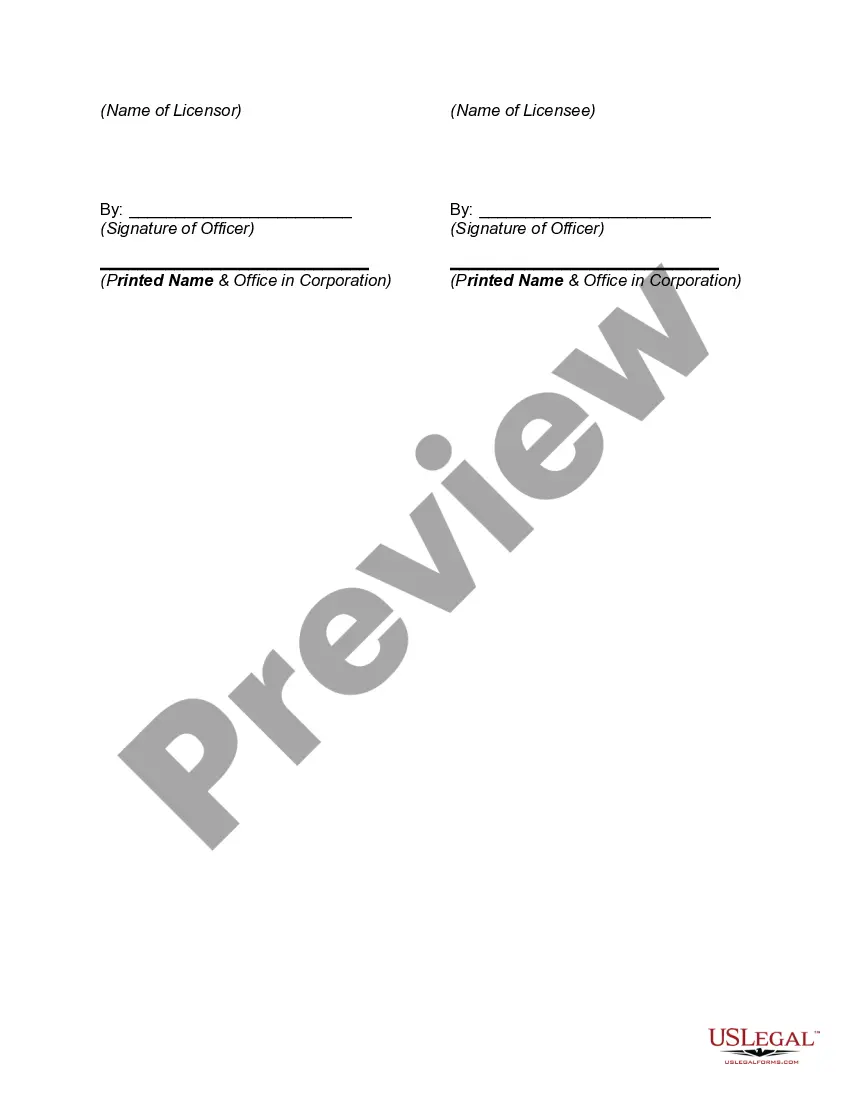
- Termination conditions specifying how either party can end the agreement.
When to use this form
This form is appropriate when a patent holder (licensor) wishes to grant exclusive rights to another party (licensee) to utilize their patented invention. It is commonly used in industries where innovation drives competition, allowing companies to sell products derived from patented technologies. This agreement is essential when both parties want to ensure clear terms regarding royalties and rights, especially in contexts involving significant commercialization efforts.
Who this form is for
- Inventors or patent holders wishing to license their patents to others.
- Businesses seeking exclusive rights to manufacture and sell patented inventions.
- Legal professionals assisting clients with patent licensing agreements.
- Corporations involved in partnerships regarding patented technology.
Steps to complete this form
- Identify the parties involved, including the licensor and the licensee.
- Fill in the patent details, including the patent number and title.
- Specify the schedule of royalties, outlining the payment terms.
- Determine and include the rights granted to the licensee in the agreement.
- Sign and date the agreement, ensuring all parties have copies for their records.
Does this document require notarization?
This form does not typically require notarization to be legally valid. However, some jurisdictions or document types may still require it. US Legal Forms provides secure online notarization powered by Notarize, available 24/7 for added convenience.
Get your form ready online
Our built-in tools help you complete, sign, share, and store your documents in one place.
Make edits, fill in missing information, and update formatting in US Legal Forms—just like you would in MS Word.
Download a copy, print it, send it by email, or mail it via USPS—whatever works best for your next step.
Sign and collect signatures with our SignNow integration. Send to multiple recipients, set reminders, and more. Go Premium to unlock E-Sign.
If this form requires notarization, complete it online through a secure video call—no need to meet a notary in person or wait for an appointment.
We protect your documents and personal data by following strict security and privacy standards.

Make edits, fill in missing information, and update formatting in US Legal Forms—just like you would in MS Word.

Download a copy, print it, send it by email, or mail it via USPS—whatever works best for your next step.

Sign and collect signatures with our SignNow integration. Send to multiple recipients, set reminders, and more. Go Premium to unlock E-Sign.

If this form requires notarization, complete it online through a secure video call—no need to meet a notary in person or wait for an appointment.

We protect your documents and personal data by following strict security and privacy standards.
Mistakes to watch out for
- Failing to clearly define royalty payment structures, leading to future disputes.
- Not including specific clauses for termination, resulting in prolonged obligations.
- Neglecting to update patent details, which may lead to enforcement issues.
- Not having both parties sign the agreement, affecting its legality.
Benefits of completing this form online
- Convenient access from anywhere, allowing quick and efficient completion.
- Editable templates that can be customized to fit specific licensing agreements.
- Reliability, with forms drafted by licensed attorneys ensuring legal compliance.
- Instant download capability for immediate use without waiting for mail or print services.
Legal use & context
- This agreement establishes legal rights and obligations concerning patent use.
- It is enforceable in court, providing a framework for resolving disputes.
- The terms must meet the legal standards of the jurisdiction where the patent is filed.
Key takeaways
- The Exclusive License Agreement grants exclusive rights to a patented invention.
- Royalty clauses must be clear and mutually agreed upon by both parties.
- Parties involved must understand their rights, obligations, and any potential legal ramifications.
Looking for another form?
Form popularity
FAQ
Royalties are usage-based payments from one party (a licensee) to another (the licensor). Licensing fees are paid as part of an agreement that defines the terms under which a tangible property is licensed for use by one party (a licensor) to another (the licensee).
Locate Manufacturers. Identify potential licensees. Sign a Confidentiality Agreement. Ask potential licensees to sign a confidentiality agreement to protect rights to your intellectual property. Negotiate Patent License. Complete a Patent License Agreement.
The royalties typically are a percentage of the gross sales of the products using your patent. Although each situation must be evaluated separately, royalties from patent licenses are usually 3 to 6 percent of gross sales. However, some patent license royalties are set by law.
An exclusive license agreement covers a license that is limited to a specific field or subject, such as a market, territory, length of time, or context.The licensor can issue an unlimited number of licenses that have different rights within the same field, or licenses with the same rights in a different field.
When it comes to setting patent licensing royalty rates, there's no room for guesswork you need to calculate fair royalties based on income, costs or comparable market rates. Royalty rates can be anything from 0.1% to 25%, and they can differ from product to product and industry to industry.
A holder of a patent can license his patent in exchange for royalties by executing a licensing agreement between himself and the third party for an agreed-upon royalty. The agreement would allow a third party to use or sell the patented invention for a limited period of time.
Exclusive or non-exclusive. In an exclusive license, the intellectual property holder is licensing the work only to one person, for that particular use/territory. Territory. Use. Attribution. Derivative works. Confidentiality. Time frame. Termination.
What is a Licensing Agreement? A licensing agreement is a contract between two parties (the licensor and licensee) in which the licensor grants the licensee the right to use the brand name, trademark, patented technology, or ability to produce and sell goods owned by the licensor.