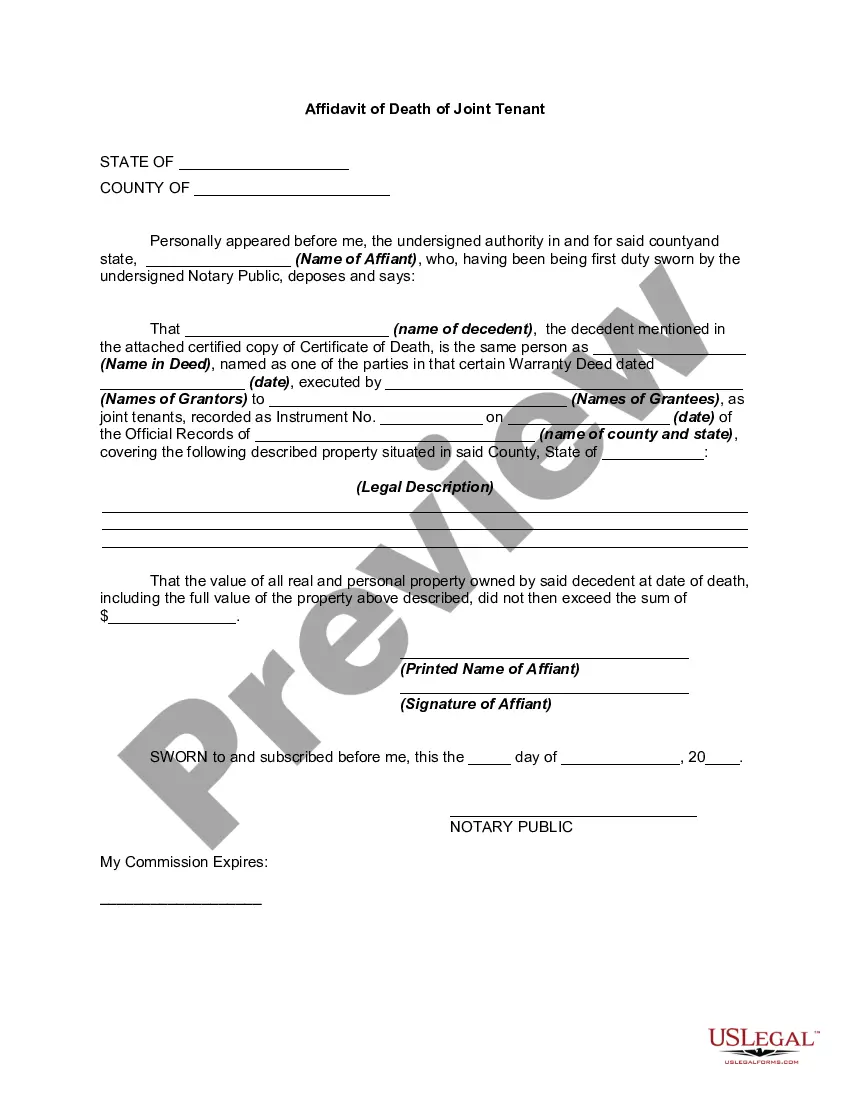
Affidavit of Death of Joint Tenant
Overview of this form
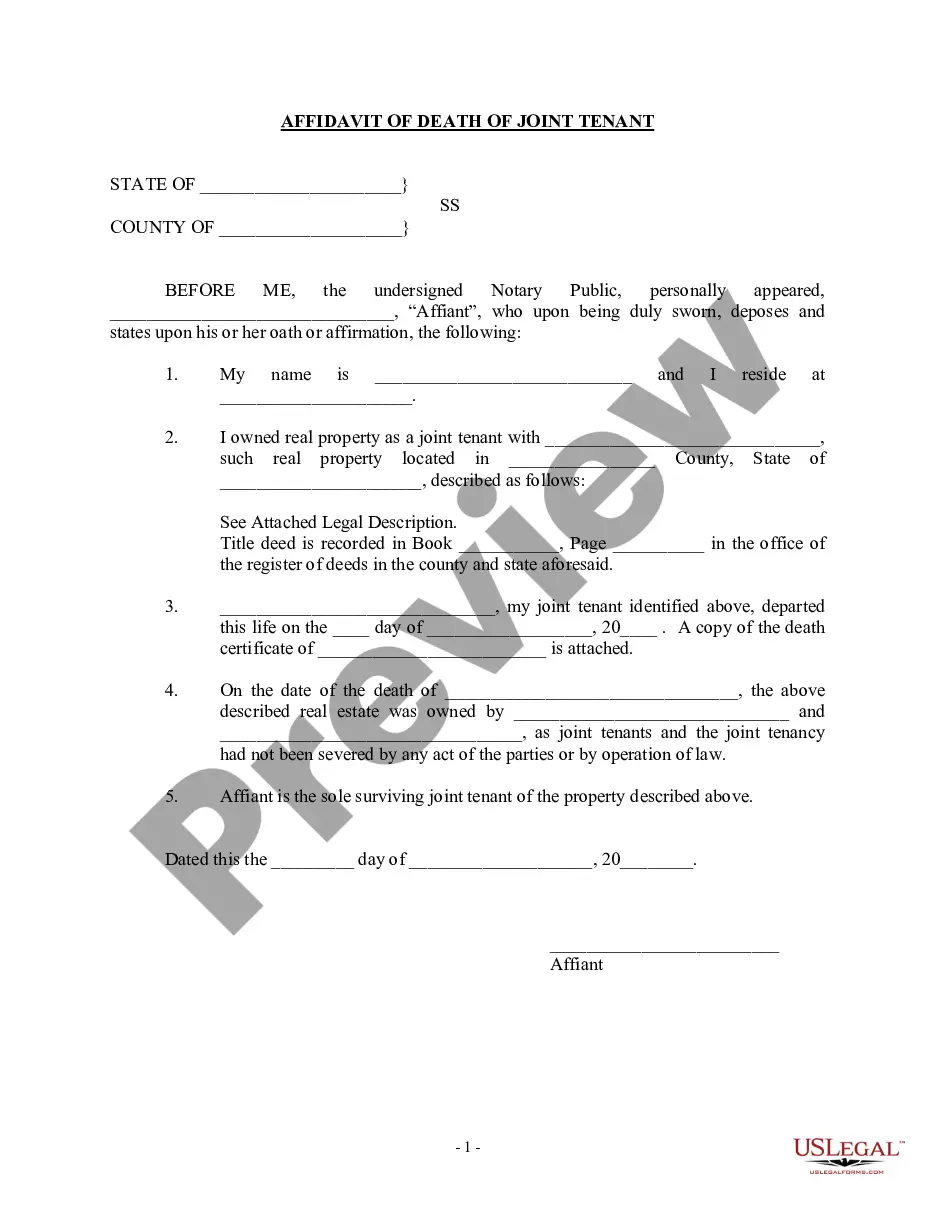
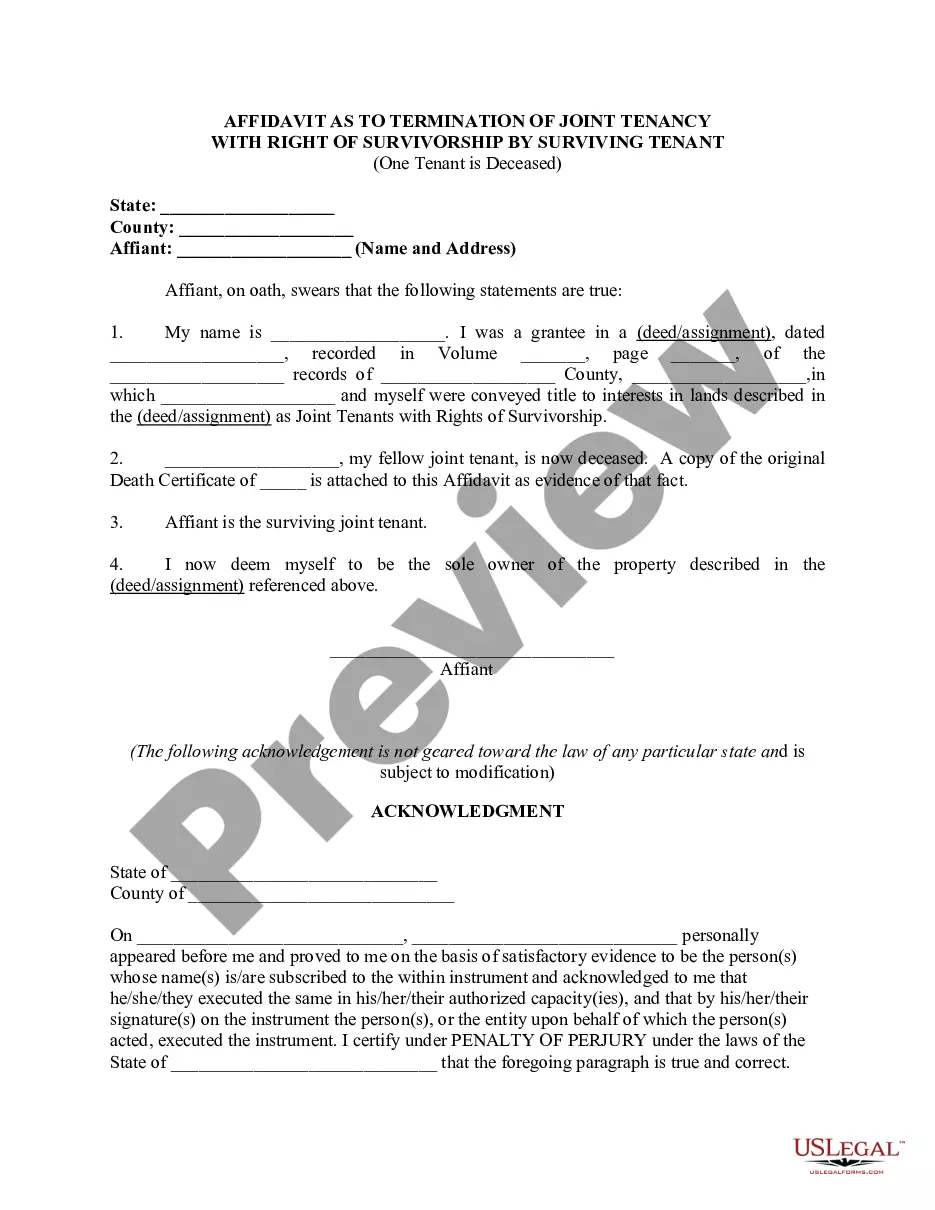
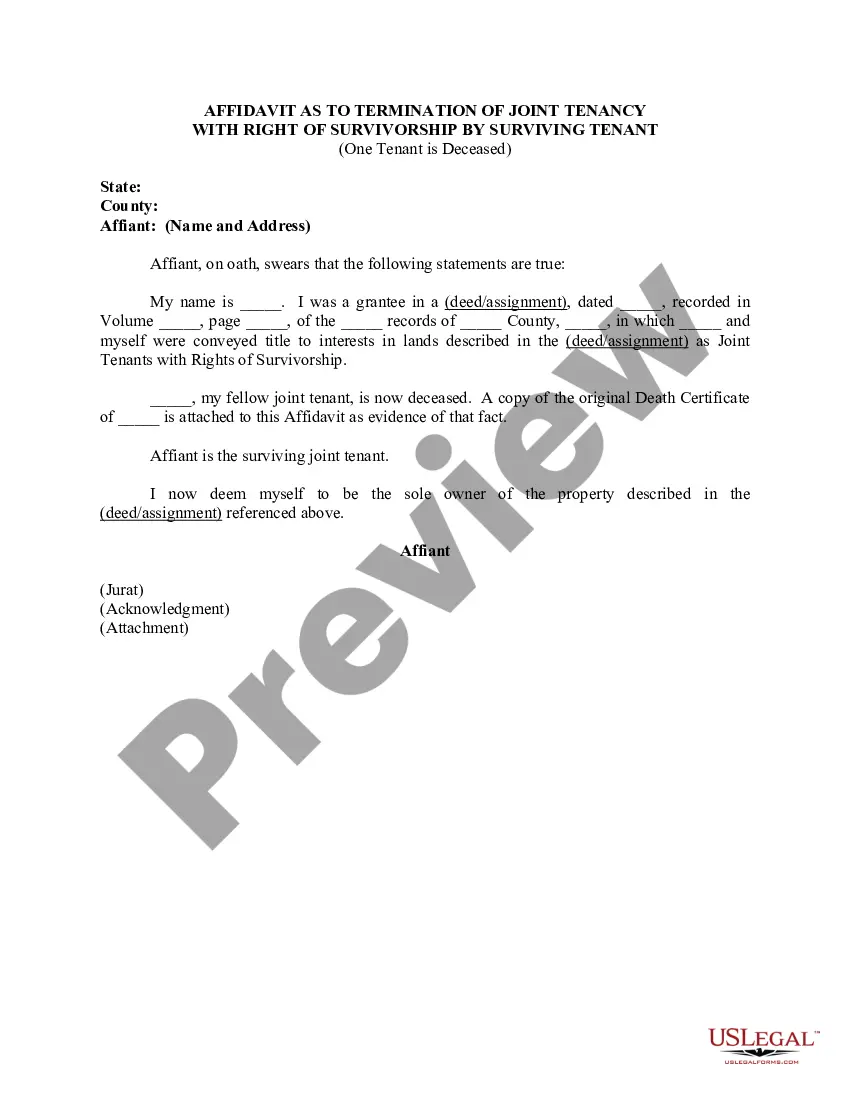
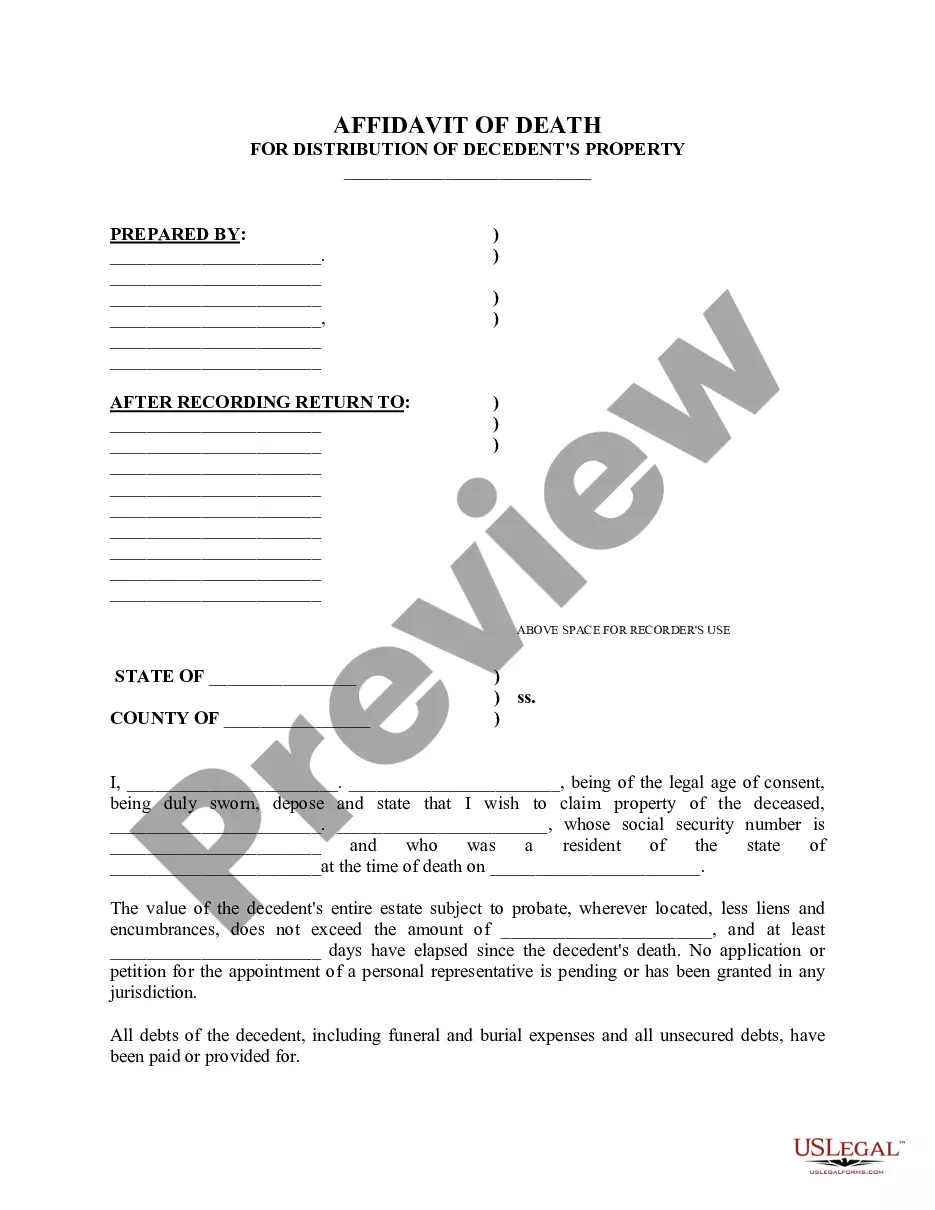
The Affidavit of Death of Joint Tenant is a legal document used to formally declare the death of one of the joint tenants named in a property deed. This affidavit serves to clarify ownership of the property following the death of a co-owner, which is essential for the transfer of property rights. Unlike other forms such as wills or trusts, this affidavit specifically addresses the issue of joint tenancy and is crucial for real estate transactions involving jointly owned properties.
What’s included in this form
- Name of the affiant, indicating who is making the declaration.
- Name of the deceased joint tenant as stated in the deed.
- Date of death and a certified copy of the death certificate.
- Details of the Warranty Deed including parties involved and date of execution.
- Legal description of the property affected.
- Value of the decedent's property at the time of death.
Common use cases
This form should be used when a joint tenant has passed away, and there is a need to confirm the surviving tenant's ownership of the real estate. It is commonly required in situations where the property needs to be sold or transferred, ensuring that there are no disputes over the estate and clarifying the legal standing of the surviving owner.
Who this form is for
- Surviving joint tenants looking to confirm ownership after the death of a co-owner.
- Estates that require the transfer of property following the death of a joint tenant.
- Individuals responsible for managing the affairs of the deceased, including executors or administrators.
Completing this form step by step
- Identify the parties involved, including the affiant and deceased joint tenant.
- Specify the date of death and attach a certified death certificate.
- Provide details of the original Warranty Deed, including names and execution date.
- Enter the legal description of the property in question.
- Declare the estimated value of the decedent's property at the time of death.
- Sign in front of a notary public to validate the affidavit.
Notarization guidance
Yes, this form must be notarized to be legally valid. US Legal Forms offers integrated online notarization, allowing you to securely complete this process via video call any time of day, ensuring your affidavit complies with legal standards without the need for travel.
Get your form ready online
Our built-in tools help you complete, sign, share, and store your documents in one place.
Make edits, fill in missing information, and update formatting in US Legal Forms—just like you would in MS Word.
Download a copy, print it, send it by email, or mail it via USPS—whatever works best for your next step.
Sign and collect signatures with our SignNow integration. Send to multiple recipients, set reminders, and more. Go Premium to unlock E-Sign.
If this form requires notarization, complete it online through a secure video call—no need to meet a notary in person or wait for an appointment.
We protect your documents and personal data by following strict security and privacy standards.

Make edits, fill in missing information, and update formatting in US Legal Forms—just like you would in MS Word.

Download a copy, print it, send it by email, or mail it via USPS—whatever works best for your next step.

Sign and collect signatures with our SignNow integration. Send to multiple recipients, set reminders, and more. Go Premium to unlock E-Sign.

If this form requires notarization, complete it online through a secure video call—no need to meet a notary in person or wait for an appointment.

We protect your documents and personal data by following strict security and privacy standards.
Typical mistakes to avoid
- Failing to provide a certified copy of the death certificate.
- Omitting crucial details from the Warranty Deed.
- Not having the affidavit notarized where required.
- Incorrectly completing the legal description of the property.
Benefits of using this form online
- Convenience of downloading and completing the affidavit at your own pace.
- Access to attorney-drafted templates that ensure legal compliance.
- Editability allows for easy updates in information.
Summary of main points
- The Affidavit of Death of Joint Tenant affirms ownership of property after one co-owner's death.
- Proper completion and notarization are essential for legal validity.
- This form can aid in the smooth transition of property rights without the need for probate.
Looking for another form?
Form popularity
FAQ
The Affidavit of Death of Joint Tenant is a sworn statement declaring that one named joint tenant has died. It clarifies who owns the property after the death and is used to support transfer of ownership or to resolve ownership questions in real estate transactions involving a joint tenancy. It helps establish surviving ownership for recording, selling, or transferring the property.
Notarization is commonly required to authenticate the affiant’s oath for real estate records. Because the form is a sworn declaration about a co-owner’s death, many recording offices expect a notary or other authorized witness. Always check the specific recording rules in your jurisdiction, as requirements can vary by state or locality.
To fill out this form, include the affiant’s name; the deceased joint tenant’s name as it appears on the deed; the date of death and a certified copy of the death certificate; details of the Warranty Deed (parties and date of execution); the legal description of the property; and the value of the decedent’s property at death. Sign and date it as required.
When a joint tenant dies, this form helps confirm the surviving owner’s interest and supports subsequent transfer or sale of the property. It clarifies ownership, reduces disputes, and may be used in recording or conveying title. The form complements, not replaces, wills or estates, and is typically prepared by the party managing the deceased’s affairs.
The affiant is the person making the declaration on the form. Typically this is the surviving joint tenant or a personal representative (such as an executor or administrator) who has knowledge of the death and the property. The signer must provide the affiant name and may need to attach a death certificate.
It is specifically for the death of a joint tenant and to clarify the surviving owner’s title after death, rather than addressing general ownership or preparing a transfer by will. It includes elements unique to joint tenancy, such as the decedent’s death and the surviving owner’s interest, and requires details from the deed and death certificate.