Commercial Affidavit of Truth
What this document covers
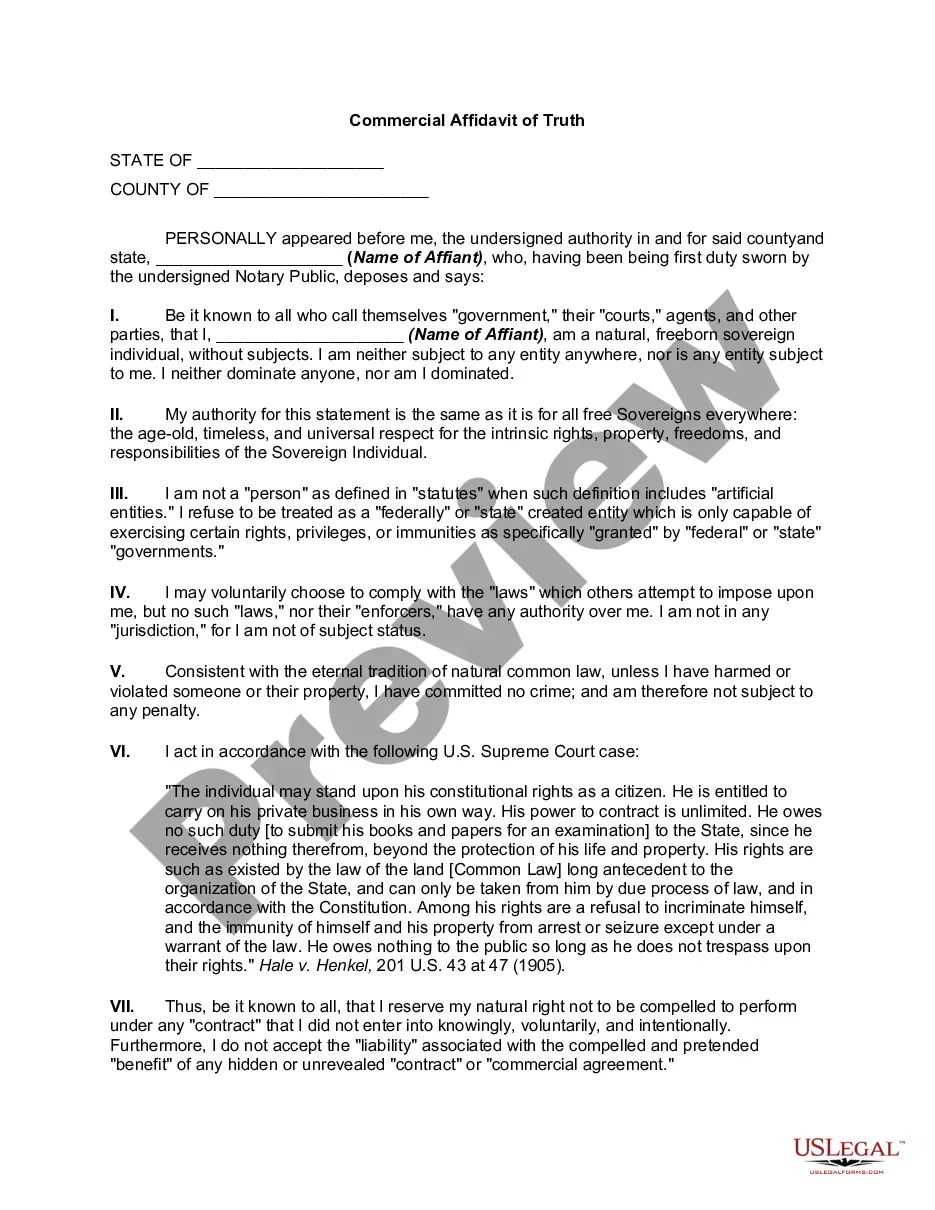
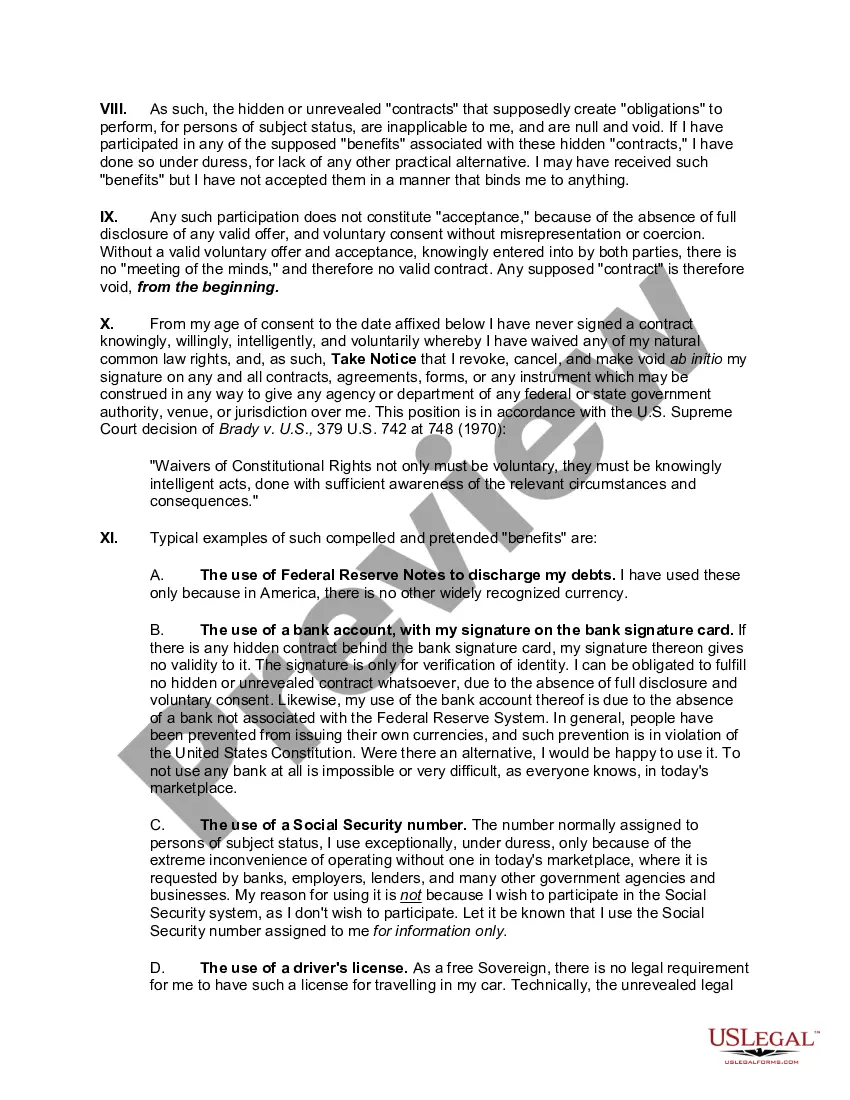
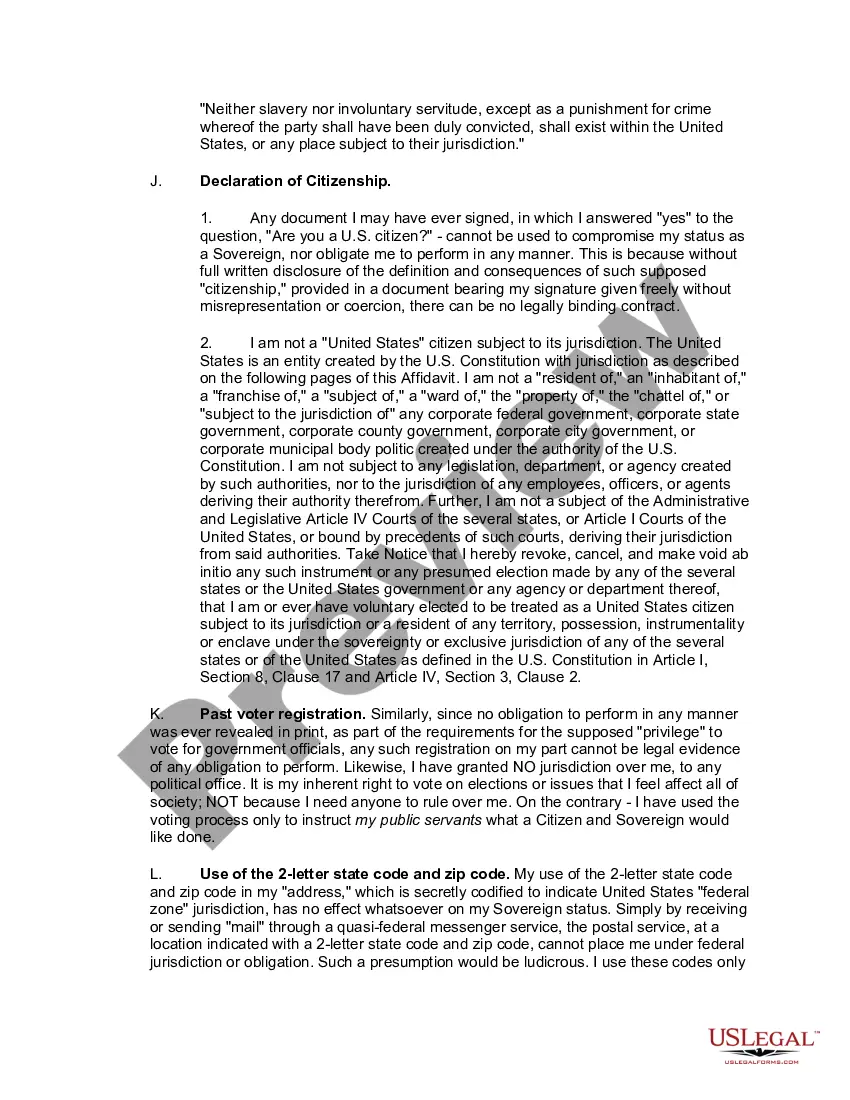
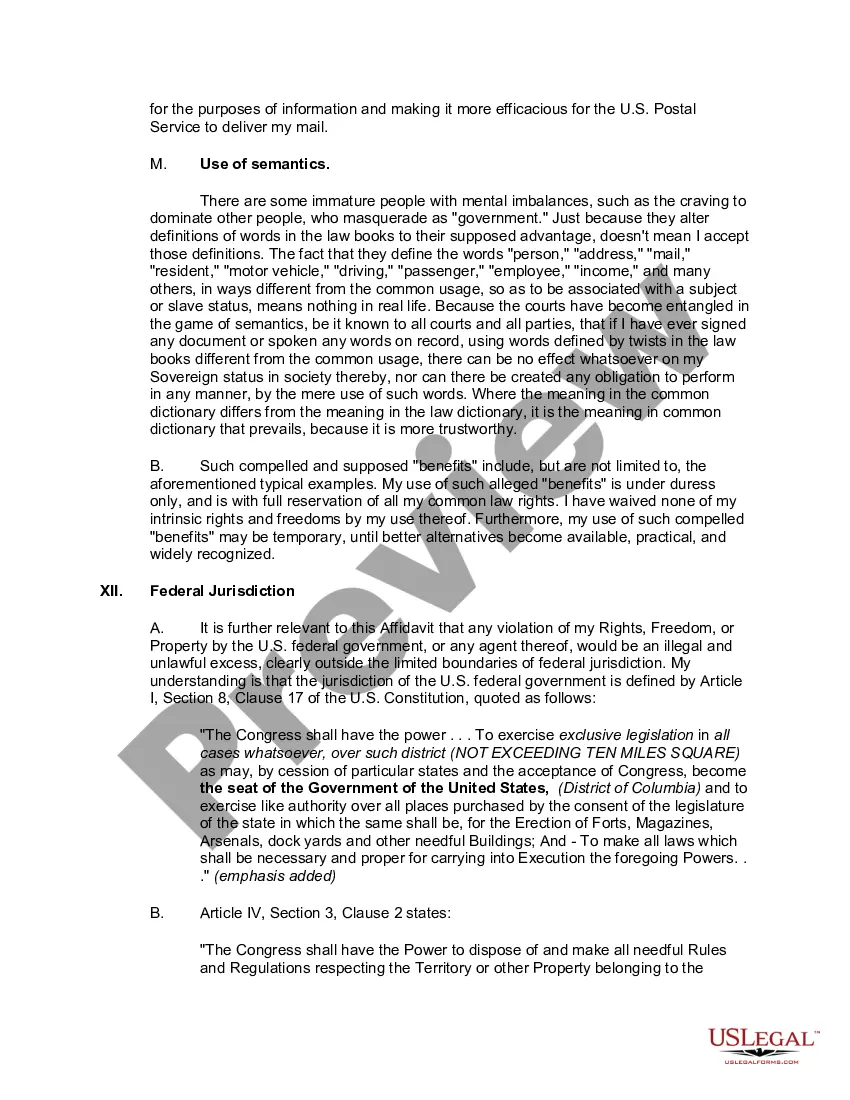
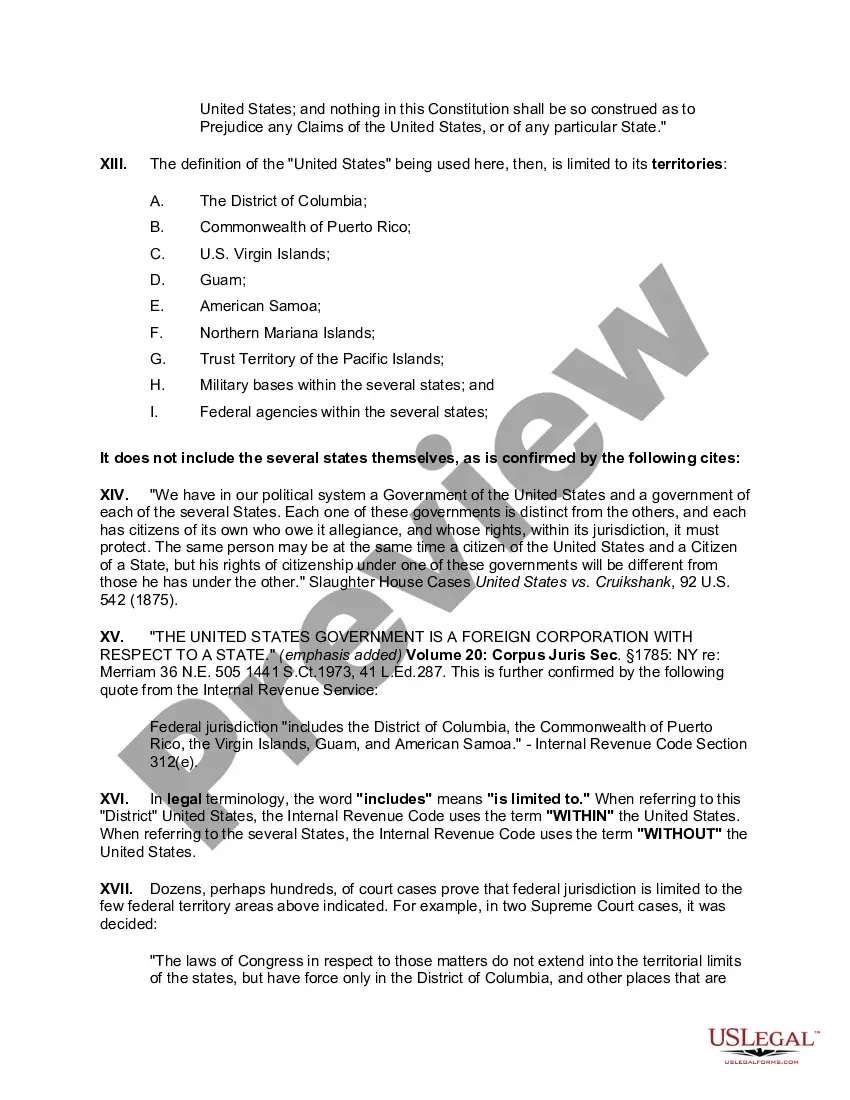
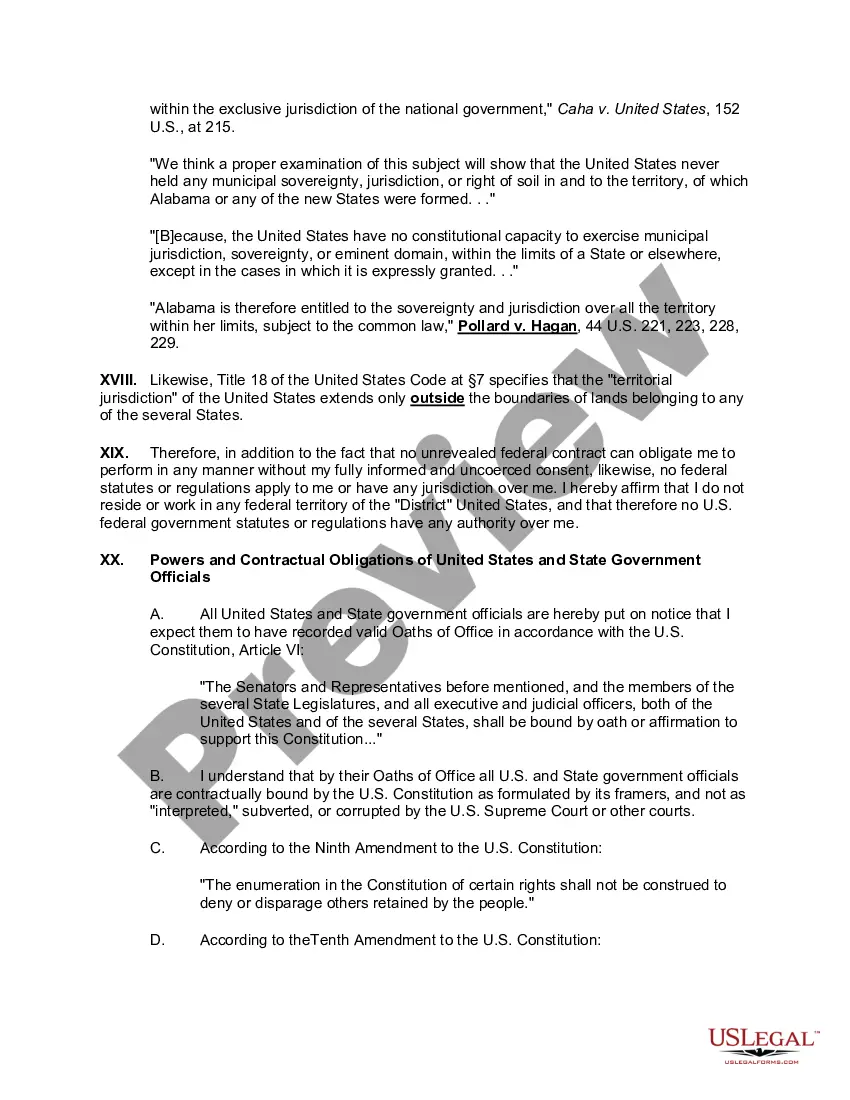
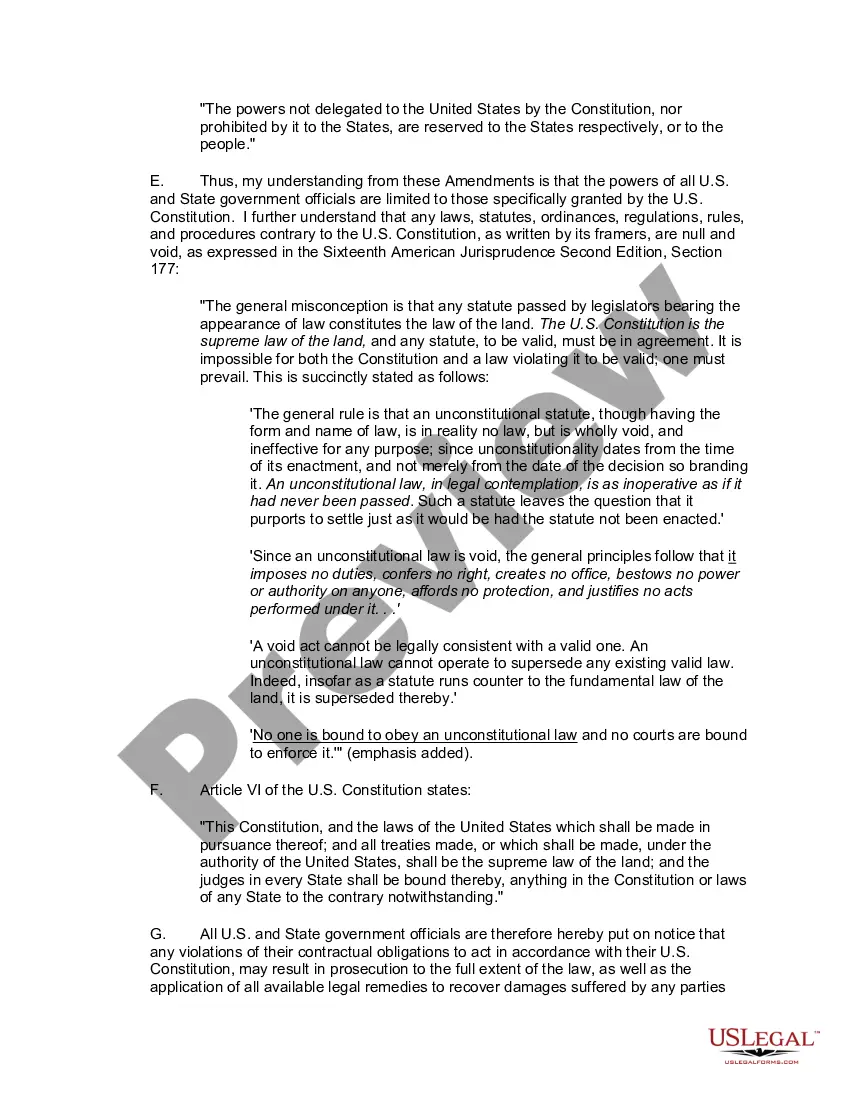
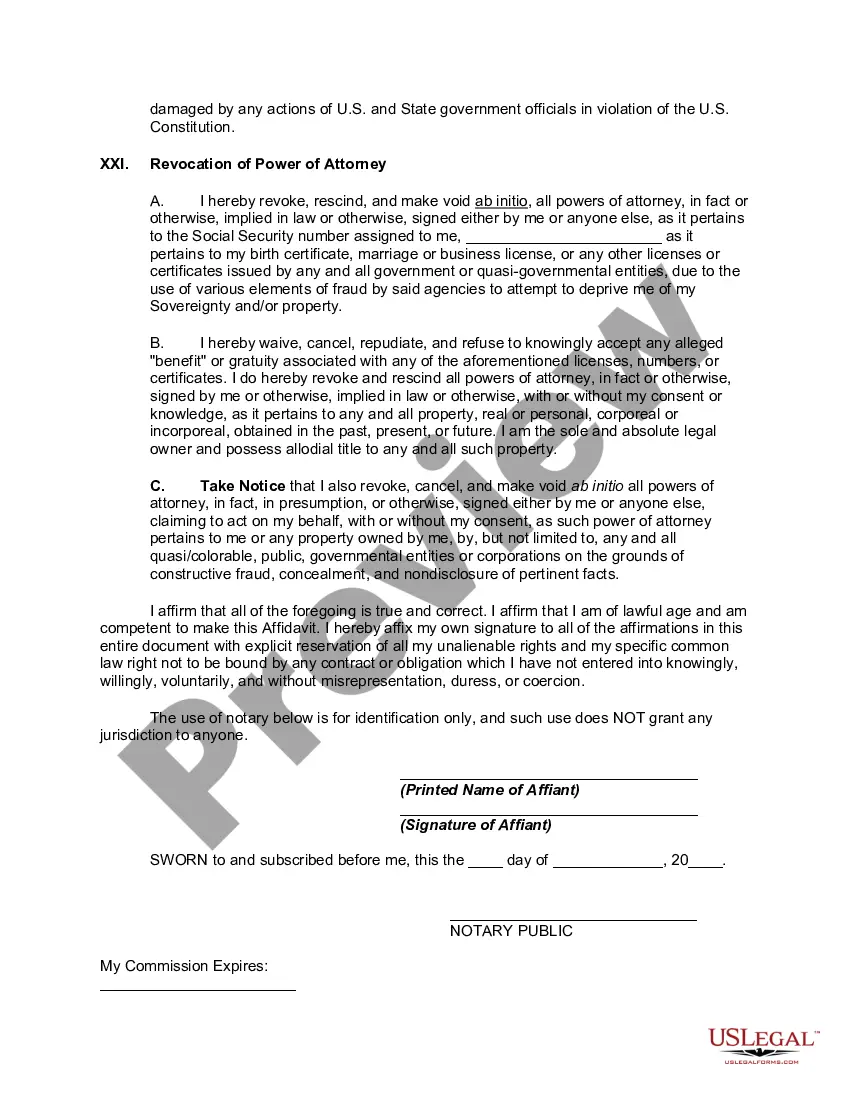
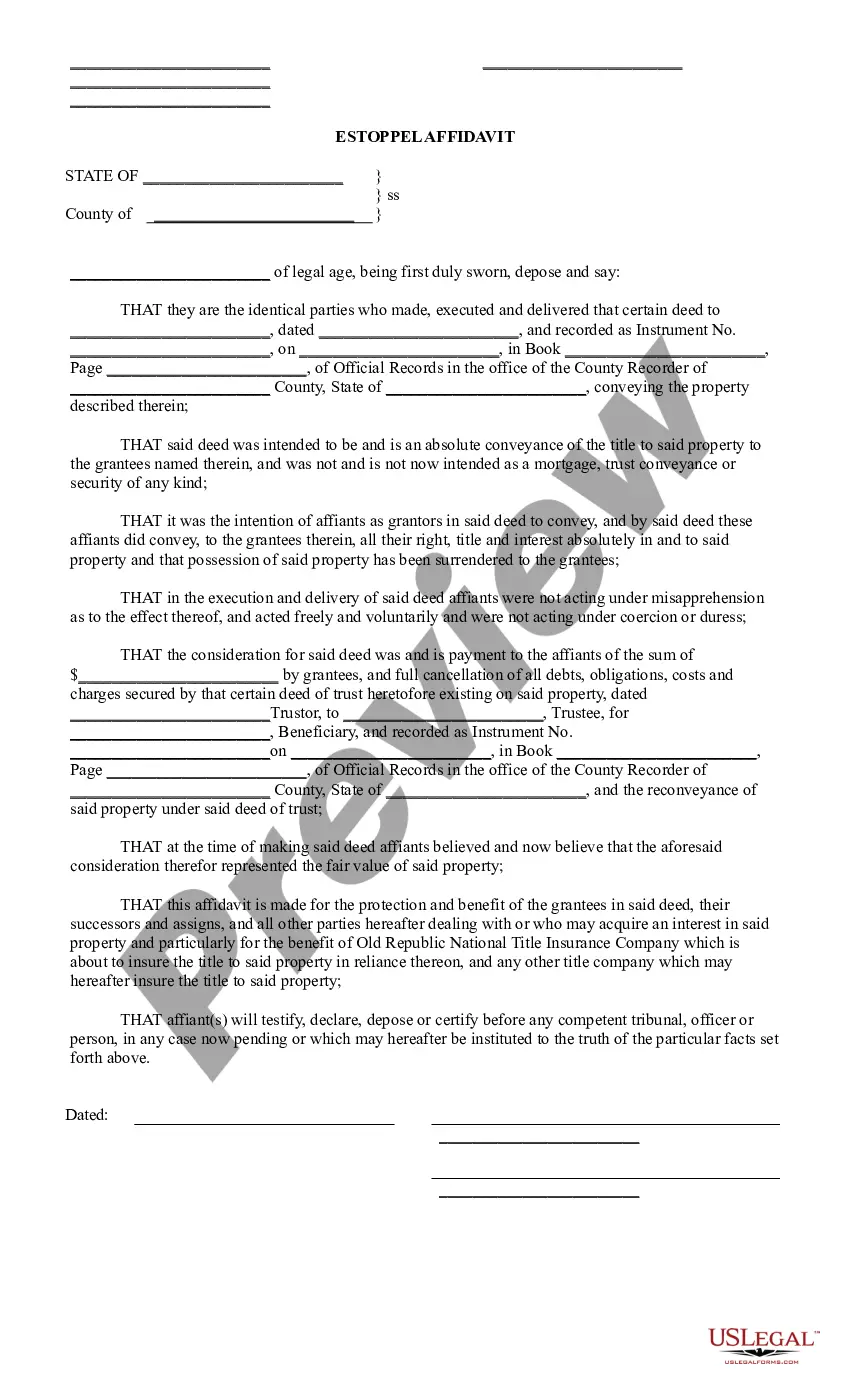
The Commercial Affidavit of Truth is a legal document in which the affiantâa person making the affidavitâdeclares certain facts as true under oath. This form is typically used to assert one's status and rights as a sovereign individual, often in contexts where legal obligations are being challenged, such as dealing with governmental entities or financial institutions. Unlike typical affidavits that may simply recount facts or observations, this affidavit emphasizes the affiant's sovereignty and legal interpretations of their rights.
Form components explained
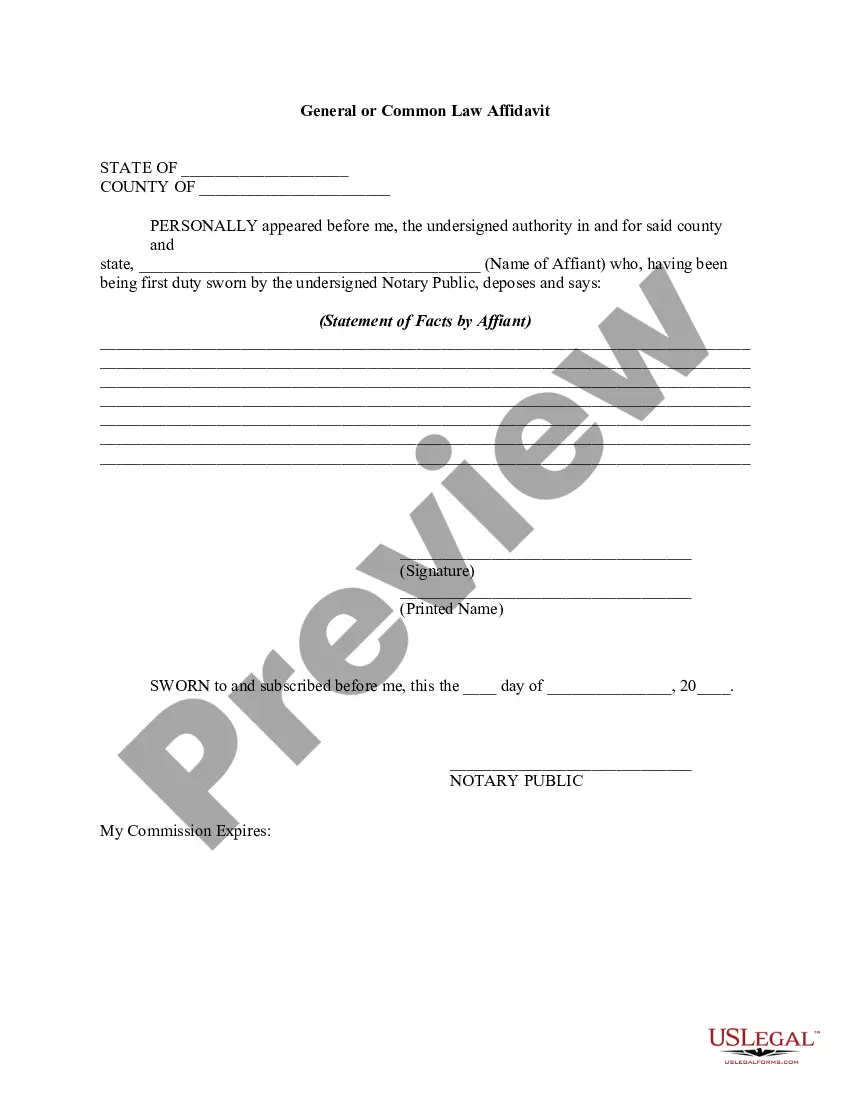
- Identification of the venue where the affidavit is sworn.
- Signature of the affiant, who states their claims and beliefs about their status.
- Jurats confirming that the affidavit was properly administered by a notary public or authorized officer.
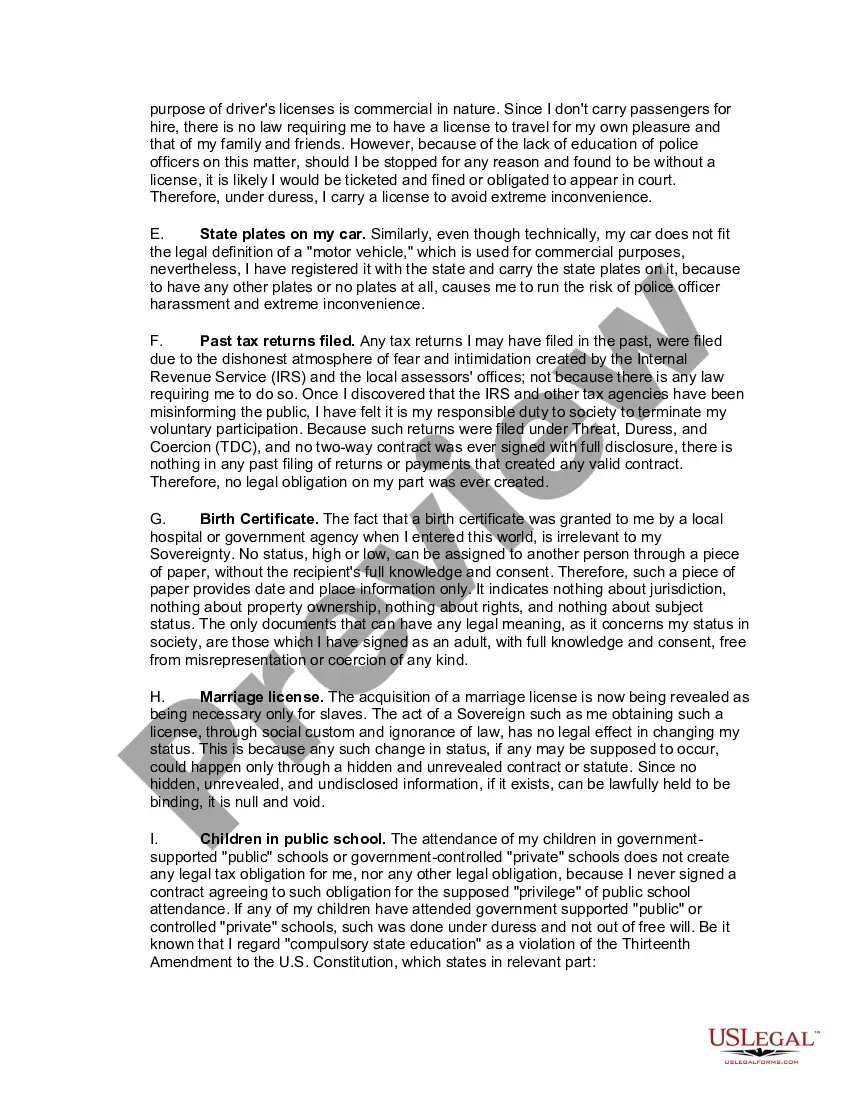
- Specific clauses detailing the affiant's sovereignty and their positions regarding various contracts and legal obligations.
- Revocation of previous agreements perceived to infringe upon the affiant's rights.

When to use this form
This Commercial Affidavit of Truth may be used in various situations, such as when an individual wishes to assert their rights against governmental entities, challenge judicial authority, refuse obligations from previously signed agreements, or delineate their legal status in financial transactions. It can be particularly relevant in scenarios involving disputes over taxes, licenses, or identification documents where sovereignty claims are presented.
Who can use this document
This affidavit is intended for individuals who identify as sovereign citizens and wish to challenge what they perceive as unjust governmental impositions or regulations. Users should have a fundamental understanding of their legal rights and be prepared to navigate complex legal contexts. The form may also appeal to those facing specific legal challenges regarding their rights and obligations under state or federal laws.
Completing this form step by step
- Identify the state and county where the affidavit is being sworn.
- Clearly state the full name of the affiant (the person making the affidavit).
- Fill in the specific claims regarding personal sovereignty and the nature of the challenges to previous agreements or obligations.
- Provide signatures in the designated areas confirming the truthfulness of the statements made.
- Have the affidavit notarized to verify the authenticity of the signing process.
Notarization guidance
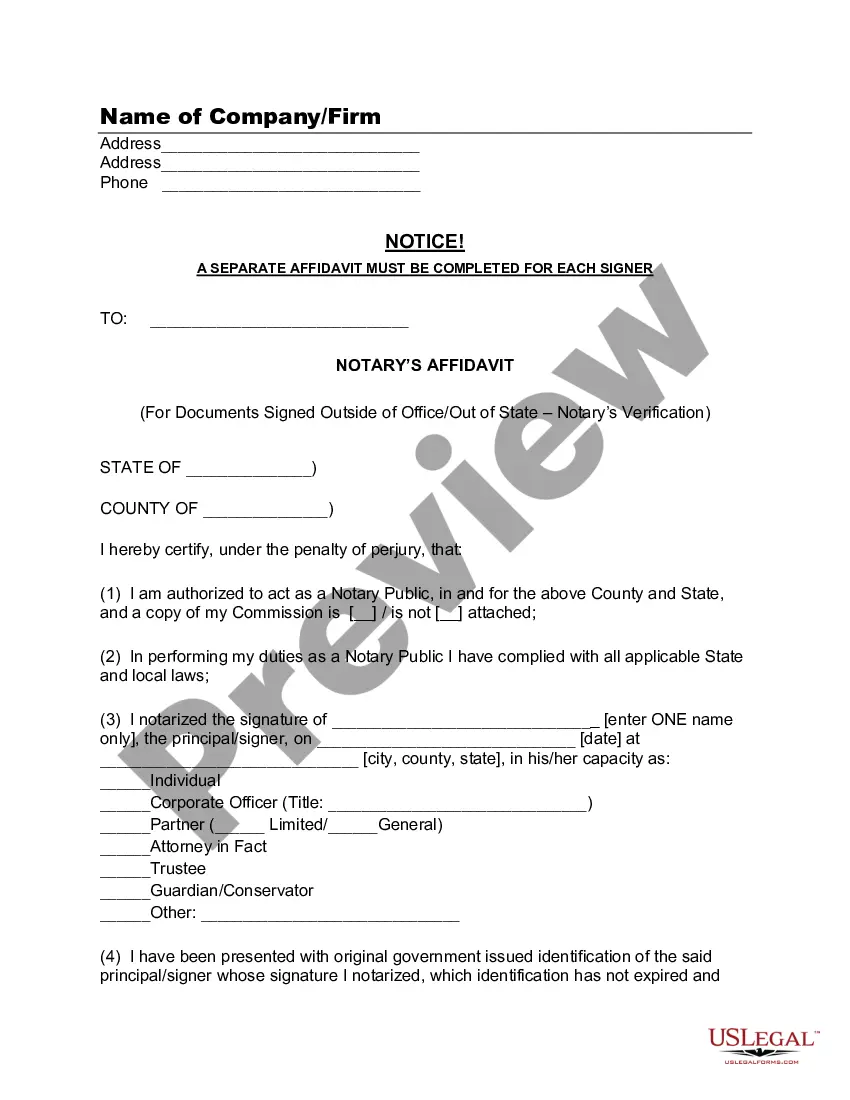
Yes, this form must be notarized to be legally valid. It requires the affiant to appear before a notary public who will verify their identity and the authenticity of their statements. US Legal Forms offers integrated online notarization, available 24/7, ensuring a secure and legal affirmation process without the need for travel.
Get your form ready online
Our built-in tools help you complete, sign, share, and store your documents in one place.
Make edits, fill in missing information, and update formatting in US Legal Forms—just like you would in MS Word.
Download a copy, print it, send it by email, or mail it via USPS—whatever works best for your next step.
Sign and collect signatures with our SignNow integration. Send to multiple recipients, set reminders, and more. Go Premium to unlock E-Sign.
If this form requires notarization, complete it online through a secure video call—no need to meet a notary in person or wait for an appointment.
We protect your documents and personal data by following strict security and privacy standards.

Make edits, fill in missing information, and update formatting in US Legal Forms—just like you would in MS Word.

Download a copy, print it, send it by email, or mail it via USPS—whatever works best for your next step.

Sign and collect signatures with our SignNow integration. Send to multiple recipients, set reminders, and more. Go Premium to unlock E-Sign.

If this form requires notarization, complete it online through a secure video call—no need to meet a notary in person or wait for an appointment.

We protect your documents and personal data by following strict security and privacy standards.
Typical mistakes to avoid
- Failing to have the affidavit notarized, which may render it invalid.
- Not clearly stating the specific claims or reasons for asserting sovereignty.
- Omitting vital information, such as the affiant's name or the venue.
Benefits of using this form online
- Instant access to the form allows for timely completion and submission.
- Editable formats of the form provide convenience for personalized modifications.
- Reliability from trusted sources ensures legal accuracy and adherence to template standards.
Legal use & context
- This affidavit can be submitted to assert personal rights in various legal contexts.
- Individuals using this affidavit should be cautious, as its acceptance may vary depending on the jurisdiction.
- The content may not be legally binding without proper execution, including notarization.
Quick recap
- The Commercial Affidavit of Truth asserts individual sovereignty against governmental claims.
- Completion and notarization are essential steps for legal effectiveness.
- This form can protect an individualâs rights in administrative or legal situations.
Looking for another form?



Form popularity
FAQ
Step 1: Decide what the title of your affidavit will be. Step 2: Put the name and personal background information of the person giving the information in the first paragraph. Step 3: Write an opening sentence in the first person tense. Step 4: Make an outline of the information given or state the facts of the case.
Full name of the deponent and their signature. Statement indicating whether the affidavit has been sworn or not. Date and place where the affidavit is being signed. Designation and full name of the Notary or Magistrate (person attesting the affidavit)
In the sentence, the person writing the statement must state that he or she is stating that the information is accurate. (Example: I, Jane Doe, solemnly swear that the contents of this document are true and correct, and that I agree to abide by the terms in this affidavit.)
An affidavit is a written statement that is notarized.The information in an affidavit must be first-hand information. It cannot be second-hand information or speculation. Affidavits can be written in your own handwriting or typed.
Title the affidavit. First, you'll need to title your affidavit. Craft a statement of identity. The very next section of your affidavit is what's known as a statement of identity. Write a statement of truth. State the facts. Reiterate your statement of truth. Sign and notarize.
Step 2: Write the purpose of the Affidavit or the Heading. Step 3: Write the name of the parties in case of an affidavit being filled in Court or Write the name of the Deponent in case of other affidavits. Step 4: Write the complete address of the deponent.
I am _____ and my name _______, appearing on the enclosed ID proof, is single name.Both names denote one and the same person. I solemnly state that the contents of this affidavit are true to the best of my knowledge and belief and that it conceals nothing and that no part of it is false.
Full name of the deponent and their signature. Statement indicating whether the affidavit has been sworn or not. Date and place where the affidavit is being signed. Designation and full name of the Notary or Magistrate (person attesting the affidavit)
It must be signed in wet ink by the person who makes it (but see Statement of truth made by a person who is unable to read or sign) it need not be sworn or witnessed. it must contain a declaration of truth in the following form: 'I believe that the facts and matters contained in this statement are true'