Texas Brick Mason Contract for Contractor
What is this form?
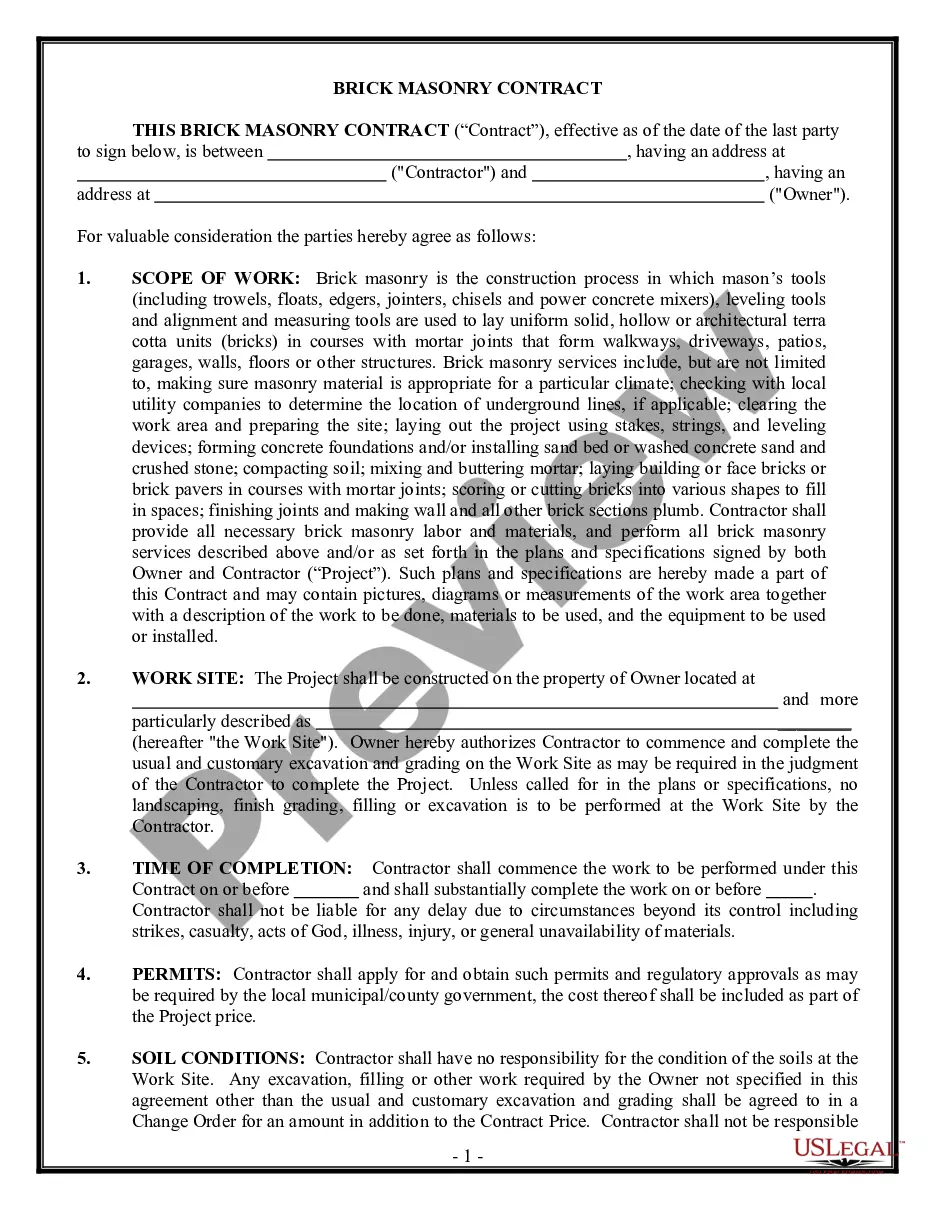
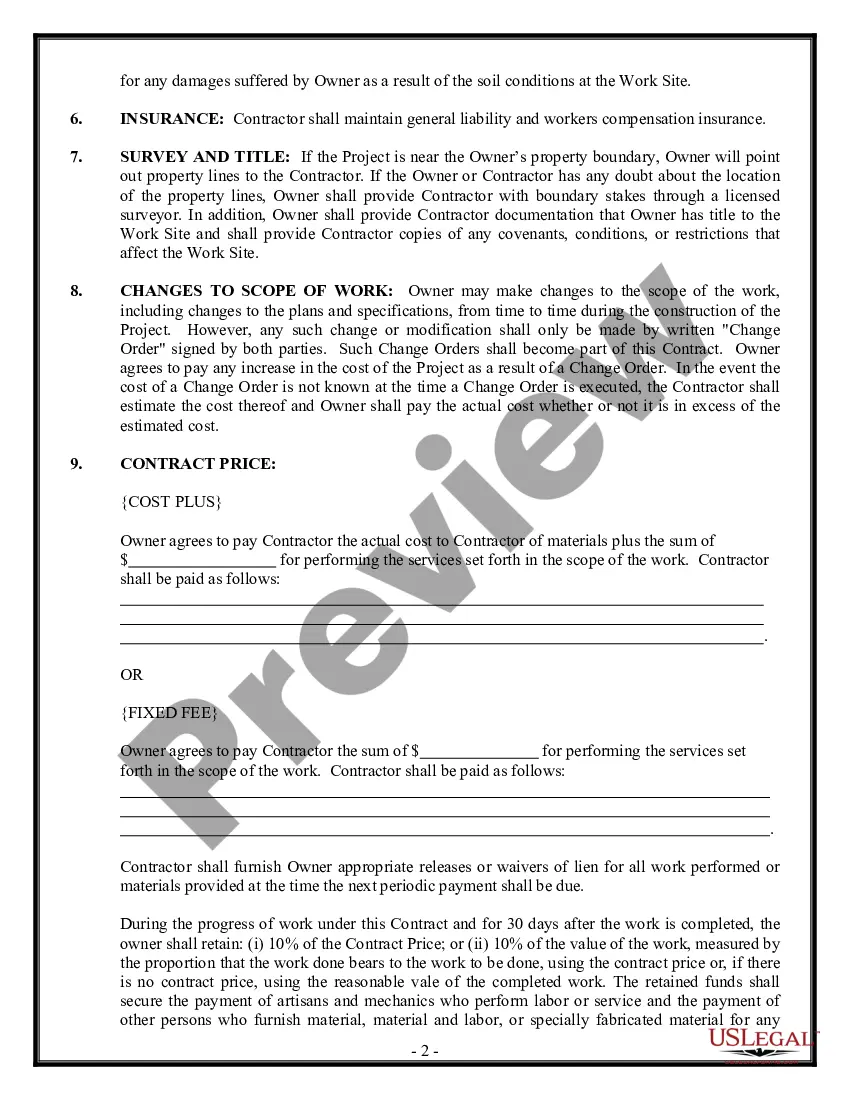
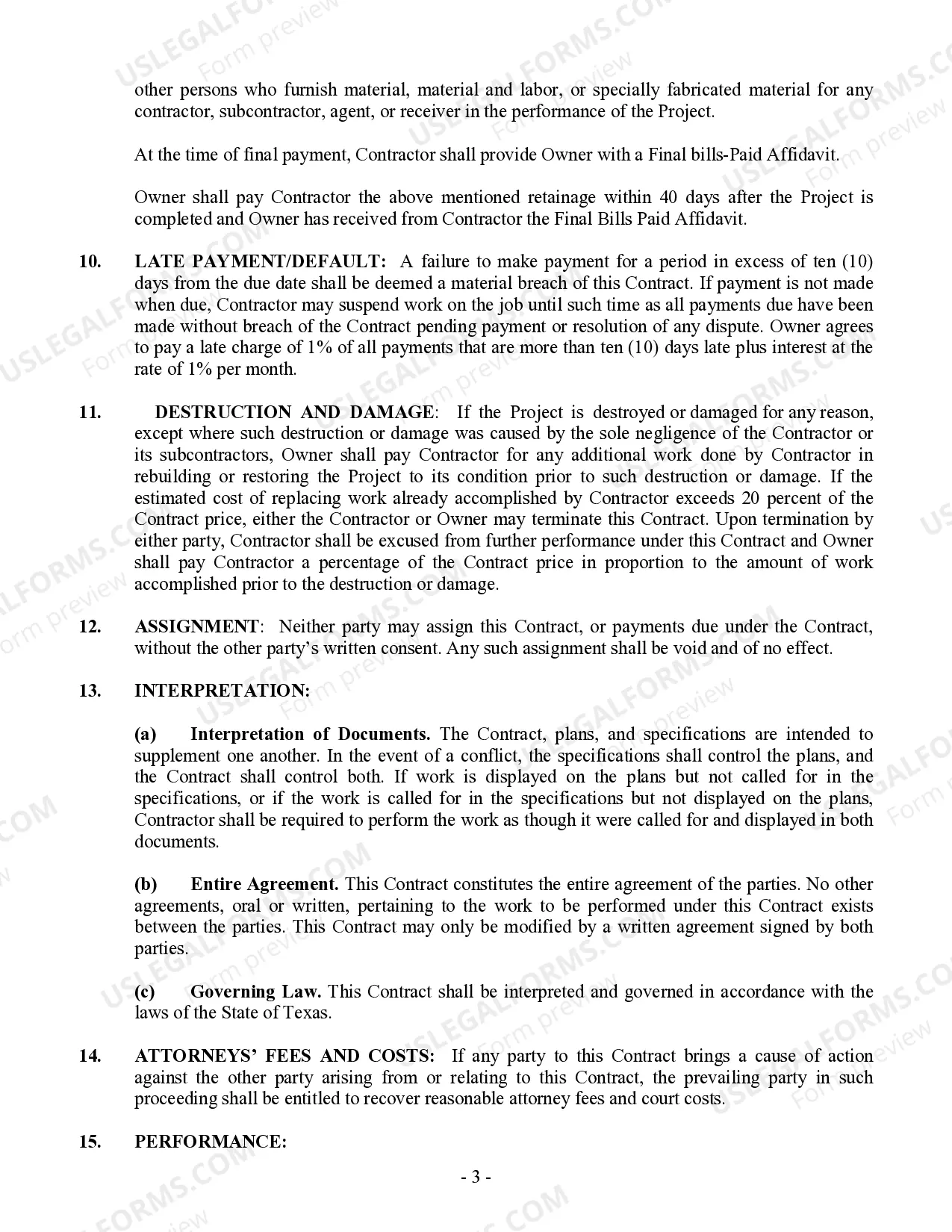
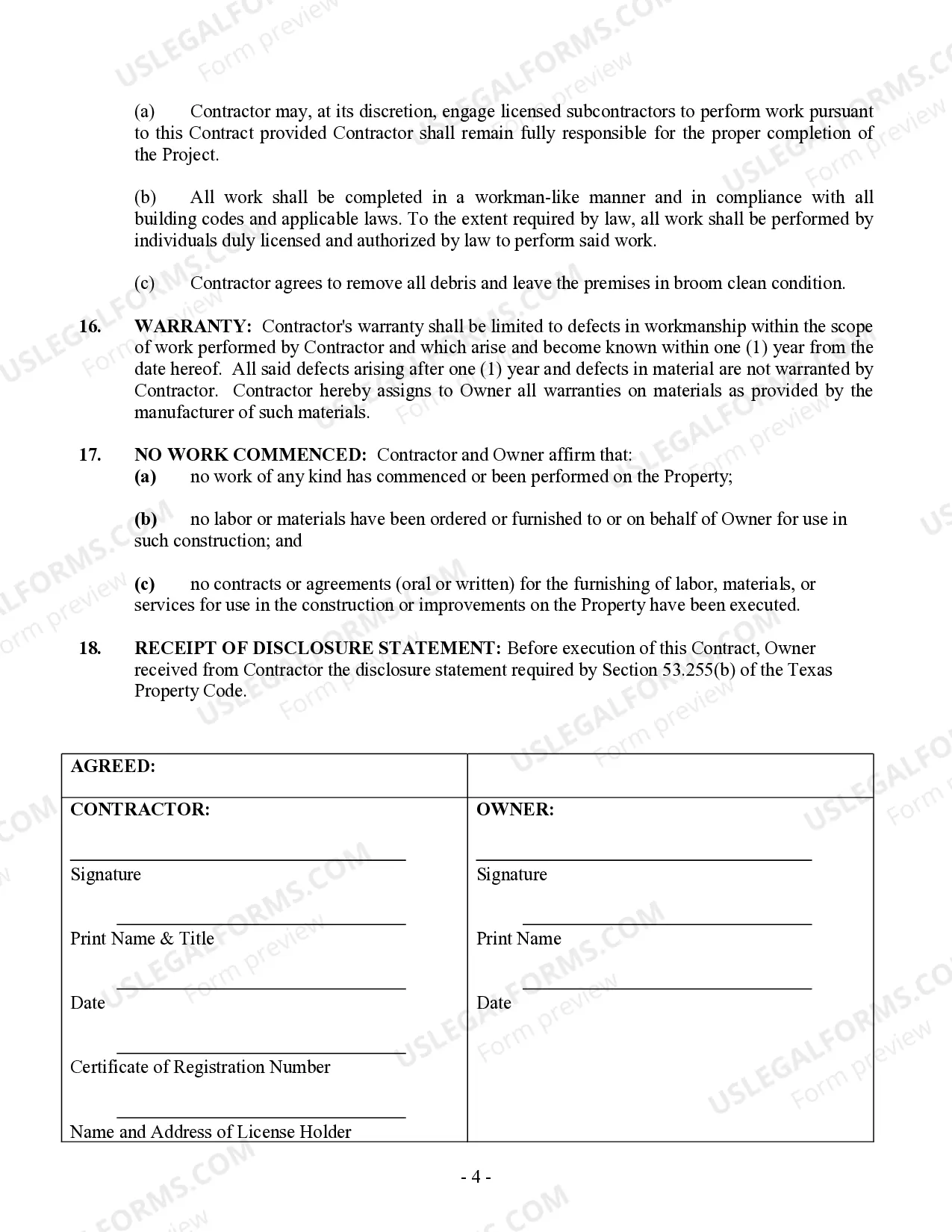
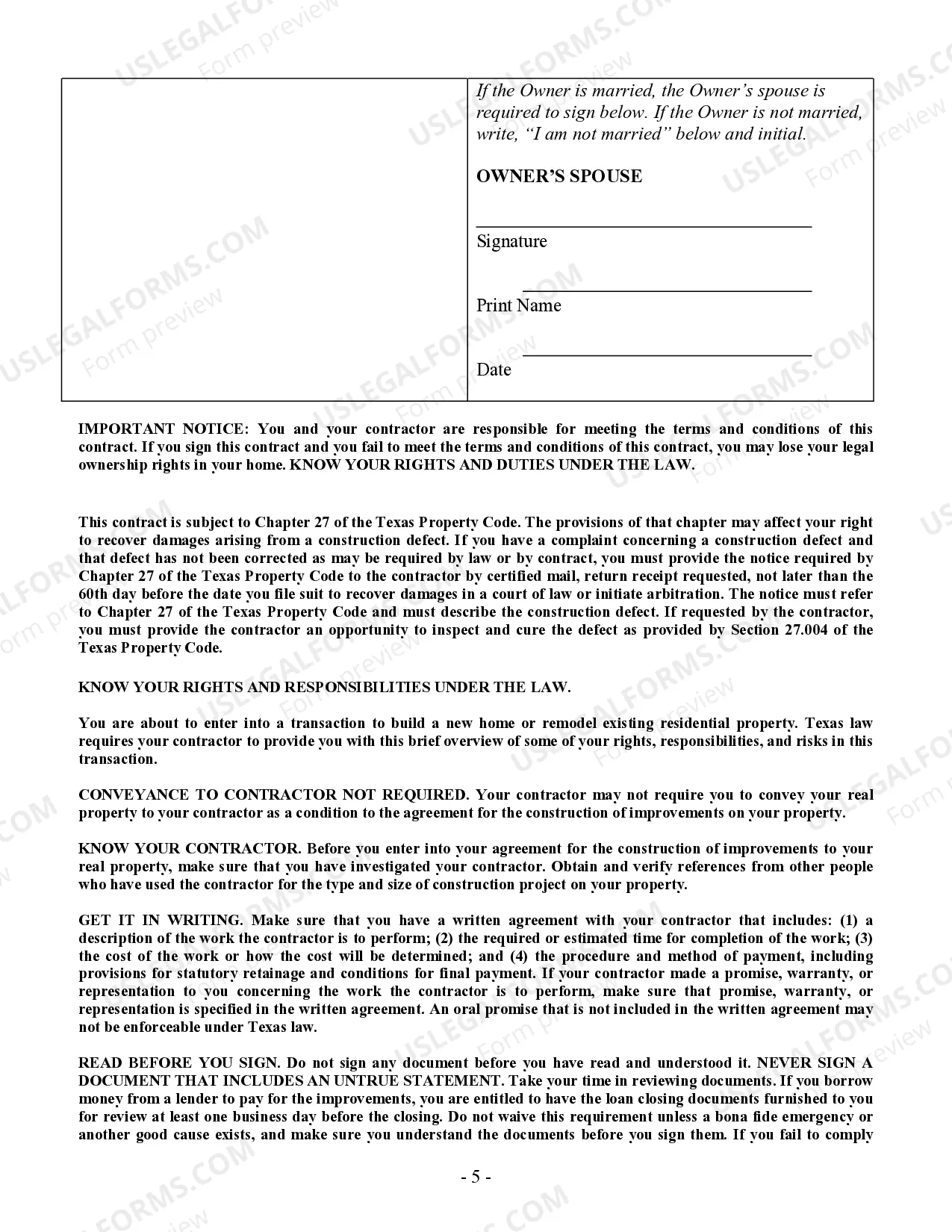
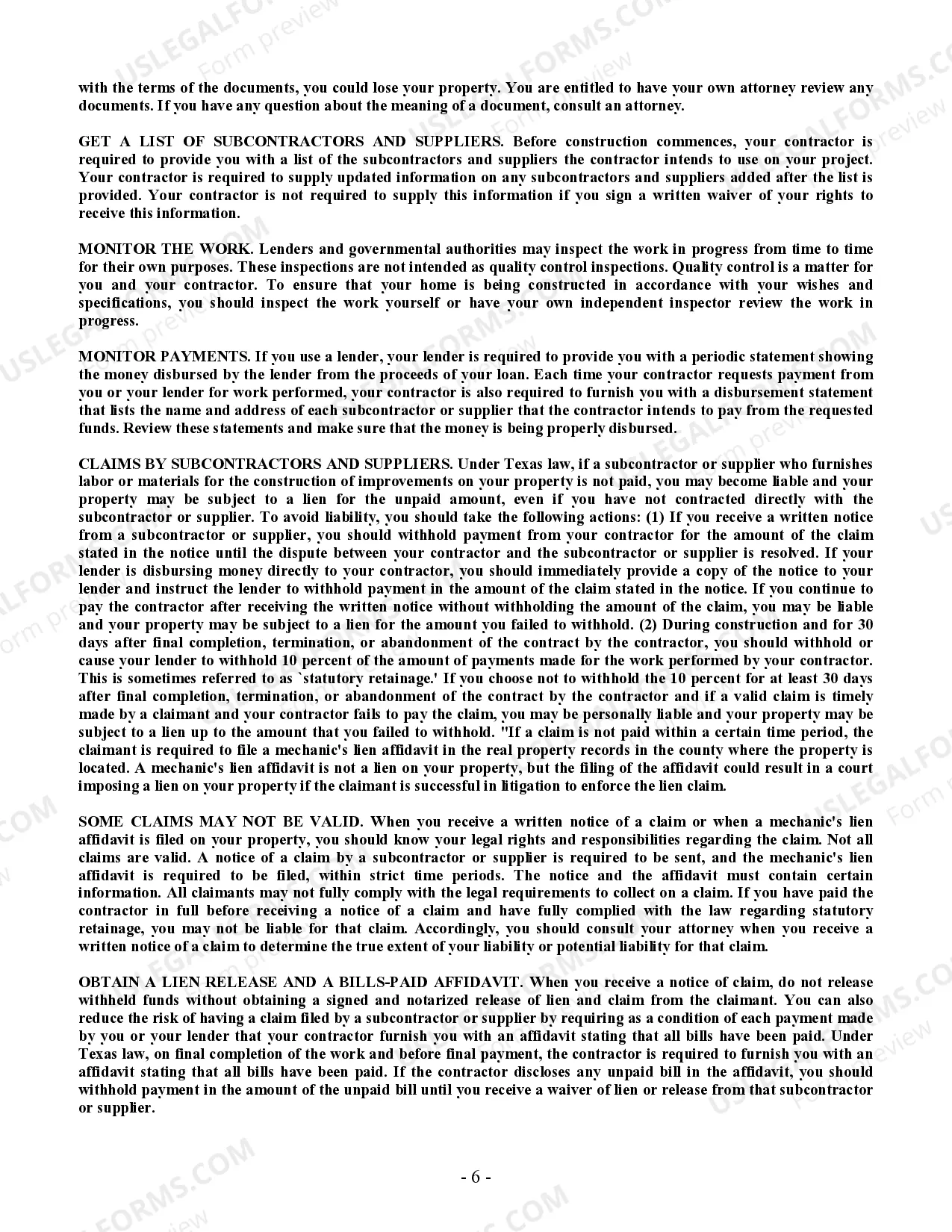
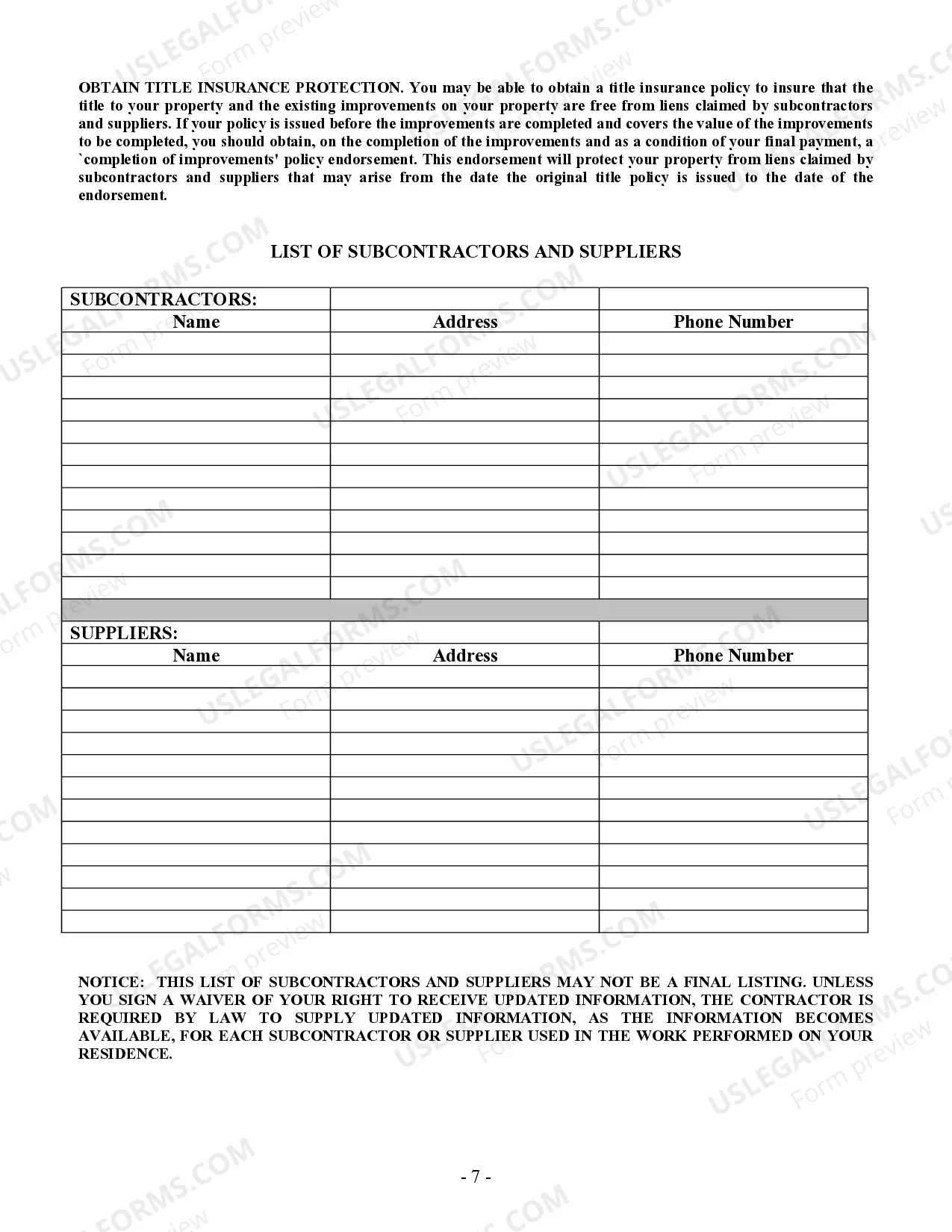
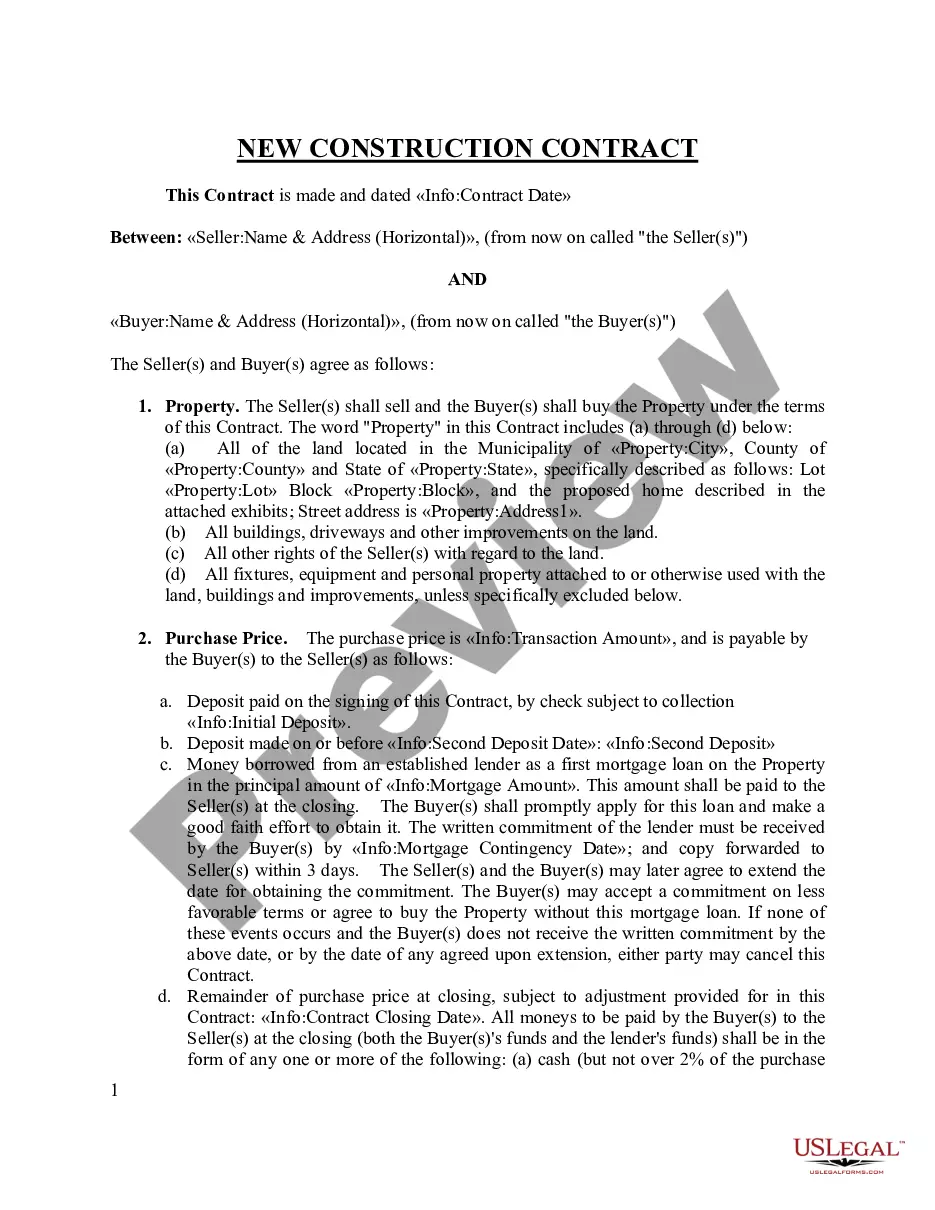
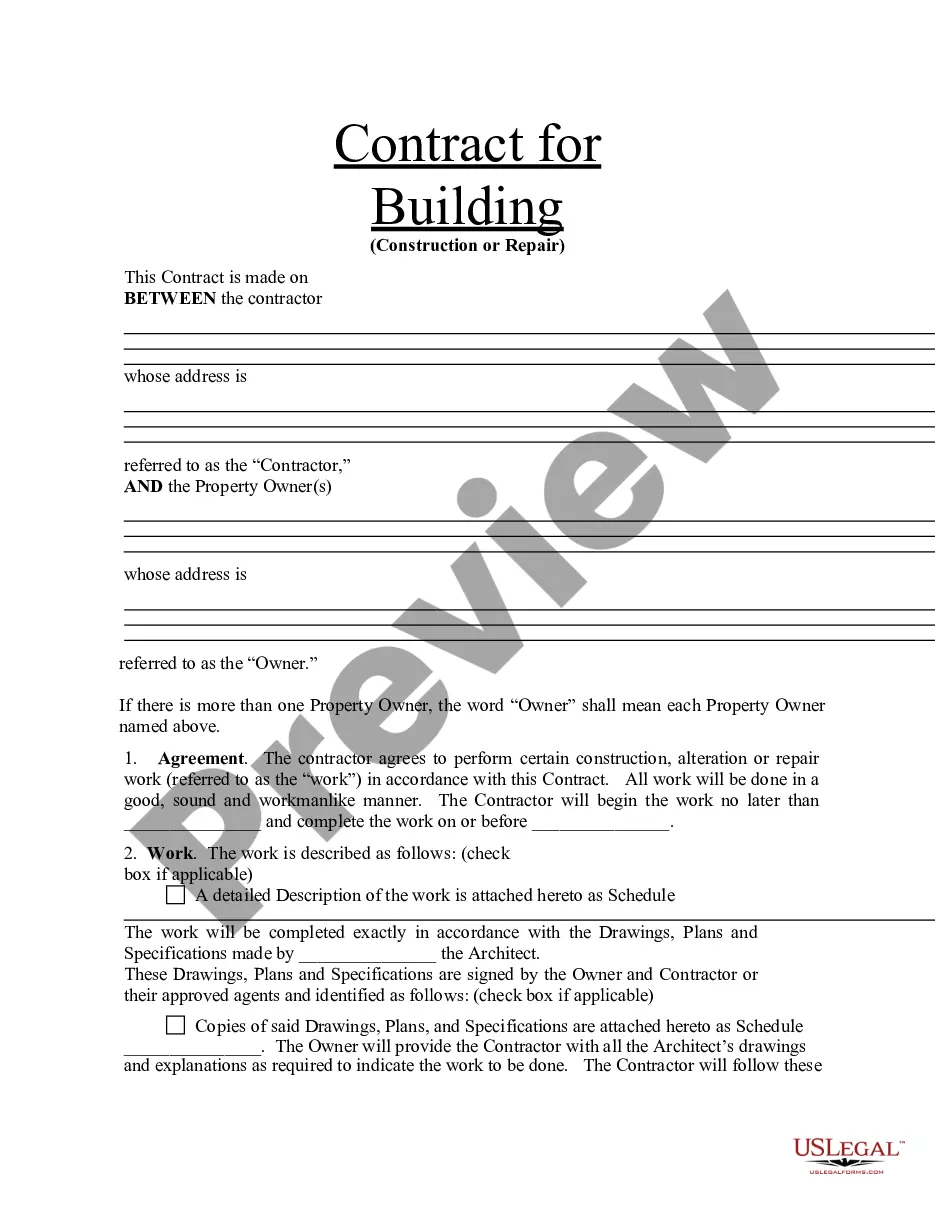
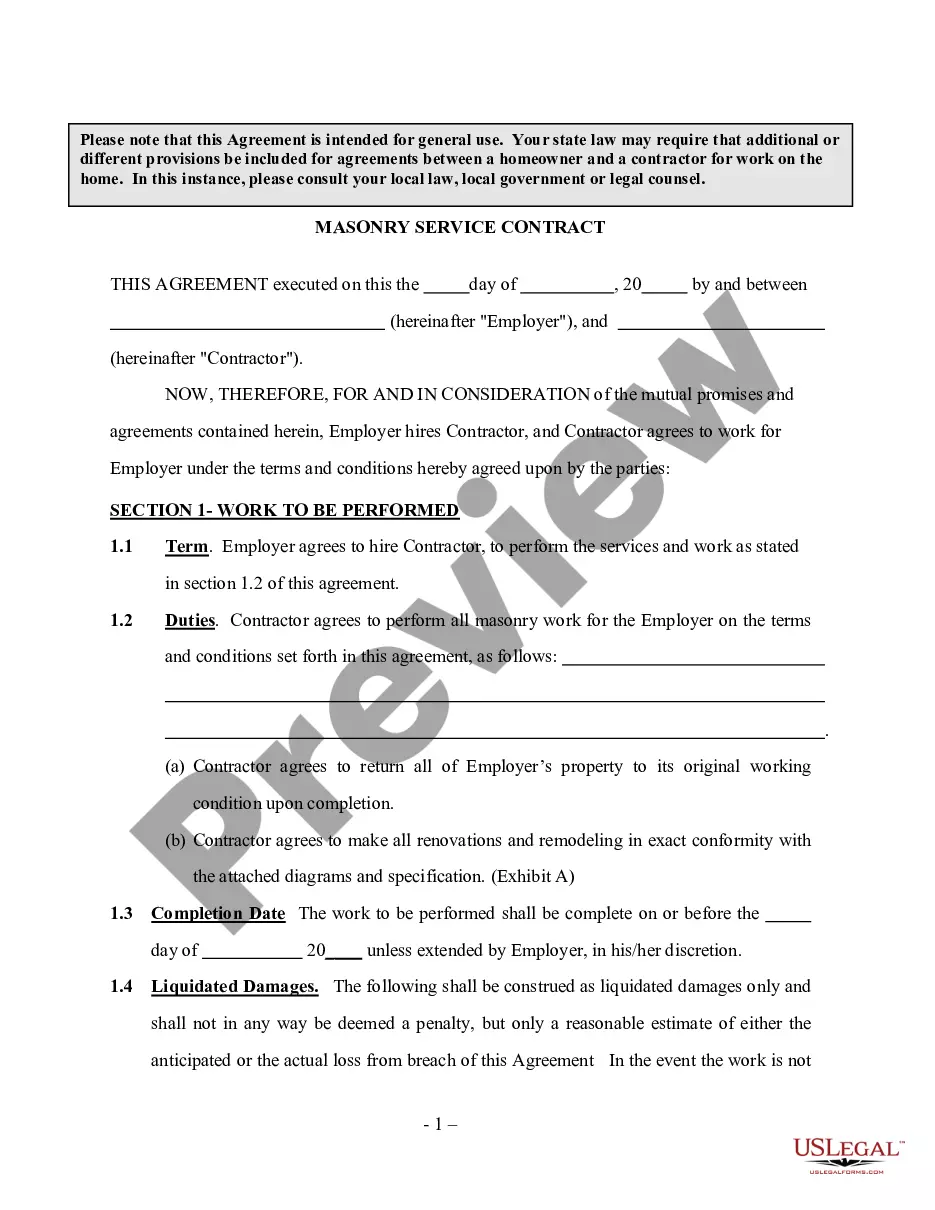
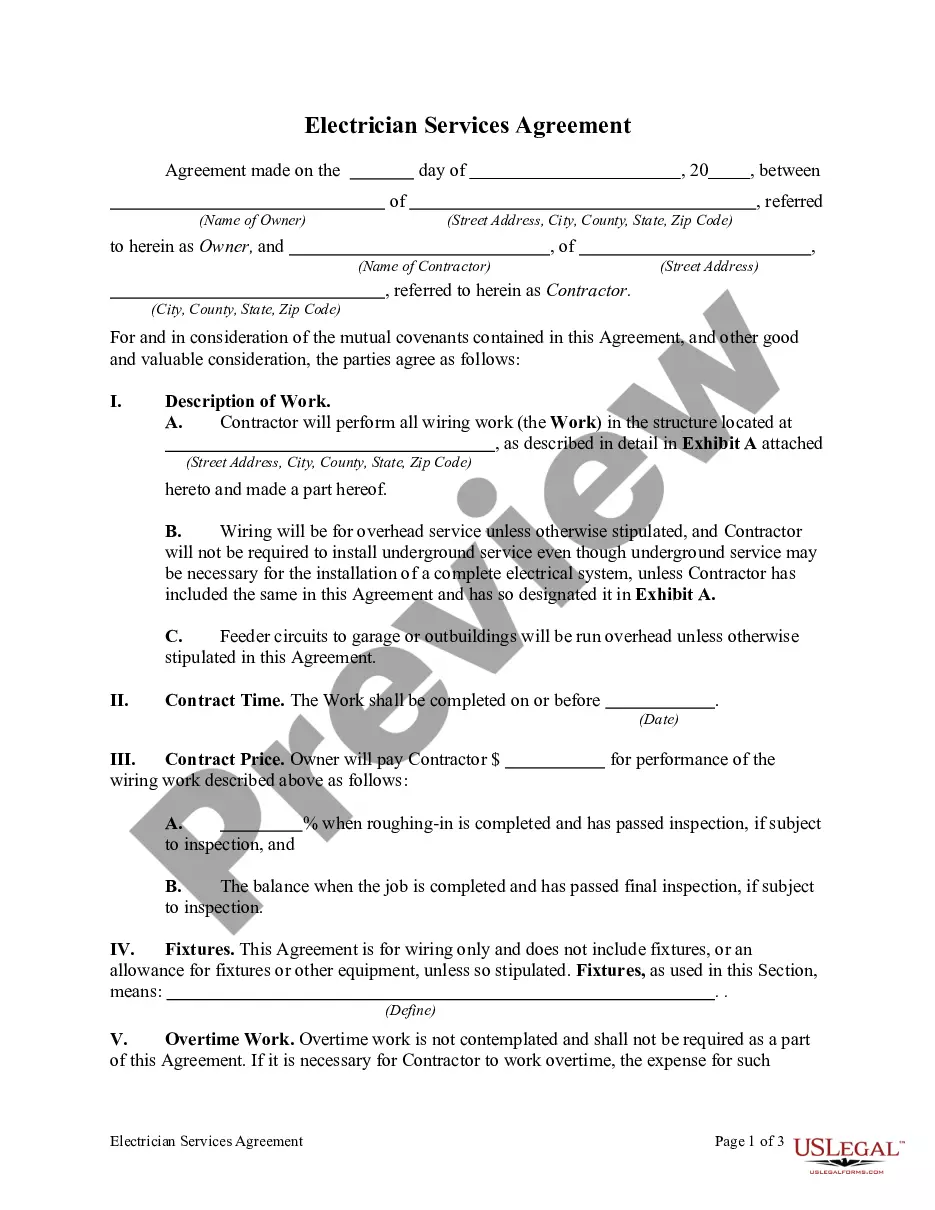
The Brick Mason Contract for Contractor is a legal agreement between a brick mason contractor and a property owner. It outlines the terms of a construction project, including payment structures such as cost plus or fixed fee agreements. This form ensures clarity in the roles and responsibilities of both parties, addressing critical aspects like change orders, site conditions, insurance, and warranties. This contract is designed specifically for compliance with the laws of the State of Texas, distinguishing it from other construction agreements by including state-specific legal considerations.
Key parts of this document
- Work site location and responsibilities
- Permit acquisition requirements
- Soil condition liabilities
- Insurance and warranty obligations
- Change order procedures
- Contract pricing terms and late payment penalties
- Termination and damages clauses
When this form is needed
This contract should be used whenever a brick mason contractor is hired for a construction project involving brickwork. It is particularly necessary when negotiating specific terms regarding payment structures, project conditions, change orders, and site-related responsibilities. Use this form to formalize agreements for residential or commercial projects that require precise documentation of the parties' obligations and legal protections.
Intended users of this form
- Brick mason contractors entering into contracts with property owners
- Property owners seeking to hire brick mason contractors for projects
- Individuals or businesses involved in new construction or remodeling projects
- Anyone looking to ensure compliance with Texas construction laws
How to prepare this document
- Identify the parties involved: Enter the legal names of the contractor and property owner.
- Specify the work site: Clearly outline the address where the project will occur.
- Outline payment arrangements: Choose either a cost plus or fixed fee agreement method.
- Detail insurance and warranty requirements: Include necessary coverage and warranty terms.
- Enter any change order terms: State how changes to the project scope will be handled.
- Sign and date the contract: Ensure both parties sign to validate the agreement.
Is notarization required?
This form does not typically require notarization unless specified by local law. Always check local regulations to ensure compliance with any additional requirements in your area.
Get your form ready online
Our built-in tools help you complete, sign, share, and store your documents in one place.
Make edits, fill in missing information, and update formatting in US Legal Forms—just like you would in MS Word.
Download a copy, print it, send it by email, or mail it via USPS—whatever works best for your next step.
Sign and collect signatures with our SignNow integration. Send to multiple recipients, set reminders, and more. Go Premium to unlock E-Sign.
If this form requires notarization, complete it online through a secure video call—no need to meet a notary in person or wait for an appointment.
We protect your documents and personal data by following strict security and privacy standards.

Make edits, fill in missing information, and update formatting in US Legal Forms—just like you would in MS Word.

Download a copy, print it, send it by email, or mail it via USPS—whatever works best for your next step.

Sign and collect signatures with our SignNow integration. Send to multiple recipients, set reminders, and more. Go Premium to unlock E-Sign.

If this form requires notarization, complete it online through a secure video call—no need to meet a notary in person or wait for an appointment.

We protect your documents and personal data by following strict security and privacy standards.
Typical mistakes to avoid
- Failing to specify a clear payment structure, leading to disputes over costs.
- Not including the exact work site, which can create confusion about project boundaries.
- Overlooking change order procedures, making it difficult to manage project modifications.
- Neglecting to verify insurance requirements, which could leave parties liable for accidents or damages.
Why complete this form online
- Convenience of downloading and customizing the legal form to suit specific project needs.
- Access to attorney-drafted content, ensuring compliance with local laws and regulations.
- Ability to save and edit the document as necessary, which allows for easy updates and revisions.
- Fast, secure access to legal documents without needing to visit a physical office.
Looking for another form?
Form popularity
FAQ
Becoming a Contractor In order to obtain a license, an individual must file an application with the California Contractors State License Board (CSLB). The CSLB also requires that the individual pass two examinations, Law and Business, and Masonry Trade.
Begin with the Date and the Address of the Other Party. Start with the Basic Details of the Planned Work. Include Special Stipulations. State Whether There Will be a Further Agreement. Create an Area for Signatures. Sign and Date the Contract Letter.
#1: Review Your Bid. #2: Review Complete Plans. #3: Review All Specifications. #4: Visit the Job Site. #5: Review the Job Schedule. #6: Complete a Project Checklist. #7: Verify Project Funding. #8: Read Complete Contract.
Who the parties are. The description of the works in a concise summary. The documents that must be referred to. Any design responsibilities the contractor has. Any compliance requirements, such as from planning, building control, party walls and utility companies.
Contract Types Overview. Express and Implied Contracts. Unilateral and Bilateral Contracts. Unconscionable Contracts. Adhesion Contracts. Aleatory Contracts. Option Contracts. Fixed Price Contracts.
Identifying/Contact Information. Title and Description of the Project. Projected Timeline and Completion Date. Cost Estimate and Payment Schedule. Stop Work Clause and Stop Payment Clause. Act of God Clause. Change Order Agreement. Warranty.
The building contract should contain your tender, building specifications, home owners warranty, your house (building) plans, engineering plans, special conditions and the building contract itself. Without all of these documents you should not enter into your building contract.
Identifying/Contact Information. Title and Description of the Project. Projected Timeline and Completion Date. Cost Estimate and Payment Schedule. Stop Work Clause and Stop Payment Clause. Act of God Clause. Change Order Agreement. Warranty.