Complaint Against Police Officer for Unlawful Arrest, Search, and Incarceration Resulting in Personal Injuries - Police Brutality and Unlawful Detainment
What is this form?
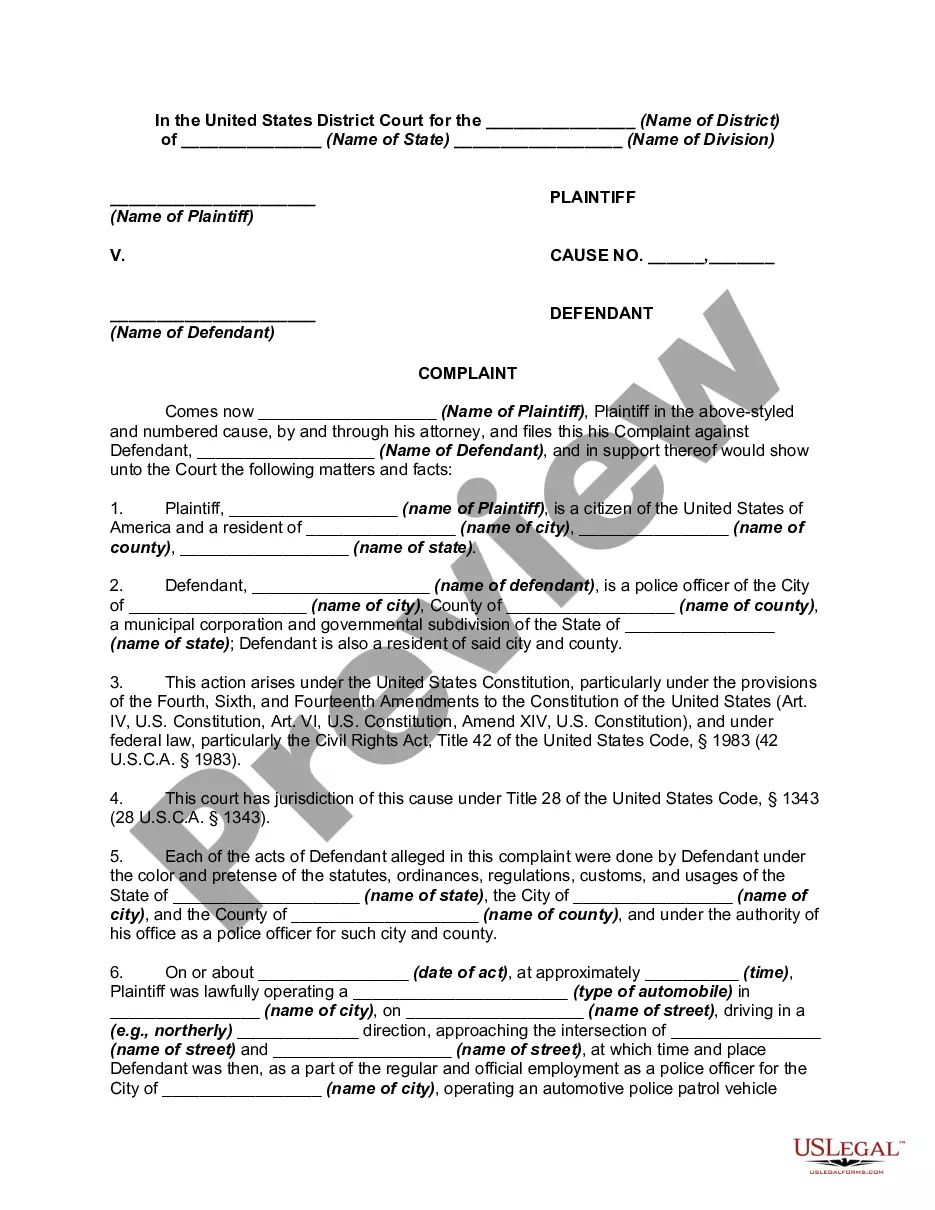
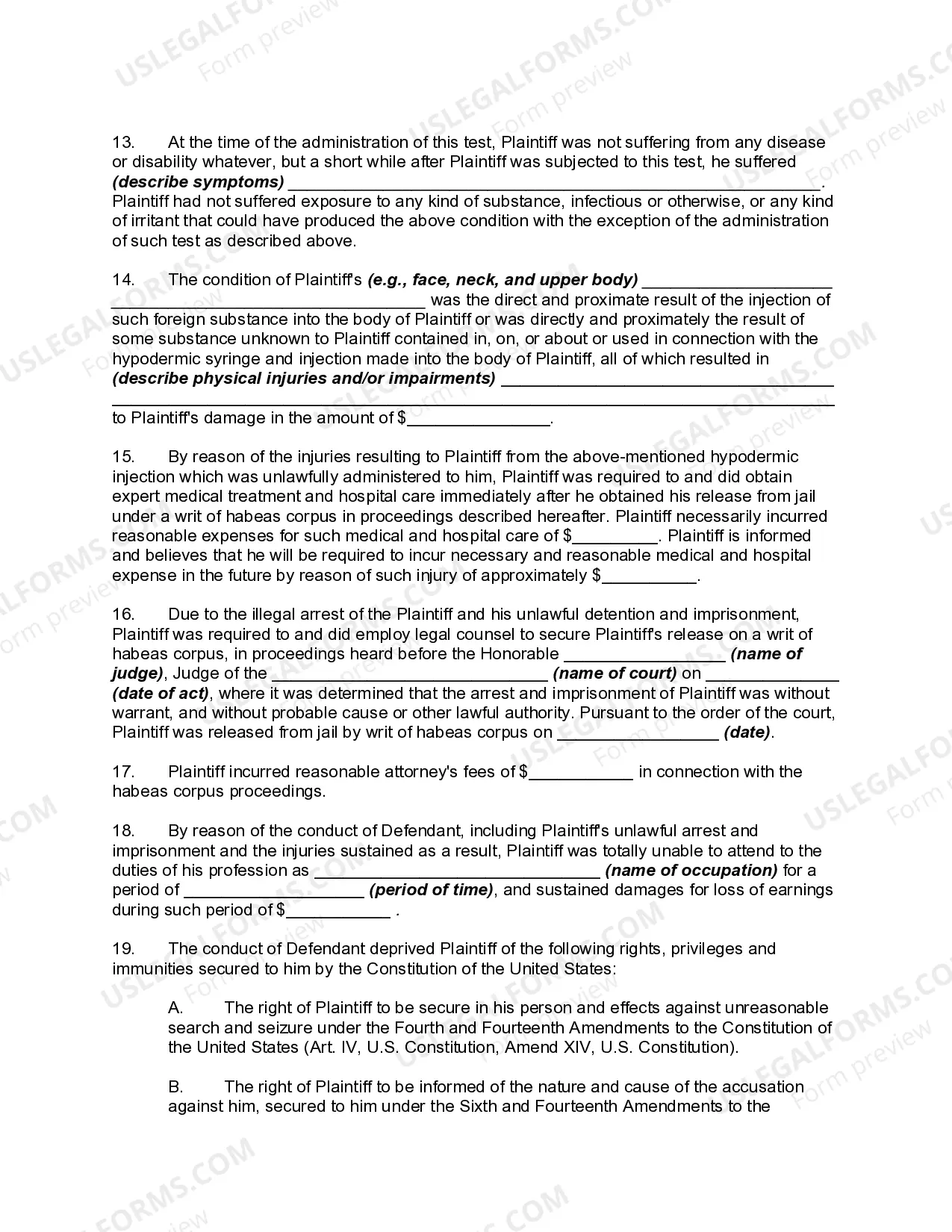
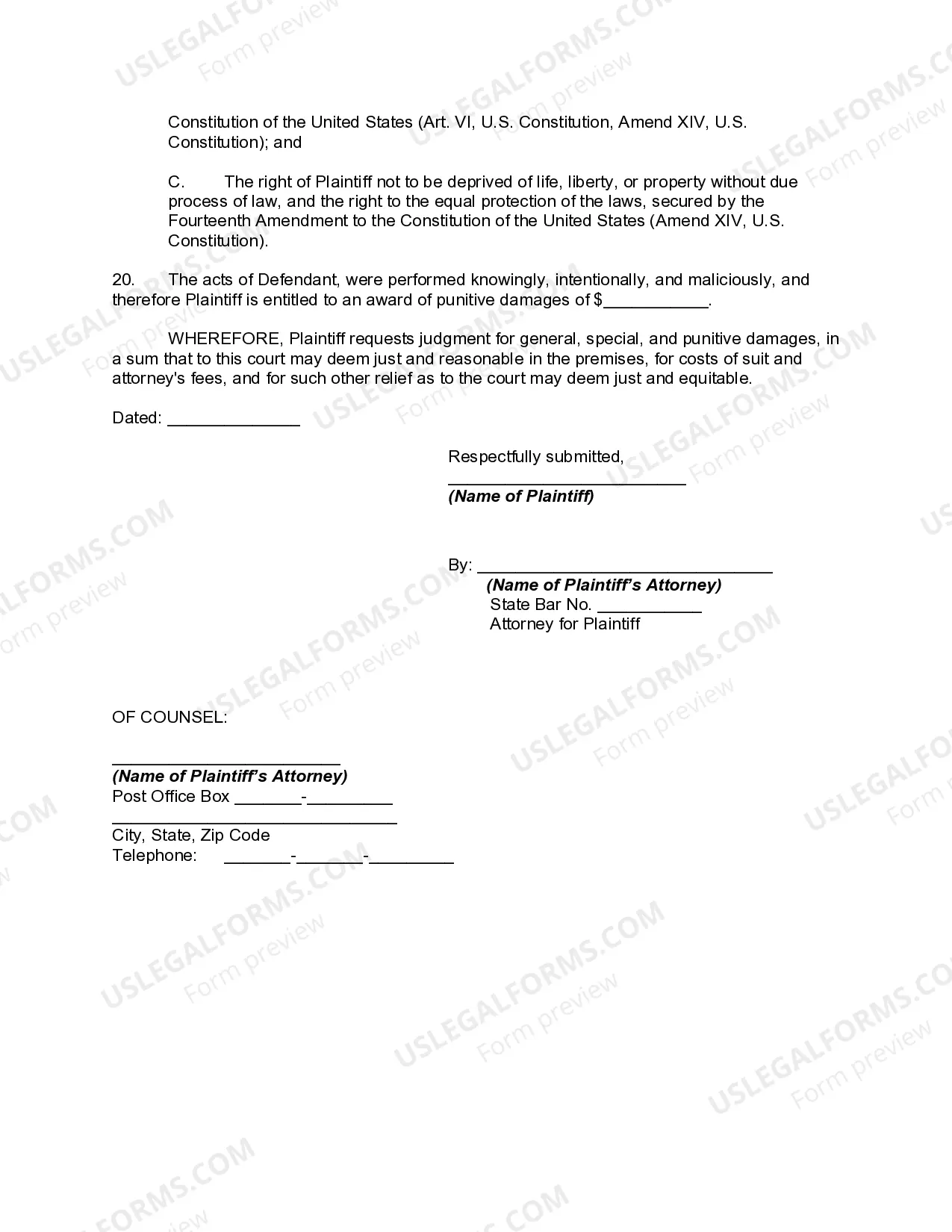
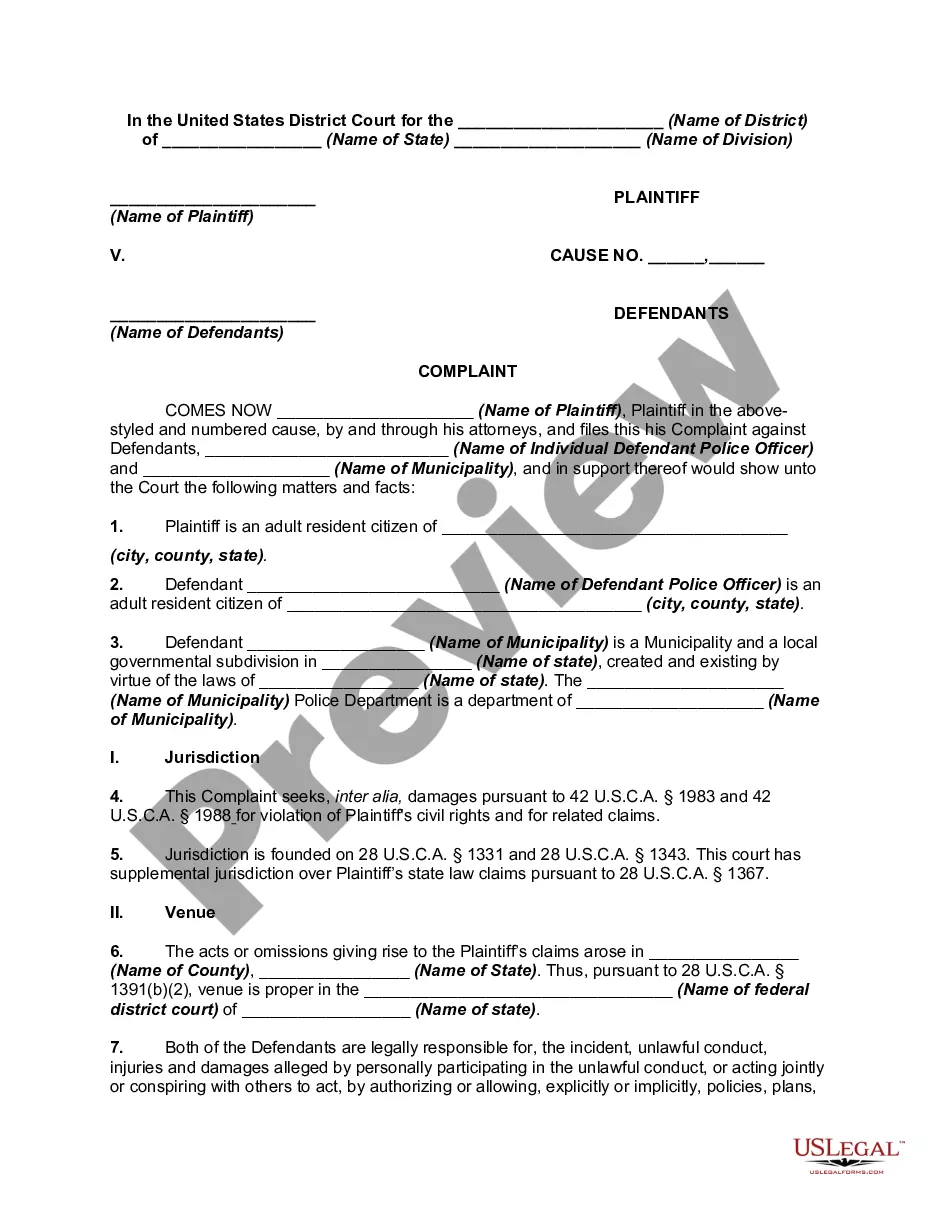
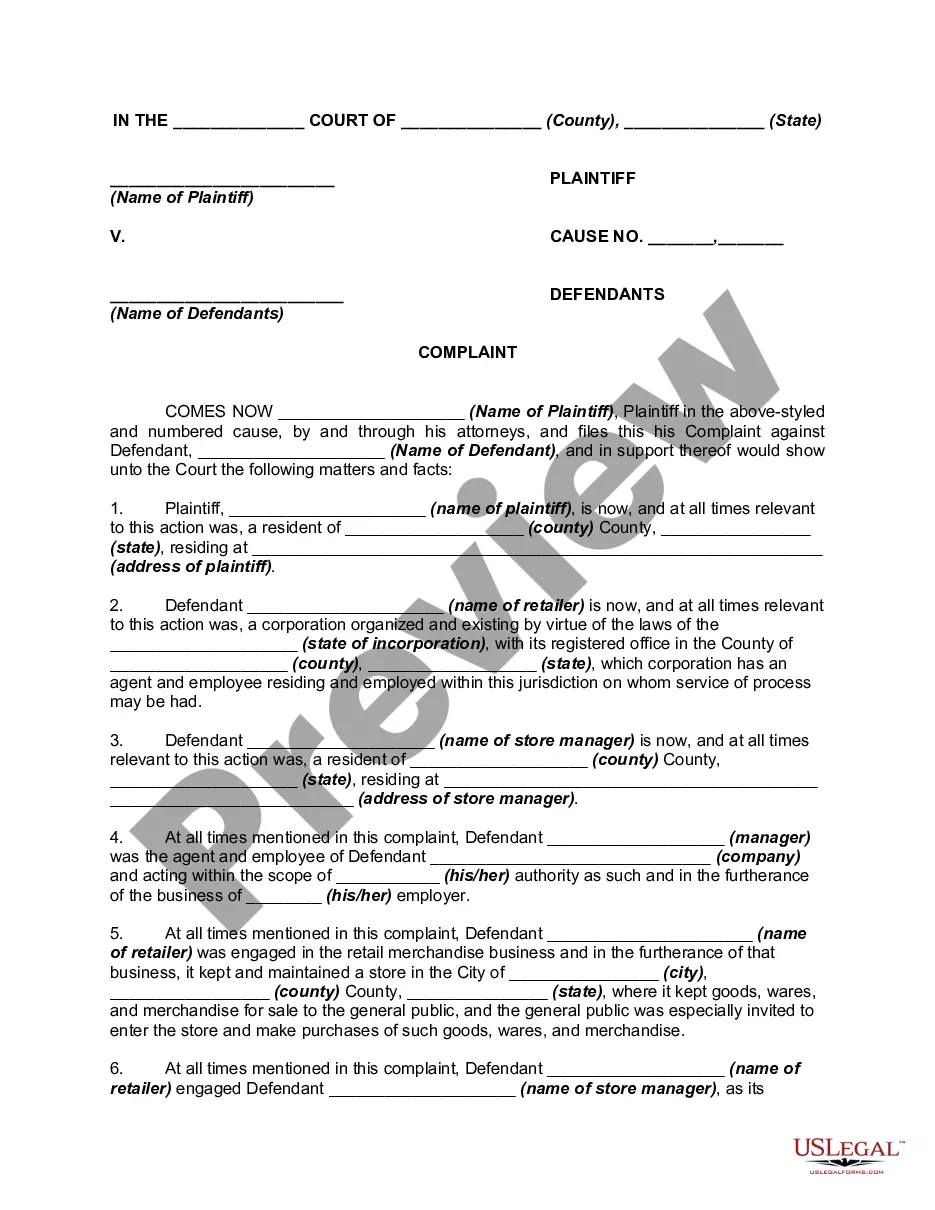
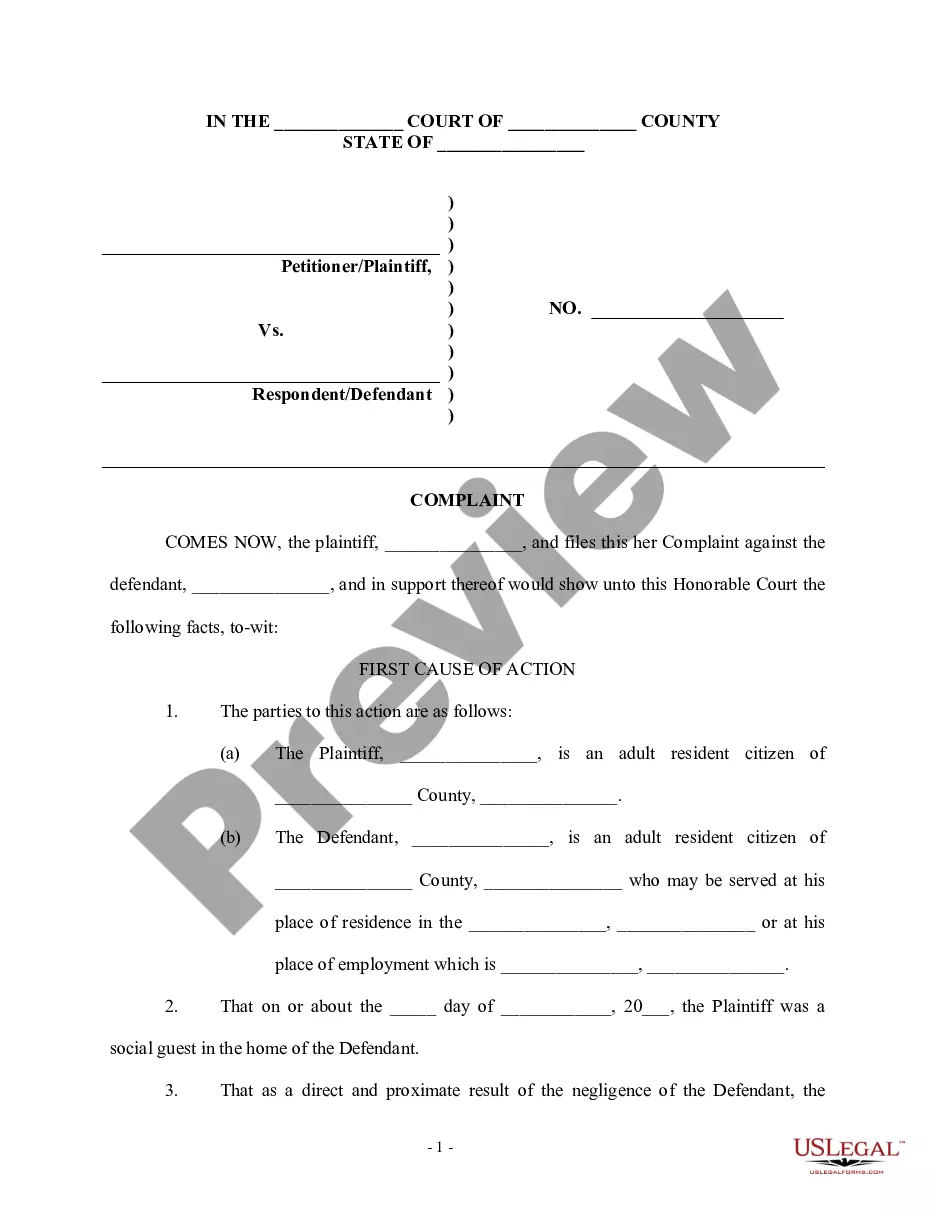
This form is a Complaint Against Police Officer for Unlawful Arrest, Search, and Incarceration Resulting in Personal Injuries. It is designed for individuals seeking to address alleged police brutality or unlawful detainment that resulted in personal harm. This form allows the plaintiff to articulate claims under both state law and federal law as specified by 42 U.S.C.A. §1983, distinguishing it from general complaint forms in that it directly addresses violations of constitutional rights during interactions with law enforcement.
Key parts of this document
- Identification of the plaintiff and defendant
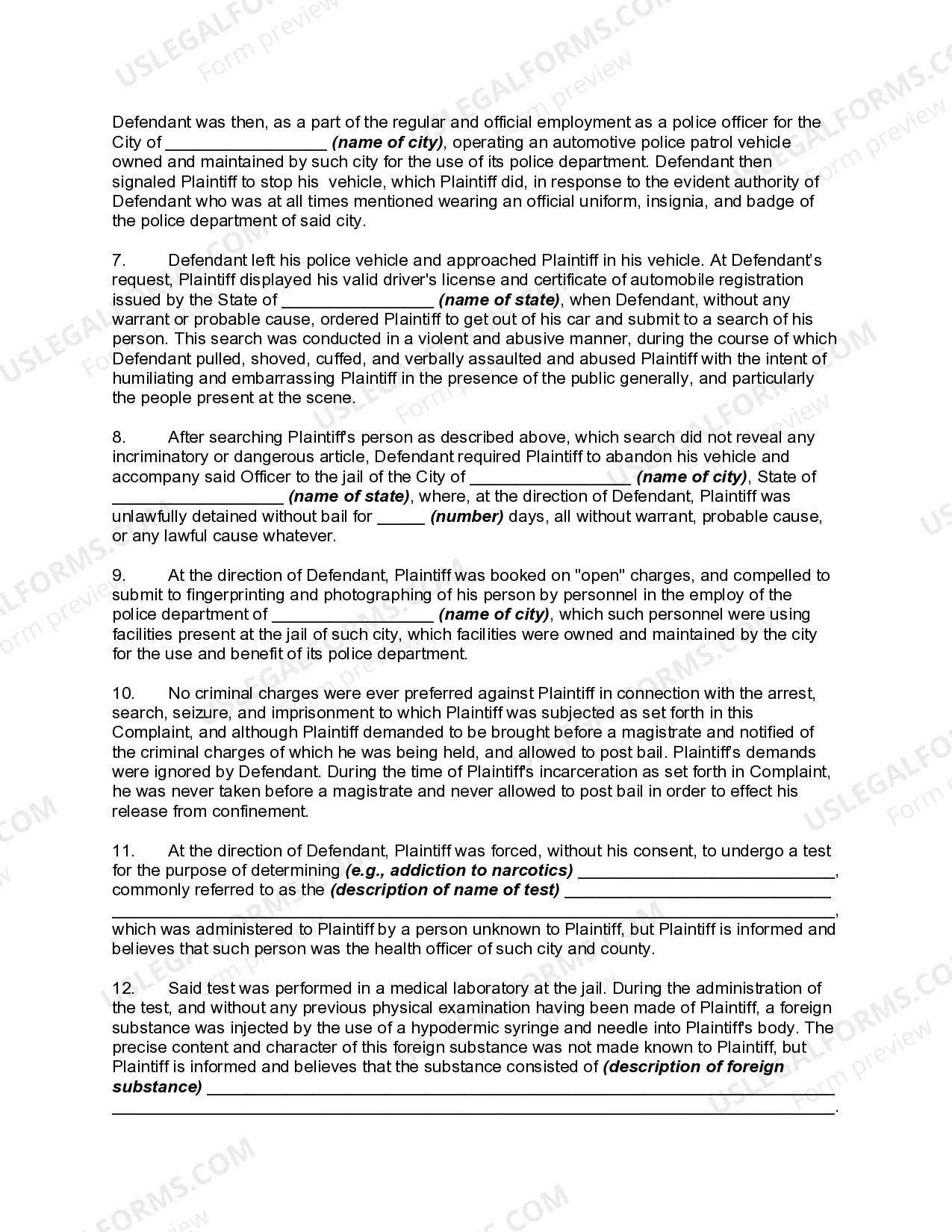
- Facts surrounding the alleged unlawful arrest and search
- Citation of constitutional rights that were violated
- Details of injuries and damages resulting from the incident
- Specifications regarding medical treatment and expenses incurred
- Request for general, special, and punitive damages

When to use this document
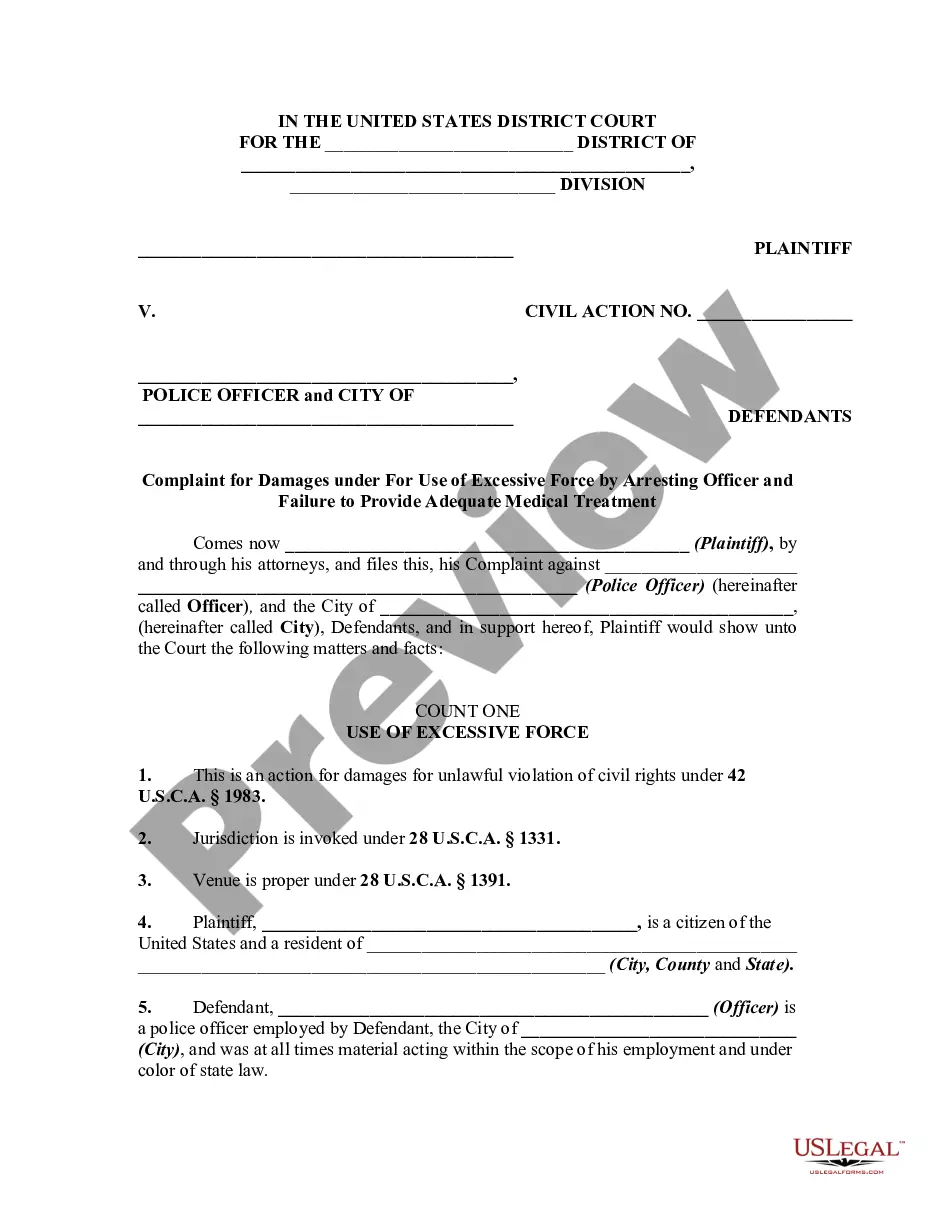
This form should be used when a person believes that they have been the victim of unlawful arrest or excessive use of force by a police officer, resulting in personal injuries. Situations may include incidents where an arrest was made without probable cause, illegal searches were conducted, or excessive force was employed by law enforcement, leading to physical or emotional injuries. It is essential in cases where individuals wish to seek legal redress for violations of their civil rights.
Who this form is for
- Individuals who have experienced unlawful arrest, search, or detainment by police officers
- Persons seeking to hold law enforcement accountable for actions resulting in injury
- Victims of police brutality looking for legal recourse
- Anyone interested in asserting their rights under the U.S. Constitution against state actors
Completing this form step by step
- Identify and fill out the names of the plaintiff and defendant, including contact information.
- Describe the incident in detail, including dates, times, and the nature of the police actions.
- Document the injuries sustained and any medical treatment received, along with associated costs.
- Specify the claims made against the defendant, including constitutional rights violations.
- Indicate the damages being sought, including general, special, and punitive damages.
- Sign and date the form, ensuring it is completed according to local court requirements.
Is notarization required?
This form does not typically require notarization unless specified by local law. Be sure to check your local regulations to confirm whether notarization is necessary for your submission.
Get your form ready online
Our built-in tools help you complete, sign, share, and store your documents in one place.
Make edits, fill in missing information, and update formatting in US Legal Forms—just like you would in MS Word.
Download a copy, print it, send it by email, or mail it via USPS—whatever works best for your next step.
Sign and collect signatures with our SignNow integration. Send to multiple recipients, set reminders, and more. Go Premium to unlock E-Sign.
If this form requires notarization, complete it online through a secure video call—no need to meet a notary in person or wait for an appointment.
We protect your documents and personal data by following strict security and privacy standards.

Make edits, fill in missing information, and update formatting in US Legal Forms—just like you would in MS Word.

Download a copy, print it, send it by email, or mail it via USPS—whatever works best for your next step.

Sign and collect signatures with our SignNow integration. Send to multiple recipients, set reminders, and more. Go Premium to unlock E-Sign.

If this form requires notarization, complete it online through a secure video call—no need to meet a notary in person or wait for an appointment.

We protect your documents and personal data by following strict security and privacy standards.
Mistakes to watch out for
- Failing to provide clear and specific details about the incident.
- Neglecting to cite applicable constitutional rights for the claims made.
- Missing signatures or notarization where required.
- Not including all relevant medical treatment and related expenses.
Benefits of completing this form online
- Convenient access 24/7 allows you to complete the form at your own pace.
- Edit or update the form as needed before finalizing.
- Reliable templates drafted by licensed attorneys to ensure legal compliance.
- Fast and easy download of your completed form for filing.
Looking for another form?



Form popularity
FAQ
This form is a standard civil action complaint template for individuals who allege police brutality or unlawful detainment resulting in personal injuries. It lets a plaintiff assert state and federal rights under 42 U.S.C. § 1983, identify the plaintiff and defendant, outline the unlawful conduct, describe injuries, and request damages, including medical expenses and punitive damages in a multi-state context.
Yes. This form is designed for suing police for unlawful arrest or detainment, guiding you to describe the incident, name the officer and agency, and cite the rights violated. It supports both federal claims under 42 U.S.C. § 1983 and state-law theories, and includes sections for injuries, medical treatment, and damages.
Examples include unlawful arrest, illegal searches, or excessive force during police encounters that violate constitutional rights. This form focuses on those types of violations, allowing you to cite applicable rights and describe resulting injuries and damages, with space to include medical expenses and both general and special damages.
This form addresses conduct that infringes constitutional rights during police encounters, such as detaining without probable cause, performing unlawful searches, or using excessive force. It requires a narrative of the incident, the rights violated, and the injuries and damages sought.
This form does not provide statistics. It is a template for alleging unlawful arrest, unlawful search, and injurious detainment that violated constitutional rights, with space to document injuries, medical expenses, and requests for general, special, and punitive damages.
This form is tailored for claims of unlawful arrest, search, and incarceration resulting in personal injuries and supports both state-law and federal claims under 42 U.S.C. § 1983. It also directs users to document injuries, medical expenses, and to request general, special, and punitive damages, setting it apart from broader templates.