Motion In Limine to Exclude Breathalyzer Results for Failure to Follow Observation Protocols - DUI
What this document covers
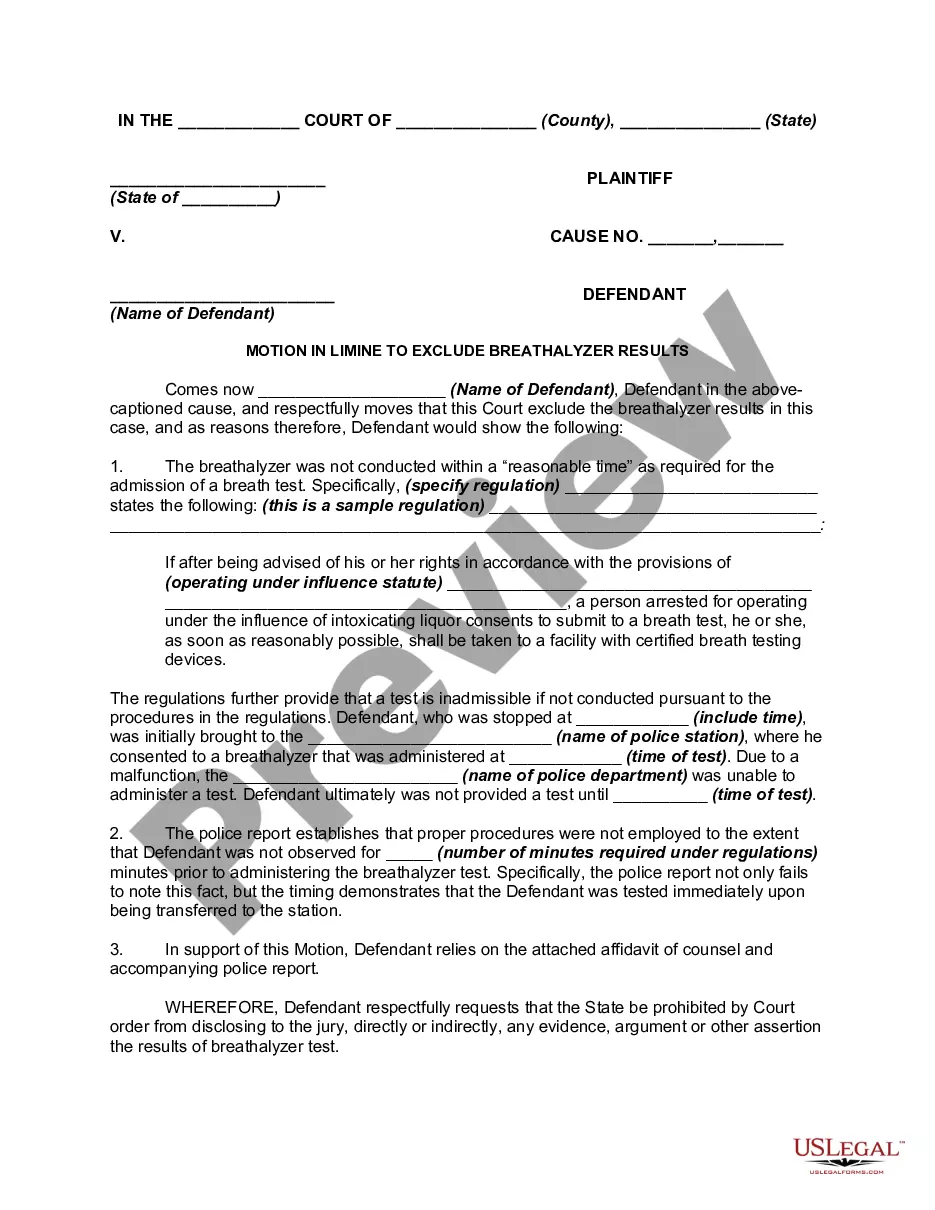
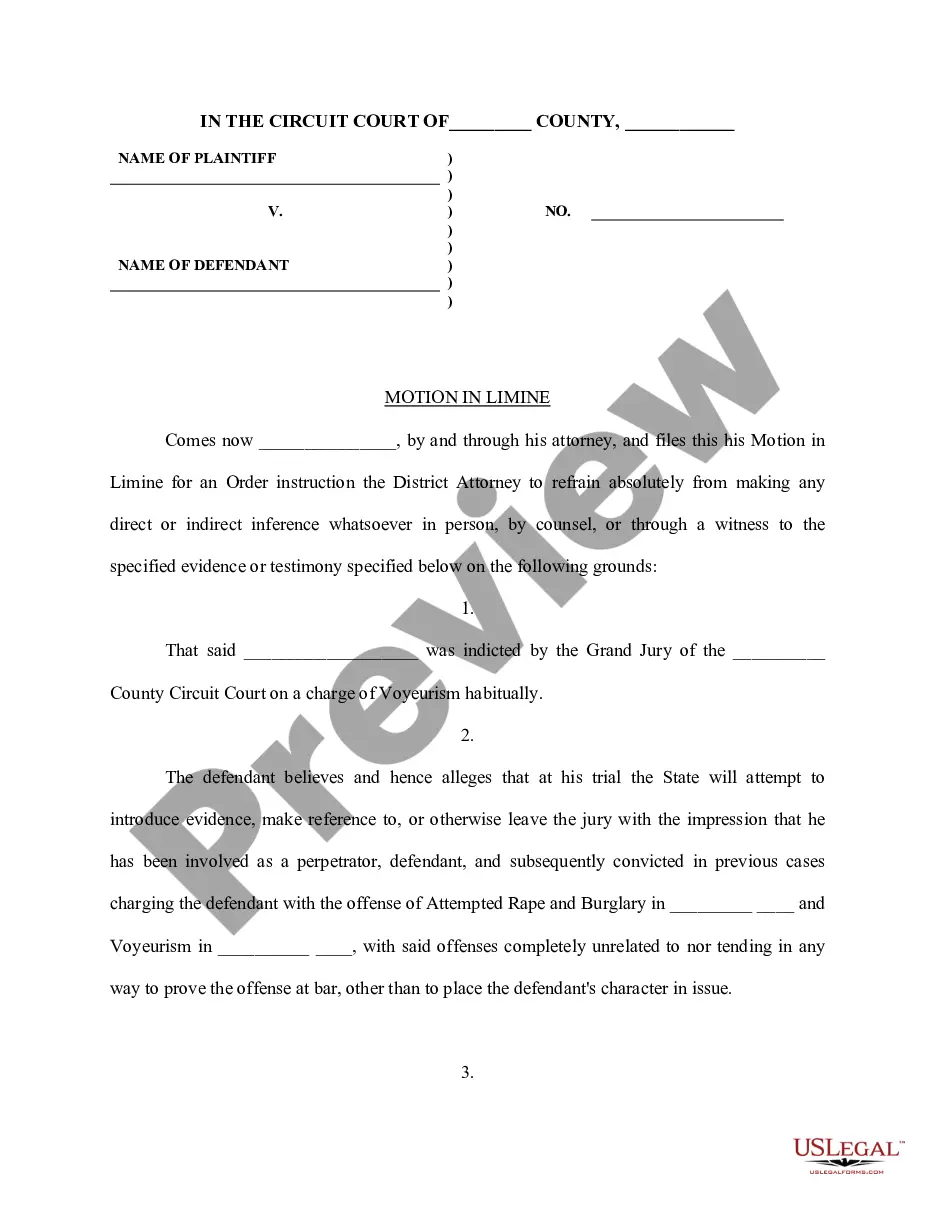
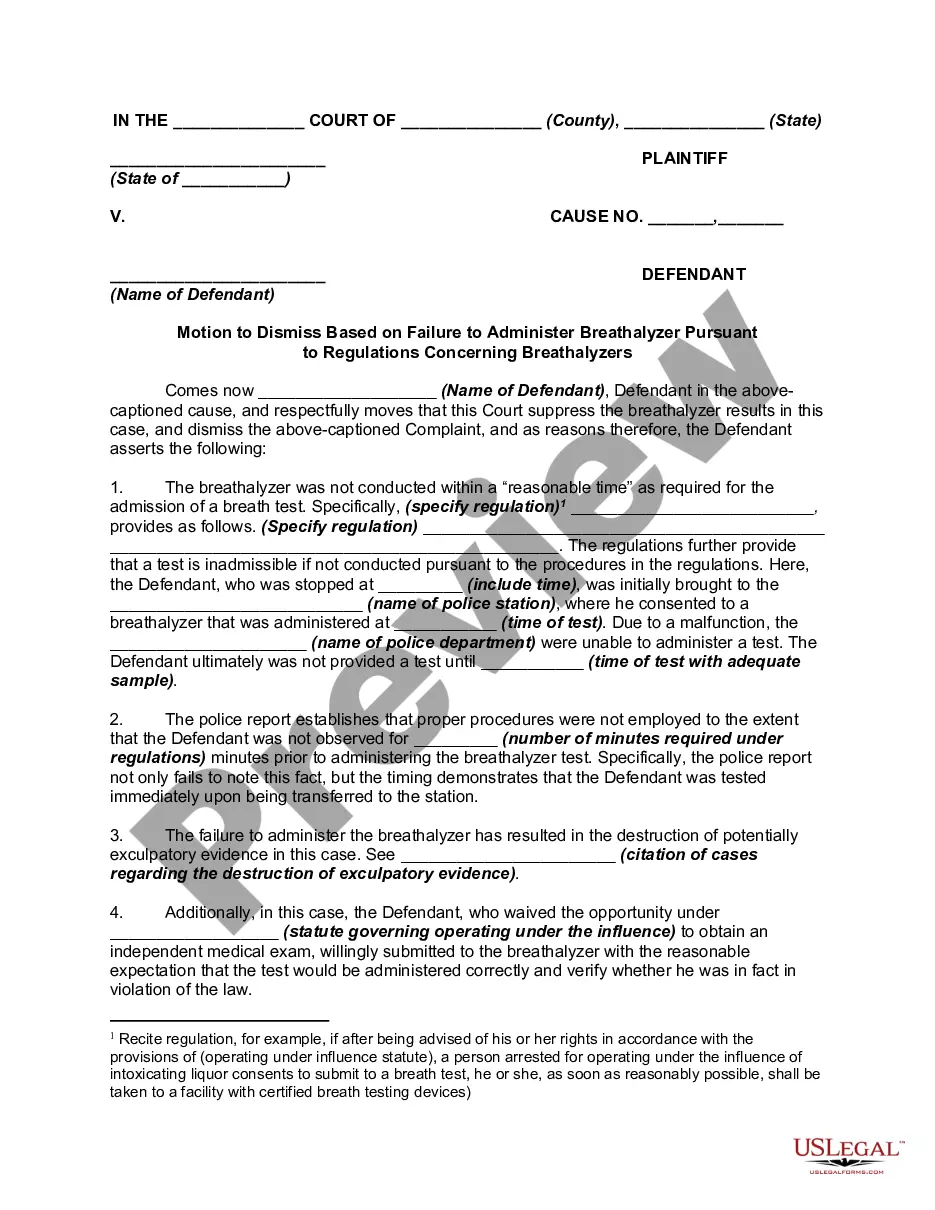
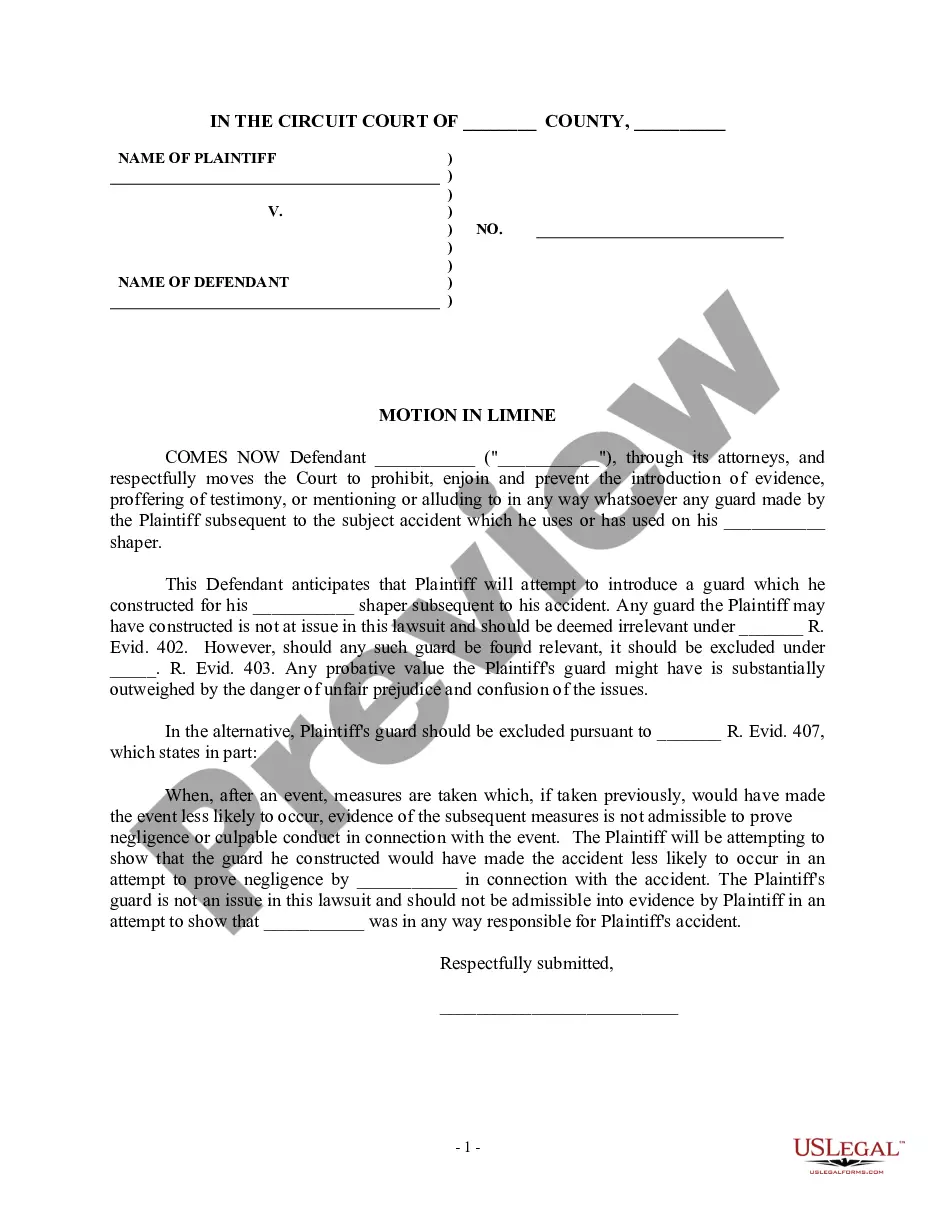
The Motion In Limine to Exclude Breathalyzer Results is a legal document used in DUI cases to challenge the admissibility of breathalyzer test results. This motion argues that the test was improperly conducted, often due to failure to adhere to observational protocols, which can invalidate the results. By filing this motion, defendants can seek to prevent jurors from considering potentially flawed evidence during their trial.
Key components of this form
- Identifying information for the plaintiff (State) and defendant.
- Specific grounds for the motion, including timing and observation issues related to the breathalyzer test.
- References to applicable laws and regulations governing breathalyzer tests.
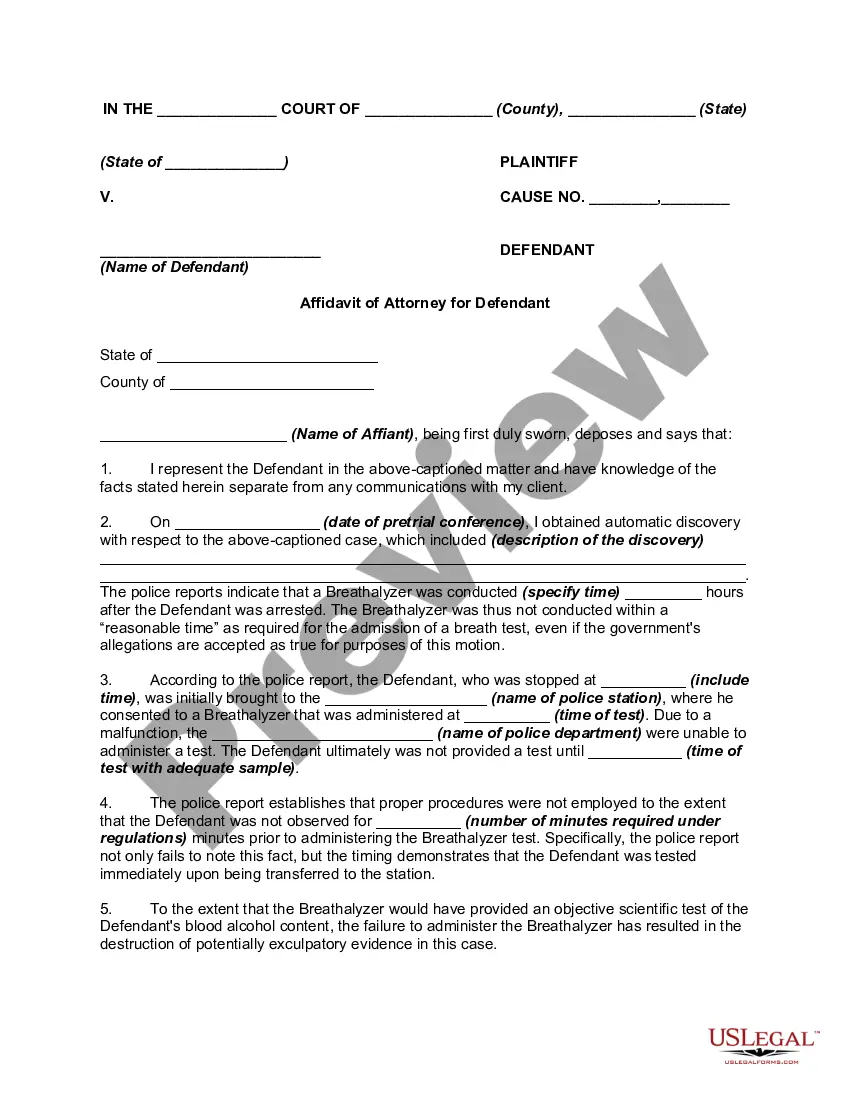
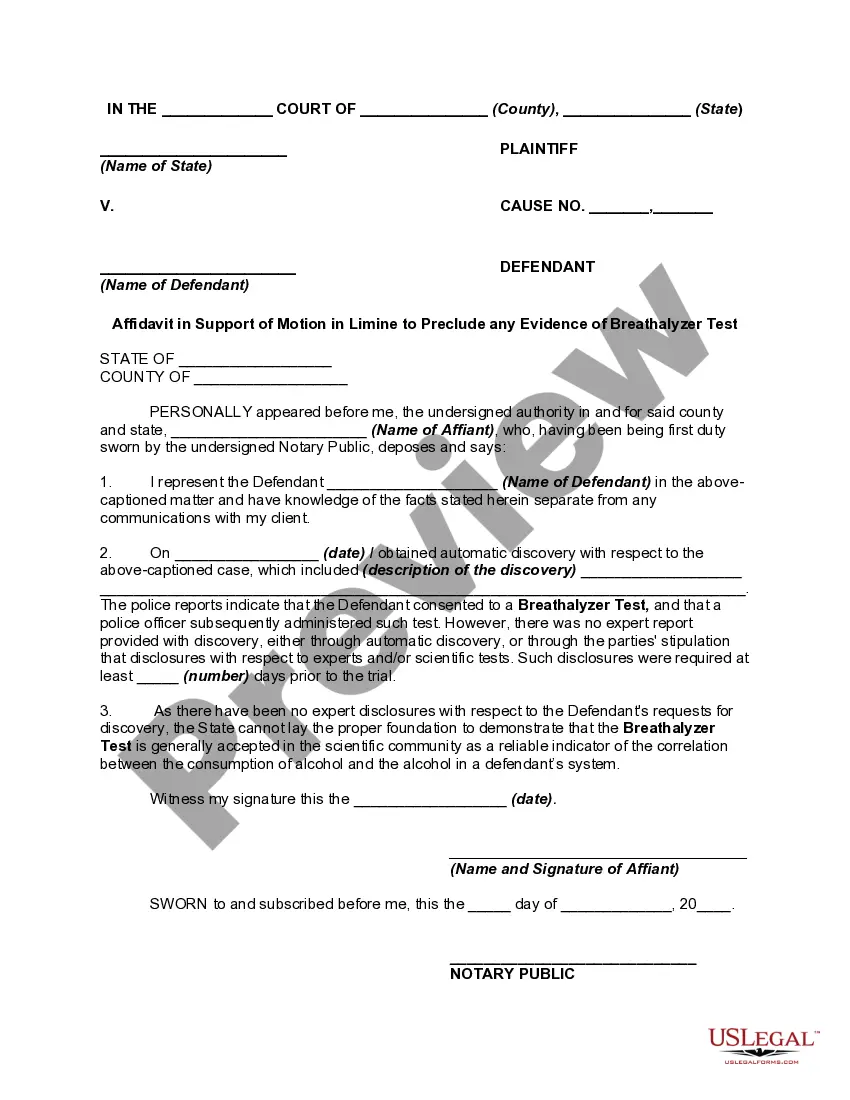
- Affidavit of counsel and attached police reports supporting the motion.
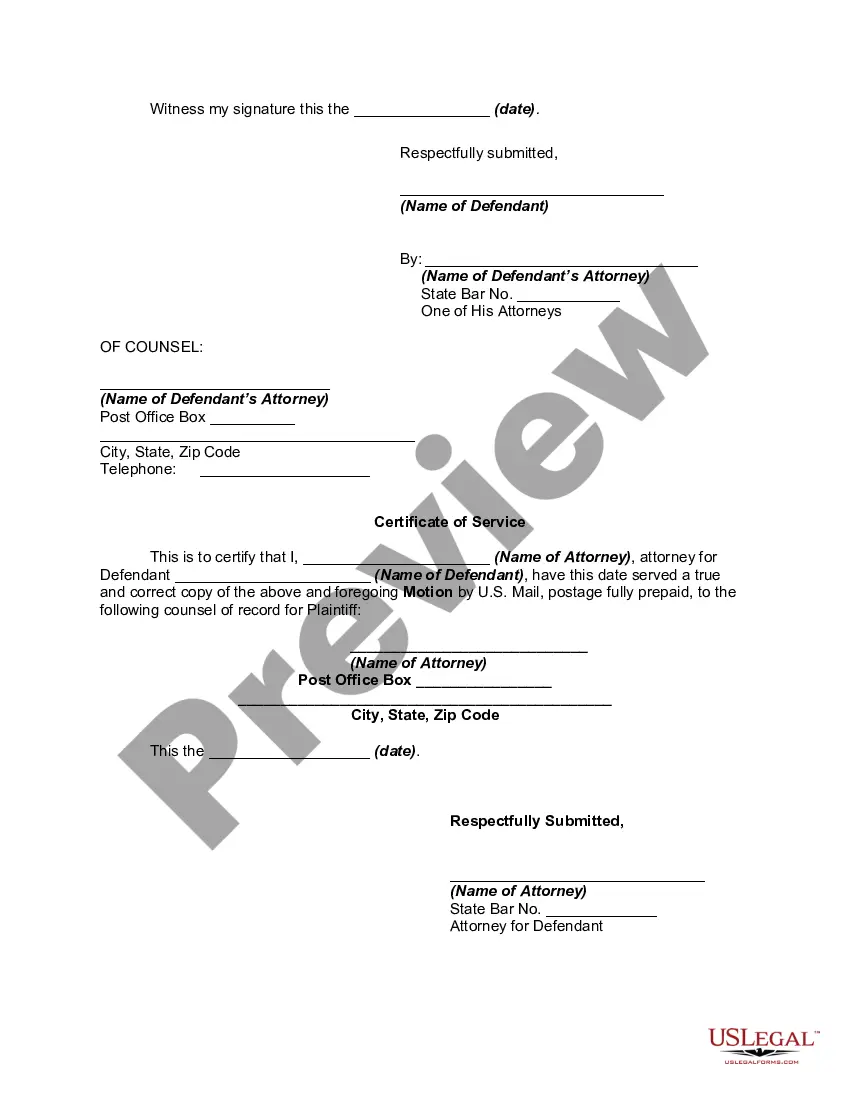
- Certificate of service to confirm that all parties have received a copy of the motion.
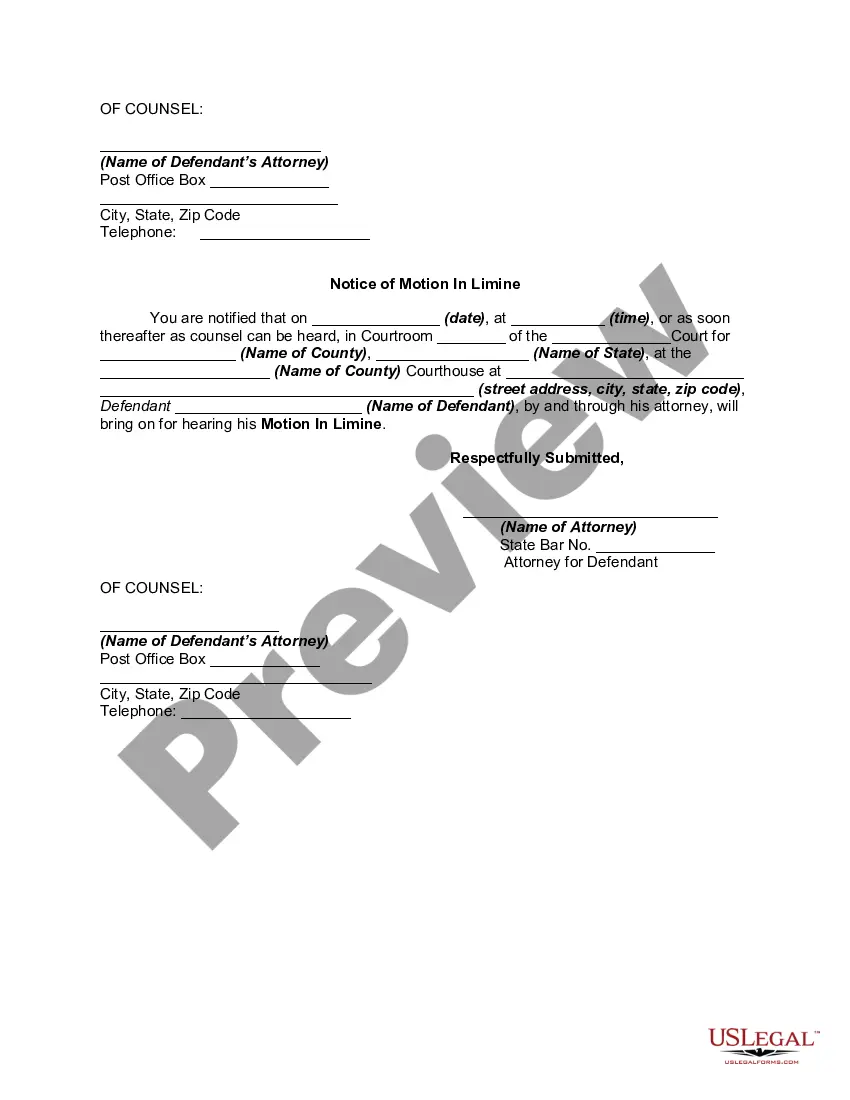
- Notice of the scheduled hearing date and time for the motion.
When to use this form
This form should be used when a defendant in a DUI case intends to argue that the breathalyzer results should be excluded from evidence due to procedural failures. Situations may include instances where the test was not conducted within the designated timeframe, or where the officer did not follow proper protocols, such as failing to observe the defendant for the required minutes before administering the test.
Who this form is for
This form is intended for:
- Defendants facing DUI charges who wish to challenge breathalyzer test results.
- Attorneys representing defendants in DUI cases.
- Individuals seeking to understand how to file a motion to exclude evidence in a DUI trial.
Steps to complete this form
- Fill in the names of the plaintiff (State) and the defendant as well as the cause number.
- Clearly state the reasons for the motion, citing the specific procedural errors or regulations that apply.
- Attach any supporting documents, such as affidavits or police reports that corroborate your claims.
- Provide the date of the motion and your signature, along with your attorney's information if applicable.
- Ensure that all parties involved are notified of the motion and its hearing date.
Does this document require notarization?
In most cases, this form does not require notarization. However, some jurisdictions or signing circumstances might. US Legal Forms offers online notarization powered by Notarize, accessible 24/7 for a quick, remote process.
Get your form ready online
Our built-in tools help you complete, sign, share, and store your documents in one place.
Make edits, fill in missing information, and update formatting in US Legal Forms—just like you would in MS Word.
Download a copy, print it, send it by email, or mail it via USPS—whatever works best for your next step.
Sign and collect signatures with our SignNow integration. Send to multiple recipients, set reminders, and more. Go Premium to unlock E-Sign.
If this form requires notarization, complete it online through a secure video call—no need to meet a notary in person or wait for an appointment.
We protect your documents and personal data by following strict security and privacy standards.

Make edits, fill in missing information, and update formatting in US Legal Forms—just like you would in MS Word.

Download a copy, print it, send it by email, or mail it via USPS—whatever works best for your next step.

Sign and collect signatures with our SignNow integration. Send to multiple recipients, set reminders, and more. Go Premium to unlock E-Sign.

If this form requires notarization, complete it online through a secure video call—no need to meet a notary in person or wait for an appointment.

We protect your documents and personal data by following strict security and privacy standards.
Common mistakes to avoid
- Failing to cite specific regulations that support the argument for exclusion.
- Not observing the required timelines for filing the motion.
- Neglecting to attach necessary supporting documents, such as affidavits or reports.
- Inaccurate or incomplete information regarding the defendant or the case details.
Benefits of using this form online
- Convenient access to a professionally drafted legal form that can be tailored to your needs.
- Editability allows for customization to fit specific case requirements.
- Immediate availability ensures timely filing when facing legal deadlines.
Looking for another form?


Form popularity
FAQ
The test on the roadside isn't the "breathalyzer". The number on the roadside is not admissible and is only used for positive or negative for alcohol. So, the officer has no obligation to show you that number.
In most cases when a motorist has been detained for a traffic violation and is suspected of drunk driving, the investigating officer will request the suspect to perform certain field sobriety tests (FSTs). It is impossible to pass a field sobriety test.
3 attorney answersYou have a right to refuse the breathalyzer test, thus, it is irrelevant how many times it was administered since the officer marked a refusal.
You don't have to be under the influence to fail a field sobriety test. In fact, about one-third of sober people who take a field sobriety test fail. Unfortunately, if you fail the field sobriety test, you will likely be arrested and taken into police custody.
Use of Field Sobriety Tests They have published several training manuals associated with FSTs. As a result of the NHTSA studies, the walk-and-turn test was determined to be 68% accurate, and the one-leg stand test is only 65% accurate when administered to people within the study parameters.
Fighting Back Against Either DUI Test What this means is that a person who passes a field sobriety test but fails a breathalyzer test can be charged and convicted of a DUI in California.
Breathalyzer tests measure the concentration of alcohol in your bloodstream. If you consume alcohol immediately before taking the test, though, it may issue a false positive.If less time has passed, your breathalyzer test's reading may be inaccurate.
08 percent or higher, at which point it's considered a DUI or DWI. However, the margin of error with portable breathalyzers can reach 15 percent, and up to 23 percent of the drivers charged for DUI/DWI may be victims of inaccurate breathalyzer results. The most accurate way to test BAC is by sampling blood.
Stand on one foot while counting. Walk a straight line, heel to toe for a specific distance. With arms stretched out, touch your finger to the tip of your nose. Repeat the alphabet from Z to A. Nystagmus or Horizontal/Vertical Gaze Test.