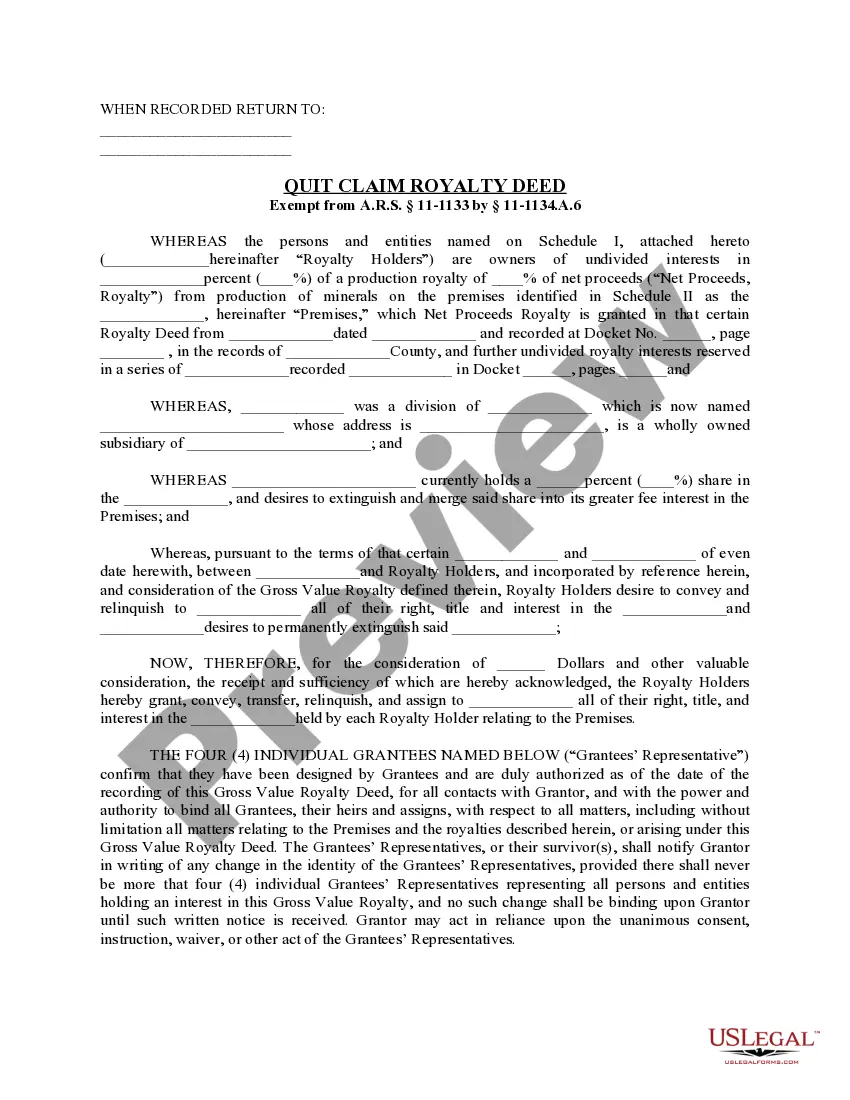
Contract or Agreement for the Construction of a Residence or Home
Understanding this form
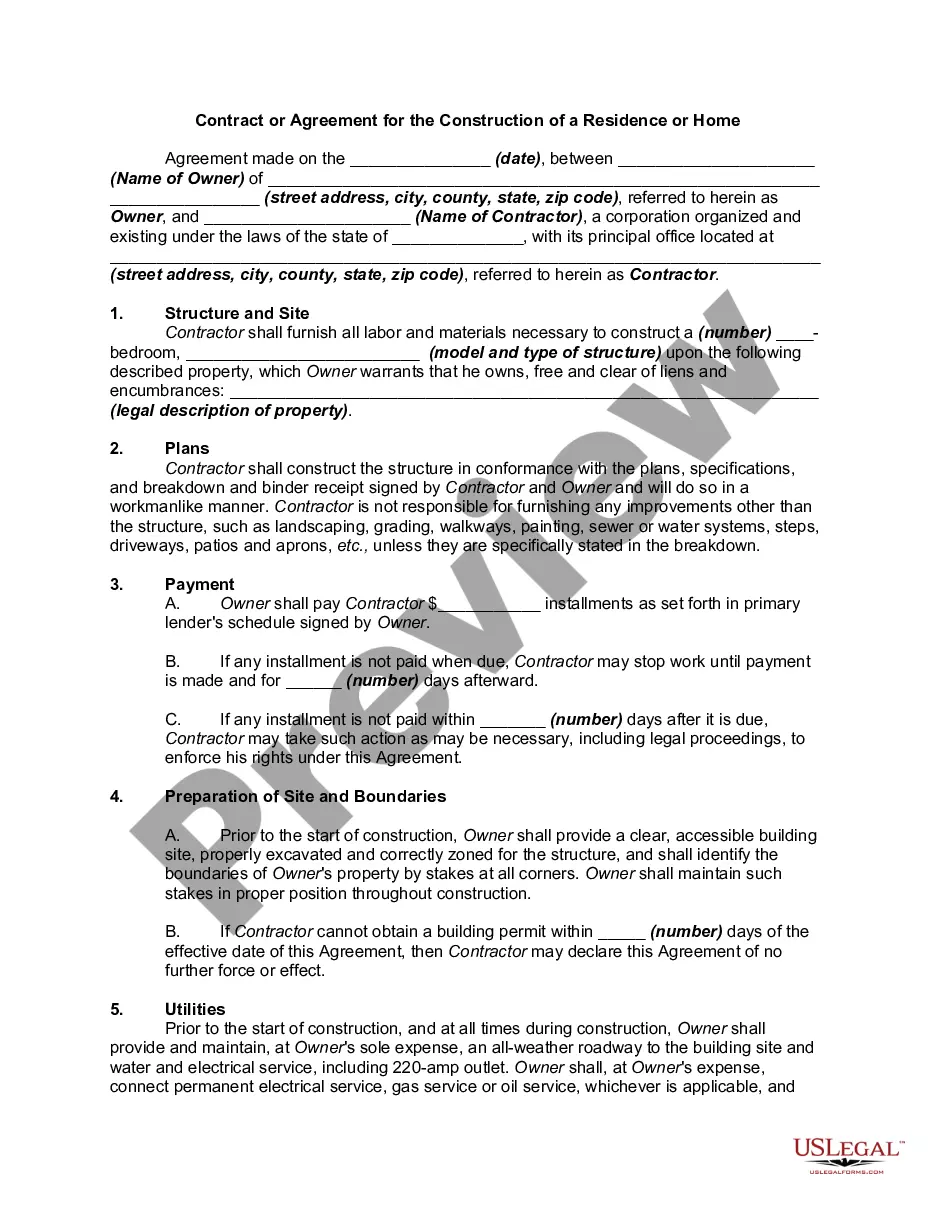
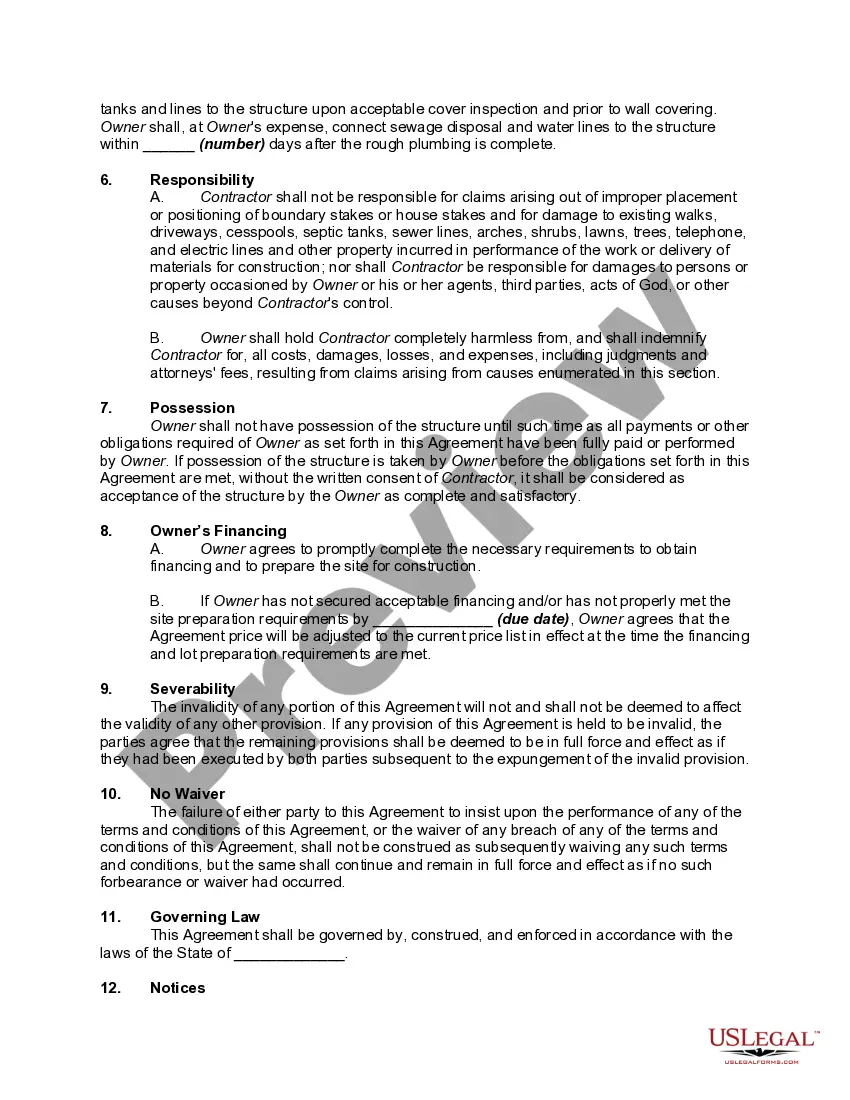
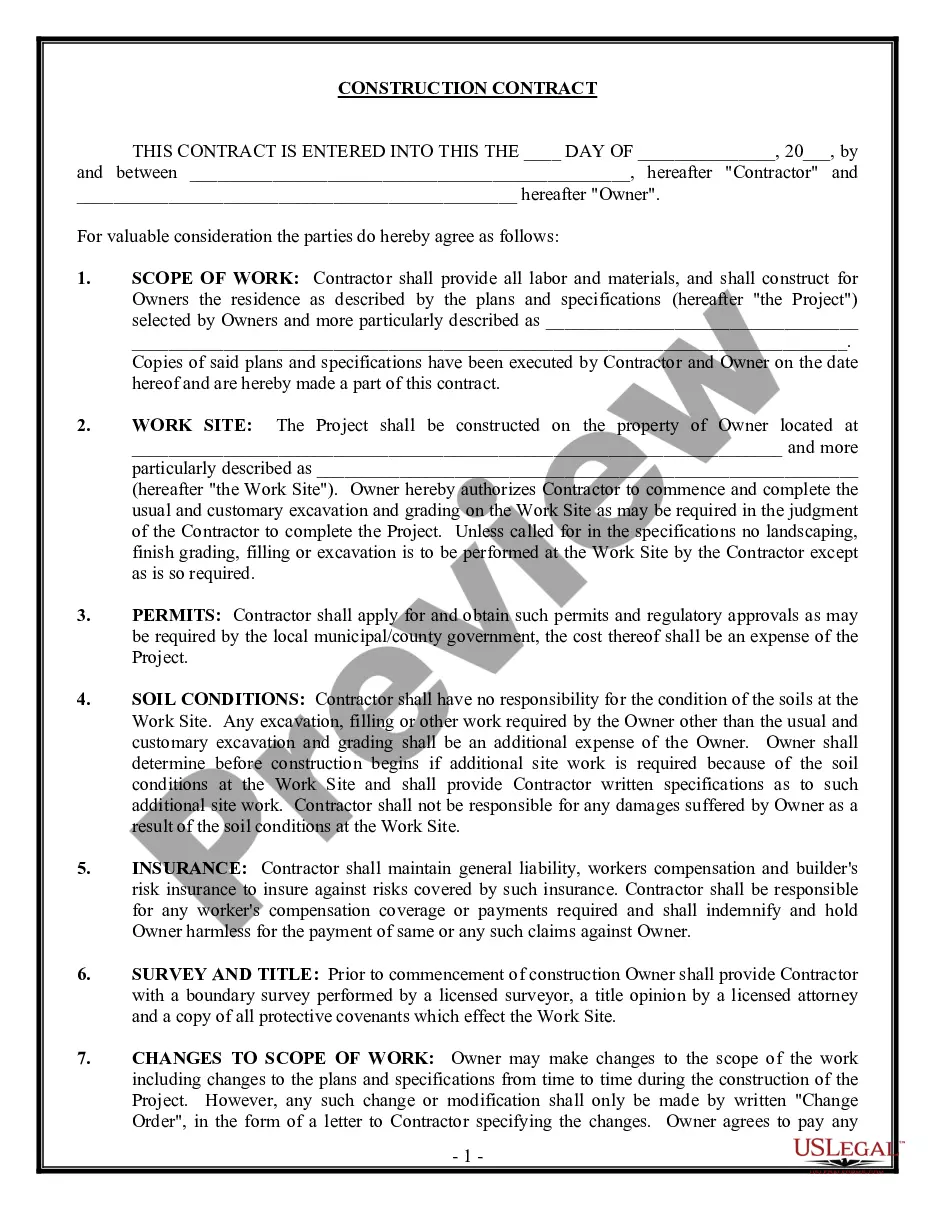
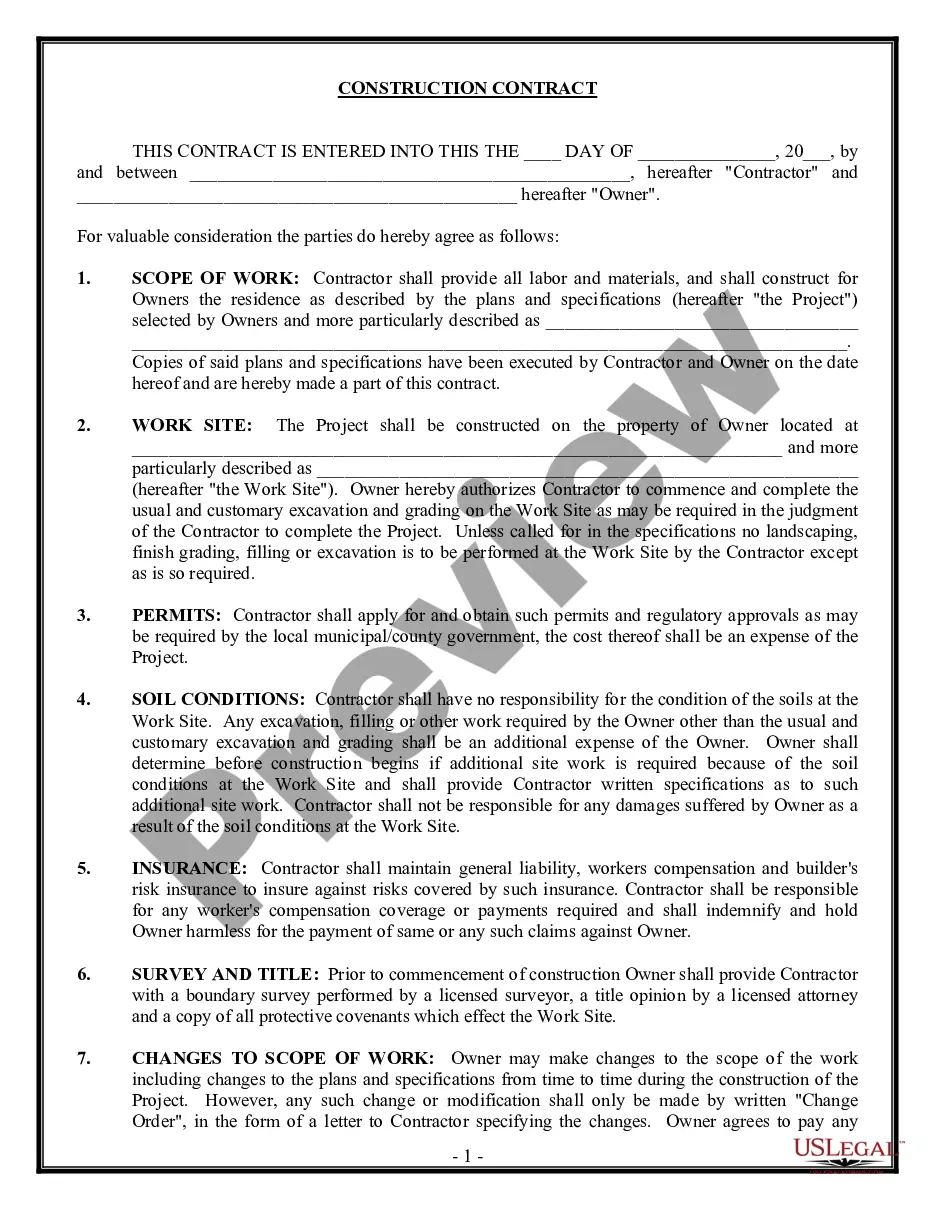
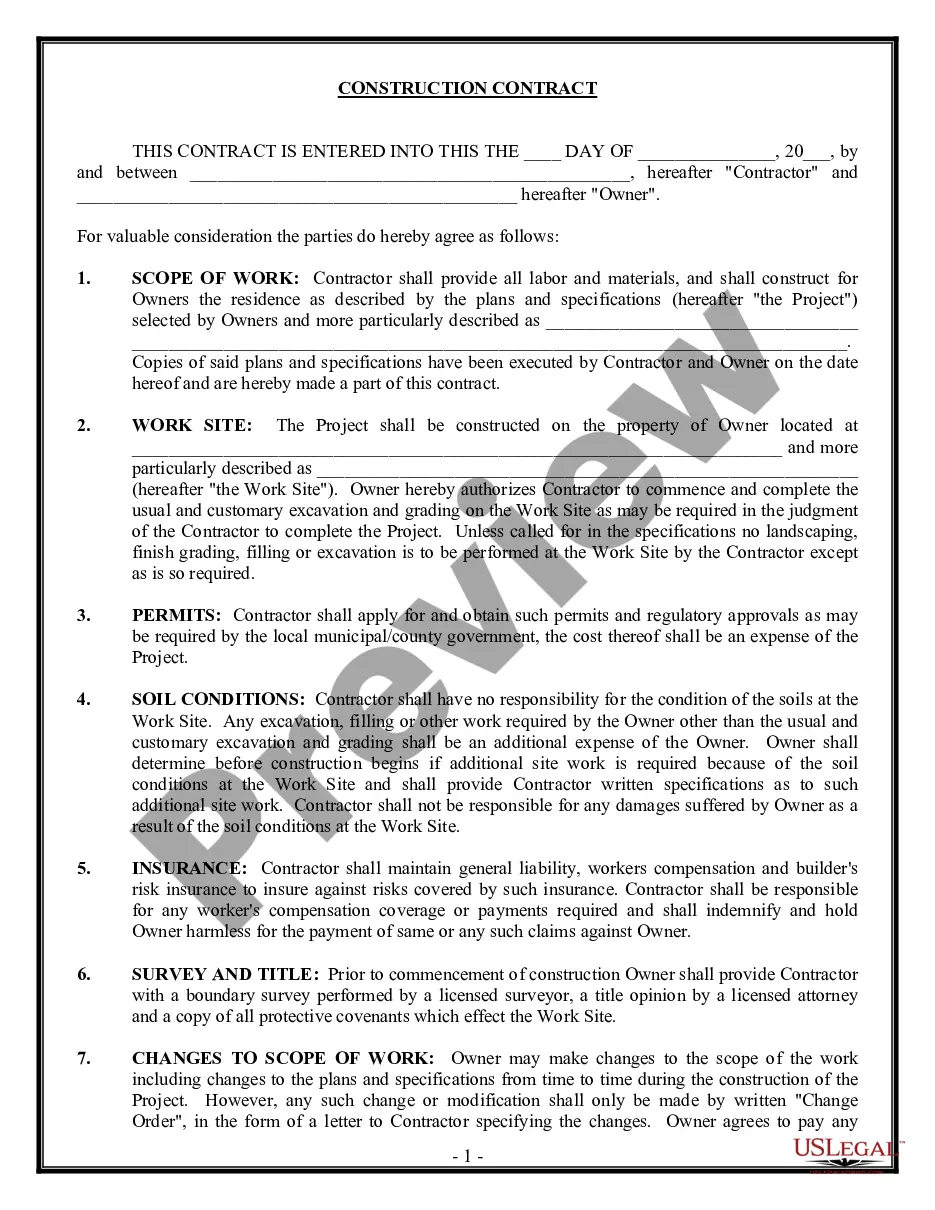
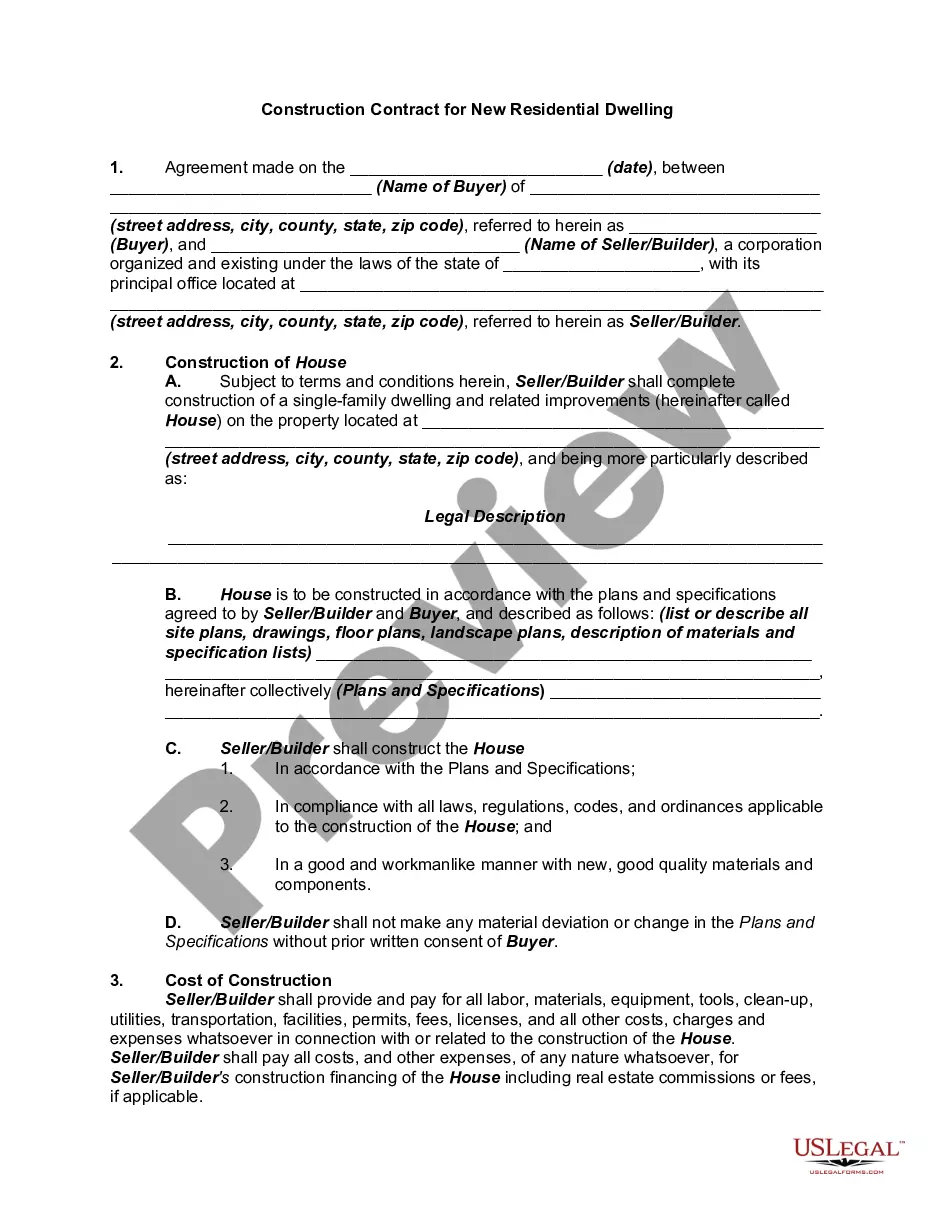
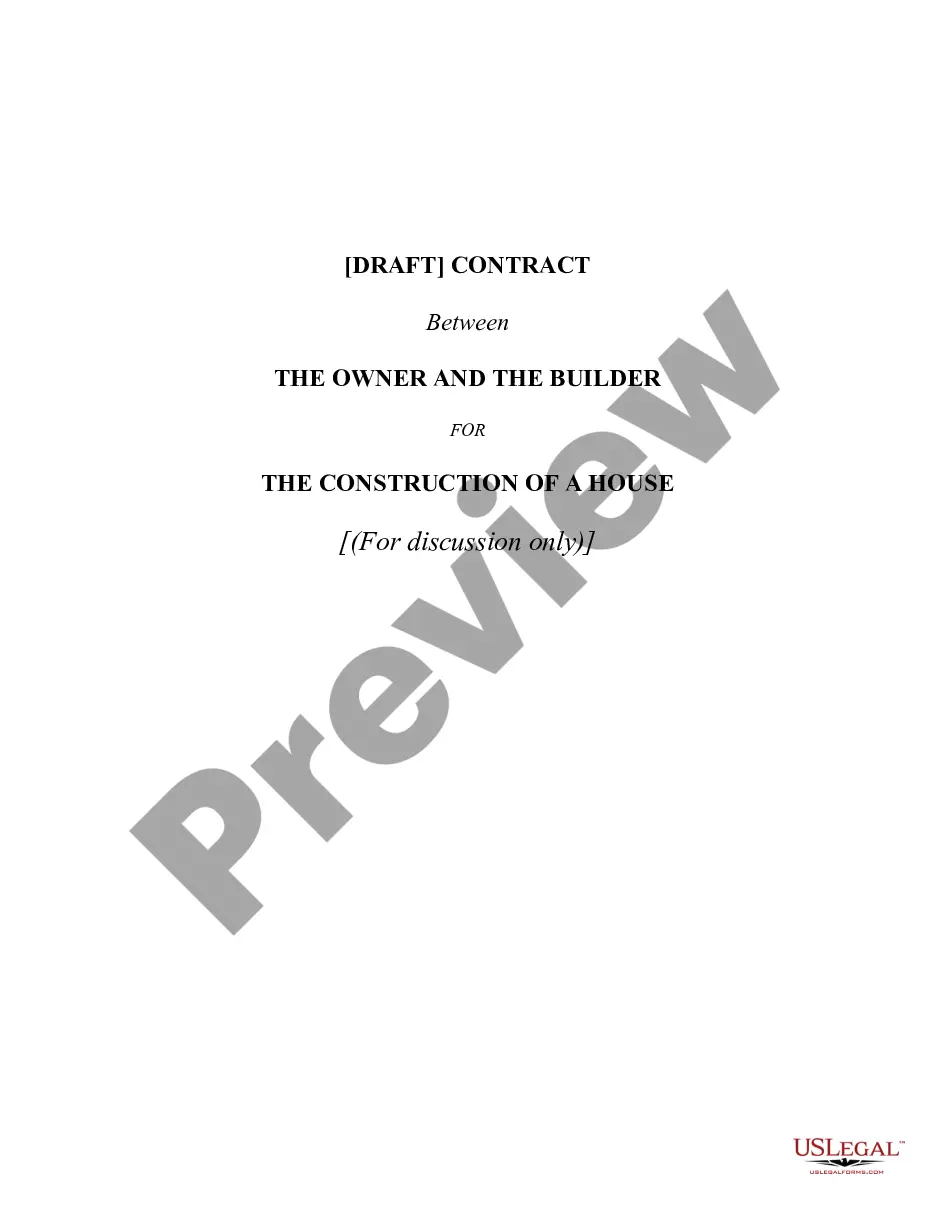
This Contract or Agreement for the Construction of a Residence or Home is a legal document that outlines the responsibilities of both the owner and the contractor involved in constructing a residential property. It serves as a formal agreement detailing aspects such as payment terms, project specifications, and legal liabilities, ensuring that both parties understand their obligations and rights throughout the construction process.
Main sections of this form
- Details of the parties involved, including name and address of the owner and contractor.
- Specifications of the construction project, such as the number of bedrooms and type of structure.
- Payment terms, including installment amounts and conditions for payment delays.
- Site preparation requirements and responsibilities of the owner to provide a clear building site.
- Provisions for utilities and necessary connections to the structure.
- Indemnification clauses protecting the contractor from certain claims.
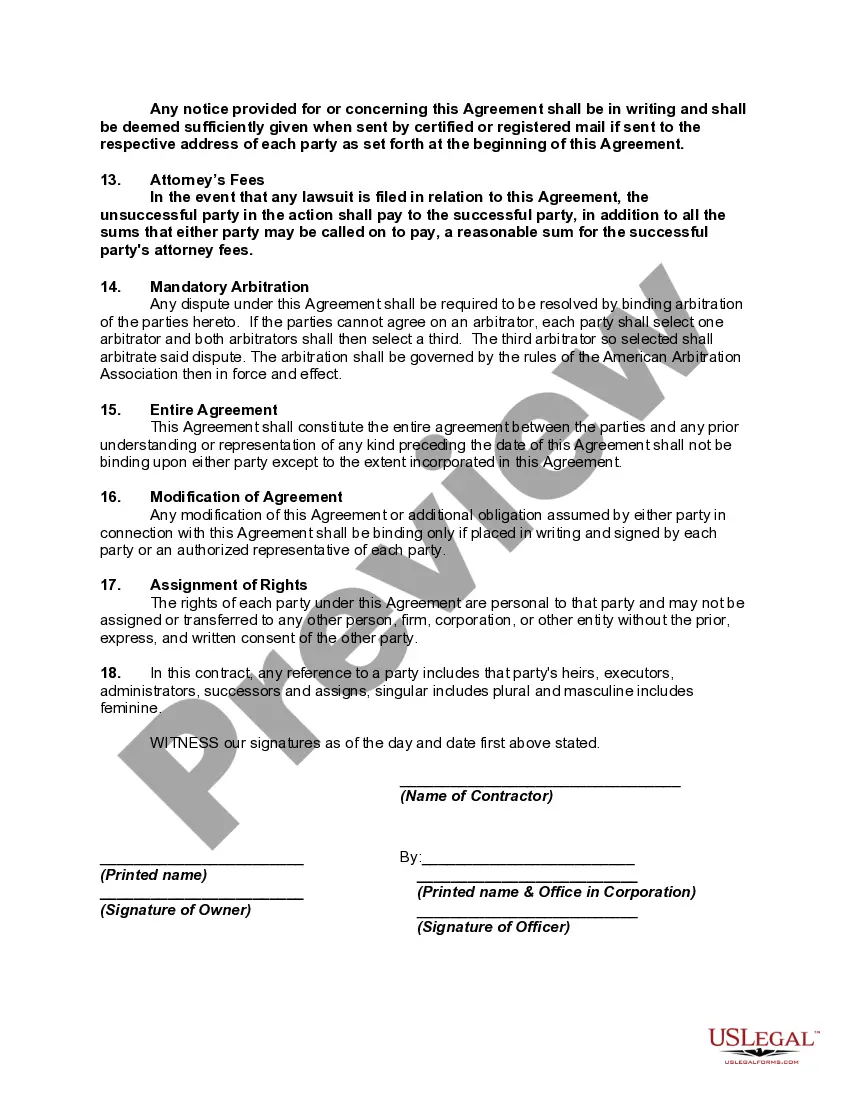
- Legal provisions regarding governing law, arbitration, and modification of the agreement.
Situations where this form applies
This form should be used when entering into a construction agreement for building a new home or residence. It is essential when the owner has secured financing and is ready to start the building process. Use this form when you need clear terms regarding the construction project, payment schedules, and responsibilities to avoid disputes between the owner and contractor.
Who needs this form
This form is intended for:
- Homeowners looking to hire a contractor for a construction project.
- Contractors who provide residential construction services and require an agreement with their clients.
- Individuals or organizations involved in the construction of residential properties.
Completing this form step by step
- Identify the parties by entering the name and address of both the owner and the contractor.
- Specify the details of the construction project, including the structure type and number of bedrooms.
- Outline the payment schedule, including the amount and due dates for installments.
- Describe the property location with a clear legal description.
- Include any specific site preparation requirements and clarify responsibilities for utilities.
- Sign and date the agreement to finalize it legally.
Does this document require notarization?
Notarization is required for this form to take effect. Our online notarization service, powered by Notarize, lets you verify and sign documents remotely through an encrypted video session, available 24/7.
Get your form ready online
Our built-in tools help you complete, sign, share, and store your documents in one place.
Make edits, fill in missing information, and update formatting in US Legal Forms—just like you would in MS Word.
Download a copy, print it, send it by email, or mail it via USPS—whatever works best for your next step.
Sign and collect signatures with our SignNow integration. Send to multiple recipients, set reminders, and more. Go Premium to unlock E-Sign.
If this form requires notarization, complete it online through a secure video call—no need to meet a notary in person or wait for an appointment.
We protect your documents and personal data by following strict security and privacy standards.

Make edits, fill in missing information, and update formatting in US Legal Forms—just like you would in MS Word.

Download a copy, print it, send it by email, or mail it via USPS—whatever works best for your next step.

Sign and collect signatures with our SignNow integration. Send to multiple recipients, set reminders, and more. Go Premium to unlock E-Sign.

If this form requires notarization, complete it online through a secure video call—no need to meet a notary in person or wait for an appointment.

We protect your documents and personal data by following strict security and privacy standards.
Common mistakes to avoid
- Failing to include a complete legal description of the property.
- Not specifying payment terms or becoming unclear about due dates.
- Not addressing site preparation responsibilities, leading to site delays.
- Neglecting to review the agreement for compliance with local construction laws.
- Forgetting to obtain all necessary signatures to validate the agreement.
Benefits of using this form online
- Convenience of downloading and filling out the form at your own pace.
- Editability allows you to customize the form based on your specific project needs.
- Reliability of forms drafted by licensed attorneys, ensuring legal compliance.
Legal use & context
- This contract serves as a formal agreement protecting both parties in case of disputes.
- Completing this form precisely can help prevent misunderstandings and conflicts about project scope and payments.
- Ensure compliance with local laws to enforce the contract successfully.
What to keep in mind
- The contract is essential for any residential construction project to define responsibilities.
- Payment terms and project specifications must be clearly outlined to avoid disputes.
- State-specific adaptations may be required for full legal compliance.
Looking for another form?

Form popularity
FAQ
Construction contracts do not necessarily have to be in writing.If contracts listed in the statute of frauds are not in writing, they cannot be enforced. Construction contracts sometimes fall within the terms of a state's statute of frauds and therefore must be in writing in some instances.
Terms. This is the first section of any agreement or contract and states the names and locations of the parties involved. Responsibilities & Deliverables. Payment-Related Details. Confidentiality Clause. Contract Termination. Choice of Law.
Define and describe the project in detail. Include what materials must be used; be as specific as possible. Include weight, brand name and other identifying features. Specify the work being performed and all equipment being used or installed.
Identifying/Contact Information. Title and Description of the Project. Projected Timeline and Completion Date. Cost Estimate and Payment Schedule. Stop Work Clause and Stop Payment Clause. Act of God Clause. Change Order Agreement. Warranty.
Name of contractor and contact information. Name of homeowner and contact information. Describe property in legal terms. List attachments to the contract. The cost. Failure of homeowner to obtain financing. Description of the work and the completion date. Right to stop the project.
Check Contract Basics. The basic job of a contractor agreement is to spell out the scope of the project's work. Set a Payment Schedule. Schedule Start and End Dates. Specify Change Orders. Research Your Arbitration Options. Turn Down the Contractor's Warranty.
A contract is formed when one party makes an offer which is unconditionally accepted by the other.A purported acceptance which contains terms different to the offer is not acceptance. This is called a counter offer which may be accepted by the other party or subject to a further counter offer.
#1: Review Your Bid. #2: Review Complete Plans. #3: Review All Specifications. #4: Visit the Job Site. #5: Review the Job Schedule. #6: Complete a Project Checklist. #7: Verify Project Funding. #8: Read Complete Contract.