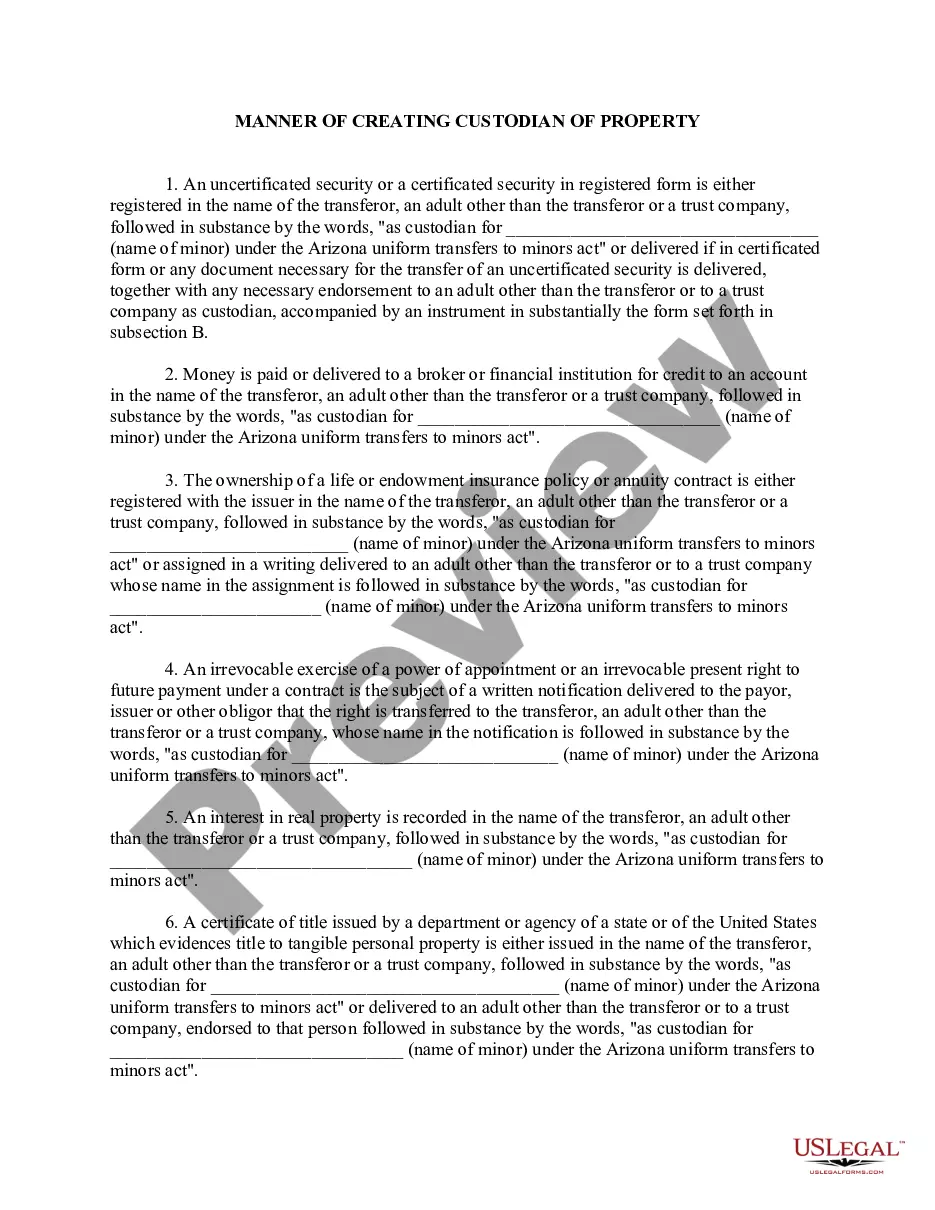
Arizona Manner of Creating Custodial Property
About this form
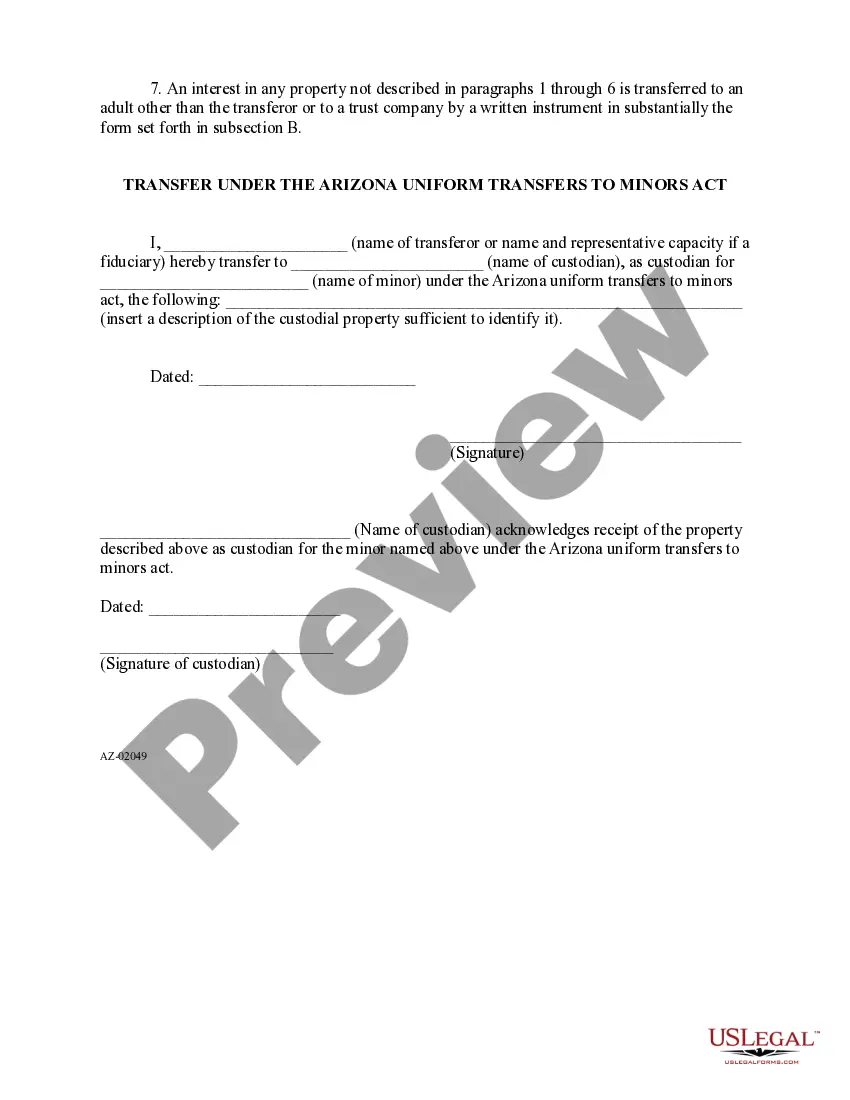
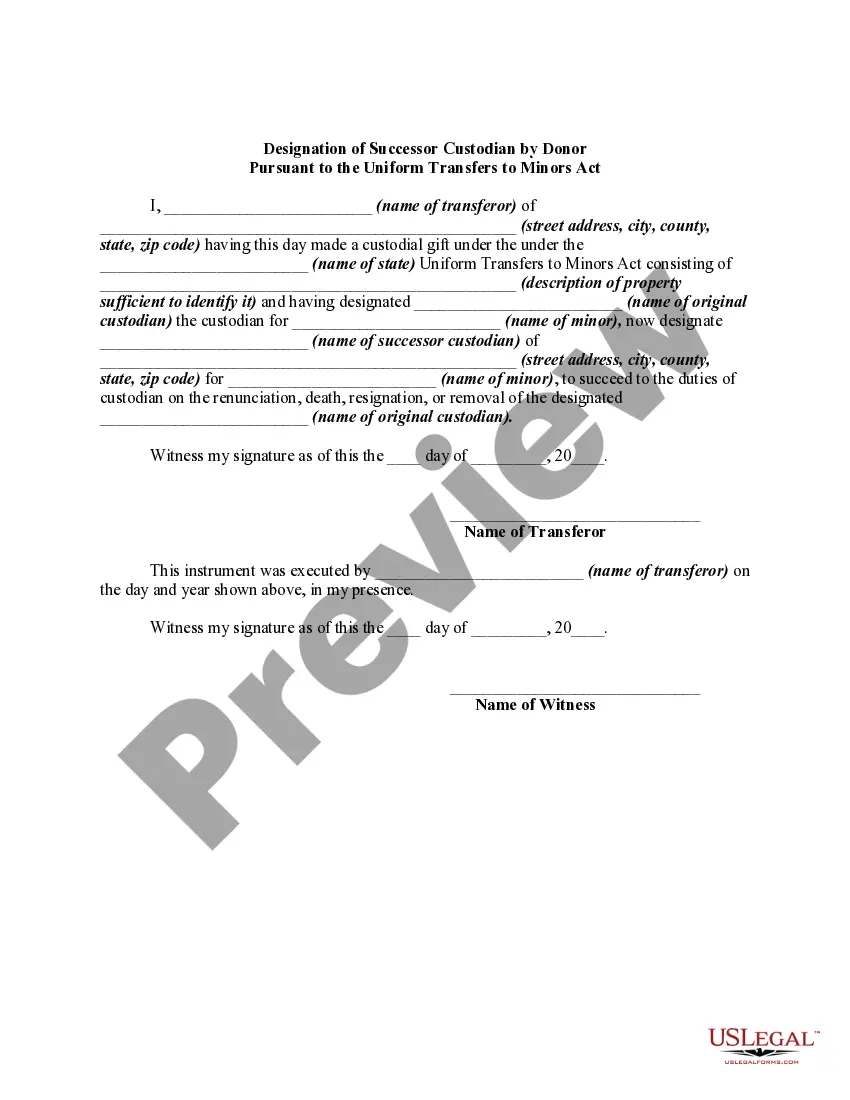
The Manner of Creating Custodial Property form establishes a custodian for assets intended for a minor upon the passing of the asset's grantor. This form outlines the mechanisms for transferring various types of property to a custodian who will manage these assets until the minor reaches adulthood. It differs from other estate planning documents by being specifically tailored to designate custodianship under the Arizona Uniform Transfers to Minors Act, ensuring that minors have appropriate management of their inherited assets.
Key components of this form
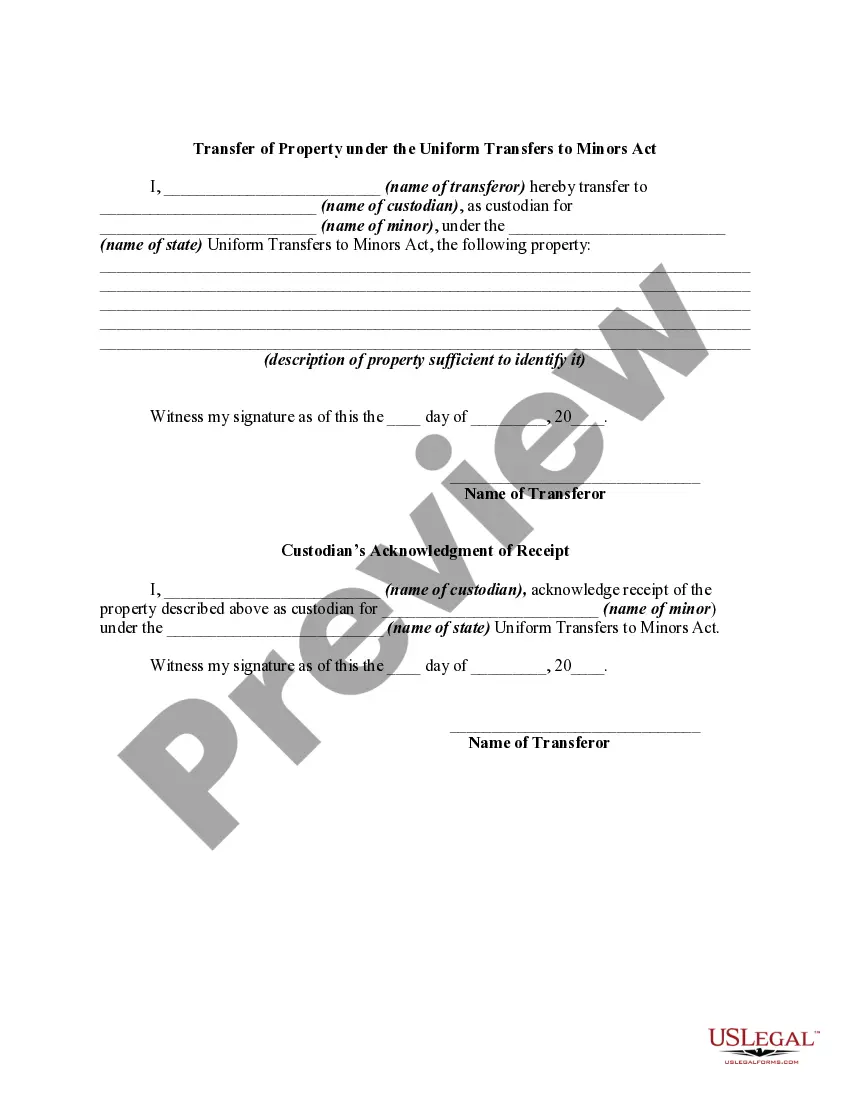
- Identification of the transferor and custodian.
- Description of the custodial property being transferred.
- Mechanisms for transferring property, including securities, money, and real estate.
- Signatures of the transferor and custodian to acknowledge the transfer.
- Compliance with the Arizona Uniform Transfers to Minors Act.
When to use this form
This form is needed when a grantor wishes to assign a custodian to manage assets intended for a minor. It is particularly relevant in situations such as the grantor's upcoming death, estate planning efforts, or when setting up provisions for a minor's financial future. If you are a parent, grandparent, or legal guardian looking to secure a minorâs inheritance, this form is essential for ensuring proper custody of the property.
Intended users of this form
- Parents or guardians planning for a minor's financial management after death.
- Grandparents wishing to ensure smooth transitions of inherited assets to grandchildren.
- Anyone holding assets they intend to transfer to a minor, such as real estate or securities.
- Trust companies designated to manage custodial accounts for minors.
How to complete this form
- Identify the transferor and custodian, providing their legal names and addresses.
- Clearly describe the property being transferred, including its type and value.
- Fill in the name of the minor for whom the custodianship is being established.
- Obtain signatures from both the transferor and custodian to validate the transfer.
- Ensure the form is dated accurately to reflect the time of transfer.
Notarization requirements for this form
This form does not typically require notarization to be legally valid. However, some jurisdictions or document types may still require it. US Legal Forms provides secure online notarization powered by Notarize, available 24/7 for added convenience.
Get your form ready online
Our built-in tools help you complete, sign, share, and store your documents in one place.
Make edits, fill in missing information, and update formatting in US Legal Forms—just like you would in MS Word.
Download a copy, print it, send it by email, or mail it via USPS—whatever works best for your next step.
Sign and collect signatures with our SignNow integration. Send to multiple recipients, set reminders, and more. Go Premium to unlock E-Sign.
If this form requires notarization, complete it online through a secure video call—no need to meet a notary in person or wait for an appointment.
We protect your documents and personal data by following strict security and privacy standards.

Make edits, fill in missing information, and update formatting in US Legal Forms—just like you would in MS Word.

Download a copy, print it, send it by email, or mail it via USPS—whatever works best for your next step.

Sign and collect signatures with our SignNow integration. Send to multiple recipients, set reminders, and more. Go Premium to unlock E-Sign.

If this form requires notarization, complete it online through a secure video call—no need to meet a notary in person or wait for an appointment.

We protect your documents and personal data by following strict security and privacy standards.
Mistakes to watch out for
- Failing to clearly specify the custodial property, leading to potential disputes.
- Not including the minor's name or providing incorrect information.
- Neglecting to obtain signatures, which can render the form invalid.
- Using outdated versions of the form, which may not comply with current laws.
Why complete this form online
- Convenience of downloading and printing the form at your convenience.
- Editability of the form allows for easy customization to meet personal needs.
- Access to forms drafted by licensed attorneys, ensuring reliability and compliance with state laws.
- Instant availability, removing the need for physical visits to a legal office.
Legal use & context
- This form legally establishes a custodianship for a minor under Arizona law.
- It provides a clear method for transferring various assets, ensuring that they are managed properly until the minor reaches the age of majority.
- Failure to use this form properly can lead to complications in asset management and distribution.
Main things to remember
- The form creates a custodial property arrangement for minors.
- It details multiple methods for transferring ownership of assets.
- Proper completion is crucial for legal validity and effective management.
Looking for another form?
Form popularity
FAQ
You can withdraw from the Uniform Transfers to Minors Act when the beneficiary turns 18 years old. After reaching this age, the individual has complete access to the custodial assets. It is crucial to understand the implications of the Arizona manner of creating custodial property and be proactive in helping the minor manage their newfound responsibilities.
The Uniform Transfers to Minors Act in Texas establishes a legal framework for transferring property to minors in a way that protects both the assets and the minor. Much like the Arizona manner of creating custodial property, it enables custodians to manage the assets until the minor reaches a designated age. This law provides safeguards, ensuring that minors benefit from the resources intended for their growth.
In Arizona, the age of majority under the Uniform Transfers to Minors Act is 18 years old. This means that a custodian must manage the assets until the minor reaches this age. Familiarizing yourself with the Arizona manner of creating custodial property can help you prepare for this transition and ensure that there are clear plans for the assets once the minor becomes an adult.
When a child turns 18 in Texas, the assets held under the Uniform Transfers to Minors Act become the minor’s property. At this point, the custodianship ends and the individual has full control over the assets. It is essential to understand how the Arizona manner of creating custodial property works, as similar rules apply in that state, allowing minors to manage their assets upon reaching adulthood.
The Uniform Transfers to Minors Act (UTMA) aims to facilitate the transfer of assets to minors while providing protection and guidance for those assets. In the Arizona manner of creating custodial property, this law allows a custodian to manage the property until the minor reaches adulthood. By using UTMA, parents and guardians can ensure that funds are used responsibly for the minor’s benefit.
A custodial owner refers to the custodian who holds and manages property on behalf of a minor until they are old enough to take control. In this capacity, the custodial owner protects the assets and ensures they are used correctly. This concept is central to the Arizona Manner of Creating Custodial Property, which outlines how custodial ownership works within the state.
Another name for a property custodian is a trust administrator or simply a custodian. These terms highlight the role of overseeing and managing custodial assets for minors. Understanding the responsibilities and titles associated with custodians is vital when following the Arizona Manner of Creating Custodial Property.
A property custodian is an individual designated to manage and safeguard assets for a minor, ensuring their proper use until the minor reaches adulthood. This role includes overseeing financial accounts, real estate, or any asset designated as custodial property. Under the Arizona Manner of Creating Custodial Property, a property custodian has significant responsibilities that protect the financial interests of the minor.
The Uniform Transfers to Minors Act (UTMA) statute in Arizona allows adults to transfer assets to a minor while appointing a custodian to manage those assets. This statute outlines the rules and regulations governing the management of custodial property until the minor reaches the age of majority. Understanding the UTMA statute is essential for anyone exploring the Arizona Manner of Creating Custodial Property.
Custodial describes the role or responsibility undertaken by a custodian, who manages the assets for the benefit of another party, often a minor. In Arizona, this term is crucial when discussing the Arizona Manner of Creating Custodial Property, which provides guidelines for asset management by a designated individual. This ensures that minors receive their inheritance or gifts in a responsible manner.