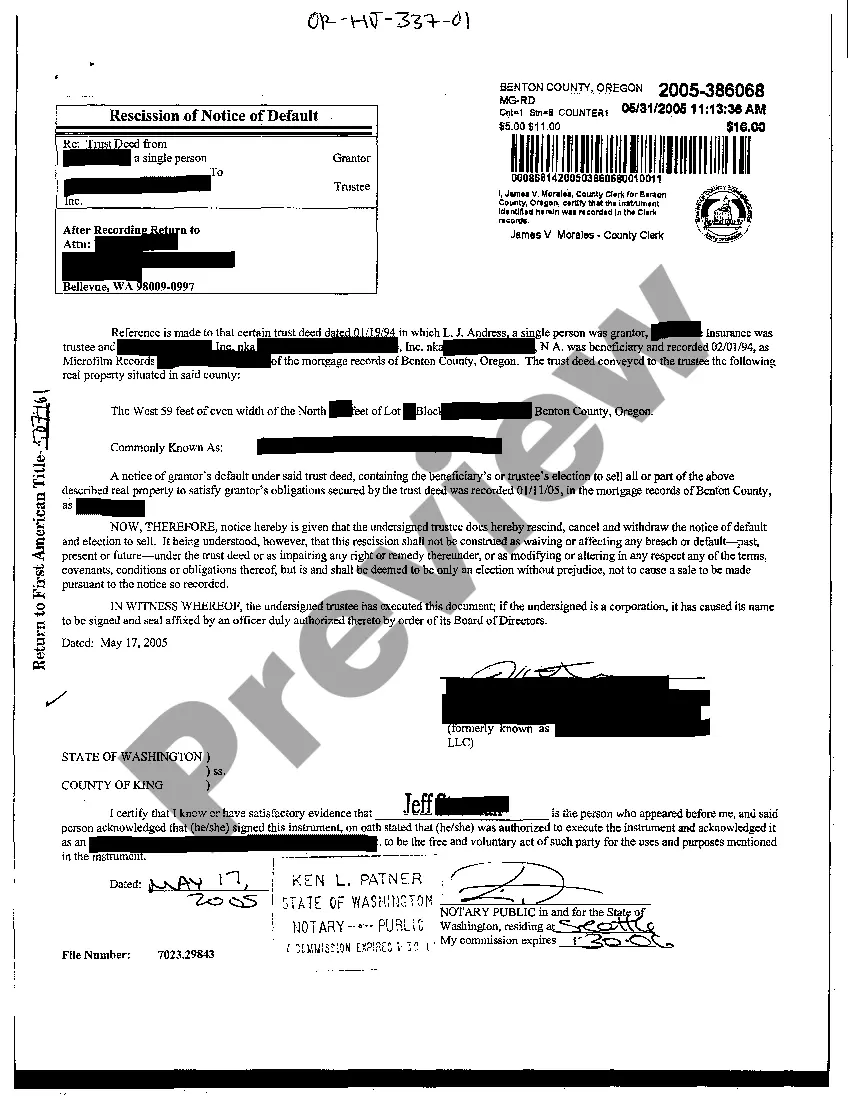
Telecommunications Provision to Add to Pipeline Easement
About this form
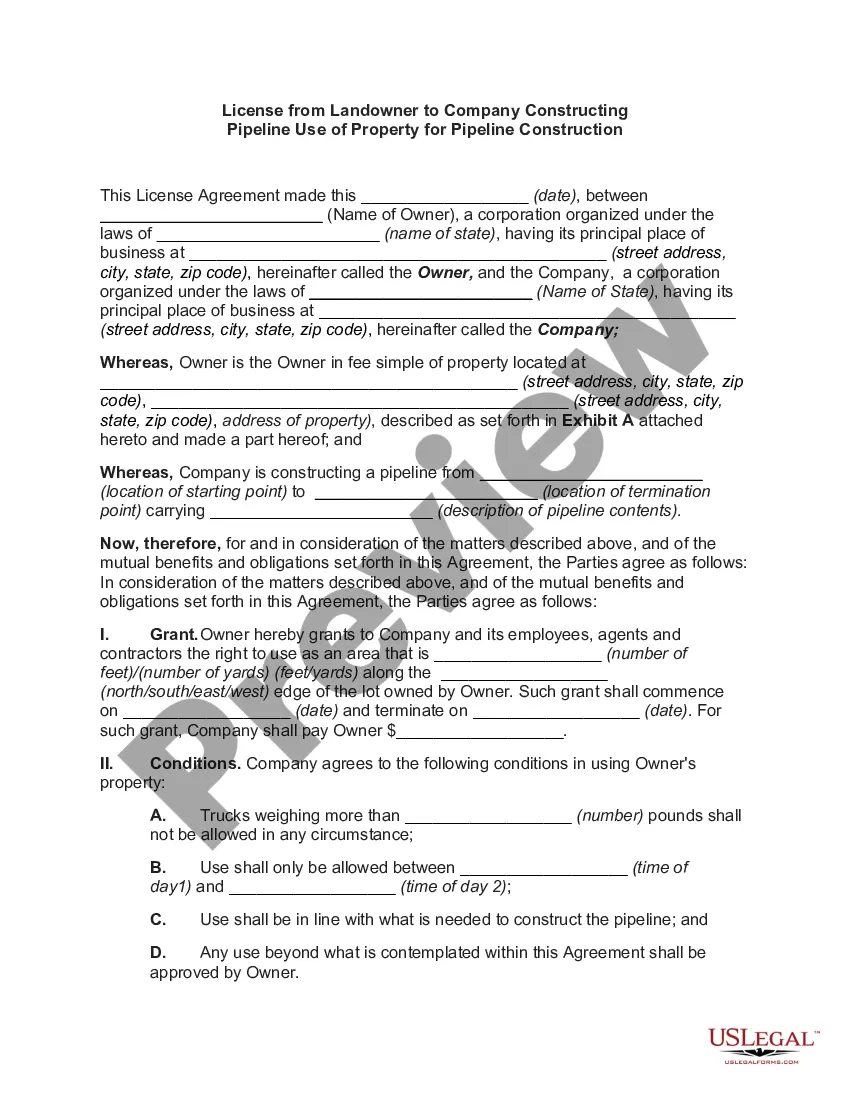
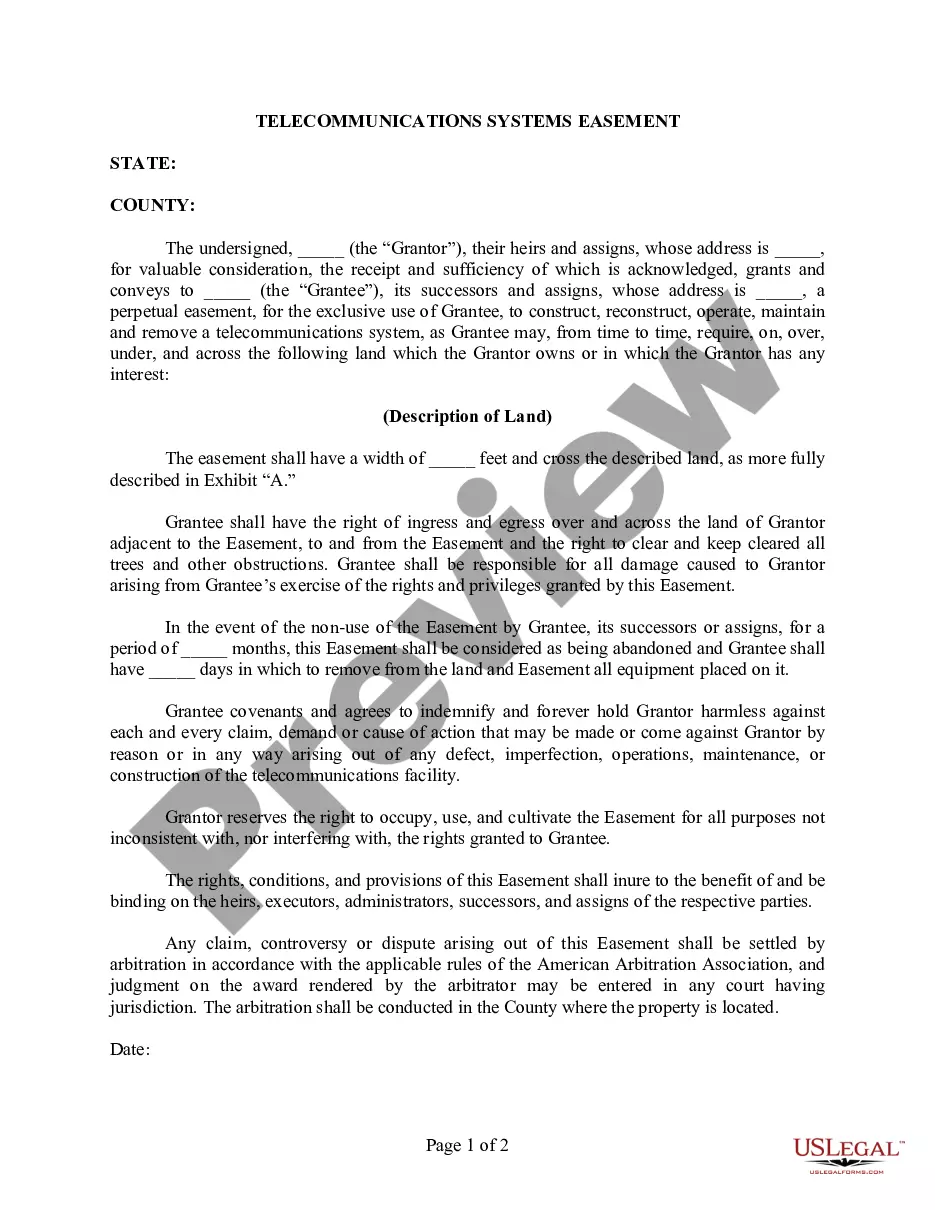
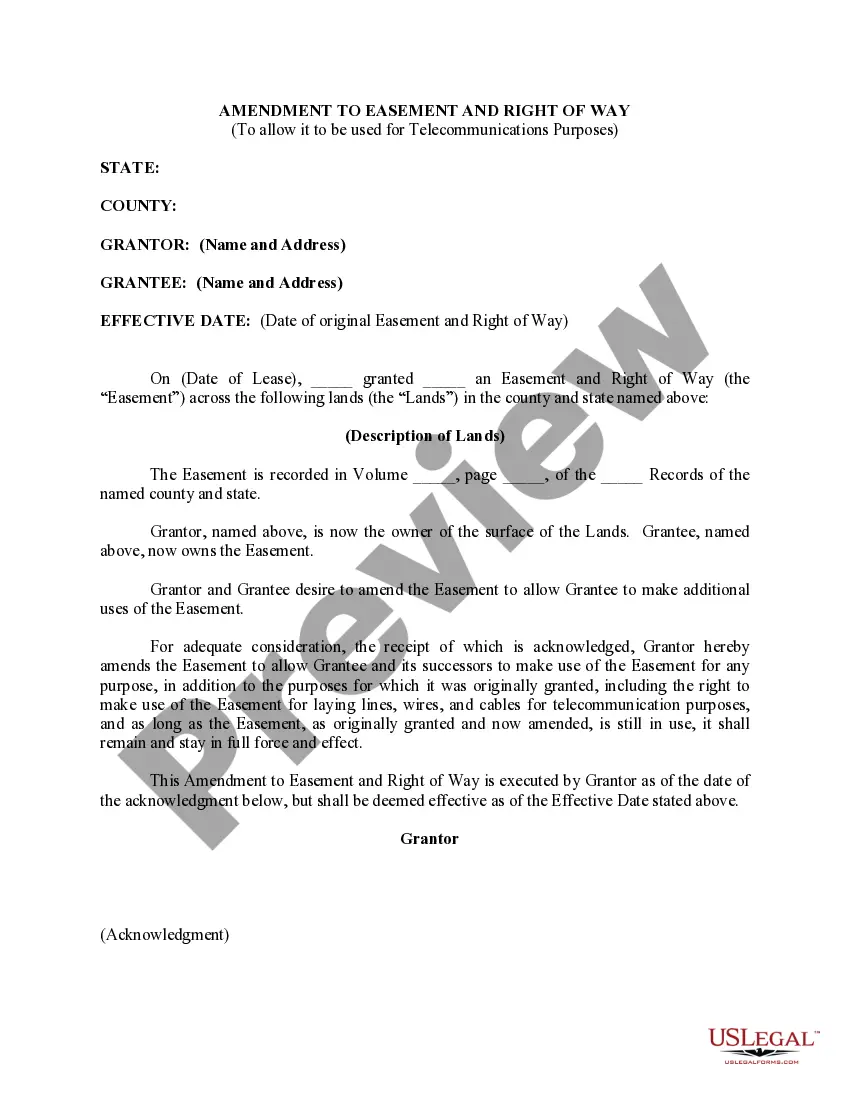
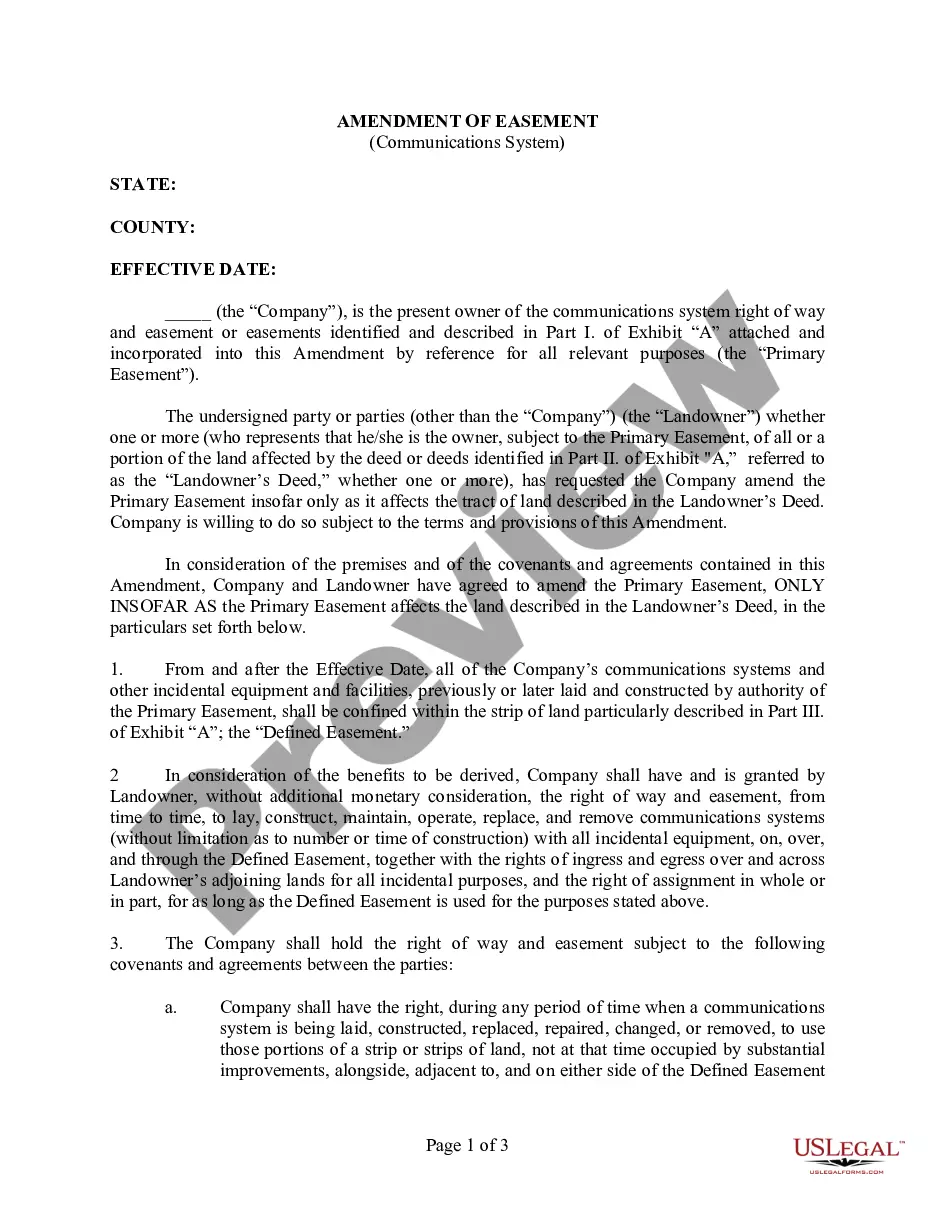
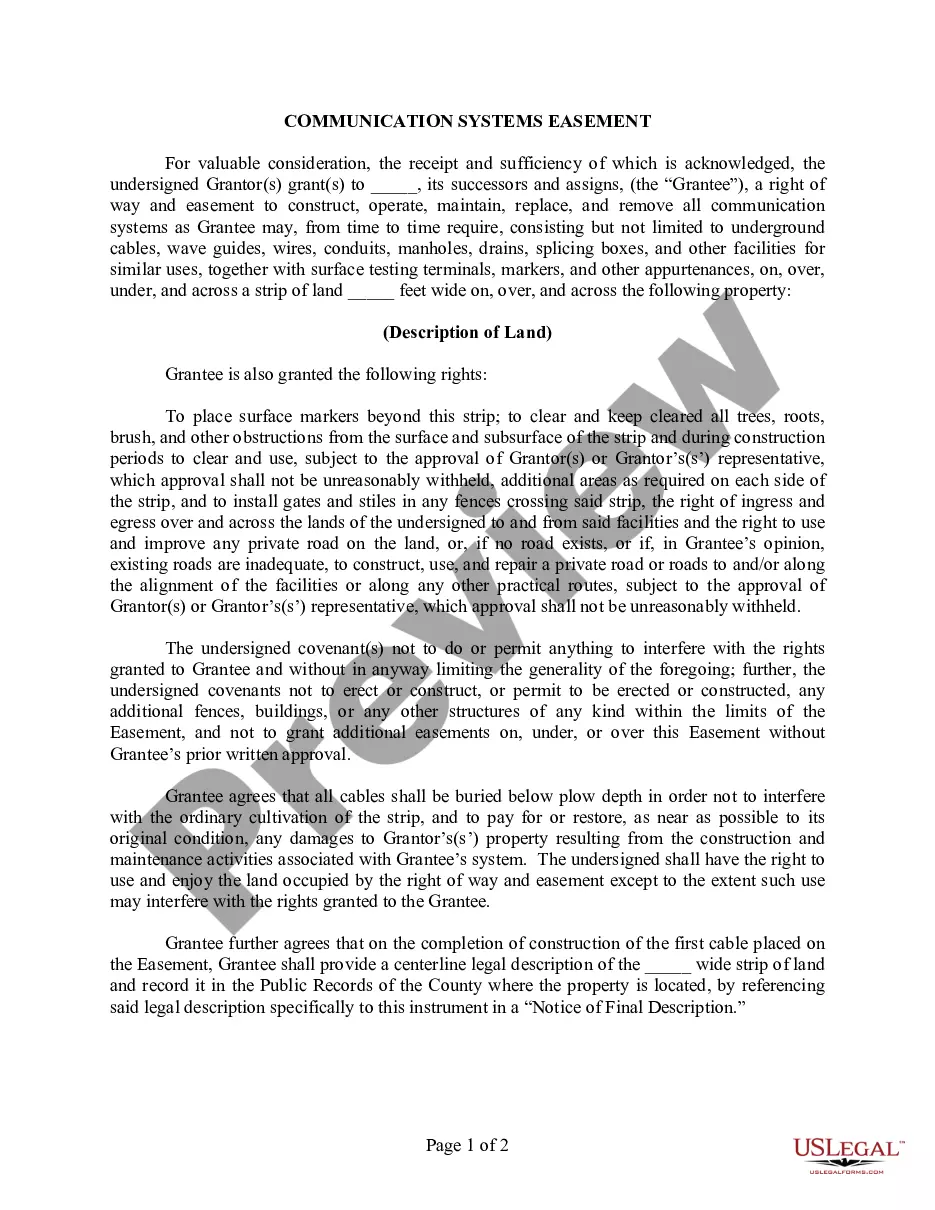
The Telecommunications Provision to Add to Pipeline Easement is a legal document that allows the owner of a pipeline easement to include additional rights for telecommunications use. This form is essential for situations where the easement originally granted for pipeline purposes can also be utilized for laying telecommunications lines, wires, or cables, thereby expanding the use of the easement beyond its original intent. It differs from standard easement forms by specifically addressing telecommunications provisions.
Key parts of this document
- Identification of the parties involved (Grantor and Grantee).
- Detailed description of the primary purpose of the easement.
- Specific clause allowing for telecommunications use.
- Statement regarding the continued validity of the easement.
- Clarification on considerations paid for the additional use.
Common use cases
This form is needed in scenarios where a property owner or company has granted a pipeline easement, but wishes to expand its use to include telecommunications. It is particularly relevant in regions experiencing increased demand for telecommunications infrastructure, making it beneficial for property owners looking to maximize the value of their easements by allowing additional uses.
Who can use this document
- Property owners granting pipeline easements.
- Telecommunications companies seeking to utilize existing easements.
- Real estate developers incorporating infrastructure into their projects.
- Legal professionals handling property and easement transactions.
How to prepare this document
- Identify the parties involved, including the Grantor and Grantee.
- Specify the primary purpose of the easement as originally granted.
- Insert the telecommunications provision to allow for laying lines, wires, or cables.
- Detail the consideration to be paid for the additional telecommunications use.
- Ensure all parties sign and date the document to validate the agreement.
Is notarization required?
To make this form legally binding, it must be notarized. Our online notarization service, powered by Notarize, lets you verify and sign documents remotely through an encrypted video session.
Get your form ready online
Our built-in tools help you complete, sign, share, and store your documents in one place.
Make edits, fill in missing information, and update formatting in US Legal Forms—just like you would in MS Word.
Download a copy, print it, send it by email, or mail it via USPS—whatever works best for your next step.
Sign and collect signatures with our SignNow integration. Send to multiple recipients, set reminders, and more. Go Premium to unlock E-Sign.
If this form requires notarization, complete it online through a secure video call—no need to meet a notary in person or wait for an appointment.
We protect your documents and personal data by following strict security and privacy standards.

Make edits, fill in missing information, and update formatting in US Legal Forms—just like you would in MS Word.

Download a copy, print it, send it by email, or mail it via USPS—whatever works best for your next step.

Sign and collect signatures with our SignNow integration. Send to multiple recipients, set reminders, and more. Go Premium to unlock E-Sign.

If this form requires notarization, complete it online through a secure video call—no need to meet a notary in person or wait for an appointment.

We protect your documents and personal data by following strict security and privacy standards.
Common mistakes
- Failing to clearly define the primary purpose of the easement.
- Omitting essential details in the telecommunications provision.
- Not including the required signatures and dates.
- Assuming the form is valid without verifying state-specific laws.
Benefits of completing this form online
- Convenience of downloading from anywhere at any time.
- Editability to tailor the form to specific needs before printing.
- Access to reliable templates drafted by licensed attorneys.
- Instant availability reduces the time spent on legal paperwork.
Looking for another form?



Form popularity
FAQ
There must be a dominant and a servient tenement; The easement must accommodate the dominant tenement, that is, be connected with its enjoyment and for its benefit; The dominant and servient owners must be different persons; The right claimed must be capable of forming the subject-matter of a grant.
Give the document a simple title: Grant of Easement is sufficient. Identify the parties. You need to explain who the parties are to the agreement. The person granting the easement to his property is the Grantor and the person gaining access to the property is the Grantee.
This chapter discusses the characteristics of an easement: there must be a dominant and a servient tenement; the easement must accommodate the dominant tenement; the easement must be owned or occupied by different people; and an easement must be capable of forming the subject matter of a grant.
An easement or right-of-way is an agreement that confers on an individual, company or municipality the right to use a landowner's property in some way. While these agreements grant rights, they also have the effect of partially restricting an owner's use of the affected portions of land.
Easements are treated as a recovery of the basis of the property first, with any excess proceeds treated as capital gain, which is taxed at a lower rate than ordinary income. The basis of property that offsets an easement is limited to the basis of the affected acres or square footage.
You are willing to either share in or bear the cost of land maintenance and are now ready to negotiate. Reducing the impact the easement has on the neighbor will help convince him to say yes. Include in the negotiations elements that include his continued use and rights to share that parcel of land with you.
How much money should landowners get when an oil or gas pipeline crosses their land? As it stands, landowners receive a one-time payment roughly based on the length of the pipeline, with rates varying from $5 to $50 per foot or more for a Marcellus or Utica shale pipeline right-of-way agreement.
An easement may be created by express words, either of grant or reservation. Typically, an express grant of easement will be created by deed but may be created by any instrument that transfers an interest or estate in real property.
Nine Essential Property Easement Agreement Considerations. Legal Description of Properties. Depiction of the Easement Area. Covenant Not to Disturb the Use of the Easement. Determination of Maintenance Obligations. Payment of Property Taxes.