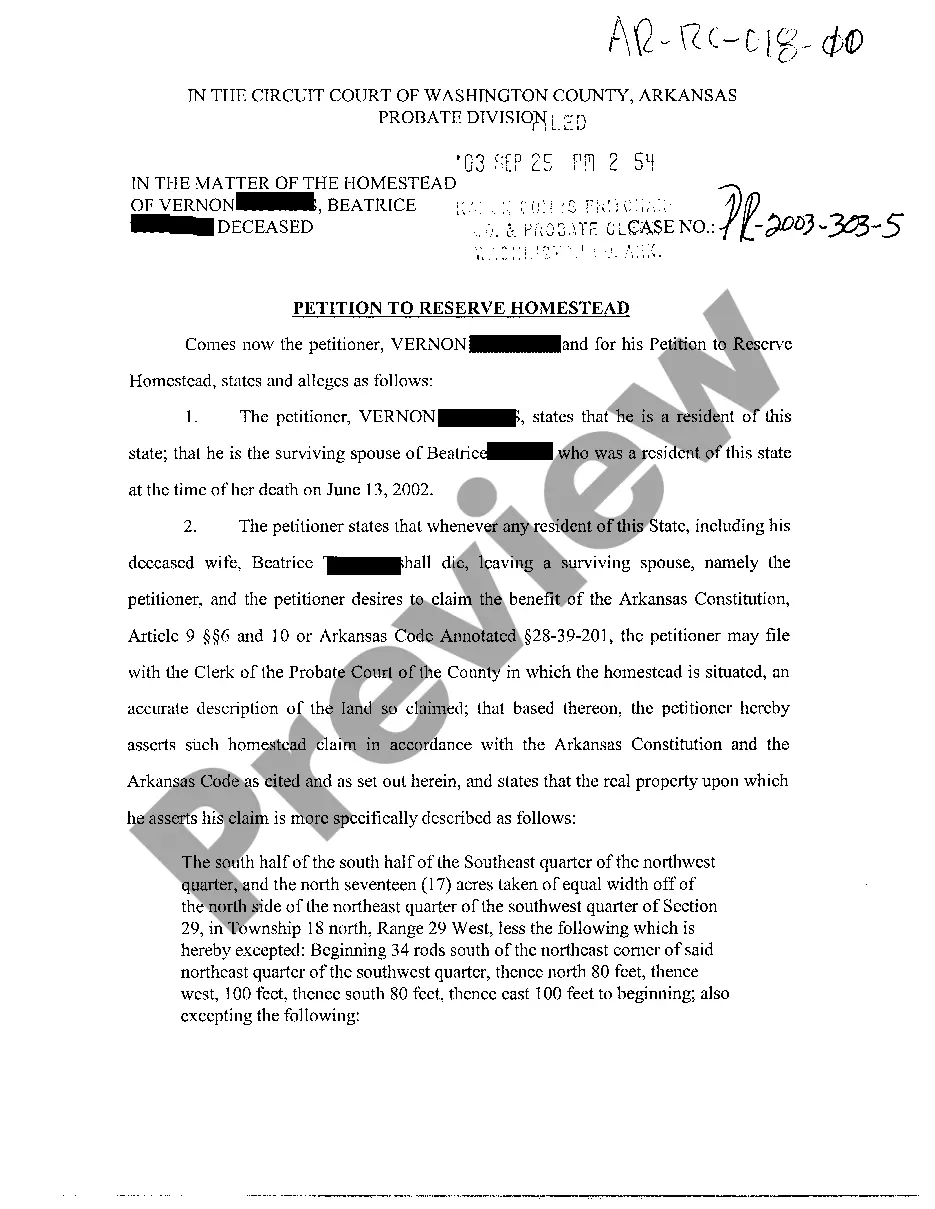
Contract of Sale and Purchase of Commercial Property - Commercial Building
About this form
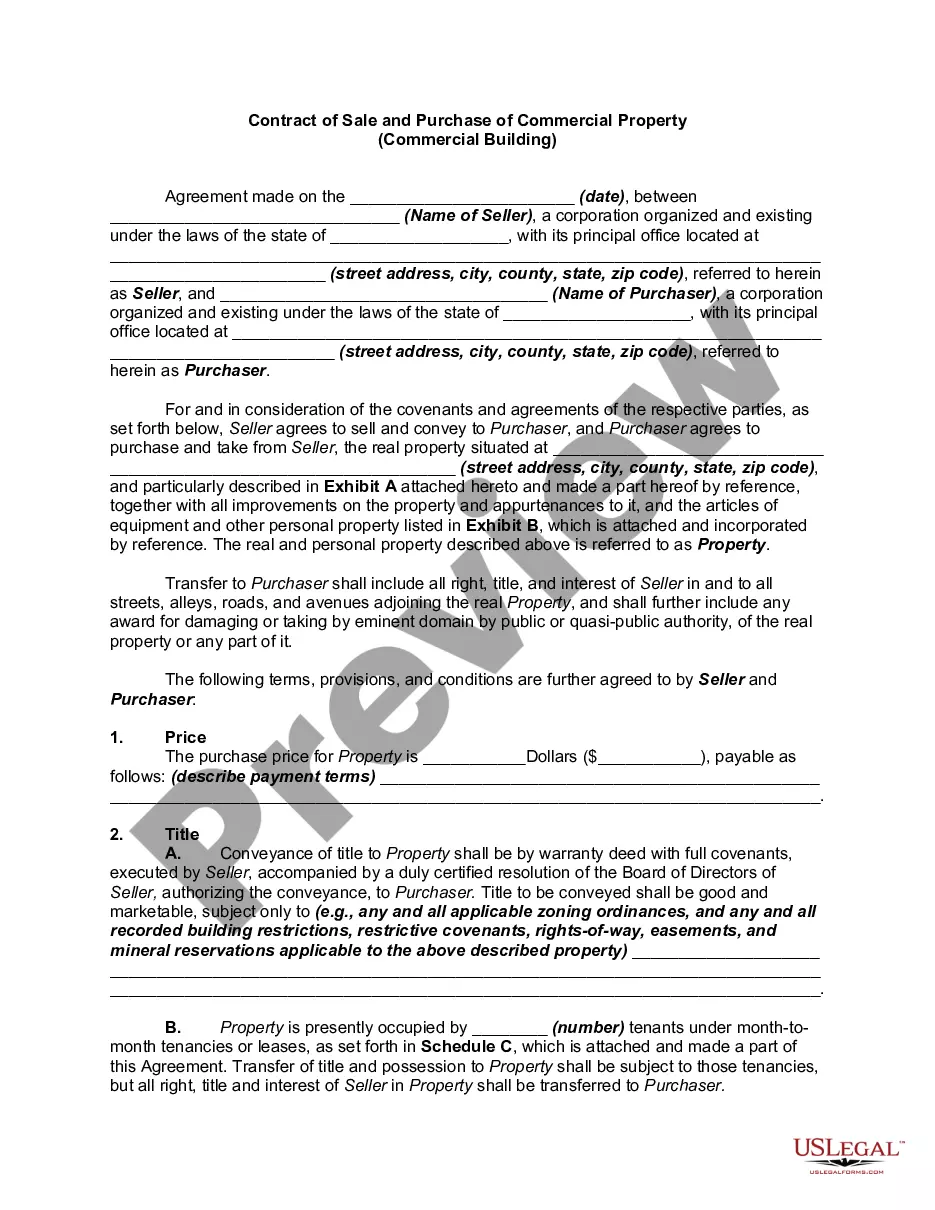
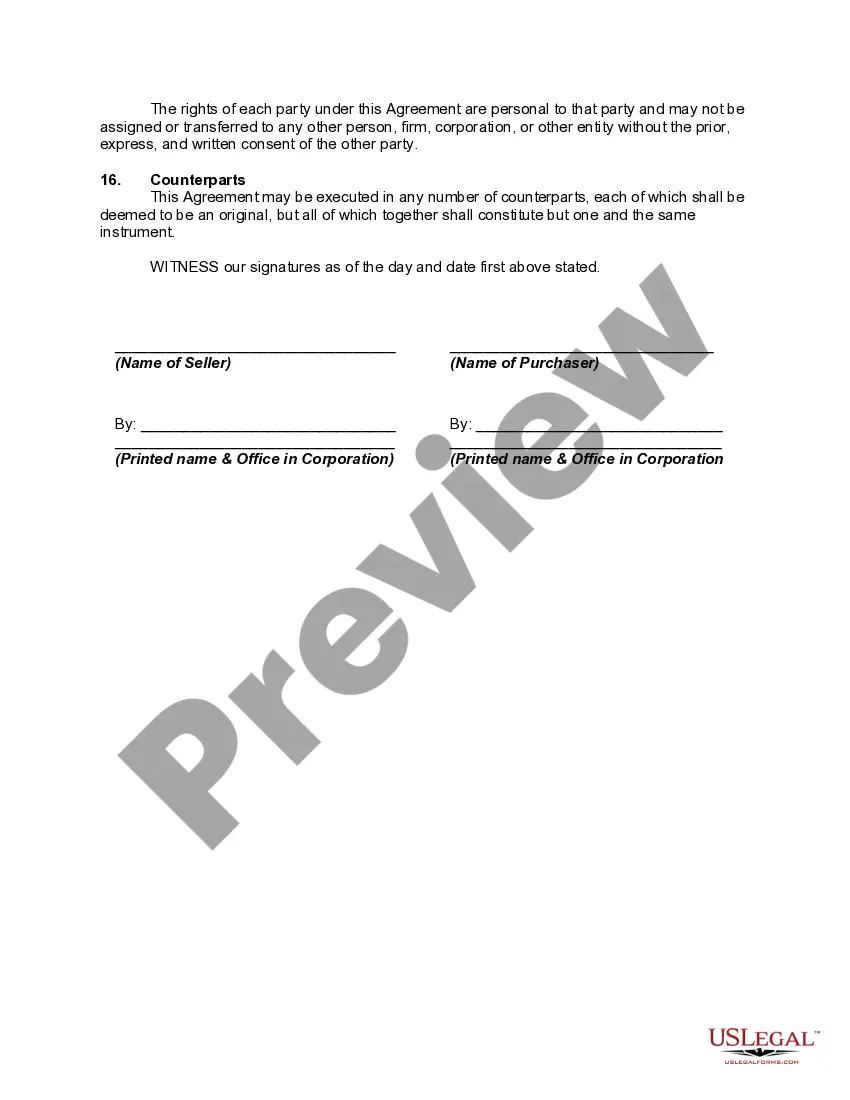
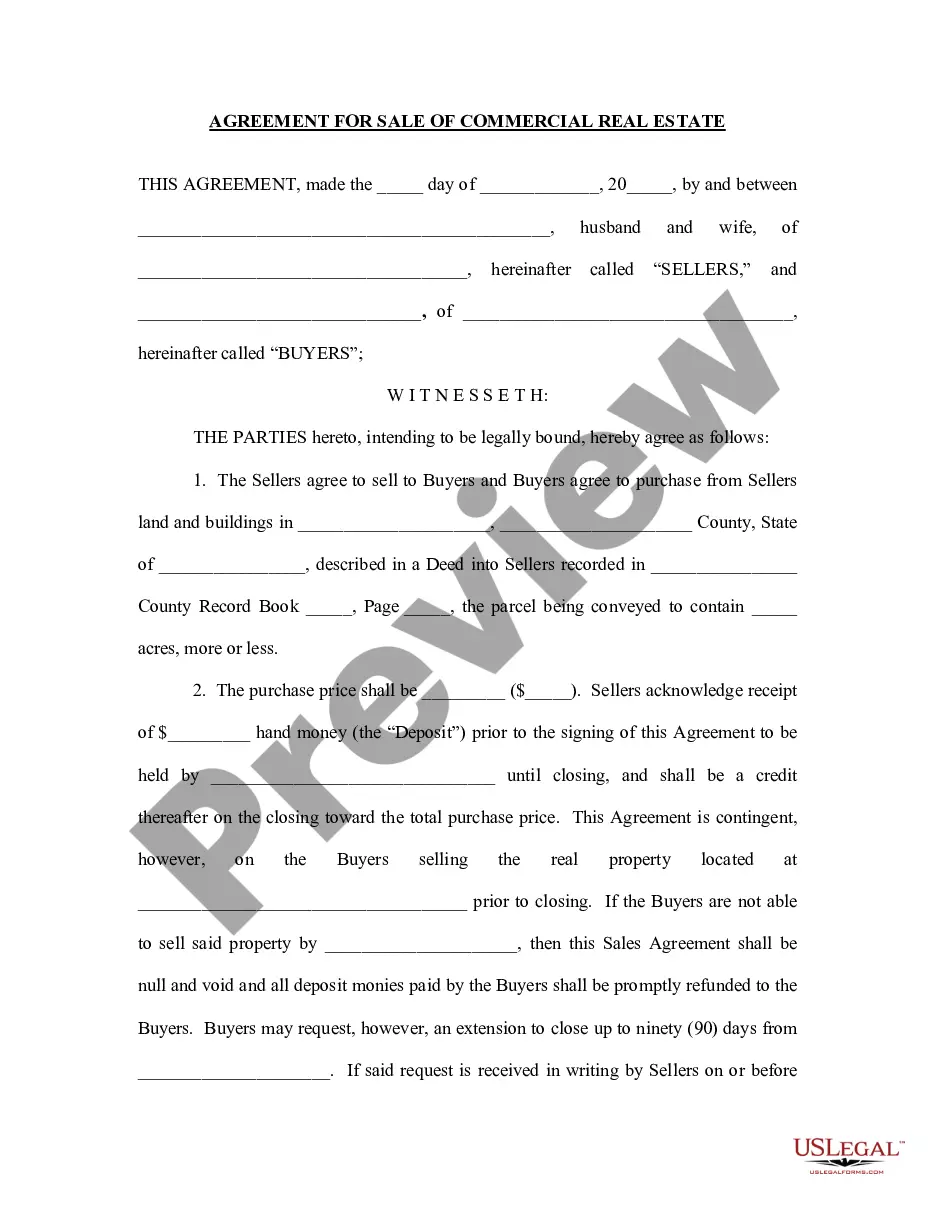
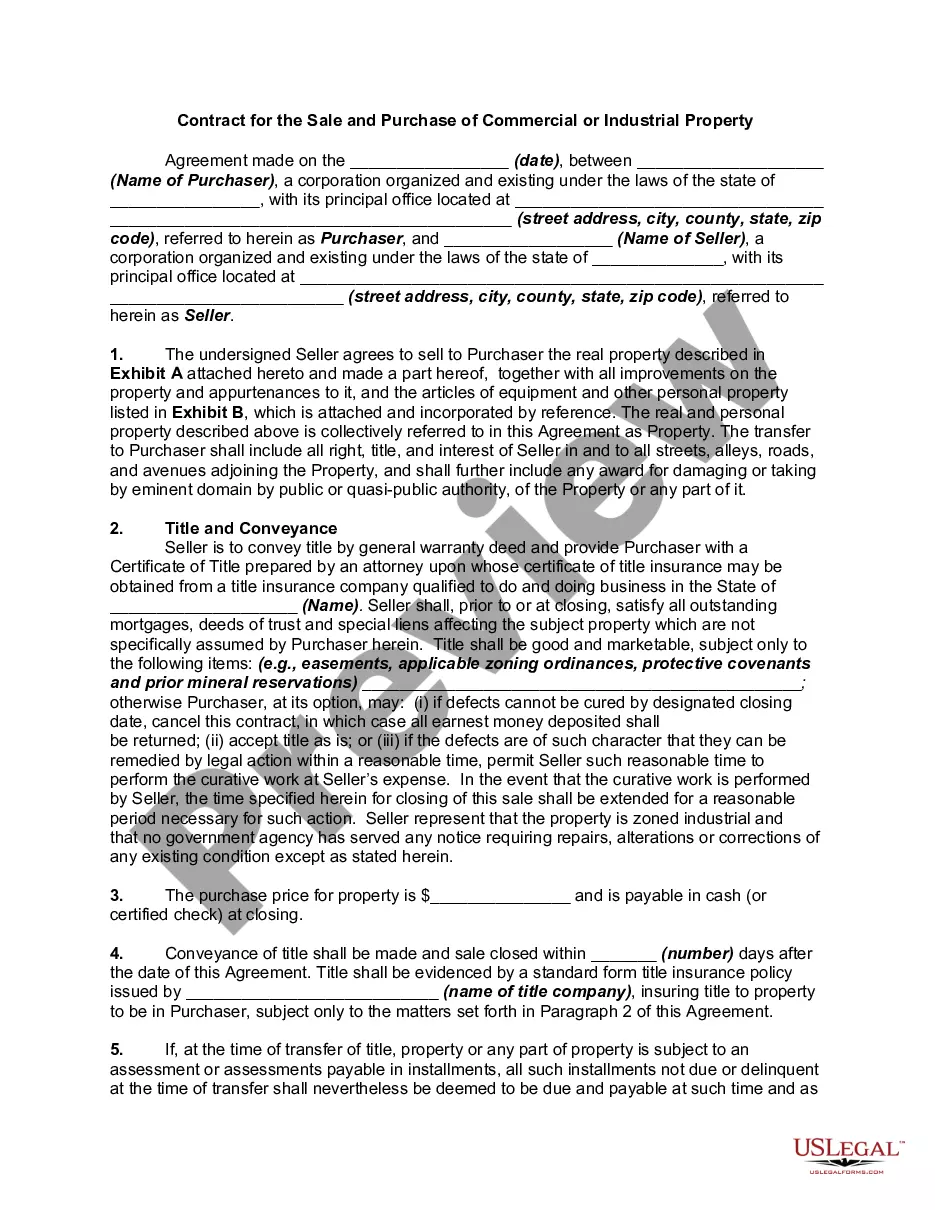
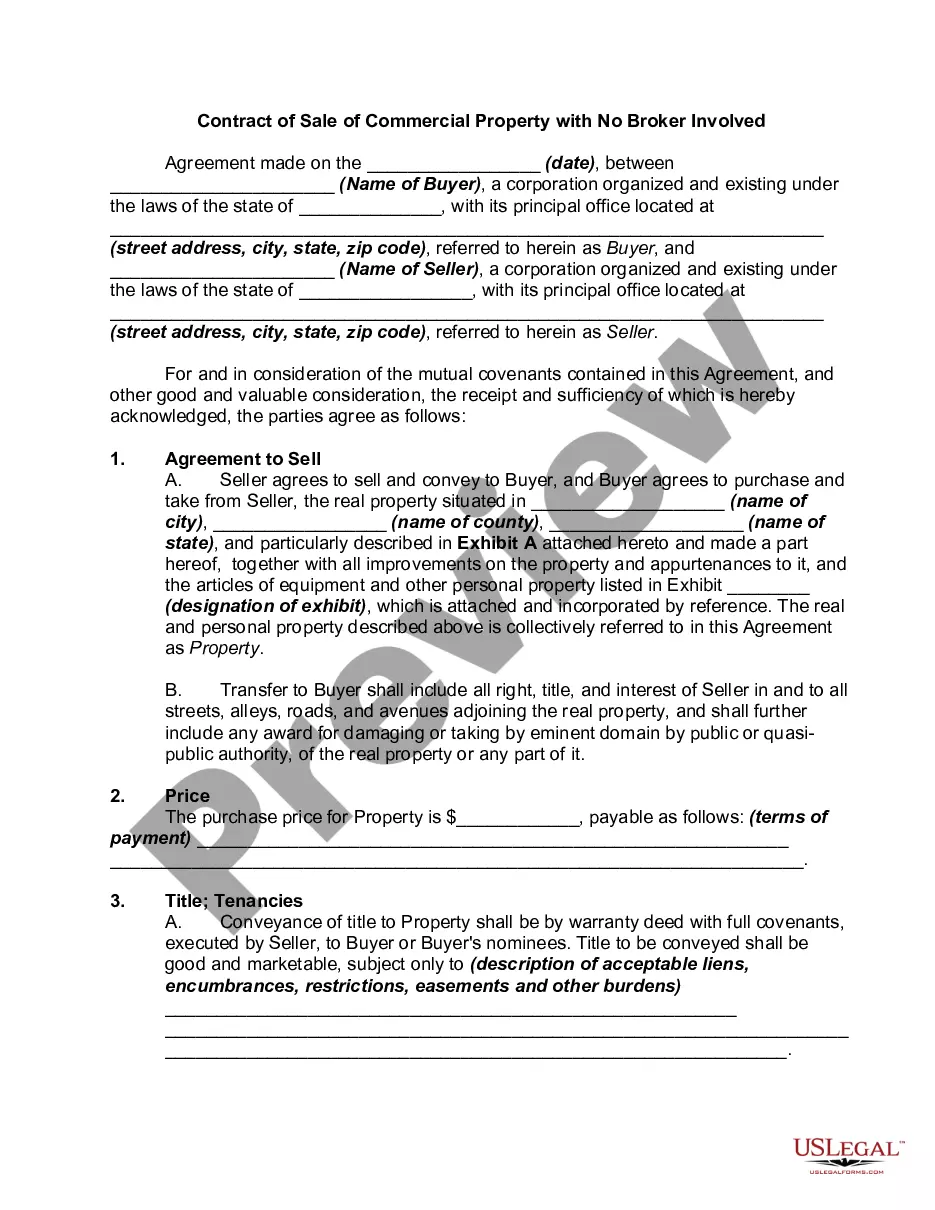
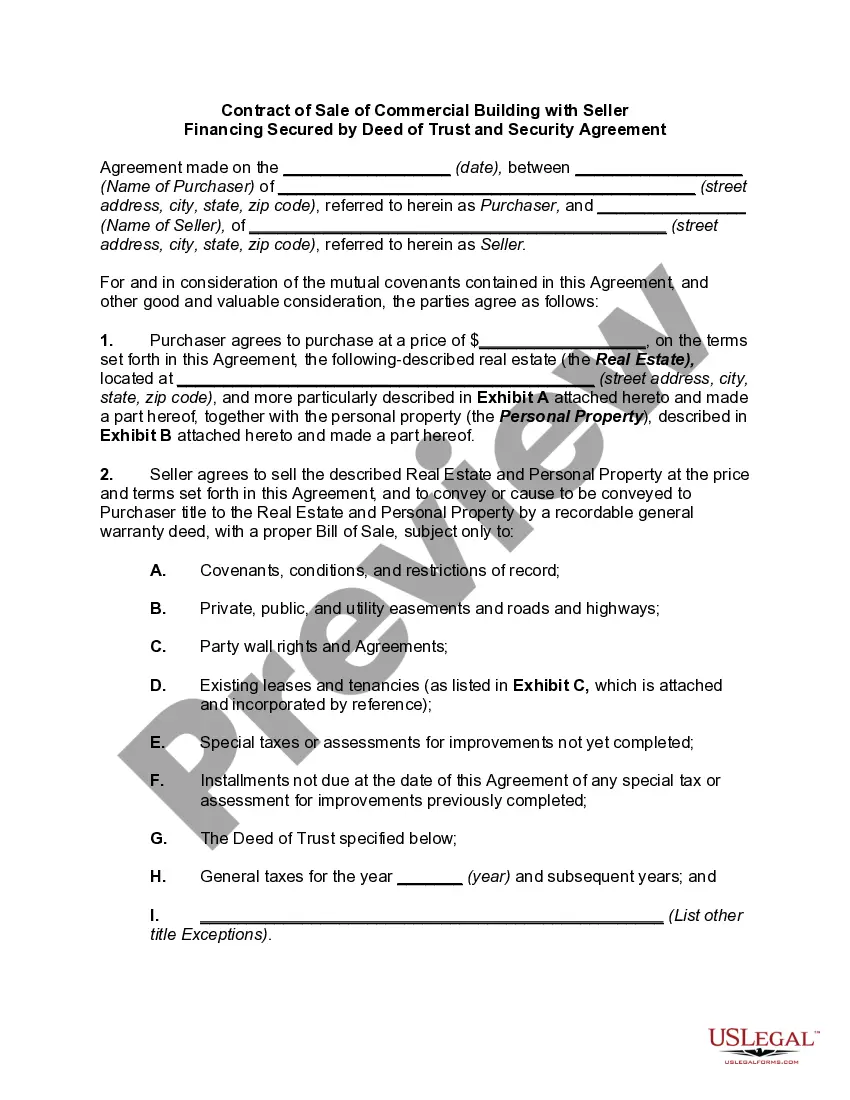
This Contract of Sale and Purchase of Commercial Property is a legal document used to formalize the sale of a commercial building. It outlines the agreement between the seller and purchaser regarding the terms of the sale, including price, property details, and conditions. This form is designed to be adaptable for use in various jurisdictions, ensuring compliance with local laws and regulations specific to commercial real estate transactions.
Form components explained
- Date of agreement and parties involved (Seller and Purchaser).
- Description of the commercial property, including location and condition.
- Purchase price and payment terms.
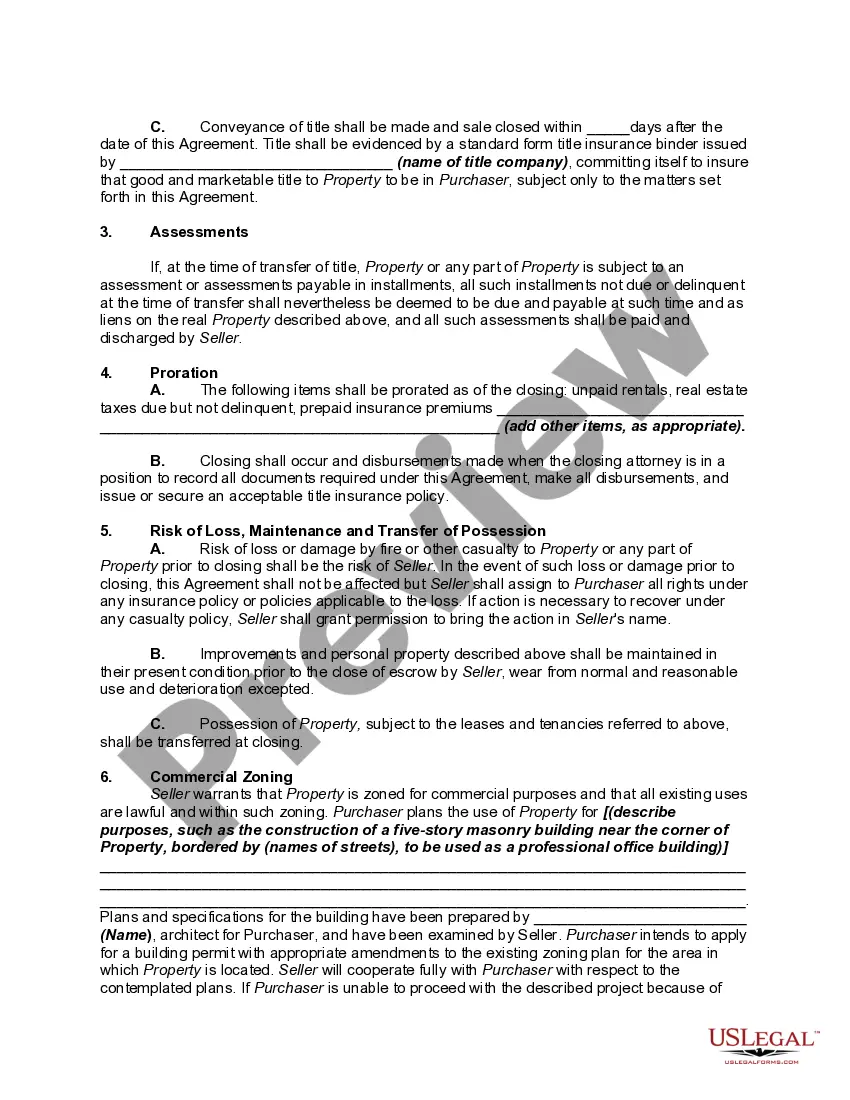
- Title transfer details and any encumbrances or tenancies.
- Risk of loss, maintenance responsibilities, and transfer of possession.
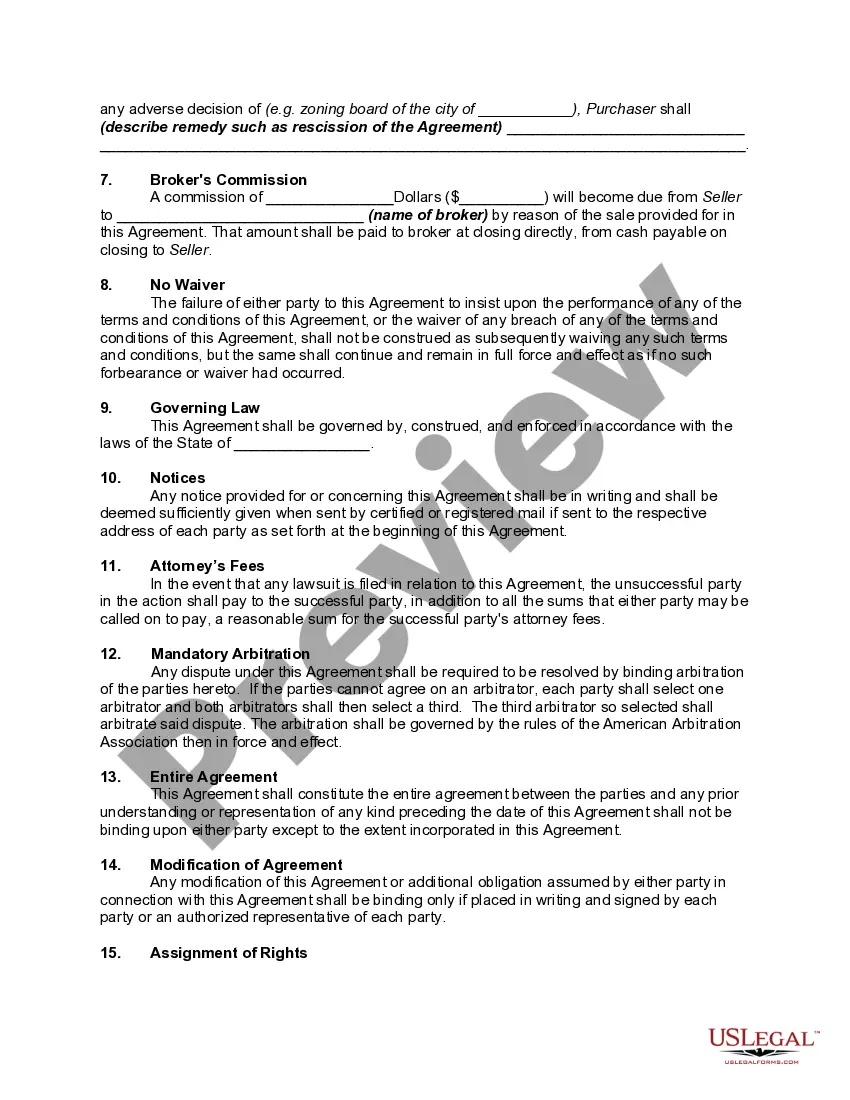
- Dispute resolution through mandatory arbitration.
When to use this document
This form should be used when a corporation or individual intends to purchase a commercial property. It is essential for legally documenting the sale, defining the responsibilities of both parties, and ensuring that both the seller and buyer are in agreement on the terms of the transaction. This form is particularly useful when multiple parties are involved, or specific conditions need to be met during the sale process.
Who should use this form
- Corporations or individuals looking to purchase commercial real estate.
- Real estate agents or brokers facilitating commercial property transactions.
- Legal professionals assisting clients in drafting or reviewing sale agreements.
Steps to complete this form
- Identify the parties involved: clearly state the names and addresses of the seller and purchaser.
- Specify the commercial property: include the full address and details describing the property.
- Enter the purchase price and payment terms: outline how and when the payment will be made.
- Detail any existing tenancies or encumbrances affecting the property.
- Ensure all parties sign and date the agreement to make it legally binding.
Does this form need to be notarized?
This form does not typically require notarization unless specified by local law. However, it is important to check local regulations to ensure compliance.
Get your form ready online
Our built-in tools help you complete, sign, share, and store your documents in one place.
Make edits, fill in missing information, and update formatting in US Legal Forms—just like you would in MS Word.
Download a copy, print it, send it by email, or mail it via USPS—whatever works best for your next step.
Sign and collect signatures with our SignNow integration. Send to multiple recipients, set reminders, and more. Go Premium to unlock E-Sign.
If this form requires notarization, complete it online through a secure video call—no need to meet a notary in person or wait for an appointment.
We protect your documents and personal data by following strict security and privacy standards.

Make edits, fill in missing information, and update formatting in US Legal Forms—just like you would in MS Word.

Download a copy, print it, send it by email, or mail it via USPS—whatever works best for your next step.

Sign and collect signatures with our SignNow integration. Send to multiple recipients, set reminders, and more. Go Premium to unlock E-Sign.

If this form requires notarization, complete it online through a secure video call—no need to meet a notary in person or wait for an appointment.

We protect your documents and personal data by following strict security and privacy standards.
Common mistakes to avoid
- Failing to specify the property details accurately, which can lead to disputes.
- Not including conditions regarding existing tenants or leases.
- Leaving out important legal terms or clauses that could affect enforceability.
Why use this form online
- Convenience of immediately downloading and filling out the form.
- Up-to-date legal information reflecting current laws.
- Editability to customize the agreement as needed for specific transactions.
Legal use & context
This form serves as a binding agreement once signed by both parties. It is enforceable under the laws of the state where the property is located, provided that all stipulations are met. Failure to comply with the terms outlined in the agreement may result in legal disputes, necessitating professional legal assistance.
Quick recap
- The Contract of Sale and Purchase of Commercial Property provides a comprehensive framework for selling or purchasing commercial real estate.
- Both parties must ensure clarity in terms regarding the property, purchase price, and title transfer.
- Consulting legal professionals is advised to tailor the form to specific state requirements.
Looking for another form?
Form popularity
FAQ
If your house is under contract, it means you've accepted an offer (congrats!) and signed a purchase agreement with a buyer. This agreement locks in the sale price, any personal property that stays or goes (washers and dryers for example), and the closing date when your buyer will take possession of the home.
The key difference between active under contract and pending is the seller's choice. With pending, the seller has said that they are comfortable with the contract, and no longer want to show and market the home.This property may still have normal contractual conditions (i.e. inspections, financing, etc.).
A good rental yield tends to be upwards of 5% and around 8% is particularly strong.
#1 Work with a Commercial Real Estate Broker. #2 Sell It Fast to an Investor (aka Cash Property Buyer) #3 Sell It By Owner Using a Professional Appraiser. Three Approaches to Commercial Property Appraisal. Create a Marketing Package. Where to Advertise Your Commercial Property.
What does under contract mean in real estate? As with a contingent property, a home that is active under contract is one where the buyer and the seller have agreed to terms, but the deal is still in its early stages and may not come to fruition.
When an owner accepts a written offer, he countersigns the offer to purchase agreement. This agreement is a contract so signing places the property "under contract." Once a property is "under contract," the contract is binding and the seller cannot change her mind and sell to someone else.
The home is under contract and all contingencies have been removed (that is, the requirements met). Basically, a sale pending property is much closer to being sold than an under contract property.
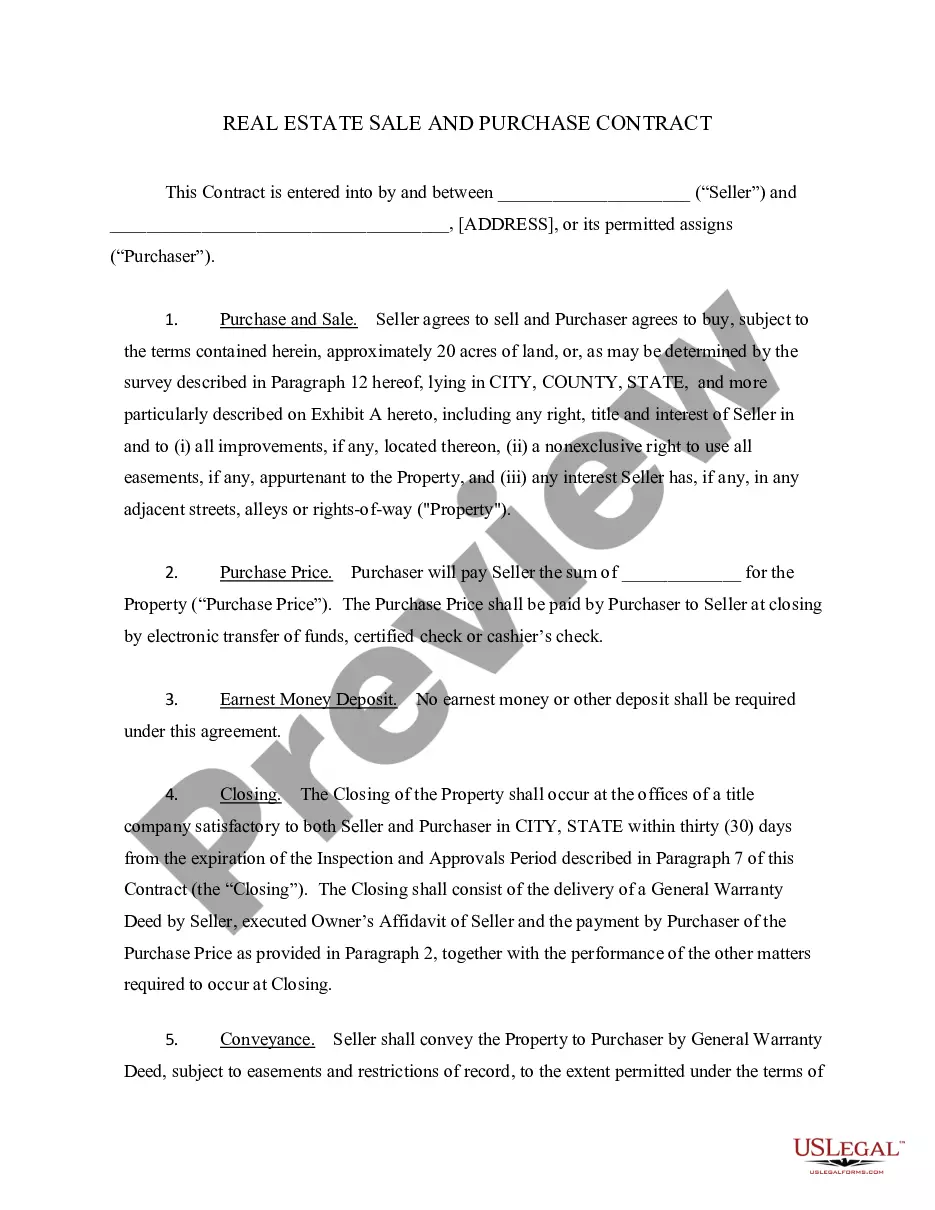
A commercial purchase agreement allows for a seller to make a deal with an eligible buyer to transfer ownership of their real estate in exchange for cash or other trade. The buyer will commonly be required to deposit earnest money, known as consideration, in order for the contract to be valid.
Owners of commercial property are typically responsible for loan payments as well as all costs associated with operating the commercial space. This means that in addition to our annual loan payment, we should expect to cover the following annual costs: Annual property taxes: $6,000. Annual retail insurance: $1,500.