Oil Cleanup Services Contract - Self-Employed
What is this form?
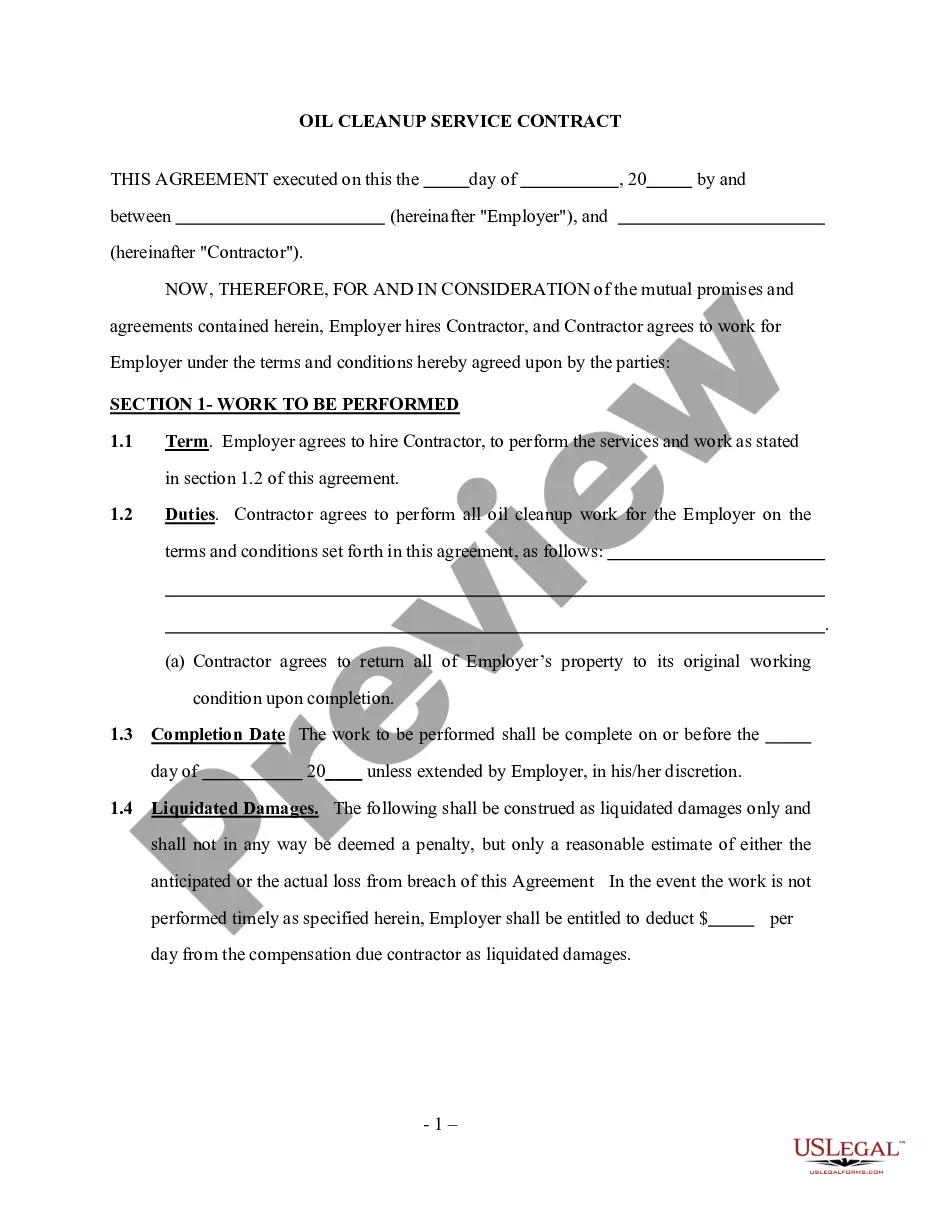
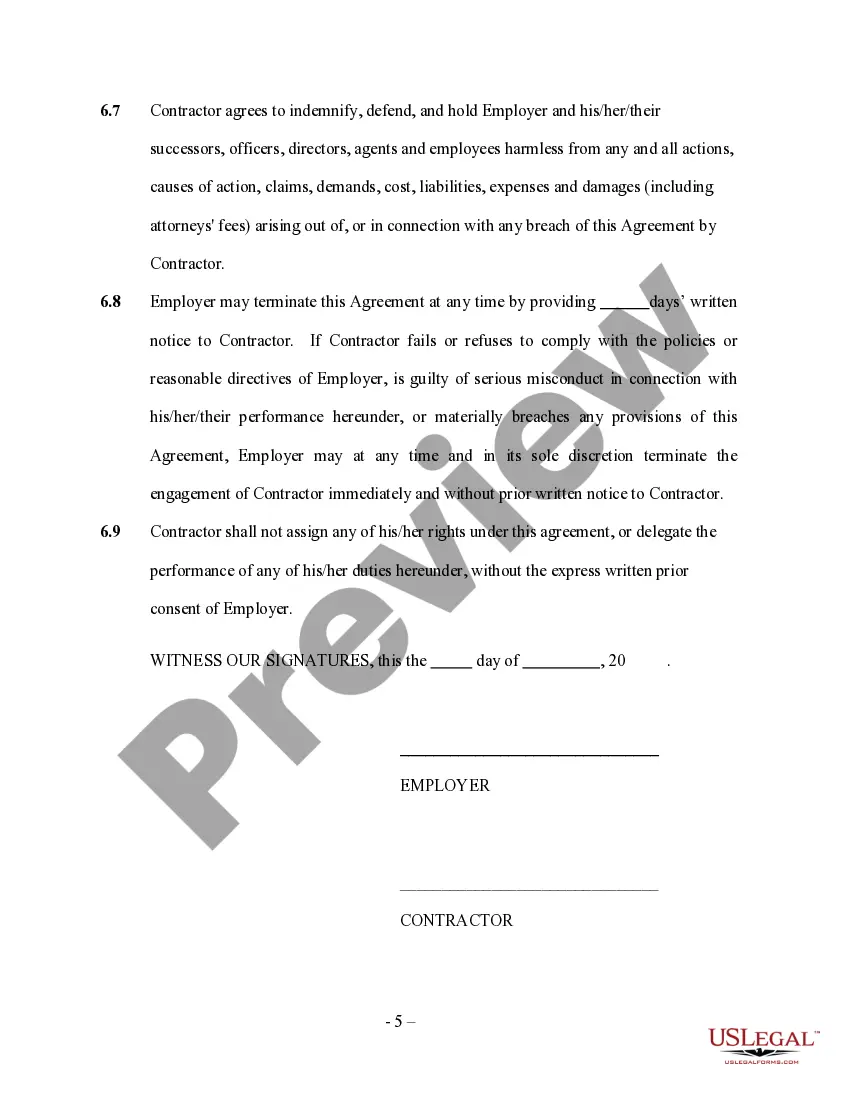
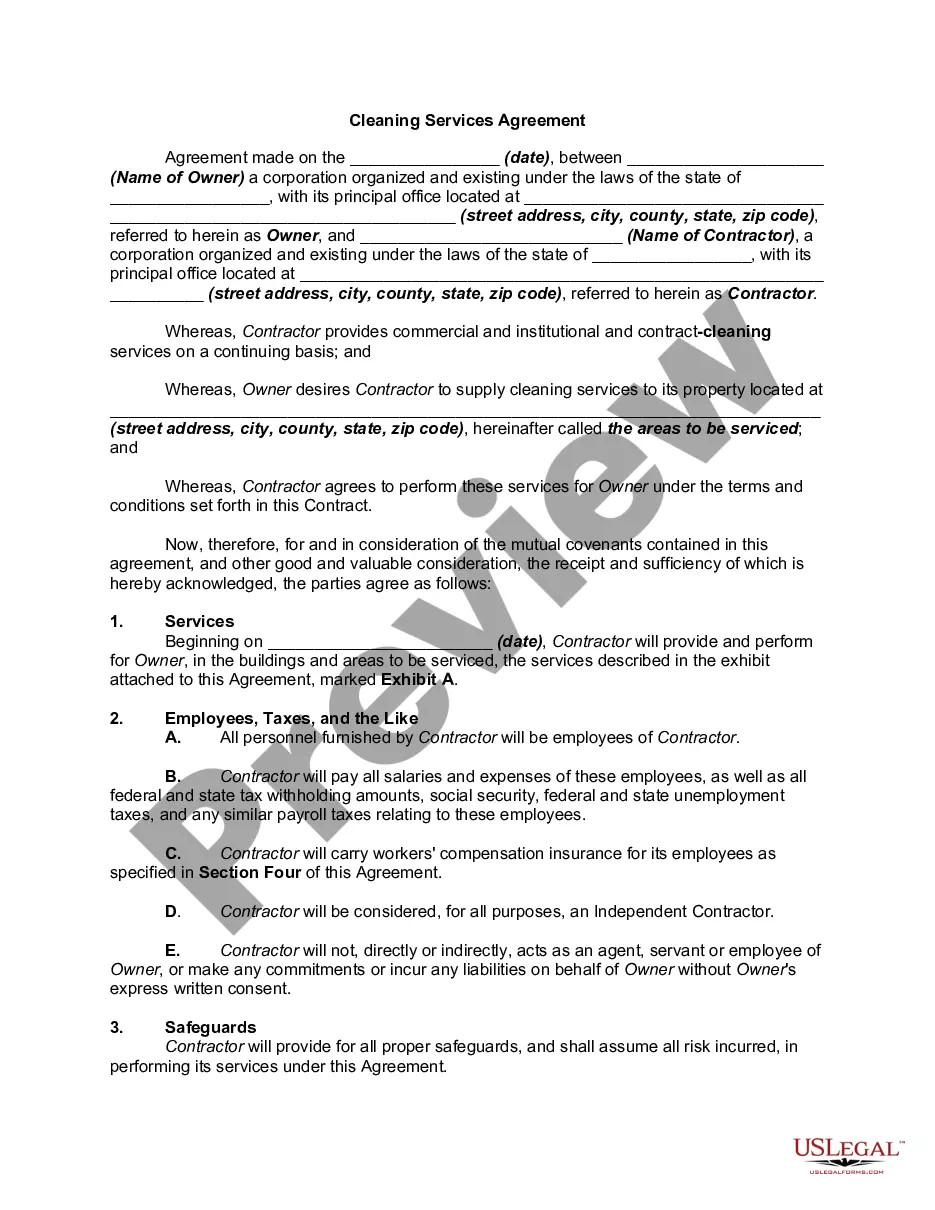
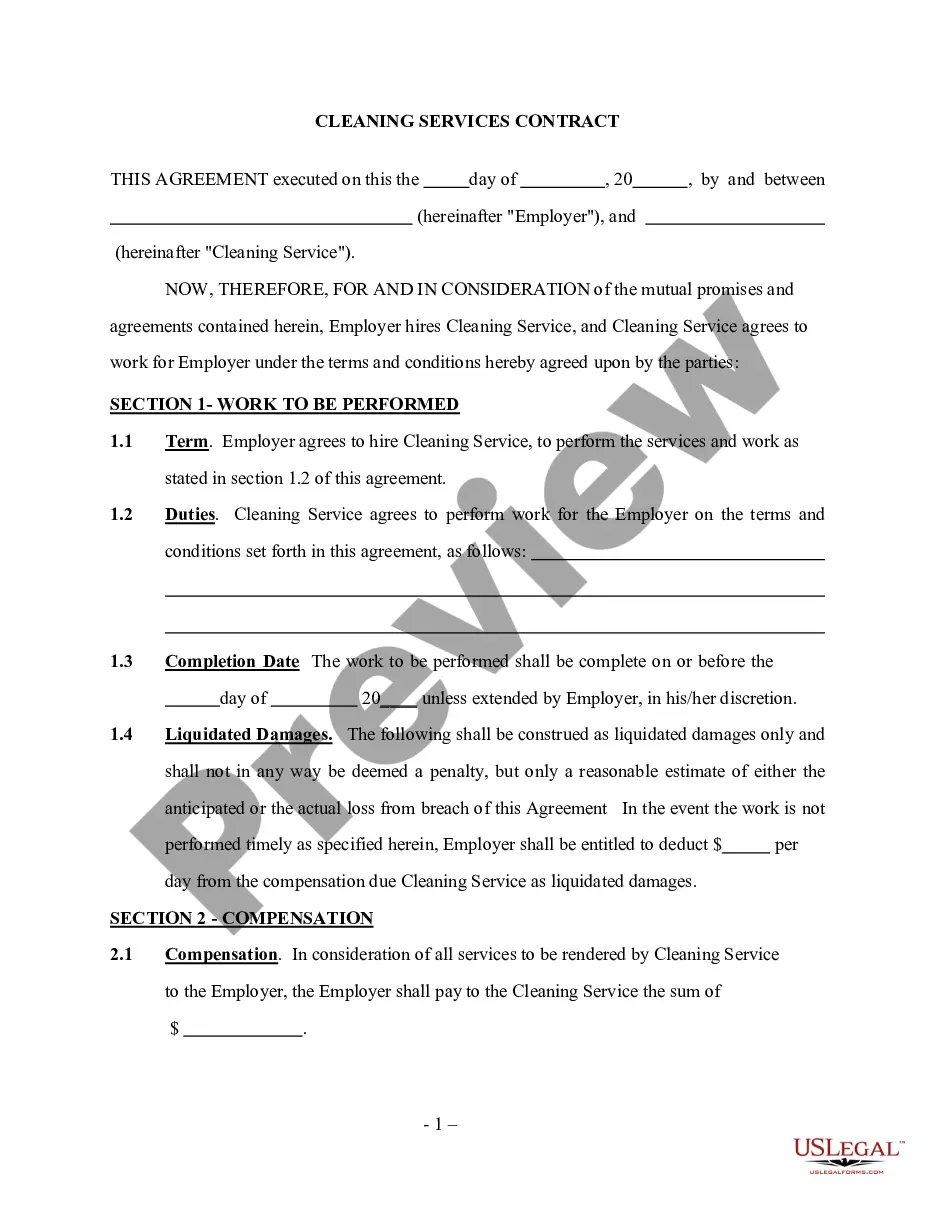
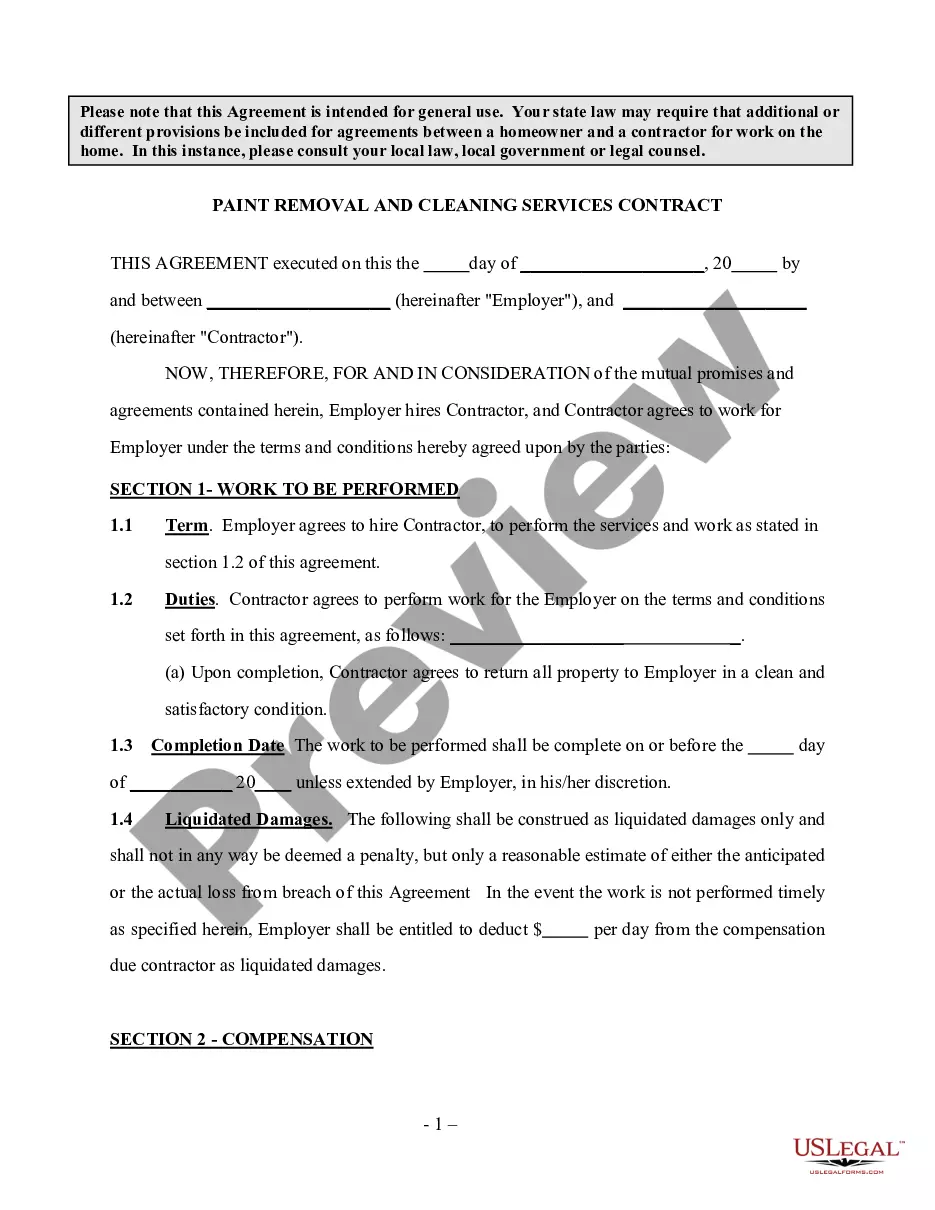
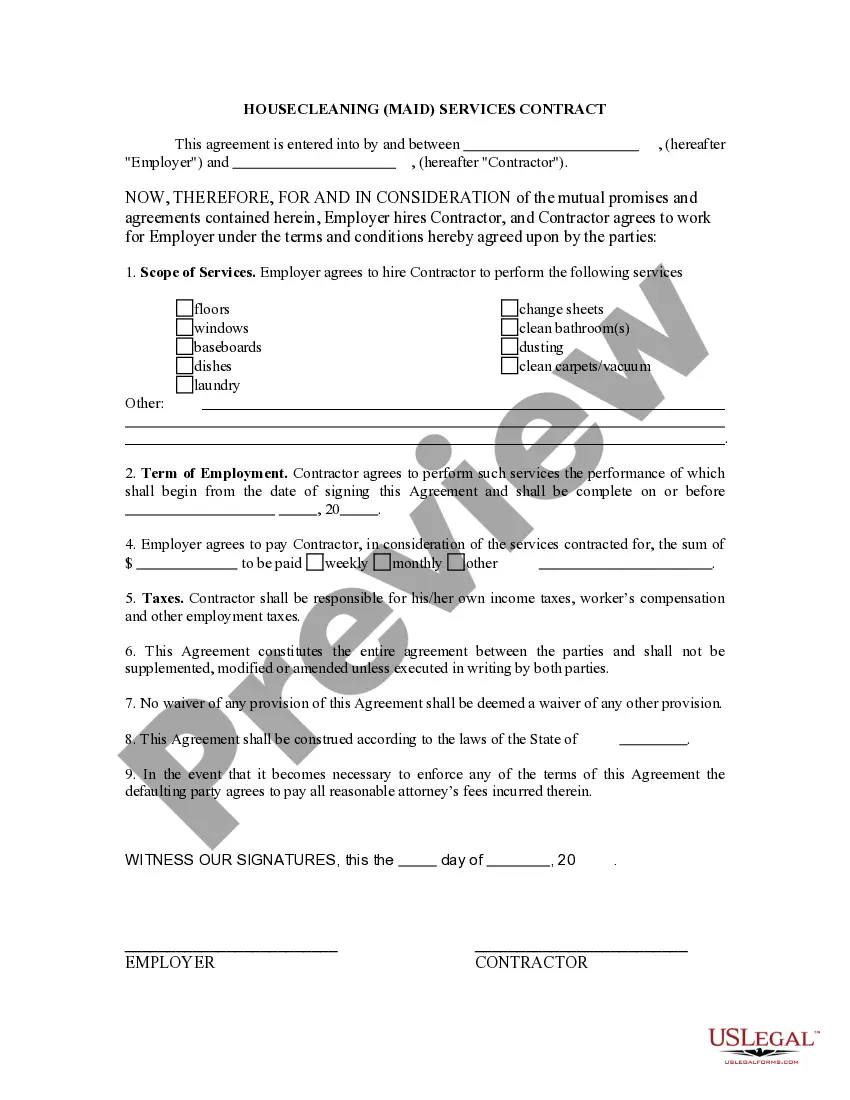
The Oil Cleanup Services Contract - Self-Employed is a legal document used to outline the agreement between an employer and an independent contractor for providing oil cleanup services. This contract specifies the services to be performed, the responsibilities of each party, and confirms the contractor's status as an independent entity. It is distinct from other service contracts as it is tailored specifically for oil cleanup operations, focusing on the unique needs of this industry.
Key components of this form
- Section 1 - Work to be Performed: Details the services the contractor will provide.
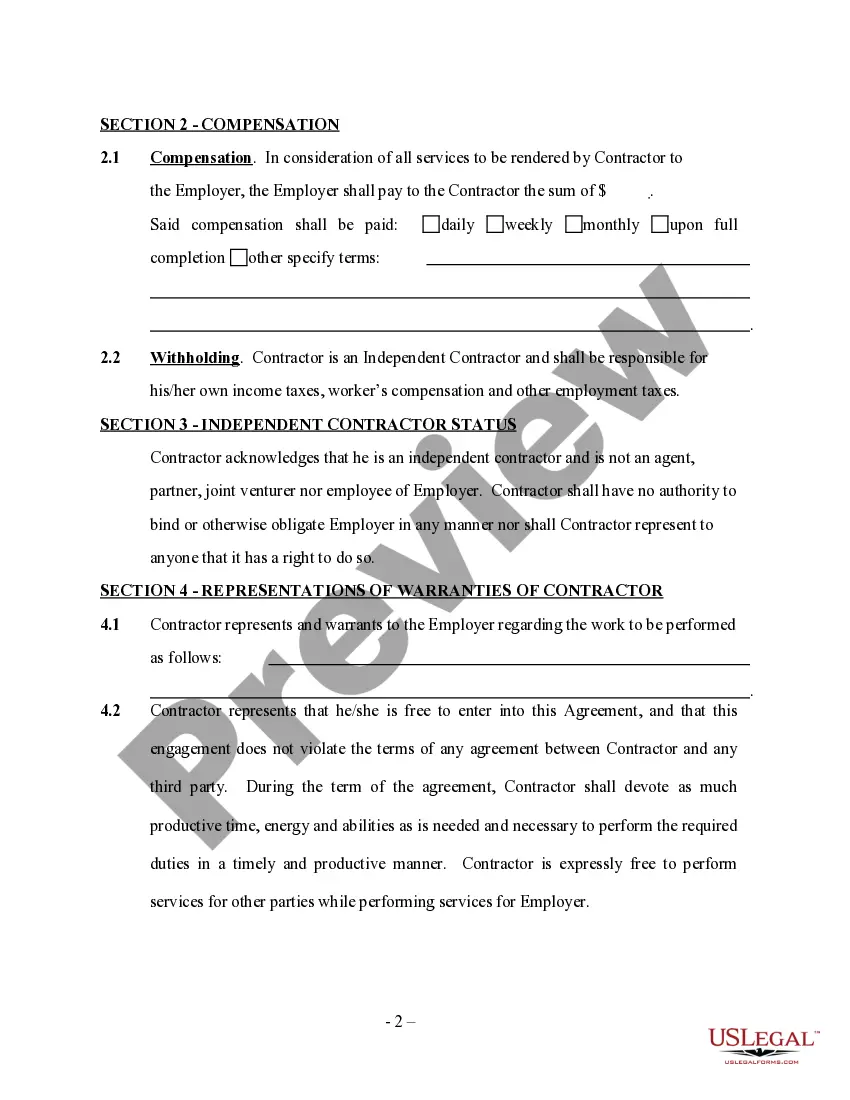
- Section 3 - Independent Contractor Status: Clarifies that the contractor operates independently and does not bind the employer.
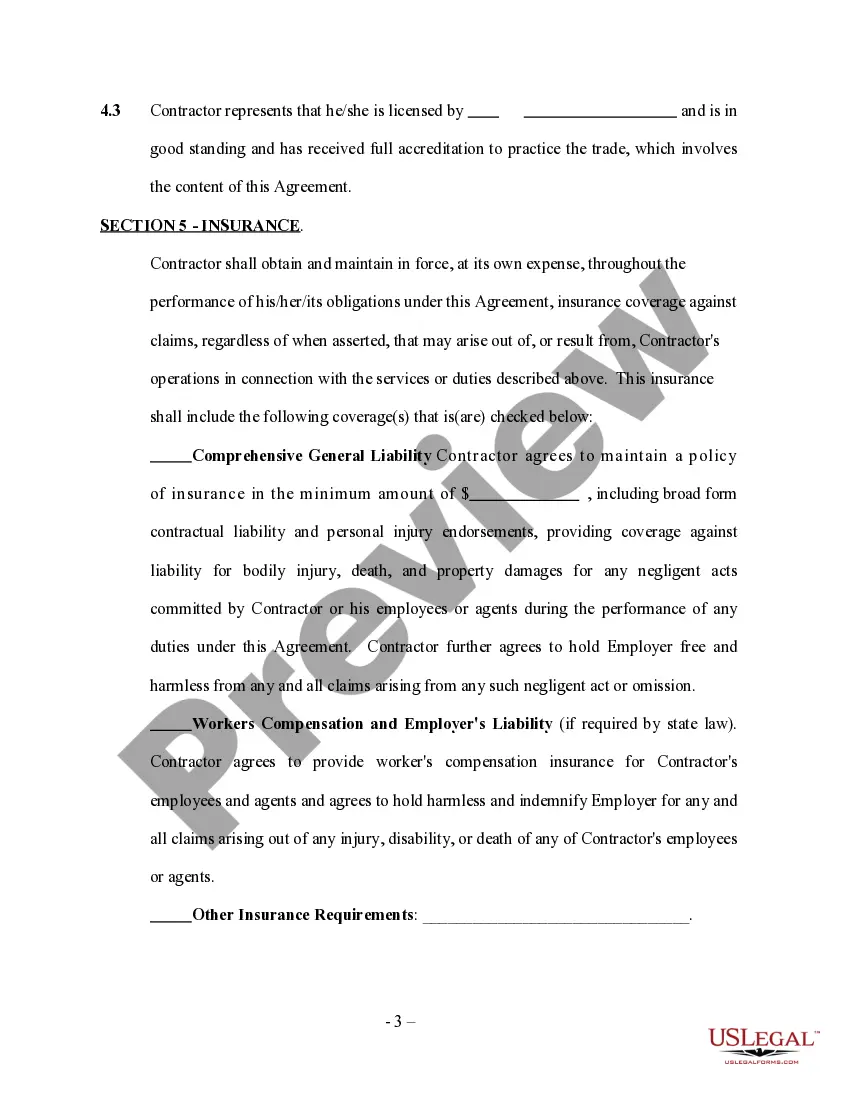
- Section 4 - Representations and Warranties of Contractor: Ensures the contractor affirmatively states their qualifications and abilities.
Common use cases
This contract should be used when an employer needs to hire an independent contractor specifically for oil cleanup services. It is essential in situations where the employer requires specialized services to manage oil spills or contamination, and where the contractor has the necessary skills and expertise to perform these tasks.
Who needs this form
The following individuals or entities should consider using this form:
- Employers in industries that handle oil and petroleum products.
- Independent contractors offering oil cleanup services.
- Environmental firms managing oil spill response efforts.
How to complete this form
- Identify the parties involved: Clearly state the employer's and contractor's names and contact details.
- Specify the work: Detail the scope of the oil cleanup services to be performed.
- Set the contract term: Outline the duration of the agreement and any deadlines for completion.
- Review and confirm independent contractor status: Ensure all aspects of the independent contractor relationship are understood and agreed upon.
- Sign and date the contract: Both parties should sign the document to formalize the agreement.
Notarization guidance
In most cases, this form does not require notarization. However, some jurisdictions or signing circumstances might. US Legal Forms offers online notarization powered by Notarize, accessible 24/7 for a quick, remote process.
Get your form ready online
Our built-in tools help you complete, sign, share, and store your documents in one place.
Make edits, fill in missing information, and update formatting in US Legal Forms—just like you would in MS Word.
Download a copy, print it, send it by email, or mail it via USPS—whatever works best for your next step.
Sign and collect signatures with our SignNow integration. Send to multiple recipients, set reminders, and more. Go Premium to unlock E-Sign.
If this form requires notarization, complete it online through a secure video call—no need to meet a notary in person or wait for an appointment.
We protect your documents and personal data by following strict security and privacy standards.

Make edits, fill in missing information, and update formatting in US Legal Forms—just like you would in MS Word.

Download a copy, print it, send it by email, or mail it via USPS—whatever works best for your next step.

Sign and collect signatures with our SignNow integration. Send to multiple recipients, set reminders, and more. Go Premium to unlock E-Sign.

If this form requires notarization, complete it online through a secure video call—no need to meet a notary in person or wait for an appointment.

We protect your documents and personal data by following strict security and privacy standards.
Common mistakes
- Failing to clearly define the scope of work can lead to misunderstandings.
- Not specifying payment terms can result in disputes about compensation.
- Assuming the contractor has the same legal responsibilities as an employee.
Benefits of using this form online
- Convenient access to professionally drafted forms tailored for oil cleanup services.
- Editable format allows for quick customizations based on specific needs.
- Reliable legal framework to protect both parties involved in the contract.
Legal use & context
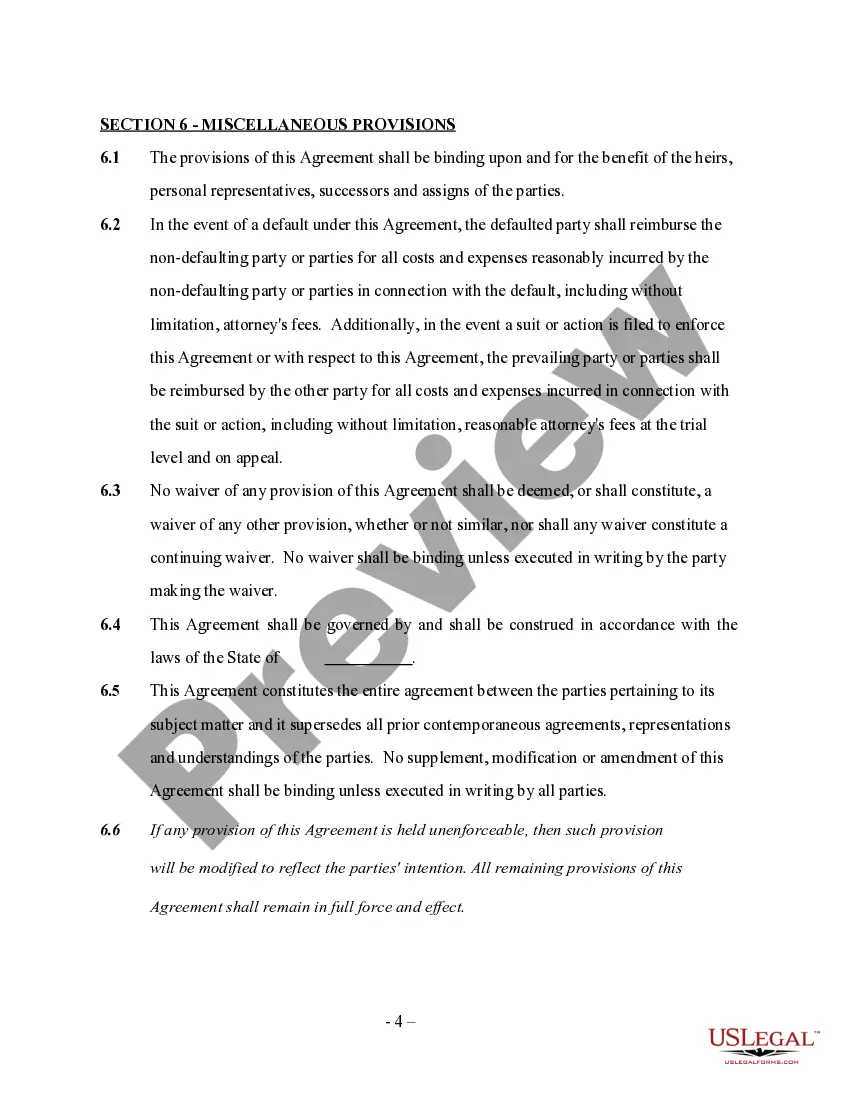
- This contract helps define the relationship between the contractor and employer, protecting both parties' rights.
- It establishes clear expectations, thereby reducing the risk of disputes.
- Properly executed contracts are enforceable in court, should any issues arise.
Main things to remember
- The Oil Cleanup Services Contract - Self-Employed formalizes agreements between employers and independent contractors.
- It is essential for outlining services, terms, and the independent status of the contractor.
- Completing the form accurately helps prevent misunderstandings and protects both parties legally.
Looking for another form?
Form popularity
FAQ
Identify the customer and service provider. Describe the services being provided. Outline a payment schedule. Establish terms about confidentiality, non-solicitation, and non-competition. Address ownership of materials. Personalize your Service Agreement.
If you received a 1099 form instead of a W-2 , then the payer of your income did not consider you an employee and did not withhold federal income tax or Social Security and Medicare tax. A 1099-MISC or NEC means that you are classified as an independent contractor and independent contractors are self-employed.
Your contact information and license number. A contract or billing number. A detailed list of the services you'll provide and on what schedule. Your prices per service. A schedule of when you'll perform your services.
Simply put, being an independent contractor is one way to be self-employed. Being self-employed means that you earn money but don't work as an employee for someone else.An independent contractor is someone who provides a service on a contractual basis.
Here's a cleaning services price list: the average cost of hire a cleaning service is $90 to $150 and the average national hourly rate is $25 to $90 per cleaner. A single family home should cost $120 to $150 to clean, according to Home Advisor.
Basic information for both parties. Your contract should list the following details about your business and your client: Scope of services. Supply list. Renewal and termination clause. Payment details. Dispute resolution.
Yes, if you have 1099 income you are considered to be self-employed, and you will need to pay self-employment taxes (Social Security and Medicare taxes) on this income.
An independent contractor is distinct from an employee who works regularly for a single employer. Independent contractors are not employees of the business or entity they are providing services for. However, the employer is paying the independent contractor for their work.
The earnings of a person who is working as an independent contractor are subject to Self-Employment Tax. If you are an independent contractor, you are self-employed.You are not an independent contractor if you perform services that can be controlled by an employer (what will be done and how it will be done).