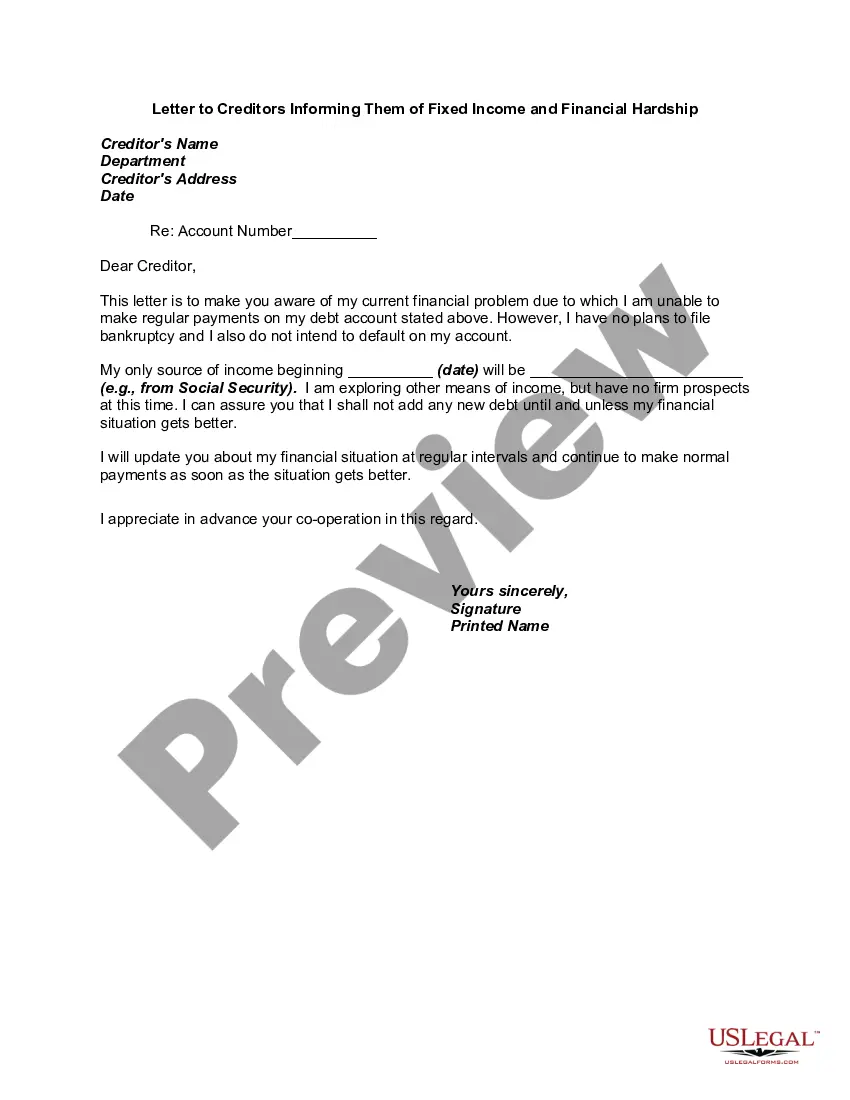
Letter to Creditors Informing Them of Fixed Income and Financial Hardship
What is this form?
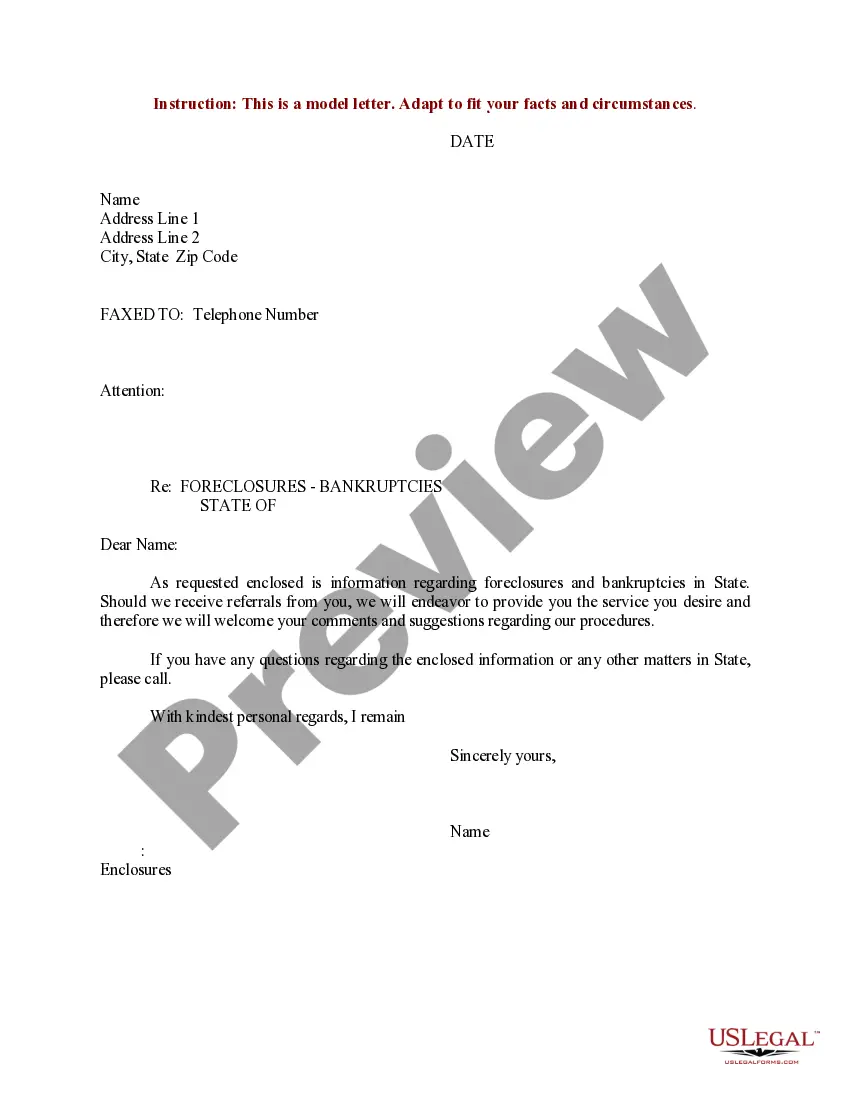
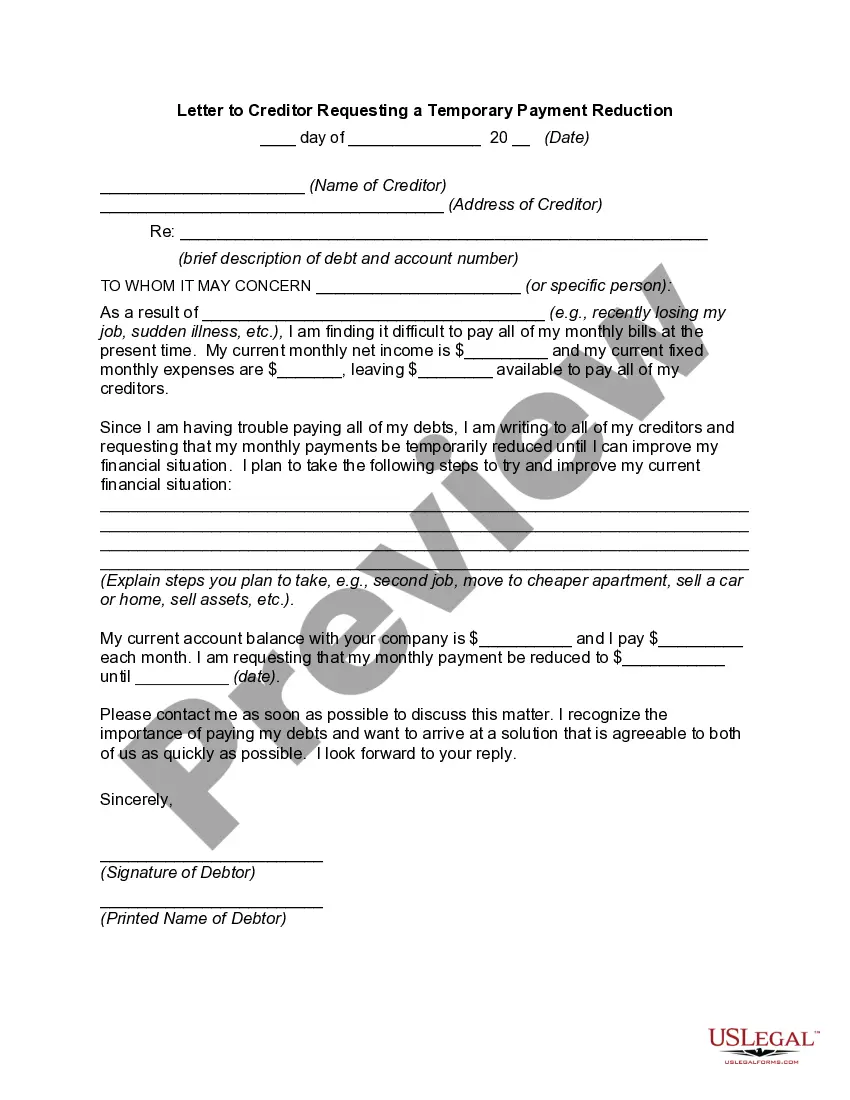
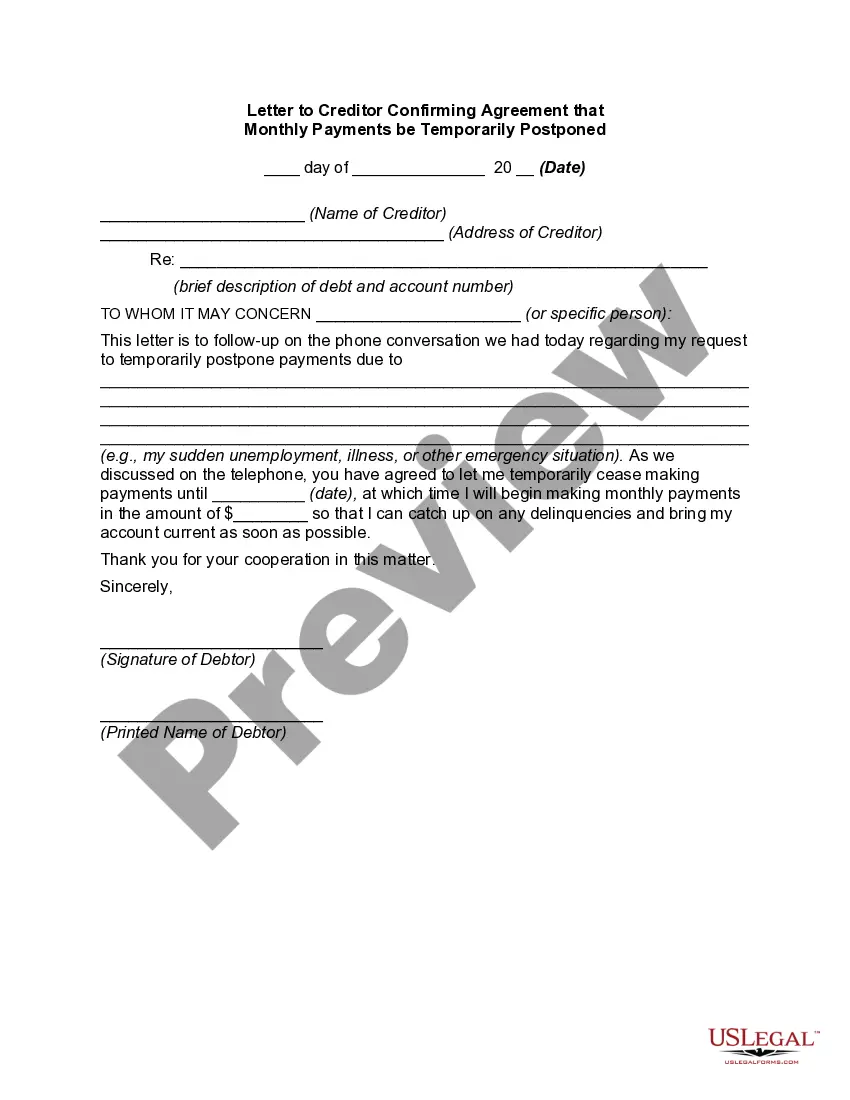
The Letter to Creditors Informing Them of Fixed Income and Financial Hardship is a legal document that allows individuals to communicate their financial difficulties to creditors. This form aids in expressing your situation without ignoring your debts, potentially leading to a compromise or more manageable payment plans. It differs from other letters by specifically addressing fixed income and hardship, emphasizing your willingness to maintain communication and payment as your situation improves.
Form components explained
- Creditorâs name and address section for proper identification.
- Date line to indicate when the letter is sent.
- Account number to specify which debt you are addressing.
- Statement of your financial hardship and fixed income source.
- Commitment to keep creditors informed about your situation.
- Signature and printed name for legal authenticity.
Situations where this form applies
This form is beneficial to use when you are facing a financial hardship that affects your ability to make regular debt payments. If your income is fixed and you anticipate difficulties in managing your debt, sending this letter can help your creditors understand your situation. Use it when you want to maintain communication with your creditors and express your intention to pay as circumstances allow.
Who should use this form
- Individuals facing financial hardship due to circumstances such as job loss, medical issues, or retirement.
- Anyone who receives a fixed income, such as Social Security or pensions, and is struggling to cover their debts.
- Debtors looking to negotiate terms with creditors without declaring bankruptcy.
How to prepare this document
- Identify the creditor by entering their name and address at the top of the letter.
- Enter the date when you are sending the letter.
- Provide your account number related to the debt.
- Clearly outline your financial hardship and what your fixed income source is.
- Include a commitment to update the creditor on your situation and your intent to pay when possible.
- Sign and print your name at the bottom to finalize the letter.
Notarization requirements for this form
Notarization is not commonly needed for this form. However, certain documents or local rules may make it necessary. Our notarization service, powered by Notarize, allows you to finalize it securely online anytime, day or night.
Get your form ready online
Our built-in tools help you complete, sign, share, and store your documents in one place.
Make edits, fill in missing information, and update formatting in US Legal Forms—just like you would in MS Word.
Download a copy, print it, send it by email, or mail it via USPS—whatever works best for your next step.
Sign and collect signatures with our SignNow integration. Send to multiple recipients, set reminders, and more. Go Premium to unlock E-Sign.
If this form requires notarization, complete it online through a secure video call—no need to meet a notary in person or wait for an appointment.
We protect your documents and personal data by following strict security and privacy standards.

Make edits, fill in missing information, and update formatting in US Legal Forms—just like you would in MS Word.

Download a copy, print it, send it by email, or mail it via USPS—whatever works best for your next step.

Sign and collect signatures with our SignNow integration. Send to multiple recipients, set reminders, and more. Go Premium to unlock E-Sign.

If this form requires notarization, complete it online through a secure video call—no need to meet a notary in person or wait for an appointment.

We protect your documents and personal data by following strict security and privacy standards.
Avoid these common issues
- Failing to include the correct creditor's name and account number, which can lead to miscommunication.
- Not signing the letter, which can affect its validity.
- Using vague language about your financial situation, making it unclear to creditors.
Advantages of online completion
- Convenience of immediate access and downloadable format.
- Editable templates allow you to personalize the letter efficiently.
- Reliability, ensuring you have a professionally drafted form that meets legal standards.
Summary of main points
- This letter is crucial for maintaining open communication with your creditors.
- Provides a structured way to explain your financial difficulties.
- Helps build goodwill with creditors and may lead to more favorable terms.
Looking for another form?

Form popularity
FAQ
Proof of income (pay stubs, offer letter, etc.) proof of other income (e.g., alimony, child support, disability benefits) an expense sheet laying out all your expenses. tax returns (two years worth of returns) profit and loss statement. current bank statements.
Financial hardship typically refers to a situation in which a person cannot keep up with debt payments and bills or if the amount you need to pay each month is more than the amount you earn, due to a circumstance beyond your control.
Name, address, phone number, date, loan number. Short introduction asking for permission to sell your home in a short sale. Hardship details and neighborhood comparables. Assertion that the only other alternative is foreclosure.
Keep the letter concise. Typically, lenders spend less than five minutes reading a hardship letter so it's in your interest to restrict the letter to a single page. Explain your situation. Keep your request specific. Restate your request.
Keep the letter concise. Typically, lenders spend less than five minutes reading a hardship letter so it's in your interest to restrict the letter to a single page. Explain your situation. Keep your request specific. Restate your request.
Proof of income (pay stubs, offer letter, etc.) proof of other income (e.g., alimony, child support, disability benefits) an expense sheet laying out all your expenses. tax returns (two years worth of returns) profit and loss statement. current bank statements.
Keep it original. Be honest. Keep it concise. Don't cast blame or shirk responsibility. Don't use jargon or fancy words. Keep your objectives in mind. Provide the creditor an action plan. Talk to a Financial Couch.
Your name, address, phone number and account number. The type of debt resolution you're seeking. Your financial situation that has caused you to fall behind in your payments. A detailed budget and your plan for making payments (if you want to keep your home)
What Is A Financial Hardship Letter? A hardship letter is a letter you write to your lender to let them know about your financial difficulties. In it, you'll ask for and ask for some form of mortgage assistance or debt relief.