Arkansas Amended Notice of Default
Overview of this form
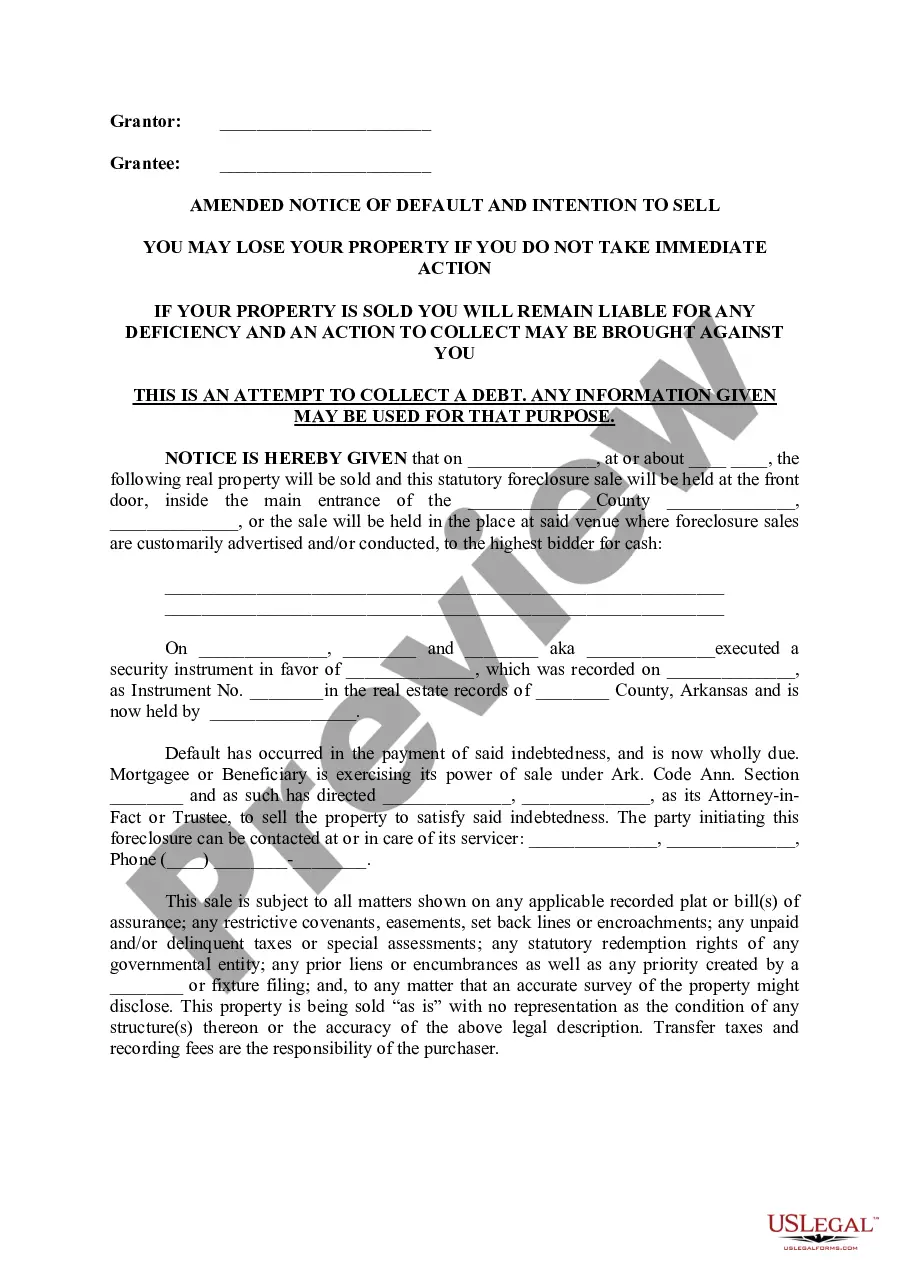
The Amended Notice of Default is a legal document used to formally inform a borrower that they are in default on their residential lease. This form specifically outlines the reasons for default and the deadline for the borrower to cure the default to avoid foreclosure. It is distinct from other notices of default by its requirement for specific reasons and an intention to sell the property if the default is not resolved.
Key components of this form
- Grantor and Grantee identification fields
- Notice of Default declaration including foreclosure intent
- Property description details
- Default and indebtedness acknowledgment
- Contact information for the foreclosing party
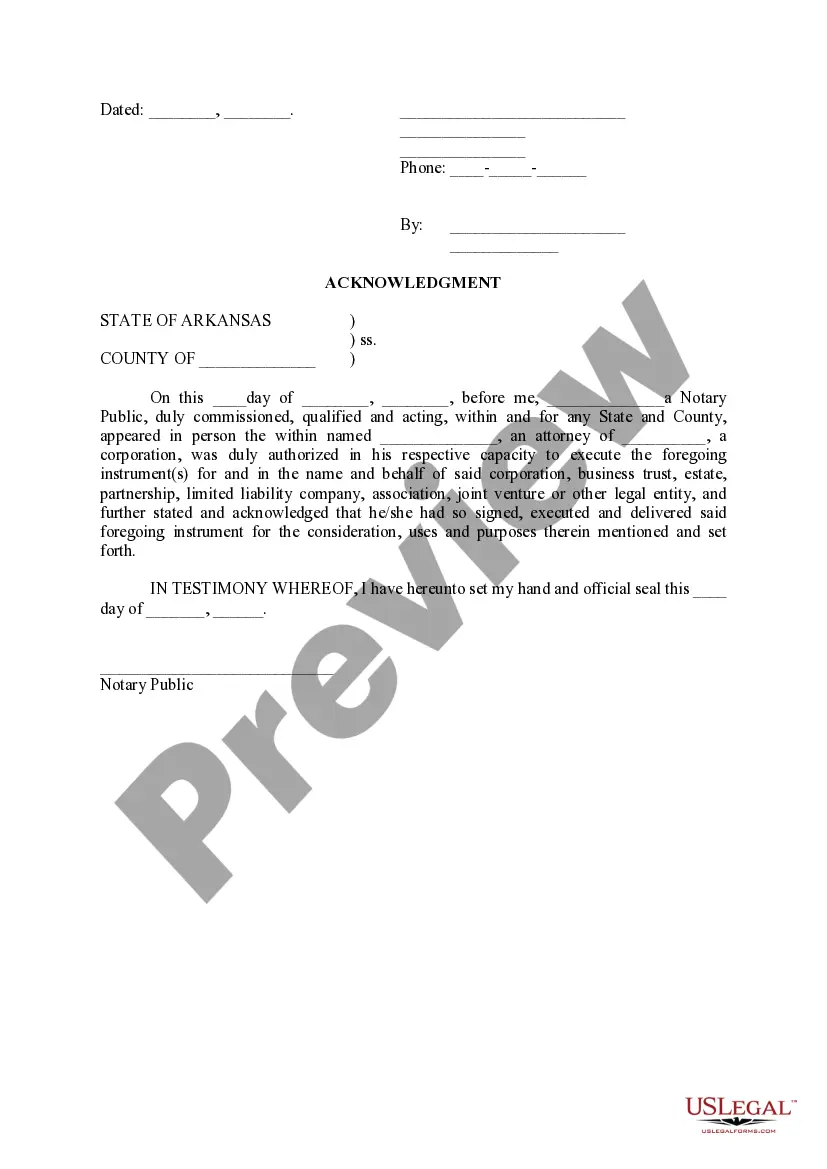
- Execution and notary acknowledgment section


When to use this form
This form is needed when a tenant has failed to meet their lease obligations, particularly in the context of a potential foreclosure on the property. It serves as an official notice to the tenant about their default status and outlines the actions they must take to rectify the situation. Use this form when you want to proceed with foreclosure due to non-payment or other breaches of the lease agreement.
Who should use this form
- Landlords or property owners seeking to notify tenants of lease defaults
- Attorneys representing landlords in real estate matters
- Real estate professionals involved in lease enforcement
Completing this form step by step
- Identify and fill in the names of the grantor and grantee.
- Provide a detailed description of the property in question.
- Enter the date and time of the upcoming foreclosure sale.
- Specify the reasons for the default and the total amount due.
- Complete the acknowledgment section with the signature and notary details.
Notarization guidance
Yes, this form must be notarized to be legally valid. Notarization is essential to authenticate the signing parties and provide credibility to the document. US Legal Forms offers integrated online notarization with 24/7 availability, secure video calls, and legal equivalence, making the process straightforward and convenient.
Get your form ready online
Our built-in tools help you complete, sign, share, and store your documents in one place.
Make edits, fill in missing information, and update formatting in US Legal Forms—just like you would in MS Word.
Download a copy, print it, send it by email, or mail it via USPS—whatever works best for your next step.
Sign and collect signatures with our SignNow integration. Send to multiple recipients, set reminders, and more. Go Premium to unlock E-Sign.
If this form requires notarization, complete it online through a secure video call—no need to meet a notary in person or wait for an appointment.
We protect your documents and personal data by following strict security and privacy standards.

Make edits, fill in missing information, and update formatting in US Legal Forms—just like you would in MS Word.

Download a copy, print it, send it by email, or mail it via USPS—whatever works best for your next step.

Sign and collect signatures with our SignNow integration. Send to multiple recipients, set reminders, and more. Go Premium to unlock E-Sign.

If this form requires notarization, complete it online through a secure video call—no need to meet a notary in person or wait for an appointment.

We protect your documents and personal data by following strict security and privacy standards.
Common mistakes
- Failing to include all necessary parties in the grantor and grantee sections.
- Omitting the specific reasons for the default.
- Leaving out important property details that could lead to legal disputes.
- Not providing accurate contact information for the foreclosing party.
Advantages of online completion
- Easy access to downloadable templates that are legally compliant.
- Time-saving: complete and customize the form at your convenience.
- Reduced chances of errors with pre-drafted language and instructions.
Looking for another form?
Form popularity
FAQ
Rule 55 C in Arkansas deals with default judgments and the process for vacating them. Under this rule, a party can request relief if they were not properly notified or if they can show good cause for their failure to respond. If you find yourself dealing with an Arkansas Amended Notice of Default, understanding Rule 55 C can provide options for reclaiming your standing in court.
In Arkansas, you typically have 30 days to respond to an amended complaint after it is served. This response period is crucial to ensure that you can contest any claims made against you. If you are facing an Arkansas Amended Notice of Default, it's important to adhere to this timeline to protect your legal position.
Rule 59 in Arkansas governs the motion for a new trial or to alter or amend a judgment. This rule is significant for parties who believe there has been an error during their trial. If you are working through an Arkansas Amended Notice of Default, this rule can offer a pathway to challenge the outcome based on perceived mistakes in the process.
Rule 60 in Arkansas provides grounds for relief from a judgment or order. It allows a party to seek to set aside a judgment due to reasons such as mistake, inadvertence, or fraud. When facing an Arkansas Amended Notice of Default, knowing Rule 60 can be crucial for contesting or navigating legal judgments effectively.
Rule 65 in Arkansas pertains to injunctions and restraining orders. It outlines the procedures for requesting these legal remedies in situations where a party needs immediate relief from harm. If you're dealing with an Arkansas Amended Notice of Default, understanding Rule 65 can help protect your rights during the legal process.
For sending your Arkansas income tax payment, you generally need to address it to the Revenue Division of the Arkansas Department of Finance and Administration. Always include your payment details and personal information to guarantee proper credit. If you are dealing with an Arkansas Amended Notice of Default, prompt payment can help you resolve any discrepancies swiftly and efficiently.
Yes, Arkansas accepts federal extensions for individuals; however, you must still file your state tax return by the extended due date. Ensure you submit any additional payments if necessary. In cases involving an Arkansas Amended Notice of Default, confirming your extension status can help clarify your obligations and prevent further issues.
Absolutely, you can e-file an amended return in Arkansas using authorized tax preparation software. E-filing simplifies the process and can lead to faster processing of your return. If you need to respond to an Arkansas Amended Notice of Default, using e-filing may provide you with quicker resolutions and confirmations.
Yes, if you meet the income thresholds set by the Arkansas Department of Finance and Administration, you will need to file a state tax return. Keep in mind that filing correctly helps you avoid complications, such as receiving an Arkansas Amended Notice of Default. Always check for the most current guidelines to ensure that you fulfill your obligations in Arkansas.
When mailing your 1099 form in Arkansas, it’s important to send it to the location outlined in the Arkansas tax filing instructions. Generally, you’ll need to address it to the Arkansas Department of Finance and Administration. Should you encounter an Arkansas Amended Notice of Default related to your 1099, it's best to consult the guidelines on what documents to include with your response.