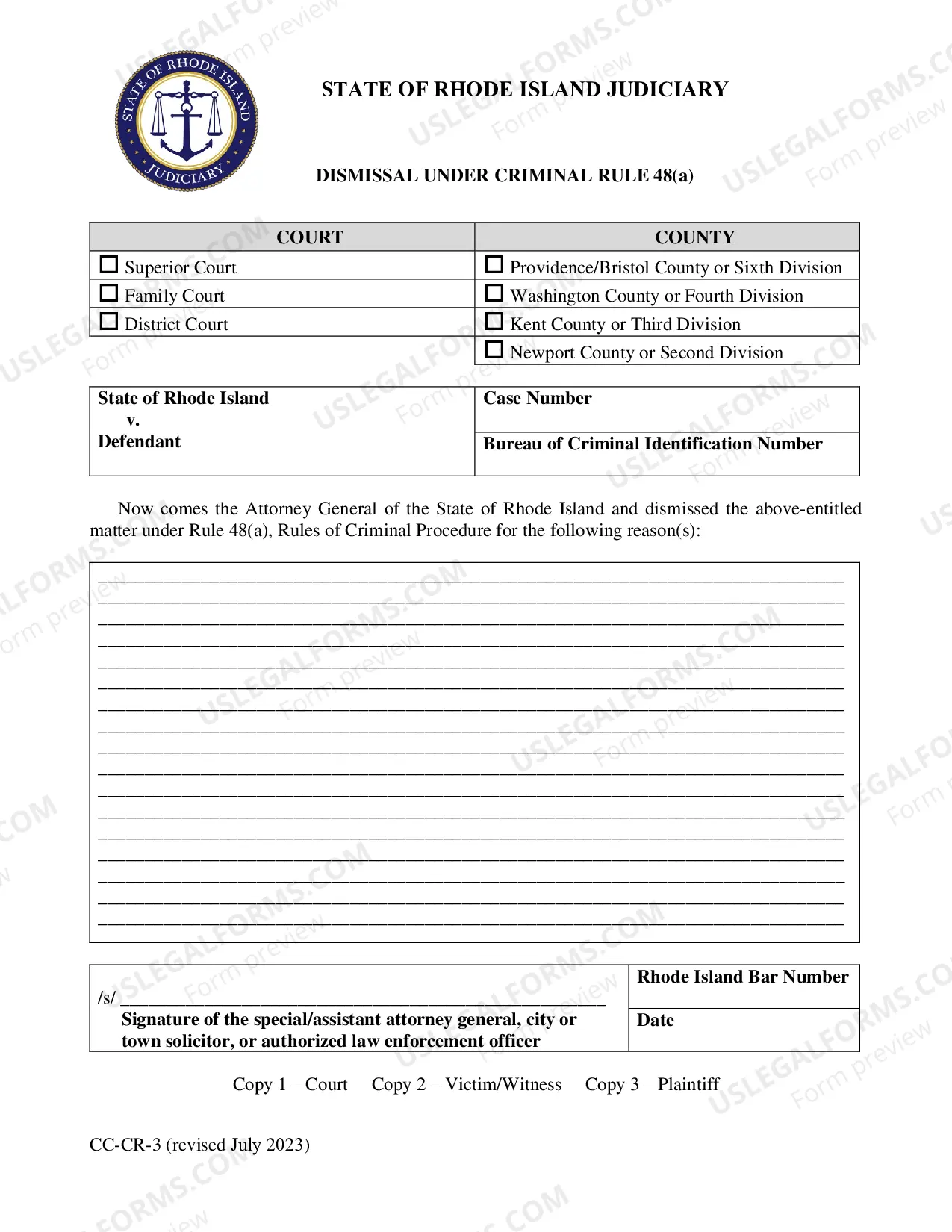
Indemnification Agreement for a Delaware Corporation
Overview of this form
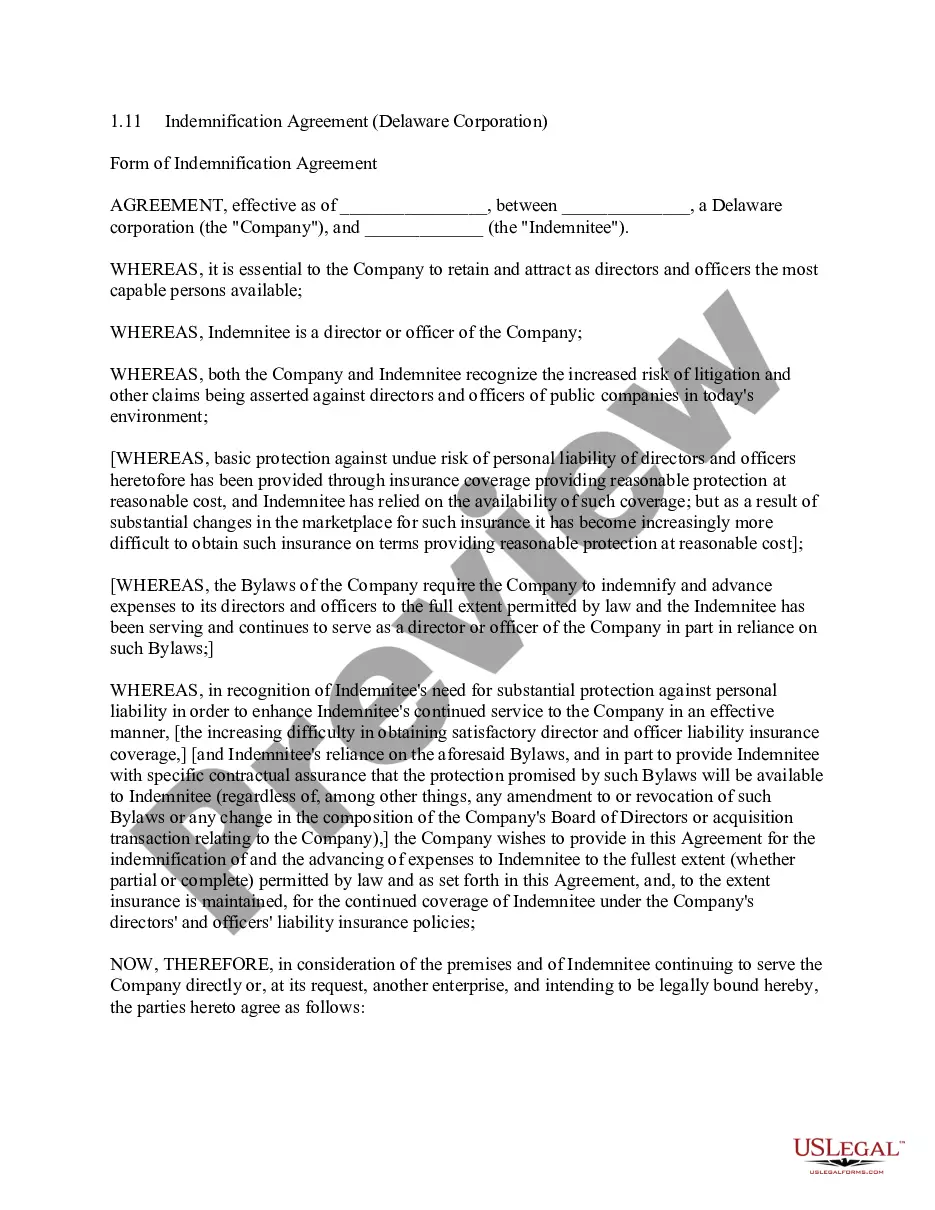
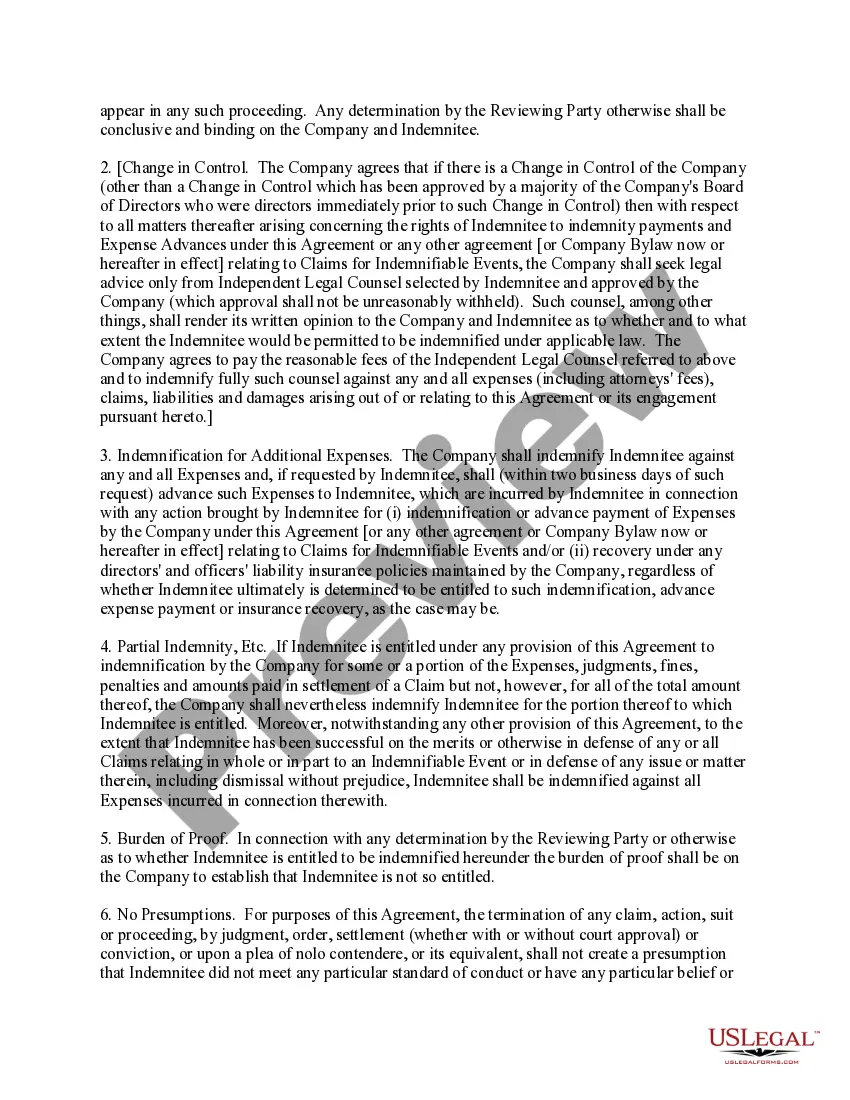
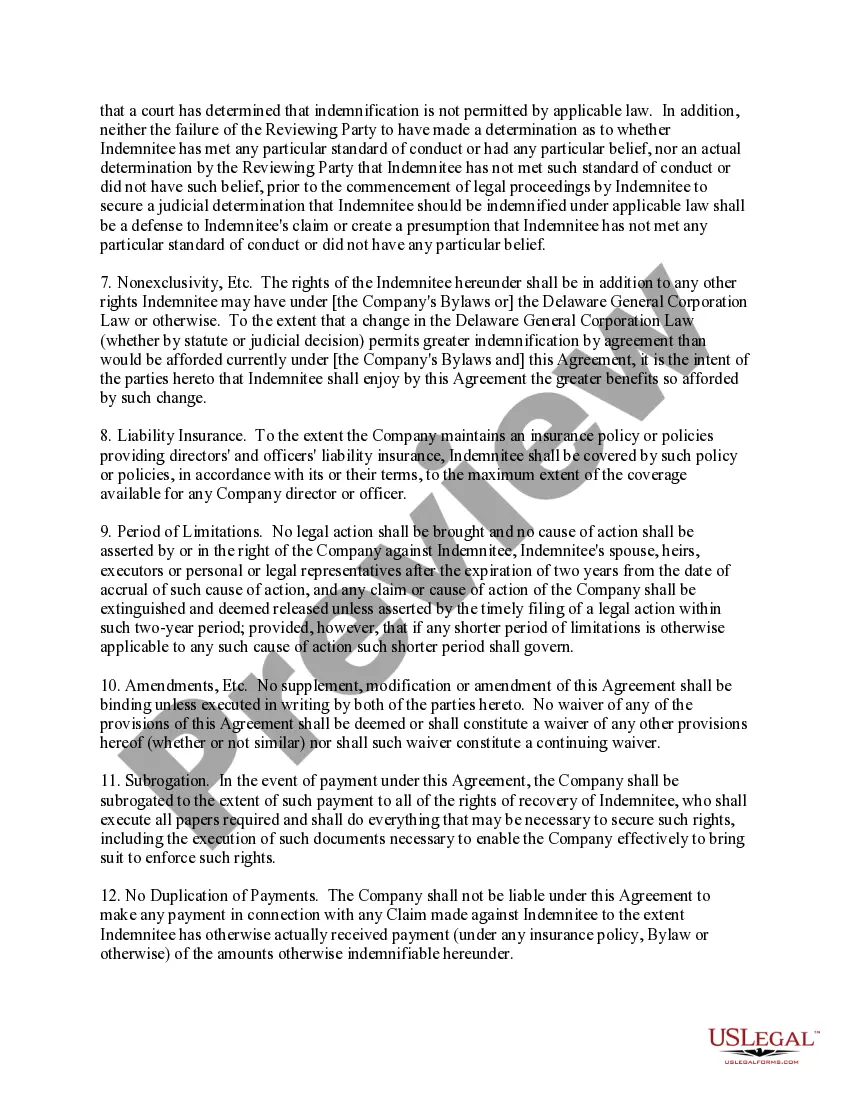
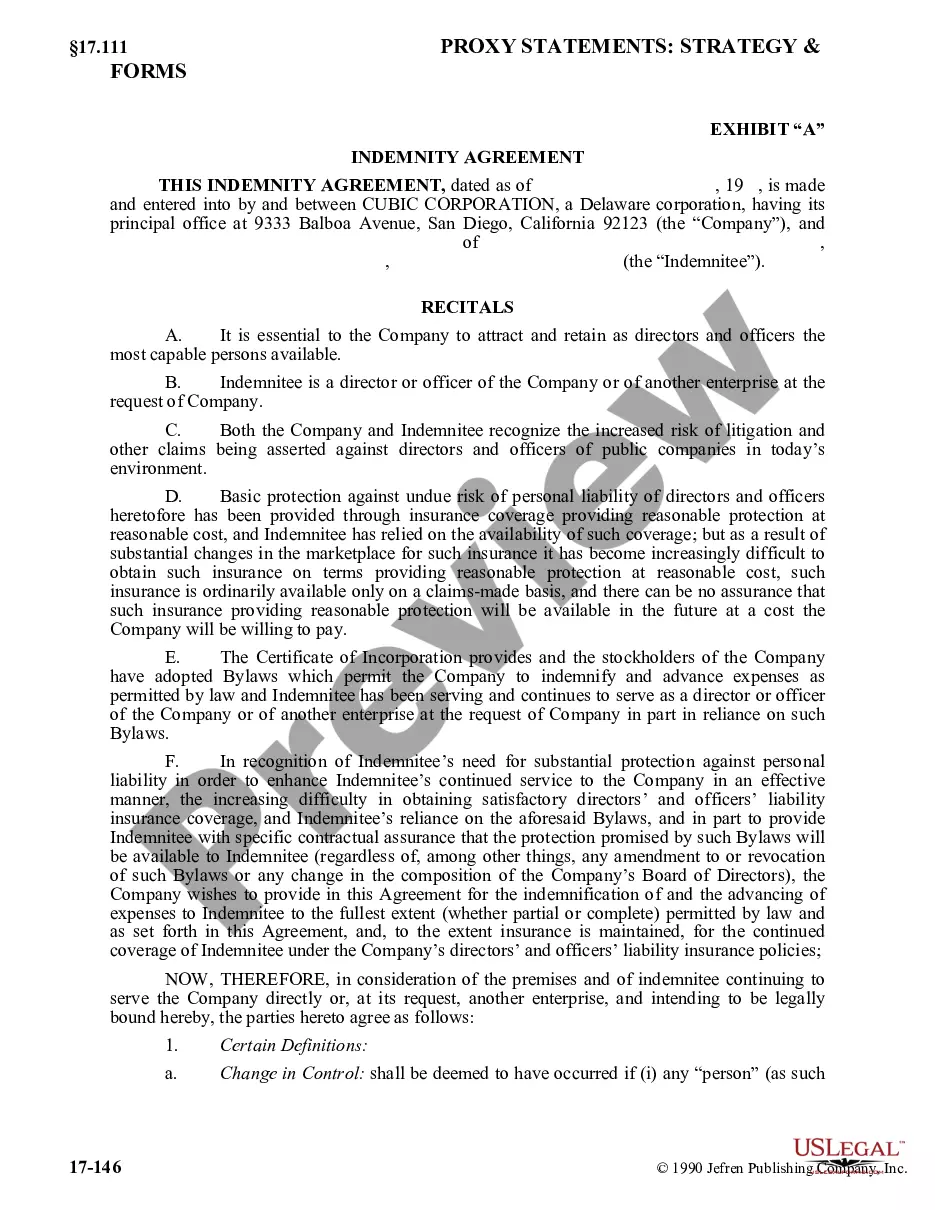
This Indemnification Agreement for a Delaware Corporation is a legal document that establishes a contractual relationship between a corporation and its directors and officers. It provides indemnification to protect these individuals from personal liability arising from their actions while serving the corporation. Unlike general corporate agreements, this form specifically addresses the indemnification rights of the indemnitee, making it essential for attracting capable leadership in a corporate setting.
What’s included in this form
- Identifies the parties involved, including the corporation and the indemnitee.
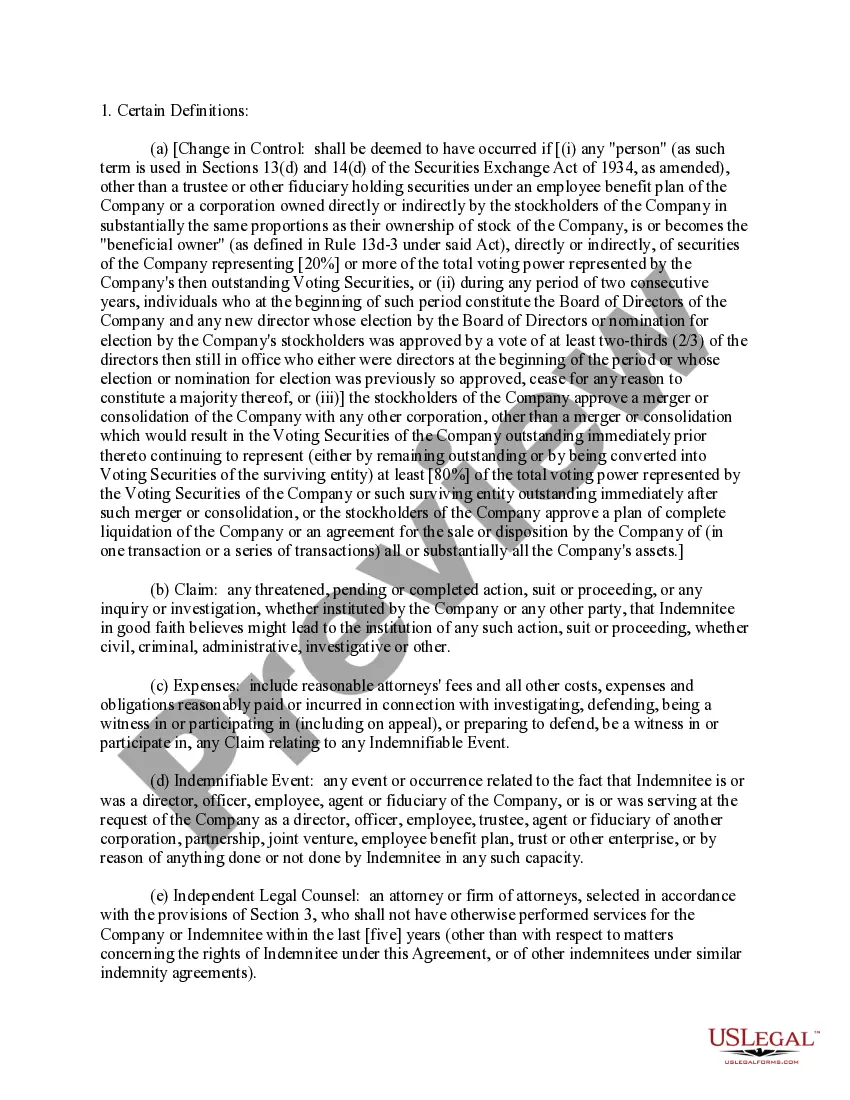
- Defines key terms such as "Claim," "Expenses," and "Indemnifiable Event."
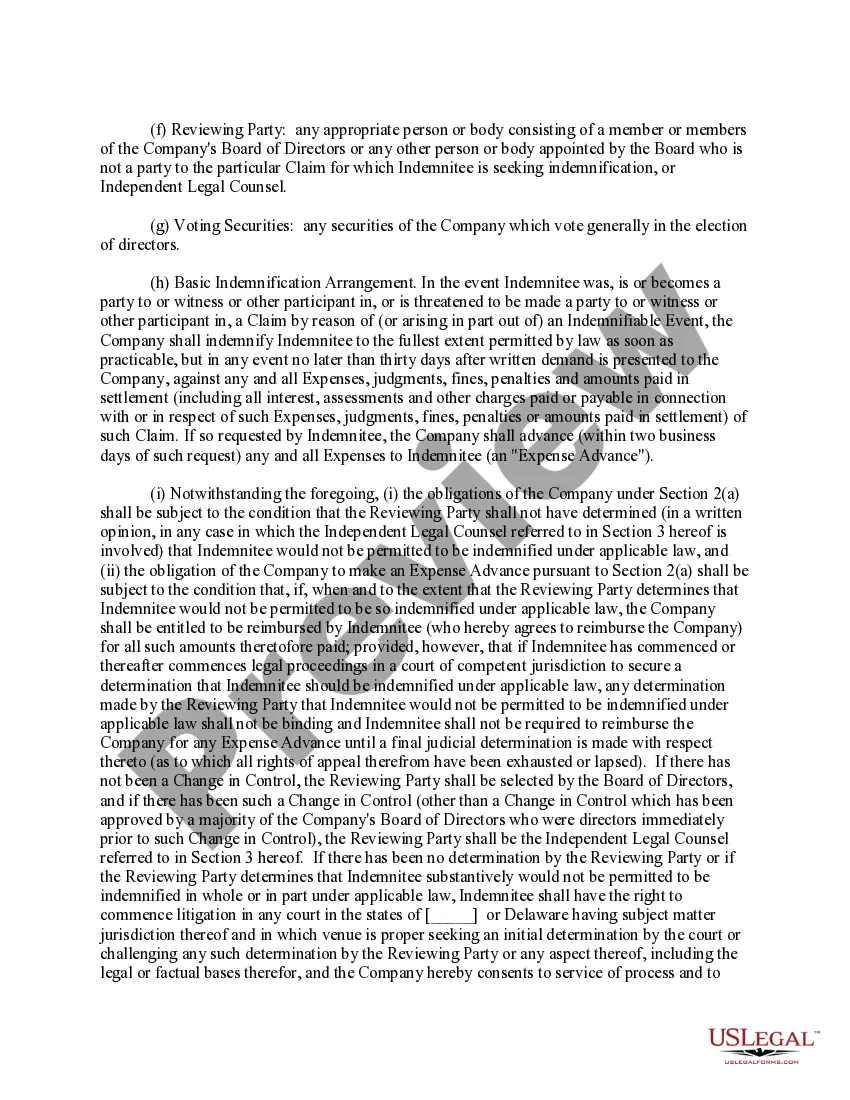
- Specifies the obligations of the corporation to indemnify the indemnitee under certain circumstances.
- Describes the process for expense advances related to indemnification claims.
- Addresses how changes in control of the corporation may affect indemnification agreements.
Situations where this form applies
This form is used primarily by corporations in Delaware when they wish to reassure their directors and officers of indemnification rights. It is crucial in situations where potential legal claims might arise against these individuals due to their corporate responsibilities. By utilizing this agreement, the corporation aims to enhance its appeal to skilled leadership, mitigating the risks associated with their positions.
Who should use this form
- C corporations and limited liability companies operating in Delaware.
- Corporate boards that want to provide indemnification assurances to their directors and officers.
- Any organization seeking to attract qualified individuals for leadership roles, knowing that their legal interests are protected.
Instructions for completing this form
- Identify and enter the effective date of the agreement.
- Fill in the name of the corporation and the indemnitee.
- Review and understand the definitions provided within the agreement to ensure accurate interpretation.
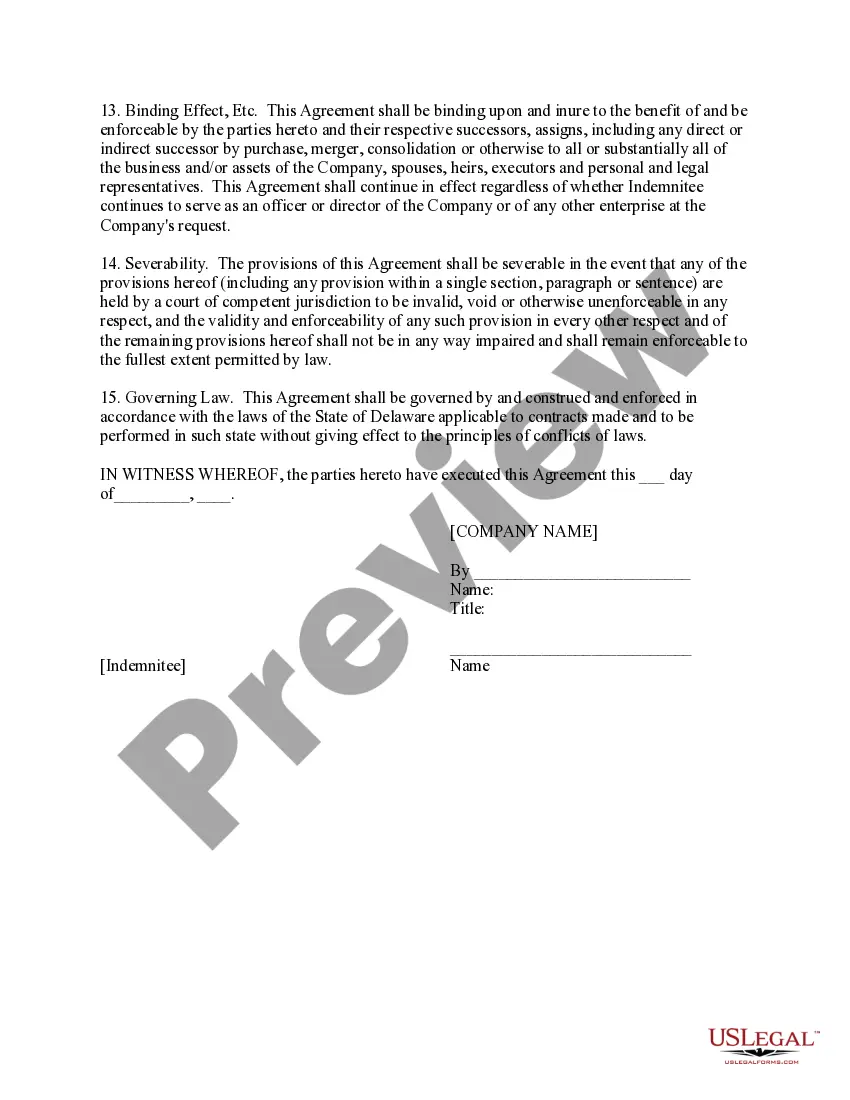
- Sign and date the agreement, ensuring both parties execute the document to make it legally binding.
- Keep a copy of the signed agreement for your records and future reference.
Notarization requirements for this form
This form does not typically require notarization unless specified by local law. However, having it notarized can add an extra layer of validation for the parties involved.
Get your form ready online
Our built-in tools help you complete, sign, share, and store your documents in one place.
Make edits, fill in missing information, and update formatting in US Legal Forms—just like you would in MS Word.
Download a copy, print it, send it by email, or mail it via USPS—whatever works best for your next step.
Sign and collect signatures with our SignNow integration. Send to multiple recipients, set reminders, and more. Go Premium to unlock E-Sign.
If this form requires notarization, complete it online through a secure video call—no need to meet a notary in person or wait for an appointment.
We protect your documents and personal data by following strict security and privacy standards.

Make edits, fill in missing information, and update formatting in US Legal Forms—just like you would in MS Word.

Download a copy, print it, send it by email, or mail it via USPS—whatever works best for your next step.

Sign and collect signatures with our SignNow integration. Send to multiple recipients, set reminders, and more. Go Premium to unlock E-Sign.

If this form requires notarization, complete it online through a secure video call—no need to meet a notary in person or wait for an appointment.

We protect your documents and personal data by following strict security and privacy standards.
Avoid these common issues
- Failing to specify the date or execute the agreement properly.
- Omitting key definitions or clauses that detail the scope of indemnification.
- Not having the form reviewed for compliance with corporate bylaws or state laws.
Advantages of online completion
- Convenience of downloading and completing the form at your own pace.
- Editability allows customization to meet specific corporate needs.
- Access to professionally drafted documents providing reliability and adherence to legal standards.
- The agreement is enforceable under Delaware law, providing significant protections to corporate officers and directors.
- It establishes clear obligations for the corporation to indemnify its leaders against personal liability.
- Failure to adhere to the terms may expose the corporation to legal risks and claims.
Key takeaways
- The Indemnification Agreement is crucial for protecting directors and officers of Delaware corporations.
- It includes specific clauses that define the roles of the parties and the extent of indemnification.
- Careful completion of the form ensures strong legal protection against potential liabilities.
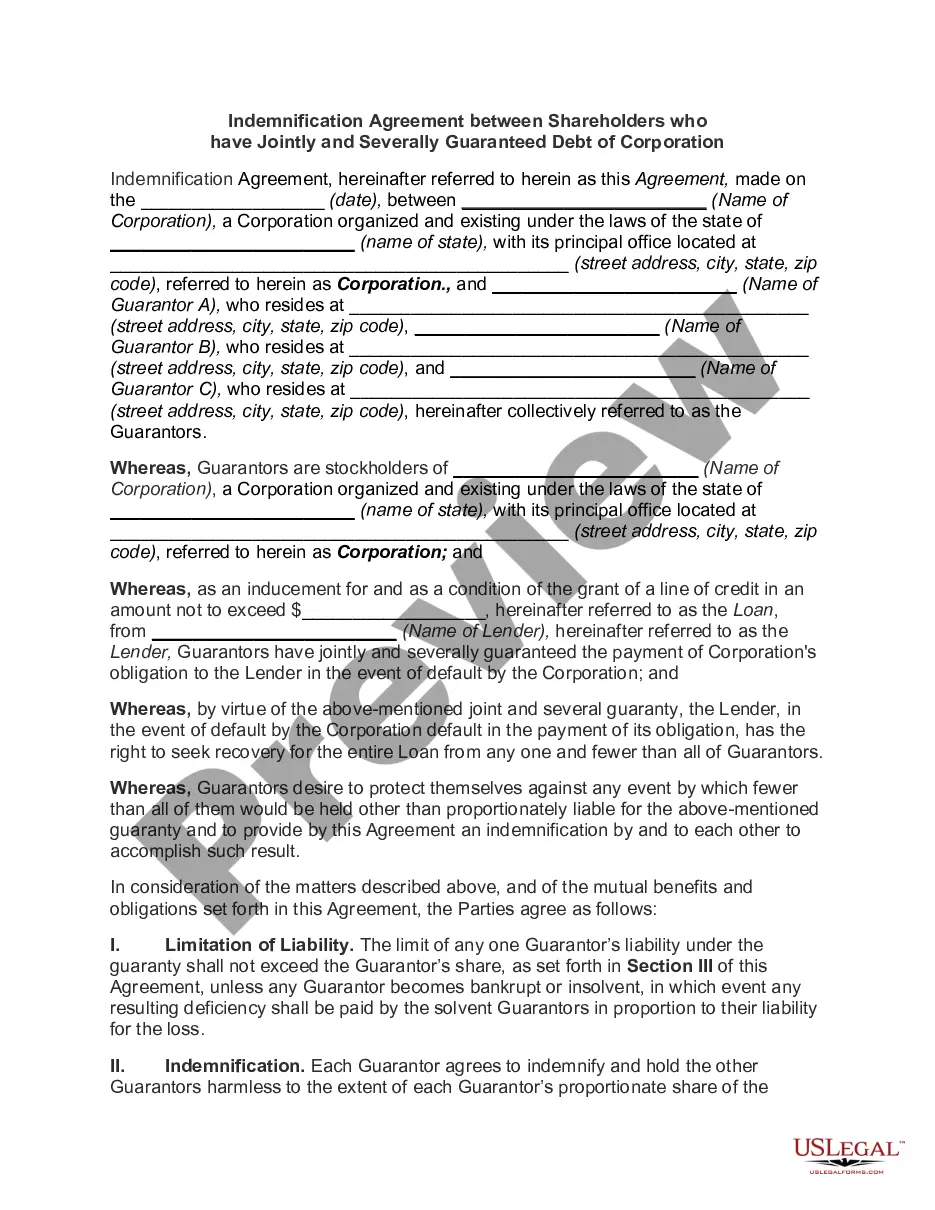
Looking for another form?


Form popularity
FAQ
Indemnification clauses are clauses in contracts that set out to protect one party from liability if a third-party or third entity is harmed in any way. It's a clause that contractually obligates one party to compensate another party for losses or damages that have occurred or could occur in the future.
What does "Corporate Indemnification" mean?In the context of business organizations, a limited liability company or corporation will often indemnify its officers and directors, covering their expenses (including legal fees) and judgment amounts incurred by such persons as a result of their service to the entity.
A company can indemnify its directors against personal liability so long as the indemnity does not cover:other liabilities (such as legal costs) in criminal cases where the director is convicted, or in civil cases brought by the company where the final judgment goes against the director.
Indemnification. Indemnification is an undertaking by the company to defend the director and officer against the cost of certain claims, including legal fees, litigation awards and settlement costs.
For investment companies like mutual funds, corporate indemnification of a director is not permitted under Section 17(h) of the Investment Company Act of 1940 (1940 Act) for willful misfeasance, bad faith, gross negligence or reckless disregard of the duties involved in the conduct of his sic officeso called
To indemnify someone is to absolve that person from responsibility for damage or loss arising from a transaction. Indemnification is the act of not being held liable for or being protected from harm, loss, or damages, by shifting the liability to another party.
Indemnity is defined by Black's Law Dictionary as a duty to make good any loss, damage, or liability incurred by another. Indemnity has a general meaning of holding one harmless; that is to say, that one party holds the other harmless for some loss or damage.
Identify Time Periods for Asserting Indemnification Rights. Provide Notice in a Timely Fashion. Notify All Concerned Parties. Understand Limitations on Recovery. Exclusive Remedy. Scope of Damages. Claims Process/Dispute Resolution.
When the term indemnity is used in the legal sense, it may also refer to an exemption from liability for damages. Indemnity is a contractual agreement between two parties. In this arrangement, one party agrees to pay for potential losses or damages caused by another party.