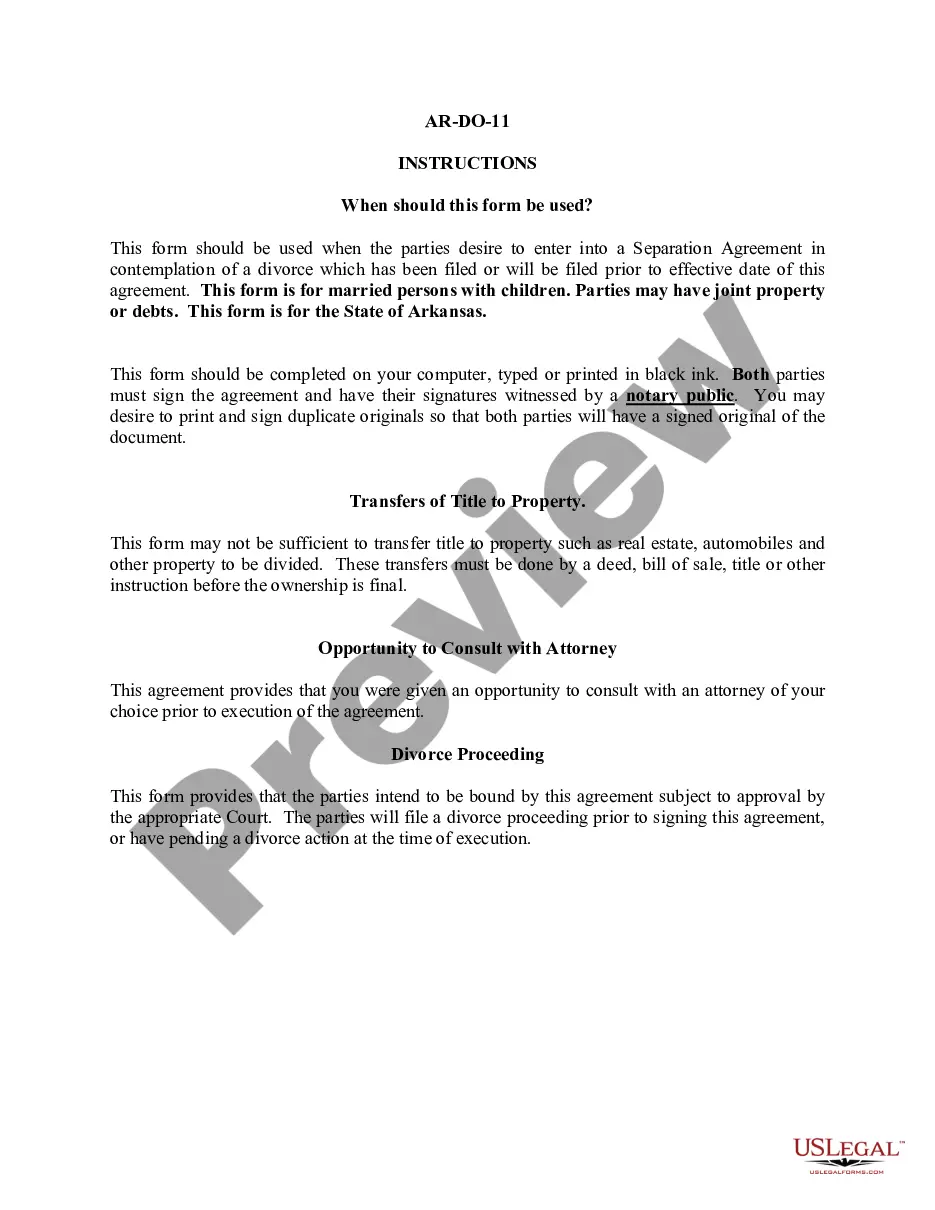
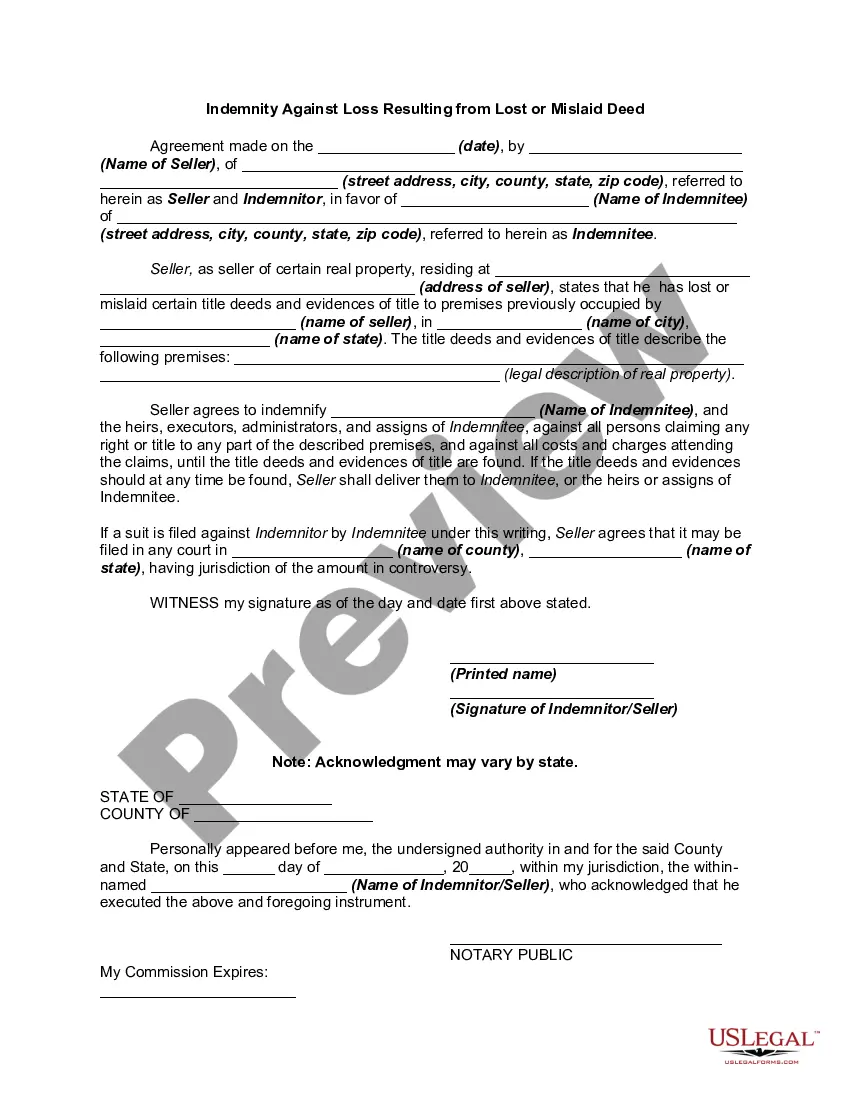
Indemnity Against Loss Resulting from Lost or Mislaid Deed
About this form
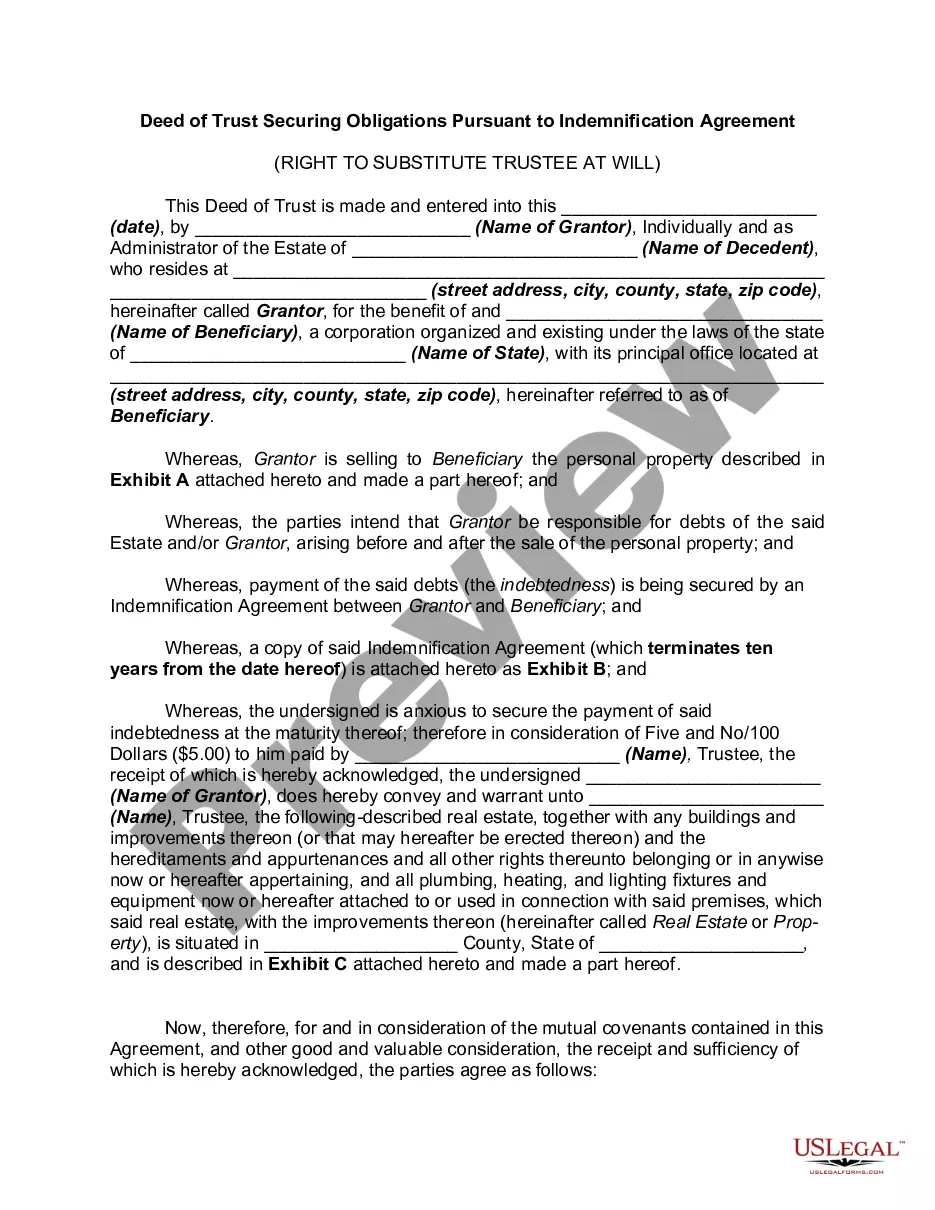
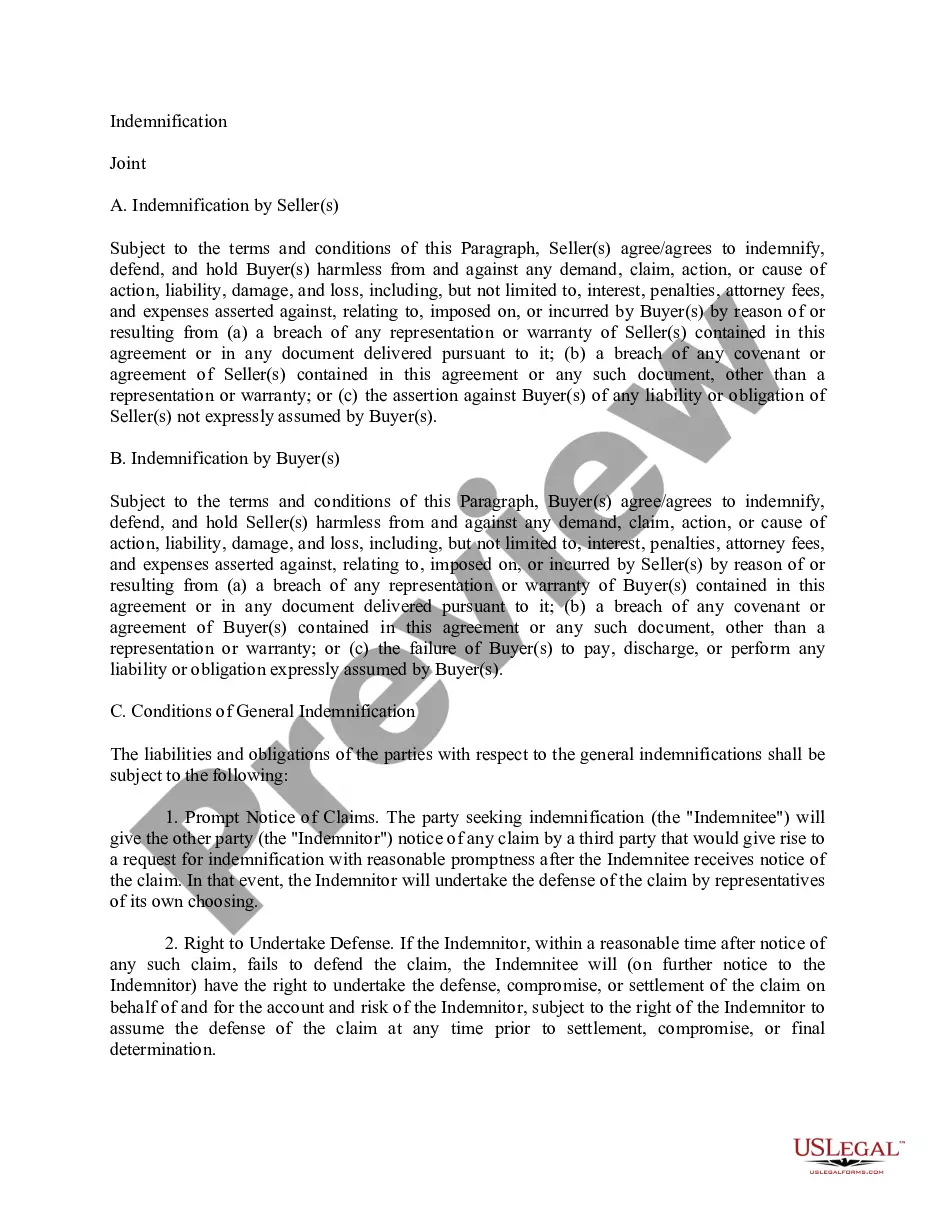
The Indemnity Against Loss Resulting from Lost or Mislaid Deed is a legal agreement designed to protect a property seller from claims made by third parties regarding a title deed that has been lost or mislaid. This form sets forth the responsibilities of the seller, known as the indemnitor, to indemnify the indemnitee against any legal claims related to the lost document, covering potential costs associated with these claims. This form is particularly important in real estate transactions where the original deed cannot be located, ensuring that rights to the property remain clear while protecting against future disputes.
Form components explained
- Date of the agreement
- Name and address of the Seller (Indemnitor)
- Name and address of the Indemnitee
- Description of the lost title deeds and property
- Indemnity clause protecting the Indemnitee against claims
- Provision for the delivery of recovered deeds if found
- Jurisdiction for potential legal disputes
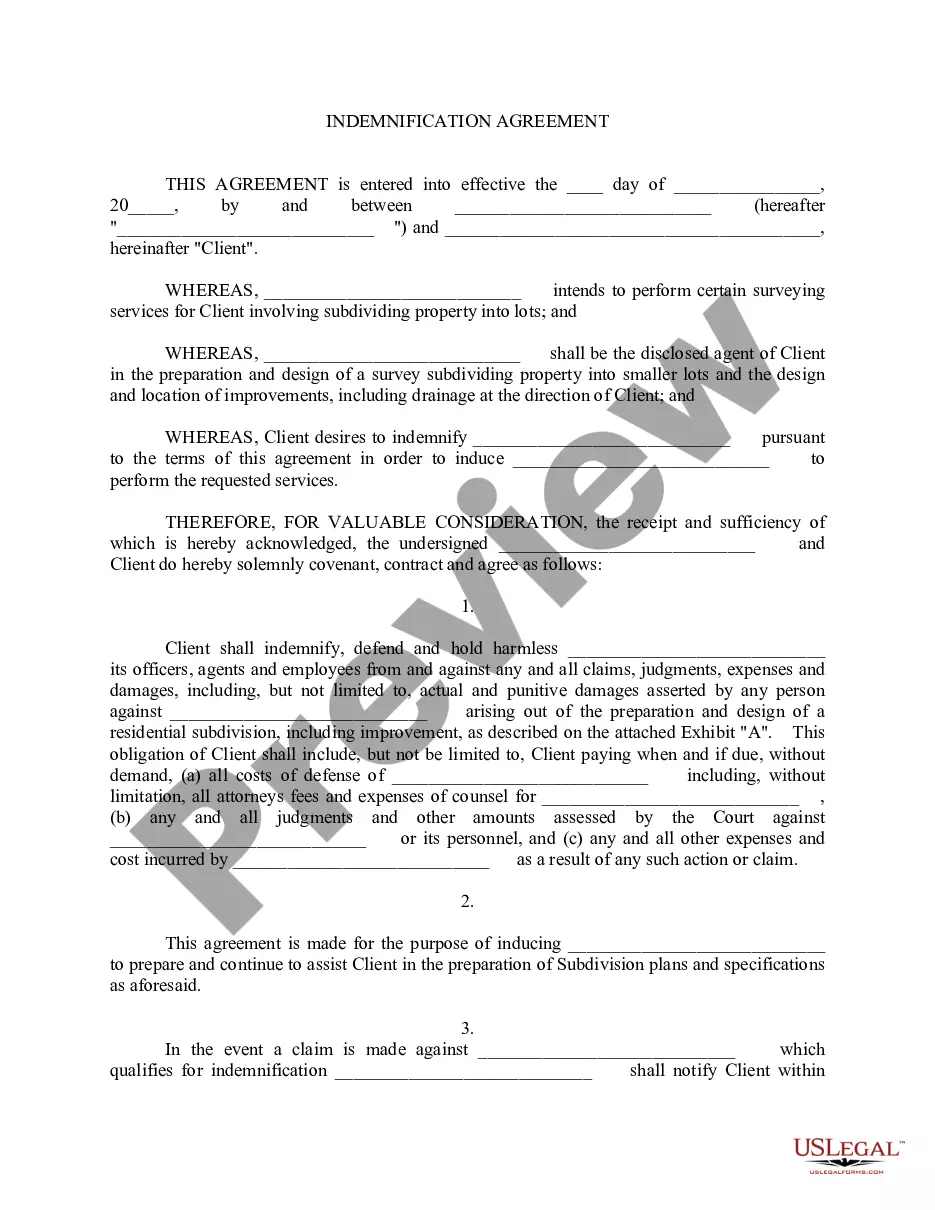
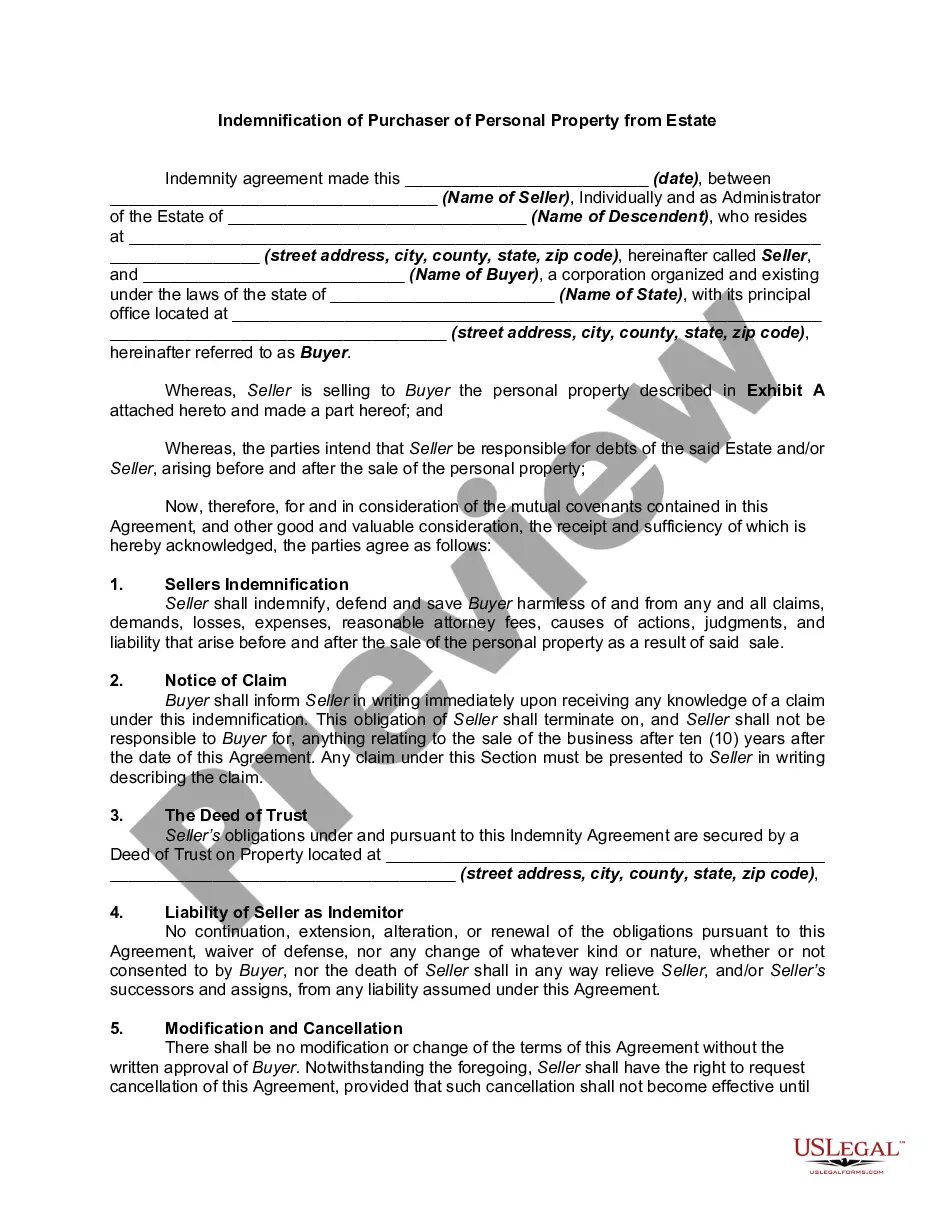
Situations where this form applies
This form is necessary when a seller is unable to locate the deed for a property they have sold or are in the process of selling. It is essential in situations that may lead to disputes regarding property ownership, especially if a buyer or another party claims an interest in the property without the original deed being present. Using this form helps to clarify the responsibilities of the seller and protects against financial claims related to the lost deed.
Who needs this form
- Property sellers who have lost their deed
- Indemnitees seeking assurance against claims regarding the lost deed
- Real estate agents or attorneys assisting with property transactions
- Individuals involved in resolving property disputes related to lost documents
How to prepare this document
- Enter the date on which the agreement is being made.
- Provide the full name and address of the Seller (Indemnitor).
- Specify the name and address of the Indemnitee.
- Describe the lost title deeds and the property in detail.
- Fill in any relevant clauses regarding indemnification and jurisdiction.
- Ensure the Seller signs and dates the document in the presence of a notary if required.
Is notarization required?
Notarization is required for this form to take effect. Our online notarization service, powered by Notarize, lets you verify and sign documents remotely through an encrypted video session, available 24/7.
Get your form ready online
Our built-in tools help you complete, sign, share, and store your documents in one place.
Make edits, fill in missing information, and update formatting in US Legal Forms—just like you would in MS Word.
Download a copy, print it, send it by email, or mail it via USPS—whatever works best for your next step.
Sign and collect signatures with our SignNow integration. Send to multiple recipients, set reminders, and more. Go Premium to unlock E-Sign.
If this form requires notarization, complete it online through a secure video call—no need to meet a notary in person or wait for an appointment.
We protect your documents and personal data by following strict security and privacy standards.

Make edits, fill in missing information, and update formatting in US Legal Forms—just like you would in MS Word.

Download a copy, print it, send it by email, or mail it via USPS—whatever works best for your next step.

Sign and collect signatures with our SignNow integration. Send to multiple recipients, set reminders, and more. Go Premium to unlock E-Sign.

If this form requires notarization, complete it online through a secure video call—no need to meet a notary in person or wait for an appointment.

We protect your documents and personal data by following strict security and privacy standards.
Common mistakes to avoid
- Failing to provide a complete and accurate description of the lost deed and property.
- Not including the date of the agreement, which can lead to disputes about the validity.
- Omitting addresses or full names of the parties involved.
- Not understanding the implications of the indemnity clause and the responsibility it entails.
Benefits of completing this form online
- Instant access to a professionally drafted legal form tailored to your needs.
- Ability to edit and customize the form without the need for legal assistance.
- Secure and reliable download process ensuring document integrity.
- Convenience of completing paperwork from your home or office.
Looking for another form?


Form popularity
FAQ
Title the letter as a "Letter of Indemnity" to make it clear what the document is about. Include a statement that the agreement will be governed by the laws of the specific state (where the agreement would be taken to court). Begin the letter confirming the contract already in place with the other party.
Indemnity is compensation paid by one party to another to cover damages, injury or losses.An example of an indemnity would be an insurance contract, where the insurer agrees to compensate for any damages that the entity protected by the insurer experiences.
Indemnity is a contractual agreement between two parties. In this arrangement, one party agrees to pay for potential losses or damages caused by another party.With indemnity, the insurer indemnifies the policyholderthat is, promises to make whole the individual or business for any covered loss.
Drafting of the indemnity clause An indemnifier must limit the amount of indemnities that is given while entering into a contract. An express obligation must be imposed so as to minimize the loss, and the duration of time in which the claim can be brought must be limited.
The Indemnity can be signed by: - Two directors or authorised signatories stating their capacity - One director of the company and a witness. The witness must also provide their full name and address.
The Indemnity bond should be signed by two witnesses and two sureties (name, address and signature). 12. Affidavit should be verified in presence of a First Class Magistrate or a Notary Public. In the event of verification in the presence of Notary Public, the Affidavit should contain the notarial stamp.
A letter of indemnity (LOI) is a contractual document that guarantees certain provisions will be met, between two parties.The concept of indemnity has to do with holding someone harmless, and a letter of indemnity outlines the specific measures that will be used to hold a party harmless.
To indemnify another party is to compensate that party for losses that that party has incurred or will incur as related to a specified incident.
In essence, an indemnity letter is the shipper of a package waiving their right to claim for loss or damage to a parcel when delivery is being made to a location that may be unsettled or dangerous.