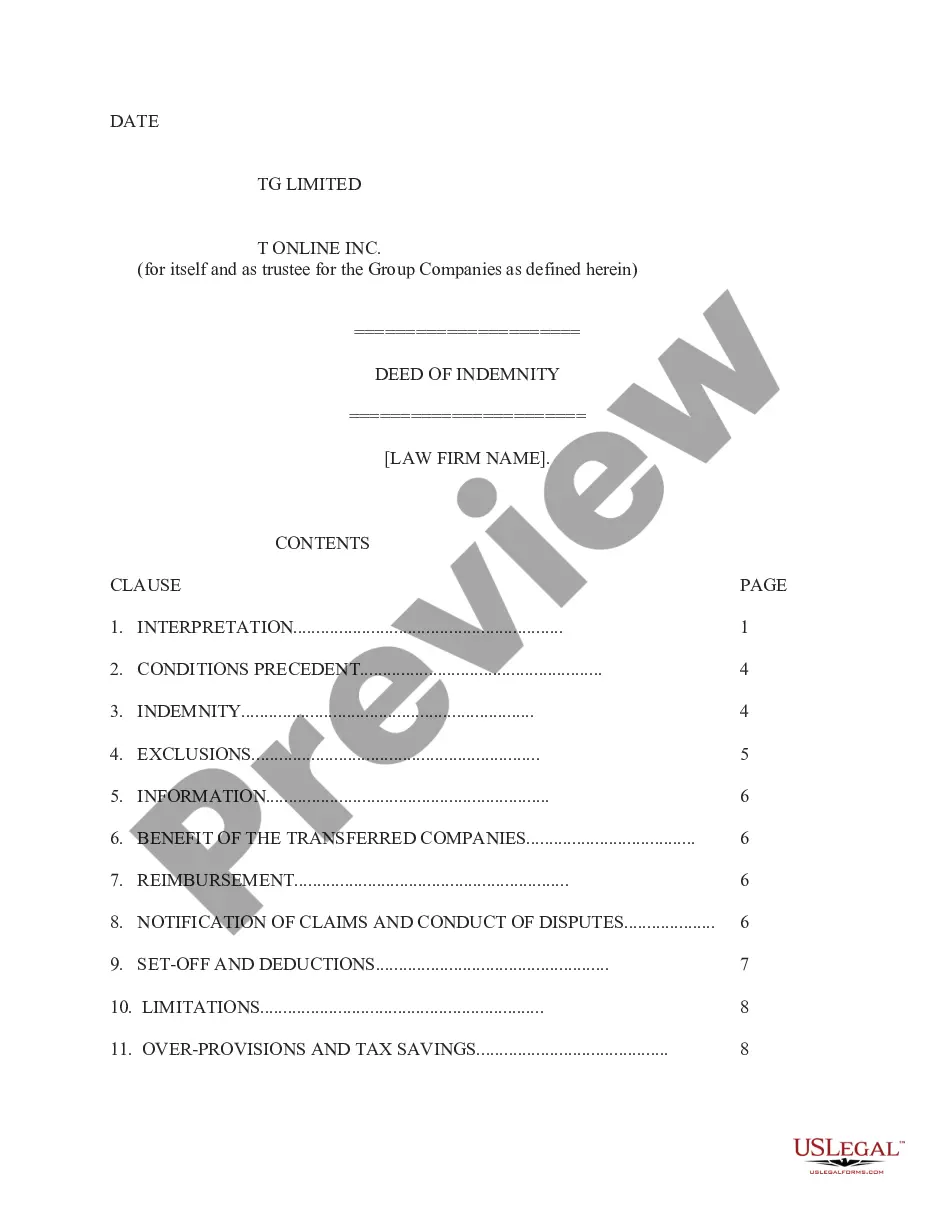
Deed of Trust Securing Obligations Pursuant to Indemnification Agreement
Overview of this form
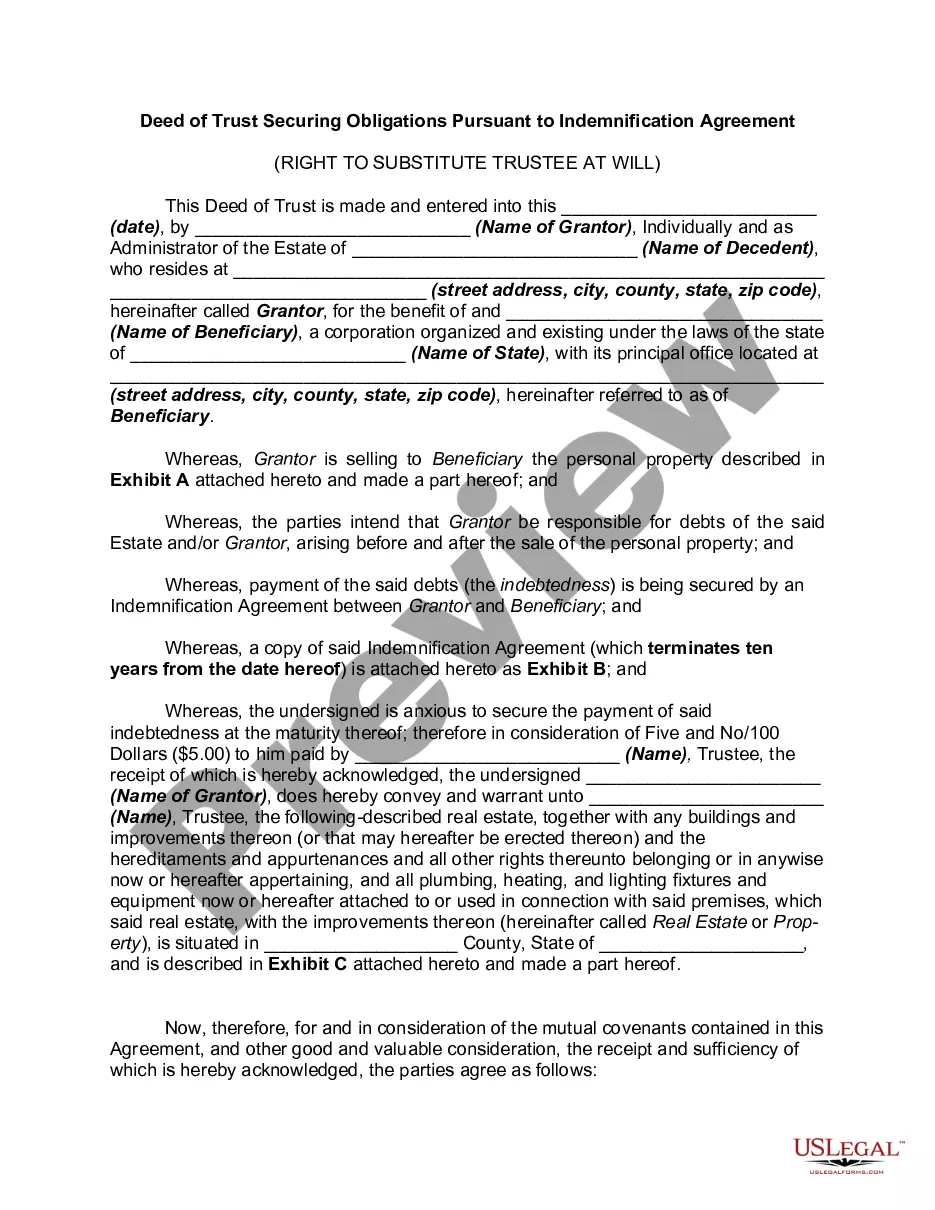
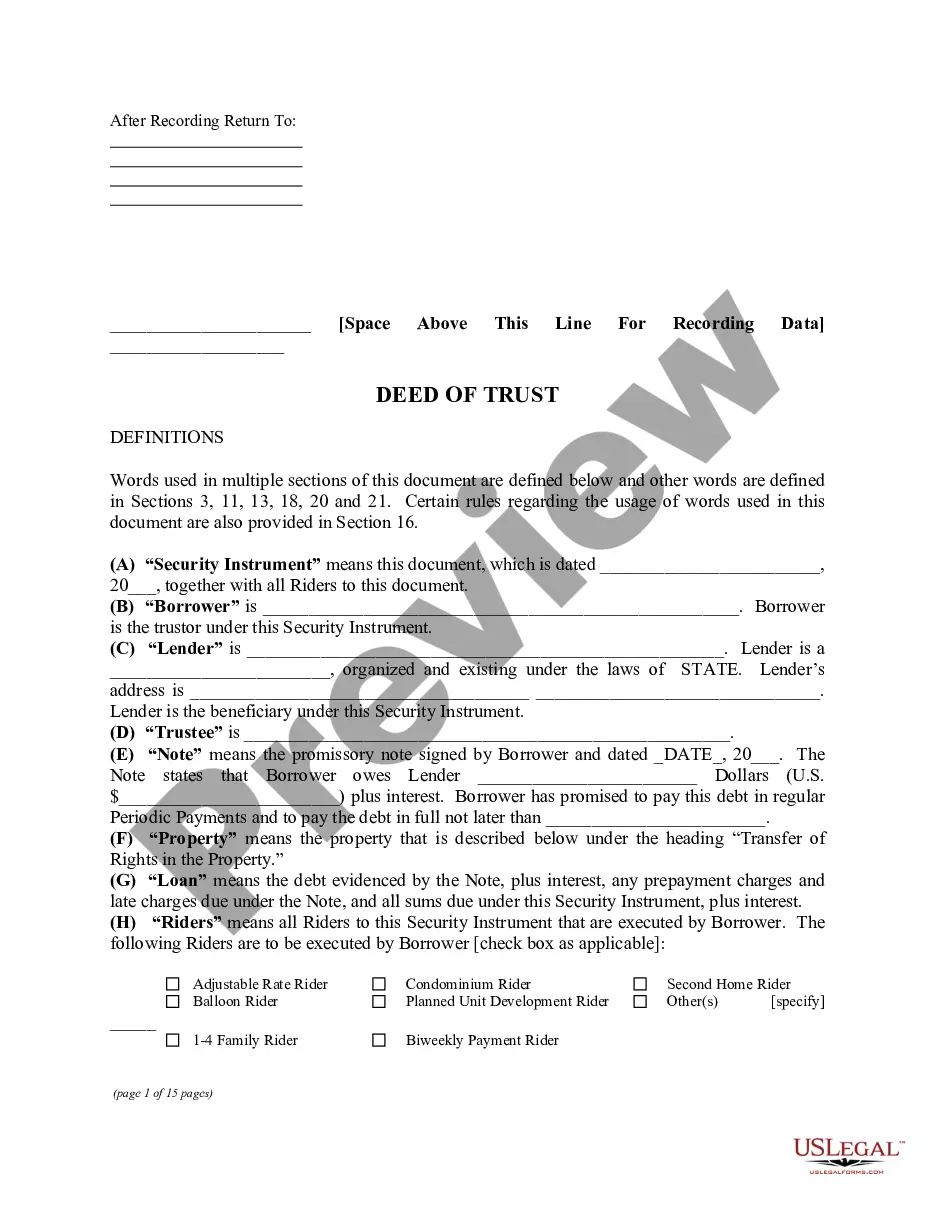
The Deed of Trust Securing Obligations Pursuant to Indemnification Agreement is a legal document that secures a loan through real property. It is distinct from a mortgage in that it involves a trust arrangement, where a trustee holds the title until the loan is paid off. This form allows a grantor to secure obligations specified in an indemnification agreement, making it essential for ensuring that debts are tied to the property being conveyed.
Key parts of this document
- Identification of the Grantor and Trustee: Includes names, roles, and addresses of involved parties.
- Legal Description of the Property: Details the real estate being secured.
- Indemnification Agreement Reference: Specifies the debts secured and outlines responsibilities.
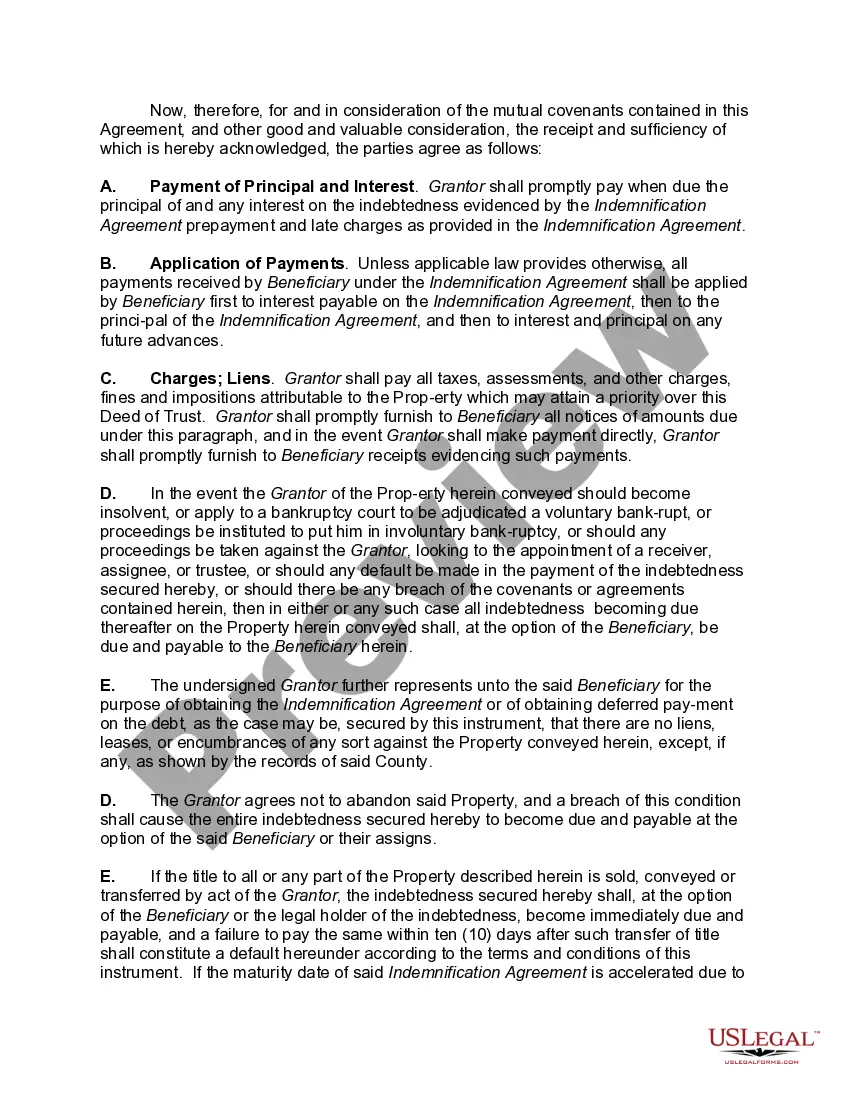
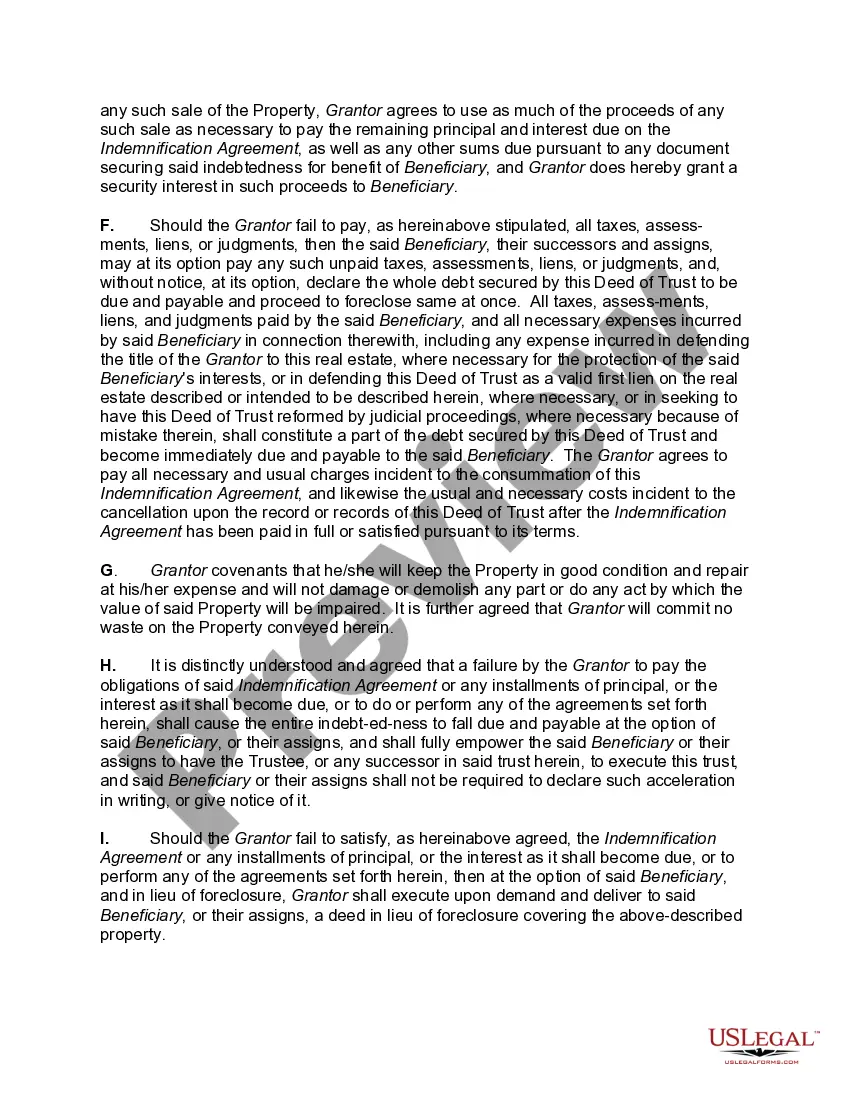
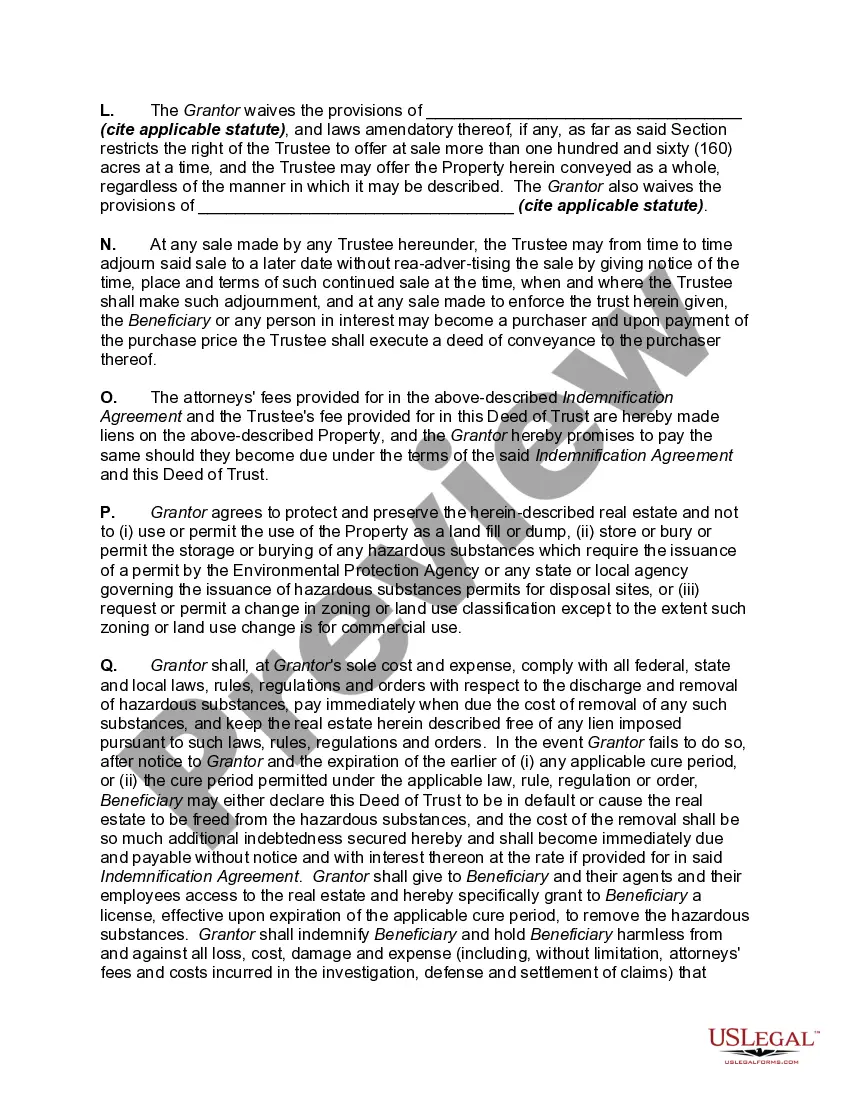
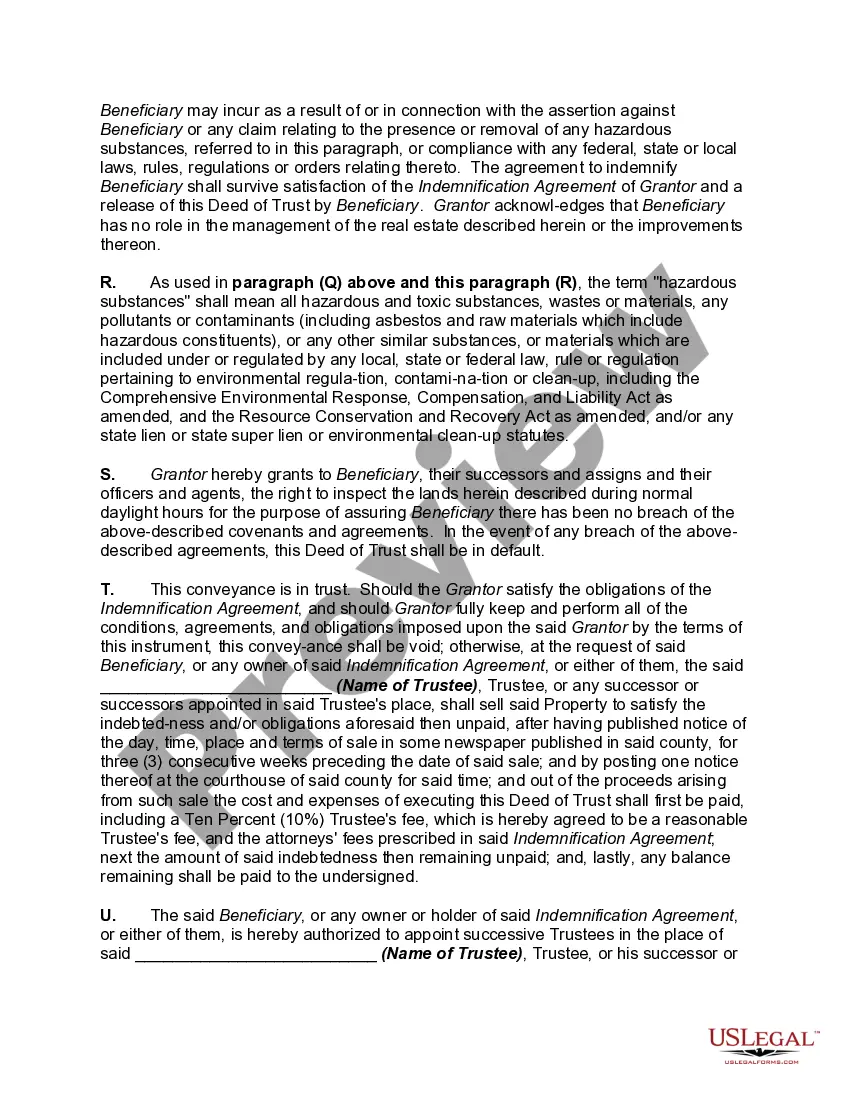
- Rights and Obligations: Lists the duties of the Grantor regarding payment, property maintenance, and compliance with laws.
- Default Conditions: Outlines what constitutes a default and the consequences that follow.
Common use cases
This form should be used when a Grantor needs to secure obligations under an indemnification agreement with a Beneficiary. This situation may arise in various contexts, such as transferring property while ensuring financial liabilities are met, or when establishing terms for loans that are backed by real estate. It's particularly relevant in estate management where personal property sales are involved.
Who this form is for
- Property owners looking to secure obligations associated with loans or debts.
- Administrators of estates needing to convey property while ensuring all debts are satisfied.
- Beneficiaries who need protection on the debts secured by property.
Steps to complete this form
- Identify the parties involved: Clearly state the names and roles of the Grantor and Trustee, and their respective addresses.
- Specify the property: Provide a legal description of the property being secured by the deed.
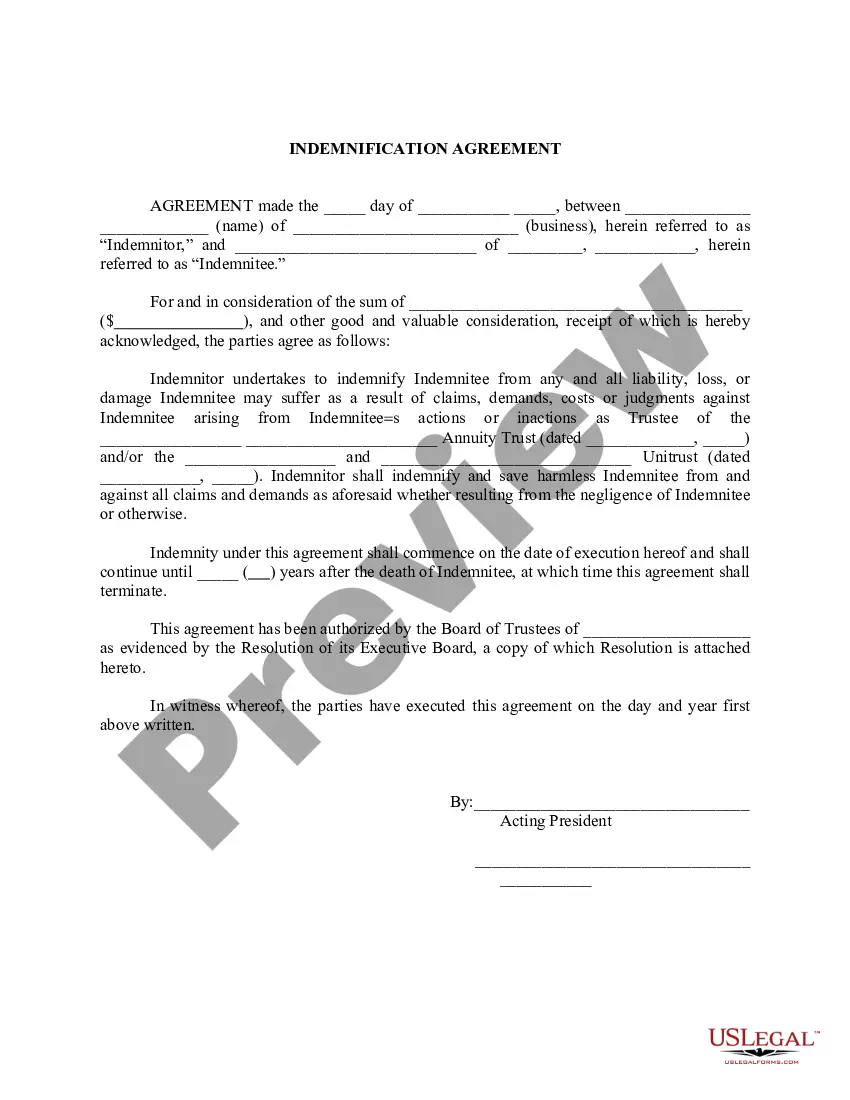
- Enter the details of the Indemnification Agreement: Include specifics that articulate the obligations being secured.
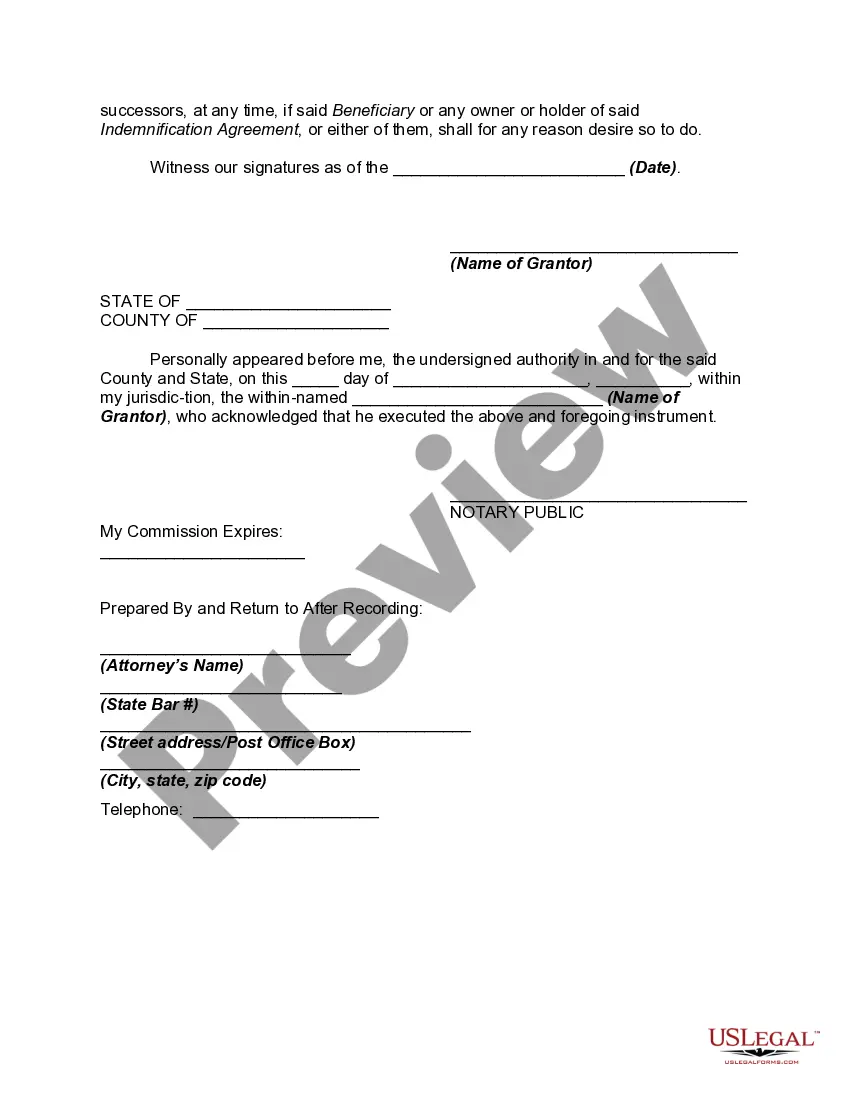
- Complete the signature section: Make sure all parties sign and date the document in the presence of a notary public if required.
- Attach necessary exhibits: Include any referenced documents such as Exhibit A for the description of property and Exhibit B for the indemnification agreement.
Is notarization required?
This form must be notarized to be legally valid. US Legal Forms provides secure online notarization powered by Notarize, allowing you to complete the process through a verified video call.
Mistakes to watch out for
- Failing to include complete and accurate property descriptions.
- Neglecting to properly name or identify all parties involved.
- Not attaching necessary exhibits or documentation required by the agreement.
- Forgetting to obtain notarization if required by state law.
Advantages of online completion
- Convenience of downloading the form at your own pace.
- Editable templates allow for easier customization to fit your specific needs.
- Access to professionally drafted language ensuring reliability and legal compliance.
State-specific requirements
This is a general form suitable for multiple states. Review and modify it as needed to reflect your jurisdiction’s rules.
Form popularity
FAQ
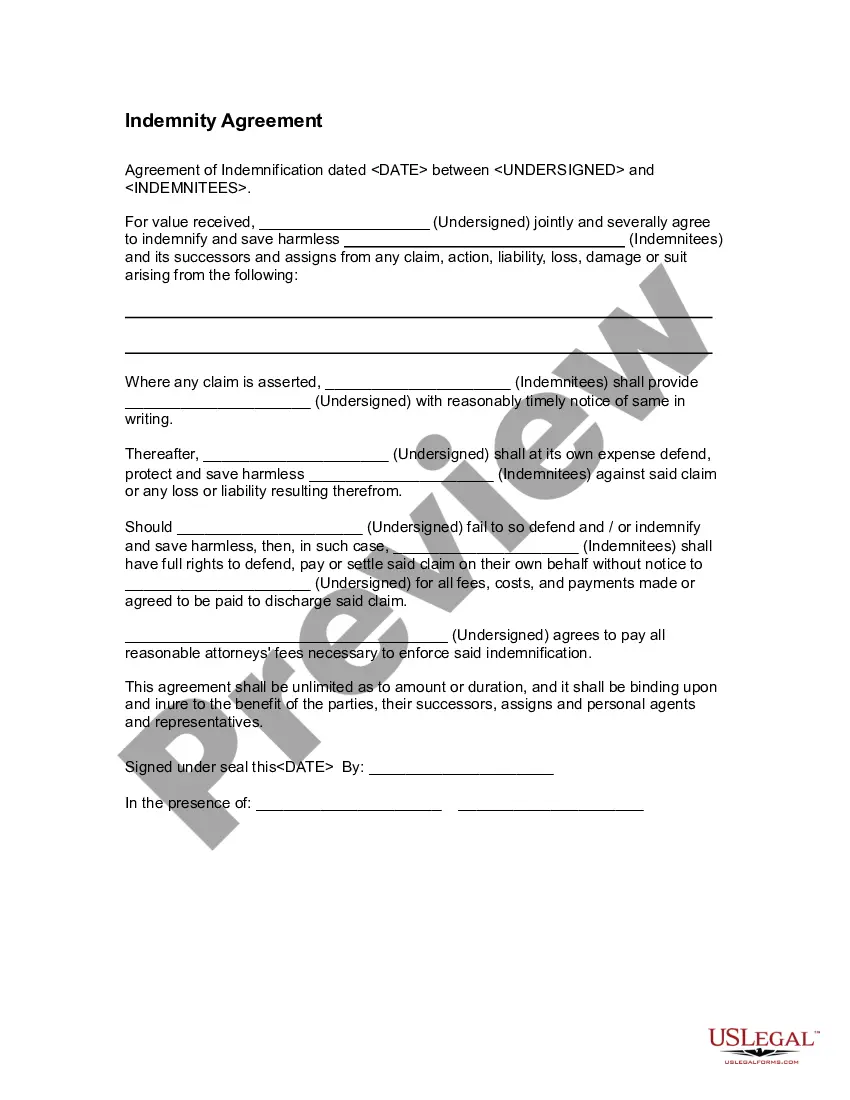
A deed of indemnity is a contractual agreement between a company and a company director. A deed of indemnity can help to indemnify a director against liabilities or legal costs incurred in his or her professional capacity as a director of the company.
Yes, there are key differences between the two. With a deed, you transfer the ownership of the property to one party. In contrast, a deed of trust does not mean the holder owns the property. In an arrangement involving a deed of trust, the borrower signs a contract with the lender with details regarding the loan.
Some owners are put off using solicitors duke to the deed of trust cost. Individuals can write out their own, and use someone else as a witness. However, this may have errors or not be a legally binding document. The investment of getting a deed of trust when buying a property is often worth it in the long term.
Party information: names and addresses of the trustor(s), trustee(s), beneficiary(ies), and guarantor(s) (if applicable) Property details: full address of the property and its legal description (which can be obtained from the County Recorder's Office)
This may be referred to as the "power of sale" clause. This is the language that legally authorizes the trustee to sell the property outside of court if the buyer does not meet his or her obligations under the deed of trust and promissory note.
Indemnity clauses in trust deeds However, a trustee has a right of indemnity out of the trust fund, which is recognised by law subject to the condition that the liability is incurred in proper execution of trust duties.
The trustee's primary function is to hold and maintain a property title for the borrower and the lender for the duration of the loan. Therefore, it is the trustee who retains factual ownership and control of the property in question, not the lender.
The person who owns the property usually signs a promissory note and a deed of trust. The deed of trust does not have to be recorded to be valid.