Contract with Independent Contractor - Contractor has Employees
What is this form?
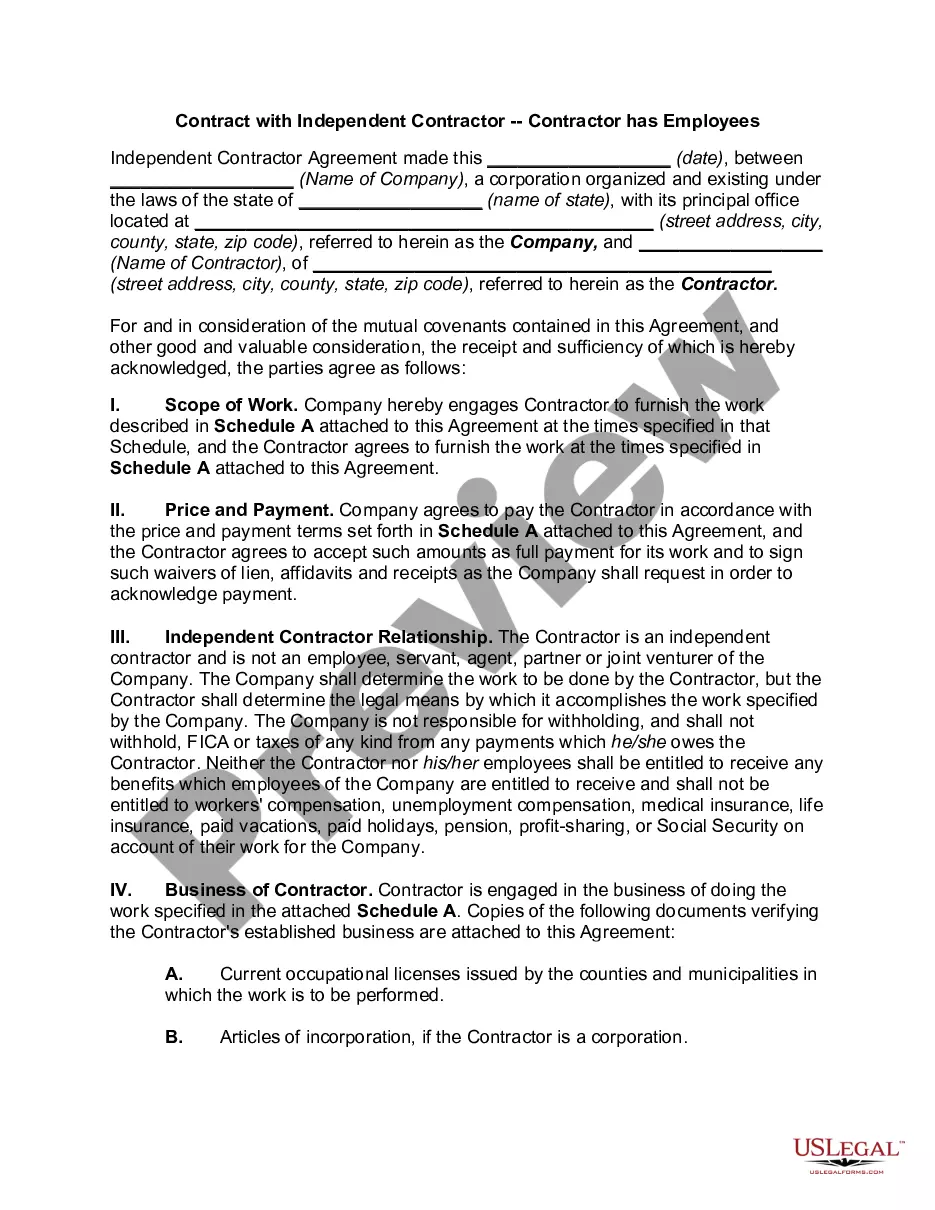
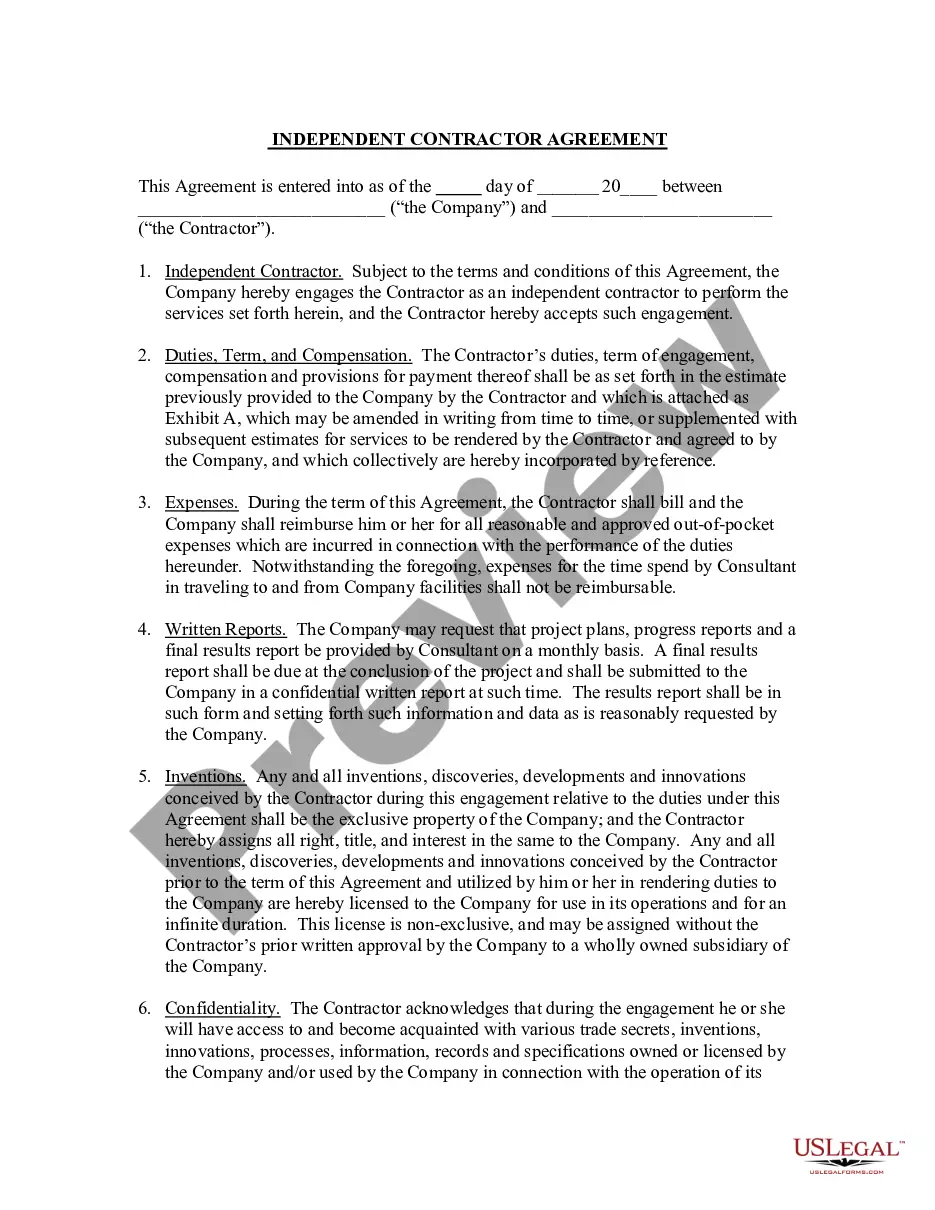
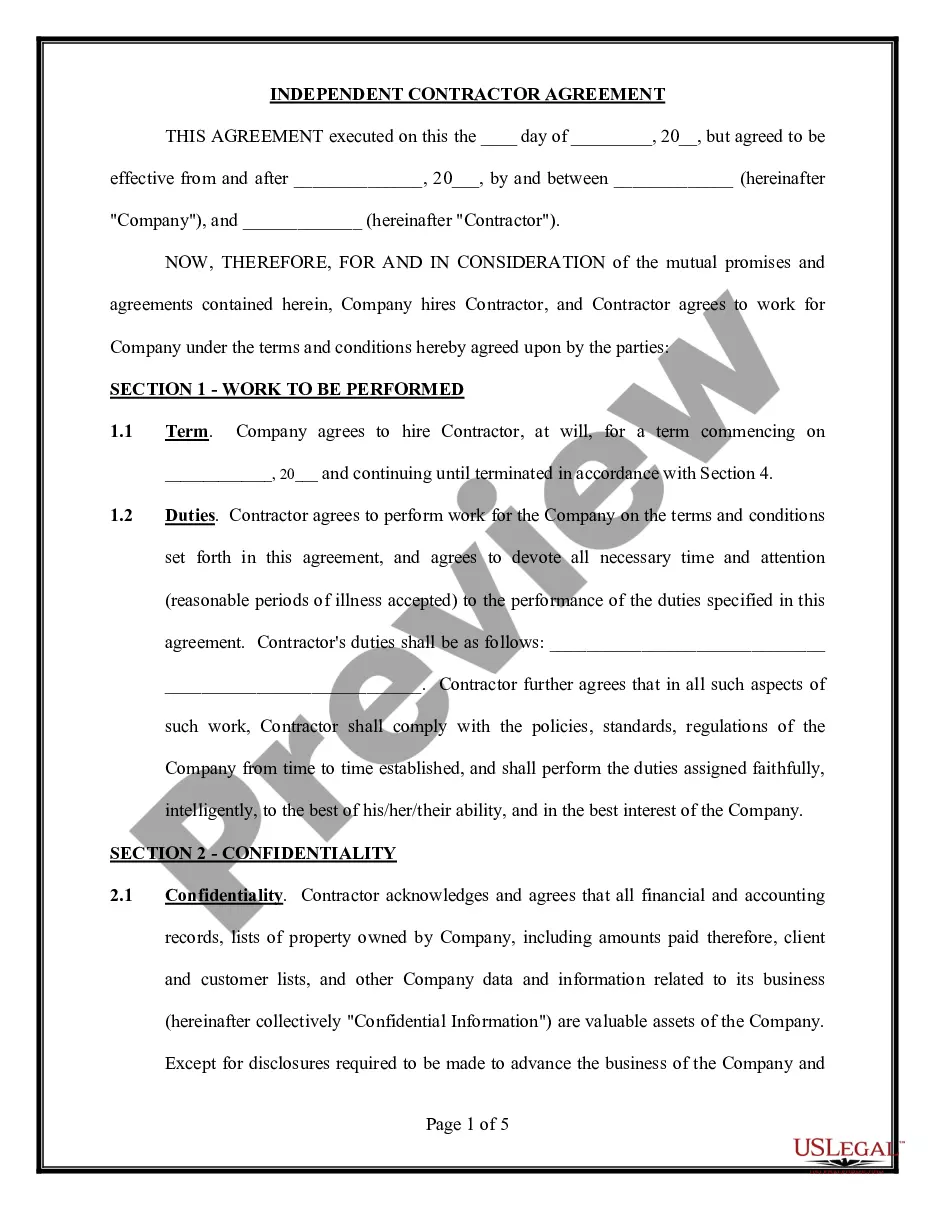
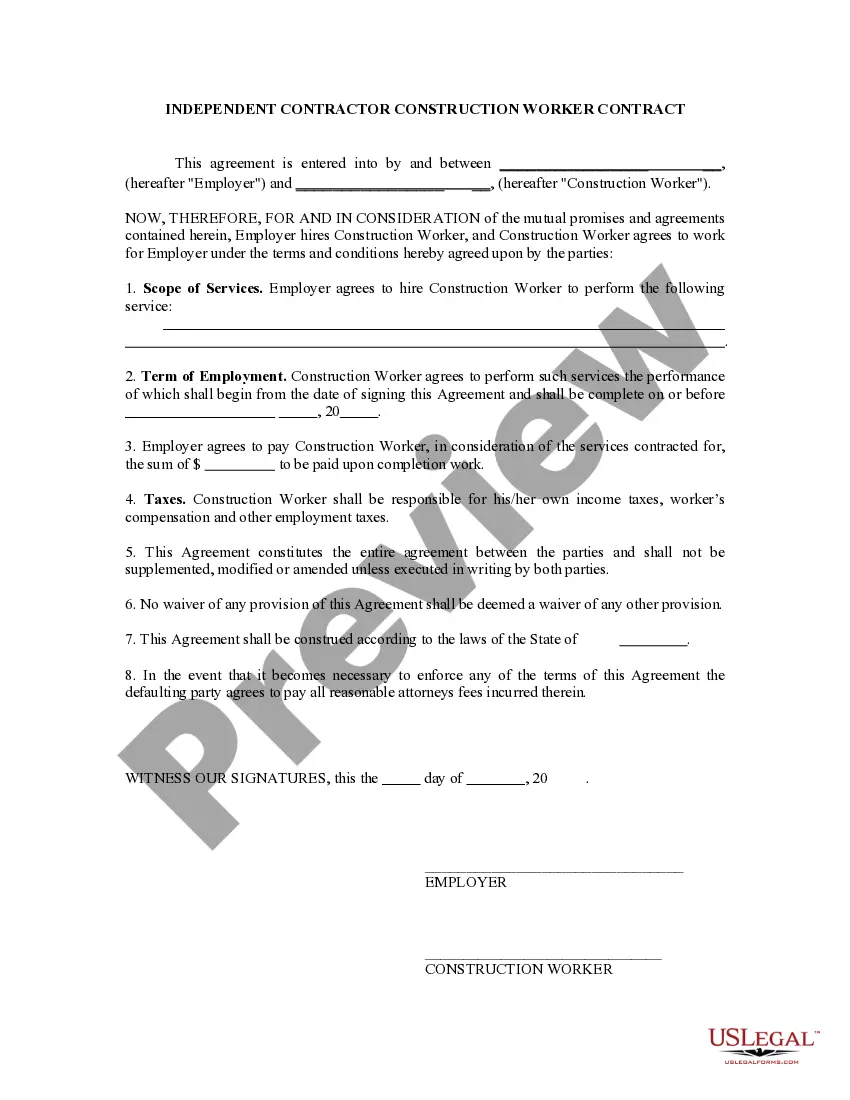
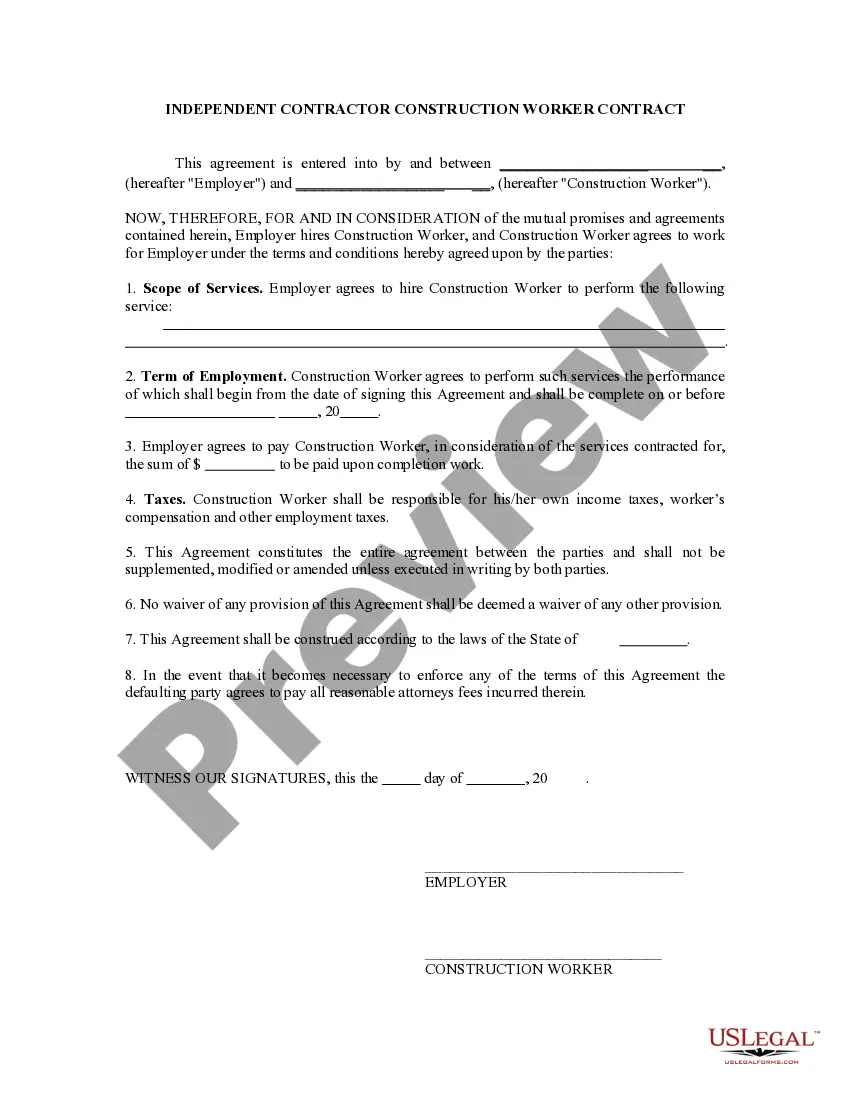
This form is a Contract with an Independent Contractor that has employees. It establishes a formal agreement between a company and a contractor, detailing the scope of work and payment terms while emphasizing the independent status of the contractor. This agreement is essential for businesses hiring contractors with staff, ensuring clarity in responsibilities and liabilities compared to standard contractor agreements.
Key components of this form
- Scope of Work: Defines the specific tasks and timelines the contractor must adhere to.
- Price and Payment: Outlines the agreed payment terms for the contractor's services.
- Independent Contractor Relationship: Clearly states that the contractor is not an employee of the company, detailing tax responsibilities.
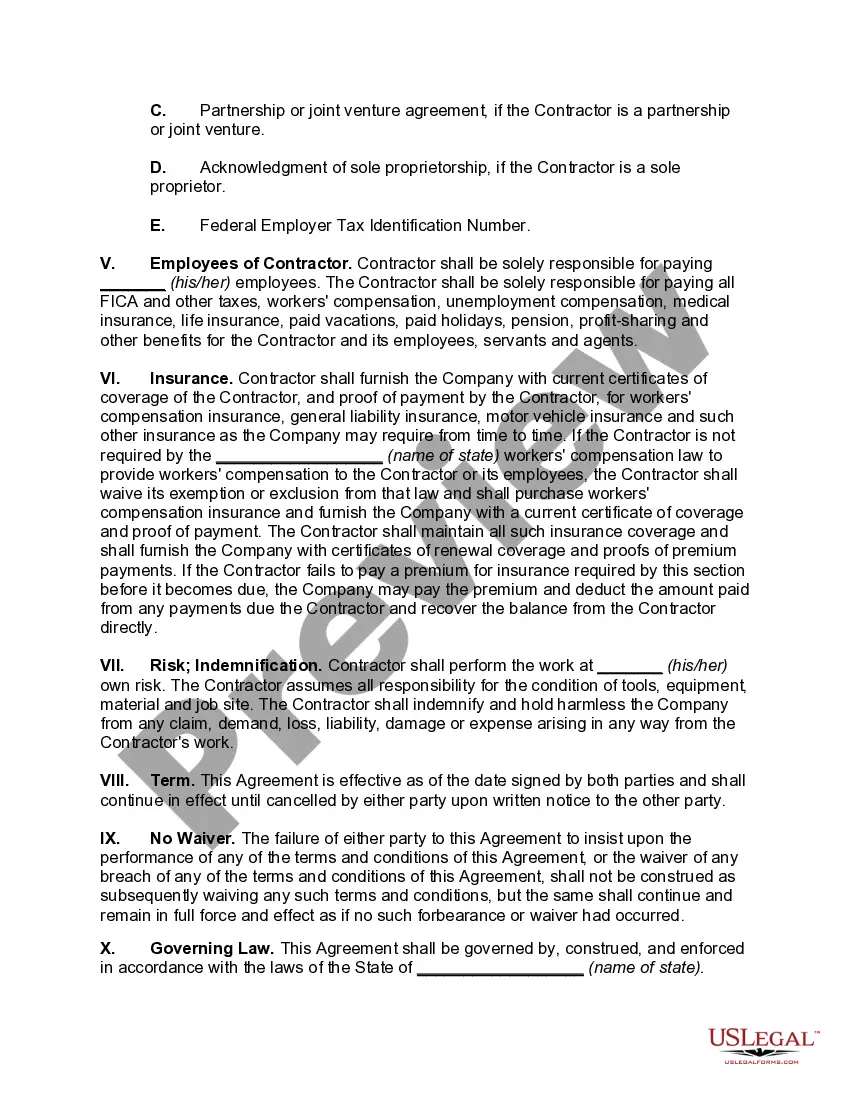
- Employees of Contractor: Specifies the contractorâs obligation to manage and pay their employees, if applicable.
- Insurance Requirements: Mandates the types of insurance coverage the contractor needs to provide.
- Risk Indemnification: Addresses liability and risk associated with the work performed by the contractor.


When this form is needed
This form should be used when a business engages an independent contractor who employs others. It is suitable for various industries, where a company needs to formally outline the expectations, payments, and insurance requirements for the contractor and their employees. This agreement helps prevent misunderstandings and defines the working relationship, making it crucial for business operations.
Who this form is for
This form is intended for use by:
- Businesses hiring independent contractors who have employees.
- Contractors with staff who need to clarify their legal relationship with a client company.
- Legal professionals assisting clients in drafting compliant contractor agreements.
Instructions for completing this form
To complete this form, follow these steps:
- Identify the parties involved by entering the name and address of the company and contractor.
- Specify the scope of work to be completed by filling out the attached Schedule A.
- Enter payment terms, including amounts and deadlines as outlined in Schedule A.
- Provide necessary insurance details and maintain compliance with state laws.
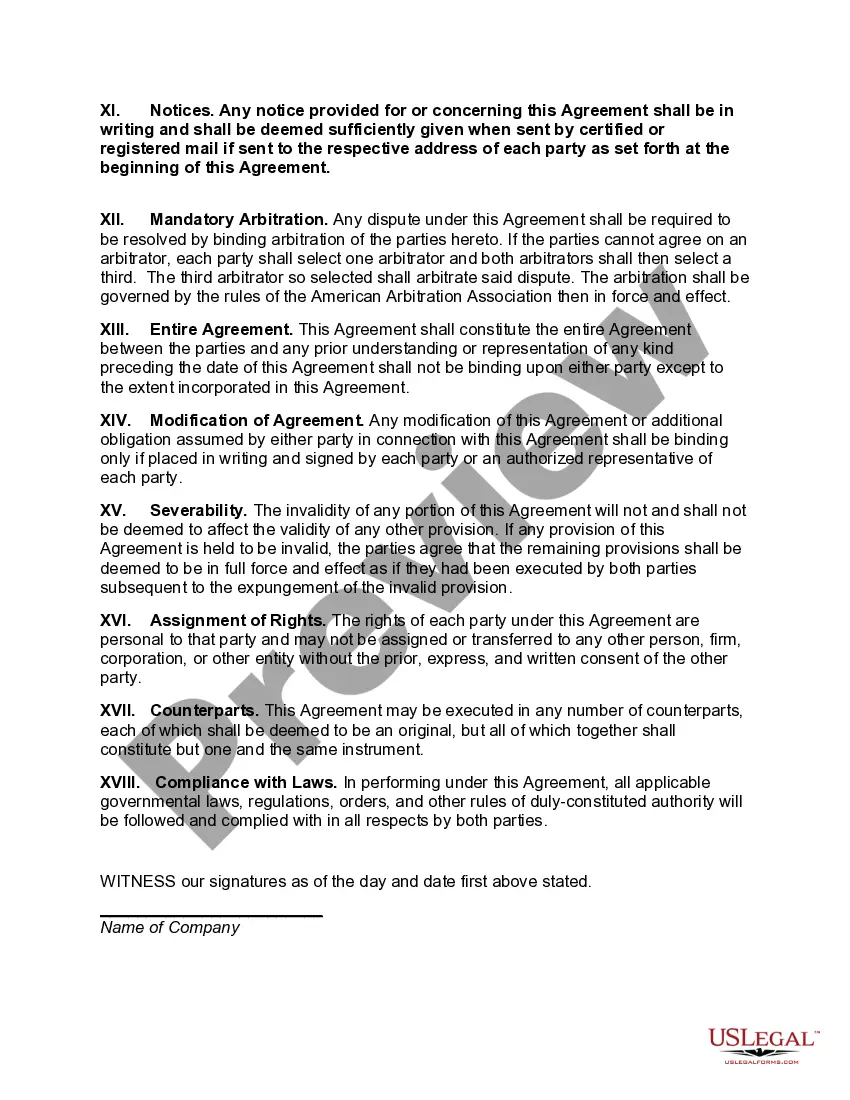
- Include signatures from authorized representatives of both parties to finalize the agreement.
Does this document require notarization?
This form does not typically require notarization unless specified by local law. Always consult with legal counsel to ensure compliance with your state's regulations regarding contractor agreements.
Get your form ready online
Our built-in tools help you complete, sign, share, and store your documents in one place.
Make edits, fill in missing information, and update formatting in US Legal Forms—just like you would in MS Word.
Download a copy, print it, send it by email, or mail it via USPS—whatever works best for your next step.
Sign and collect signatures with our SignNow integration. Send to multiple recipients, set reminders, and more. Go Premium to unlock E-Sign.
If this form requires notarization, complete it online through a secure video call—no need to meet a notary in person or wait for an appointment.
We protect your documents and personal data by following strict security and privacy standards.

Make edits, fill in missing information, and update formatting in US Legal Forms—just like you would in MS Word.

Download a copy, print it, send it by email, or mail it via USPS—whatever works best for your next step.

Sign and collect signatures with our SignNow integration. Send to multiple recipients, set reminders, and more. Go Premium to unlock E-Sign.

If this form requires notarization, complete it online through a secure video call—no need to meet a notary in person or wait for an appointment.

We protect your documents and personal data by following strict security and privacy standards.
Avoid these common issues
- Failing to clearly outline the responsibilities related to employee management.
- Not specifying payment terms, which can lead to disputes.
- Overlooking the requirement for insurance certificates or proper coverage.
- Being unclear about the independent contractor's status, which can affect tax obligations.
Benefits of completing this form online
- Convenience: Easily downloadable and editable, allowing customization to suit specific needs.
- Reliability: Created by licensed attorneys, ensuring the document adheres to legal standards.
- Time-saving: Quick to complete and submit, facilitating faster onboarding of contractors.
Main things to remember
- The Contract with Independent Contractor is vital for formalizing relationships with contractors who have employees.
- Clearly laid out terms help prevent misunderstandings regarding responsibilities, payments, and insurance.
- Completing this form carefully can protect the interests of both the company and the contractor.
Looking for another form?

Form popularity
FAQ
A business may pay an independent contractor and an employee for the same or similar work, but there are important legal differences between the two. For the employee, the company withholds income tax, Social Security, and Medicare from wages paid.Employment and labor laws also do not apply to independent contractors.
A business may pay an independent contractor and an employee for the same or similar work, but there are important legal differences between the two. For the employee, the company withholds income tax, Social Security, and Medicare from wages paid. For the independent contractor, the company does not withhold taxes.
There may be some factors suggesting a California worker is an employee and others suggesting he or she is an independent contractor. It is even possible that a worker can be considered an independent contractor for purposes of IRS tax filing, but they are considered an employee under California's wage and hours laws.
If you're self-employed, you do not have a contract of employment with an employer.You don't have employment rights as such if you're self-employed as you are your own boss and can therefore decide how much to charge for your work and how much holiday to give yourself. You do have some legal protection.
The general rule is that an individual is an independent contractor if the payer has the right to control or direct only the result of the work, not what will be done and how it will be done. Small businesses should consider all evidence of the degree of control and independence in the employer/worker relationship.
A: Typically a worker cannot be both an employee and an independent contractor for the same company. An employer can certainly have some employees and some independent contractors for different roles, and an employee for one company can perform contract work for another company.
The dictionary definition of employee says succinctly that an employee is a person who works for another in return for financial or other compensation.3 Under that definition, independ- ent contractors would appear to be employees.
Unless you are a casual employee, employees have regular and defined working hours. On the other hand, contractors usually have the freedom to decide what hours they work to complete the task unless otherwise specified in their contractor agreement.
If the worker is paid a salary or guaranteed a regular company wage, they're probably classified as an employee. If the worker is paid a flat fee per job or project, they're more likely to be classified as an independent contractor.